The world of wellness conjures strong feelings, whichever side you're on.
There are those with a daily regimen of pills, powders and potions they believe will optimise every aspect of their health.
Through products such as collagen (claims: better skin, easing joint pain), magnesium (heart health) and zinc (immunity), they're doing their bit to take control of their bodies in a volatile world.
Then there are the arch sceptics who can scarcely utter the word wellness without rolling their eyes. For them it’s a dirty word encased in air quotes.
The industry, in their reading, exists to extract as much money and physiological data as possible from its mark's bank accounts and devices.
Between these extremes are the enthusiastic, the agnostic and the simply confused. All three may still take, as a minimum, a daily multivitamin out of any combination of habit, caution and trend following. They may not know it works, or even believe it does, but what harm could it possibly do?
At the centre of it all is a mega industry – the supplements business in the USA alone is worth $70bn annually.
There's plenty to go around for the makers, marketeers, entrepreneurs, influencers, journalists, lobbyists, doctors and scientists – working alone and sometimes in cahoots – in this highly lucrative but frustratingly opaque, some might say cynical, world of supplements, wearables and blood testing.
Make me well
In his superb, skewering new book Make Me Well: A Quest to Understand the Confusing World of Wellness, British medic, broadcaster and presenter Dr Xand van Tulleken wades into what he sees as a baffling, quixotic industry to find out, first and foremost for himself and his young family, the stuff that works and doesn’t.
His investigation, he says, began because he “genuinely did not understand the wellness claims that I was being seduced by".
“People ask me questions all the time about sports, kids and pregnancy supplements, or different gadgets and devices, and increasingly I wasn’t able to answer them," he says.
“The academic literature is abundant, but very confusing. There were tons of people who looked extremely legitimate and credible, attached to serious universities like Harvard, King’s College and Stanford – towering institutions.
"They were making claims supported by scientific papers, but none of this was in the medical mainstream.
“So the catalyst for this book was partly to solve my own problems as a middle-aged man with a family, young kids and older parents, trying to navigate the wellness world and to find the stuff that worked.
"And then also as a broadcaster thinking that there is this gap: why on one hand you have people that seem legit, but on the other why are none of the royal colleges or medical associations recommending any of it?
“Are [those bodies] just behind the times or is it more snake oily than we think?”
Van Tulleken’s enquiries take him around the world; to the Chinese mega factories making many of the products for literally anyone who cares to start a supplement brand (it turns out it's not that hard), to the sensory overload of European ‘nutraceutical’ trade shows, so vast in size and high in persuasion that you'll be convinced by even the most far-fetched claim.
He meets investors who explain where they choose to put their money for the biggest returns, the online influencers on the (virtual) shop floor of the sales pitch to consumers and the scientists whose work is sometimes coopted by bigger forces.
He makes clear at the start of the book that he’s not “anti-wellness”. “I want to be more well than I suspect my doctor can make me,” he writes. What he wanted was evidence that this stuff works.
Well, well, well…
In that spirit, the book opens with a chapter devoted to the golden goose of the vitamin world, vitamin D. This is the one that does work, right? He'd be on solid ground. A slam dunk.
“I thought, ‘this is the exception that proves the rule’ – I wanted to understand why we should take vitamin D, and why the other vitamins and minerals don’t seem to have the same effects as supplements.”
But the cautionary tale of what vitamin D turns out to be sets up the reader for what's to come: that the wellness industry is built on sand. That its foundations are a mile wide but an inch deep.
So, what happened to vitamin D? Van Tulleken says when he was at medical school in the late 1990s, it was thought to be associated with lowering the risk of heart disease, cancer, dementia and multiple sclerosis.
“If you went and looked at a patient population with a severe health problem, they would have low vitamin D. The observational studies on this were very persuasive.
“When I was at medical school, it was like vitamin D was going to be the cure for everything. Certainly, an important public health intervention.”
On that basis, vast amounts of money were thrown at quality vitamin D research and trialling it as a pharmaceutical drug, the results of which have started coming in over the last few years.
They turned up next to nothing. The old problem of observational studies is that correlation doesn't mean causation and so it proved here.

“Vitamin D in the major trials seems to do nothing other than prevent vitamin D deficiency, which only leads to old-fashioned diseases like rickets that are very uncommon in the UK now," he says.
“[Vitamin D] Supplementation in the general population does not seem to affect any aspect of our health. I found that very hard to write and get my head around, that this trusted ‘sunshine’ vitamin was not doing what we all think it is.”
D minus
If van Tulleken found it hard to write, spare a thought for Adrian Martineau, a respiratory doctor who's currently professor of respiratory infection and immunity at Queen Mary University of London.
He spent a large part of his career researching vitamin D and running trials for its effectiveness as a treatment on a range of diseases. He got an answer, but not the one he’d hoped for.
“He was like, 'I spent my life trying to make it work’, to be the guy that discovered the cure for things that helped around the world," says Van Tulleken.
“And when you find out things don’t work, nobody reads your papers and your career doesn’t go very well.
“He’d felt he’d got to the end of the road, and had answered the questions. So he left the field and no longer takes [vitamin D] himself."
As Martineau explains in the book, one of the ways that the drumbeat for vitamin D got so loud (and can be seen in other areas of the wellness industry) is the idea of publication bias.
This is where there’s an absence of negative study results because the lack of a positive finding is seen by a researcher to be a failure.
It can lead to false hope being created, when the truth is hidden away on the laptops of scientists worried it’ll damage their careers.
“Every time I see a doctor on the news talking about a study showing how great supplements are, I ask myself: ‘what wasn’t published?'” writes van Tulleken.
The damp squib of vitamin D caused scientists to flee the scene, but it did little to harm its reputation in the mainstream: among single-nutrient vitamins, it’s the most popular supplement in the UK and USA.
In part, that’s because it's still one of the few vitamin supplements promoted by the NHS. Or, more precisely, it says that people over the age of one “should consider” a 10mcg supplement daily in the autumn and winter (it’s made in your body from sunlight, which drops in these months).
This, van Tulleken says, remains “excellent” advice. “What the NHS is designed to do is stop anyone getting seriously ill from vitamin D deficiency. But it will not enhance [healthy] people.”
Cs and desist

Van Tulleken turns his attention to vitamin C and the historic finding that people on long naval voyages would develop scurvy.
It's vitamin C deficiency that stops your body making collagen, a protein, which leads to weakened bones and bleeding gums.
Few people are at risk of it nowadays, even people with poor diets, so it’s not a reason to take a massive single supplement of vitamin C.
It’s not going to boost you beyond a baseline, yet it's still a persuasive idea that a big dose is going to have added benefits for your health.
“You don't have to have your teeth and hair fall out to go, 'well, maybe if I took a bit more vitamin C, my hair might have a bit of extra glow, my skin might be better',” says van Tulleken.
Vitamins D and C might be the first two supplements the average person thinks of, but they are merely the tip of the iceberg. Van Tulleken says more than 100,000 different products are on sale in the USA in 2026.
How has this industry, not only supplements, but wearables and blood testing, been able to flourish so spectacularly?
There are certain things the industry stacks in its favour; influencing biomedical research through funding; ‘paper mills’ creating fraudulent papers and passing them off as legitimate; supplements having a lower bar to market than medicines and popular podcasters deep-diving into products that they themselves are financially linked to. The mechanics of each are detailed in the book.
There’s also help from the media, and van Tulleken writes of a ‘positivity bias’: with the rise of online news, a positive story on a wellness product will generate far more views and dwell time than a negative one.
The result of that is more positive stories are commissioned at the expense of negative ones, regardless of how compelling the evidence is.
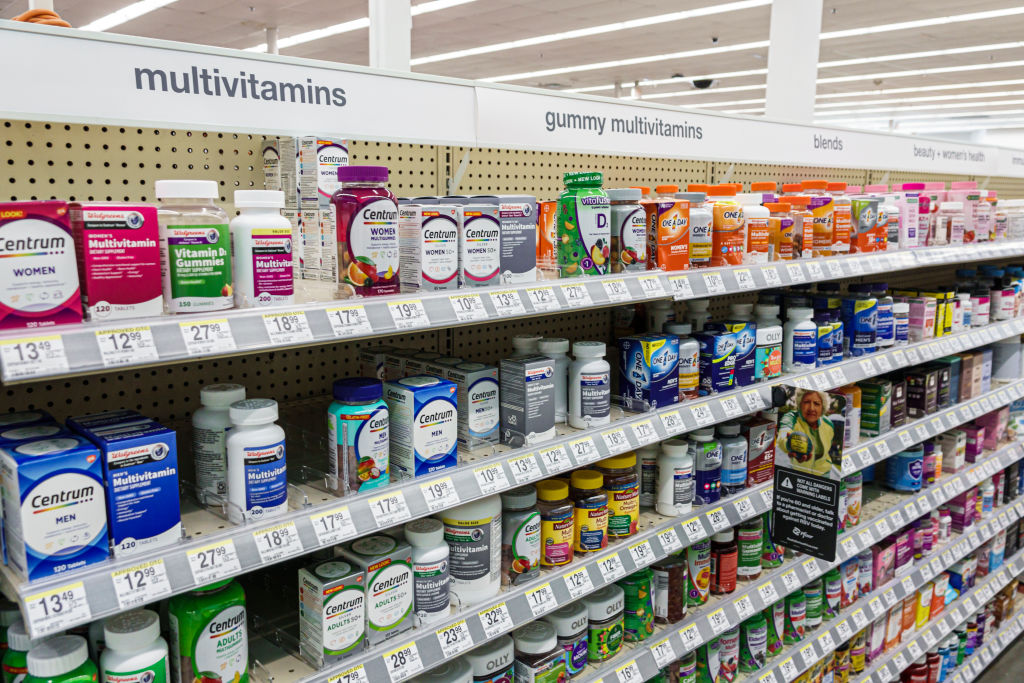
From the consumer side of wellness growth, van Tulleken’s take is we are all compelled to buy this stuff because of the strains of modern life.
“The pressure on people, the precarious nature of most people’s lives in the economy, means we all have to be high-performance people.
“We all have to think about our lives and getting the most out of our sleep, out of our bodies, just to go and do a day of work now."
He also says the “coopting of medical and scientific information into marketing is the most sinister thing”.
We’ll all have come across websites making eye-catching claims about the health benefits of their products, but trying to cut through the slick marketing, weigh up the quality of a study and figure out the facts is a tall order, even for an Oxford and Harvard-educated doctor such as van Tulleken.
Small fortunes
One of the few areas of the supplements industry van Tulleken does find positive evidence for is in sport and their effects on performance.
He speaks to journalist Alex Hutchinson, who specialises in the physiology of endurance sport and cites the Australian Institute for Sport’s (small) list of products that do have (again small) evidence for performance gains: caffeine, nitrate, beta-alanine, glycerol, creatine and sodium bi-carbonate.
Don’t rush to buy them straight away, he told van Tulleken. “He said, ‘do a whole season where you fix everything else first: sleep, diet, mental state, kit, training. Only then should you think about supplements. But at that point he suspects you won’t need to.”
What advice would van Tulleken give to people about making informed decisions concerning their supplement purchases?
It should come as no surprise that, by the time you get to the end of his investigation and all the disappointments that the industry has thrown his way, he’s able to keep it brief:
“It would be very confusing if I'd had a list of things you should take and a list of things you shouldn't take and depending on which sport you do and how old you are and all these things…
"Instead I got to the end and thought 'I have really not found anything credible at all that is recommended for the general population'.
“For someone heading towards the supplement aisle in the supermarket, I would say stop, turn around, go and do something else.
“Eat whole foods. It seems like your body can get nutrients much better from them.”
Spreading the message

A book that spends over 300 pages systematically exposing an entire industry’s bluster and cynicism – however entertainingly – might seem like the opposite of the positivity bias of the media that we mentioned earlier, that works to give more exposure to positive news stories in this business.
We asked van Tulleken whether he was concerned that this meant the book doesn’t reach the people who’d benefit from hearing his findings.
“Two worries: one is that to get an interview on a podcast that’s entirely sponsored by wellness products is going to be complicated – and that’s a lot of podcasts. Also, positive news leads,” he says.
He cites journalist Anahad O’Connor, who broke stories about supplement adulteration in the mid 2010s, who told him that “when he published a story about a thing that worked, he’d get an order of magnitude more clicks and downloads.
“I would have loved to find more stuff that works because I think the book would sell better!
“[But] I can promise you that what’s in the book is my best effort of getting you the truth.”
One area that does get positive notices is some elements of wearable technology – one of the three cornerstones of the book, along with supplements and at-home blood testing.
There are parts that he finds problematic, such as the (over-) detection of serious heart conditions such as atrial fibrillation that he thinks are a conflation of health and wellness.
Fundamentally, however, he believes that anything that can power a passion – such as tracking your ride data or going deep into training metrics – is a net gain.
“The good news is that I did find stuff that worked beyond saying eat your greens and do some exercise, which is that doing things that you are passionate about and that are meaningful to you with enthusiasm and trying to get better at them is really good for you.
“And so the cyclists who are nerding out on their sport and have got into every aspect of their kit, their gear and their ride recording, I think that's a very positive way of approaching your life.
“I am very in favour of endeavour of any kind.
“Whether it's knitting or dancing or going to art galleries or cycling, even if it doesn't involve physical activity per se, it's incredibly good for your brain, your body and your social world.”
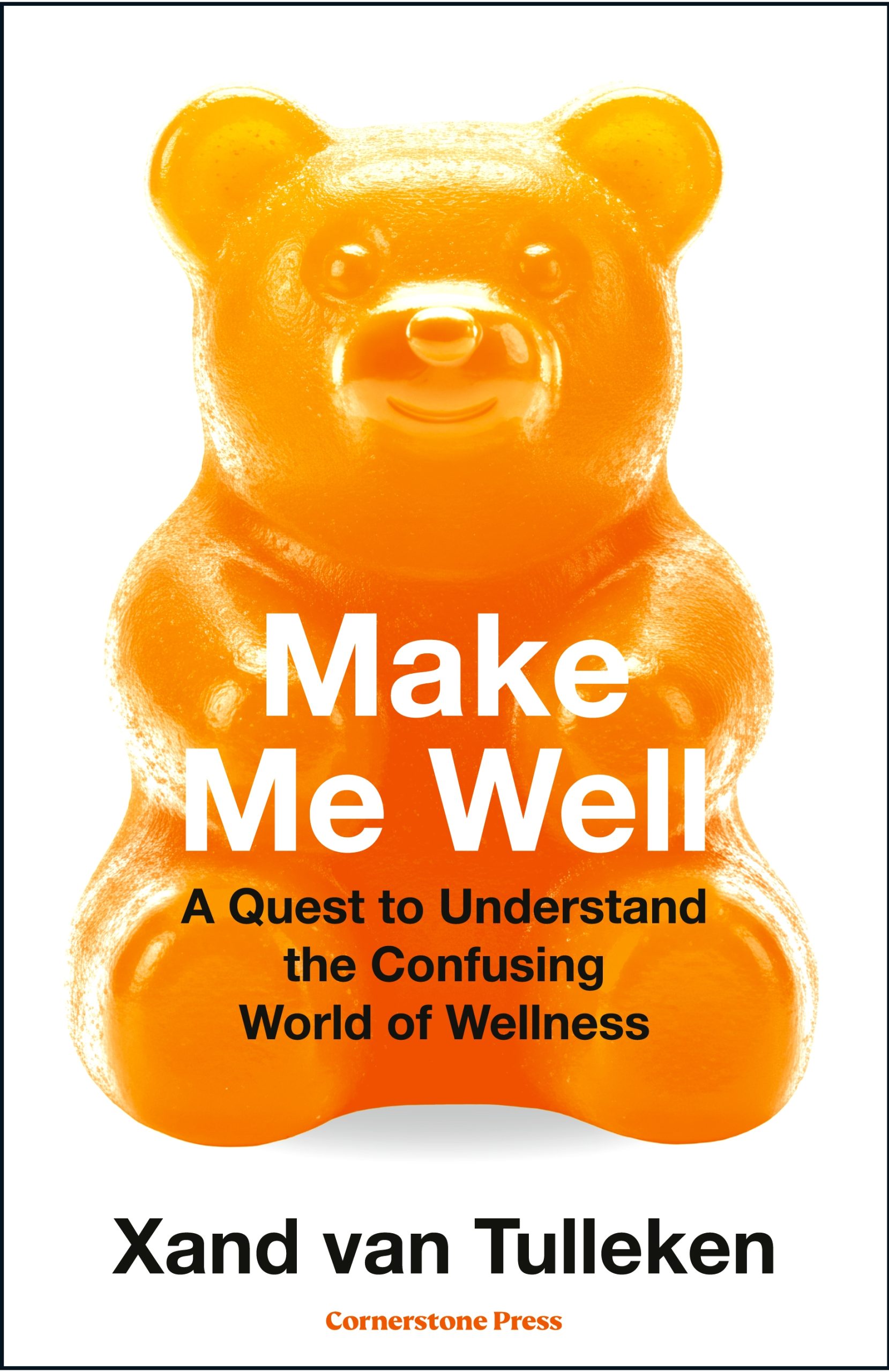
Make Me Well: A Quest to Understand the Confusing World of Wellness by Xand van Tulleken (Cornerstone Press, £22) is published on 10 September