Anti-ageing is big business – and growing rapidly. This once unfashionable backwater of the science community is experiencing an unprecedented boom in research and popular interest.
But amid the pioneering research comes a lot of nonsense. It’s a subject that covers the full spectrum, from eminent professors slowly eking out gains with tireless research over many years to impatient folk (often obscenely wealthy men) who aren’t told ‘no’ enough, funding research where the results are swung to get the outcome they want.
A lot of the more grounded research seeks to discover how we can live a larger portion of a lives healthily, but when that turns to wild talk of vastly increasing lifespan, of cheating biology and evolution – this is when we need to be on our guard.
What is it about anti-ageing that attracts such eccentric views and goals, and how can we separate the honest, progressive research from the elevated, self-interested hype?
Nobel intentions
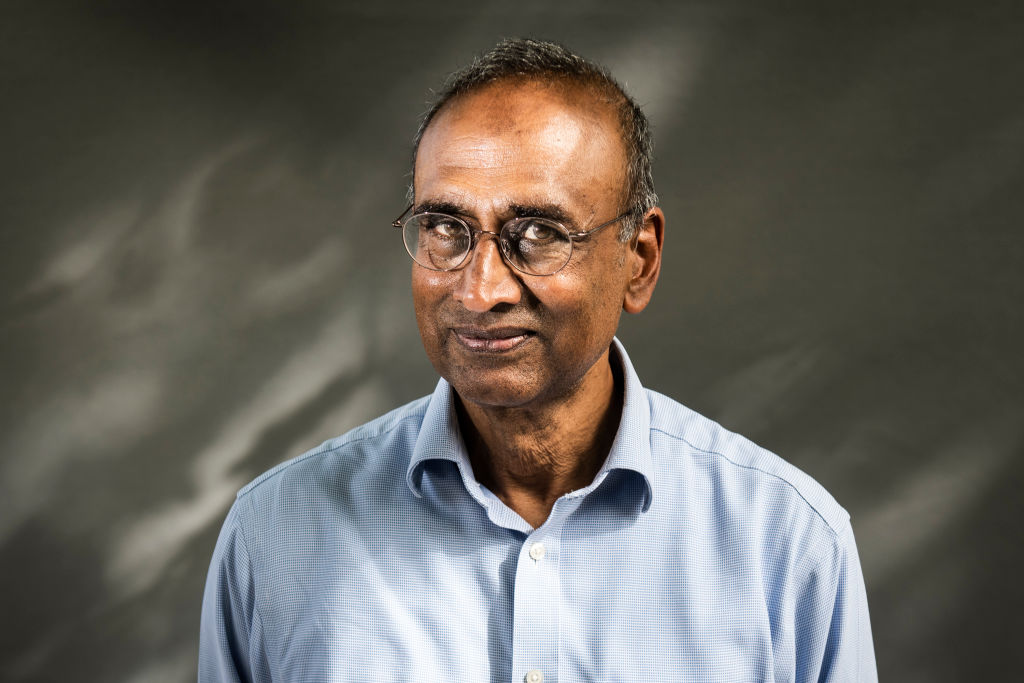
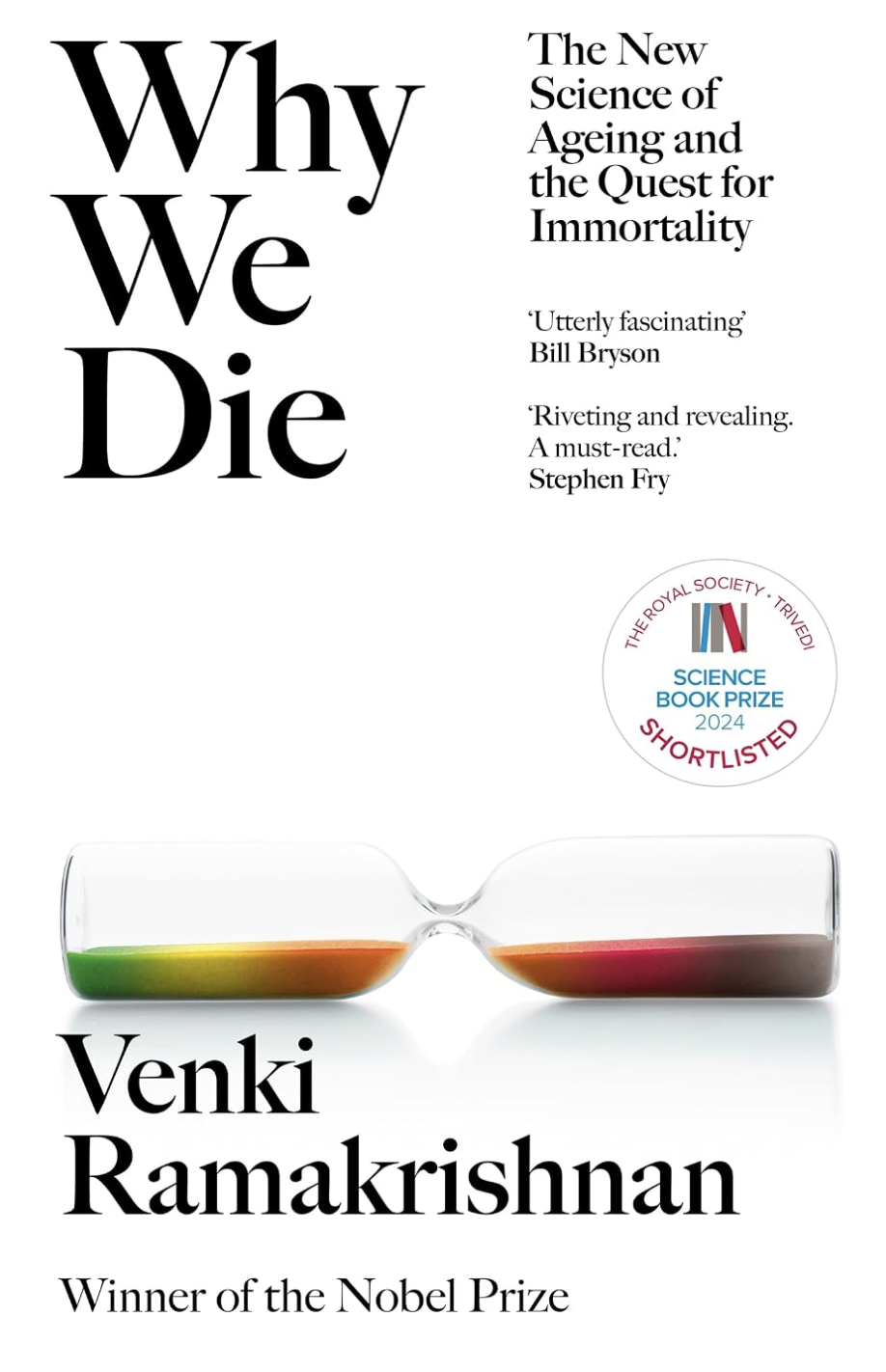
A book that answers a lot of these questions and many more besides is Why We Die: The New Science of Ageing and the Quest for Immortality by Venki Ramakrishnan.
Shortlisted for The Royal Society’s Science Book Prize in 2024, it reveals the latest science on what causes ageing and how we might prevent it, and presents it in a way that enables the reader to develop a critical nous for separating the healthy research from the hyperbole.
Ramakrishnan, 73, an eminent structural biologist, was well-placed to write it. He won the 2009 Nobel Prize in Chemistry for his work on the structure and function of the ribosome, the structure in a cell that makes protein through genetic information.
When that process goes wrong, it affects everything, including ageing. So, he’s close to the field, without being in it.

“That frees me up to be more objective and I don't have an axe to grind or some vested interest in some particular idea or cure or therapy,” he tells me.
Ramakrishnan is a lifelong cyclist who knows full well of the bike’s own anti-ageing powers and the slender figure that appears on our Zoom call is unmistakably the rangy physique of a cyclist.
"I was never a racer or anything but I've always loved bicycle touring," he says, before talking about the bikes he's built himself over the years for his own odysseys.
“I moved to Cambridge, England in 1999 and before that we lived in Salt Lake City [Utah].
“I no longer have a car in Cambridge but we did in Salt Lake City, only I rode my bike so regularly that a weed grew over my car because it hadn’t been driven.”
He's blighted by bad knees, as many septuagenarians will sympathise with, but that doesn't get in the way of riding a bike. Where does he put the bicycle on the spectrum of anti-ageing interventions?
"It's certainly great exercise, from a cardiovascular perspective, so it's very important for your heart and blood vessels," he says.
"But people underestimate the importance of weight resistance exercise as they age. Ageing decreases your muscle mass and that's a real problem as you need it for stability, strength and so on.
"Cycling is only working certain muscles, and you really need to be looking at your whole body."
Outer limits
From the simple contraption of the bicycle, essentially unchanged for over a century, Ramakrishnan's book explores the outer (and deeper) reaches of the complex anti-ageing industry.
He’s critical of the 'hype' machine that inflates the wilder ideas at the expense of the “very good science” in the field that fails to surface.
“People want to believe that this is the way that’s going to solve the ageing problem. They come at it from a particular angle and the kindest word would be to say is that they’re over optimistic," he says.
In the last decade alone, after a long period in which ageing was a “scientific backwater”, he writes that more than 300,000 studies on ageing have been published.
“It’s not all high-quality research,” he says.
The gold standard for any research, he says, are randomised controlled trials, where people are assigned randomly to two groups so that one is just like the other. One group gets the treatment, the other doesn't.
The problem with ageing studies as he sees it is not only the vast amount of time (and money) they need (spoiler, people already live for a long time), but how do you measure or quantify ageing?
One promising way is in ‘biomarkers’ – specific measurements of our biology such as inflammation and hormones – that can help piece together our own state of play when it comes to ageing.
Biomarkers, says Ramakrishan, can help get around the major problem of ageing studies taking a huge period of time to glean results.
This, indeed, is how the industry is promoting anti-ageing products, but results on their own don’t have the strength of multiple studies backing them up.
A lot of research is funded by people and companies who have vested interests in the result going their way.
“The trouble is that people who want to sell something don’t have an incentive to do this careful measurement.
“It might not show that there’s much effect [with the treatment] and then they wouldn’t like that. They’ll do an observational study and say ‘oh, people felt better after taking this or mice ran around better after doing that'.
The long game

It perhaps shouldn’t be a surprise that humans already do very well when it comes to longevity.
‘Lifespan’ broadly correlates to the size of a species and the ‘longevity quotient’, coined by ageing expert Stephen Austad and his graduate student Kathleen Fischer in 1991, is the ratio of the average lifespan of a species to what it would be if it followed scaling laws.
Humans’ LQ is 5, which means we live five times as long as would be expected by our size. Of mammals, only 19 outperform us – 18 species of bat and the naked mole rat.
Life expectancy (the average period a person is expected to live) has increased dramatically over the past century, largely because of better healthcare and a dramatic reduction in infant mortality.
Yet lifespan – the maximum age of humans - hasn’t moved much at all. The oldest person to have lived, Frenchwoman Jeanne Calment, died at 122 almost three decades ago.
Why, then, are there people – albeit at what Ramakrishnan says is the extreme end of the anti-ageing spectrum – who believe the first person to live to 1,000 years old has already been born?
One of those people, writes Ramakrishnan in his book, is Aubrey de Grey, a mathematician of some repute who turned to biology “believing ageing to be a solvable problem”.
His suggestions include working out how to remove senescent cells (these are cells that have stopped dividing but don’t die off, and linger, causing inflammation in the body), and stopping DNA telomere lengthening mechanisms (and thus stopping cancer).
“He’s learned enough biology,” writes Ramakrishnan in his book, “to pinpoint many of the things that go wrong as we age.
“But with the characteristic arrogance that many physicists and computer scientists display towards biologists, he is wildly optimistic about the feasibility of achieving them.”
Ramakrishnan brings scepticism, then, to anti-ageing but also has his mind open to what can be achieved.
He points to evolution and how it doesn’t care how long we live as individuals – it cares about and selects for us to live long enough into adulthood to pass on our genes.
Worse than that, he says, is that evolution selects for traits that will get you to adulthood, even if those exact traits hurt you later in life and cause ageing.
This process tends to (but not always) protect us from cancer early in life, and why it’s typically a disease of ageing.
“But it also means that if some species can live a few hundred years, and they're all made of the same material, maybe we can alter our ageing process and tinker with it and keep us healthier and possibly live longer.
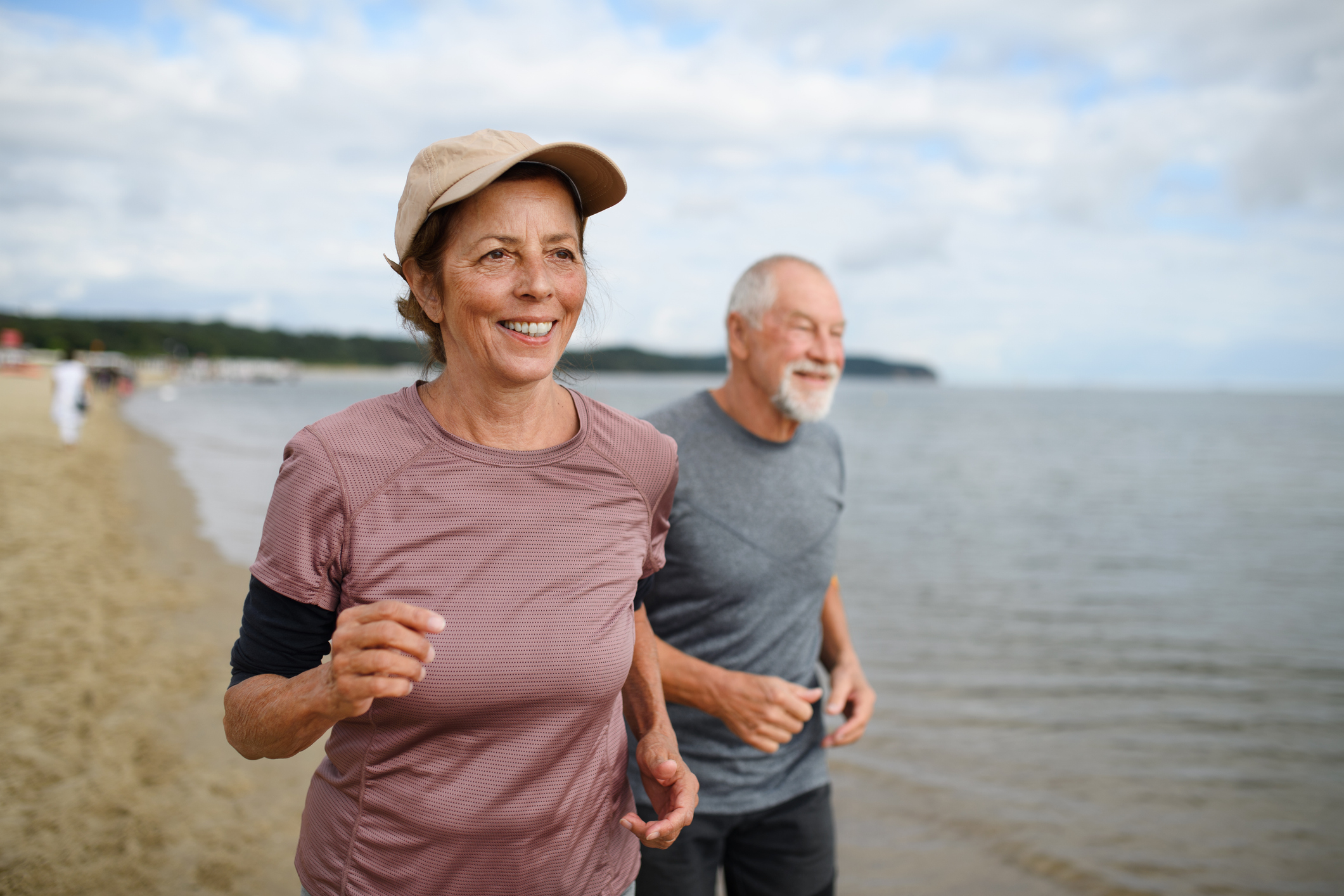
“I just think it'd be very hard because you have to change things and the balance is delicate. So I'm beginning to think it's hard to have a free lunch, where we can just get all the benefits, but none of the drawbacks.
“That’s going to be hard, but it doesn't mean it's impossible.”
Picture of health
The goal of much (mainstream) anti-ageing research isn’t about a massive increase in lifespan, but to delay the onset of age-related diseases such as heart disease, cancer and dementia and improve our health in old age.
Death’s finality isn’t what terrifies most people – it’s the years, sometimes decades, of infirmity that lead up to it.
As the number of people living to an older age increases, so too does the prevalence of ill health in old age. Doing something about it is an admirable aim.
This is the idea of healthspan, rather than lifespan, and was called compression of morbidity by James Fries in 1980.
The problem with it is that it also assumes the length of life is fixed. The reality is that, should we make more progress in finding cures and remedies for the diseases of ageing, we would likely live longer as a result.
While disease might be solved, or least treated and delayed, the problem of frailty of old age remains.
Ramakrishnan writes that in the UK, data from the ONS (Office of National Statistics and the UK’s largest producer of independent statistics) shows the time we live with four or more diseases has actually increased as a fraction of our lives, rather than decreased.
He remains “more optimistic that they'll find things that will keep us healthier in old age. “There may be things that will delay the onset of those things so that we live healthier for a longer period. And then the hope is that we would have a more rapid decline. But there's always a possibility that as we get to stay healthier, we're simply prolonging the decline.”
Insurance policy

What’s driving our collective quest to live longer, or at least – as a more mainstream idea – live better to typical ages of today?
The answers are varied and numerous.
Most of us are likely simply more aware than ever of how tough old age can be. With more people living longer – and living longer with diseases of age – many of us know at least one person close to us who has suffered through this later phase of life.
We want to insure against that, as best we can, by getting ahead of the game with our diet and lifestyle. On another level, we’re simply scared of talking about death, as much now as we ever were.
And with the rise of social media and individualism making us the main characters in our story, perhaps we’re simply unable to comprehend a world without us in it.
Then, at the elite, monied end of the spectrum come the tech billionaires, who are often the ones funding biotech firms’ research into life-prolonging techniques.
They have all the money in the world and nothing is off limits. Nothing, that is, except death. They don’t want the party to end.
“They’re used to having everything their own way,” says Ramakrishnan. “And they’re used to very rapid progress because in software, the timescale is often measured in months. In a year or two you can suddenly take over the market.
“They think that anti-ageing will be solved on the same time scale as some algorithm in software. I think they have no idea of the complexity of biology.
“Some of that research will turn out to be very useful. Some of them will claim they're altruistic, but I have a feeling there are rather mixed motives.”
Age concerns

This is Ramakrishnan’s second book, following on from 2018’s Gene Machine, which told the story of his life’s work on the ribosome. He’s enjoyed the reception.
“The critical reception has been good, including from ageing experts – although obviously not the people that I’ve been critical of [ed – these were numerous!].
“But many people in the mainstream ageing research community are very positive about the book. Maybe I said the things that needed to be said.
“The kinds of books that often turn out to be like the big airport sellers – this book is not that. It’s not the prescription books, like those called How to Live Forever or How Not to Age. With these books, even the titles are nonsense.
“People want to be sold this fantasy, this quick fix.
“My book of course isn’t that. What it does is give people the tools for both how to live better and how to evaluate the steady stream that comes out in the news.
“Every week, there's a news item about some breakthrough in ageing. Reading the book will give them a mental framework and an understanding of why we age and why we die.
“Then they can ask, is this hype or is this real?”