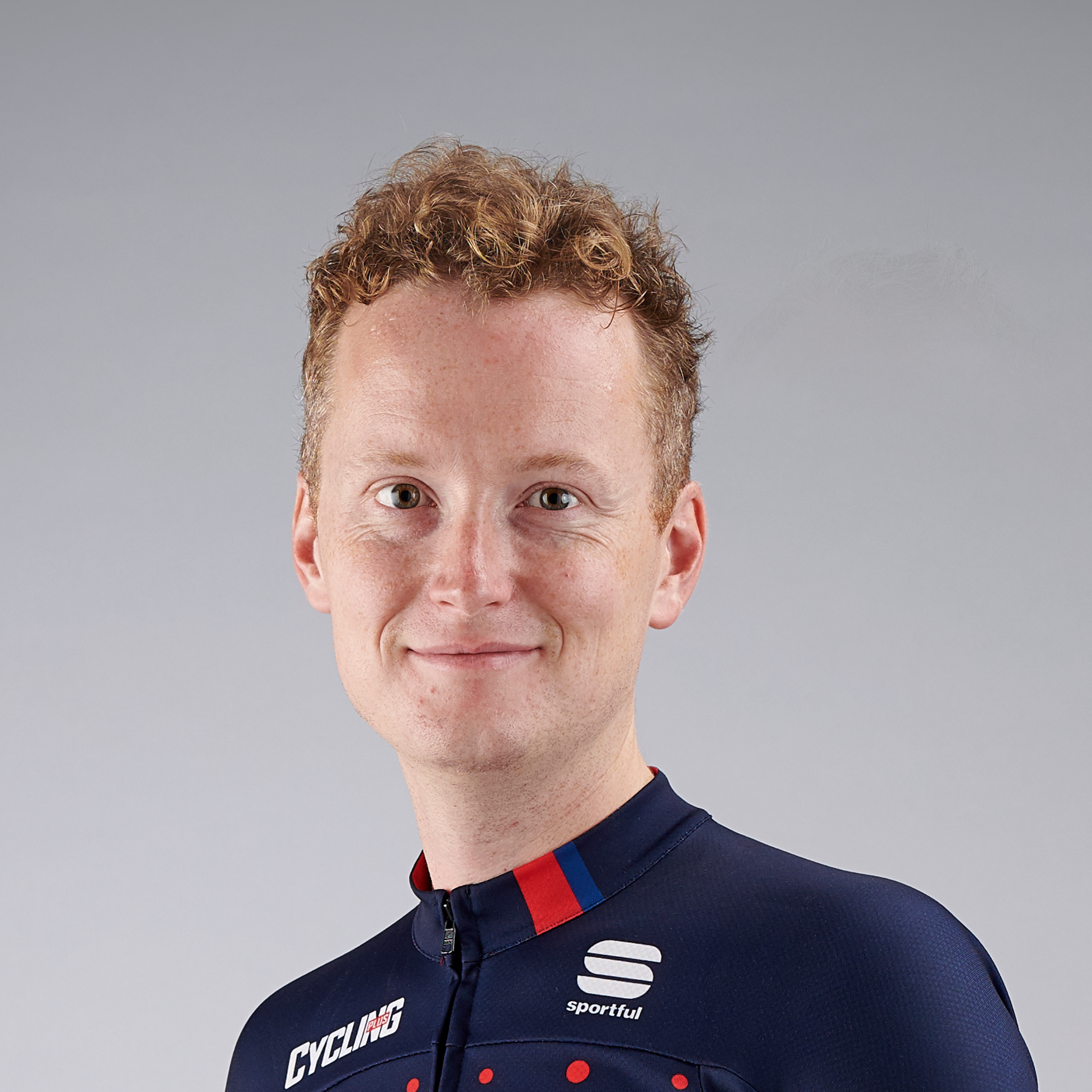
In the summer of 2023, with some impressive performances at the Spring Classics under his belt, Belgian pro cyclist Nathan Van Hooydonck of Team Jumbo-Visma supported his team leader, Jonas Vingegaard, to a second successive win in the Tour de France.
He was full of promise, having also notably helped Primož Roglič to a Vuelta win in 2021. Then, only two months later, it all came crashing down.
While driving at home in Belgium, in mid-September, with his pregnant wife in the passenger seat, Van Hooydonck suffered a massive cardiac arrest. He crashed the car and, in his words, was “dead for a little bit”, before being resuscitated at the scene.
After several emergency surgeries, he thankfully awoke in hospital and, almost immediately, was forced to come to terms with the fact his racing career, which had been such a massive part of his identity, was finished.
Two years later, we sat down with Van Hooydonck to find out, in his own words, the story of that horrific day, what came next, and what his experience can teach anyone who exercises regularly and is passionate about it.
- Read more: Fit older male cyclists face these hidden heart risks – here's why that shouldn't put you off riding
A different focus

Thankfully, Van Hooydonck hasn’t had to turn his back completely on cycling since that awful, life-changing moment.
In 2024, he returned to the WorldTour circuit in a new role, working in hospitality for his team, guiding VIP guests to give them a tailored experience in the riders’ footsteps, from Omloop Het Nieuwsblad to the Tour de France.
“Guiding the hospitality guests during the races played a huge role in my processing,” Van Hooydonck has said previously. “In the months after the accident, I found it hard to accept that I was no longer a rider. Being present at the races helped me tremendously.”
Now he’s joined their commercial department. He also does media work, including commentary for TNT Sports.
“I’m doing well, and I’ve found my place within my team, Visma-Lease a Bike, the team I was part of as a pro cyclist,” Van Hooydonck tells us. “Apart from the cycling bit, nothing has changed – I still see all the same faces every day, which is nice.”
Recalling his life-changing experience, he says: “In 2023, I’d just come back from a race, the Tour of Britain, which I didn’t know at the time would be the final one of my career.
"I had a heart attack in my car – certainly not what you want or expect as a professional athlete in their 20s. I immediately knew that I couldn’t be a pro cyclist anymore. I had to retire and find new opportunities. As 2024 went on, I found a spot on the business side of the team.”
Road to recovery

But of course, getting to that point wasn’t plain sailing. “Before all that, I had to recover from all the surgeries – three, initially, in the week after the heart attack. Then there was the whole mental aspect to manage. I could have gone on and pretended that it didn’t happen, but I’d have been lying.”
After leaving hospital, Van Hooydonck was able to gradually start recuperating and even start cycling again, albeit at a much more leisurely pace.
“Once I was back at home, it was about being relaxed to exercise again,” he says. “A case of going out for a ride, or just to play golf even – it’s not a sport that gets the heart rate up, but it still took time.
“Now I know what my body can do. That’s something my cardiologist spoke to me about: ‘Please realise you were very lucky, and don’t push yourself like you used to’. I know what I can do and what I want to do, so that makes cycling a lot more fun than a year ago.”
He's been fitted with an internal defibrillator to keep things in check. “People point to their chest when they think of where it is but it’s actually close to my armpit,” he explains of the device.
“It’s constantly ‘aware’, but it hasn’t needed to do anything yet. If my heart goes crazy, it notices and regulates it. It’s not a pacemaker, it doesn’t set my heart rate. My heart runs free, then it steadies it if it goes haywire.”
Being sensible

Van Hooydonck has been given clear guidelines on exercise by his cardiologist: “I always need to stay under my threshold [the highest average power you can sustain for an hour] if exercising for any extended period of time.”
But he can feel the change within his body and doesn’t want to push it anyway. “My heart is different now,” he explains.
“When you break your leg, for example, and it gets put in a cast, when you take it off, all the muscle in your leg goes. And that’s what’s happened to my heart. It was big, as a trained athlete.
"Two months ago, I visited my cardiologist and he said my heart was shrinking. That actually means the chance that it [a heart attack] happens again is small, because my heart is a normal size now, for someone who rides a bike now and then."
And does he still have that competitive spirit that many athletes just can’t shake, even in retirement? “I feel that I could still beat [friends] in a race, but I don’t want to.
"Why should I try to push myself when my body has shown me that my life could so easily have been over? I don’t need to prove myself to anyone any more.”
Learning new skills
While the former pro admits the transition to racing retirement was “super challenging”, he says he was lucky with the people he had around him and that he hadn’t been “living in a bubble”, aside from during the Tour de France.
As he’s said previously, he’s grateful to his former team, too: “If you perform well as a rider, you are always valuable to a team, and they will do everything to keep you.
"Once you stop, those abilities are gone. That is why I am grateful to the team, that they also see the value in me as a person. They look beyond just the rider Nathan van Hooydonck, and that is special.”
He's been figuring out what kind of role he’d like within the commercial department, while also picking up the basics of a more desk-based job.
“I’ve had to start working for the first time, but I’ve also had to learn how to work,” he admits. “I don’t know what it is to build a PowerPoint [presentation], to fill in numbers in a spreadsheet or keep an agenda.
"It makes it challenging at times, but I just try to deal with it. I get up in the morning and try to make the best of it. If it’s not good enough, I’ll try again tomorrow, because I don’t know anything else.”
Decision made

Wasn’t he ever tempted to try to get back on the bike and give it a go competitively instead of resigning himself to immediate retirement and a behind-the-scenes role at races?
“I know some athletes who have carried on after heart attacks, but I knew quickly it wouldn’t be an option for me,” he says.
“After my accident, I asked my dad, ‘Do you think I could ever be a cyclist again?’, and he’s always very positive. And he said: ‘We’ll see about that’. I knew then it was over.
“My wife too – she didn’t say I couldn’t cycle any more, but I just felt in all kinds of ways that it was over. I didn’t ask doctors, could I do this or that – I knew it was a clear sign that I had to retire.
"I’m very lucky to still be here. I didn’t feel the need to be smarter than my cardiologist, who’s the best in Belgium. It wasn’t my decision.”
Words of wisdom
Van Hooydonck’s experience is a reminder that even if you’re super-fit, you’re not immune to heart issues such as this.
This is especially true for men, who are far more prone to them than women, with the protective role of the hormone oestrogen thought to be a significant factor in this.
He urges anyone taking on a major endurance challenge to see a cardiologist first. “[The risk of a heart attack] goes much broader than people who’ve already had an issue,” he explains.
“Even if you’re healthy, it’s worth getting checked out. It’ll give you the freedom to ride safely. If there was something wrong with your heart, you’d know it.
“It’s your body, you only have one and you really need to take care of it. Some people are untrained and go completely over the limit. Be responsible for yourself and your family.
"If you’re scared to get checked, ask yourself, would you rather know and be healthy, or not know and die? It’s a responsibility to take care of your body.”