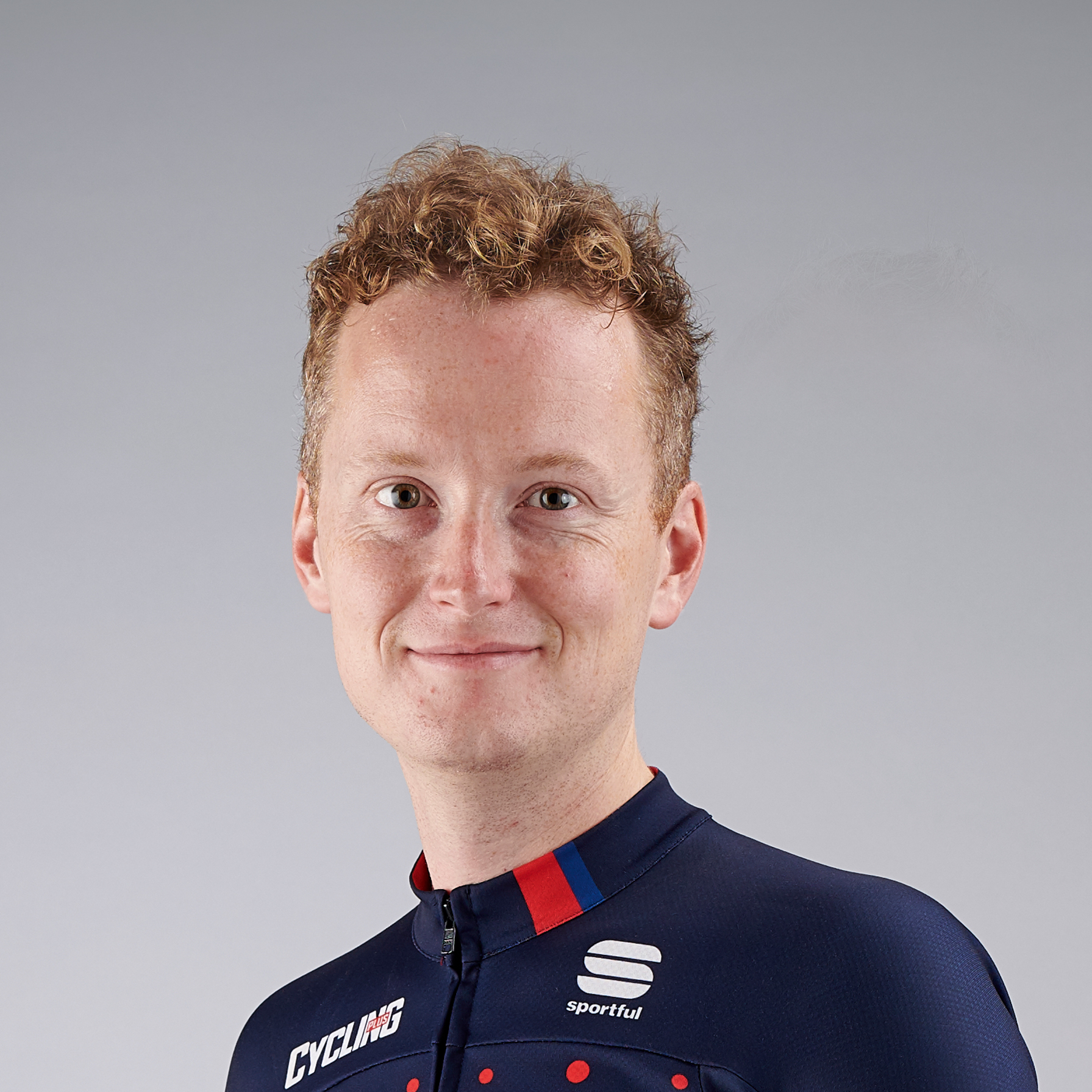
Weaving in and out of a series of cones on the ground, it seems Oscar Saiz, barely 10 minutes into our session, has already worked me out.
“I can see that you’re a cautious guy, John.” As far as descending and I go, cautious just about covers it.
It’s one of the reasons I’m here, after all, to see if this former downhill mountain bike racer can help me improve my technique and free me from the shackles that hold me back.
‘Here’, however, isn’t a corkscrew mountain pass in the Pyrenees but a Carrefour supermarket car park in the city of Terrassa, north east Spain. An unusual location to learn descending techniques?
Not at all. It’s this stripped-back starting point that enables Saiz to evaluate a rider’s skill level. His credentials for the job are impressive – he was one of the top downhill mountain bikers of his generation and a trailblazer for the sport in his country.
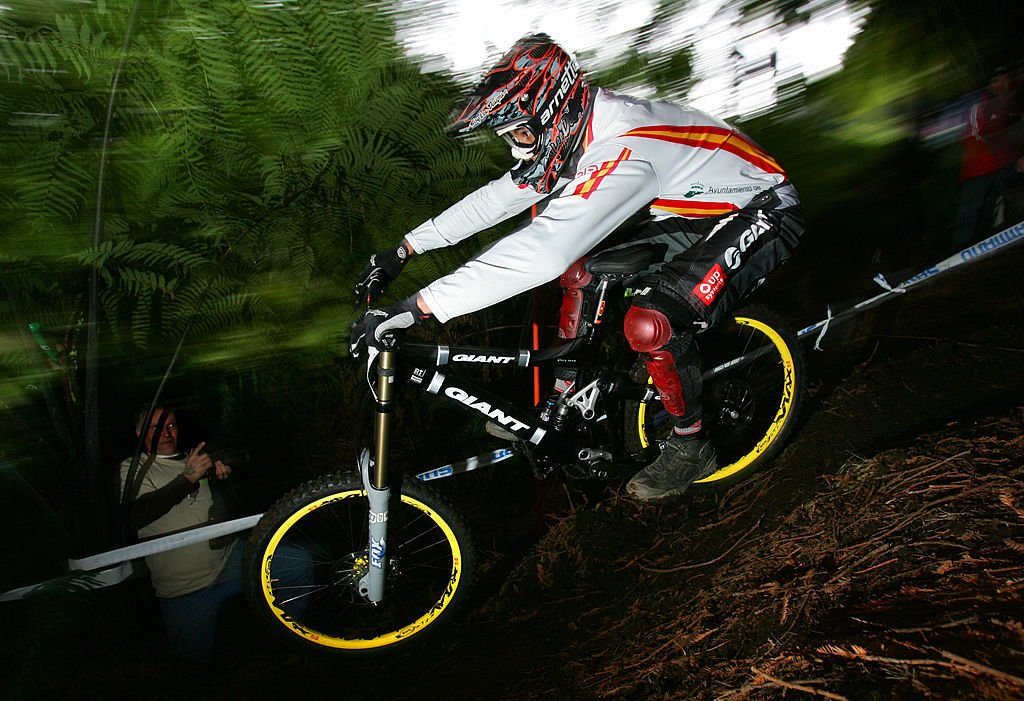
As a technically gifted rider with a thorough attention to detail, coaching always looked likely to be his next port of call.
Giant, the team he ended his career with, offered him that chance in 2010 and 12 months later he’d helped turn Britain’s Danny Hart into a downhill world champion.
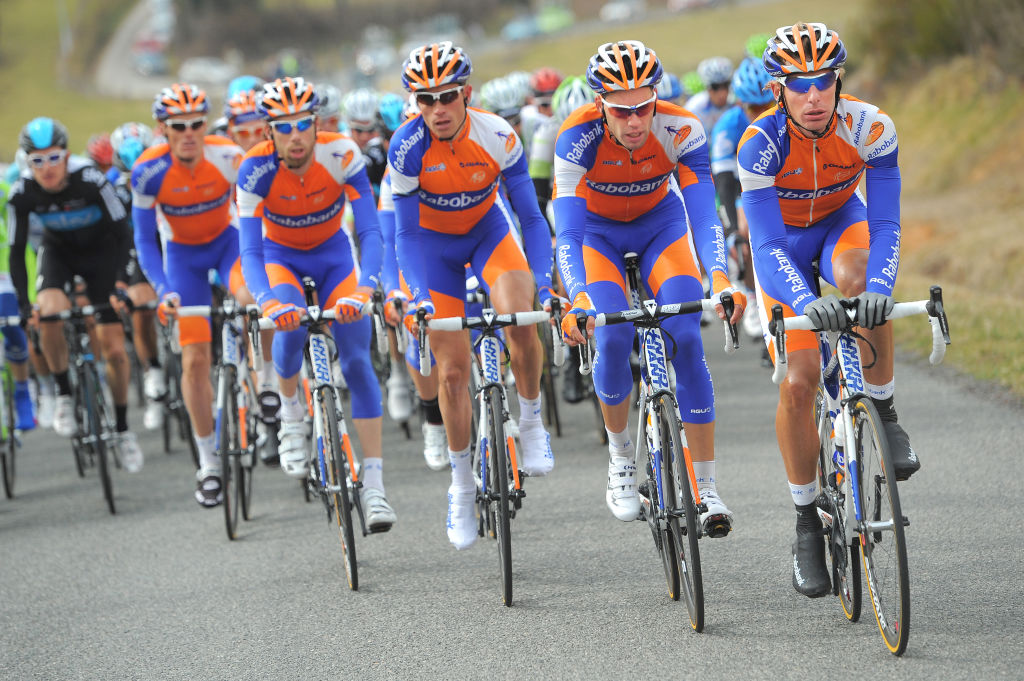
In 2012, Giant’s XC team came calling, hoping his technical expertise could rub off on its riders. It did. Then came a far more radical proposition: would he work with the roadies on the Giant-sponsored Rabobank road racing team on their descending skills?
Saiz has been riding every type of bike since he was three and is in his element, at speed, on anything two-wheeled.
He trains on the road, as he did during his career, in the mountains where we’d be heading later, north of his home in Matadepera near Barcelona.
However, he’s never done a road race in his life and was concerned that this lack of pedigree would count against him with the team.
“Maybe they’d be thinking, ‘What is this guy going to be able to tell us?’,” he says. So, he put together a presentation for the riders to explain why he thought descending skills were being neglected and what he could bring to the table.
The goal wasn’t to turn those who struggled into superstars but to equip them with the skills and confidence so they didn’t lose races there.
“There was silence,” he recalls. “Riders soon become restless when equipment sponsors come in to give presentations – 10 minutes in and they’re tapping away on their phone. But I had their attention and I was impressed they wanted to listen.”
So, too, have many across professional road cycling in the years since and, as of 2026, he's a skills coach at Lidl-Trek.
Take five
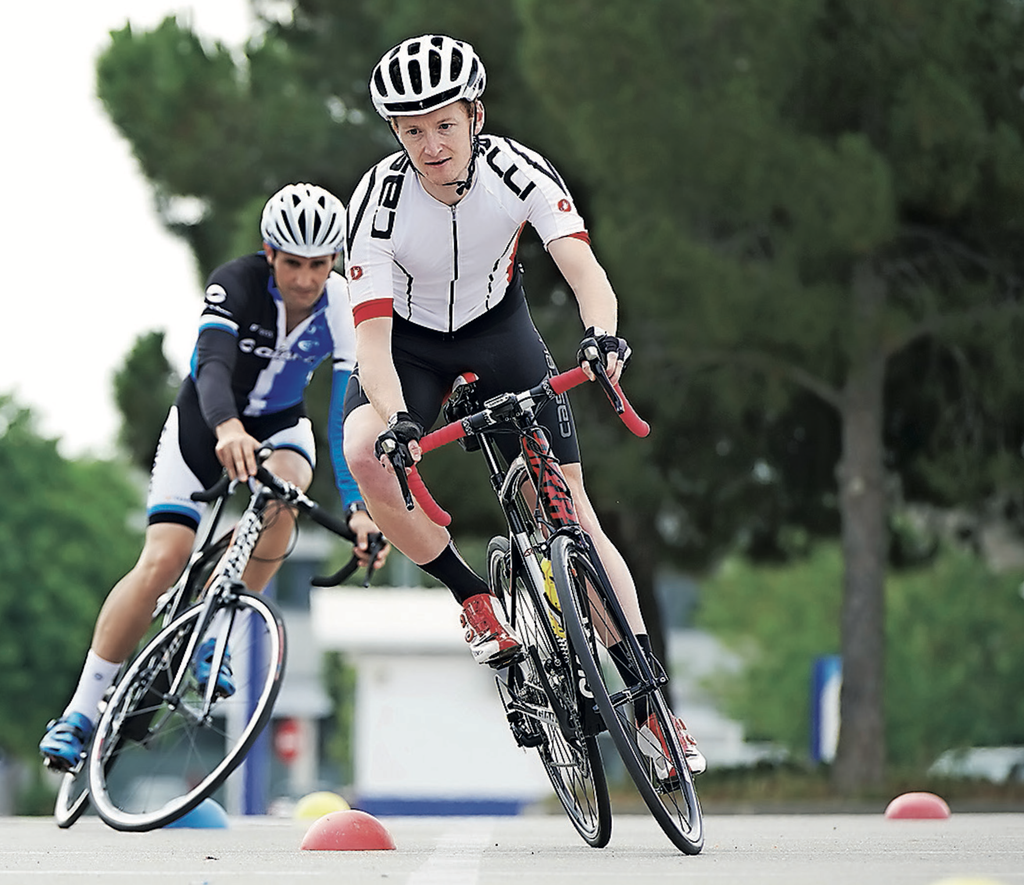
Whether it’s on- or off-road, there are five central tenets to Saiz's descending philosophy: symmetry (how the left side compares to the right), body position, braking, reading and anticipation. The latter two get the lion’s share of his focus.
He begins in a car park for several reasons, the first being that “if it’s not going to happen down here, then it’s certainly not going to happen up there” – in the mountains.
Cones are placed in a variety of formations over increasingly difficult drills to give Saiz an initial indication not just of technical ability but of how much a rider is willing to assume risk.
If you assume risk going downhill, you recognise the inherent danger of the activity and are willing to push to the limits within your skill level.
Those who are good at descending, says Saiz, have a hardwired genetic predisposition to assume risk in all aspects of their lives, not just cycling.
“If you’re willing to drive your car faster to get somewhere on time, this is often reflected on the bike,” he says.
“When I go to the edge of my speed limits on a downhill bike, I like it. Many don’t. The upshot is that the guy who likes risk will keep on improving downhill, the one who doesn’t stays where he is and the gap gets wider.
“I always hear from roadies that the guy going fast downhill is either crazy or brave. It’s never ‘this guy knows how to do it’.
"When I see a fast guy like Vincenzo Nibali, I see he’s taking risks but I also see the skill. He’s been here before and he’s absolutely ready for an emergency situation.”
But how does someone like me who doesn’t like risk begin to improve? Like any skill, Saiz believes it’s a step-by-step process of drills, first in a safe environment such as a car park and later on open-road descents, slowly carving out technique and building confidence and, eventually, speed. His ultimate aim is to turn fear into fun.
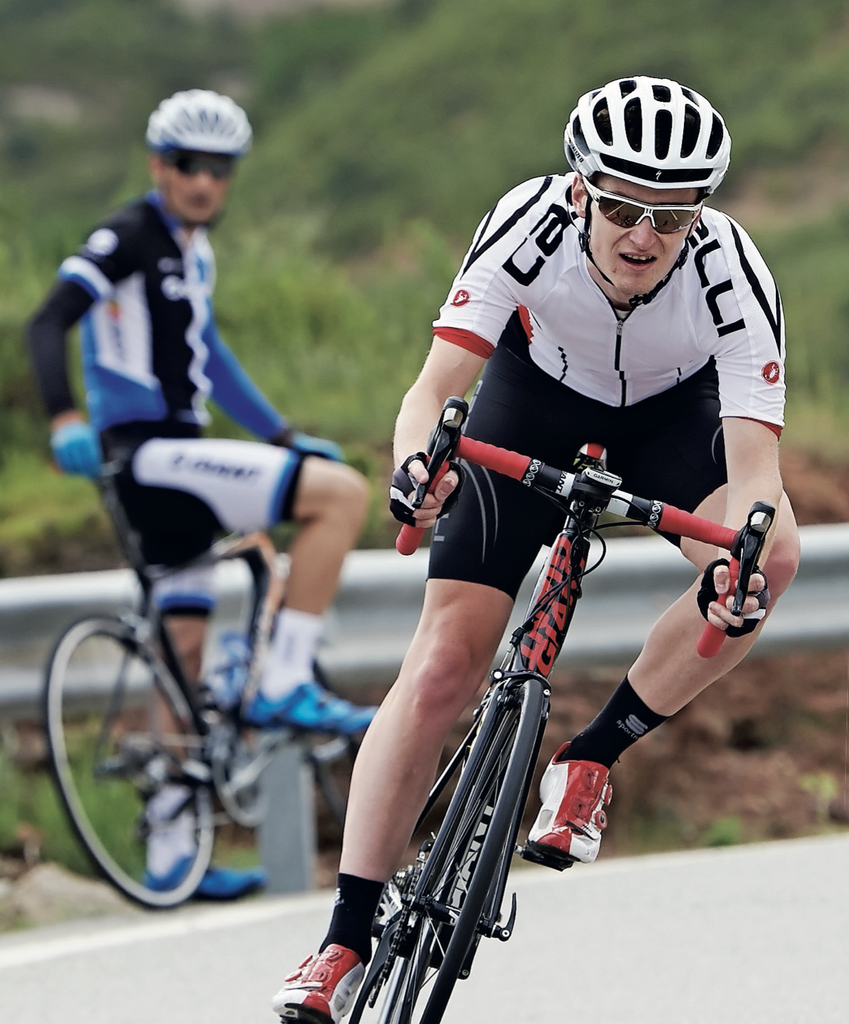
My first drill was to ride a figure of eight around two cones 10m apart, and immediately my reading and anticipation were found wanting.
So focused was I on the first that I rushed into the corner and hit the apex early, ruining my line into the second.
What I should have done was take both cones as a single unit rather than in isolation, approaching the first cone at a wider angle to exit wider and open up more space to do the same with the second.
As I rounded each corner, Saiz encouraged me to look ahead to the exit of the current one and then the entry into the next. As well as helping me to point my bike where I wanted it to go, this anticipation lowers the risk of any nasty surprises.
Get a grip
Beginning in a parking lot is as much for my benefit as it is for Saiz's, and an unthreatening environment helps to reveal the limits of a bike.
Getting comfortable with just how far I could lean into a corner without my wheels sliding from under me (the answer is ‘very’) was crucial to building confidence.
Tyres can heavily influence this, so the drills can help you ride more confidently when you fit a different type.
These drills also helped me become more comfortable with my bike’s braking capabilities. In one drill, I sprinted to top speed and then tried to stop as soon as I could after passing through a gate of cones.
It showed that it’s extremely unlikely you’ll go over your handlebar, a concern for nervous riders, no matter what the braking force.
Learning when not to brake is also important. Could I see through the exit of one cone and into the straight before the next? If I could, he encouraged me to carry my speed through rather than killing it unnecessarily.
This environment also helps to develop body symmetry. I’ve always been happier turning left than right, which is an issue Saiz says affects even the best downhill pros to a certain degree.
“It sounds simple, but I always tell my guys that for every corner on your stronger side, do 20 on the weaker," he explains.
"What feels good about your left turns? Visualise it in your head and try to feel it. Maybe have someone video you so you can observe the footage. Then start practising your right turns, first with lower speeds and slowly increase it.”
These drills were repeated over and over, and clearly have their roots in Saiz's downhill background. In his sport, that works because courses are short and success is down in part to a rider committing them to memory.
The question is how this can possibly relate to road cycling, where a course is far longer and often unfamiliar.
Well, drills encourage good habits. Saiz's preference for drills to improve skill relates to one of his peeves with road cyclists: that descending is a skill that isn’t always worked on. Descents, he believes, should get the same billing as climbs.
“Roadies only seem to be having fun when their legs are hurting. You talk about the climbs, it was this percentage, this length, this many watts. Nobody ever mentions the downhill," he says.
“People always think of downhill as an extreme sport but we have a full-face helmet, body armour, the course is short and I know it like the back of my hand…
“You guys ride all day, in heat, cold, rain, snow and storms with increasing fatigue, with cars on the road, on tiny tyres at these crazy speeds wearing what are basically pyjamas and a piece of foam that’s a poor excuse for a helmet. The consequences of even small mistakes can be huge. No, it’s you guys doing the extreme sport.”
Ups and downs
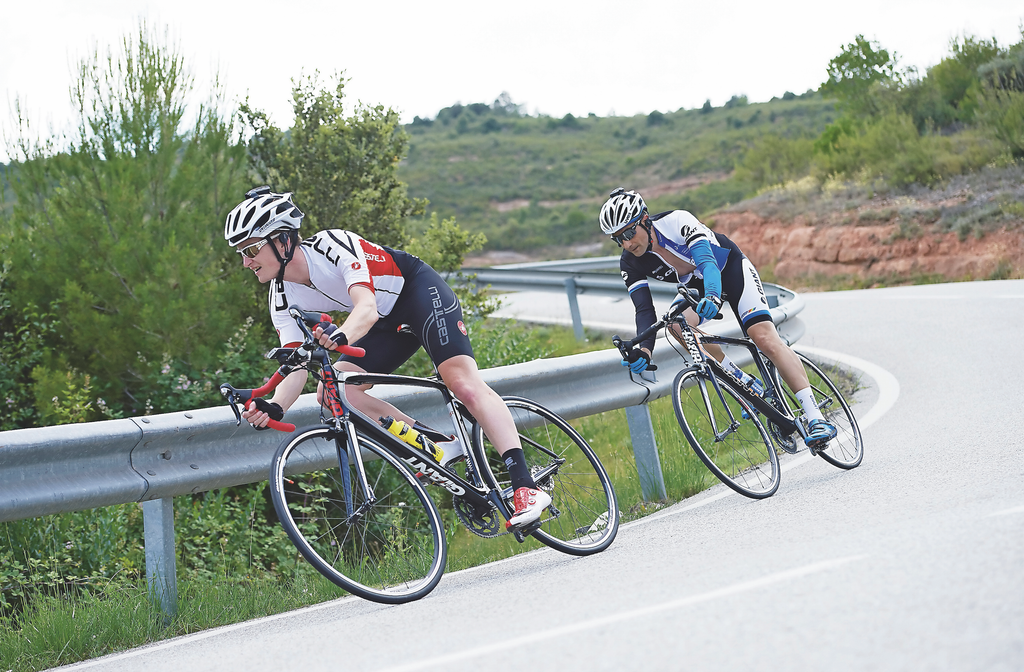
Foundations laid, it was time to head into the mountains. Saiz took me to a 2km stretch of road that, while technically challenging with plenty of bends and switchbacks, never got below seven per cent gradients. Largely free of traffic, it was ideally suited to his safety-first method.
He uses earpieces to communicate with his riders on the mountain and offer feedback in real time, using it to guide/instruct when he’s on the front and to correct when he’s following.
When following him, through visual and verbal instructions, he encouraged me to mimic his movements.
In terms of body position, he keeps his inside leg tucked in on bends, in contrast to what many encourage, and in successive left/right turns will only adjust his legs to the 12/6 o’clock position on the other side if he has the time to do so; 10/4 is fine, he says – not making rapid, destabilising movements is the priority.
Lines and speed into bends are crucial and can be best explained in the diagrams below. He keeps his body still through the bend and only begins to pedal upon exiting.
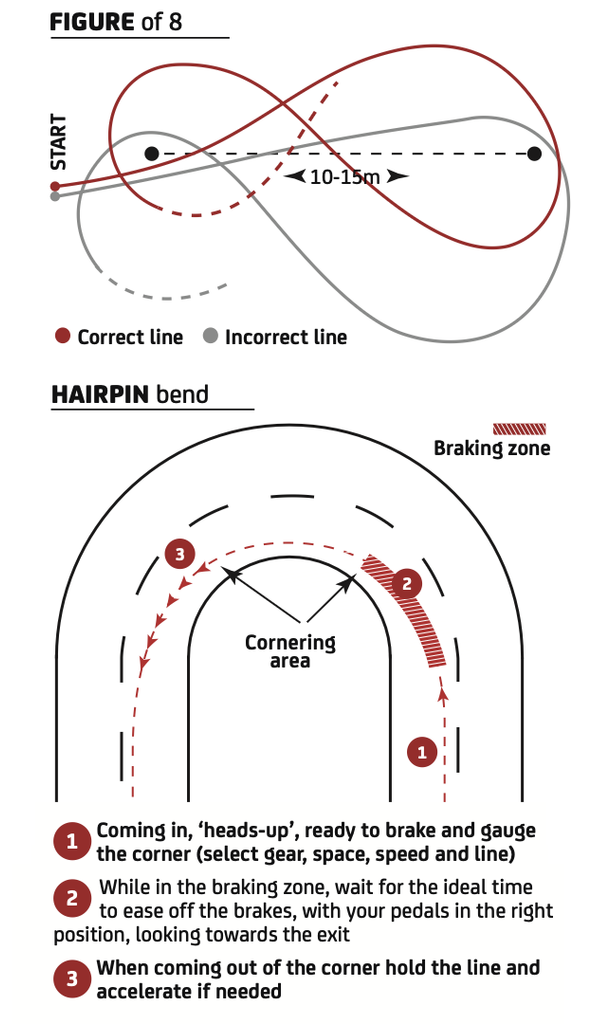
His head is always up, with eyes focused down the road, not underneath his nose, and he glances further down the mountain if more of the road comes into view. If he’s anticipated far enough down the road and is confident there are no cars, he will take more of a racing line through the corner.
The way ahead
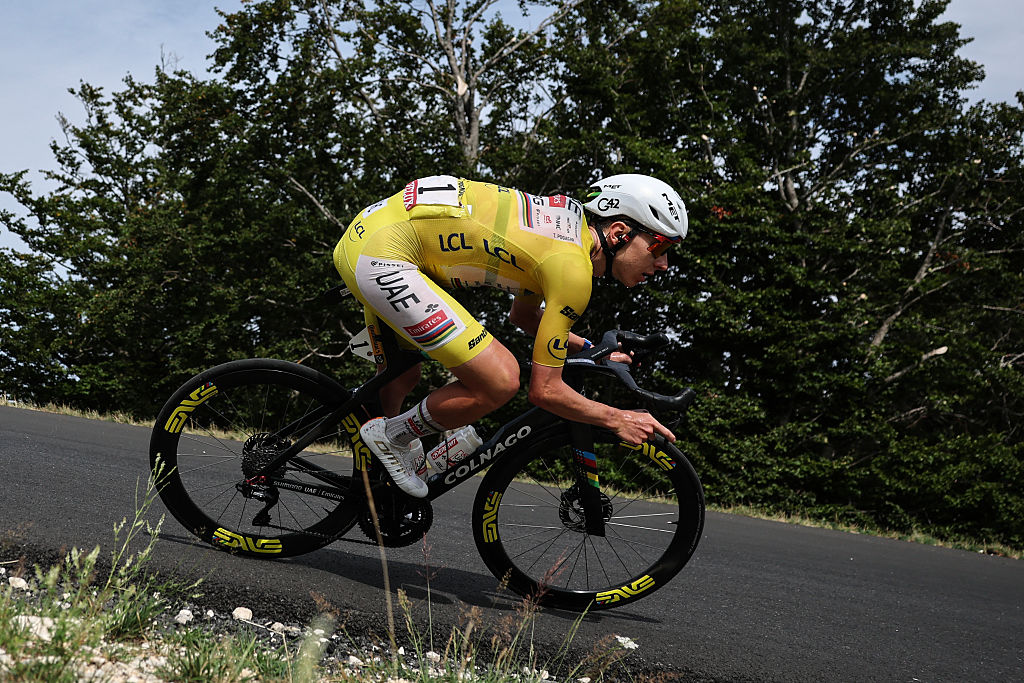
Any advance information is used to ease his path down the descent. It’s all a matter of constant evaluation of his surroundings, well ahead of time.
On the road, noticing obstacles such as potholes, drop-offs and gravel well before he reaches them, and making the necessary correction to his line, makes for a less twitchy, nervous descent.
Following a strong rider downhill is a good way to learn the lines to take into corners, says Saiz. He says even pro riders struggle with this and talks of climbers who would begin stressing about the descent before the summit.
Unable to read the road, they fret about being dropped and left in no man’s land without a wheel to follow.
Their technique might be sound, but without a reference point they’re utterly lost. In his sessions, he encourages them not to blindly follow but to absorb and learn from the skilled rider’s movements.
He recalls riding the Majorca 312 gran fondo and continually yo-yoing with a rider, who would blitz him on the climbs and flats but would always come back to him on the descents.
“I told him, ‘Just follow my wheel, try to stay with me’. I watched so many people having a hard time on the descents and if you gave them the option of a shuttle down the hill, they’d take it. It should be a far more enjoyable experience than ‘phew, I made it’.”
This again comes back to the idea of treating descending like any skill, one that you need to devote time to. Don’t just blast up a hill and switch off at the summit, he advises.
Pay the same attention to the downhill. Saiz frequently reminded me to focus in the moment and to self-evaluate each corner.
Did I miss the apex? Did I enter the bend with too much speed? Even if I got it right, we’d climb back up and descend again, and try to get it right again. It’s a matter of hammering home the message in the drill.
“I’ve found people reach a certain descending skill level and just settle, which jars with every other aspect of their riding,” says Saiz. “They’ll never stop gathering kit to make themselves faster cyclists on the climbs.
"A new helmet that keeps your head ultra-ventilated and lowers your body temperature for a higher VO2 max? Sure, they’ll take one of those but they’ll neglect the skills of riding the bike.”
Crash test dummies
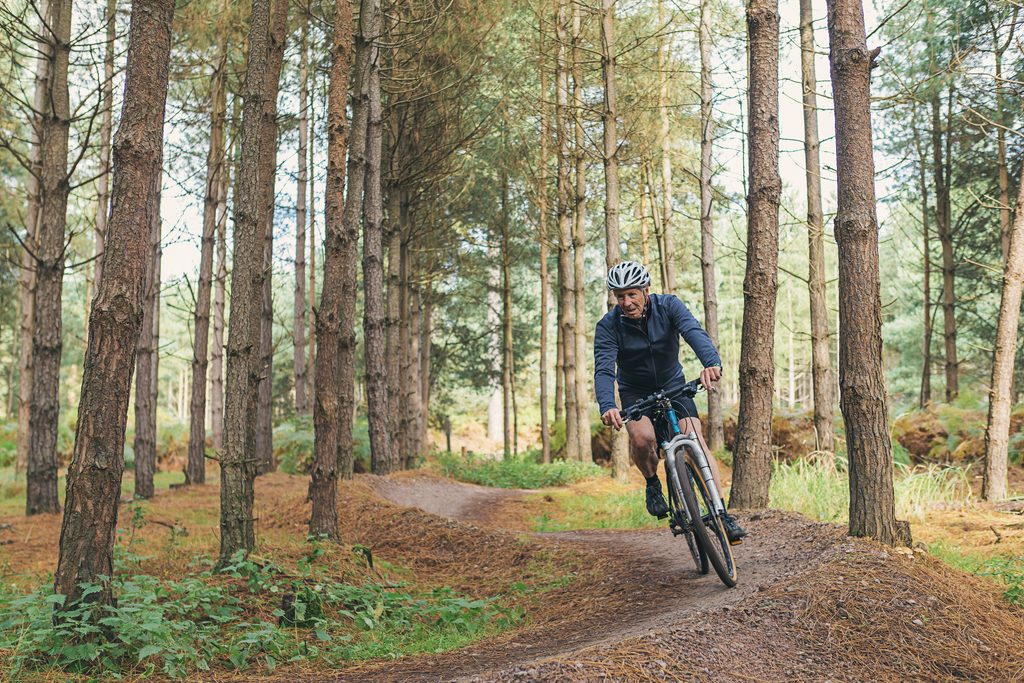
Unsurprisingly for a man who’s spent his life riding in the dirt, Saiz suggests that all roadies who descend hesitantly should give mountain biking a go.
“Look at the pro peloton,” he says. “Which riders are crashing consistently? Not the former mountain bikers. Who is crashing on their own on a descent? Not them.
“Try the same parking lot drills, but off-road,” he suggests. “It’ll improve your reaction times and you’ll learn so much about braking and traction.
It’s fun and you can take it all back to the road. The bike slides at lower speeds on constantly changing surfaces, so when you come back to a predictable surface like tarmac you feel far more comfortable with the increased grip that you have.”
I have yet to make that jump into the off-road world, but I am starting to make progress with my descending.
Saiz's approach is to offer a fresh, simplified approach to a skill that can sometimes seem overly complex and daunting, and with his emphasis on awareness, it was a day that opened my eyes to descending.
Since I got home, I’ve tried to take that into my rides. Now, every descent is an opportunity to improve rather than endure. I may, ultimately, still be the cautious guy who pitched up at that Carrefour car park, but at least I’m beginning to embrace it.
Oscar Saiz's tips for better descending
- In the wet, take your tyre pressures down a little. It makes them more adaptable to the surface. It’s what the pros do when they stop for pee breaks when it’s raining. Wet roads are a less stable surface, so you should also make fewer sudden movements.
- Putting pressure on the outside pedal in a corner, in the six o’clock position, will help with balance. Keep your legs fixed in the bend.
- If a corner requires you to reduce your speed, brake before the corner, never in it. Always use the front brake first and always favour it – if you need the rear brake, don’t use more than 30 per cent in relation to the front.
- Don’t think there’s a magic key to descending. If I played golf, I wouldn’t expect to be a scratch handicap by playing one round a month. Descending is a tough skill that you can only improve step-by-step.
- Try to maintain a gap of 7-15 metres to the rider in front, depending on speed and gradient. The higher both figures are, the bigger the gap should be.
- Don’t get to a mountain summit and think of a descent as a whole, that will make it seem unmanageable. Read the road in the moment and think, ‘What’s coming next?’.