If you’ve ever fancied riding over rocks on a 20in-wheeled bike or using a mallet to hit a ball while riding one-handed, perhaps you could find your calling in one of these unusual disciplines.
There are plenty of weird and wonderful cycling events across the world that are unofficial and not sanctioned by cycling’s international governing body – the Union Cycliste Internationale (UCI). However, only the UCI has the power to award riders the coveted rainbow stripes of an official world champion.
The UCI was formed in 1893 and has seen many cycling-related sports develop during its tenure. Here are some of the more niche events sanctioned by the UCI.
Indoor cycle speedway
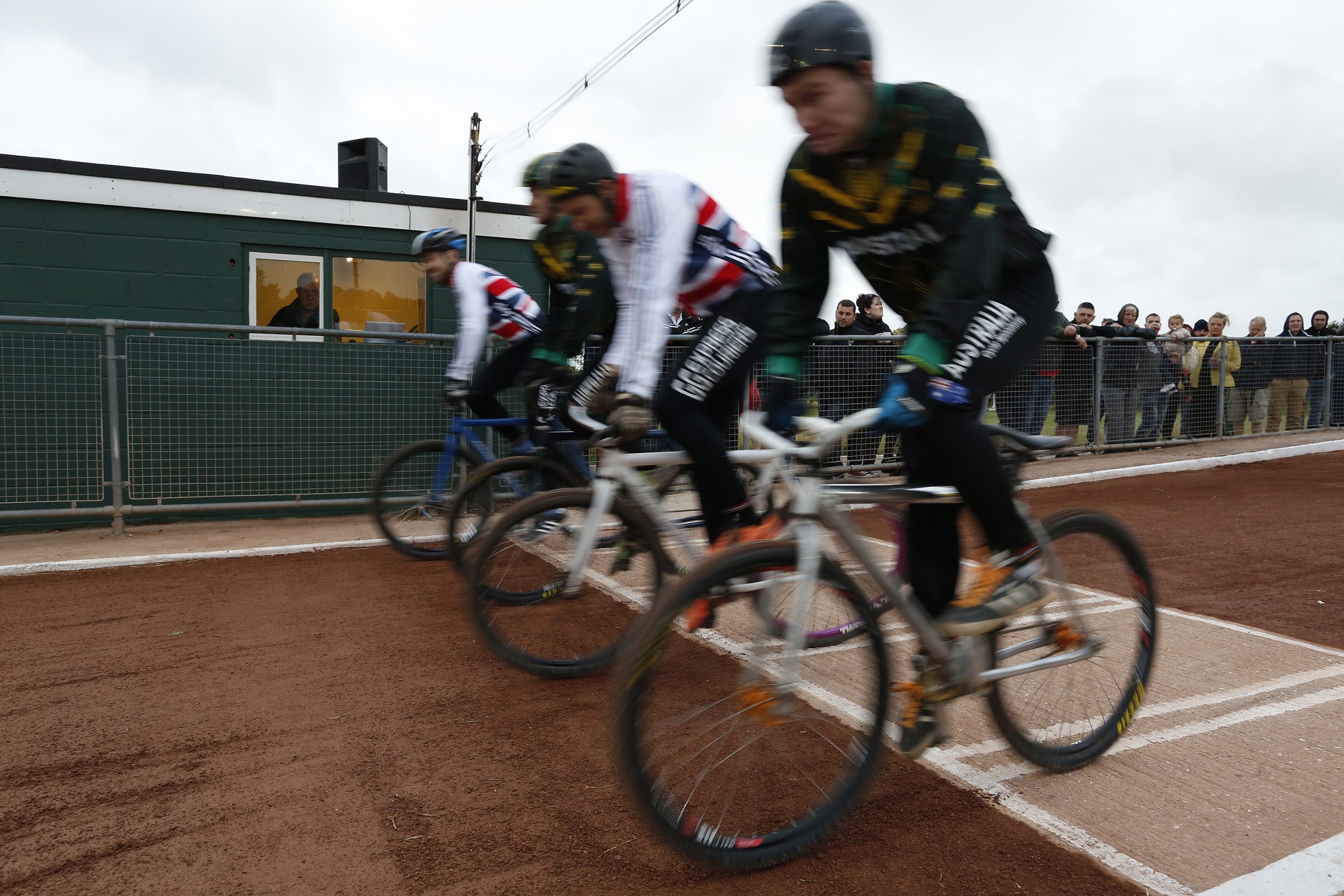
Cycle speedway races take place on a gravel oval track. As with motorcycle speedway, four riders race at a time and there is a taped gate that rises at the start of the race. Riders sprint off the line and race to the chequered flag four laps later.
With the tracks less than 100 metres long, heats don’t last much longer than 30 seconds.
The bikes used for cycle speedway are simple, with no suspension or brakes. They are singlespeed with a freewheel, so speed is scrubbed off during cornering. The bikes are small and manoeuvrable with 26in wheels and high, back-swept handlebars.
Cycle speedway is organised by the International Cycle Speedway Federation (ICSF) not the UCI, so reigning world champions Lewis Brinkhoff and Emily Burgess of Great Britain do not currently have a rainbow jersey.
However, for 2027 the UCI has introduced its first official indoor cycle speedway World Championship. It will form part of the UCI Super World Championships in France, starting on 24 August.
Bike polo
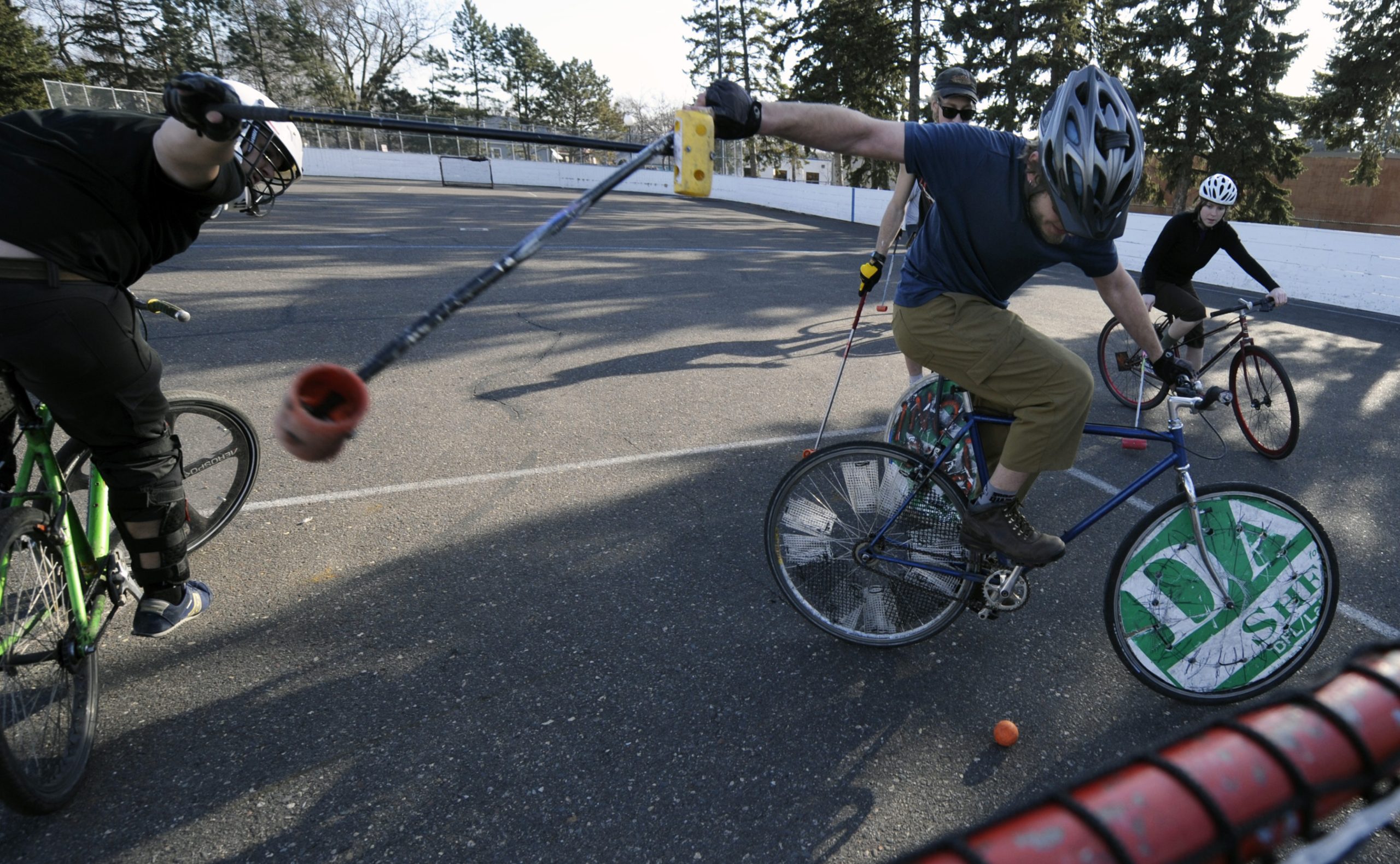
Bike polo involves two teams of two riders using mallets to hit a ball into a goal. The first official UCI Bike Polo World Championship will also take place next year as part of the UCI Super World Championships.
Bikes have a short gearing for quick acceleration across the pitch, while riders must combine prowess with the mallet with supreme balance on the bike, all while riding one-handed.
Bikes are singlespeed with only a front brake, protected from damage by a disc guard.
It’s a fast and aggressive sport with mallets flying and riders sprinting head-on towards each other.
Artistic cycling
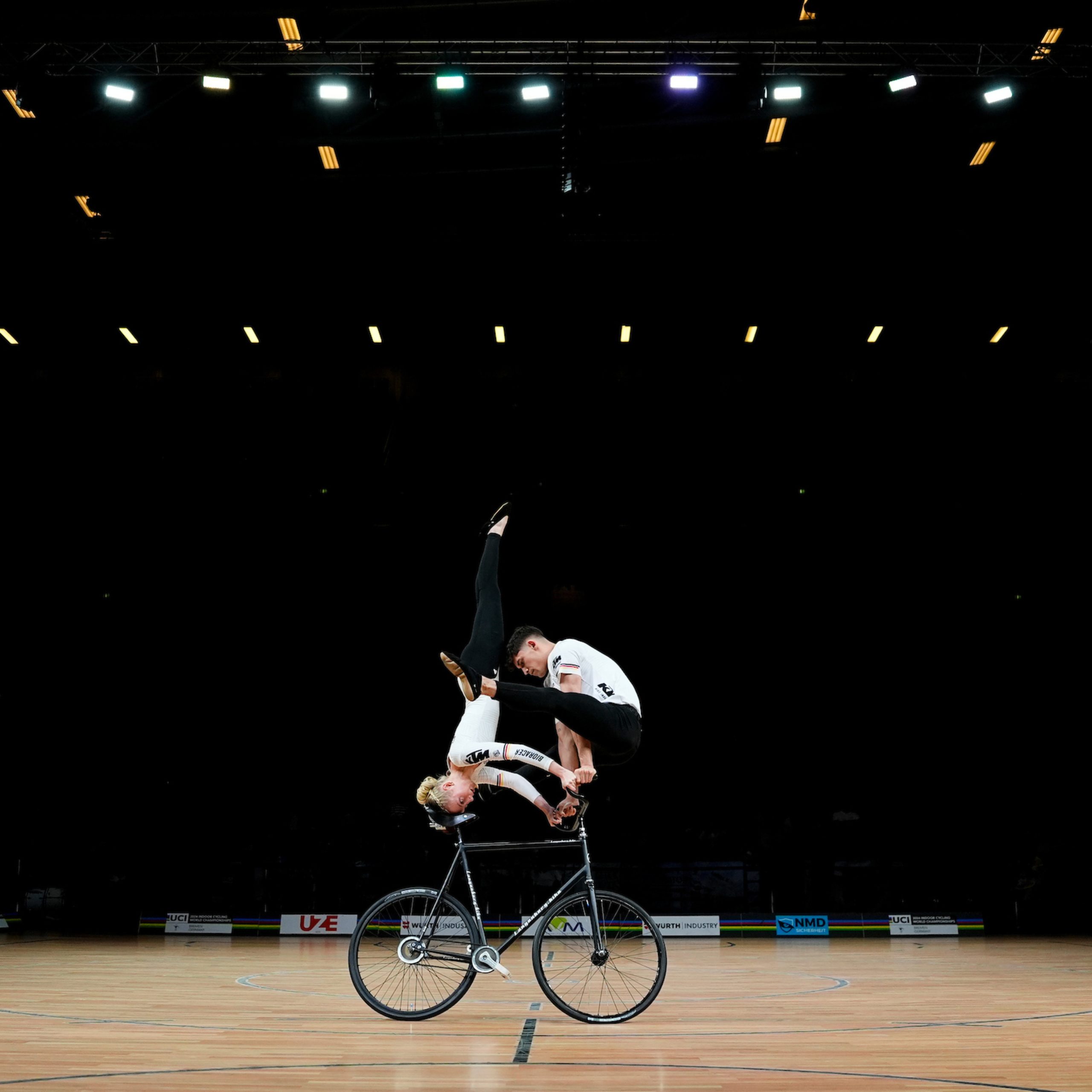
Popular in Europe and Asia, artistic cycling features fixed-gear bikes with no brakes and riders performing five-minute choreographed routines for the judges.
The bikes have a handlebar that looks like an inverted drop bar. Forks have zero offset and stems have zero reach, so the bikes handle consistently regardless of which way the handlebar is facing. Gearing is 1:1, so speeds are low but torque is high for lofting the front wheel.
Categories on offer to become a world champion are the Women’s Single, Men’s Single, Open Pairs, Women’s Pairs and Open Act 4 (team of four).
The discipline forms part of the UCI Indoor Cycling World Championships, along with cycle-ball.
Cycle-ball
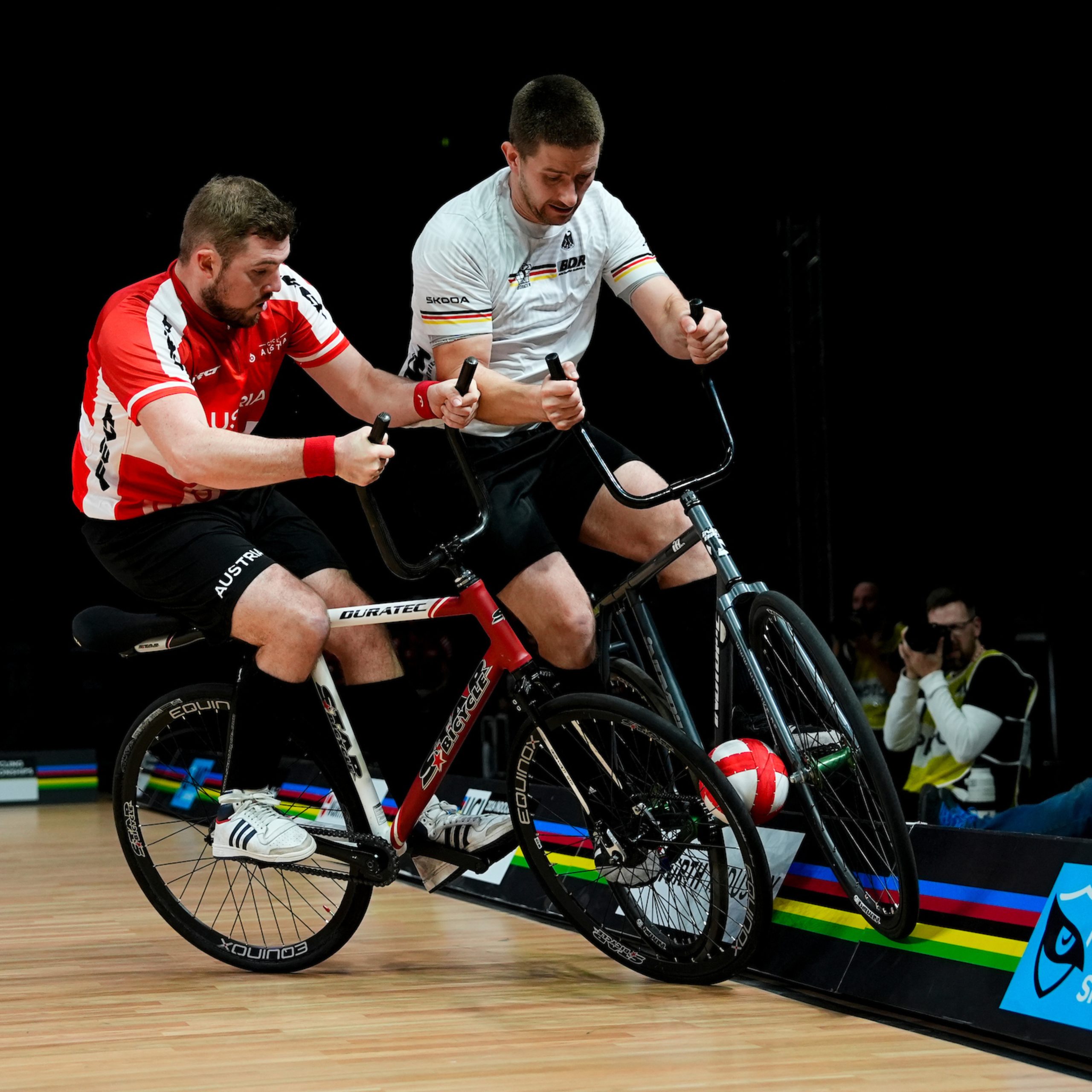
Cycle-ball uses bikes with fixed-wheels, high forward-swept handlebars and low gearing. They have no brakes and a short wheelbase for manoeuvrability.
Riders spend most of the time standing up, so the seat is over the rear axle, enabling riders to sit on it to lever the front of the bike in the air. The forks have very low offset for maximum control at low-speed.
Cycle-ball is played by two teams of two players in a 14-minute match split into two halves. Matches take place on a 14x11m rectangular field and the square goals measure 2x2m.
If you fancy watching the world championships of of indoor cycling (comprising both artistic cycling and cycle-ball), the 2026 event is taking place in the UK at Derby Arena from 16-18 October.
Snow biking
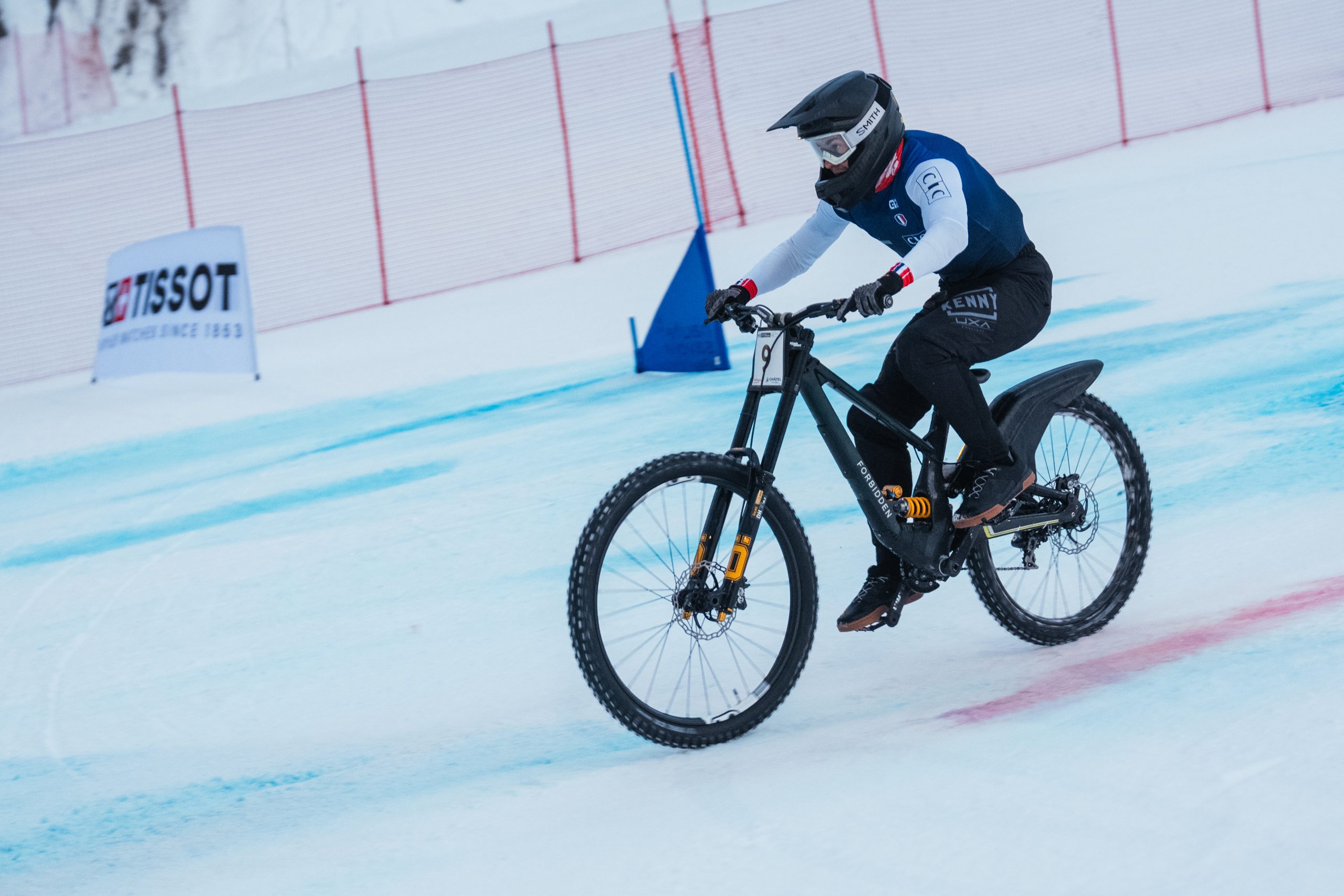
The UCI Snow Bike World Championships consist of two events – the Super-G and dual slalom.
Super-G is a timed format completed by one rider at a time. It’s based on downhill skiing and uses a similar wide, icy course down the ski piste.
Bikes are usually full downhill mountain bikes, but with the addition of aggressively studded tyres and a rear mudguard to keep the rider safe following the former modification.
Dual slalom is two-up racing, where each rider has to stick within their designated lane. Riders pop out of the start at the same time and negotiate the course as quickly as they can, assisted by gravity. The slalom track is narrower and shorter than the Super-G course.
Riders must then swap lanes and complete another race before a winner is determined, in order to neutralise any advantage or disadvantage from the difference between the two lanes. It’s a knock-out format where the winner progresses through to the next round.
The 2026 World Championships saw Swiss Lisa Baumann claim the double in the women's events, winning gold in both the Super-G and dual slalom. France dominated the men's events, as Pierre Thévenard defended his 2025 Super-G title, while Vincent Tupin won gold in the dual slalom.
Bike trials
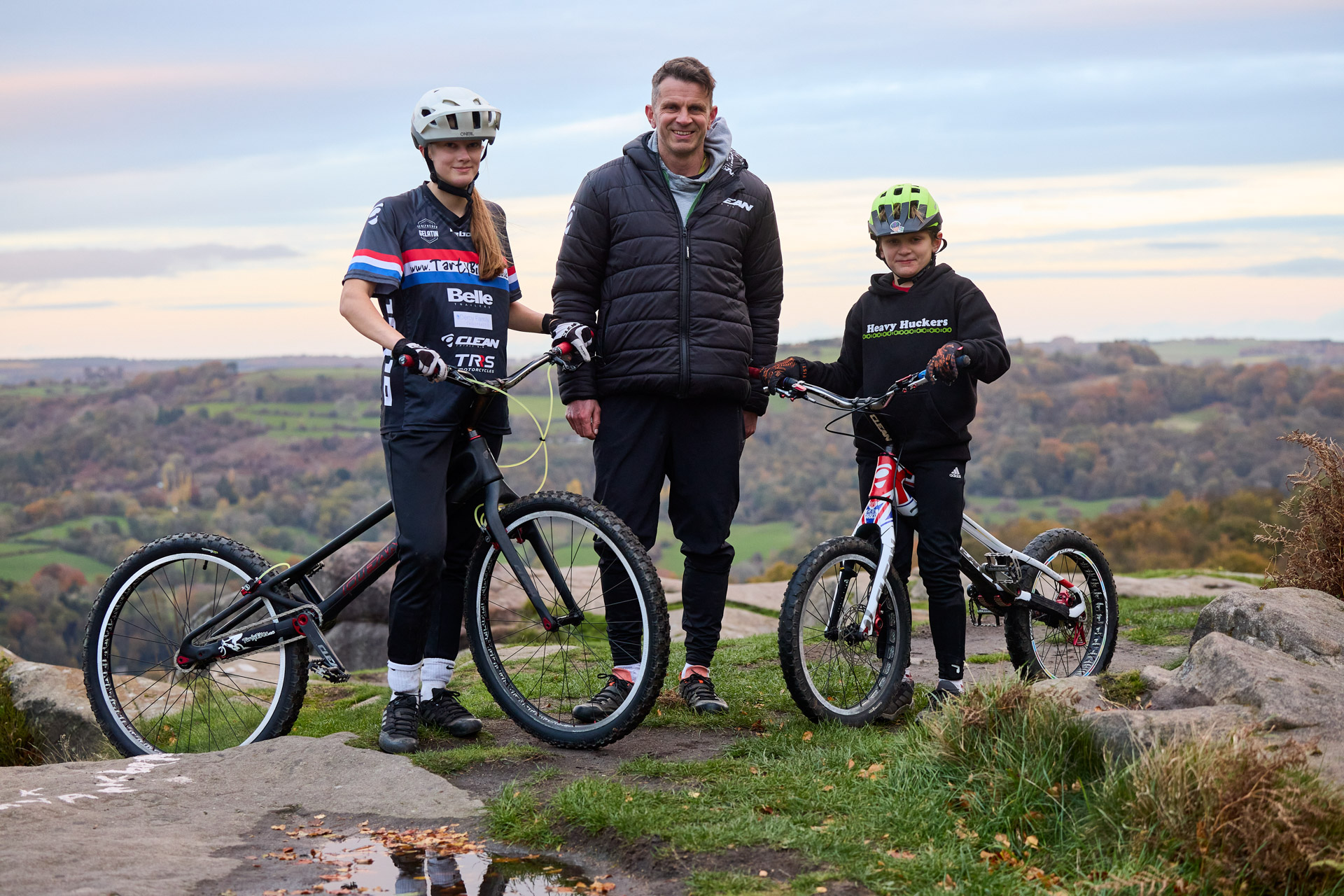
Bike trials involves competitors negotiating 10 marked sections, each in under two minutes. The difficulty is that each section is strewn with various obstacles to be tackled. Riders receive a point each time they put a foot down (called a ‘dab’), until they reach a maximum of five points. Crashing or leaving the course earns you five points, as does running out of time, or putting both your feet down simultaneously.
Riders must complete 10 marked sections twice during the competition, and whoever finishes the two laps with the least points is the winner.
Trials bikes have traditionally been split into two categories, called ‘stock’ and ‘mod’ (short for modified). The stock category is for 26in-wheeled bikes and the mod category 20in. These bikes are highly specialised, with one gear, a high bottom bracket and a high handlebar run on a long stem. They have no suspension and tough tyres, which are run at low pressures for maximum traction.
The reigning men's world champion is Brit Charlie Rolls, and the women’s champion is Spain's Alba Riera.
The 2026 World Championships will take place in Riyadh, Saudi Arabia from 6 November.