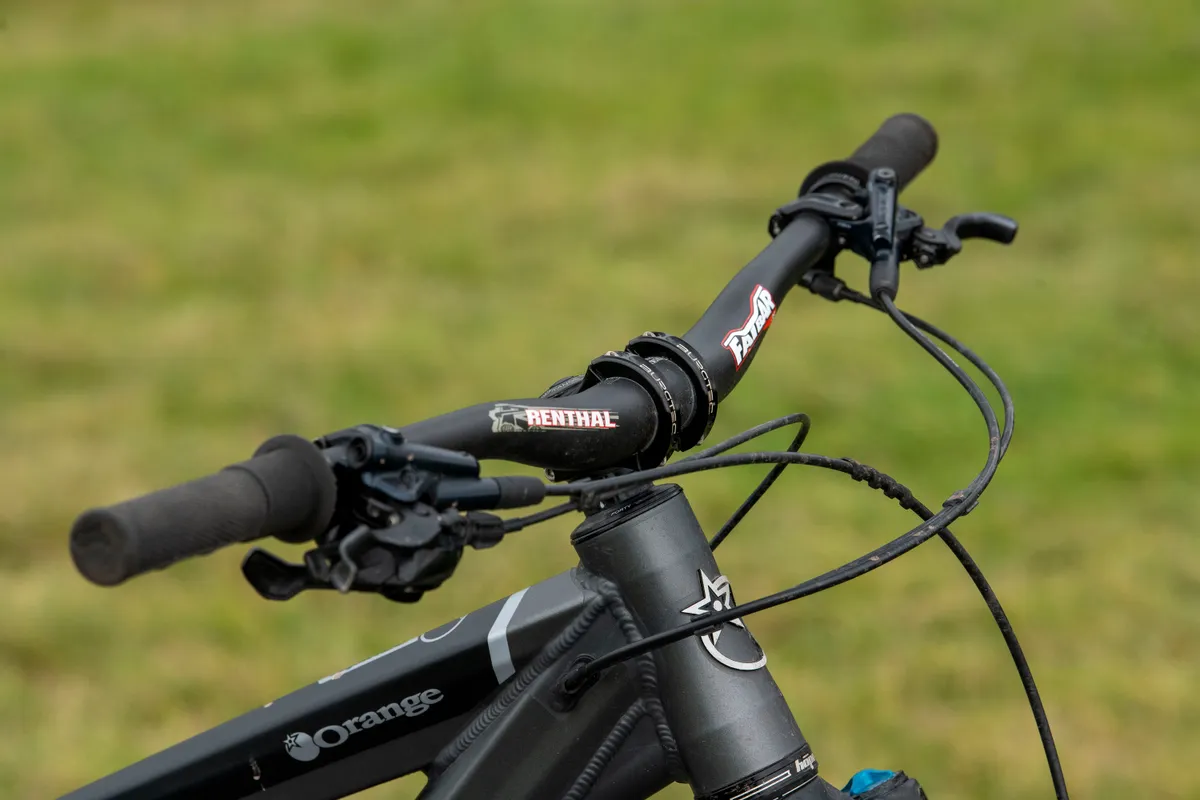
Installing a set of the best mountain bike grips is an easy way to make a big difference to your riding by improving comfort and control at one of the key contact points on your bike.
Mountain bike grip choice is as personal as it gets and there are no hard and fast rules here about which ones to go for. However, shock and absorption, width and surface texture are three things to bear in mind when considering which mountain bike grips to get.
You might be happy with a relatively thin and firm grip if you're riding cross-country, but you'll likely want something with a bit more cushioning and a grippier surface if you're heading downhill.
Length of grip is another thing to consider. If you have large hands or run a wide handlebar, you might appreciate longer grips, but if space on your bar is limited you might want to go for a shorter grip.
Most of the options here are lock-on grips that have clamps. These are good because they stay in place and don't move around, as other clamps can.
With this in mind, read on to find out about the best grips our expert testers have got their hands on.
We've also included our mountain bike grips buyer's guide at the bottom of the page, with suggestions on what to consider before buying a new pair of grips.
This best list was written by our staff writer, Nick Clark, who has brought together expertise from across the team while adding his personal experience in the saddle.
The reviews in this buyer's guide were written by Nick Clark and Robin Weaver.
Editor's note: this list was updated on 23 September 2026 with our award-winning grips. We have also removed grips no longer available for purchase.
Best mountain bike grips in 2026, as tested by BikeRadar
Our award-winning mountain bike grips
Gusset Matt Jones S2 Lock-On – Best overall
SQUIRREL_TEXT_14043970
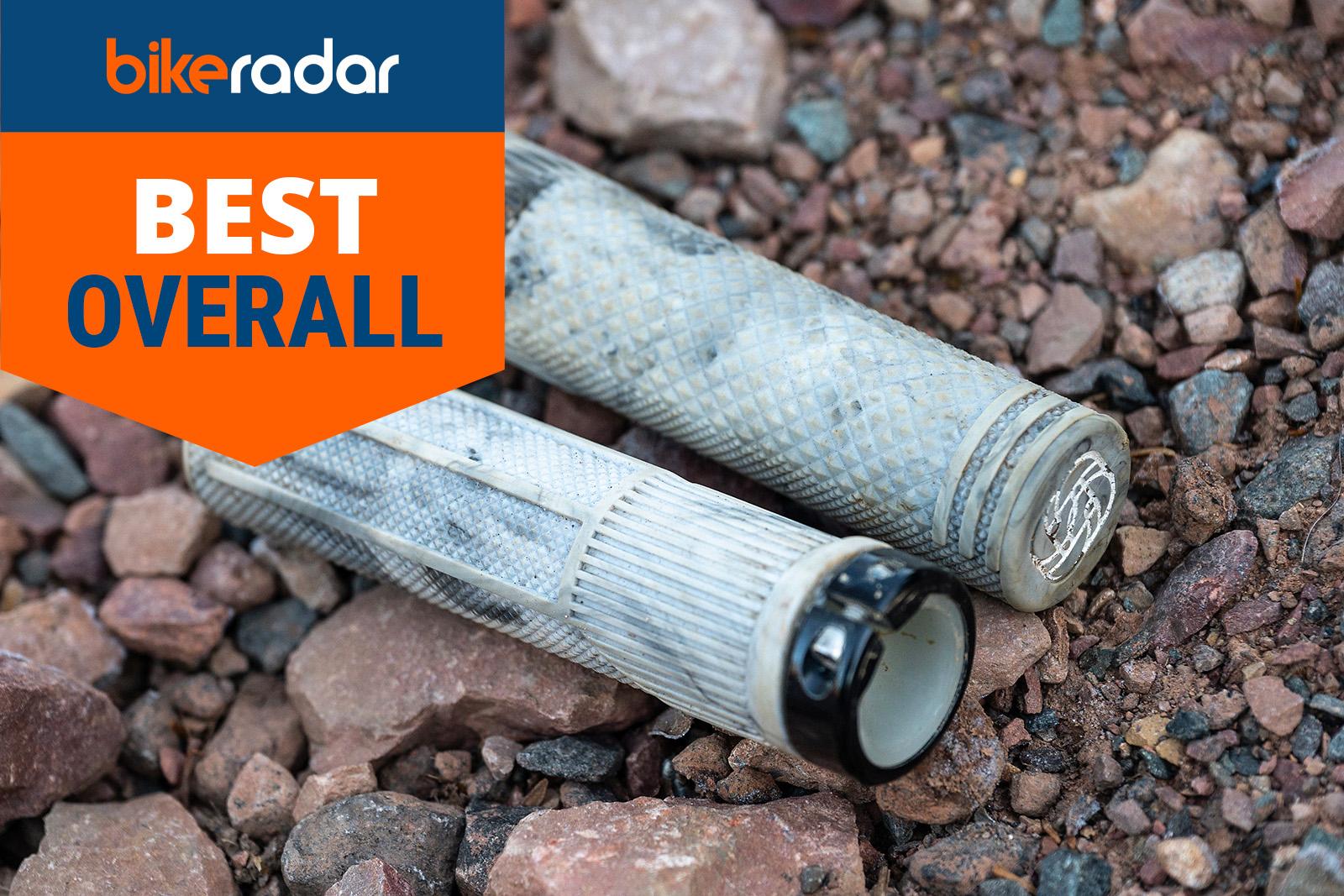
- £23 / $30 as tested by Nick Clark
- Pros: Bulk-free design; good cushioning; easy to install; plenty of grip
- Cons: Very little
The S2's eccentric off-centre core design provides plenty of performance, adding bulk-free cushioning to the top side of the grips.
A single clamp keeps the S2s from twisting on the bars, with a 3mm Allen key used to tighten it.
Gusset’s standard ‘soft’ 30A VEXK compound covers the entirety of the grip and helps give a tacky feel, while the chamfered clamp design keeps things comfy when changing gear.
Horizontal ribs on the inside of the grips stop your hands from rotating on heavy landings, while vertical radial ribs on the end give confidence that they won’t slide off laterally.
The diamond pattern in the palms grips sweaty hands and wet gloves with ease, while the ribbed underside gives plenty of purchase for digging fingers into.
- Read more: Gusset Matt Jones S2 Lock-On Grips review
SQUIRREL_14043970
DMR Deathgrip Race Edition – Best performance
SQUIRREL_TEXT_13120231
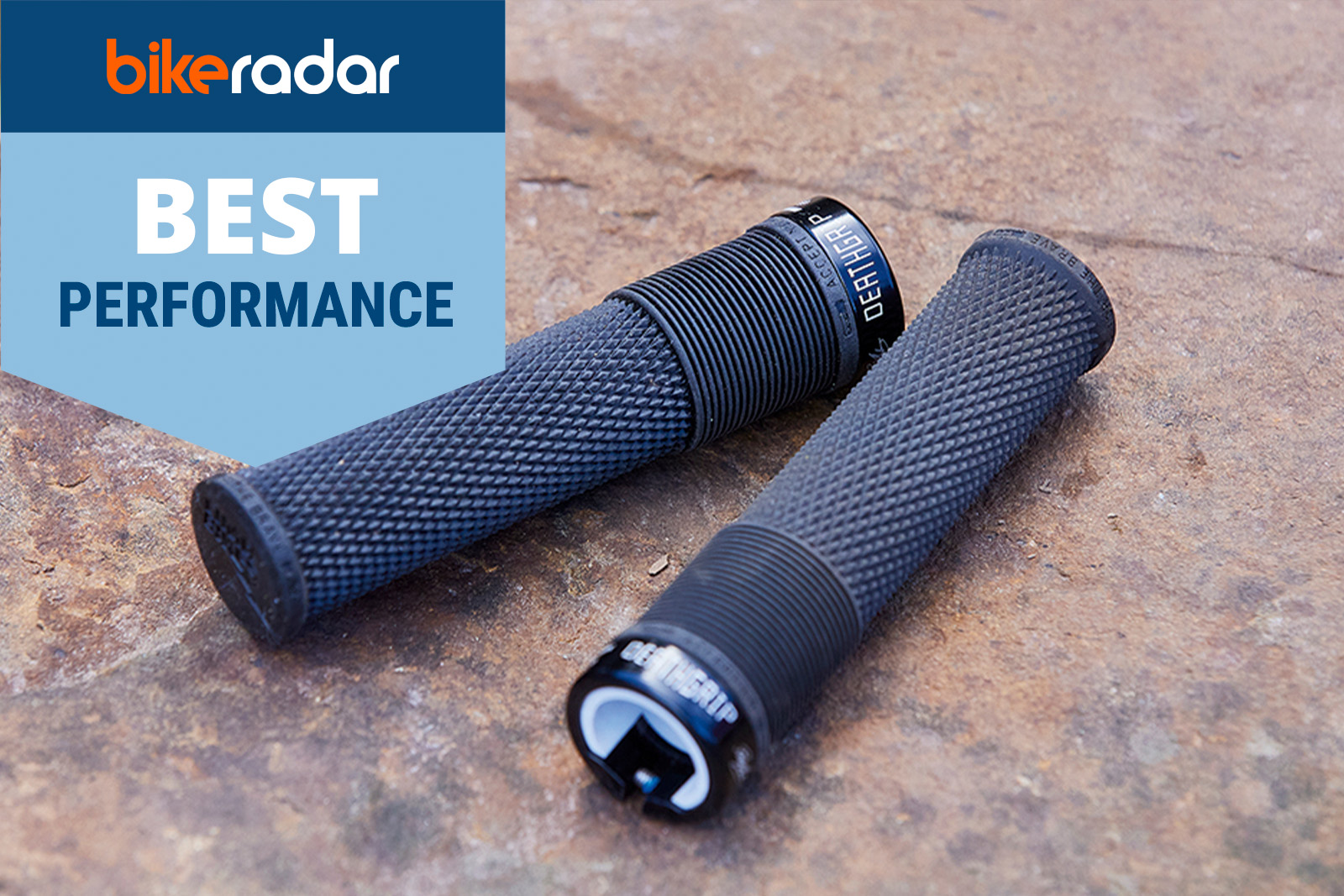
- £26 / $28.95 / €27.99 as tested by Robin Weaver
- Pros: Impressive grip; comfy profile; good knurling
- Cons: Compound can wear quickly
DMR's Deathgrip Race Edition grips offer huge amounts of traction thanks to their super-soft and 'race' compound construction, which has been developed in collaboration with Brendan Fairclough.
Alongside tacky rubber, the knurl pattern bites into hands and gloves well, providing unparalleled grip while still remaining plush for damping.
All this traction does come at a cost, with the grips relatively quick to wear out.
A 'mushroom' section near the thumb allows for shifters and dropper levers to be used while still feeling a secure connection to the bar through rough sections.
SQUIRREL_13120231
Race Face Chester – Best in class
SQUIRREL_TEXT_13079491
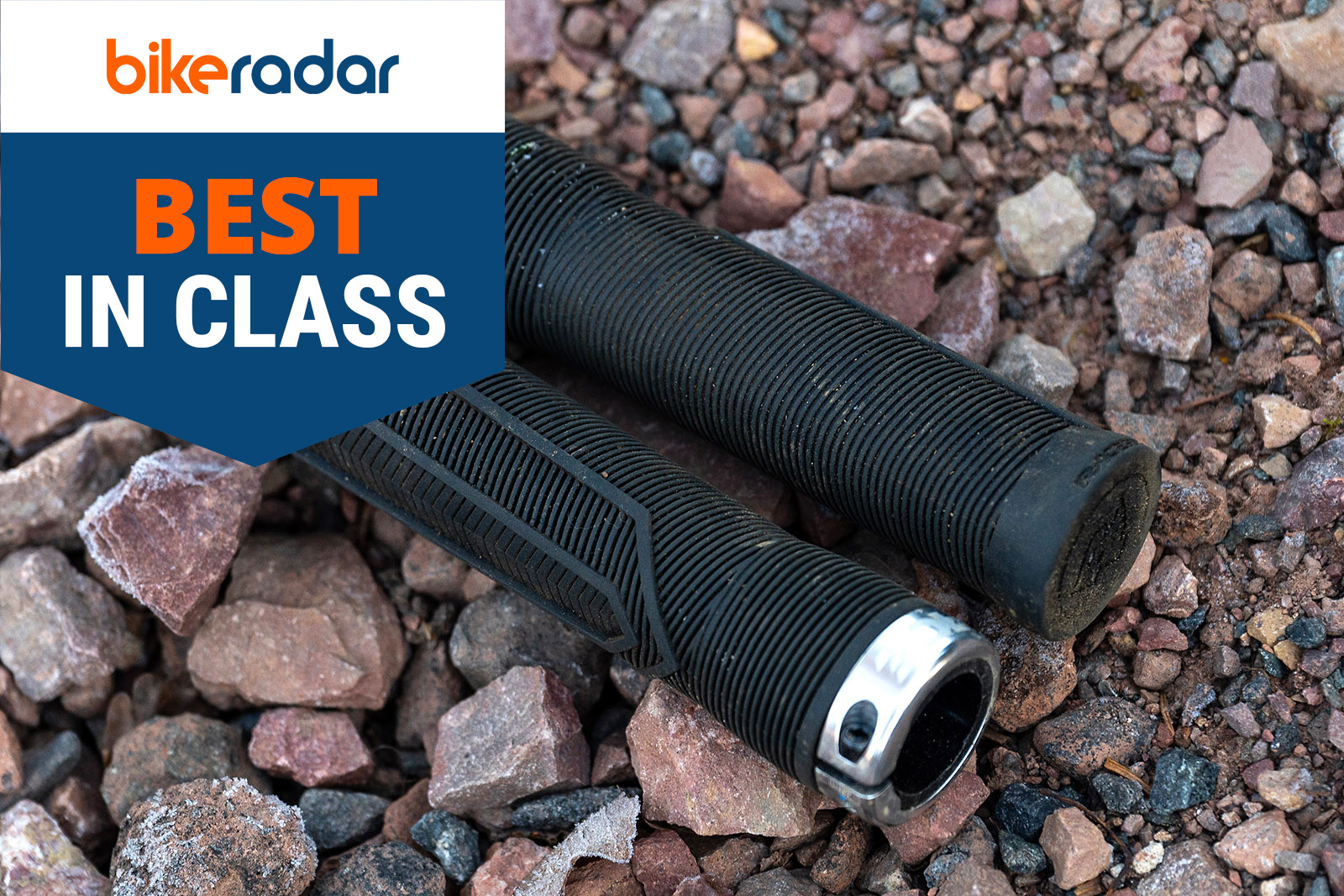
- £25 / $27 as tested by Nick Clark
- Pros: Good cushioning; high levels of grip; secure feeling
- Cons: Can be slippy with wet hands
Race Face's Chester grips use flanged mushroom tread that sits next to the clamp and helps keep you in contact with the bar when removing a digit for shifting or braking, while giving extra cushioning between the thumb and forefinger.
On the top of the grip, there's extra padding, which helps to isolate your palm from trail buzz, while the angled ribbing helps keep your hands from slipping sideways.
The tapered outside gives a good indication of the bar end without restricting your palms from creeping over it should you prefer to ride in that style.
The compound feels tacky even in cold temperatures, with the grips among the best on test during wet conditions.
The grips are easy to install, slipping over the bar with ease and remaining fixed in place thanks to the single clamp.
- Read more: Race Face Chester grips review
SQUIRREL_13079491
Best of the rest
Chromag Format
SQUIRREL_TEXT_13083447
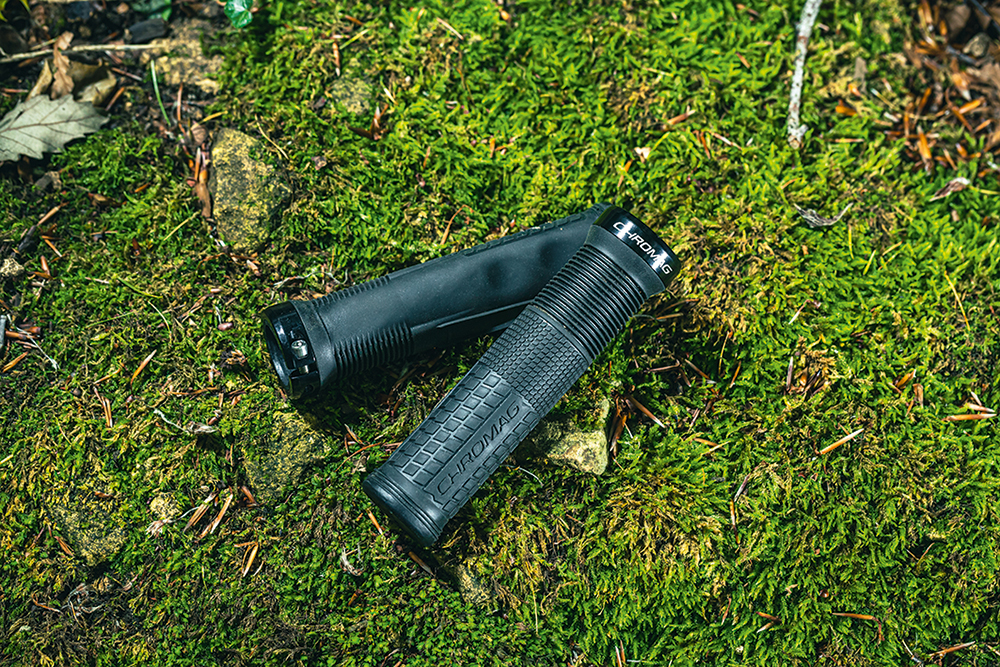
- £22 / $30 / €24 / AU$39 as tested by Robin Weaver
- Pros: Vibration damping; direct-feeling; slim feel
- Cons: Fingers don't naturally fit in indents
Considering how good these Chromag grips are at damping vibrations coming through the bar, the direct handling you get from these slim-feeling grips is impressive.
The finger ridges do a decent job of adding mechanical grip – even though they aren’t the biggest – and the ribbing for thumb comfort is softer than most. A subtle outboard flange adds support when resting your hands right at the edge of the grips.
We didn’t always find our fingertips sat in the indents.
SQUIRREL_13083447
DMR Deathgrip
SQUIRREL_TEXT_14043967
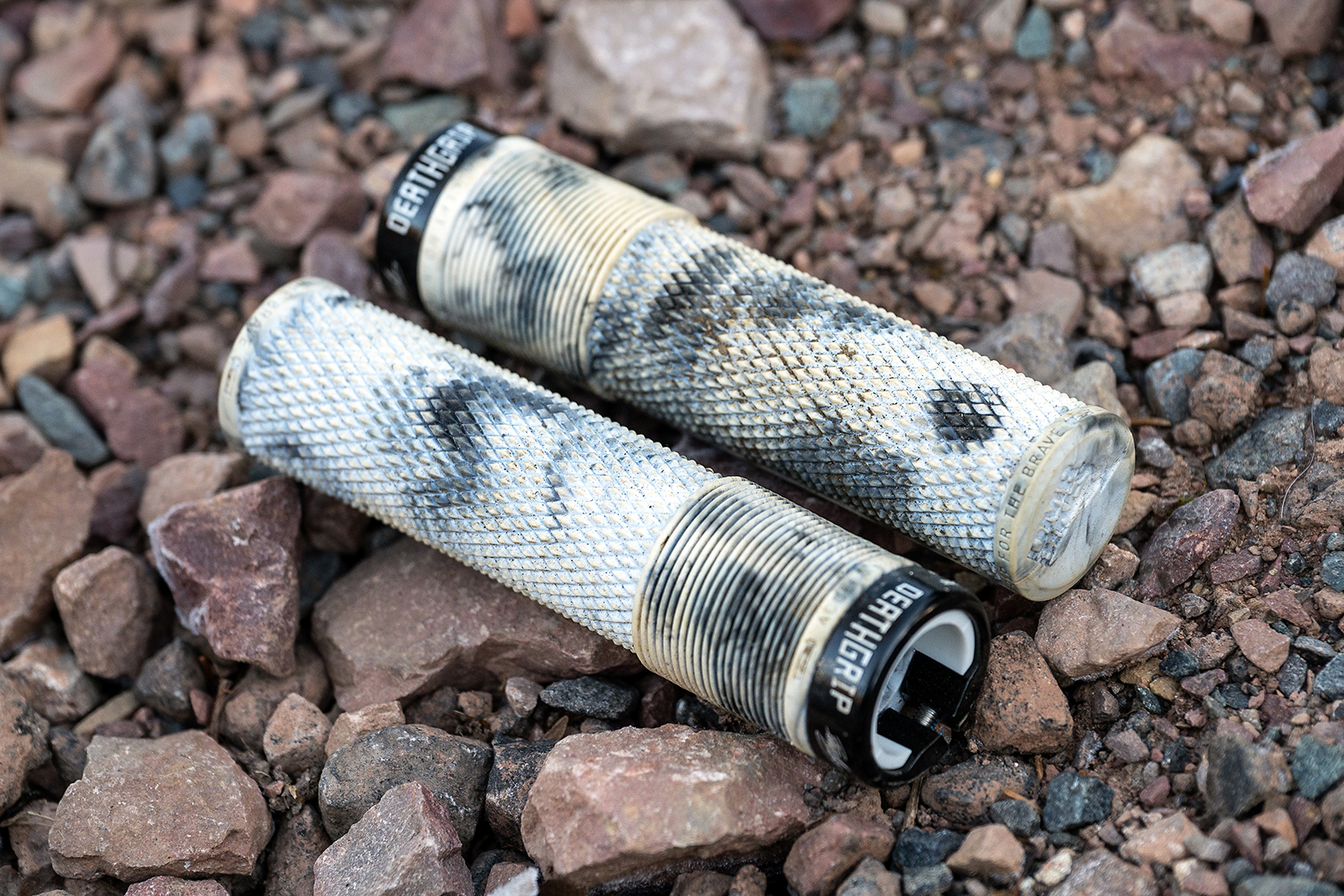
- £23 as tested by Nick Clark
- Pros: Great traction whatever the weather; good feel; multi-texture adds comfort and grip
- Cons: Tread can wear quickly
DMR’s Deathgrip offers serious levels of traction even in the worst conditions, with the multi-pattern design providing grip even when slathered in mud.
The thick mushroom tread around the inside of the grips helps you to feel connected with the bar when moving your digits off for breaking and shifting, while the small overlap of the clamp protects your inner knuckles from irritation.
Good adhesion is made thanks to the knurled diamond pattern on the outside of the grip, aiding in keeping rotational and lateral movement to a minimum.
The soft 20A compound provides plenty of tack, even on cold days and makes a good home for gloved and gloveless hands.
Plenty of well-placed cushioning is provided, though it doesn’t come at the sacrifice of feedback through the bar.
SQUIRREL_14043967
PNW Loam
SQUIRREL_TEXT_13082203
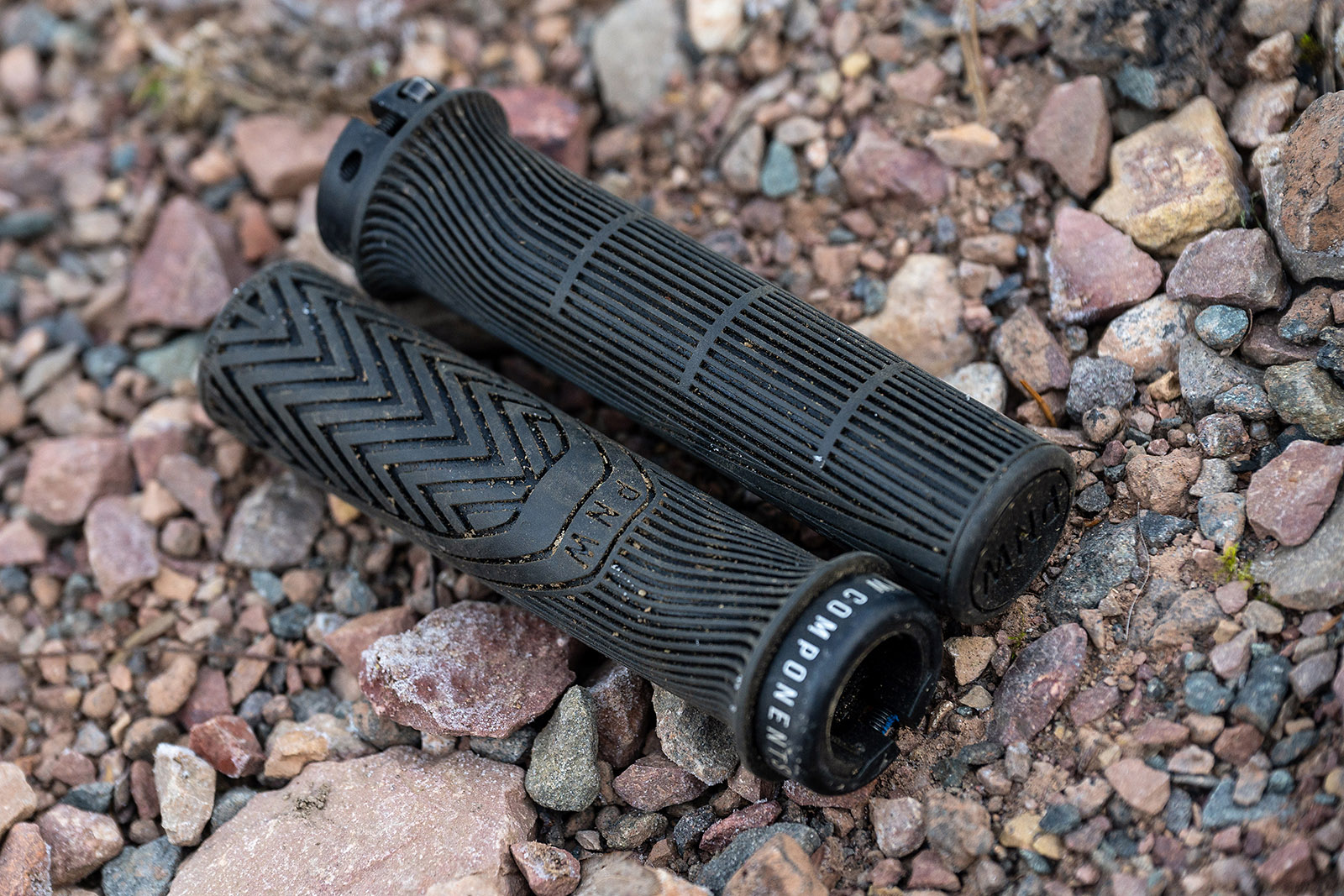
- £26 as tested by Nick Clark
- Pros: Solid, wide feel; dense yet shock-absorbing; plenty of grip
- Cons: Can be slippy in the worst weather
PNW’s Loamer grips use a varying tread pattern that employs a spiral mushroom pattern on the inside of the grip that counters hand rotation well and adds cushioning between your finger and thumb, relieving fatigue on long rides.
A dense, zig-zag pattern on the top of the grip provides support for your palm and helps reduce trail chatter vibrating up your arm.
Horizontal grooves on the underside of the grip provide plenty of purchase for your fingertips to dig into, making it comfortable to strangle the bars through rock gardens.
The soft compound feels great gloveless and extends around the bar end, doing a good job of hiding scratches when resting the bike on the ground.
On the outside of the grip, there's no taper, enabling you to overhang your hands without interference.
- Read more: PNW Loam review
SQUIRREL_13082203
ODI Elite Pro
SQUIRREL_TEXT_13120229
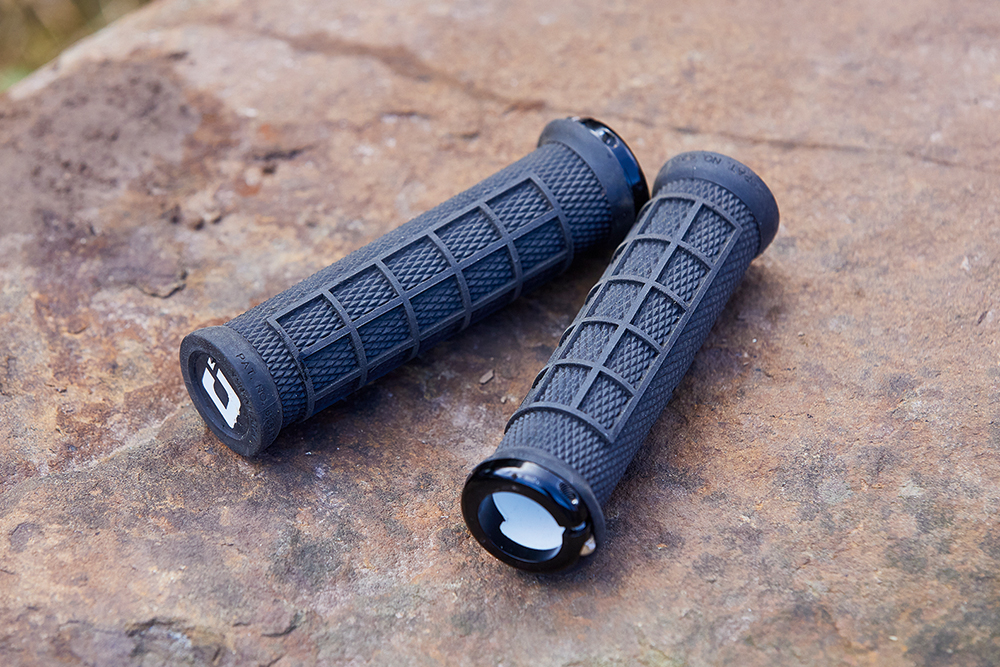
- £27.99 / $29.95 / €30 as tested by Robin Weaver
- Pros: High grip; locked-in feeling; good vibration damping
- Cons: Rubber could be softer
The Elite Pros have an ergonomic design that offers high comfort levels without being overly bulky.
The thick rubber numbs vibrations through the bar, while maintaining a direct feel for accurate line choice, although this disappears towards the ends of the grips, where it's needed most.
A large outboard flange is positioned at the end of the grip, which we found reassuring, especially if you hold your bar at the ends.
The half-waffle design adds plenty of traction, although we'd have liked a softer rubber for greater comfort.
SQUIRREL_13120229
ODI Vans V2.1 Lock-on grips
SQUIRREL_TEXT_13083638
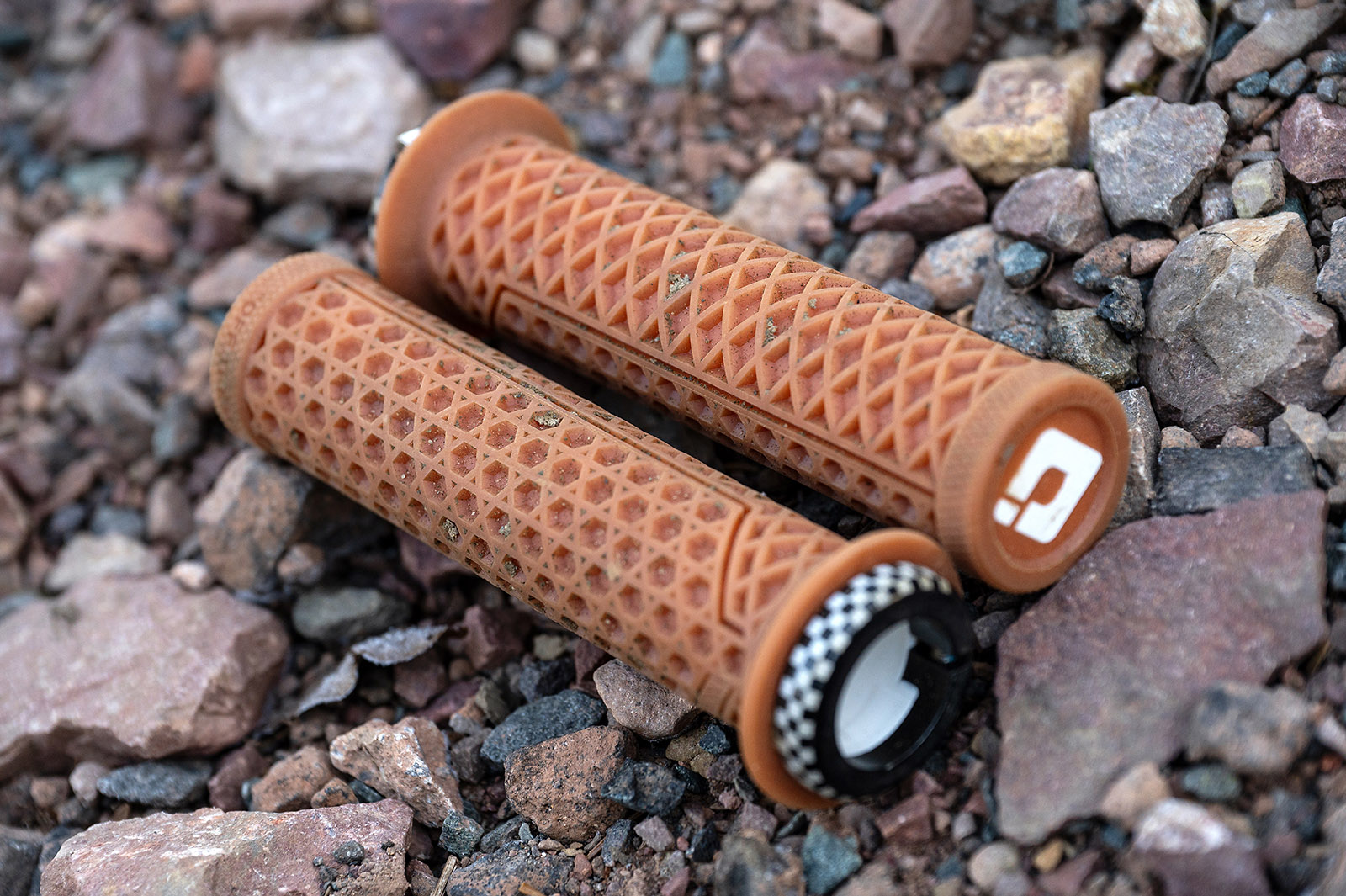
- £29.99 as tested by Nick Clark
- Pros: Great dry-weather performance; interesting looks; secure-feeling
- Cons: Not the best in the wet
ODI's sole-inspired grips provide ample traction in all but the muddiest of conditions, with the varying waffle pattern adding good tack and cushioning.
An unintrusive mini-flange on the inside of the grip adds comfort to your thumbs when shifting gear and acts as a good marker of where your hands are in relation to the bars.
On cold, wet days the tackiness of the rubber diminishes making the grip less adhesive but the diamond-shaped grip pattern makes up for this in most circumstances, although the addition of mud can make the grips quite slippy, as anyone with experience of Vans shoes can attest to.
With bare hands, the grips feel amazing, with the underside tread providing good support for nestling your fingers into. The square ends allow you to overhang your palms while maintaining a lateral grip.
SQUIRREL_13083638
Renthal Push-On Ultra Tacky
SQUIRREL_TEXT_13083017
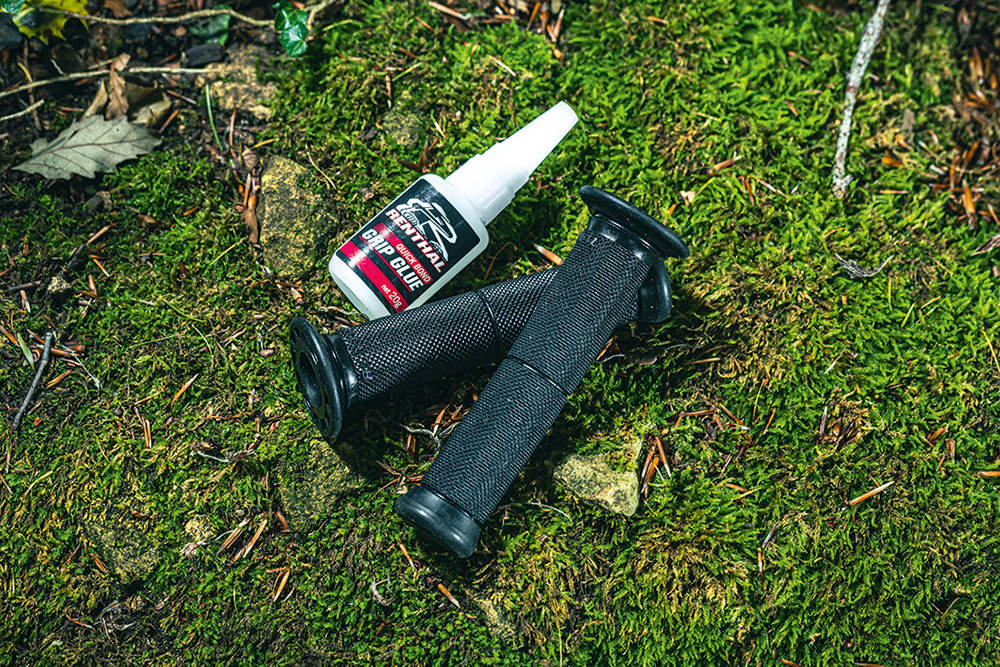
- £13 / $17 as tested by Robin Weaver
- Pros: Impressive grip; thin; bonded feeling
- Cons: Installation is a pain
Looking for the most direct and responsive-feeling grips possible? The Renthal Push-On Ultra Tacky grips are some of the best.
The lack of a plastic insert means they provide comparable damping to thicker options. Installing them with glue is quick and easy, too, and they stayed in place during testing. The rubber really is ultra tacky, so it helps with keeping your hands in place, as does the flange at the end.
There are no finger ridges or waffle pattern for added grip and if you can’t detach your brake levers, gear shifter or dropper post lever without also removing your grips, these aren’t your best bet.
SQUIRREL_13083017
Renthal Traction UltraTacky
SQUIRREL_TEXT_13079347
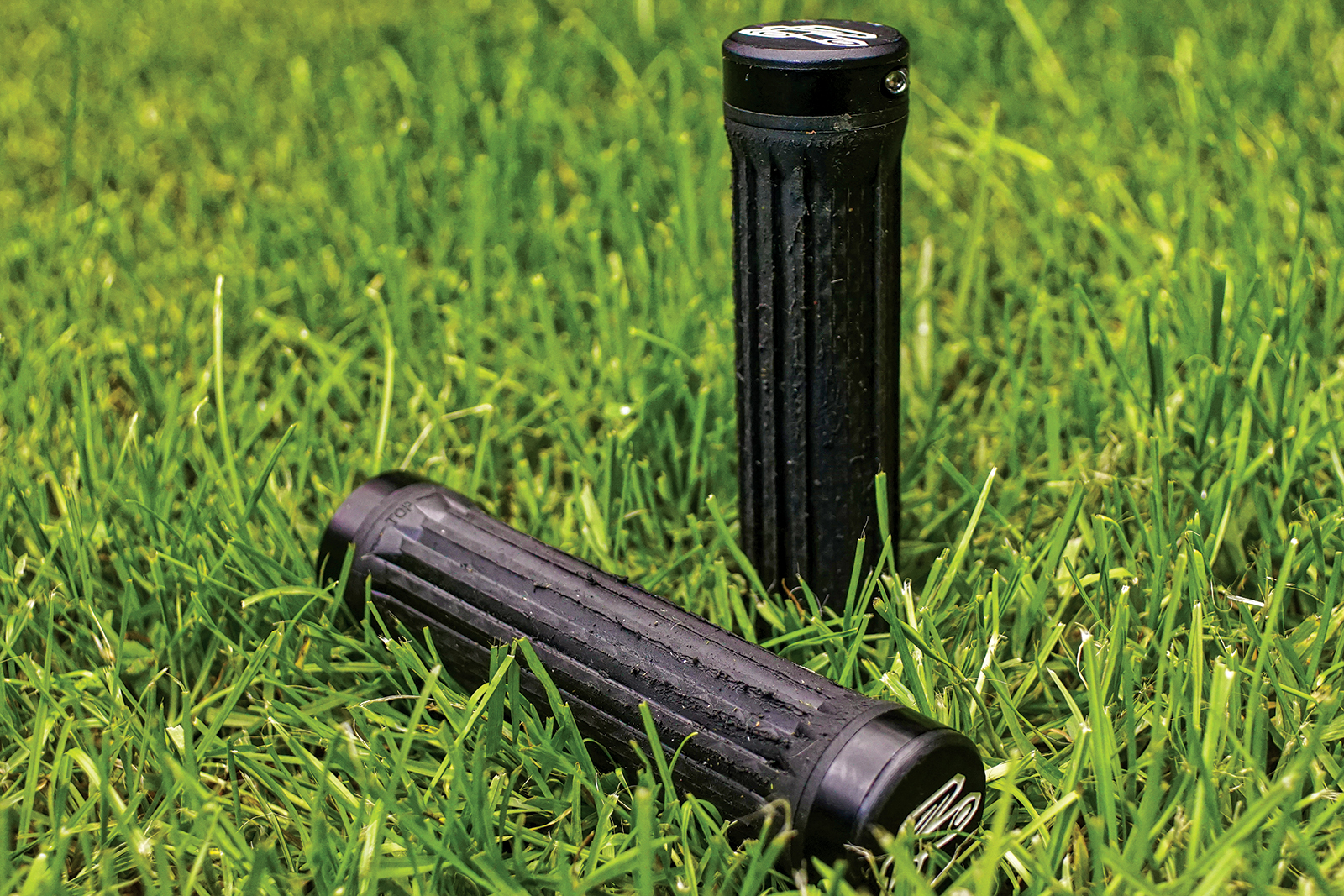
- £25 / $33 / AU$55 as tested by Robin Weaver
- Pros: Good grip; locked-in feeling; secure mount to bar
- Cons: Outer ring can be intrusive
Renthal’s UltraTacky lock-ons offer so much purchase that even a layer of dust or grime doesn’t affect grip. The ‘traction ridges’ stop your hands slipping on flat landings. Plus, the super-soft rubber compound helps damp trail chatter and vibration when things get rough.
The large twin lockrings won’t be to everyone’s taste, though. They sit taller than the rest of the grip and, if you’re used to hanging your hands off the end of the bar, you may find the outer ring a little intrusive under the meaty outer edge of your palm, especially on bigger impacts.
SQUIRREL_13079347
Truvativ Descendant grips
SQUIRREL_TEXT_13096657
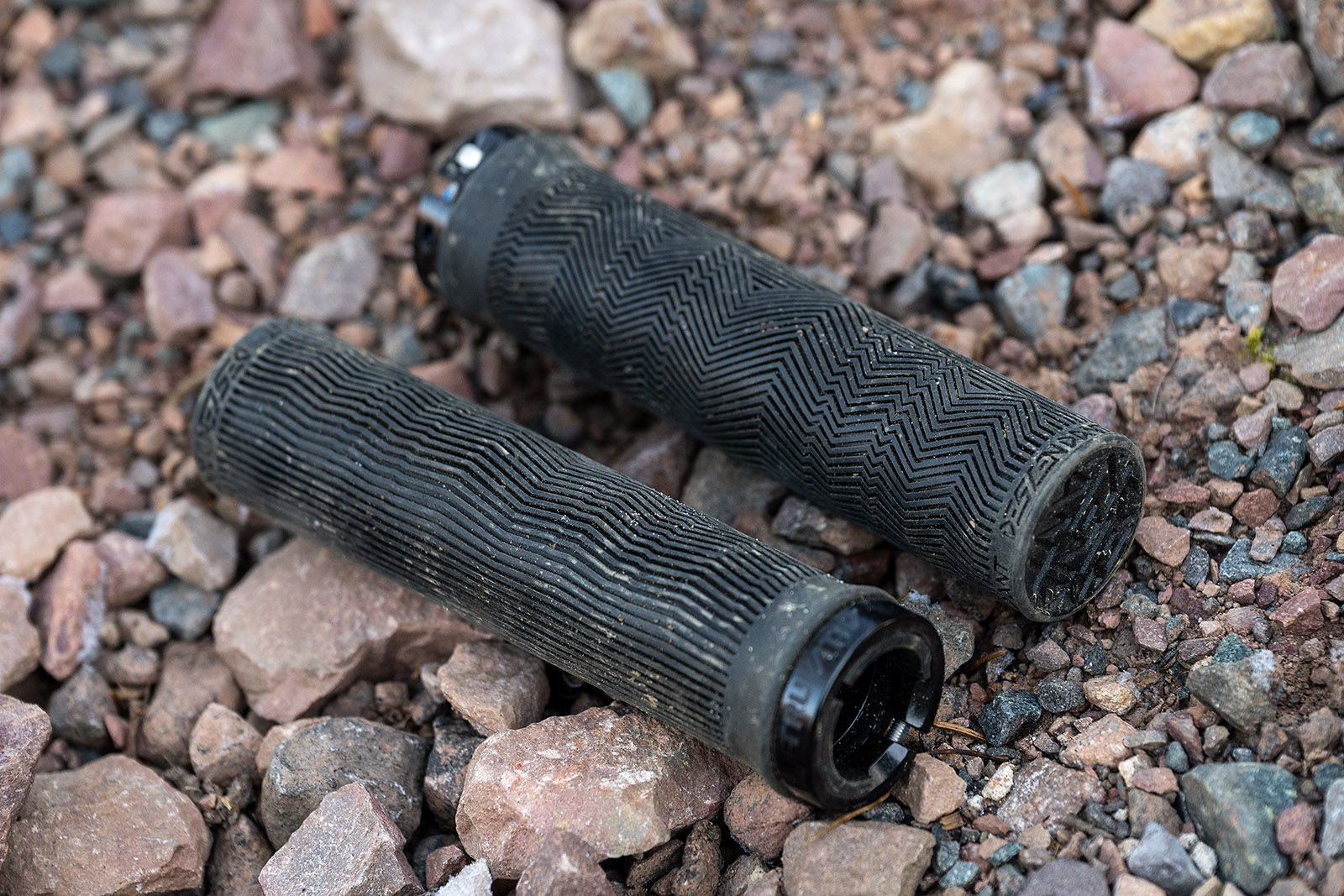
- £30 / $32 / €34 as tested by Nick Clark
- Pros: Comfy, wide profile; good grip in the dry; plenty of damping
- Cons: Some may dislike movement
The Descendants are consistently grippy and well-damped thanks to their cushy horizontal mushroom tread pattern.
This pattern continues around the grip, evolving slowly into a mountain range on the underside for you to dig your fingers into.
There’s some rotational movement attributed to the unconsolidated mushroom ribs flexing under the hand, which can be initially off-putting, but once accounted for it adds good comfort on gnarly terrain.
A boxed-off outer edge of the grip allows meaty palms to overlap the bar ends unrestricted, while a thin band of tread provides a horizontal grip.
The clamp is relatively thin compared to others we've tried, enabling easier access to shifters and levers, which small-handed riders will appreciate.
- Read more: Truvativ Descendant grips review
SQUIRREL_13096657
Why you can trust BikeRadar
BikeRadar has been an authority on bikes and cycling tech since its inception in 2007, delivering the world’s best riding advice.
We have experts testing all types of bikes, parts, clothing and accessories, from road, mountain and gravel bikes to commuting, bikepacking and electric bikes.
Our reviews are always editorially independent – with no exceptions. Our reviewers comprehensively test all products in the real world, always reflecting on performance, value and the wider market when delivering their verdicts and review ratings.
We have more than 15,000 product reviews available at your fingertips, as well as expert buying, maintenance, training, skills, health and fitness advice.
Our annual Bike of the Year test is an industry benchmark and the BikeRadar team consists of some of the most experienced riders and testers in the business.
Mountain bike grips buyer's guide
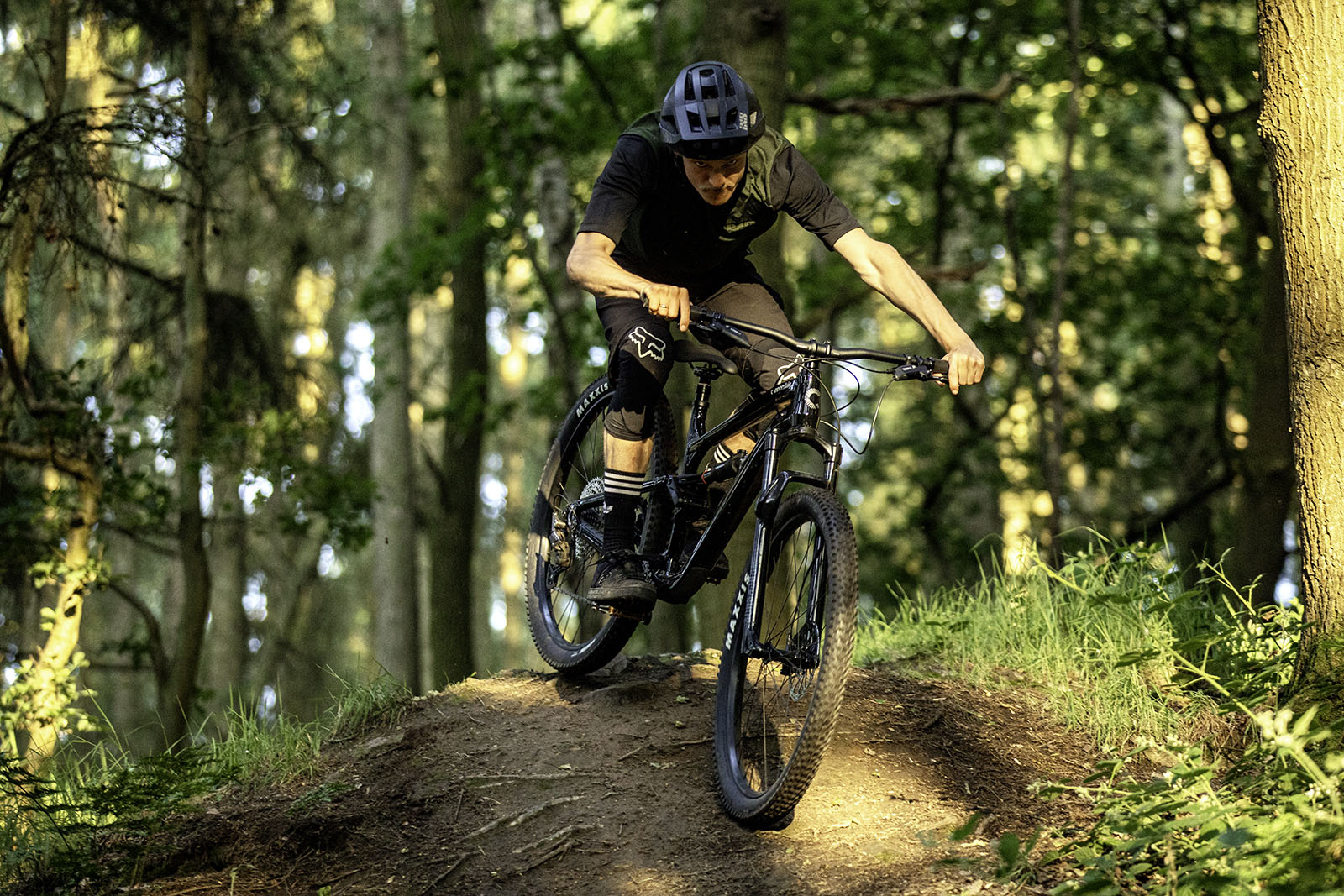
Grips appear to be one of the most basic components on your bike – usually consisting of nothing more than an inner plastic tube covered in a rubber compound and featuring either a single or dual clamp. However, they are an important contact point that can seriously impact performance.
What to look for in mountain bike grips
How a grip performs can be determined by its size and profile, grip pattern, clamp design, the compound of the rubber and the quality of the materials used.
Getting the formula right improves grip and hand security on the handlebar, leading to better control and less fatigue when hitting the trail.
Grips are quite personal items, more so than most bike components, with people's preferences depending on their hand size and the feel they desire through the handlebar.
Smaller-diameter grips will often feature less cushioning, resulting in more feedback being passed on to your hands. Thicker grips will help more in reducing trail buzz.
Thicker grips are usually better at reducing fatigue for this reason, with the larger contact area also helping to keep your hands in a relaxed position as opposed to balled up around a thinner grip.
The connection of the grip to the handlebar is fundamental in stopping grip rotation on hard impacts – a frightening feeling that sees both grips turn into twist throttles.
Solid mounting clamps are needed for this, with most grips featuring a single clamp on the inside to secure them to the bar, ensuring they can’t slide off in your hands.
Most grips will use multiple patterns to aid in all areas of contact with the bar.
Many grips use ribbed mushroom tread patterns on the topside because the design adds cushioning when deformed and provides a large surface area to boost adhesion to your hands.
The underside often sees horizontal ribs for your fingers to wrap around, creating an extra layer of connection and countering hand rotation.
The rubber compound is also important in the traction the grip provides, with manufacturers often listing the hardness of its rubber using a durometer reading.
Softer compounds will be more tacky, although this often comes at the sacrifice of needing to replace the grips faster.
Harder compounds will last longer, but won’t offer the same mechanical grip.
Mountain bike grips features
Clamp
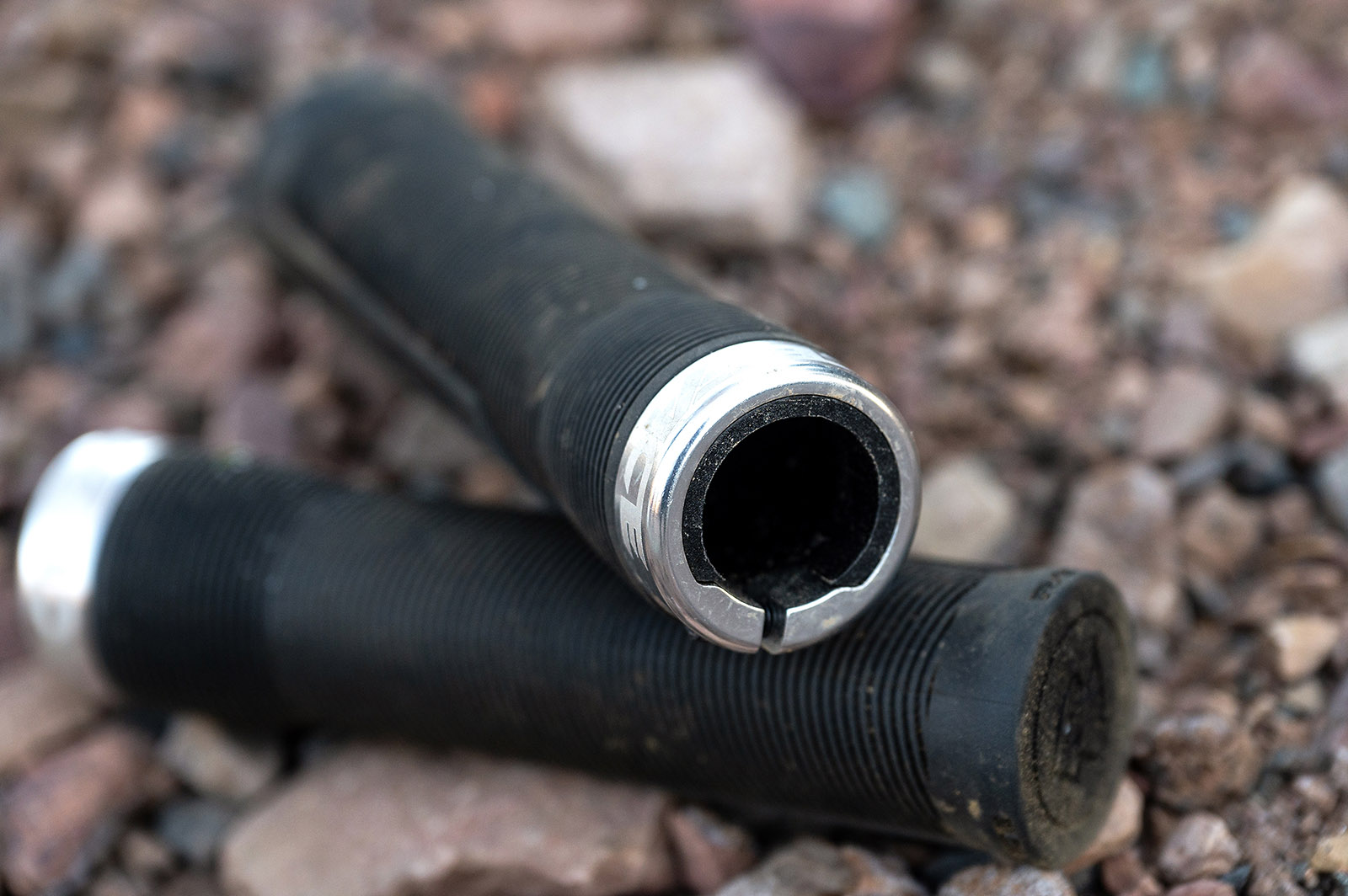
Clamps, otherwise known as lockrings, sit at one or both ends of lock-on grips and cause excess friction with the bar, keeping the grip in place. Usually tightened with an Allen key, they stop the bar from rotating on the handlebar.
Chamfered and tapered
The profile of the grip is often chamfered (angled at the extremity) or tapered (sloped all the way across) to the inside clamp to give a more ergonomic feel in the hand and protect your digits from bashing into the clamp.
Compound
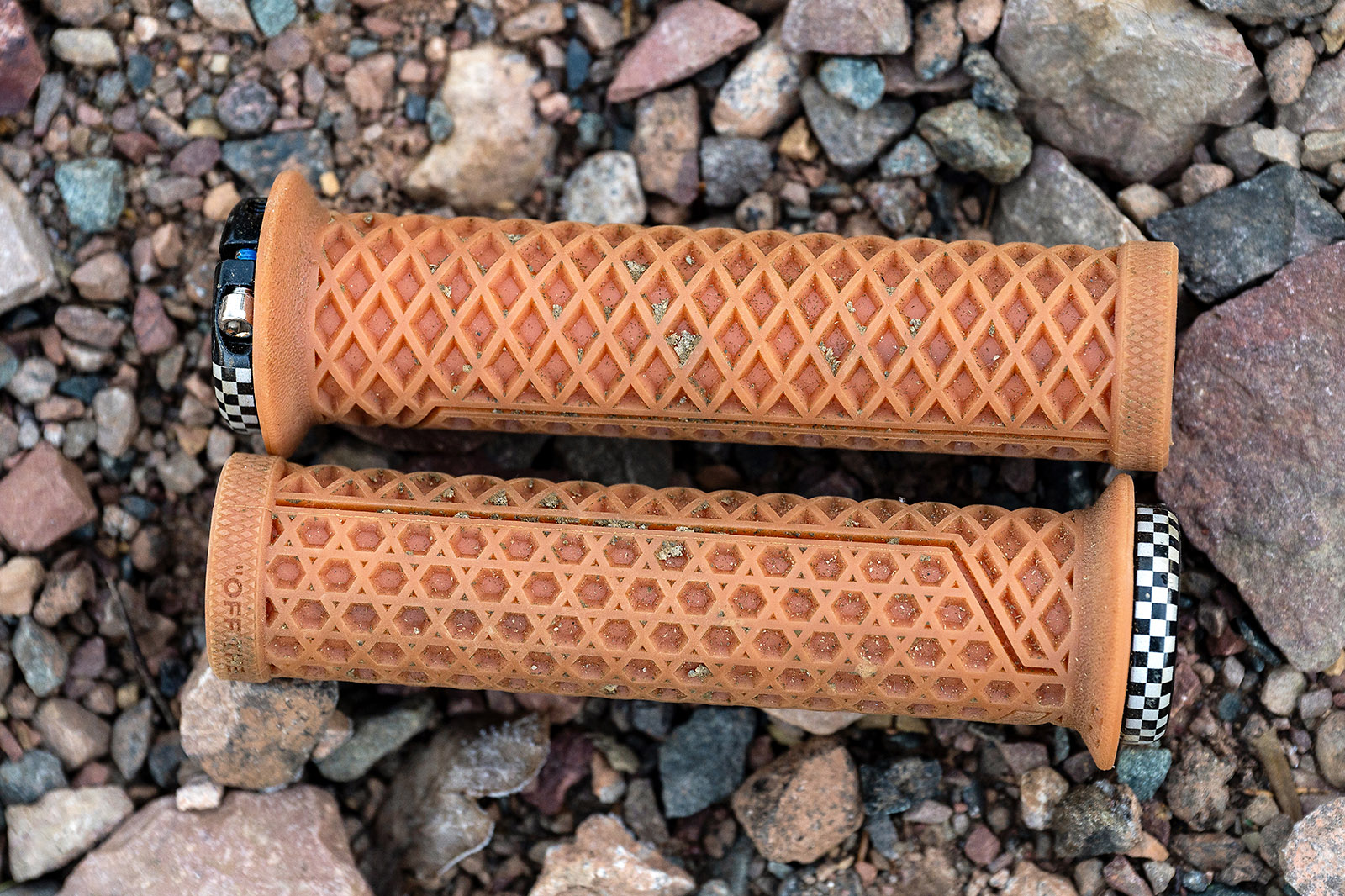
The rubber compound of the grip is usually a good indication of how grippy it is, with softer compounds proving to be tackier than harder ones.
Body
Lock-on grips will feature a hard plastic body onto which the compound is coated. This enables the grip to slide onto the handlebar and protects the handlebar from the clamp.
Bar-ends
Bar-ends are usually built into grips, covering the outside of the handlebar and removing the danger of piercing yourself on the bar like a spud on a spud gun.