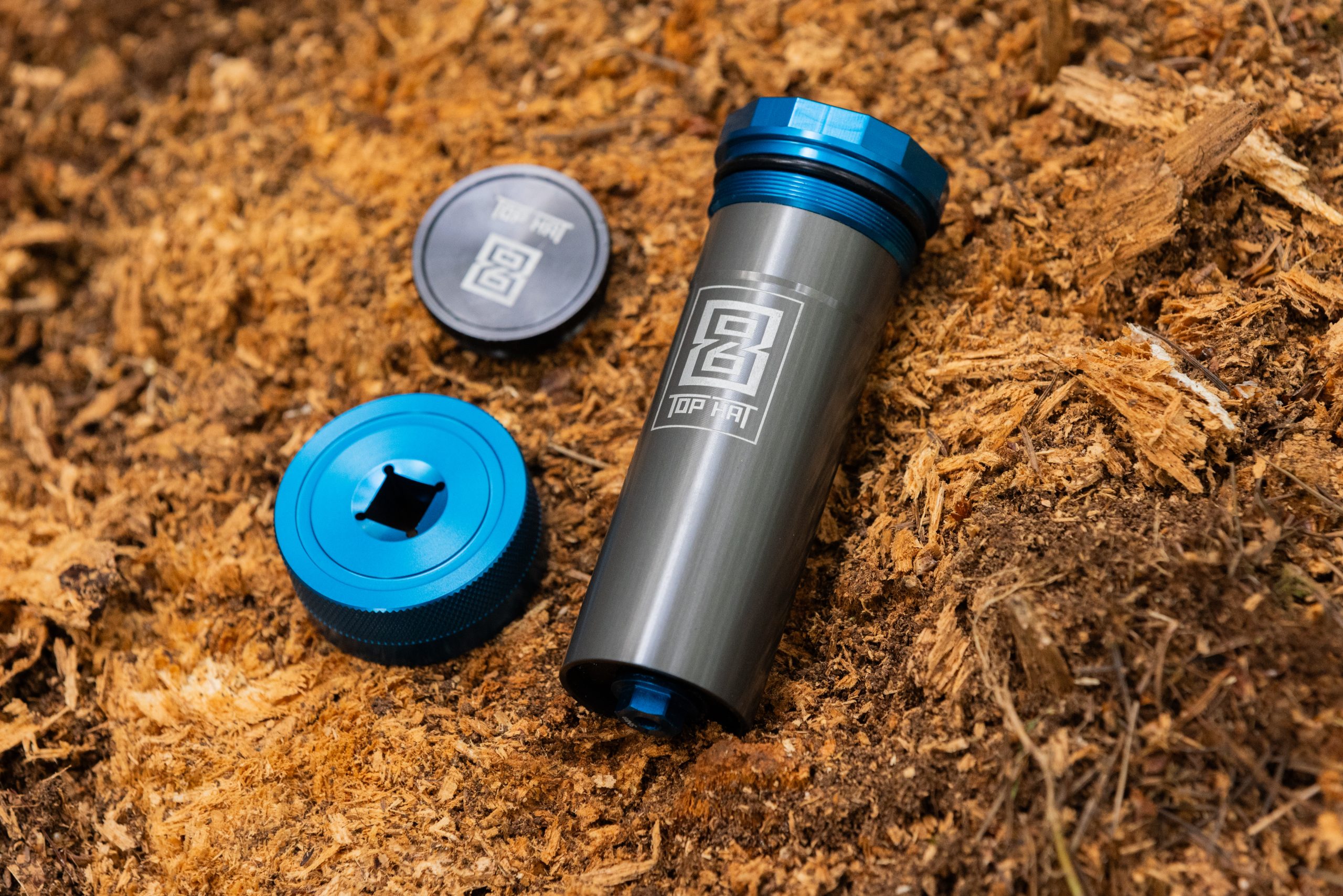
The Ride 886 TopHat replaces the top cap on your fork, creating a secondary air spring that gives you the chance to finely tune your spring rate curve.
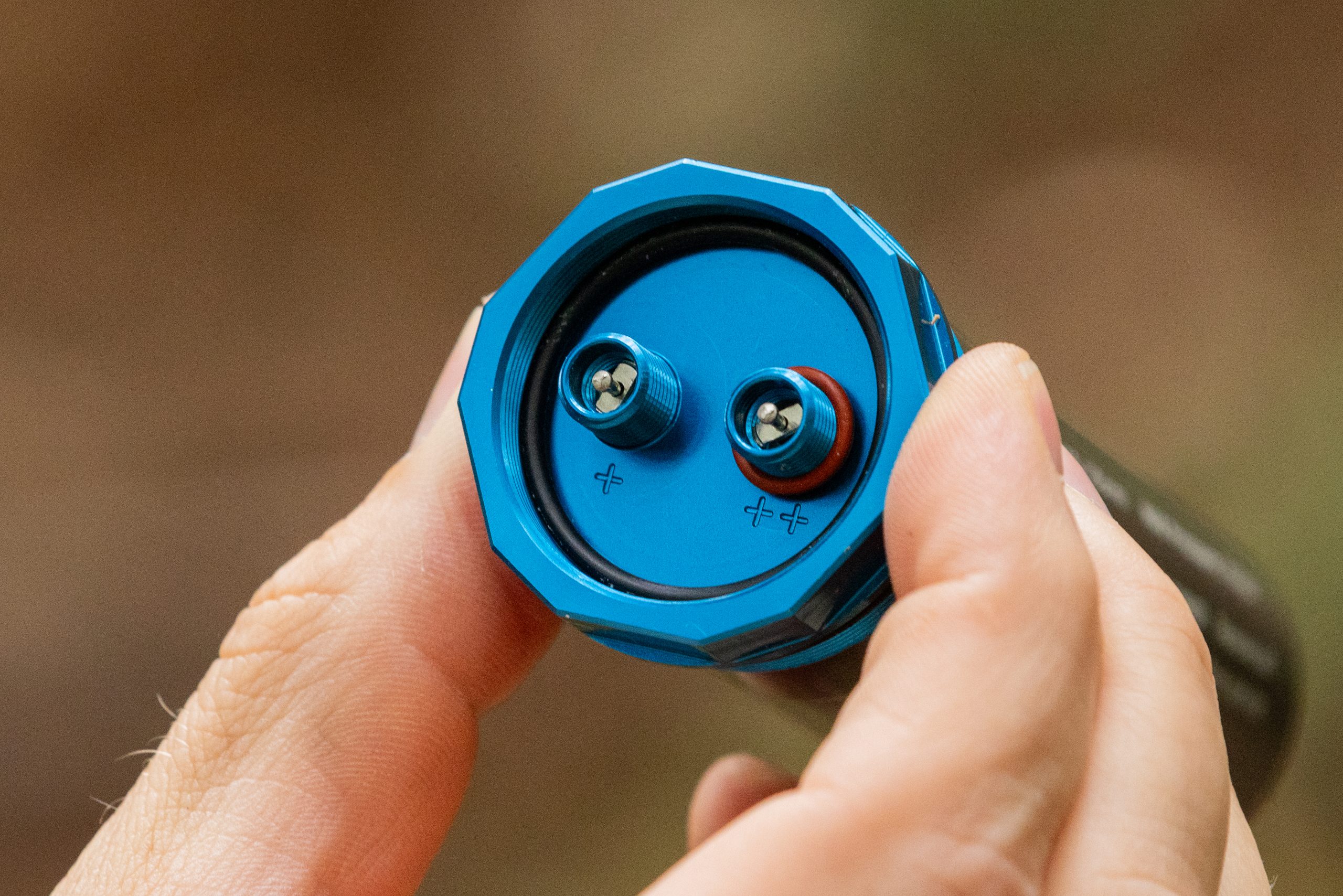
The factory threaded aluminium cap (and plastic volume spacers usually found there) are shelved in favour of an extra air chamber, separated from the fork’s air spring by a moving piston. The air pressure in the TopHat is adjustable via a second valve.
The aim was to create a dual-stage spring system, which Ride 886 says gives more tuning options, and means the air spring can be set up to give a more linear coil-like spring feel.
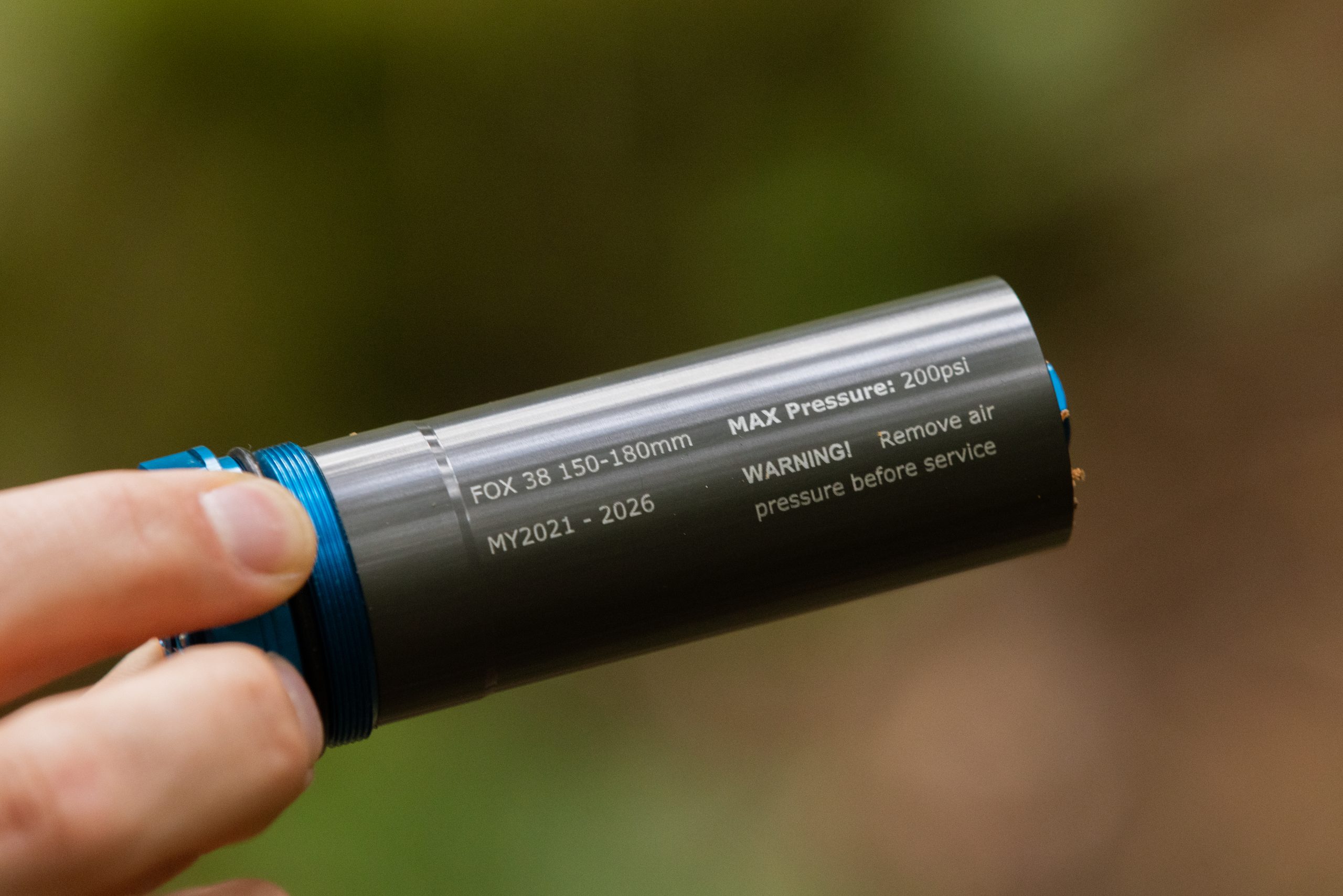
Ride 886 claims the Fox 38 compatible model (which I have) weighs only 40g more than a stock top-cap assembly.
Performance improvement
Volume spacers enable riders to control the rate at which the air pressure inside a spring increases throughout the travel. More volume spacers means less air volume in the air chamber and so the spring gets firmer more quickly as the suspension is compressed.
The TopHat offers more than this, though, because it enables the air pressure in the main spring and in the TopHat’s secondary air chamber to be varied independently. When the (lower) pressure in the main air chamber increases beyond the pressure in the TopHat, the TopHat piston will be compressed. This enables the fork to be tuneable in the mid stroke, and at the end stroke. Traditional volume spacers only enable tuning of the end-stroke ramp-up.
Ride 886 also supplies its own volume spacers to tune the rate of spring progression of the second-stage air spring. They work in the same way as traditional plastic volume spacers. These can be fitted externally below the TopHat piston or inside the TopHat chamber (but the system will need disassembling).
Interestingly, Ride 886 says there is a “negligible” performance difference between these two fitment positions.
If you’re a nerd (like me), you can also adjust the initial height of the secondary piston (the one inside the TopHat’s chamber). This enables you to adjust the dynamic ride height (where the fork sits in its travel when you’re riding) by controlling the ratio of the air volume between the fork’s air spring (which Ride 886 calls the primary chamber) and the TopHat’s air spring (which Ride 886 calls the secondary chamber).
Using more piston spacers to raise the resting height of the piston in the TopHat will create a larger primary chamber and smaller secondary chamber. This will offer more initial sensitivity and a lower dynamic ride height for a given pressure.
It’s a relatively simple system, which provides myriad tuning options to enable you to make your fork spring feel different from the factory setup. If you like fiddling about, are fussy about your suspension and want to manipulate how it operates, this could be a good buy.
Installation and setup
Ride 886 claims installation will take less than five minutes: let the air out of your fork (a very important step), unscrew the top cap and use the included socket tool to screw up the TopHat. Then fill the two chambers with air and ride.
The first valve (marked +) inflates and deflates your fork’s air spring as normal, the second valve (++) inflates the TopHat.
There are three guides on the Ride 886 site to help you get the most from the TopHat – a quick start guide, a standard setup guide and an advanced setup guide.
The TopHat will have to be removed from the fork in order to install the internal volume spacers or piston spacers, but Ride 886 says this can be done with everyday tools.
Pricing and availability
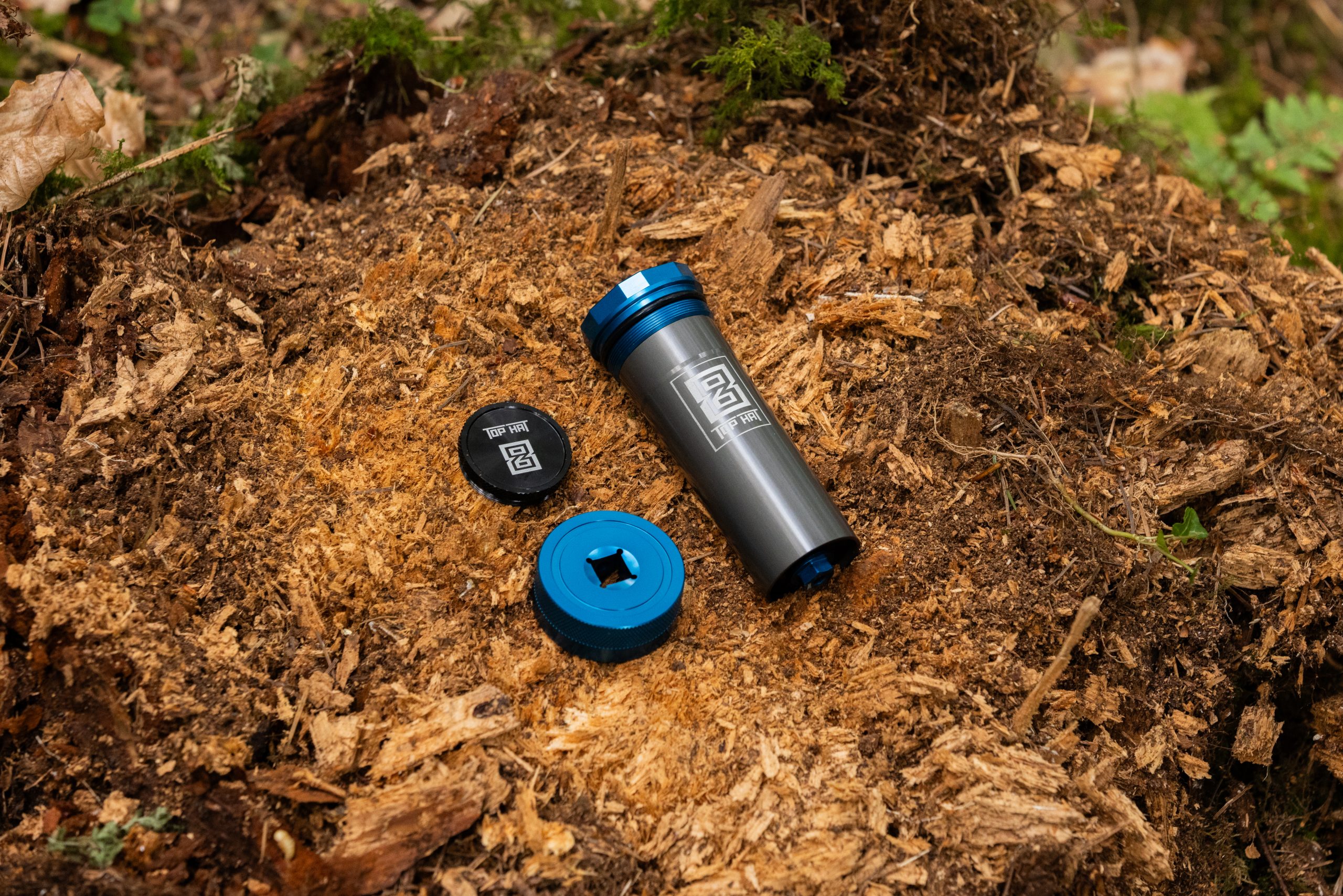
Ride 886 TopHats are available for various MTB forks. Fox and Marzocchi models are available in black and blue, RockShox models come in black and red.
- Fox 36 (2016 on): £210 / $225 / €239
- Fox 36 SL (120-130mm only): £210 / $225 / €239
- Fox 38 (2021-2026): £210 / $225 / €239
- Fox 38 (Glidecore 2027 on): £210 / $225 / €239
- Fox 40 (2016 on): £219 / $235 / €249
- Fox Podium: £210 / $225 / €239
- Marzocchi Bomber 58: £219 / $235 / €249
- RockShox Zeb (A1 & A2): £210 / $225 / €239