Concept bikes used to be the highlight of the cycling show season. These out-there designs from the likes of Specialized, Cannondale, BMC and Canyon gave us us a glimpse into the future of bike design.
The most outlandish concept bikes didn’t come from software studies; they came from the creative minds of design teams. Blue sky thinking made for real flights of fancy that sometimes could lead to real-world rides or at least inspire major elements and design directions.
I loved heading to huge bike shows such as Eurobike and Ponbike, and other events in Milan, Berlin, Kortrijk, London and elsewhere to see what design and engineering teams had been playing with.
These teams were experimenting with every type of bike, from road to urban, mountain and even kids’ bikes. The unleashed creativity may not have inspired that many real bikes, but I like to think it kept designers and engineers fresh.
More recently, we haven’t seen concepts beyond CFD and simulations. I want to see creativity rule again and not have design be at the behest of computers and engineering software. Maybe it’s a throwback, but I want my designs to come from the humble pencil – I think it could lead to exciting innovation.
Speedy but not special

The recent Factor One shows how computers now rule bike design. The aero bike is a truly radical design – and one that’s celebrated in a Bugatti special edition, even if no amount of signature Bleu de France paint makes the Factor look good. The bike’s odd angles and awkward front end just don’t sing out to the aesthete in me.
You’ll have to explain the performance benefits of the Factor One to friends to justify the price, whereas a beautiful concept made real, such as the original Lotus Sport Pursuit, or the 108 as it was later known, needs no explanation.
It’s the same with Hope’s Team GB bike. Its challenging looks need data to explain, whereas Miguel Indurain’s Hour Record bike, the Pinarello Espada, didn’t forget the style to focus solely on substance. It looks fast standing still.
The Specialized fUCI concept bike dreamed up by Robert Egger was designed before Specialized had its own wind tunnel. The concept was drawn to look fast, with some aero knowledge, and let the details come later.

In an era of AI and data-driven design, with certain sections of the cycling media clamouring for aero efficiency above all else, we run the risk of creating a generation of ugly bikes.
Efficiency might sound good, but ultimately brands need to sell bikes. So make them pretty!
With this in mind, it’s no wonder titanium is on the up, and steel bikes remain popular at all price points. If we look at the latest road bikes, I admire the Colnago Y1RS in terms of its aerodynamic prowess, but I don’t want one.
If you asked me which Colnago I’d buy, it’d be without doubt the glorious Steelnovo, or if it really had to be carbon, a C68 please.
Making a statement
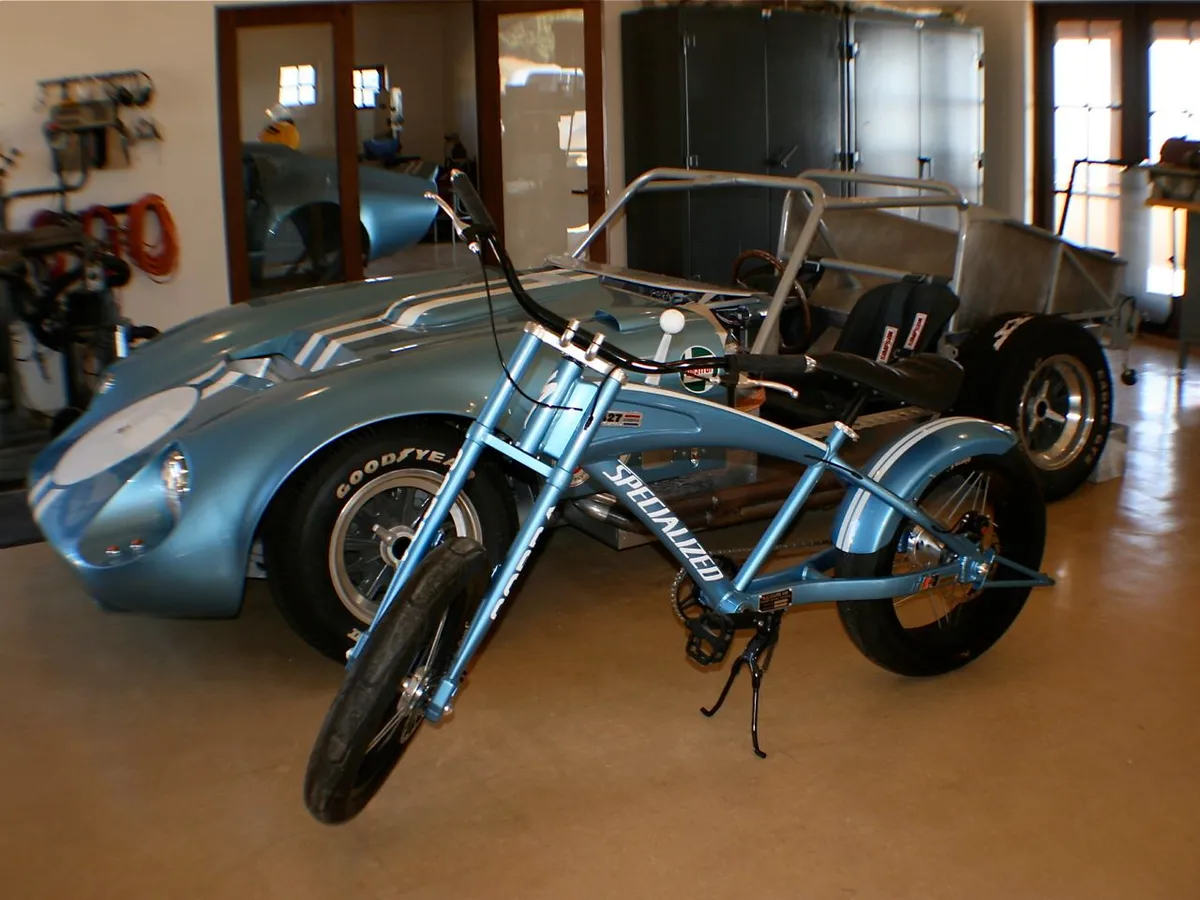
I love that concept bikes said something about a brand. Take Specialized’s history of concepts. On one hand, you have cutting-edge aero ideas such as the fUCI and on the other a series of bikes inspired by California hot-rod culture, with bikes taking inspiration from classic scrambler bikes. It’s an expression that says something about the brand that another Tarmac does not.
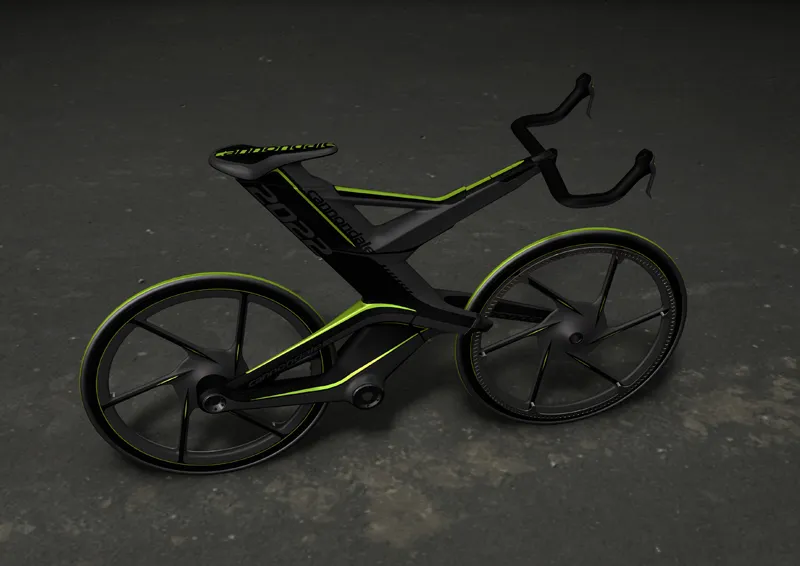
As you’d expect, Cannondale’s concepts leaned into racing, although the transatlantic nature of their design team brought plenty of urban solutions, too.

BMC’s concepts brought cutting-edge integration and an emphasis on precision shapes. Lots of the elements of the 2014 Impec concept are now generally accepted: integrated bars, fully internal routing and in-frame storage. The Impec was never going to be produced, but it inspired plenty of bikes that followed.

Canyon’s concepts showed the ambition of the brand – high-tech manufacturing for sport bikes, and a series of urban solutions that even moved beyond the ‘simple’ bicycle and into transport solutions for all.
The decline of shows has reduced the concept bike’s importance

Cycling trade shows aren’t as important as they once were. America’s legendary Interbike folded before Covid in 2018, and Eurobike hasn’t recovered since the pandemic.
The Taipei Cycle Show is more for industry insiders, but it has still thrown up the occasional interesting concept over the years.
Perhaps the concept bike doesn’t have the press potential it once had and has fallen victim to budgets being restricted or pushed into the digital aspects of R&D.
The AI tools being used now could really do with being rewritten, but then it’s hard to quantify beauty when so much is in the eye of the beholder.

Torgny Fjeldskaar, the industrial designer who has worked for both Cannondale and BMC, now runs his own Fjeld design consultancy, with the likes of Colnago and Fizik as clients.
He told me that: “For product development teams, working on a concept bike can be a massive creative boost. It allows designers and engineers to explore entirely new solutions without the usual constraints and risks tied to production.
“The concept bikes I’ve been involved in often included features that were clearly unrealistic at the time – some still are, and may always remain so. But interestingly, a few of those ideas eventually found their way into production in one form or another.”

Fjeldskaar also highlighted how concept bikes are generally less appreciated than concept cars.
“In the automotive world, the value of exploring bold, unconventional ideas – whether in interior or exterior design – is widely understood by both the general public and enthusiasts,” he said.
“Even when these concepts have little direct relevance to future production models, they are appreciated as a vital part of innovation. In cycling, by contrast, both functional and visual experimentation often face a fair amount of initial pushback.”
But wait, there is hope for the future of concepts…

So the concept bike seems to be relegated to the history books, yet one cycling company recently attempted to bring it back to life.
Van Rysel, the upstart brand born out of Decathlon, launched a proper concept bike at Velofollies this year. It did its job. It got Van Rysel a ton of press, lots of comments, and everyone talked about Van Rysel for a few days. The FTP2 did everything a concept bike should:
- It challenged current thinking. It’s a TT/aero concept with built-in power assist to propel you to speeds over 100kph.
- The details are full of bright ideas. It integrates lights, GPS, textures, materials, and while it has all the data-driven aero shapes you’d expect, they don’t dominate the design.
- It completely ignores rules and regulations.
- It doesn’t fit into a ‘normal’ bike genre.
- It's a story that says, ‘some of the tech will make it into bikes’.
- The chances of it making production? Zero.
So, thank you, Van Rysel, for reinstating my faith in the concept bike. But please, more of this from the rest of the industry. After all, who doesn’t want to mix tech with a good dose of style?