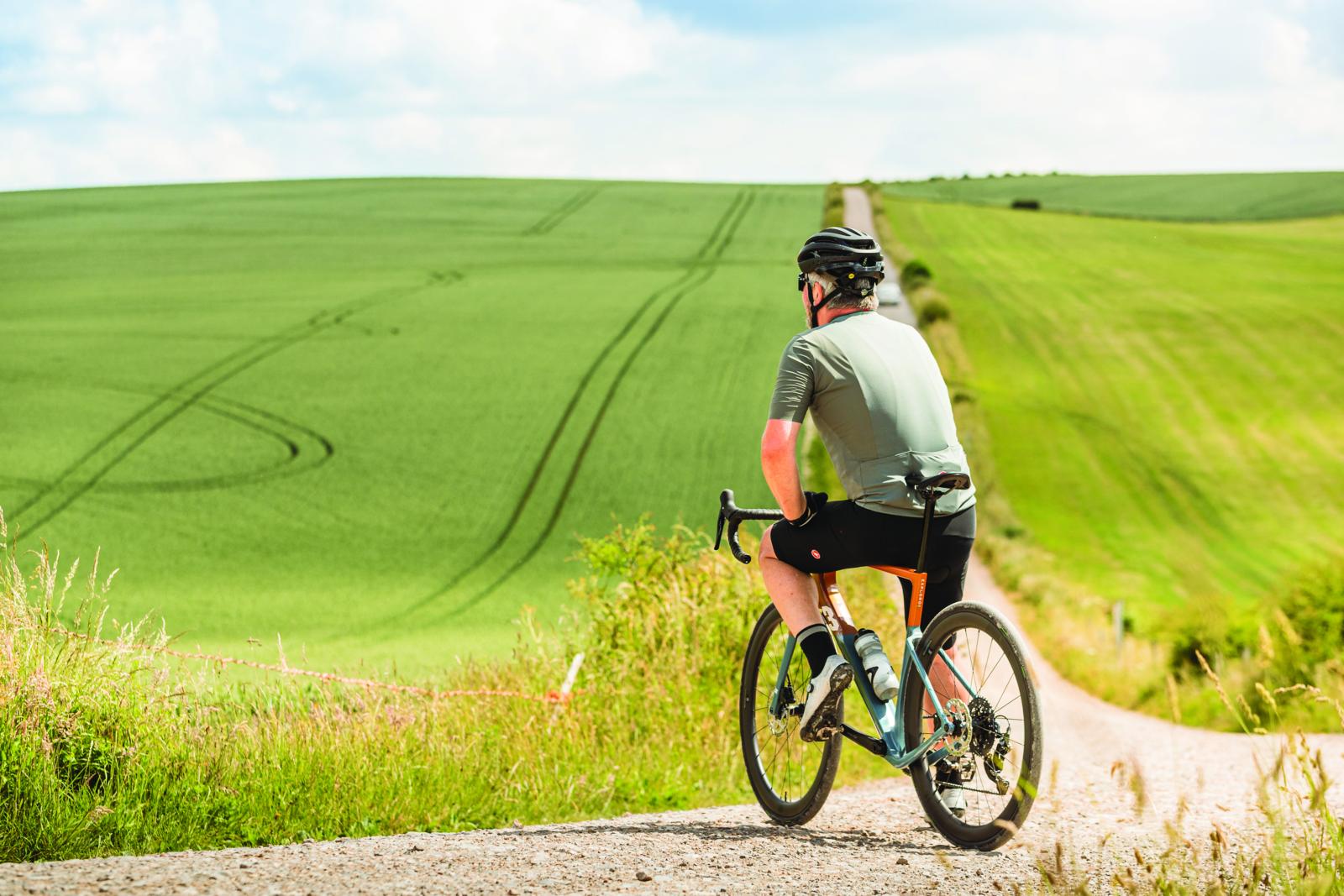
Cyclocross remains a widely participated and well-loved sport at grassroots level beyond its Belgian heartland, despite the advent of gravel. So why have mainstream bike brands almost completely disowned it?
Even when participation is up here in the UK, while road racing has fallen in popularity, it has become harder to find a cyclocross bike to race on.
Gravel bikes have taken their place at every price point, or so brand marketeers would have you believe.
Over the last couple of years, I’ve tested a huge number of gravel bikes, and there’s a particular trend in gravel ‘race’ bikes – where they are simply cyclocross bikes under a different name.
Just admit it’s a cyclocross bike

Let's start with the featherlight, headline-grabbing, stripped-down racer that is the Specialized Crux. Now, the original Crux was an aluminium cyclocross bike, with a carbon version following in 2013.
The reinvention of the Crux in 2021 as a super-light gravel bike with a still very light 725g frame (and 47mm tyre clearances) was, I believe, something of a marketing exercise.
Yes, the Crux ships now with technically ‘illegal’ oversized tyres for cyclocross (the UCI limits tyre width to 33mm for cyclocross), but the geometry of the frame, the stem length and the bar widths all scream cyclocross, not gravel.
We in the media are just as complicit in the ‘gravel thing'. Don’t get me wrong, I think gravel is the best thing to happen to drop-bar bikes in the three decades I’ve been doing this.

It shouldn’t, however, come at the expense of cyclocross; ‘cross was and is a uniquely weird and wonderful discipline. It’s the definition of being underbiked for a racing event; the short-track, explosive nature of the racing is a joy to watch when it’s done well.
It’s worth saying I have little personal experience of racing ‘cross, with only a couple of tries many years ago, where I basically shouldered a bike around the perimeter of a muddy field for the best part of an hour…
That said, I love to see the best exponents of the art manoeuvring a drop-bar bike on the limits of grip, combined with the tactical line choices from the most talented riders.
I’d posit that the Crux, and the more affordable aluminium Crux DSW, are modern, pure, cyclocross race bikes.

Merida’s recently announced Mission has contentiously slender tyre clearances by modern gravel standards, but they're hugely generous for cyclocross. Like the Crux, the previous Mission wasn’t called the Mission CX by mistake.
Again, when you look at the geometry, it's pure cyclocross – a steep head angle, rather than the slackened figures favoured by gravel. It has a shorter wheelbase for short-track agility and speed, too.

I think Cervélo’s genre-busting Áspero 5 gravel race bike would make a phenomenal cyclocross rig. It has the same steeper-than-gravel head angle and shorter wheelbase.
Cannondale’s feathery SuperX is marketed as a gravel racer, but surely it’s a ‘cross bike; the SuperX always was – Tim Johnson, the US ‘cross legend and all-round nice guy, won plenty aboard a SuperX.
So why have nearly all the major brands dropped the word 'cyclocross' from their promotion of these bikes?
Of the major players, only Ridley proudly promotes a cyclocross bike range (of two models), not surprisingly considering its Belgian origins. It also has a massive gravel range of 10 or more models. I’d argue at least two or three of the ‘Performance gravel’ offerings wouldn’t be out of place on a ‘cross starting grid.

Here in the UK, the strongest elite cyclocross team, Spectra Racing, are riding the Pearson On&On Race, a lightweight purported gravel race bike I’ve been testing.
On a recent photoshoot, I’d brought along Scott Chalmers, an ex-pro rider and National Trophy ‘cross racer, who also runs Magspeed Racing, and I let him take the Pearson for a spin. He was very impressed by it 'as a cyclocross bike'.
Let’s get back to championing cyclocross

I think brand marketers should go back to embracing cyclocross as a positive focus of a bike's intentions.
Cyclocross is a great competitive sport if you're short on time (races are relatively short). It gives lots of people their first taste of competition and has provided many talented riders across road, mountain and, of course, gravel with their start.
Its strangeness should be celebrated, not brushed under the carpet. It's perhaps the only drop-bar competition left where you can win on whatever you bring: gravel, 'cross, and yes, even road bikes. Just ask Toon Aerts if you don’t believe me.