Mountain bike manufacturers have spent the past few decades carving out individual categories, expanding their ranges so there’s a bike for every type of rider and trail.
While there’s a big difference between a non-assisted 120mm cross-country bike and a heavy-hitting 170mm enduro bike, the democratisation of climbing performance brought by electric motors means I don’t see the point of short-travel eMTBs.
In this instance, I’ll refer to eMTBs that have 120mm to 140mm as short-travel.
Sure, I understand not everyone lives near trails that require a long-travel bike, but the penalty for carrying the extra weight is negated by motor assistance on the climbs, whether it’s a full-fat or lightweight eMTB.
You might suggest the extra weight for burlier frames and components is felt on the descents – and you’d be correct. But considering the extra weight added by the powertrain, it seems like the thin end of the wedge.
More is more
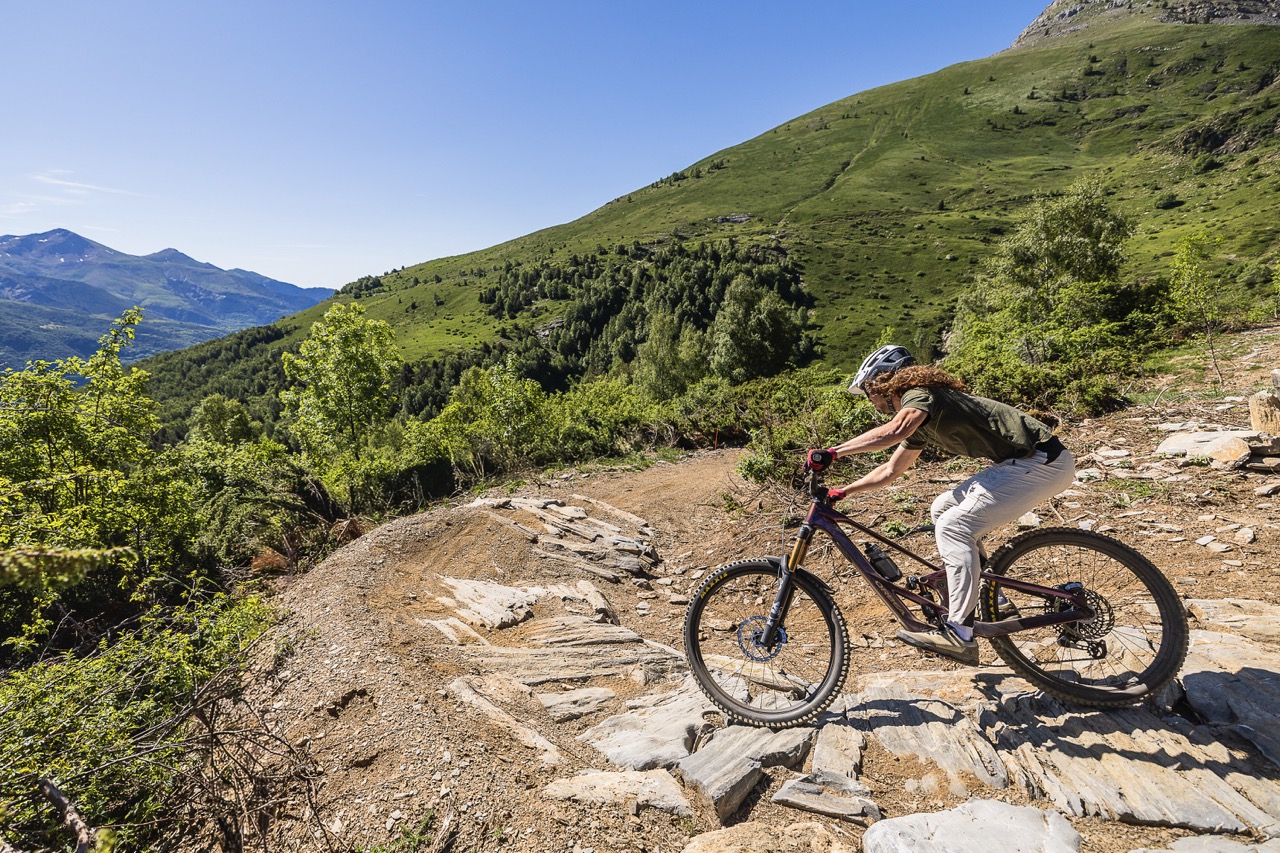
While the majority of long-travel eMTBs I’ve ridden have been capable on the steep and nasties, and in the bike park, modern-day geometry and suspension make them just as much fun on flatter gradients.
It’s fair to say coil shocks detract from this, but I’d rather have a bike that's more capable on the descents, especially if I’m not struggling on the hills.
With all electric bikes legally limited to set speed limits, it's not as if suspension travel makes a difference to top speed.
Shorter-travel bikes don’t only offer less support on gnarlier sections of trail; they also feel less precise because shorter-travel forks often use narrower stanchions.
This, combined with the weight of an eMTB, can lead to some peculiar handling characteristics on the trail.
I do see the fun in underbiking; there’s thrill in fork flex and joy in abusing cross-country bikes on downhill tracks, but when you add the extra weight of a motor and battery to the equation, that raw feeling is already removed.
Wild thing
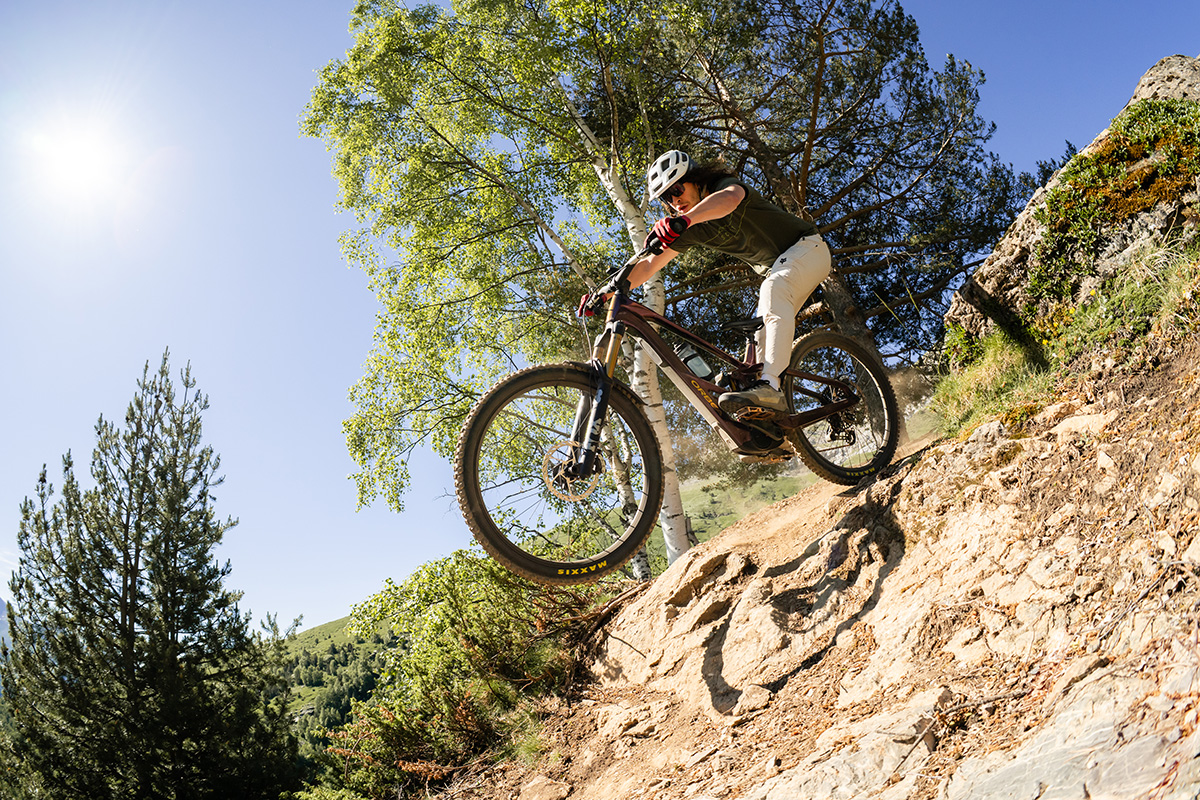
Having recently tested the new Avinox-equipped Orbea Wild LT M-LTD RS, which features 170mm of rear suspension and up to 180mm on the front, I was amazed by the bike's playful nature on tame trails, even in its slackest geometry setting.
I have ridden eMTBs with more travel, such as the 175mm Canyon Torque:On, which was less sprightly on smaller gradients, but I'd take that drawback for the ability to ride harder trails with more capability.
The motor not only helps hide the weight of the bike on the hills, but it also gets you up to speed faster on the descents, and it's here, hitting the trail at full speed, where you appreciate the travel.
Having met many ebikers out on the trails, I’ve never heard of one who has a long-travel bike wanting a shorter-travel variant.
Of course, there will always be riders who prefer shorter-travel eMTBs – and if you’re sticking to mostly gravel paths and mellow trails, I understand it – but the compromises are tough to justify.
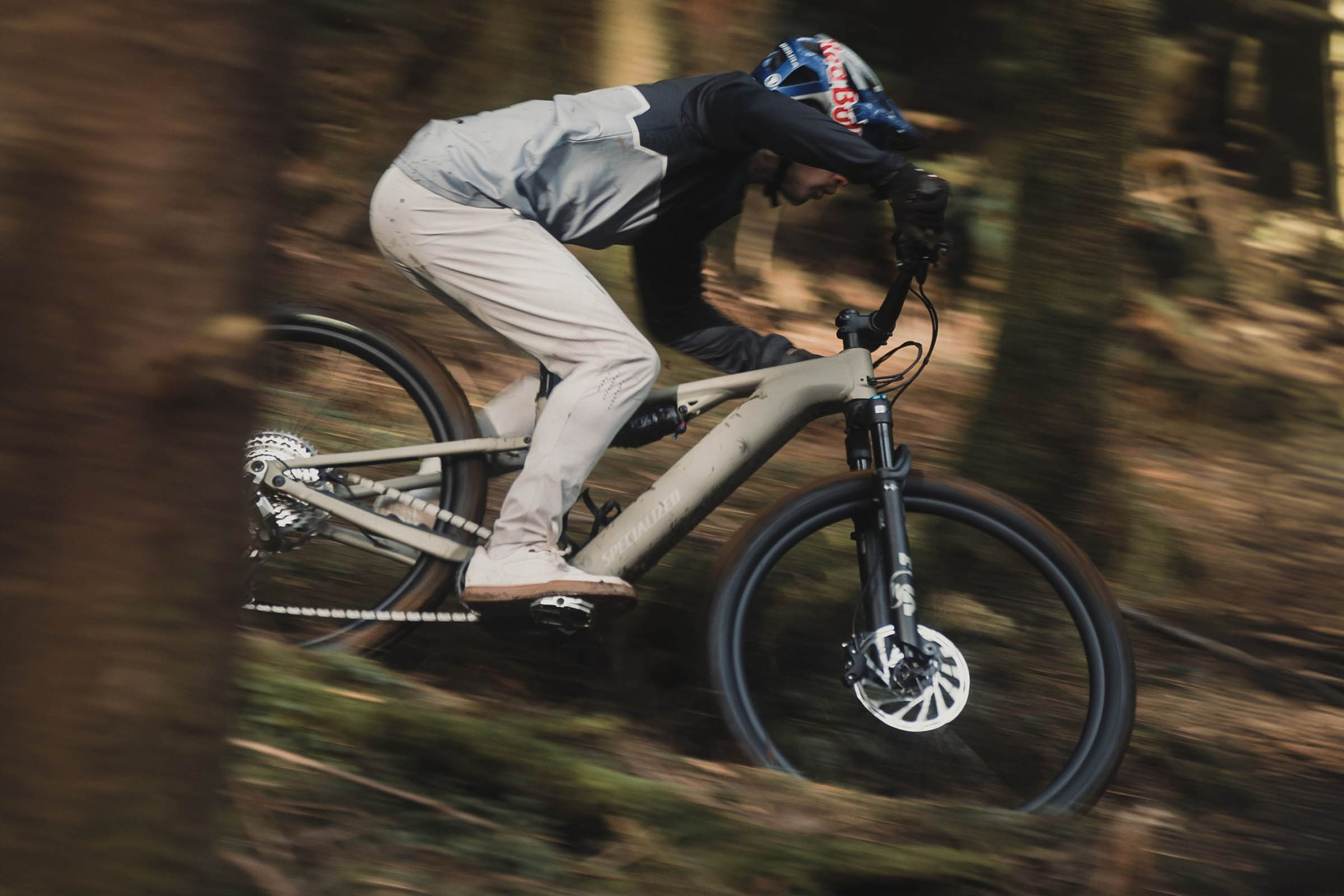
Looking at current short-travel bikes, only the Giant Stance E+, Pivot Shuttle SL, Norco Fluid VLT 140 and Specialized Levo R stand out in the eMTB category, suggesting manufacturers have identified the demand – or lack of.
eMTBs have fundamentally changed the equation that once made short-travel bikes compelling.
With the ride to the top no longer a limiting factor, it makes sense to optimise for the ride back down.
If I'm choosing an eMTB today, I'd rather have suspension travel in reserve and not need it than find myself wishing for more.