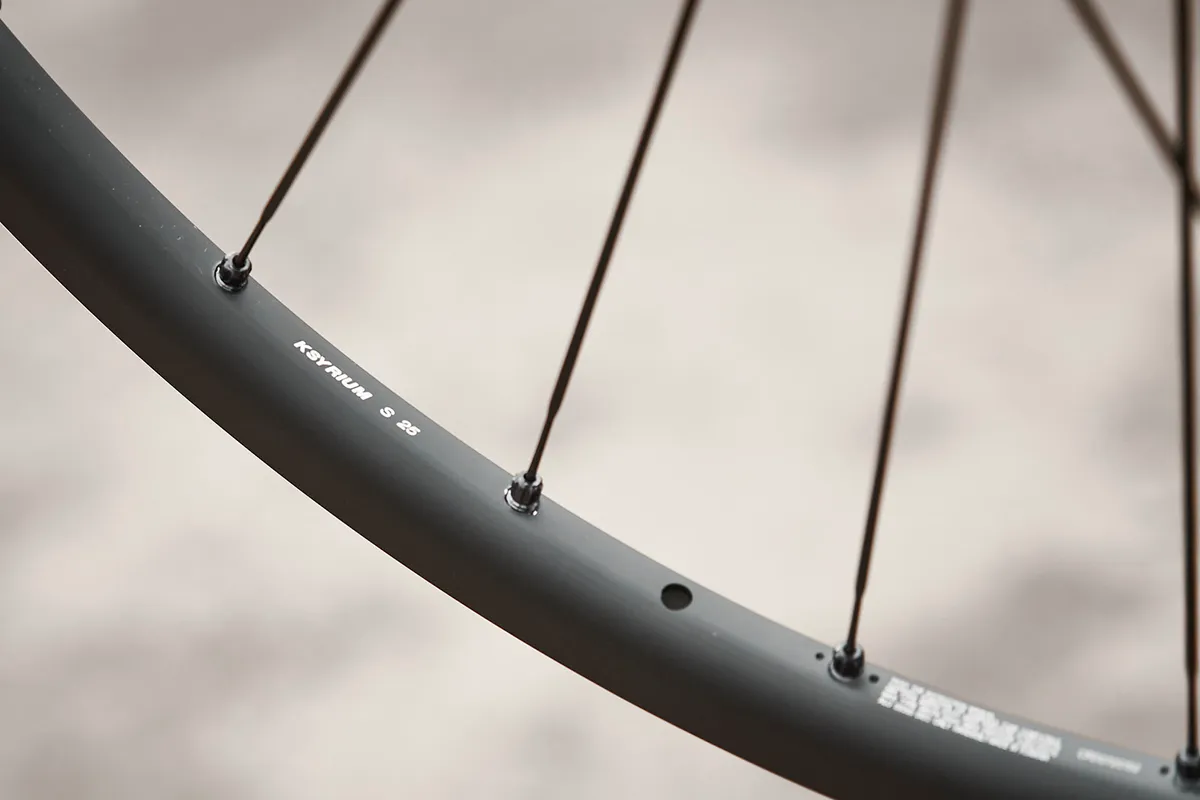
With no tubeless tape required, solid rim bed rims are easy to set up, easy to clean, and with no chance of leaky tape, they create a super-reliable seal between the rim and tyre.
Mavic created rims that were guaranteed not to leak air through the spoke holes – because there weren’t any. They were designed this way to avoid the necessity to use tubeless tape to seal up the holes where the spoke nipples are inserted.
A solid rim saved around a metre of tubeless tape every time it was set up tubeless, reduced non-reusable plastics, and saved riders money and time.
And, according to Mavic, rims equipped with its solid-rim-bed FORE technology were stiffer, stronger and lighter than traditionally constructed rims.
If this design has so many advantages, surely it should be more popular. Here is the lowdown on solid rim beds and who still makes them.
What is a solid rim bed?
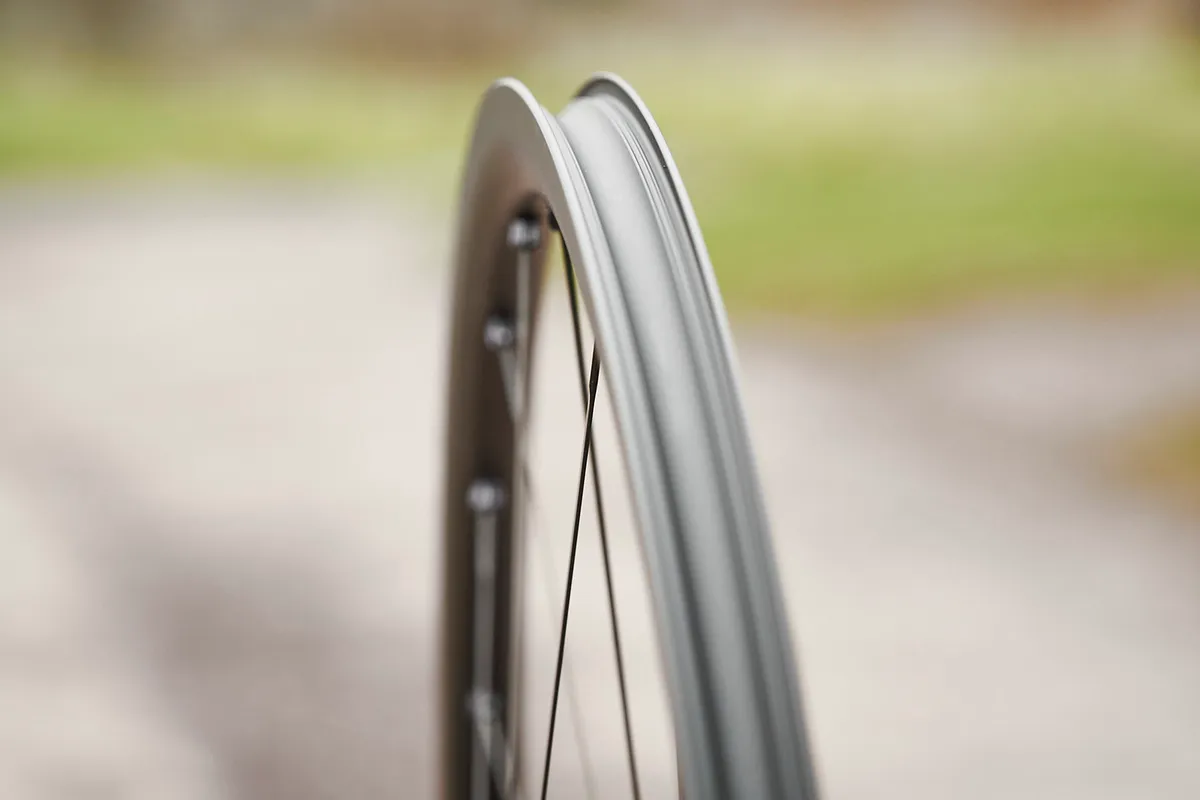
Tubeless systems use sealant within the tyre, and an airtight seal between the rim and the tyre instead of an inner tube.
This requires increased precision for rim and tyre manufacture, and Universal System Tubeless (UST) was launched jointly by manufacturers Mavic, Michelin and Hutchinson in 1999.
UST featured a specified profile for the tyre and rim bead so they would ‘lock’ together, creating an airtight seal.
At this time, inner tubes were still the norm, and tubeless tech was unproven and highly futuristic.
Mavic launched its solid-rim-bed technology in conjunction with UST on its high-end aluminium rims, and it was used in two ways.
One method employed aluminium spokes and special oversized nipples that threaded into the rim from below. These were used to tension the spokes as they were tightened.
Alternatively, traditional aluminium/brass nipples could be captured in the rim using a threaded aluminium pocket. This was tightened all the way into the rim, which could then be built up with traditional steel spokes.
Mavic has since released rims with FORE technology, which uses a solid rim bed on carbon and aluminium rims. It claimed this enabled the creation of lighter, stronger and stiffer rims.
Crankbrothers also used a solid rim bed for its early Cobalt, Iodine and Opium wheelsets. These had vertical flanges on the rim, to which pairs of spokes were attached in tandem.
Why are solid rim beds a good thing?

Tubeless taping is inconvenient. It can be expensive to buy and takes time to fit. This is especially true if you’re retaping a rim, because the rim has to be stripped carefully of the old tape, cleaned and dried before fitting new tape.
There is also the risk of leaks if the tape isn’t applied properly. Even with perfectly applied tape, a snapped spoke can send a nipple straight through the tubeless tape, ruining both the tape and your bike ride.
There is a cost to the environment of single-use plastic tape, too – you need around a metre each time for a 29in wheel.
Solid rim beds do away with these negatives, providing an easy-to-clean and instantly ready surface for fitting tubeless tyres.
Mavic claims its FORE technology leads to lighter, stronger and stiffer rims. Presumably, doing away with a series of holes in the surface enabled engineers to optimise the rim’s strength-to-weight ratio.
However, there are some downsides. Firstly, the increased complexity of attaching the nipples necessitates engineering solutions such as captive pockets for nipples or proprietary nipples.
This means an increased manufacturing cost and potential difficulties in sourcing these parts for the user. Secondly, these parts are liable to seizing if not maintained carefully; adding another moving part creates another opportunity for something to come loose or get stuck.
Does anyone make wheels with a solid rim bed now?

Both Campagnolo and Fulcrum produce wheels with solid rim beds. They both use traditional nipples with no special parts to capture them. This is because they have patented technology called MoMag for locating the nipples in the rim when lacing up a wheel.
MoMag sees a magnet inserted into each aluminium nipple, which is dropped through the valve hole and chased around the rim with another magnet until it is in place. This sounds like a lot of extra effort, and could prove tricky for the user if a nipple needs replacing, but it simplifies rim construction significantly, compared to solid rim beds.
Fulcrum’s Wind 40 DB road wheels and Campagnolo’s Lavante carbon gravel wheelset are examples of wheels that use MoMag tech.
Boutique wheels from companies such as Partington use a solid rim bed, too, as on their ultra-light and ultra-expensive composite R Series road wheels.
Will there be more solid rim beds in the future?

Rim manufacturers are always on the hunt to optimise their designs, and some already have their own solid-rim-bed options ready to use.
If more manufacturers can find increased stiffness and strength by using a solid rim bed, it’s a design that could gain popularity again. It’s down to whether these benefits can outweigh the extra cost and complexity of locating spoke nipples without using holes in the rim bed.
If you hate taped rims, you’ll just have to hope solid rim beds become increasingly commonplace.