Last weekend saw the fastest Paris-Roubaix ever, with winner Wout van Aert averaging an incredible speed of 48.91kph / 30.39mph.
This speed was thanks to advances in sports science and training, alongside a bristling tailwind. Bikes are showing huge advances, too. They’re more aerodynamic, the drivetrains are more reliable and they’re lighter – even if that’s not as important at a race such as the Hell of the North.
But there’s a shortfall in all these advancements, and that’s the humble pneumatic tyre. I’m not talking about rim-interface technologies, which have been a hot topic in recent years. But what we saw at the men’s Paris–Roubaix was a huge number of punctures that arguably changed the whole outcome of the race.

With the likes of Tadej Pogačar running tyres that were nominally 35mm wide, you’d think there would be fewer punctures, but this was far from the case. The world champion punctured several times – even resorting to a Shimano neutral service bike at one point – and punctures also sabotaged Mathieu van der Poel’s hopes of claiming a fourth consecutive victory at Paris–Roubaix.
Teams are employing plenty of hacks to improve tyre reliability, from mismatched tyres to glueing tubeless tyres and using inserts (both foam and inflating). Nothing, however, seems to be able to prevent the dreaded puncture.
What can tyre brands do?

We’ll never be able to eliminate punctures – they're a simple matter of fact with an air-inflated tyre. For tyre brands, though, a failure at a crucial time can cause far more reputational damage than the benefits of getting a positive result can bring.
We’ve seen an increase in the use of inserts. These foam rings don’t prevent punctures, but they minimise the damage and mean pros can ride slowly while they flag down a team car for a spare bike.
Inserts aren’t a solve-all, though. So what other options are there?

The UCI outlawed one potential fix for race-ending punctures on the eve of Paris–Roubaix, the Gravaa inflation hub. This wouldn’t prevent punctures, but if you burped a tubeless tyre or had a slow puncture, it could compensate, as well as ensuring the right pressures for the changing surfaces of classics such as Roubaix.
Another option could be ‘solid tyre’ tech, which raises its head every few years when a start-up takes on the idea. Brands such as Tannus and Gecko make solid tyres that are OK for non-sports applications, and commuter or urban hire bikes, but they can’t cut it when it comes to road feel and low rolling resistance.
Perhaps a breakthrough in solid tyre tech may happen, but nothing performance-oriented is on the horizon.
Can tyre makers learn from mountain biking?
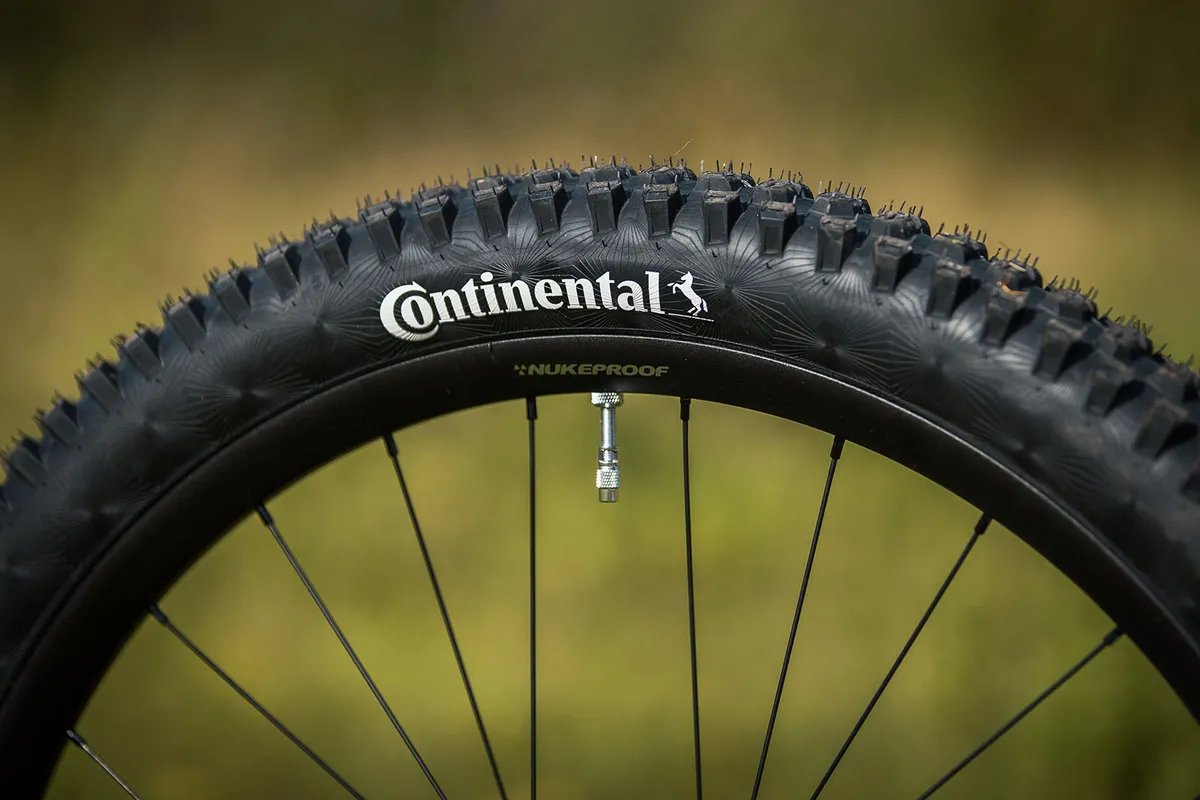
One unlikely place that might provide the answer to punctures at Paris–Roubaix is downhill mountain biking.
The racing discipline had similar issues a few years back, as courses got more technical and at the same time faster, thanks to improvements in bike tech, and the skills and athleticism of the riders. This led to races being won – or more accurately, lost – on the reliability of tyres.
Tyre inserts offered a potential solution to the problem. However, in more recent seasons the use of inserts has declined at the same time tyre brands are making tougher downhill-specific tyres, using the same soft, sticky, grippy compounds but encasing tougher and stiffer casings to prevent splits and cuts.
So perhaps we now need a classics-specific tyre construction?
I know Continental offer the GP5000 AS TR and Vittoria have the Corsa Pro Control, but I'd say both of those are more all-weather than cobbles specific. I think we need the same lightweight, soft sticky compound of pure race tyres, but with a casing prepped for the hard edges of hitting cobbles at speed. Thats what downhill tyre tech has brought in, even to the point of single-race compounds!
Don’t get me wrong, downhill racing still suffers its fair share of tyre failures, but mountain bike tech seems to be making bigger strides to address this.
The opposite is true in gravel, with tyre brands not making ‘fast’ gravel tyres, but instead overbuilding tyres for racers by making them bikepacking-tough.

That has led to racers switching to lighter, faster, mountain bike XC tyres. It’s changing for gravel racing, though, with the advent of tyres such as the HYPR-X-compound Maxxis range, Panaracer’s new GravelKing ZX, and Continental with the Dubnital.
Maybe there isn’t a commercial reason for brands to make tyres tough enough for Paris-Roubaix. However, I’d argue finding a balance between speed and toughness should be a priority. I’d certainly be in the market for a tyre that was tough enough to survive Paris-Roubaix, even if that meant a small weight trade-off.
After all, we amateurs don’t have the luxury of support vehicles – and who wants to be stuck on the roadside changing a flat tyre?