In our Tech Q&A series, we tackle cycling queries – no matter how minor or maddening – with help from the BikeRadar team and trusted industry experts. Next up, we examine why gearboxes aren’t more common on bicycles, yet…
Different companies make gearboxes for bikes, but I don’t see many on the trails. Why don’t people buy them?
James Tupman
High-tech bicycle gearboxes are on sale now, with features including carbon belt-drive systems, electronic shifting and even ebike motor integration.
However, the vast majority of riders are still running a cassette and derailleur.
This begs the question: are there fundamental problems with gearboxes? Or are their advantages being overlooked?
Reasons we don’t see more gearboxes on bicycles

Despite how good modern gearboxes are, there are myriad reasons why we don’t see more of them on new bikes.
Specific frame construction
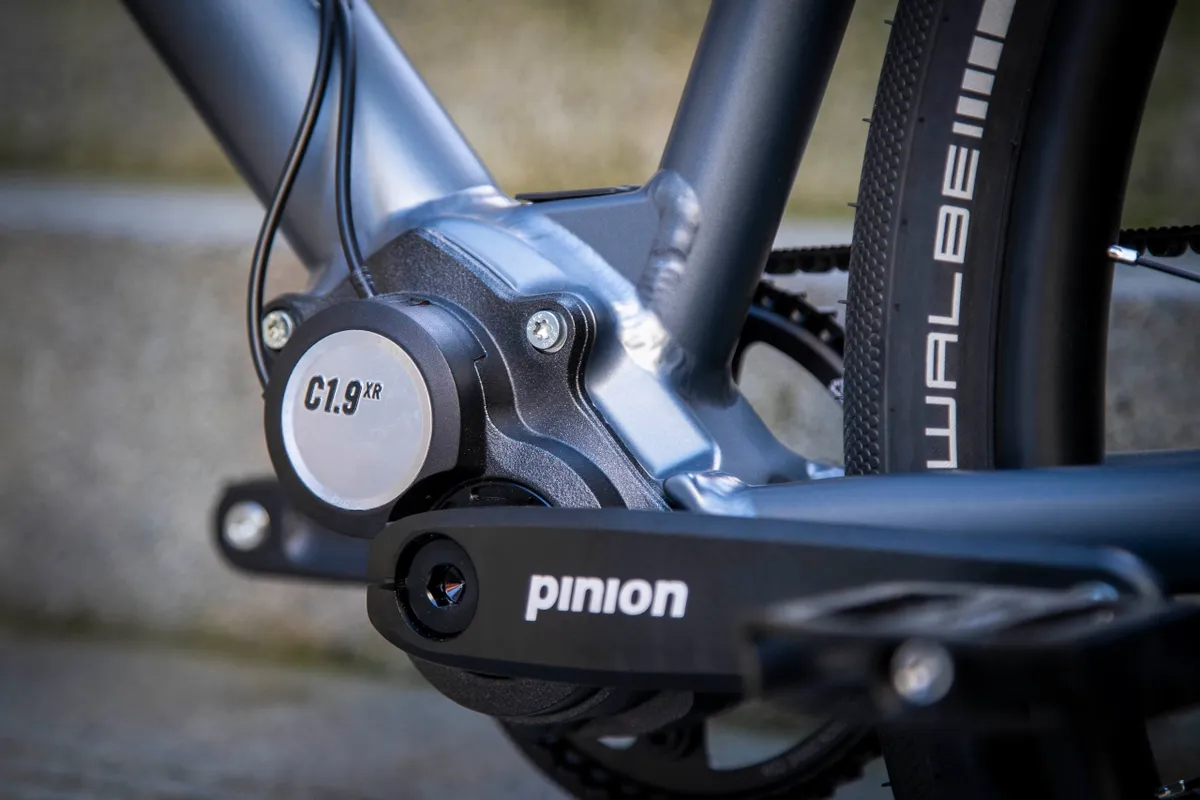
A bicycle gearbox can’t be mounted to any bike – manufacturers must make frames designed around the gearbox, which adds expense.
Pinion’s gearbox mounting system (for non-assisted mountain bikes) is an open design and has been adopted by around 100 international manufacturers – but that’s still a small number of brands (and bikes) compared to those that fit derailleurs.
French gearbox manufacturer Effigear has designed a gearbox called the Mimic, which uses Pinion’s mounting system.
Additional weight

Gearboxes are heavier than cassettes and derailleurs – having a large number of cogs inside a case is difficult to engineer in lightweight form.
However, the handling benefits of extra mass mounted low in the centre of the bike is evident, with some top downhill riders strapping around 2kg of ballast onto their bikes. The Orbea Rallon is even supplied with weights included.
Gearboxes are centralised in the bike, whereas derailleurs and cassettes are ‘unsprung’ mass, which reduces the effectiveness of the bike’s suspension.
With new manufacturing and material technology, the weight of gearboxes is likely to decrease.
Conversely, top-end derailleurs are now electronic, with the inclusion of internal batteries and motors increasing weight.
They're expensive

Bicycle gearboxes have historically been considered an expensive choice, requiring a large number of parts, precision manufacturing, and extensive research and development.
However, the latest crop of high-performance electronic shifting has pushed up prices of derailleur drivetrains to match gearboxes. For example, the Nicolai G1 GPI costs £9,099.99 with a Pinion gearbox and £8,099.99 with a traditional drivetrain.
The Haibike Hybe CF11 eMTB costs £8,399 with its SRAM AXS electronic drivetrain, whereas the Haibike ALLMTN CF11 TRN/IQ eMTB with a Pinion Motor Gearbox Unit (MGU) electronic gearbox and integrated motor costs £7,899. The specs are similar, with the same carbon frame, battery size, motor power and suspension spec.
Added friction

Gearboxes create more drag than a derailleur and cassette. A chain running on a chainring and a cassette cog is remarkably low-drag, particularly at low power outputs.
In a gearbox, the meshing cogs and extra bearings, which are required to provide different gear ratios, increase friction losses.
Drivetrain dominance

Gearboxes are the outlier in an industry that has evolved around rear derailleurs. SRAM and Shimano are the two largest manufacturers of traditional drivetrains (as well as brakes, wheels and other components), but don’t manufacture gearboxes.
The two brands have considerable sway over the OE (original equipment) parts they sell to bike manufacturers, with gearbox manufacturers tiny in comparison.
Bike shops are almost guaranteed to have derailleurs, cassettes, shifters and geared chains in stock, so repairs and replacement are quick and easy for consumers. In comparison, gearbox shifters, parts and optional belts are more difficult and time-consuming to source.
Why gearboxes are a good idea

Despite the issues we've highlighted above, gearboxes still have plenty of positives and make a lot of sense, especially for certain cycling disciplines and genres.
Wider gear range
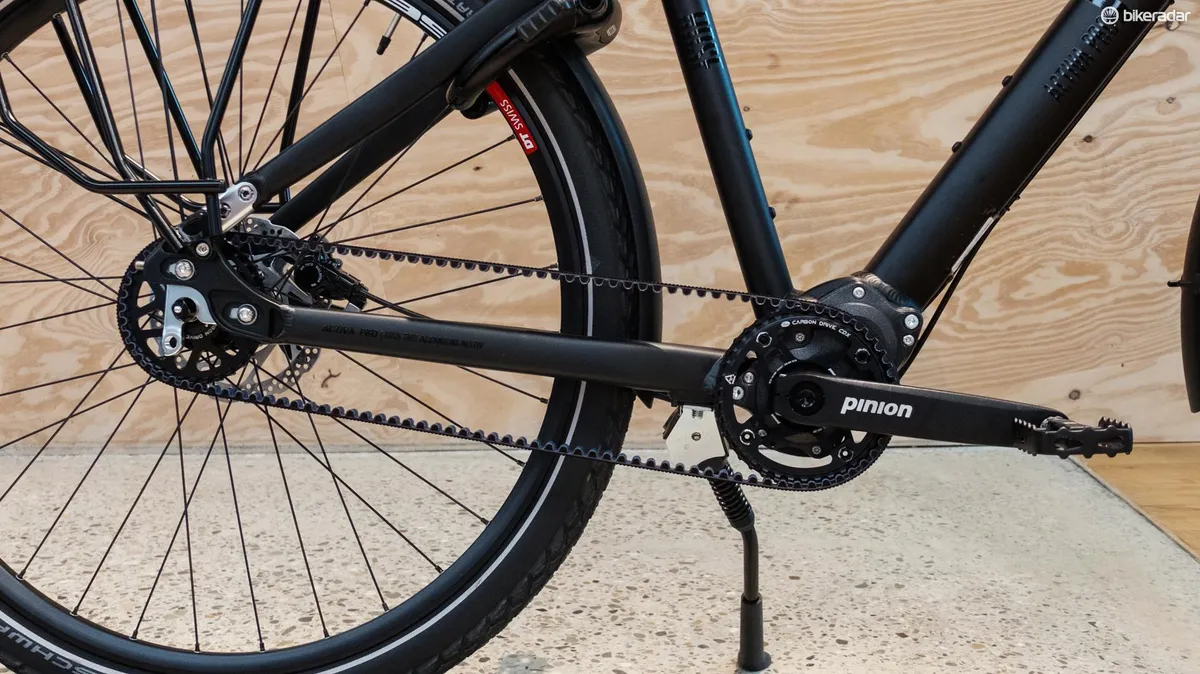
Gear range is the difference in ratio between the highest and lowest gears available. SRAM’s Eagle 12-speed with 10-52t cassette, to name one traditional drivetrain, offers a 520% range.
Gearboxes blow these numbers out of the water, with Pinion boasting a 600% range on its 12-speed C-line MTB gearbox and a whopping 636% on the 18-speed P-Line touring gearbox.
Stronger and more durable

Gearboxes are exceedingly tough and able to handle high loads with ease.
However, if a gearbox breaks, the precision componentry inside is best worked on by a professional.
When it comes to servicing intervals, gearboxes win, too. Pinion promise staggering 10,000km service intervals for its latest gearboxes – and that’s only for an oil change. Derailleurs and cassettes are exposed to the elements and can suffer from wear – particularly on MTBs, where they are exposed to dirt from the trail.
Which bike types are best suited to gearboxes?

Mountain bikers can benefit from gearboxes’ strength because MTB drivetrains are used in high-torque, high-vibration environments. In mountain biking, the sealed nature of gearboxes means they are protected from dirt and there is no derailleur susceptible to damage. The extra weight is a drawback for some, though.
Touring, bikepacking and commuter bikes prize low maintenance and robustness, so the long service intervals and inherent toughness of gearboxes are an asset. The wide gear range is also relevant here.
Tandems have to deal with double the power of traditional drivetrains, so could benefit from the strength of a gearbox, while the drawback of increased weight makes a smaller percentage increase compared to a solo bicycle.
The inherent friction losses (especially at low power outputs) and weight penalties are prohibitive to the uptake of gearboxes for road and XC race bikes.