The 2026 Tour de France Femmes will cover 1,175km with a total elevation gain of 18,795m as it gains an extra stage, includes only its second proper time trial and climbs Mont Ventoux for the first time.
Added to that, the fifth edition of the race has a start list packed with previous champions, alongside riders and teams that will be eager to prove themselves at the Tour.
Here are eight key questions and answers before the action gets underway this Saturday 1 August.
1. Where does the race start this year?
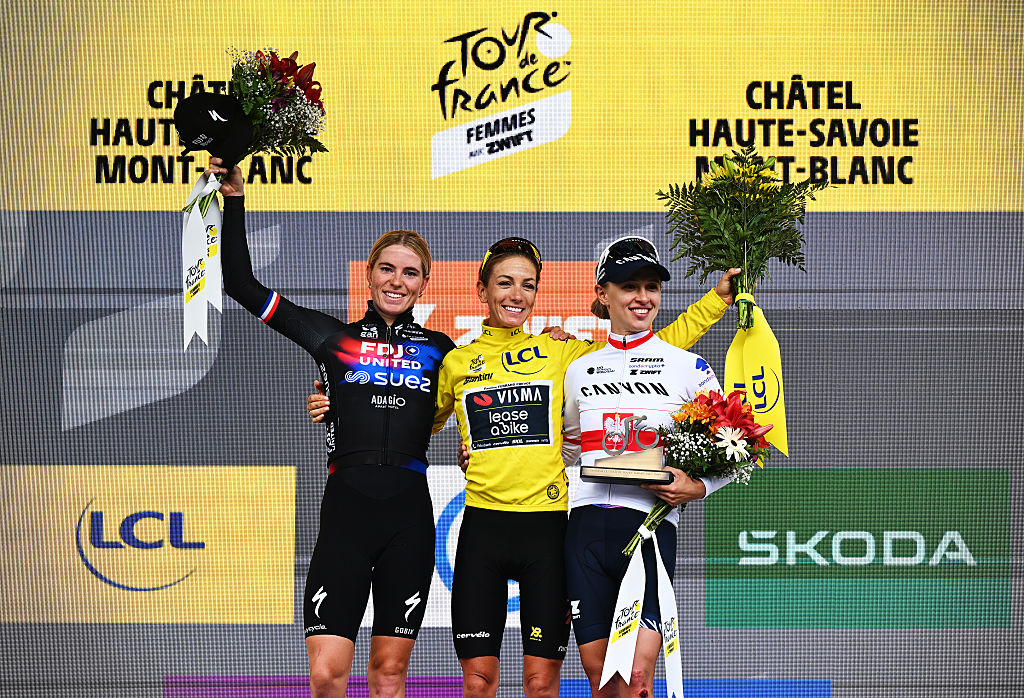
For the second time in its short history, the Tour de France Femmes has a Grand Départ outside of mainland France, over the border in Switzerland. The city of Lausanne, on the northern flank of Lake Geneva, plays host to stage 1 with a circular loop.
If that wasn’t enough to pull in the crowds, it’s also Swiss National Day – an occasion that’s been celebrated since 1891 to commemorate the 1291 formation of Switzerland as we know it. The finish of this stage should be fun too – the final 2.5km is at 4.6%, with more pronounced gradients in the middle of this section.
2. What has race organiser Marion Rousse said about this year’s route?
Now five years into plotting Tour de France Femmes routes, race director Marion Rousse can call on experience, confidence, nous and clout to pull together her dream passage through her home country.
Since last year, she’s also had an extra stage to play with – nine, up from the previous eight – which shouldn’t be underestimated when it comes to planning a balanced route that covers different regions (and countries) without the need for big transfers.
At the launch last October, talking to L’Equipe, she referred to the route as “mischievous” – an all killer, no filler race packed with testing climbs, often at critical junctures.
3. Who does the 2026 route suit?
When the race launched in 2022, there were concerns that high-summit finishes would be dominated by Annemiek van Vleuten, the pre-eminent stage racer of her generation, and would be a little uncompetitive. That is indeed what happened, but since then, we’ve seen three different winners in three years.
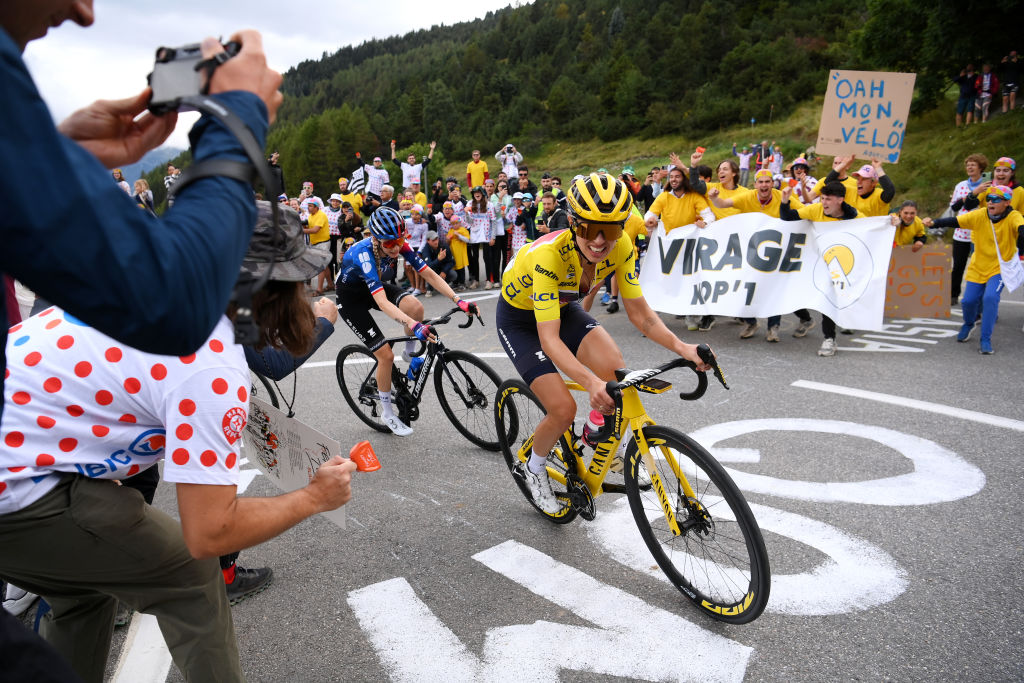
The 2024 race, in particular, produced a scrap for the ages, when Kasia Niewiadoma-Phinney held off the challenge of defending champion Demi Vollering by only four seconds atop Alpe d’Huez. Both riders will be in the competitive mix again this year. Vollering – who’s strong against the clock – will like the inclusion of the rolling, 21km stage 4 time trial to Dijon almost as much as Niewiadoma-Phinney will loathe it.
However, these two riders will have their work cut out against favourite Pauline Ferrand-Prévot, who on her return to road racing last year won the Tour well ahead of her own schedule. She’s armed with a fresh, extended contract with Visma-Lease a Bike too, and will hopefully be racing pain-free following post-season ankle surgery to fix an issue she’d carried all the way from that spring’s Strade Bianche.
Outsiders for overall victory include Marlen Reusser, second at the 2025 Giro d’Italia, who’s racing on home roads in Switzerland, and after winning world time-trial gold last year will be buoyed by the inclusion of the 21km solo test.
The Giro winner for the past two years, Italy’s Elisa Longo Borghini, could also challenge if she extricates herself from the tractor-beam pull of her home Grand Tour.
Then there’s British up-and-coming rider Zoe Bäckstedt. The 21-year-old is a time-trial expert, and also has previous form on hilly routes, so there’s potential to shine on multiple stages of this year’s Tour.
4. How is the route balanced between terrain and time trials?
As with the men’s race, you should take the broad labelling of stages in the race guide with a pinch of salt. Like a half rain/sunshine symbol on a weather map, it rarely tells the full story of what’s set to happen. The guide says there are three ‘flat’ stages, three ‘hilly’, two ‘mountain’ and one time trial. This is true, to an extent, but don’t assume that ‘flat’ will mean a bunch-sprint finish and ‘hilly’ will result in a breakaway or solo exploit.
With its finishing kicker into Lausanne, the ‘flat’ stage 1 will be an early GC shakedown, while the ‘hilly’ 157km stage 3 to Poligny is indeed that with 2,400m of climbing, but its benign finish will keep the interest of the sprinters all day. What can’t be argued with is that stage 7’s mountain dalliance with Mont Ventoux will do exactly what it says on the tin.
5. What is the ‘Queen stage’ of the race and where is it this year?
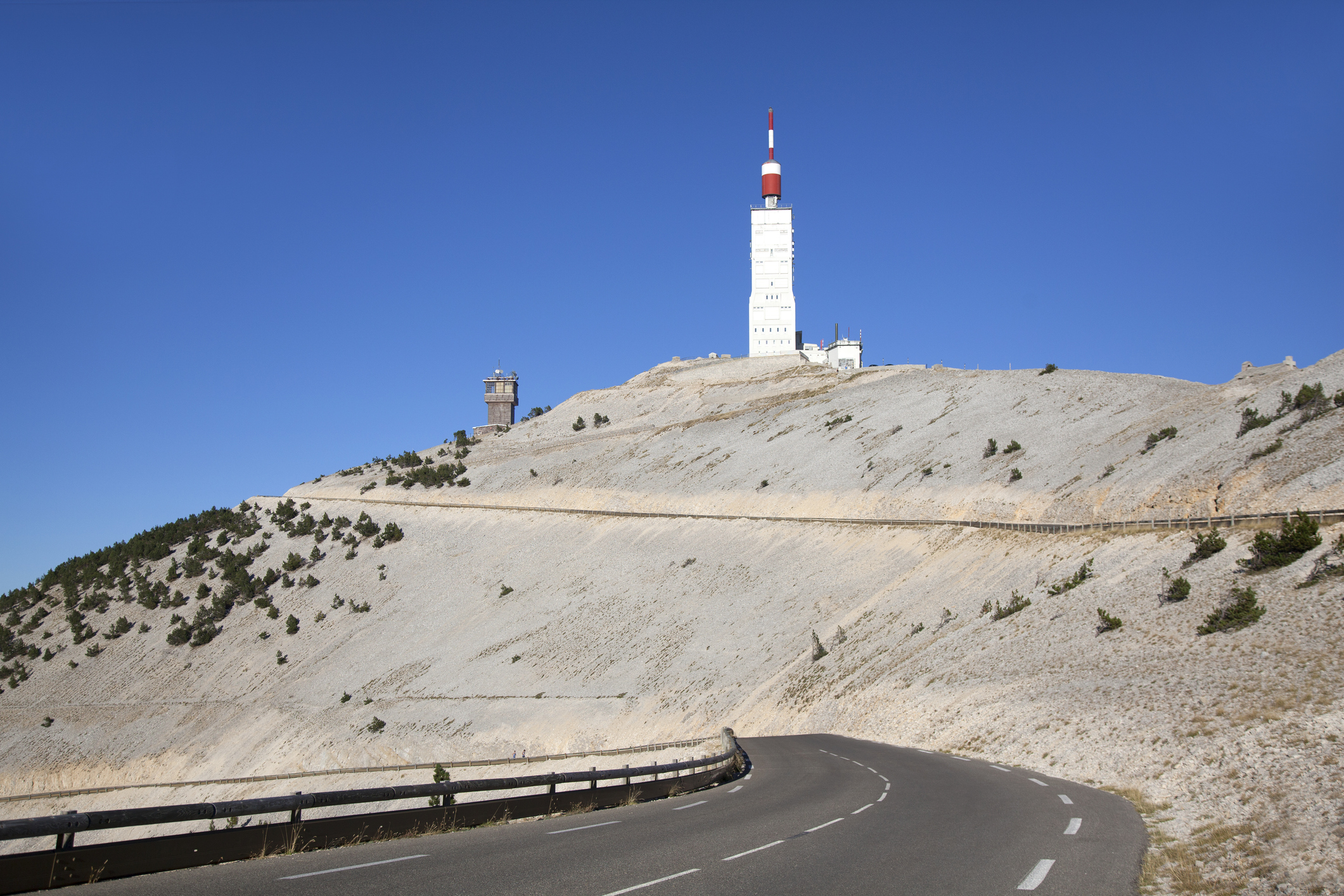
It can only be stage 7 to Mont Ventoux. Forget all the shadow boxing and phoney wars up until that point – the Tour de France Femmes GC fight has always built to a crescendo later in the week. The Giant of Provence strides like a colossus over the Vaucluse, dwarfing everything in its sight, and has been an imposing obstacle on the men’s route since 1951.
The stage this year is a classic of the genre, with a smattering of small categorised climbs as a prelude, prior to beginning the monstrous ascent in Bédoin – the classic side of the climb. Things really explode at Saint-Estève, kickstarting 15.7km at 8.8% to the summit.
It’s sure to please defending champion Ferrand-Prévot, who excelled in the high mountains last year, winning the final two stages. Pure climbers, such as Sarah Gigante, will also be enthused – it would be a prestige standalone win for her palmarès.
6. Which stages should we make an appointment for?
We said the Tour de France Femmes tends to build to a crescendo on the final weekend, but that’s not necessarily going to be true this year.
Yes, Mont Ventoux will be a blockbuster Friday afternoon, but the route then settles back down with a likely sprint on the longest stage (175km) of the race into Nice before going berserk for the finale on stage 9.
This short 99km (2,175m elevation) stage has the look of a World Championship road-race finishing circuit, climbing Col d’Eze four times. The Col is a legend of the Paris-Nice stage race, where it has often concluded the proceedings. Residents of nearby Monaco, of which there are many in the men’s and women’s pelotons, will be familiar with it from training rides.
The uphill drag race to Ventoux may well prove to be the knockout blow for the yellow jersey, but the riders will all need to have their wits about them for this final stage laced with booby traps.
7. Where might moments of chaos hit the route?
There are no chaos-inducing cobbles or gravel sections in this year’s race, although uncontrolled moments will never be far away on a route with few obvious dead spots. Stage 5, from Mâcon to Belleville-en-Beaujolais, should provide lively racing, with eight categorised climbs and almost 3,000m elevation across 140km, as it winds through the Beaujolais wine region.
The final climb is also the toughest – the vine-covered slopes of the 486m Mont Brouilly (3km at 7.7%) offer sumptuous views of the vineyards below, and top out 11.5km from the finish, making the summit a platform for victory for brave riders.
8. Will the time trial have an outsized role to play in deciding the race?
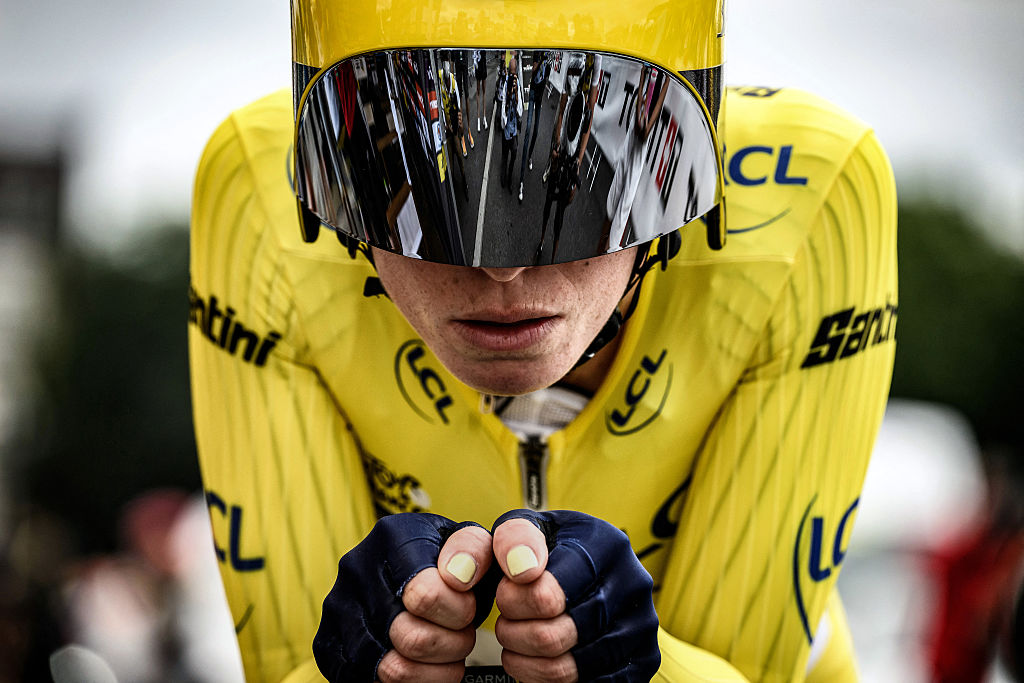
Time trials haven’t been an annual staple of the Tour and this will be only the second proper TT, if you discount the prologue of 2024.
Rousse has said they run a risk of a time trial ruining the GC as a contest, particularly when it’s so early in the race. She’s confident this year’s 21km test to Dijon won’t have that effect, particularly with a monster stage to Ventoux and the Col d’Eze finale up the road.
On the contrary, she believes the design (one for TT specialists) and placing (first half) of the time trial will enhance the GC and give riders such as Reusser a leg up before the high mountains.