The Tour de France returns like clockwork every July, but every route has its own distinct character, shaped by the organisers' philosophy, the wider trends circling professional cycling and the attributes of the riders expected to fight for victory.
For 2026, cycling's greatest race sees the return of a team time trial for the first time since 2019, a brief drive-by of the Pyrenees and a slow build to a brutal final weekend in the Alps.
It's a route race director Christian Prudhomme has described as a "crescendo", with three of the five summit finishes coming in the three stages before the Tour draws to a close in Paris. Two of those summit finishes are in Alpe d'Huez, with the Tour's most famous ski town featuring on back-to-back days for stages 19 and 20.
On paper, the route appears to have been designed to keep the suspense alive for as long as possible, despite the presence of the seemingly unstoppable Tadej Pogačar, and without accounting for the unpredictable danger that lurks around every corner of a Tour de France.
Which riders does the route favour? Which Tour de France stages are worth clearing your diary for? What's new for this year's Tour? Here are the answers to eight of the biggest questions about the 2026 Tour de France route.
Where does the race start this year?
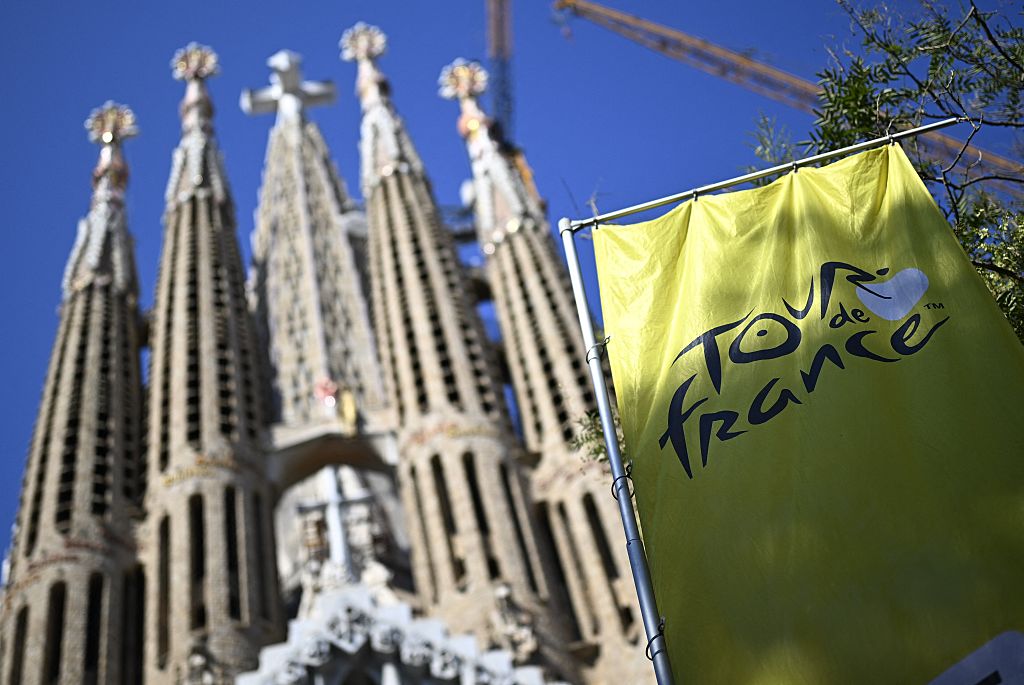
Up until 2023 and Bilbao, Spain had to wait over 30 years to host the Tour de France Grands Départ, and now it’s come along twice in four editions. This time, it’s in the Catalan capital, Barcelona, with three stages in Catalonia before it reunites with France.
Barcelona’s certainly no stranger to the race; the city has played host three times since 1957. The most recent was 2009, in a stage that ended in Andorra and was won by Brice Feillu. The cities of Tarragona (the furthest south the race has ever been) and Granollers to the north are also on hosting duty, on stages two and three.
In classic Grands Depart fashion, there’s a bit of everything on the menu aside from anything that will allow a rider to take a stranglehold on the yellow jersey (and, unusually, there’s nothing for the sprinters). The opening stage sees a 19km team time trial, the first time the discipline has featured for seven years, through Barcelona’s streets with a climb of Montjuïc hill – a sporting and cultural hub of the city that has always hosted the Tour when it’s visited.
Stage two also finishes here, with a three-lap circuit of the climb that is the traditional finish of March’s Volta a Catalunya stage race, before stage 3 heads into France with a Pyrenean mountain-top finish at Les Angles, even if it’s the most benign Pyrenean summit finish imaginable.
The 2026 Tour de France route – in numbers
- 3,320.7km – total length
- 7 flat stages
- 4 hilly stages
- 8 mountain stages
- 5 summit finishes
- 1 team time trial
- 1 individual time trial
- 2 rest days
- 7 new climbs
- Côte de Begues (stage 2)
- Montée de Gavarnie-Gèdre (stage 6)
- Col de la Griffoul (stage 10)
- Col du Page and Col du Haag (stage 14)
- Plateau de Solaison (stage 15)
- Col de Sarenne (stage 20)
- 2,642m – highest point in the race (Col du Galibier)
- 53,950m – total elevation gained
Will the race be interrupted by protests, like last year’s Vuelta a España?
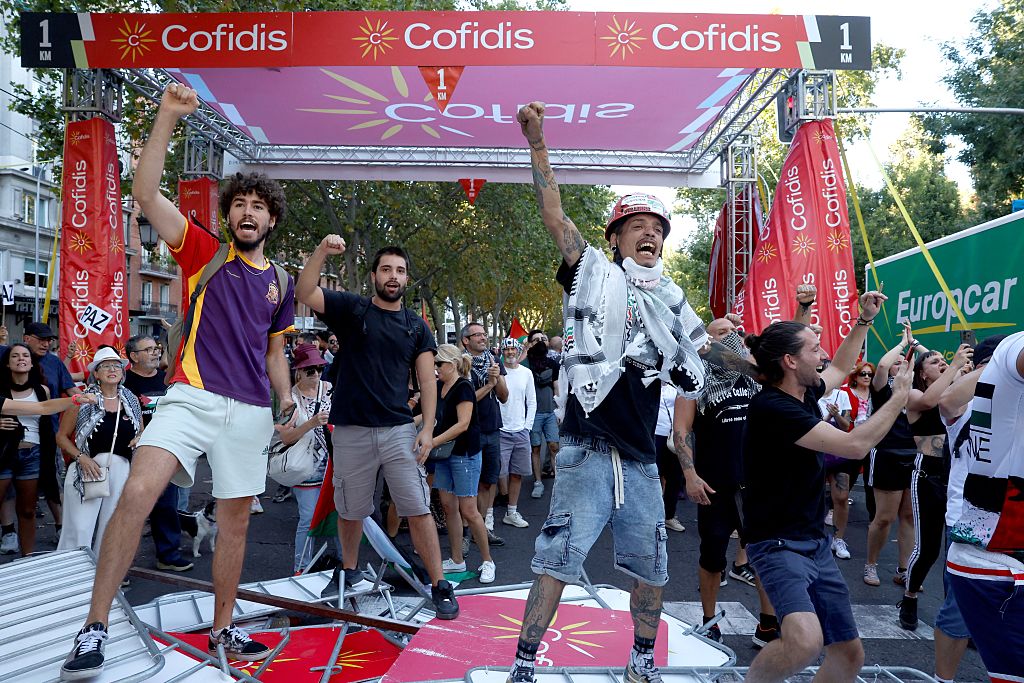
The last time a grand tour was staged in Spain, in September, it had to be abandoned before its finish. The 2025 Vuelta a España was increasingly targeted by pro-Palestine protesters, who were vociferous in their opposition at the presence in the race of the Israel-Premier Tech team, at the same time as Israel’s war in Gaza.
This led to stages being shortened and eventually the collapse of the final stage in Madrid with 60km remaining, with Jonas Vingegaard declared the winner (even if there was no formal podium presentation). There were fears at the time that protests would engulf the Tour de France upon its resumption in Barcelona, but fundamental changes within the team have calmed those fears.
The team is racing in 2026 under the name NSN Cycling, shedding its Israel identity and racing under a new Swiss license and management structure. Not only that, but significantly, as far as the Barcelona Grand Depart is concerned, the co-owner of NSN – and, so, the cycling team – is Barcelona football legend and lifelong cycling fan Andres Iniesta.
What is the ‘Queen stage’ of the race and where is it this year?
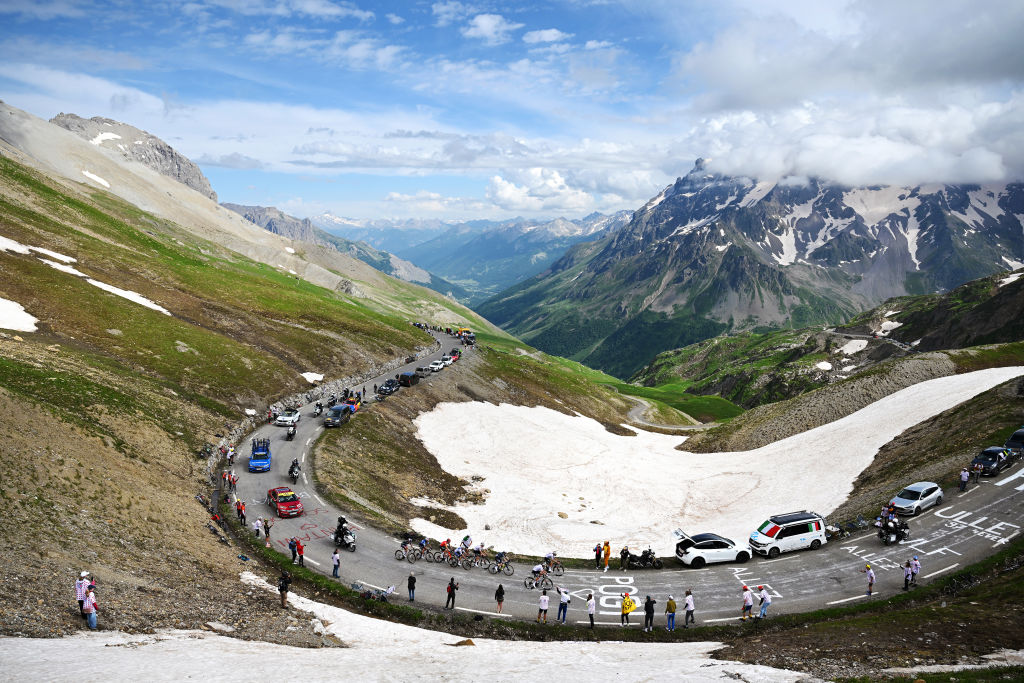
The Queen stage is typically defined as the hardest, highest and most demanding stage of the race, featuring high (or the highest) altitude and multiple of the longest, steepest hors categorie (HC) climbs.
The label isn’t always explicitly given by the organiser or in the race literature and is sometimes simply left to wise sages of the Tour to make up their own minds. Some years can be less clear than others, but there’s no argument in 2026: stage 20 is a monster.
Its 5,600m elevation dwarfs its nearest rival (4,300m, the day before), and includes the highest point of the race (Col du Galibier, 2,642m), the hideously uneven Col de la Croix de Fer and a second – albeit somewhat contrived – ascent of Alpe d’Huez in consecutive stages (via the alternative route of the Col de Sarenne).
Pogačar could well have a big lead come the start line of stage 20, but there’s a lot to survive here and plenty on the line.
How is the route balanced between flat, hilly, mountains and time trials?
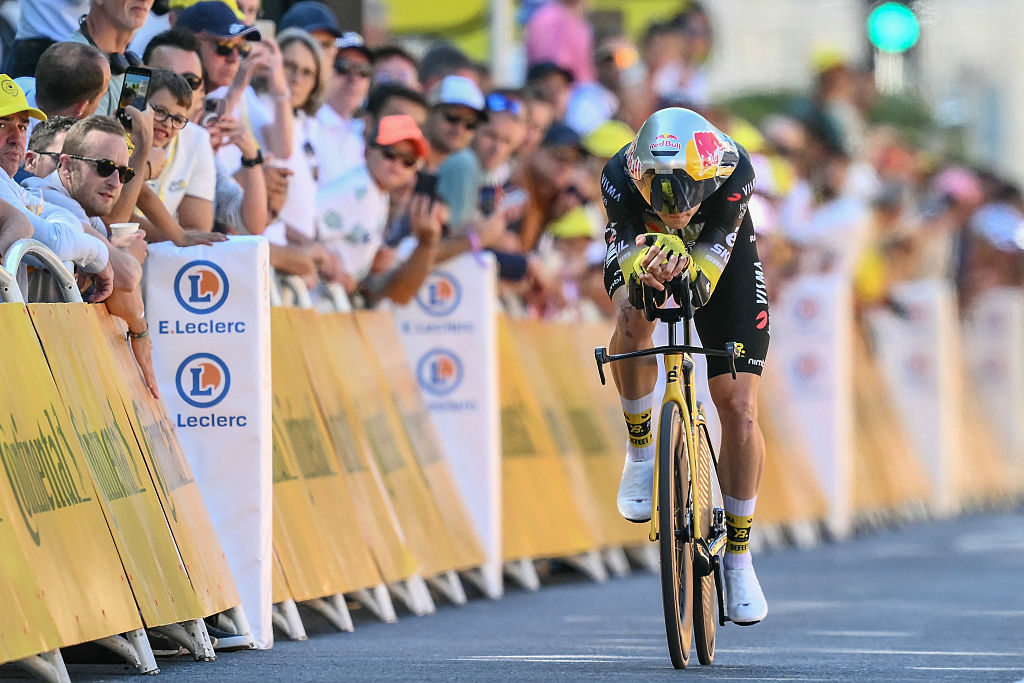
The official media guide to the race tells us, in the broadest strokes, that there are seven flat stages, four hilly, eight mountains (including five summit finishes) and two time trials (one team and one solo).
Yet, as a restless route tinkerer who’s always looking for novel and innovative ways to present a 21-stage romp around France, Prudhomme perhaps doesn’t like his stages to be pigeonholed so restrictively.
There might be subtle sections within a ‘flat’ route that can have huge effects on the outcome, including stinging late climbs or areas where crosswinds may be more likely. The word ‘wind’ isn’t mentioned once in the route guide, however, largely because the route avoids the windy, flatter northwest of France.
Nuances buried within the route can also be thrown up by the pacing and placing of types of stages in a Prudhomme Tour.
Rarely do you see a string of similar stages in a row, like the Giro d’Italia tends to inflict on us.
Keeping the viewers gripped is always central to Prudhomme’s vision. The opening week of this year’s Tour is a prime example: the first six stages offer opportunities for every single strength in the varied grand tour peloton. If the riders are kept interested, chances are we viewers at home will be.
Which stages are essential viewing?
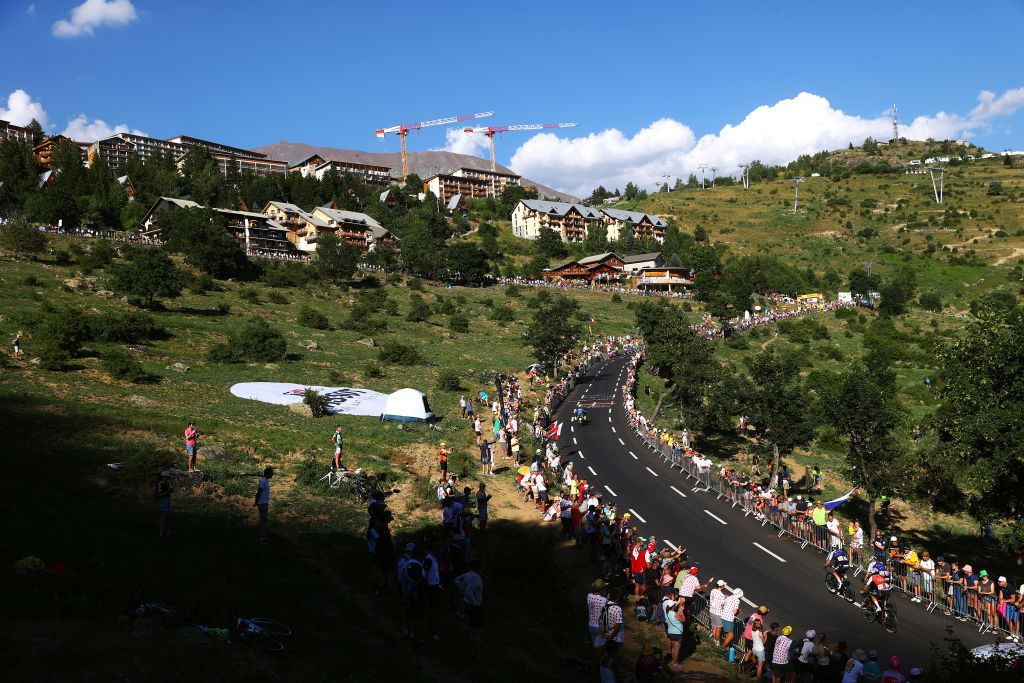
The final weekend is where this Tour is expected to reach its crescendo. Stage 19 finishes atop the legendary Alpe d'Huez after its famous 21 switchbacks, before stage 20 returns to the mountain in an entirely different way.
Riders first tackle the little-known Col de Sarenne – climbed for the first time in Tour history after previously featuring only as a descent – before dropping through the ski station and looping back for another 200m of climbing to finish on Alpe d'Huez itself. With 5,600m of climbing in total, stage 20 is comfortably the hardest of the race and the clear Queen stage.
The opening stage is also one not to miss. The 19km team time trial in Barcelona is the first of its kind at the Tour since 2019 and the first to open the race since 1971, offering an immediate test for the general classification favourites.
Beyond that, Bastille Day's stage 10 to Le Lioran in the Massif Central could provide a flashpoint, with a series of short, punchy climbs capable of exposing weakness before the race heads into its toughest Alpine block.
While the Pyrenees stages are always worth watching, the detour into the mountains comes so early this year – with fairly benign route profiles as a result – that we're unlikely to see much in the way of serious GC action.
What’s new to the Tour on this year’s route?
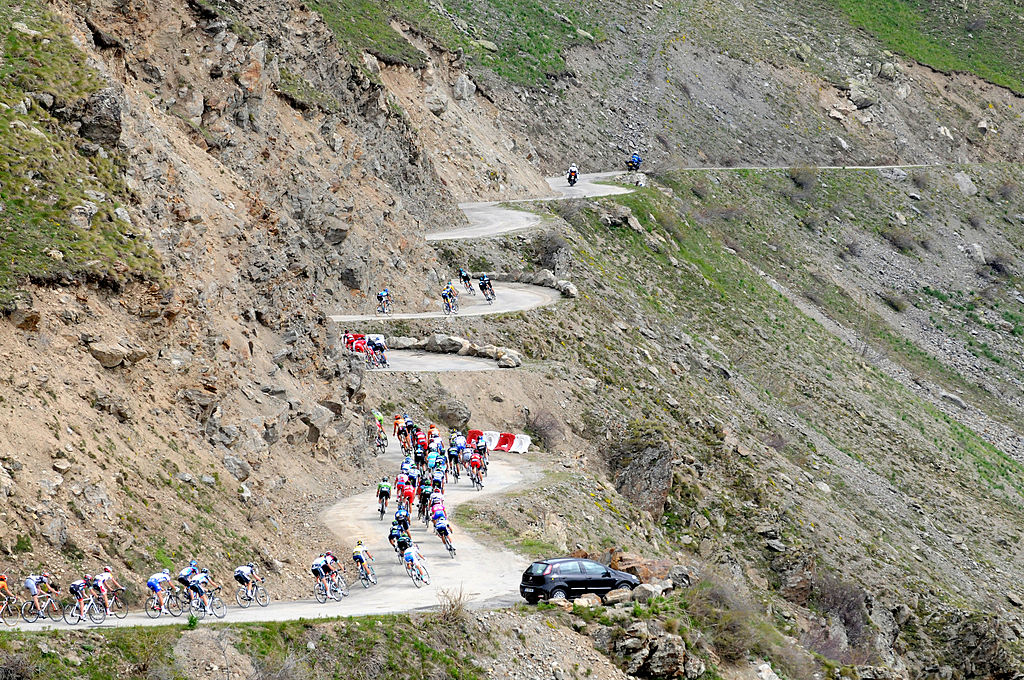
Aside from that new TTT format, Prudhomme continues to search out new climbs to throw riders out of equilibrium. Finding new climbs isn’t the problem – finding new climbs that can accommodate the Tour de France peloton and caravan is – so he’ll be happy to introduce several new treats in 2026.
The most decisive, on stage 20, has been trodden before by the Tour, just not as an ascent: the Col de Sarenne, which approaches Alpe d’Huez from the east, was first descended in 2013 as part of the double Alpe d’Huez ascent.
It’s a narrow, wild climb – think the Giro’s Colle delle Finestre – and a world away from the wide, engineered asphalt of Alpe d’Huez. It caused great concern among the peloton in 2013 when it was revealed they’d be descending it, but the worst sections were repaved and it passed without major incident. This year, the concern will be how to best negotiate its double-digit gradients at the summit.
Another key new climb is the Col du Haag (11.2km at 7.3%) – a Vosges forest trail converted into a bike path in 2022, with an aim to host the Tour – and will be decisive for its summit’s positioning, only 5.5km from the finish of stage 14 to Le Markstein.
Even tougher will be the finish of the following stage, at the summit of the claustrophobic Plateau de Solaison (11.3km at 9.1%) – unusually a new summit finish in the well-trodden Alps. It’s had a steady build-up in ASO circles, first in 2014 in the U23 Tour de l’Avenir, then a couple of editions of the Critérium du Dauphiné – the latter, in 2022, won by Jonas Vingegaard.
Is last year’s novel Paris finish back?
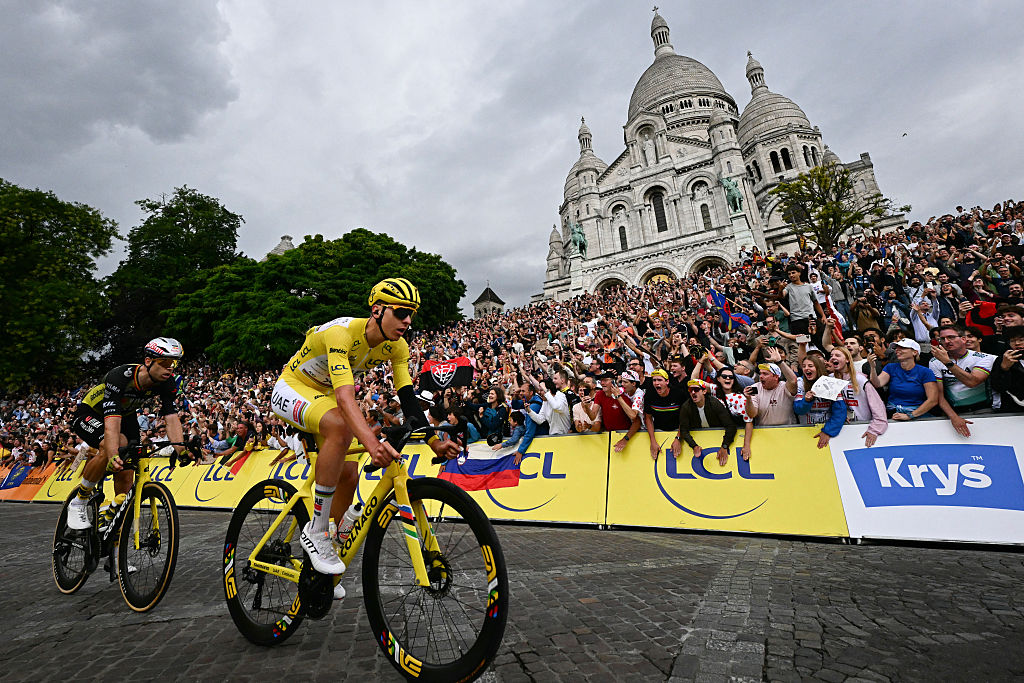
Yes, but with tweaks. Last year’s finale on a new finishing circuit on Butte Montmartre was a triumph, pitting a seemingly dead-on-his-feet Pogačar against a revitalised Wout van Aert.
It returns this year, but a police-enforced change means the final ascent on Montmartre is a longer 15km from the finish on the Champs- Élysées. It gives the strongest sprinters, the biggest losers of the re-jigged finale in 2025, a sniff of success again on a stage they had dominated for decades.
Which parts of the route will look the most spectacular on TV?
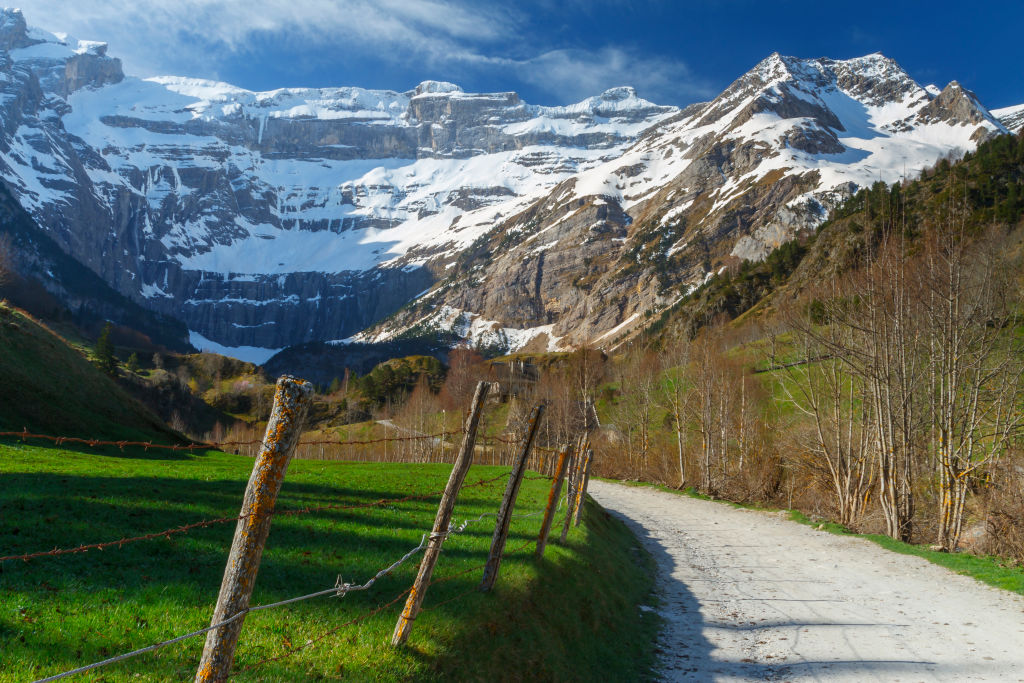
In an unofficial way, the Tour de France is a way of promoting the country as a tourism destination to the world, beaming images of ornate cathedrals, imposing châteaus and natural wonders into living rooms across the planet.
Chief among this feast for the eyes in 2026 is the inaugural inclusion of the Cirque de Gavarnie on stage 6, which won’t just prove a visual treat but a sporting one, too. The Cirque – an amphitheatre-like valley formed by glacial erosion that is a gigantic horseshoe slab of rock – is, since 1997, a UNESCO World Heritage site in the Pyrenees National Park. And it’s this that has prevented the sprawling race from visiting it, until now.
The route, which stops at Gavarnie-Gedre, stops short of ascending the fabulous Col de Tentes, one of the best-kept secrets of the Pyrenees for cyclists.
The stage isn’t merely eye candy, either. Although the finishing climb to Gavarnie-Gedre isn’t especially testing (18.7km at 3.7%), it is immediately preceded by the legendary Col du Tourmalet (17.1km at 7.3%).