Throughout the build-up to Paris-Roubaix 2026, we’ll be answering common, quirky and unexpected questions about the Queen of the Classics – not the headline debates such as who’ll conquer the cobbles this year, but the juicy nuggets and details that make this incredible race unlike any other.
This time, how do riders modify their bikes for Paris-Roubaix?
More than any other race, Paris-Roubaix used to be the place to see equipment swap-outs and strange hacks to add comfort over the cobbles. That’s changed in recent years, though, with the race now typically ridden and won on fairly standard aero road bikes.
Often, teams used to switch to their sponsors’ endurance bikes for Paris-Roubaix, highlighting another model in their range. That’s dying out, though, with modern road race bikes now offering tyre clearance that’s generous enough to fit wider tyres that enable riders to tackle the cobbles more easily.
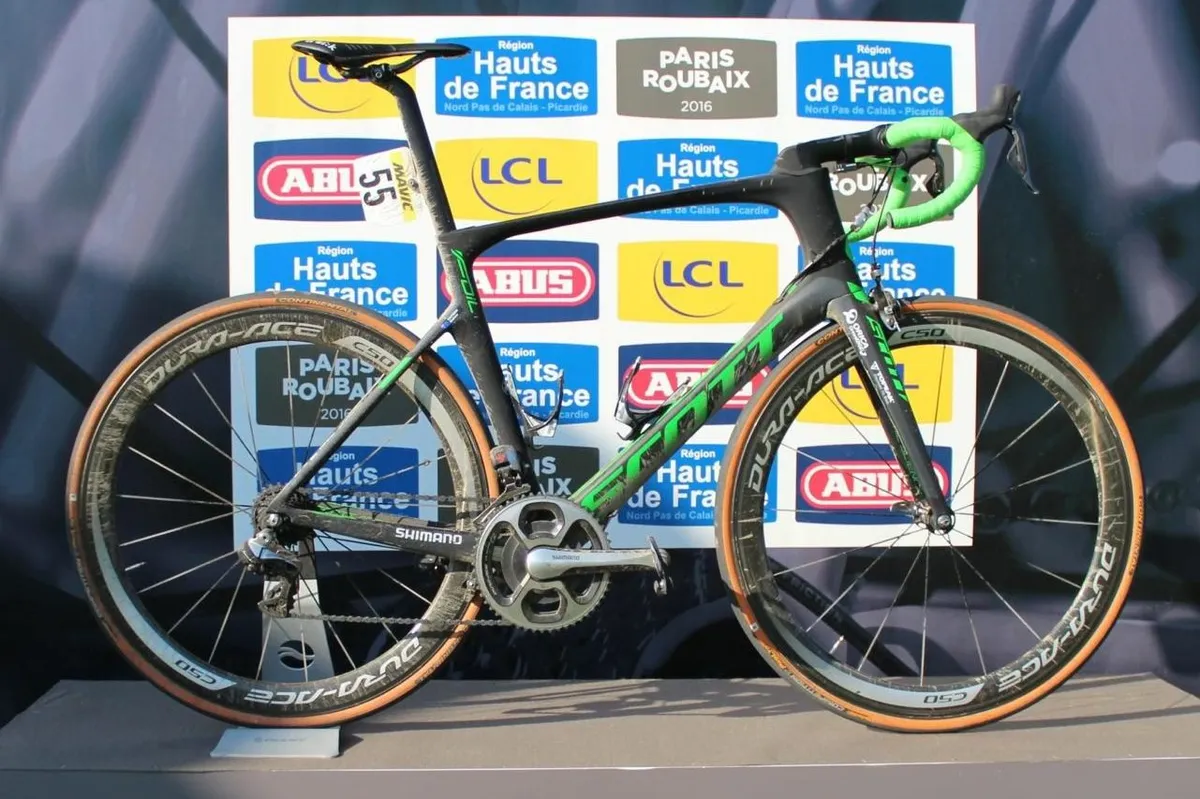
With average winning speeds over the 160km of the race now reaching around 47km/h and many wins on aero bikes, after Matthew Hayman won in 2016 on a Scott Foil, bikes used for Paris-Roubaix are becoming more and more normal.
Riders typically fit wider tyres than in races ridden exclusively on asphalt, though. That’s often 32 or 35mm, while in the past 28mm was usually as wide as you could go on a bike with rim brakes.
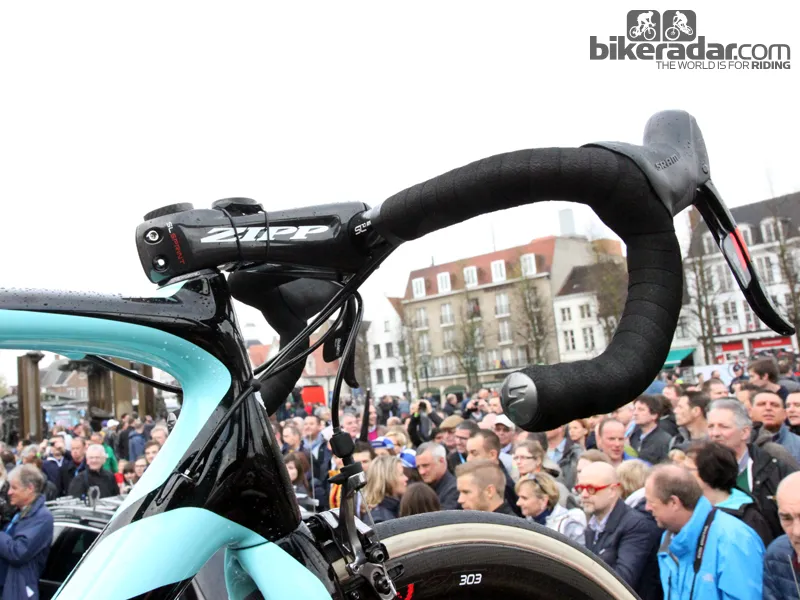
Another change that’s frequently made is to wrap handlebars with two layers of bar tape, to help cushion riders’ hands from vibrations. Nevertheless, it’s not unusual to see riders with bleeding hands at the end of the race.
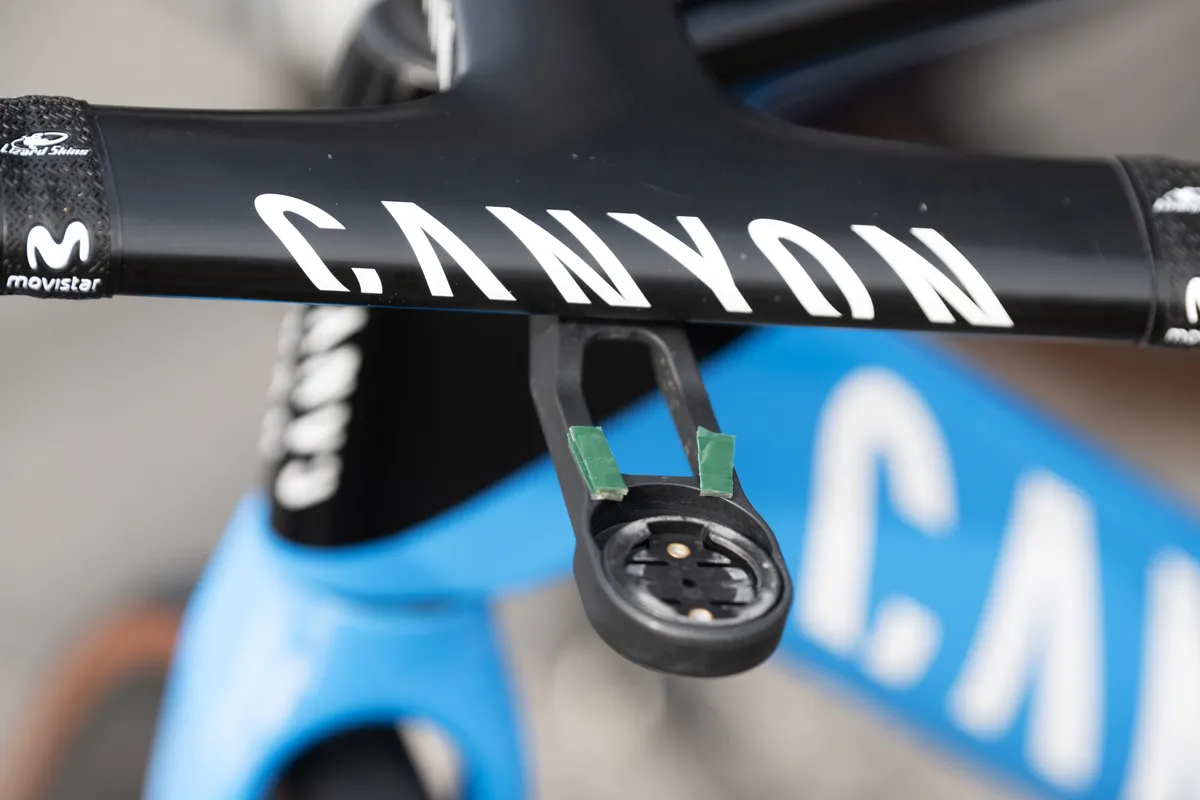
Bar tape ends up in other places, too, helping to stop things rattling loose on the cobbles. That includes strips of tape on water bottle cages, computer mounts and even pedal-top surfaces, where it may help dampen vibration from the cobbles.
With few hills, riders may fit extra-large chainrings for Paris-Roubaix. This not only provides higher top ratios, but it enables them to run a straighter chainline in the centre of the cassette at the race’s fast speeds, thus increasing drivetrain efficiency.
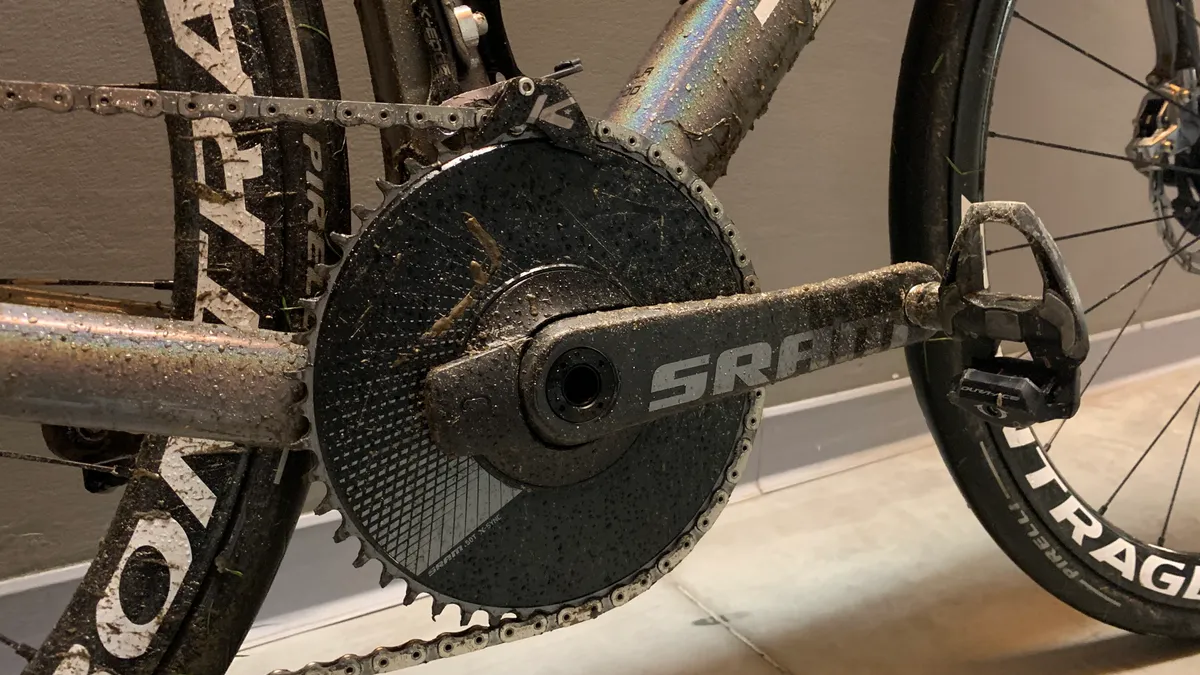
Some riders, including Lizzie Deignan when she won the inaugural Paris-Roubaix Femmes in 2021 and Mads Pedersen of Lidl-Trek, who has placed highly in previous editions of the men's race, have run 1x drivetrains.
The single chainring, which is often an aero design, can make the bike more aero and cut some weight, while the lack of proper climbs renders the smaller chainring and lower gear ratios redundant. A 1x setup can also be fitted with a chain catcher to help avoid chain loss on the cobbles.
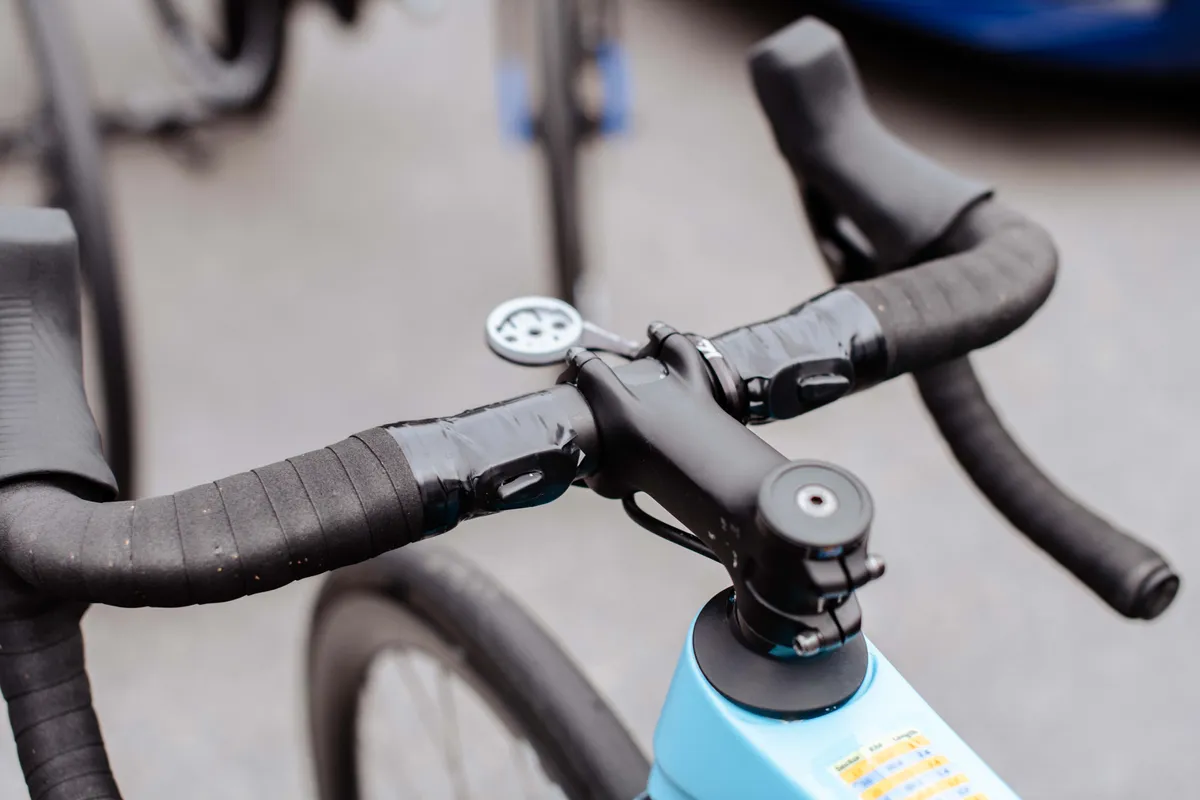
Some riders switch from integrated one-piece cockpits to two-piece designs, which are more adjustable and may be more robust. Satellite shifters are often placed on the bar tops to avoid having to change hand position on the cobbles. We’ve seen bar-top brake levers used, too.
Bikes with external seatpost clamps may have a second clamping ring added to avoid saddle slippage, although, with most modern top-tier bikes having an integrated clamping mechanism, this is now seen rarely.
Paris-Roubaix is the place to search for novel equipment, too, such as Visma-Lease a Bike’s Gravaa variable tyre pressure system, so it remains a highlight of BikeRadar’s tech coverage.