Throughout the build-up to Paris-Roubaix 2026, we’ll be answering common, quirky and unexpected questions about the Queen of the Classics – not the headline debates such as who’ll conquer the cobbles this year, but the juicy nuggets and details that make this incredible race unlike any other.
This time, we ponder why some riders historically preferred mechanical groupsets.
Shimano launched Dura-Ace Di2 in 2009 and SRAM’s 11-speed Red eTap groupset appeared in 2015. They rapidly took over from mechanical groupsets as the pros' choice for the majority of races.
Nevertheless, Paris-Roubaix was last won on a mechanical groupset in 2018, when Peter Sagan rode to victory on a Specialized Roubaix equipped with Dura-Ace mechanical (plus pro-only rim brakes when the Roubaix sold to the public was already disc-brake only).
Sagan would swap frequently from electronic to mechanical shifting for cobbled races and was still using mechanical Dura-Ace at Paris-Roubaix in 2023, his last appearance.
Sagan wasn’t the only Roubaix winner to prefer mechanical shifting. Fabian Cancellara, who won in 2006, 2010 and 2013, was also a mechanical luddite. Back in the day, it was claimed by some mechanics that Di2 (and not the riders) could get ‘confused’ on cobbles.

Riders who stuck with mechanical groupsets had their reasons. Particularly with Shimano’s wired electronic groupsets, there’s always the chance that a crash or brush with another rider could damage the groupset’s wiring and render the rear derailleur inoperable.
Mechanics have several hacks to lower the risk of this, though, including using a cable tie to attach the wire to the derailleur hanger and threading it around the hanger.
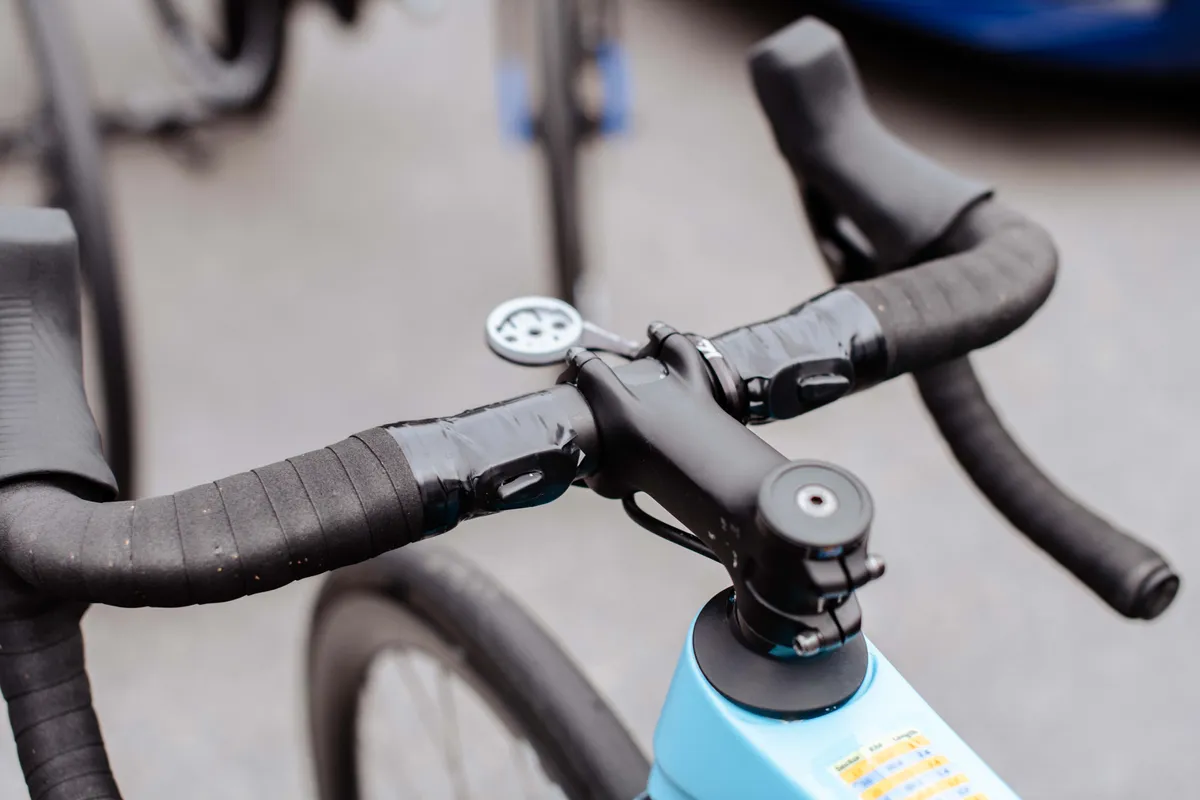
On the other hand, an electronic groupset can be set up with satellite shifters, which provide extra hand positions from which to shift, which can be useful on cobbled sections to avoid having to change hold on the bars.
It can be quite difficult to hit the correct shift button on Shimano levers, particularly previous generations, because the buttons were quite close together and in line. The latest Shimano Dura-Ace R9200 has gone some way to reducing the risk of this, with the two buttons easier to distinguish by touch.
SRAM has one lever per side, so such mis-shifting is less likely, plus you can add up to four sets of satellite shifters, positioning them on the bar tops and drops, for example.
Nowadays, pros don’t get the option to use a mechanical groupset, because everything in Shimano’s range above 105 is now purely electronic, and all SRAM’s 12-speed groupsets use its AXS electronic shifting. Most pro-level bike frames are also electronic-only.
Most riders in the pro ranks are now likely to have grown up racing and winning using electronic groupsets, while a few years ago many had probably spent the majority of their careers using mechanical. Switching to mechanical shifting for one race would probably feel strange to them.