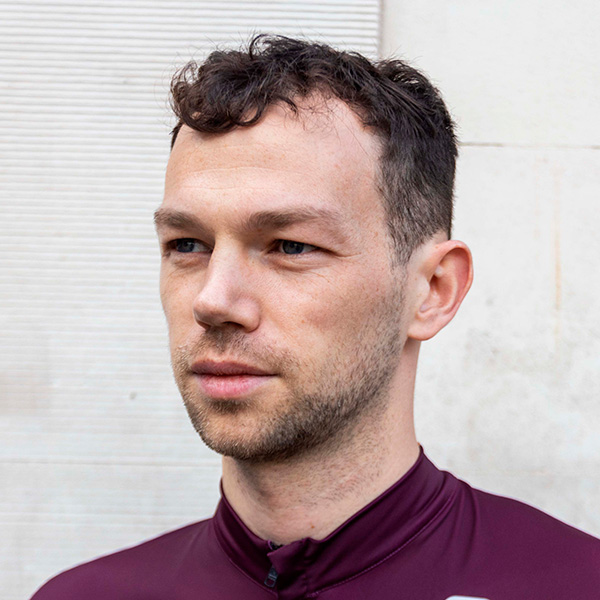
Late last year, Quirk Cycles announced it was looking to raise £500,000 to fund scaling its production and launch new small-batch models.
Quirk was founded in 2015 and since then it has gained a reputation for creating some of the most desirable custom bicycles. But founder Rob Quirk told me at the company’s workshop in Hackney Wick, London, that it was his plan “from day one” to build a bigger company.
“Although it’s romantic, the idea of being the only person in the workshop making these things for the next 30 or 40 years – I’m sure that’s a Ring of Hell,” he joked.
For Quirk, choosing the right time to grow was a case of building the right team. “I'd had various people offer to invest, but it wasn't a case of money. It was a case of skill. I needed to find the right people to work with, who had the skills to help me build it and scale it.”
One of those people was Noah Warren, who Quirk met two years ago. Warren had previously helped grow Temple Cycles. He began working with Rob and now works for Quirk full-time as the company’s operation manager, alongside a head of brand and creative, and a “shit hot” marketer, who has worked for MAAP and Cannondale.
Another key person was Rapha co-founder Simon Mottram. Mottram originally came to Quirk as a customer looking for a bike for Rapha’s Manchester to London ride and later came onboard as a lead investor.
In Rob’s words, Mottram now acts as an "unofficial advisor”. “We probably speak once a month or something like that. He’s given advice on brand strategy, and he’s just opened a lot of doors,” Rob said. Mottram has said: “Quirk isn’t following trends; it’s defining what’s next for boutique performance cycling.”
Catching the bug
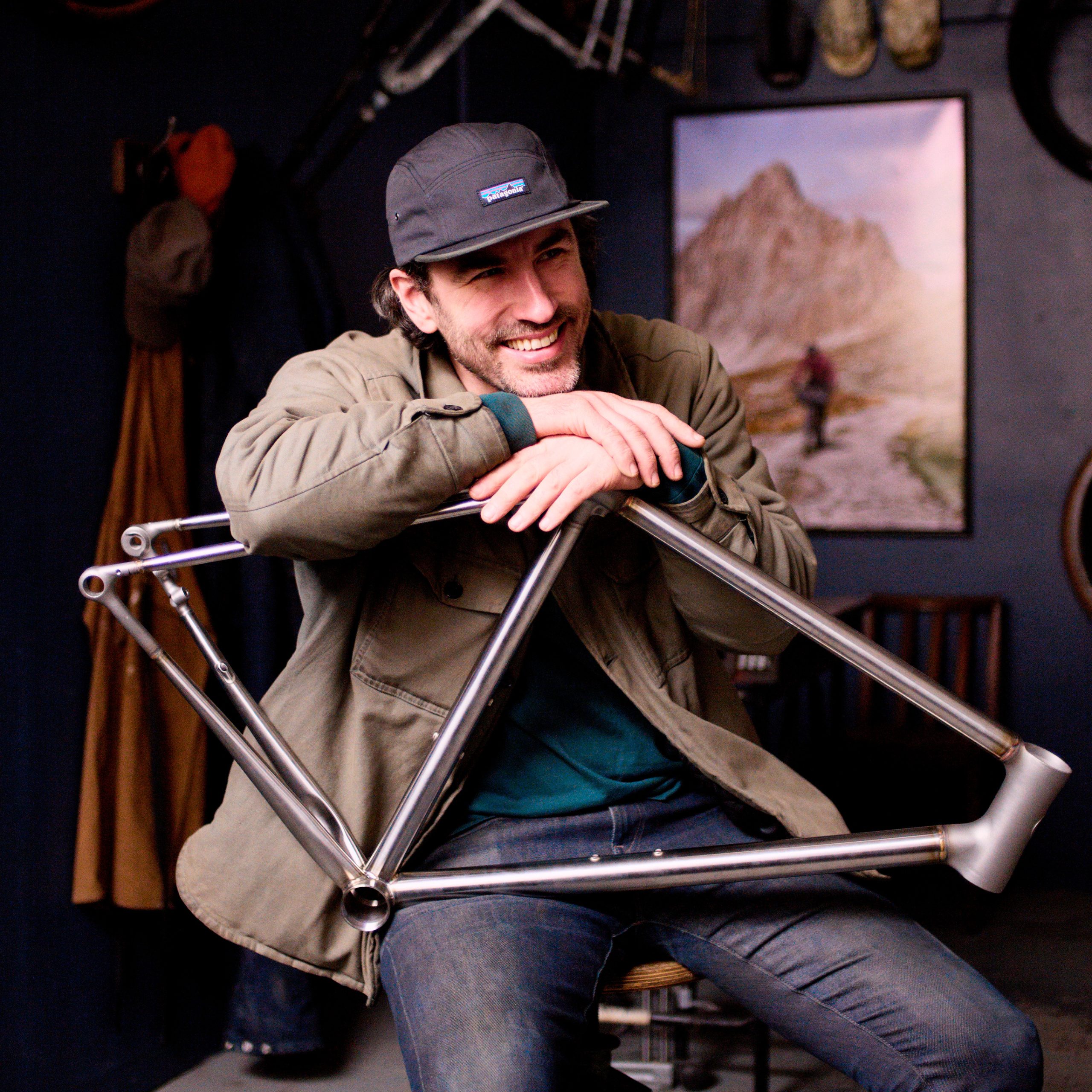
Quirk may have grown to a team of four, and have the support of a former Rapha CEO, but Rob wasn’t always a frame builder – or into bicycles.
Before Rob established Quirk, he was an artist. It was on a three-month residency in Berlin that he became obsessed with riding a bike and discovered how cycling offers “an amazing sense of freedom”. “The project had a budget and we had to do a lot of travelling, so it was like, ‘Maybe the best use of our funds is to buy a bike’.”
Rob said he “caught the bug” and, alongside using bicycles as a mode of transport, he became fascinated by their mechanics and design. He took to buying vintage steel bicycles from the 1940s and 50s, rebuilding them and selling them on, before getting into more modern bikes.
At the time, Rob was studying for an MA in research architecture at the University of Goldsmiths. The course was less about the realities of designing buildings, and more the production of space and its political connotations, including how the public and private interact.
This aligned with a residency he completed in Berlin, which saw him build a house made from pallets and water cooler bottles overnight in Alexanderplatz to ‘claim’ the land, an idea borrowed from folk law (rather than lore) in England and Wales. But Rob said the course’s emphasis on theory meant you didn’t “necessarily see the fruits of your labour manifest in front of you”.
“I think because of that, and whatever else was going on in my life, it had this quite depressing effect on me,” he said.
It was cycling that provided a remedy to his situation. Rob became hooked on trying to make a carbon fibre bike in the UK, after he was inspired by Argonaut Cycles, which was doing the same thing. He approached UK-based composite companies, who he said were interested, but didn’t have the capacity to take the idea on. He returned to the drawing board and joined a course at the now defunct Bicycle Academy instead to learn how to make a steel bike.
“The whole experience was one of these life changing moments,” he said. “It returned me to that immediacy of seeing what you've been working on manifest in front of you.”
Rob’s other bike was a carbon Cervélo with light wheels and “all the bells and whistles”. “It wasn't inspiring me, or making me feel like it was pushing me on to ride harder. It was just a pretty neutral experience. Then riding this first steel bike I built was just like” – he clicked his fingers – “Bam, this is it, this is what it should have felt like.”
Craftsmanship and 3D printing
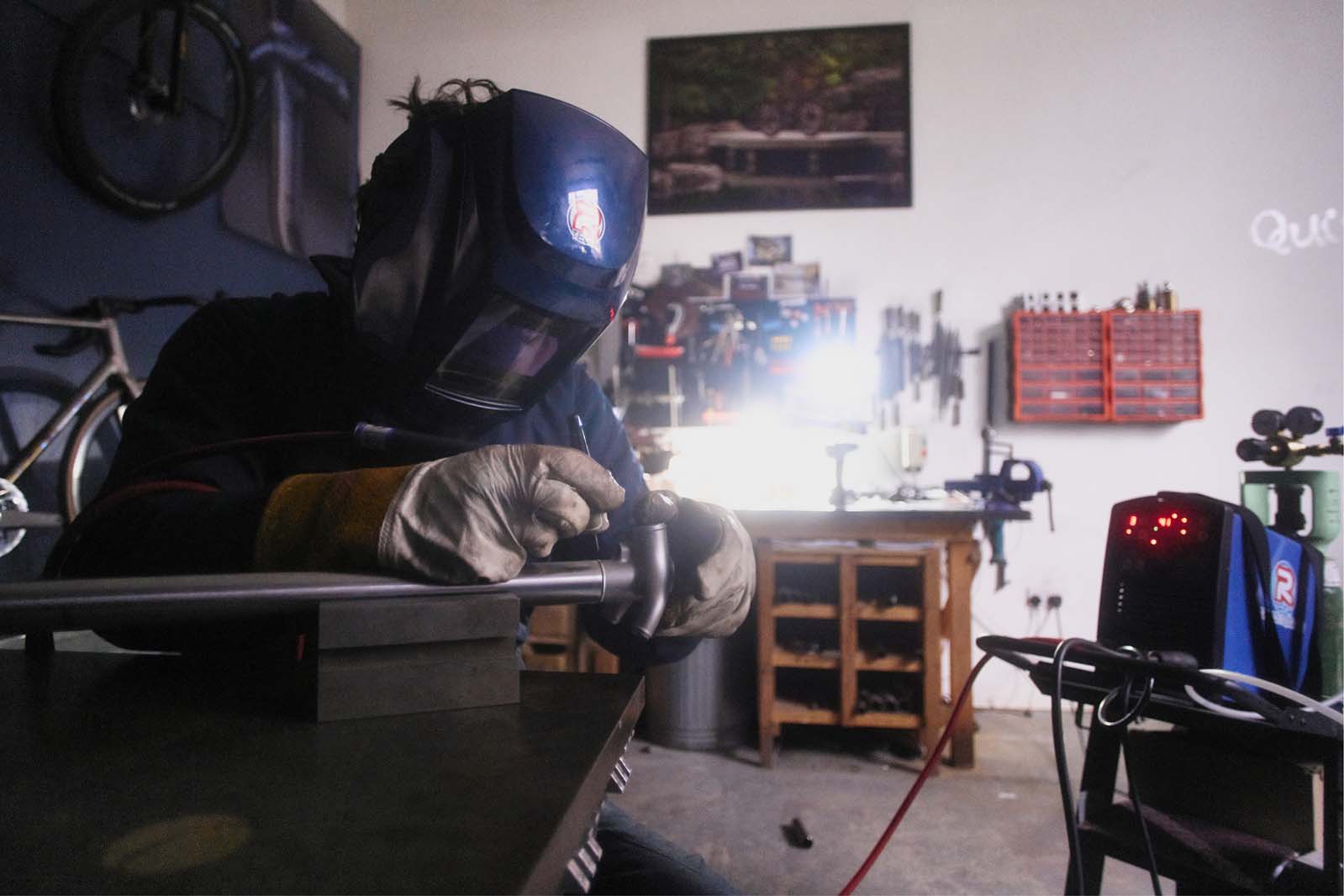
That experience at the Bicycle Academy led Rob to start Quirk and build steel and titanium bicycles. While he’s no longer a practising artist, his background isn’t far away when he speaks about the form and function of his designs, particularly the welds.
Rob keeps the welds on his bicycles visible, which is something people often remark on. “They don’t want to see them,” he said. But he explained the decision to keep them plainly: “A good welder doesn’t grind his welds; a bad welder grinds his welds. If you grind them, you hide them. A bad weld can look good when you grind it.”
“There’s a pride thing. I’m a craftsman, I’ve learned a skill and this is part of it. But then there’s an engineering reason: if you’re removing material then that weakens the weld.”
For Rob these welds are a “badge of honour” and draw attention to the component parts. This uniqueness is also part of the reason why Rob began developing 3D-printed parts back in 2018. “At the time, if you were making a steel bike, all of your components that go into the frame – so your dropouts, head tubes, bottom brackets – would all be off the shelf.”
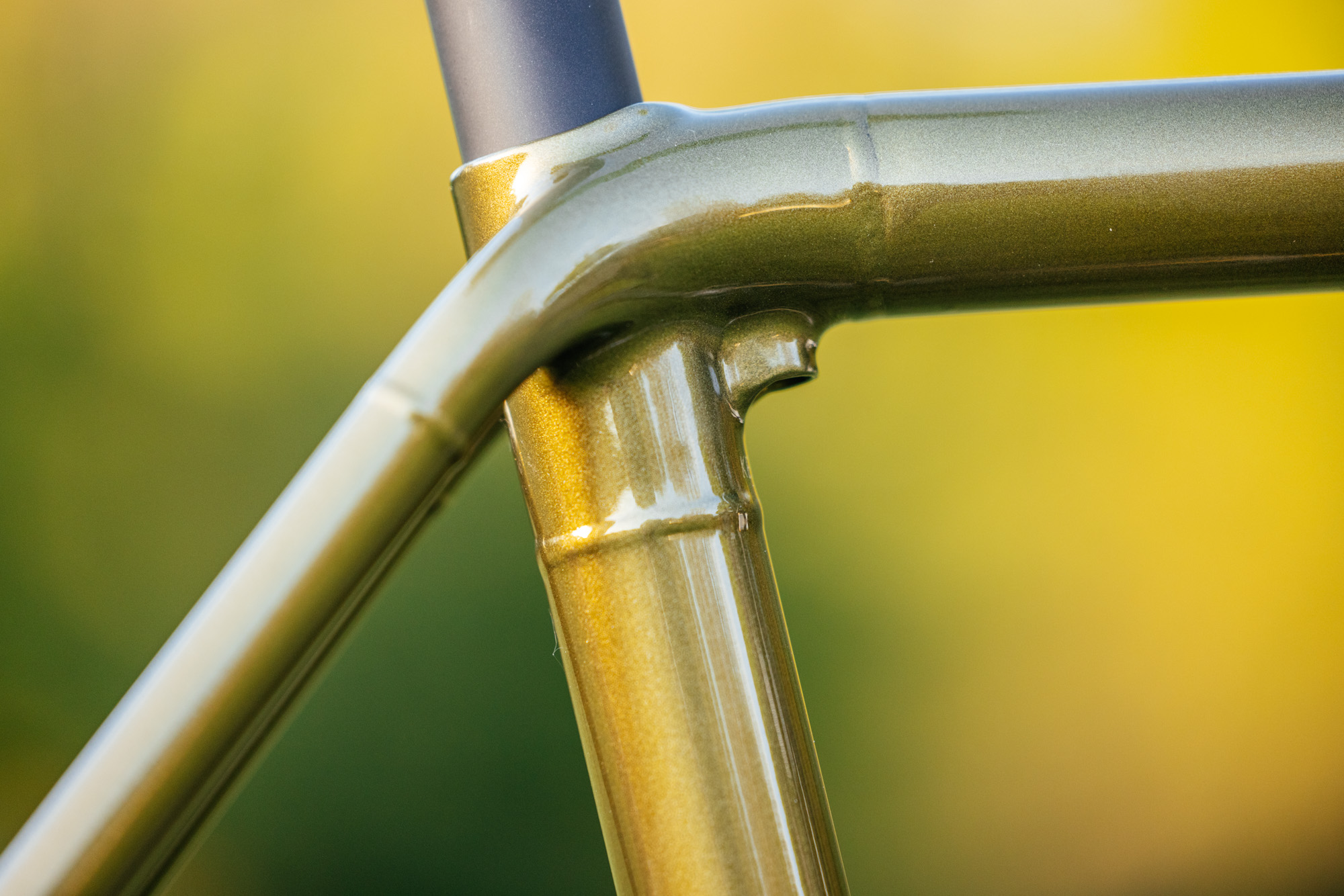
Developing 3D-printed parts then became a way to create proprietary designs that would be recognisable as a Quirk even without their paint. Yet the decision to use 3D-printed components was also borne of necessity and engineering logic.
Quirk was originally in a workshop above its current ground-floor premises and there was no way to get heavy machines into the space. The 3D-printed parts meant Rob could cut almost all his tubes at a 90-degree angle, and therefore avoided needing heavy-duty machinery. The decision had the added benefit of speeding up production; he went from spending a day making a set of chainstays to building a complete frame.
The 3D-printed parts also offer Rob a “mechanical advantage”. He said they distribute stresses through the frame more effectively than tight corners and joins, which could increase the risk of failure. “All these 3D-printed parts have smooth contours because that helps distribute the stress and spread it out of a wider area.”
Off-the-peg and future ambitions
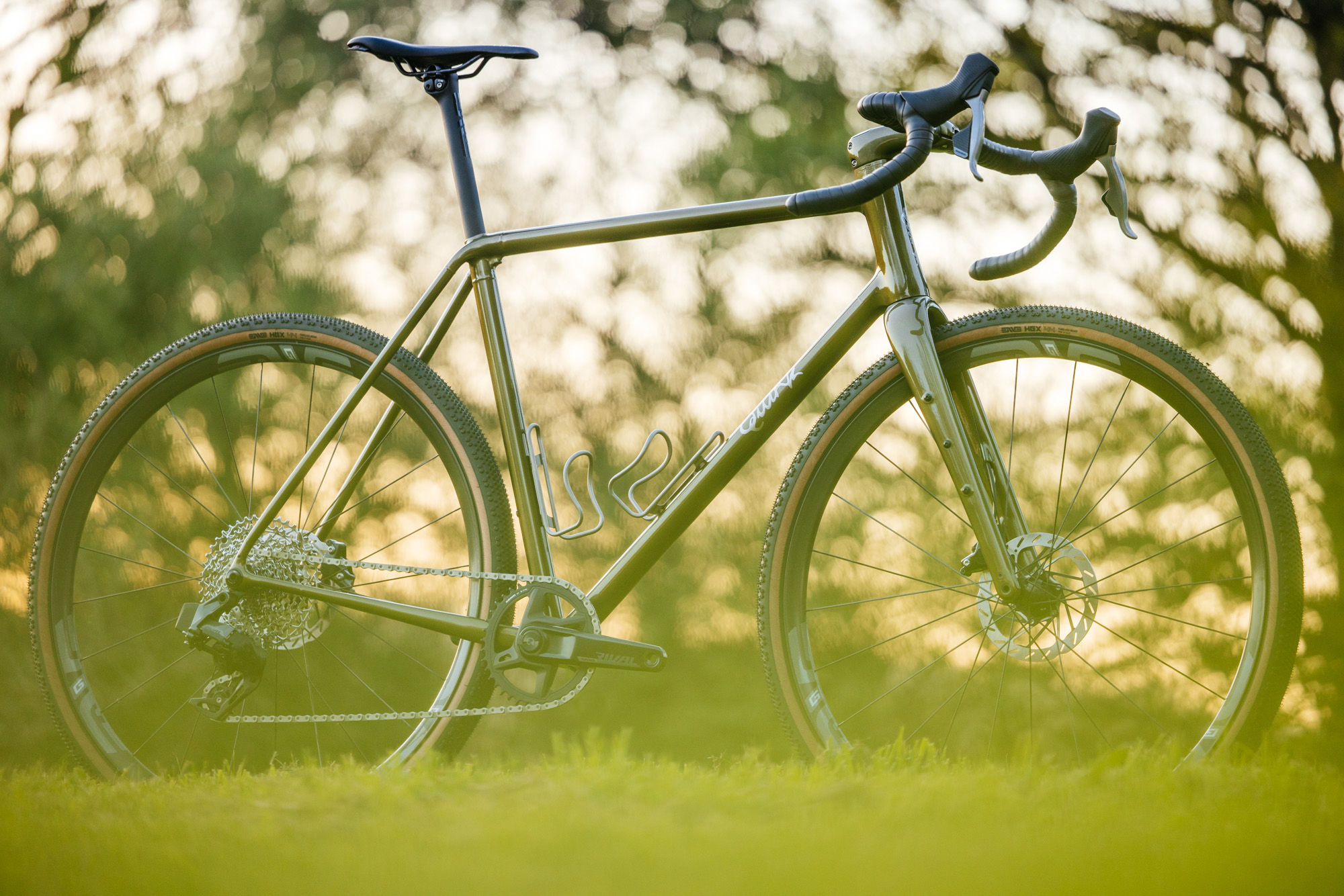
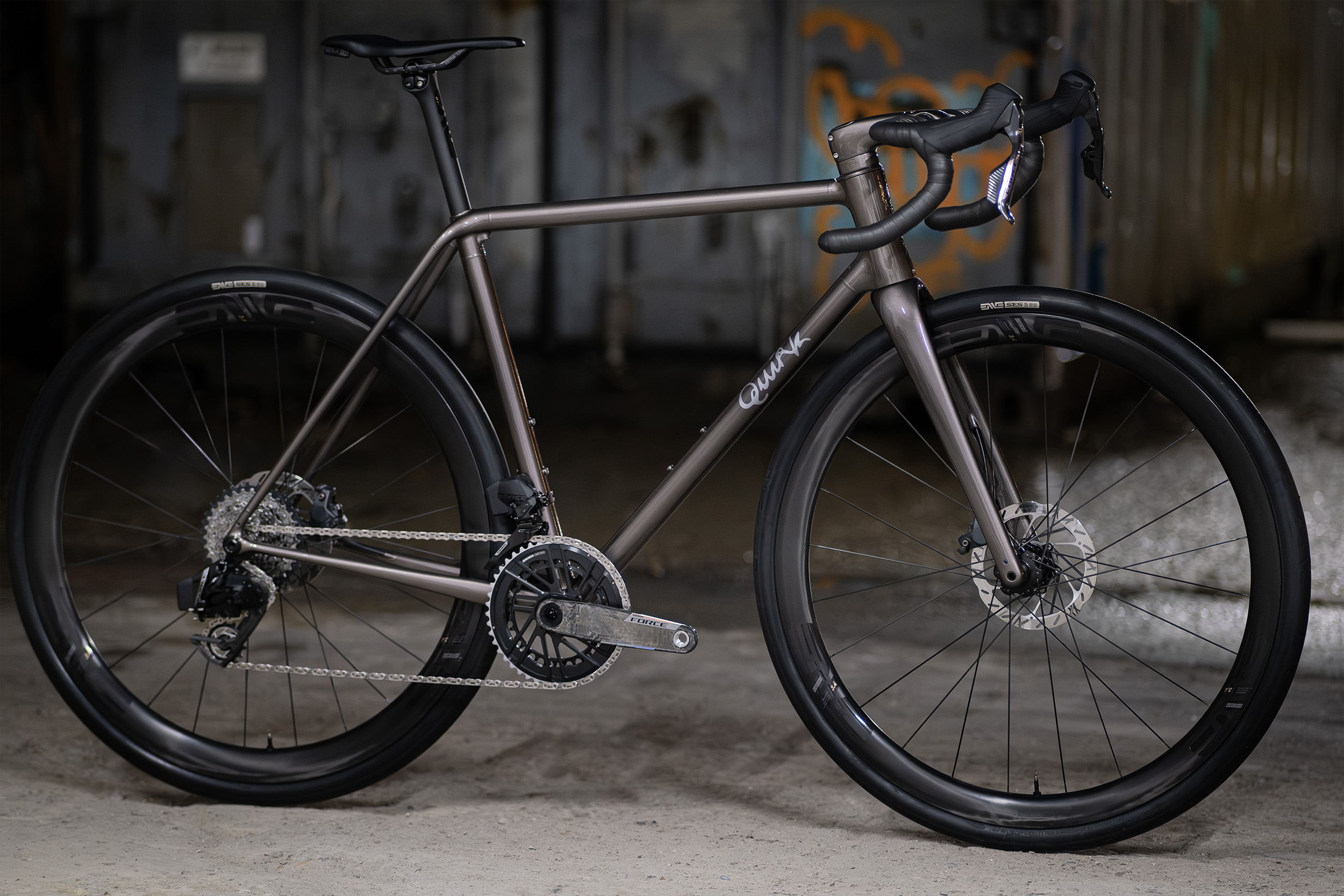
The visible welds and 3D-printed parts have become signature features of Rob’s designs, and they have carried over into Quirk’s latest range of off-the-peg steel bikes. These include the Durmitor race bike, which won best road bike at Bespoked London 2026; the Mamtor endurance bike; and the Kegety gravel bike, based on the bike Rob built to ride the Silk Road Mountain Race.
Moving from custom to small-batch designs is a well-trodden path in the world of bespoke bicycle makers, and Rob said it fits with why customers come to him.
“It isn't because I can give them endless options. It's because they obviously like what I make and value my opinion on the choices and the process that I've taken to get to that point,” he said. “So then offering the standard sizes and off-the-peg options is kind of the same thing, where it's me making what I think is the best version of a road, gravel or race bike.”
The geometry of his bikes is still informed by the years he spent making custom bikes, and buying a bike from Quirk offers a level of fit customisation few mainstream brands provide.
This simplified range should also help fulfil Mottram’s ambition to help Rob “scale his vision into a modern, globally respected performance brand”.
When I asked Rob where he sees Quirk heading, he said one brand he’s looked at is Colnago, which combines artisanal design with performance. He also highlighted how Colnago has kept much of its production in Italy – which comes back to Rob’s interest in space.
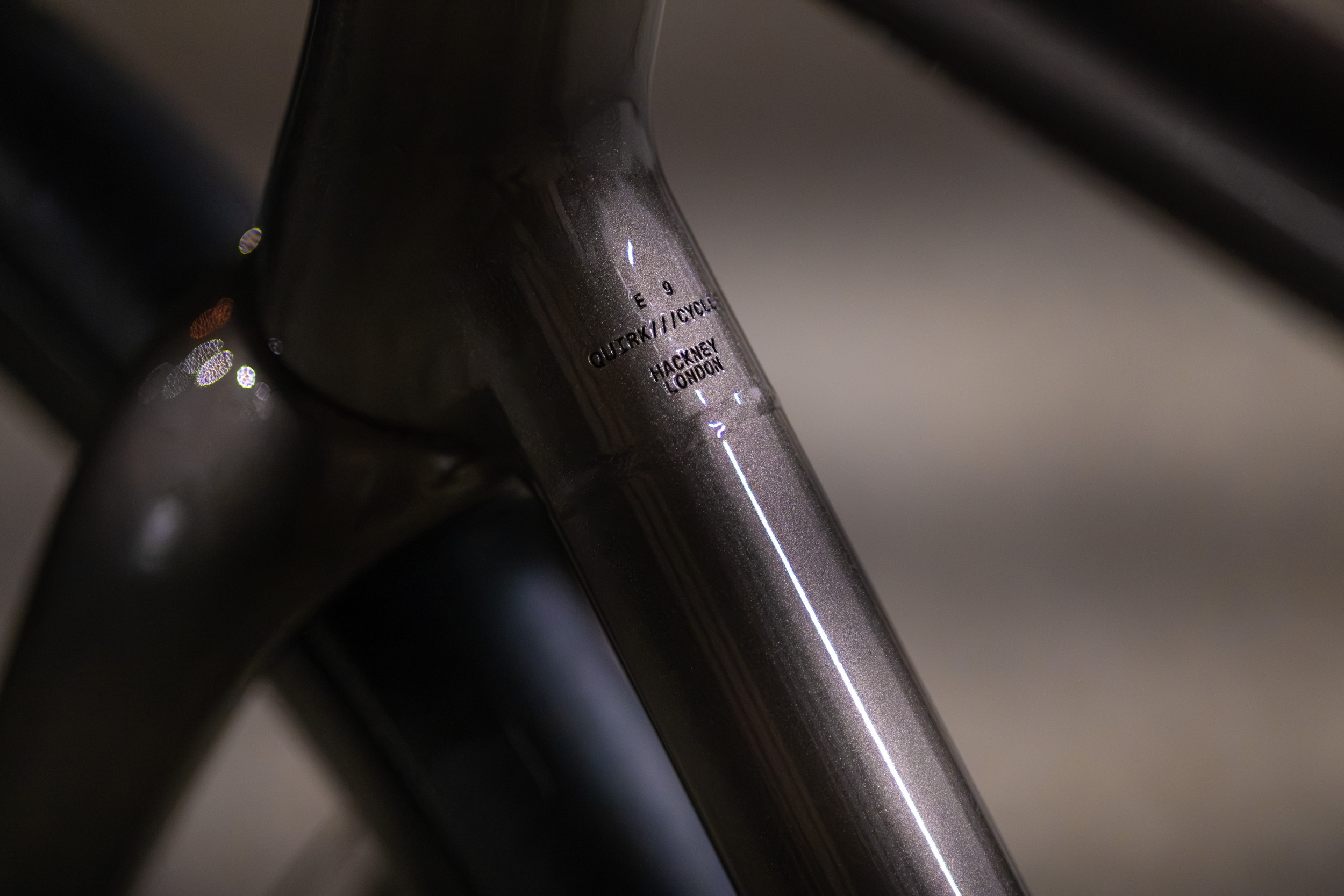
Quirk’s bicycles have the postcode of the workshop and ‘Hackney London’ stamped boldly into the frame and he hopes to keep the company in the East London borough.
“We see a great deal of value in the fact that we're manufacturing them in-house. London has been instrumental to the growth of the brand and Hackney has a lot of value,” he says.
However, he acknowledged that it’s becoming harder to be a manufacturer in the city, and how artist studios and workshops in Hackney Wick have been turned into flats. For Rob, it’s a “battle of space”, a phrase that sounds as if it could’ve come out of his MA degree.
“It’s a story of gentrification in a modern city and how we’re able to resist that,” he said. “That's part of what you’re buying into here, which is the authenticity of a product that is made locally and knowing who’s made it.”