For the third time in mountain bike history, there is a chance for riders to increase their wheel size – with the introduction of 32in wheels looking almost certain for cross-country racers in 2026.
First it was 29ers, then 27.5in wheels, then back to 29in wheels, and now there are 32in wheels appearing on the World Cup XC circuit after the UCI confirmed the larger wheels are legal.
But this switch to new-size hoops means more than just stocking another size of tyres.
It’s important to consider the full ramifications of another new standard in cycling – not just what 32in wheels will feel like to ride, but what living with them will be like and the wider implications for the MTB industry.
There was an outcry when 29ers first appeared, with purists saying they were too big and unrideable, and MTB parts couldn’t be strong enough. While their concerns were valid, clever product designers were able to overcome the difficulties of making larger parts light, strong and stiff enough.
Thanks to the adaptability of mountain bike riders and visionary engineers, any handling quirks were overcome or even exploited.
There is likely to be an even more vocal outcry about the 32in standard. The cycling industry is struggling, and being forced to stock more parts based around another new standard could be the last straw for shops that are barely coping.
What stock will bike shops need?

When the industry switches to a new wheel size, bike shops are under pressure to stock new wheels, tyres and forks, as well as spare parts, as soon as possible.
Assuming there is demand for the new wheel size, shops will need the ability to work on the larger-hooped bikes, which may mean they need to invest in some specific tooling.
New rims will be required, but outsized long spokes will have to be sourced, too. Broken spokes are common, and a spoke replacement and true is a regular job for a bike shop.
When the industry shifted to 29in wheels, some of the difficulties were minimised because they are the same size as 700c road wheels, so generic spokes of the right length were already available. With 32in wheels, this is not the case and the longer spokes will have to be sourced from distributors.
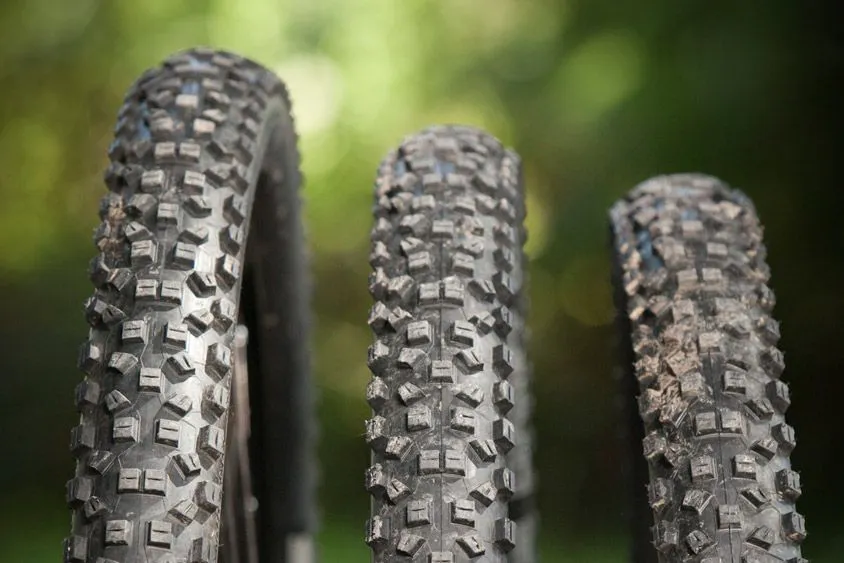
Tyre choice is likely to be an issue for a considerable period, too, as manufacturers adapt to an additional wheel size. This was the case at the birth of 29in wheels and 27.5in wheels alike, as manufacturers scrambled to perform the requisite research and development, and then calibrate production equipment in order to fulfil demand.
Because tyres are available in different compounds, widths and casings, as well as tread patterns, this will mean a huge number of SKUs (stock keeping units) for bike shops to handle.
Forks and frames will have to be designed around the new wheel size, because the larger wheels will not fit inside the confines of existing frames and forks designed for 29in wheels. Bike shops will have to wait for manufacturers to create these and then order them in.
However, due to the complex nature of fork construction, with compound shapes cast into magnesium lowers, it’s likely that 32in forks from major brands could take a considerable time to arrive on the market.
What tools and equipment will bike shops need?

Thankfully for bike shops, most of the tools and equipment needed for 32in-wheel bikes will be the same as other bicycles, but there are some notable exceptions.
When it comes to building and truing wheels, a valid question is whether 32in wheels fit in a traditional truing stand.
Some stands, such as the Park Tool TS-2.3, are highly adjustable, but there are others that are officially labelled to only accommodate up to 29in/700c.
If their truing stands don’t fit 32in wheels, shops may need to buy something new or adapt an existing stand. Otherwise, workshops will have to resort to truing wheels the old-school way – while they’re still on the bike.
It's a relatively minor point, but it's also likely that some display stands and storage racking will not be compatible with the larger 32in-wheel size and will need replacing, too.
All these purchases, or at the very least modifications to existing equipment, could be costly in both time and money for bike shops.
Do mechanics need new skills to work on 32in wheels?

Almost all the skills required to work on 32in wheels will be directly transferable from bikes with smaller wheels, so don’t expect a revision to Cytech syllabuses any time soon.
The only real differences in knowledge will be the requirement for mechanics to understand compatibility between different components, but because they should all be labelled according to wheel size, this shouldn’t pose a problem.
When 29in wheels became widespread, shops were having to deal with more punctures because appropriately tough tyres took a while to arrive. This could well be the case with 32in wheels because few manufacturers offer 32in tyres. If good tyres are rare, riders may be more inclined to perform tubeless repair jobs to keep their tyres serviceable.
Who makes 32in-specific parts?

Another new standard in mountain biking is sure to make some industry insiders groan. However, the advantages of 32in wheels could be hard for XC racers to ignore, and they could easily become as ubiquitous as 29in wheels over the coming months and years if they are adopted in other disciplines, such as trail riding.
As well as the extra stock, any extra required equipment will put strain on bike shops in an era that is already challenging. However, as with everything in business, demand is king – and if riders want to buy into the new 32in-wheel standard, bike shops will cater for them.