Reverse-reach, high-rise stems have been cropping up with increasing frequency, including on former world champion Reece Wilson’s bike. Wilson achieved a World Cup podium using a reverse-reach stem to claim second place at the 2026 Pal Arinsal World Cup downhill.
If you're not familiar with them, reverse-reach stems combine a high rise with an outlandish negative reach, putting the handlebar behind the steerer tube. This radically alters the rider’s position on the bike, giving them a more upright stance, with their hands further away from the front wheel.
BeMoreBikes' Bronson Moore has been waiting in the wings to explain the theory behind reverse-reach stems, and why he makes his own versions you can buy. He sat down with us and brought an enduro RR stem for us to ride as we asked why these stems are so controversial and – the million-dollar question – do they work?
How does a negative-reach stem work?
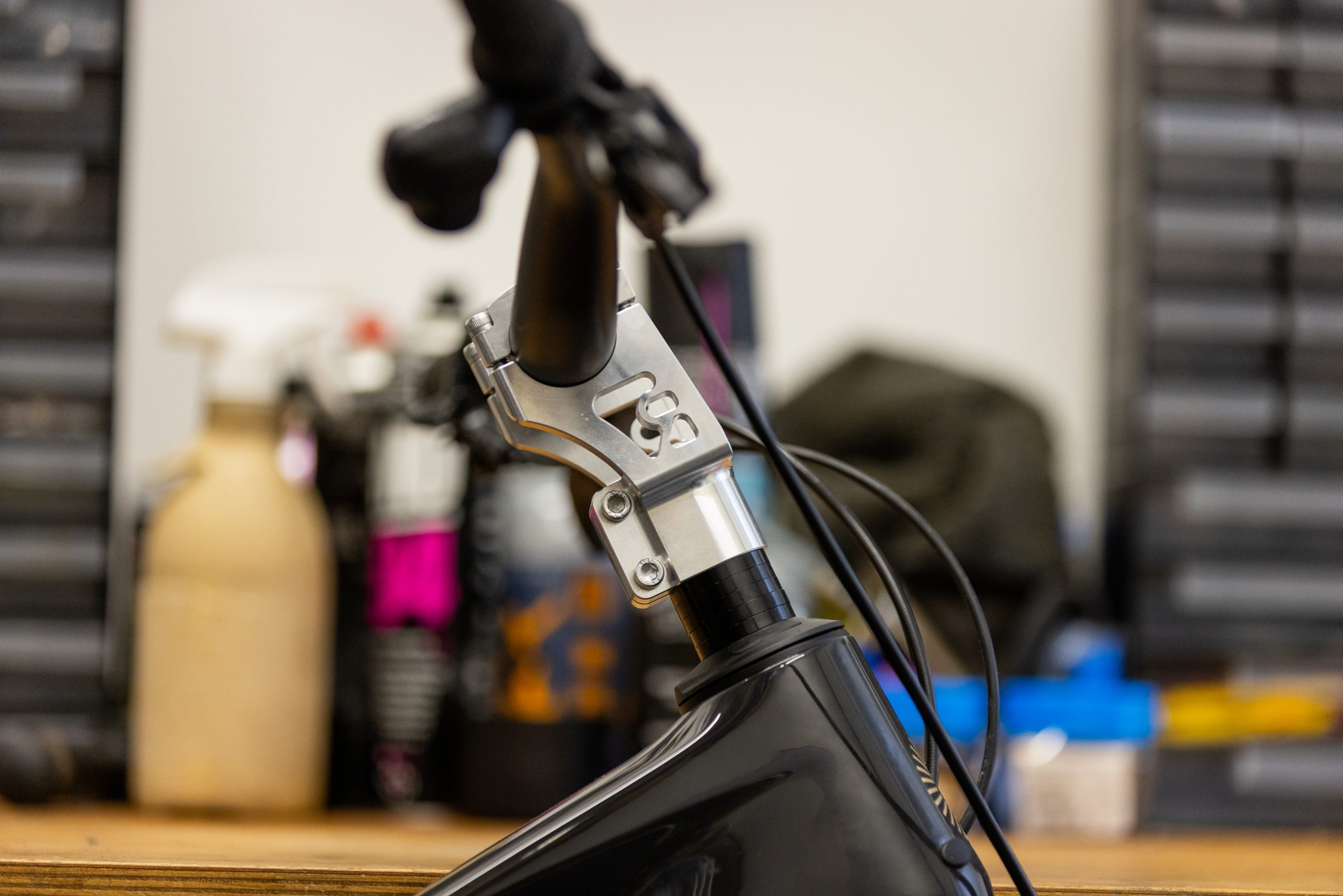
I asked Moore why he created his own negative-reach Raised Reverse stem. “The limiting factor I saw [in MTBs] was geometry progression,” he says.
“The RR stem puts the hands at a slacker effective angle to the front axle,” he explains, going on to say that “the number one benefit to me is cornering: the reversed offset arcs [the bar] up towards the rider when the bike is leaned over, instead of falling down away from them.”
The crucial benefit of the revised cockpit is weight distribution. “The raised height improves body position with less weight on the hands and all the weight standing through the feet,” Moore adds. “Humans are bipedal, so our arms aren’t well suited to supporting our bodies. Reducing load on the arms greatly reduces fatigue and arm pump."
Moore has further plans to improve riding dynamics with BMB products. “I see room to continue developing frame geo around the stem for an even further improved total package and that’s exactly what I’m doing with my Mule prototype frames,” he says.
World Cup proven
The AON Racing World Series downhill racing team, including 2020 downhill world champion Reece Wilson, 2024 Enduro World Cup champion Hattie Harnden and junior racer Stan Nisbet, have all been seen using reverse-reach stems.
It seems to be working for them in 2026, with Harnden qualifying fastest at the Pyongyang Downhill World Cup in South Korea and winning the IXS Cup at Fort William, and Wilson’s brilliant second place in the finals at the Pal Arinsal round of the Downhill World Cup.
When asked how a reverse-reach stem works, Wilson says: “I’m underqualified to explain it properly, but something happens that fundamentally changes how the bike feels – and it’s a much better feeling in my opinion.”
Negative-reach stems continue a trend
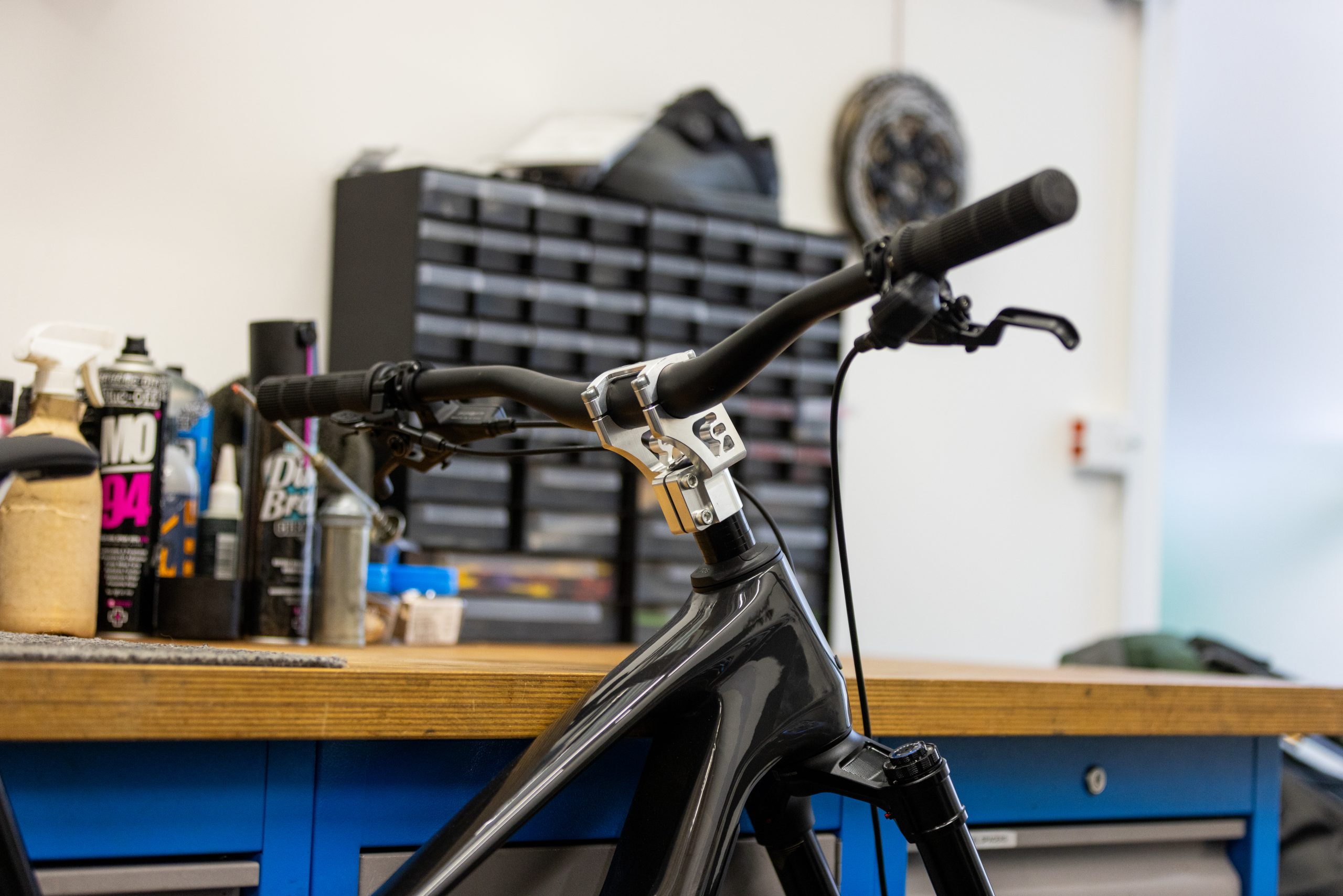
Stems connect the handlebar to the fork steerer and usually have a positive reach – putting the bar in front of the fork’s steerer tube and therefore the steering axis.
In the 90s, MTB riders ran long stems that put their weight far forward of the front axle with disastrous handling characteristics. This was a hangover from road bikes, which still run longer stems than MTBs.
As head angles slackened, frame reach figures grew longer, fork offsets increased and stems grew shorter – stems with as little as 35mm reach are now common. MTB handling became more stable and the rider’s weight moved further rearward behind the front axle line.
This is important because it contextualises reverse-reach stems as an evolution, rather than a revolution.
Despite the trend for long stems in the 90s, there were zero-reach stems on sale from companies such as Azonic and Massi. They didn't catch on at the time, but does the recent surge of interest in reverse-reach stems mean the world is finally ready to do away with positive reach?
Riding the BMB RR stem
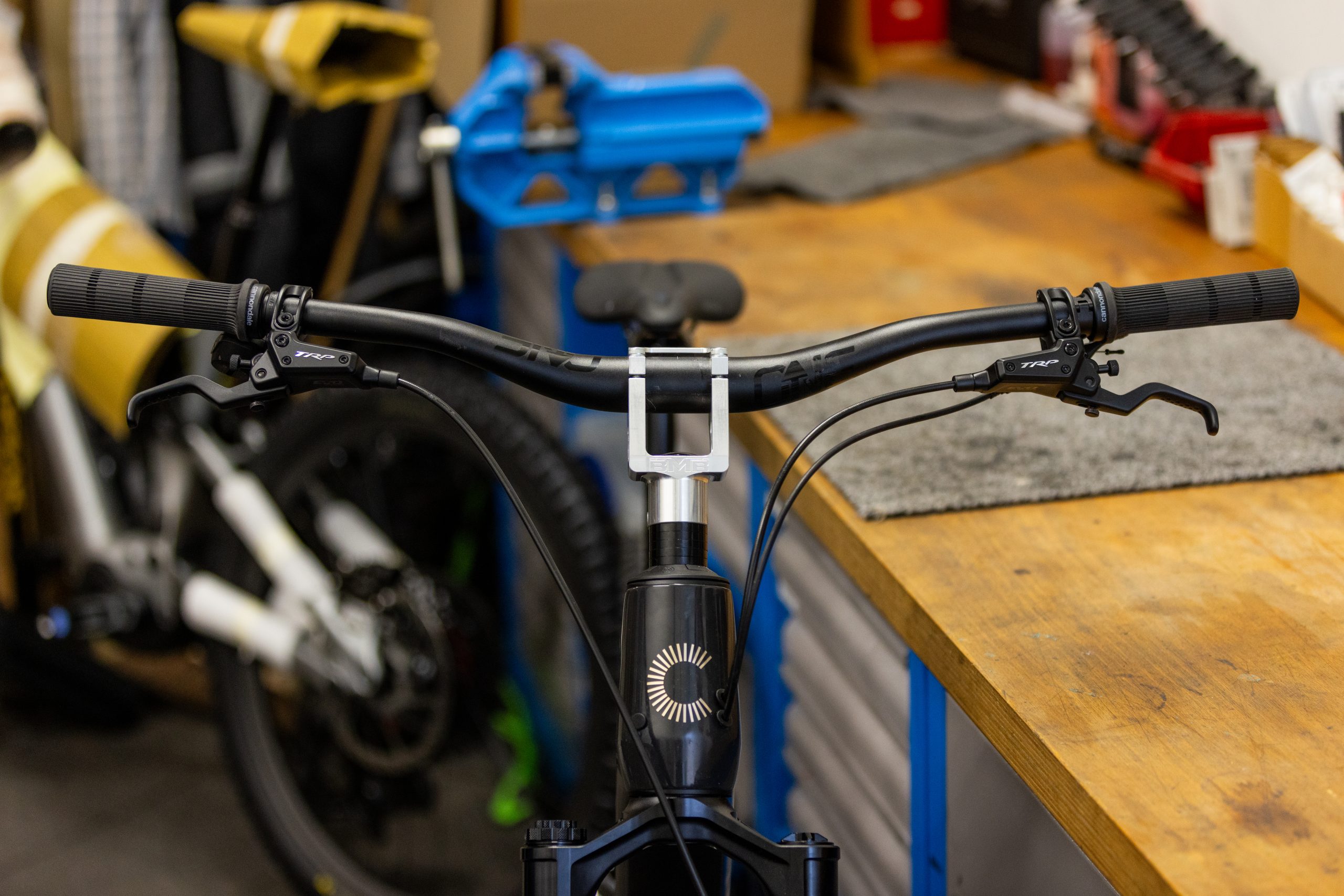
I first bolted the BMB RR stem onto an Amflow PL Carbon eMTB. The front brake hose was just about long enough to reach up to the handlebar’s lofty height.
My first impressions were that the cockpit was now very cramped, with the bar 50mm further back and 90mm higher than the traditional 35mm-reach stem I removed.
On my way to the trails, I felt very upright and cramped. Climbing was truly awful, with the front wheel rising up every time the eMTB’s power hit, and the steering felt vague.
Point the bike downhill, though, and the new geometry starts to make more sense. It feels as if the front-wheel grip is almost infinite. It is effortful to weight the front wheel, but once you've started cornering the bike feels wonderfully predictable with a bias toward oversteer.
The bike seemed to have a planted front end and it felt as though my weight was pushing the rear outwards, away from the corner. This meant I felt I was pointing the bike accurately where I wanted to go and managing the rear-wheel slide, never worried that the front end might lose traction.
Steeps become effortless because you’re perched high on the bike with the front wheel way off in front – even on the steepest, gnarly descents, it never feels as though you’re going to overbalance or go over the bar.
Transferring the stem to a longer bike was where it really came into its own. I consider an XL-sized Nicolai GeoMetron G16 to be too large for me, with a whopping 535mm reach. It felt slow to turn and I felt stretched beyond what I was comfortable with.
Combine it with a -15mm-reach stem, though, and suddenly the bike felt comfortable to be on. Importantly, it still climbed predictably. Descending steep trails felt easy, and I was concentrating purely on line choice and braking points without being conscious of my body position.
My logical brain expected the RR stem to show an improvement on steep stuff, but where it surprised me was on flatter stretches of trail.
It was effortlessly easy to handle and disconcertingly fast on twisty, flatter stuff. The braking performance was great, especially when trail-braking as I tipped the bike into a corner. I think this is because your body doesn't get pitched forward as much because you’re further back and taller on the bike.
Where can you get a negative-reach stem?
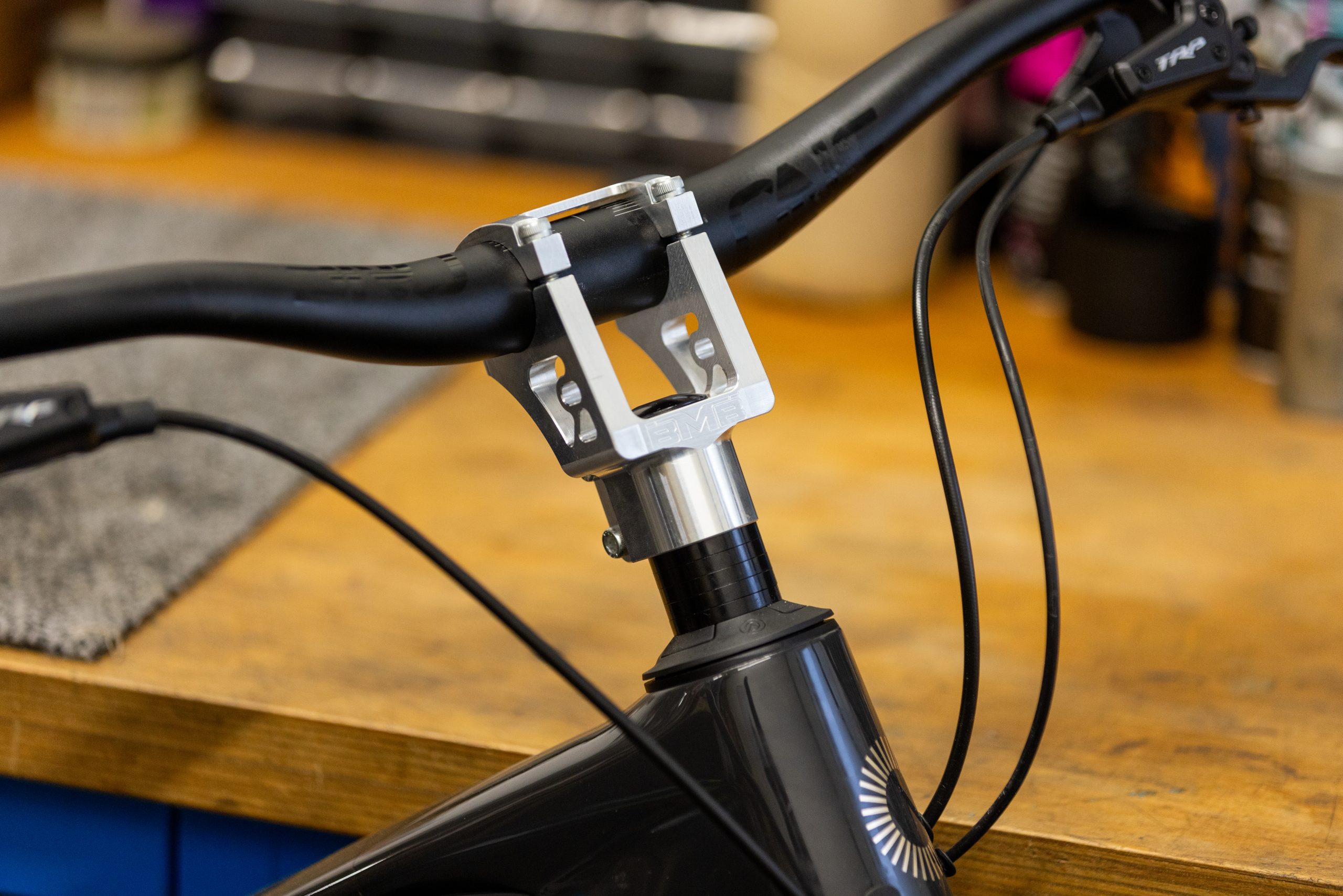
The reverse-reach stem I rode is the BMB RR Gen 2, designed and CNC machined in the USA. It fits a 1 1/8in steerer and a 35mm handlebar, but includes an intricate fitted shim for use with 31.8mm handlebars.
The Gen 1 stem is even taller than the Gen 2 at a whopping 150mm rise. The Gen 1 and Gen 2 stems both have -15mm reach.
There is also a new direct-mount stem available in 80mm and 100mm-rise options. Both RR DM stems have -15mm reach, but can be flipped to offer a +25mm reach for more conservative riders.
Hope has recently released a high-rise stem with only 20mm reach. The brand says it can be flipped to offer a -20mm negative reach if you're so inclined. A big manufacturer weighing in on such a polarising trend could indicate a shift toward more mainstream adoption over the coming period.