Gravel bikes are just 90s mountain bikes, aren't they? I decided to test the theory by converting an old 1990s MTB into a full-suspension gravel bike and testing it against one of the best current gravel racers.
When gravel biking began, BikeRadar's comments sections were flooded with statements along the lines of ‘it's just 90s mountain biking’. Maybe there’s something in that – mountain biking is now ruled by trail centres and bike parks; gravel is more about the great outdoors and a sense of adventure, just as mountain biking started out.
The naysayers were talking about the bikes, though, which they saw as nothing more than rebadged drop-bar-fitted 1990s MTBs.
As a 1990s mountain biker and a gravel fan myself, I wanted to put that notion to the test. So, I reached into the dusty, cobweb-strewn corners of my workshop and found a 1990s Azonic Propulsion MTB.
I love gravel bikes and gravel riding. While I wouldn’t concede the point about the bikes, I’d certainly agree gravel riding is ‘just’ 90s mountain biking.
Meanwhile, bikes have got increasingly expensive; a cutting-edge gravel bike can easily cost £5,000 or more – for something designed to take a beating. Affordable has to be the way to go.
So, could what many might consider to be old junk be competitive with the latest tech, after a few frugal updates? After converting the Azonic into something akin to a contemporary gravel bike, I planned to find out.
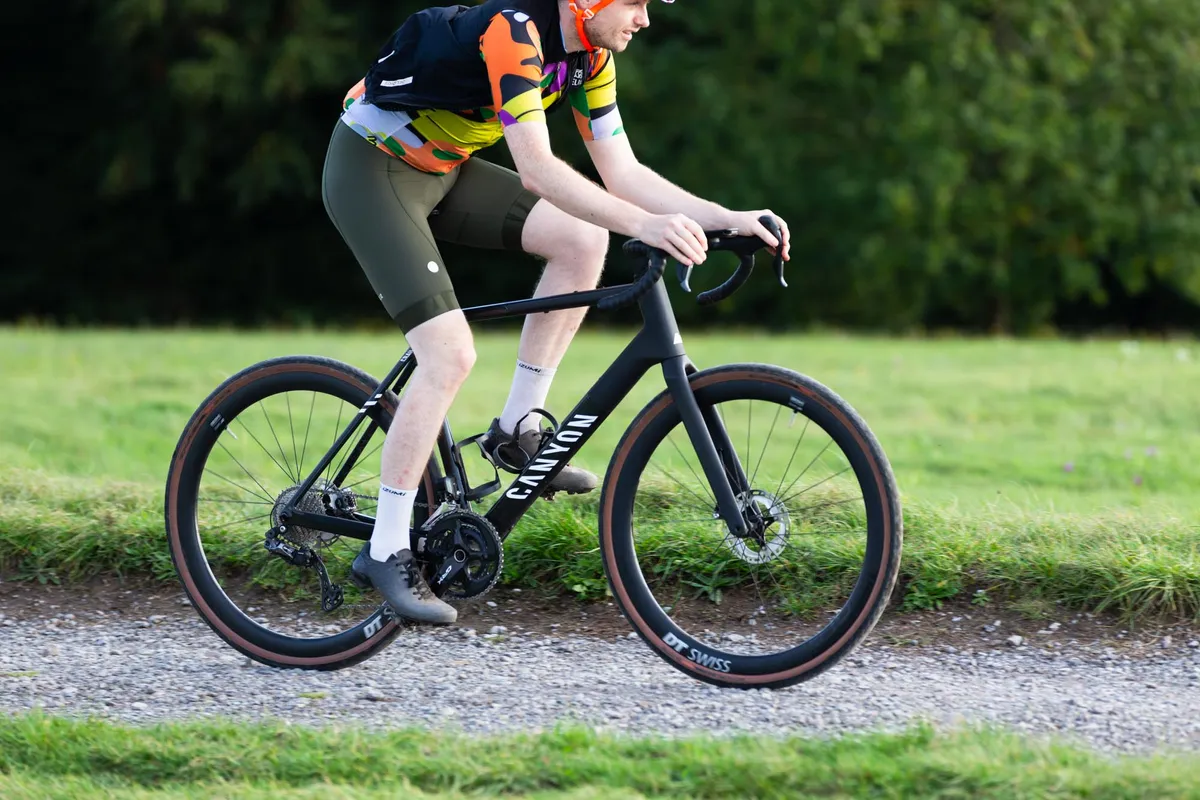
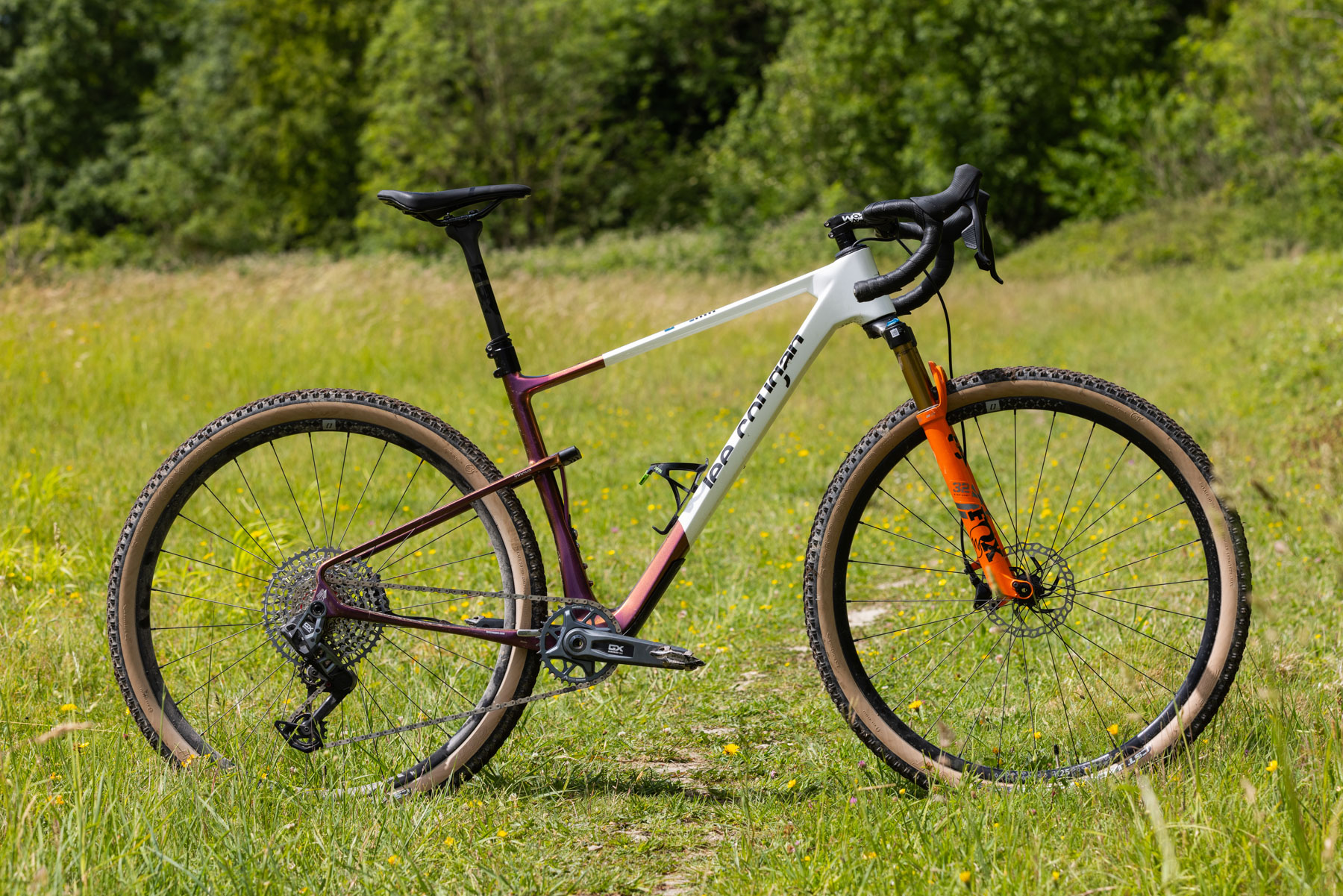
With the Lee Cougan Super Innova Gravel my benchmark for longer-travel full-suspension gravel bikes, it was the natural choice as the rival in this head-to-head encounter.
The contenders
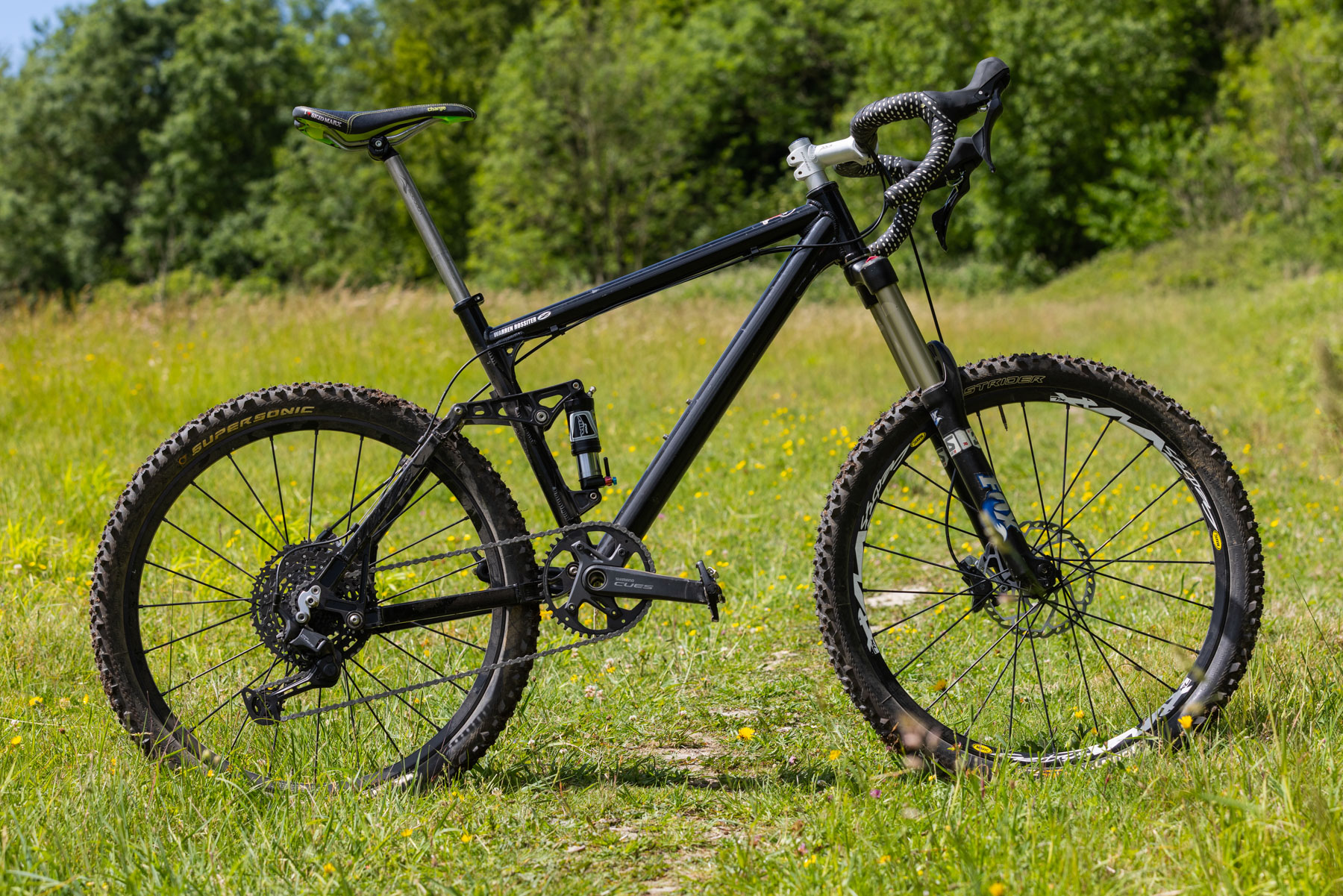
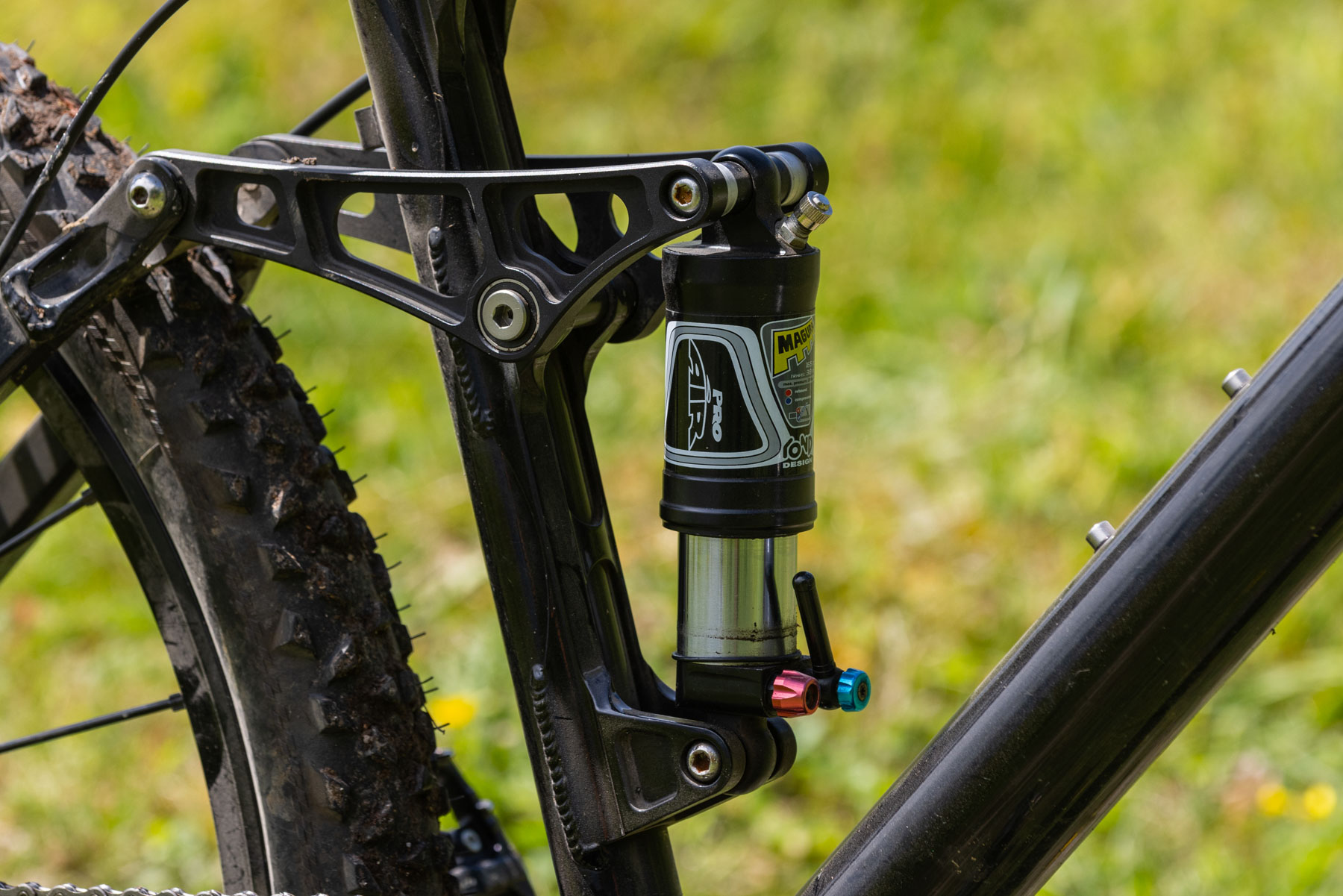
I decided to use my old Azonic Propulsion for the conversion. Its Horst-link back end provides around 6 inches of travel – that’s more than four times the travel at the rear of the Lee Cougan.
Up front, the Fox 36 Vanilla R fork has a massive 160mm of travel – 60mm more than the Lee Cougan’s Fox 32. Would this big, bouncy, small-wheeled (26in) MTB be able to cut it as a gravel-ready bike?
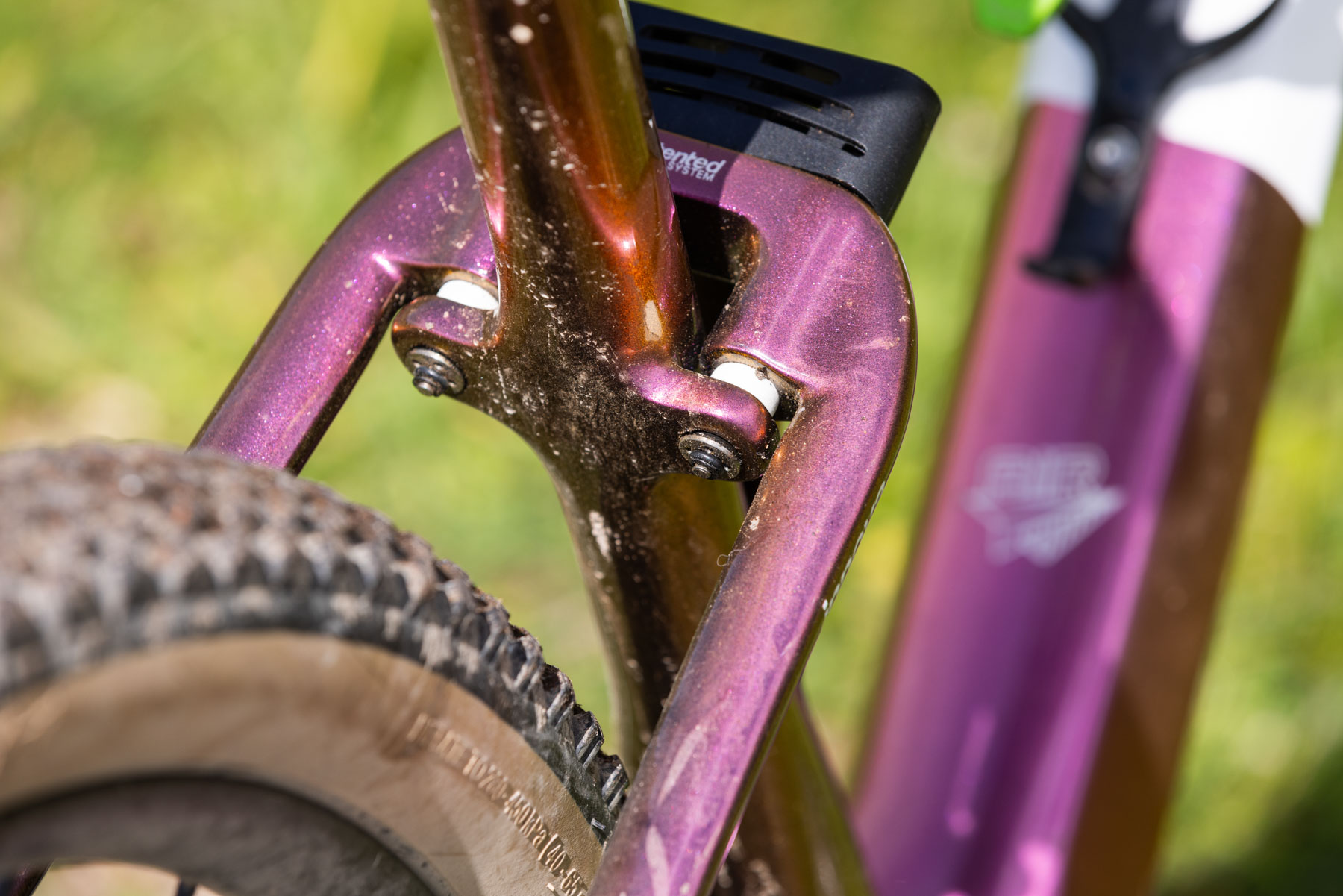
The Lee Cougan is a long, low-slung gravel race bike with a great pedigree. It uses a long-travel (100mm), yet lightweight Fox 32 Kashima fork. At the back, it has a carbon leaf-spring design replete with dampers to provide around 30mm of travel.
Beauty is in the eye of the beholder, but I love the design of the Lee Cougan.
I think my parts-bin Azonic looks great, too, but I’m a 90s mountain biker and still wistfully remember John Tomac storming down the Kamikaze downhill at Mammoth Mountain aboard his Yeti C-26 with a 3TTT drop bar.
For the current generation, it’s got fashionably wide 2.4in tyres, albeit on ‘tiny’ 26in wheels. That should keep me in with the gravel hipsters, surely?
Budget buy
I wanted to keep to a tight budget, so I set myself a limit of £1,000 – what would be the point of throwing piles of cash at an old bike?
The Azonic is my own bike, so no purchase was involved, but a quick scan of eBay’s sales history and I found the last equivalent Azonic like mine sold for £150 – that left me £850 to get it converted.
That wasn't enough for a ‘performance’ gravel groupset – even the cheapest options, such as SRAM Apex Eagle and Shimano GRX 10-speed would blow my budget. So, I decided to go with Shimano CUES. I've been impressed with it on affordable flat-bar bikes, so I wanted to see how it faired in its drop-bar guise.
Fitting the groupset meant sourcing brake-mount adaptors – the Azonic has IS mounts and CUES is Flat Mount. Hope, purveyor of a multitude of useful parts, came up trumps for this.
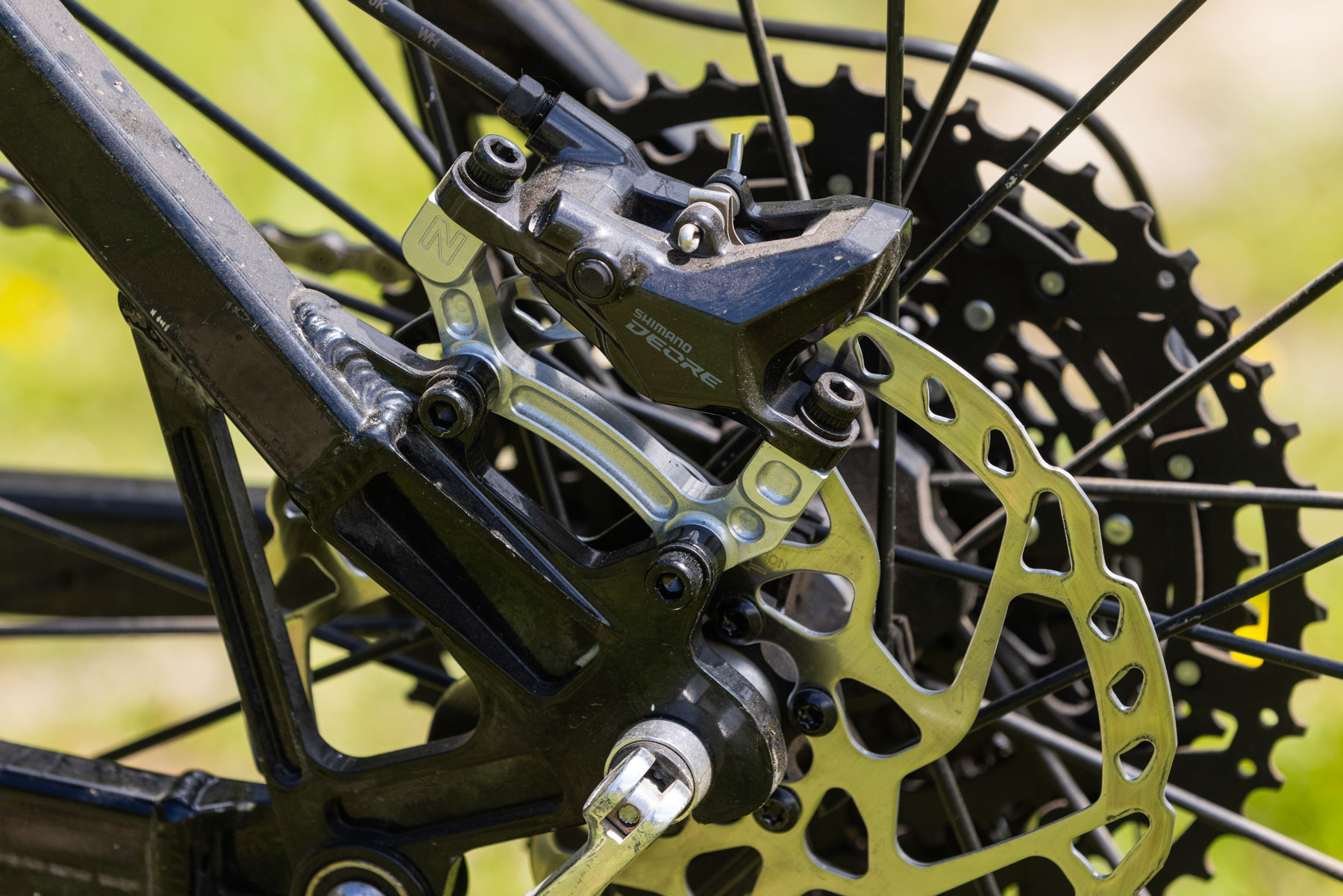
When it came to converting the drivetrain, Will our workshop mechanic stepped in.
Will was overjoyed at just how simple CUES is. It has bags of tolerance on chainline and fitted easily. In all the off-road miles I’ve tested it on, it hasn’t put a foot wrong. It’s been simply brilliant and has made me reevaluate my whole outlook on this budget mechanical group. I can’t recommend it highly enough.
My total of £975.95 is now less than that, because I've sold on a few of the ‘classic’ parts of the Azonic’s original build to the tune of £50.
Azonic Propulsion conversion vs Lee Cougan Super Innova Gravel ride impressions
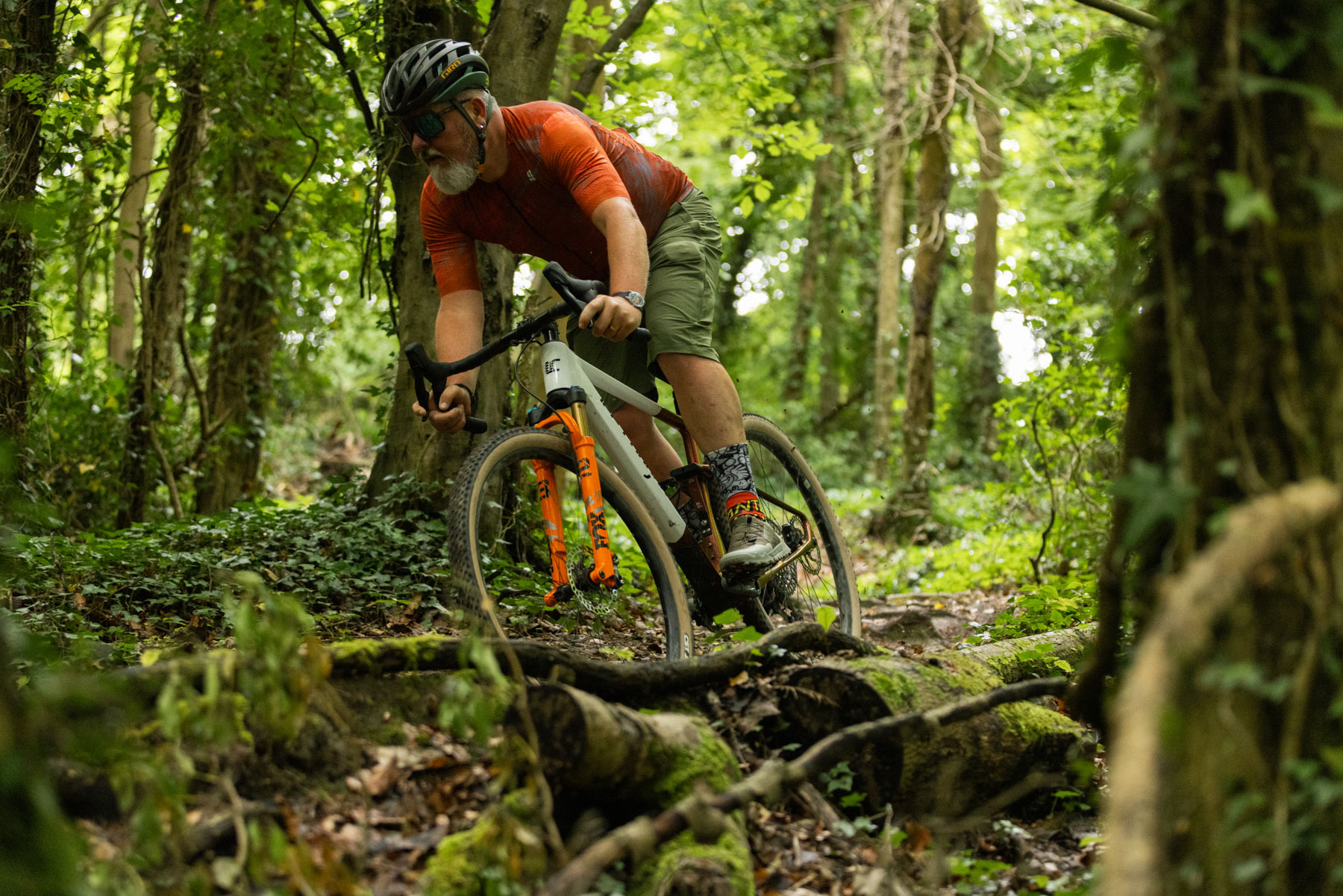
First things first, this isn’t a fairy tale, rags-to-riches story. I haven’t broken the matrix and created a bike that undoes 26 years of design and development.
My converted Azonic is not a better bike in any way than the superb Lee Cougan Super Innova Gravel, even if it does have a simpler name.
For starters, the Azonic is heavy. It weighs in at 13.62kg, compared to the Innova’s 10.74kg. Its small wheels make it harder to maintain higher speeds over smoother gravel and tarmac, not to mention those massively chunky treads of the Continental Mountain King tyres.
In fact, when I took the Azonic out for its initial ride, I hated it. It felt squishy, sluggish and weirdly long in reach, yet low in stack with a very short wheelbase.
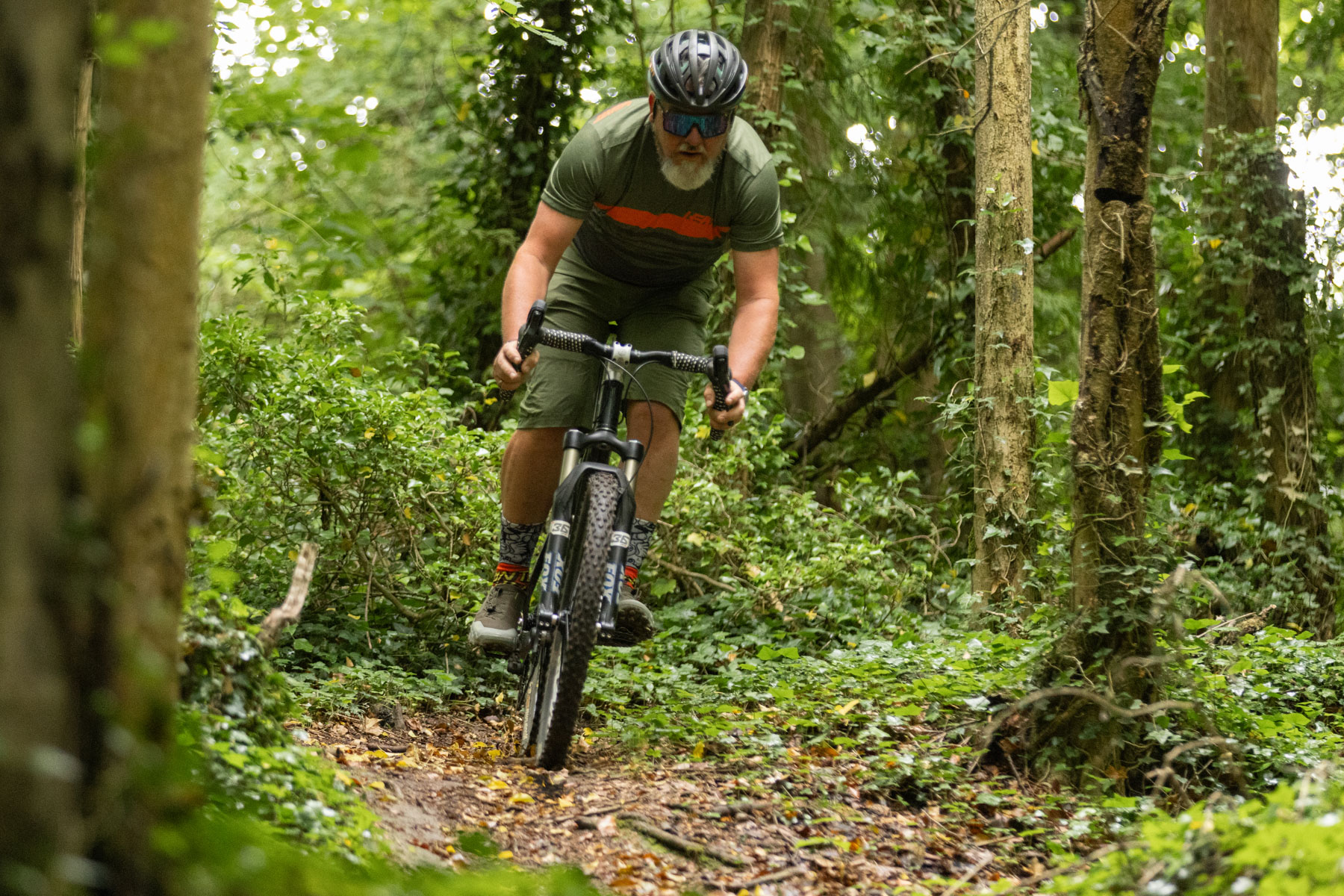
I’d been approaching the suspension setup as I would have when it was a mountain bike. However, a bit of lateral thinking, in putting more air in the shock, ramping up the preload of the fork and slowing down the rebound helped solve this.
As an aside, a quick word on the long-since-defunct rear Magura Rond air shock and Fox fork. Neither had been touched in over 20 years, but a wipe down with WD40, a bit of lube on the dials and threads, and both work just as they used to. No perished seals, not a hint of sticky/stiction in the movement, these were both built very well back in the day.
This won’t be the case for everyone minded to attempt a conversion like this – your starting point is likely to be with components of varying quality and a life well-lived, but at least it’s a lesson to start with what you have because it might just be alright.
When it comes to performance, the Azonic falls well short of the Lee Cougan (as I’d expect). Its smaller wheels and heavier weight make it trail behind the Lee Cougan on long climbs. It’s certainly more of a chore when climbing, but it’s not uncomfortable.
I found myself sitting in and grinding away on the pedals, while on the Lee Cougan it was easier to rise out of the saddle and attack – and to change tempo.

However, the Azonic accelerates with plenty of vigour when riding flat or undulating singletrack. Old-school mountain bikers will know the snap of a 26in wheel compared to a 29er, but holding onto that speed is more of a challenge than with the 29in Lee Cougan.
On fast, open gravel roads, then, the Azonic is at a disadvantage, but when it gets onto rougher, choppier surfaces, the plushness of the extra travel pays dividends.
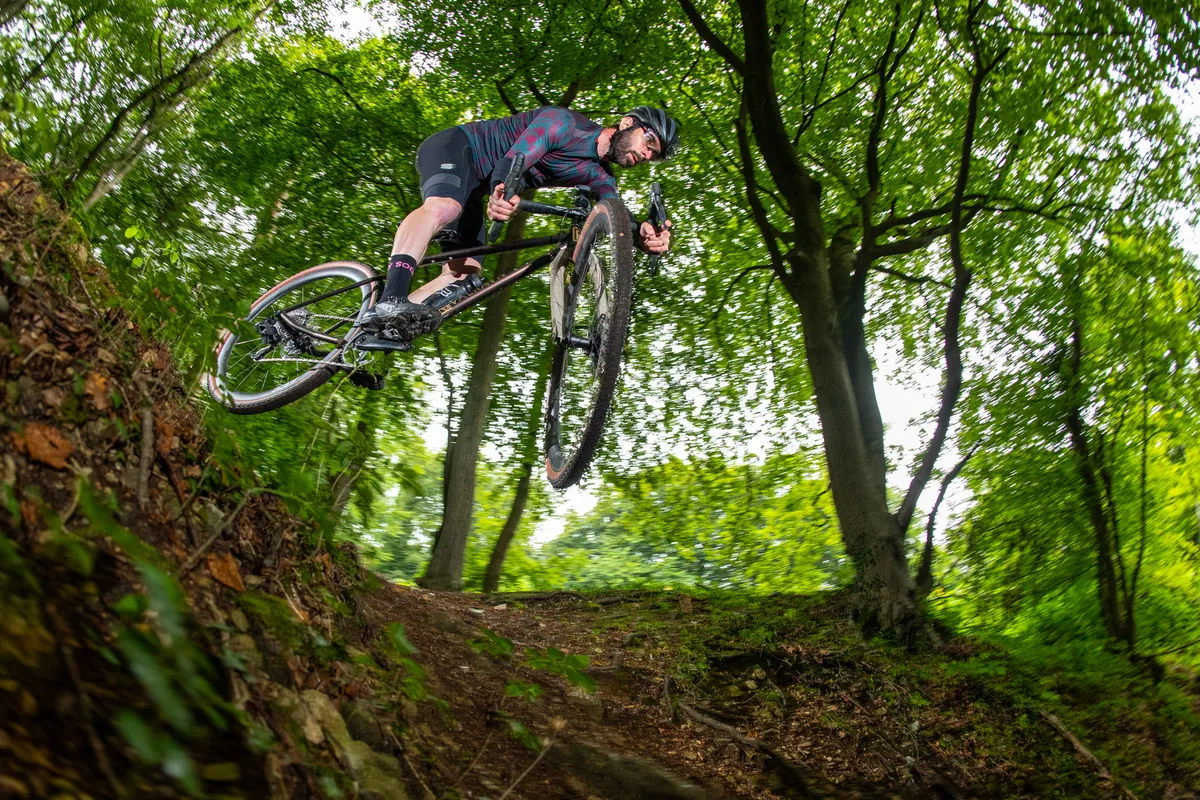
The distance between the two narrows on technical terrain and singletrack, with the Azonic swallowing up big hits brilliantly. I just had a bit more squash on bigger drops and bumps with the longer-travel Azonic.
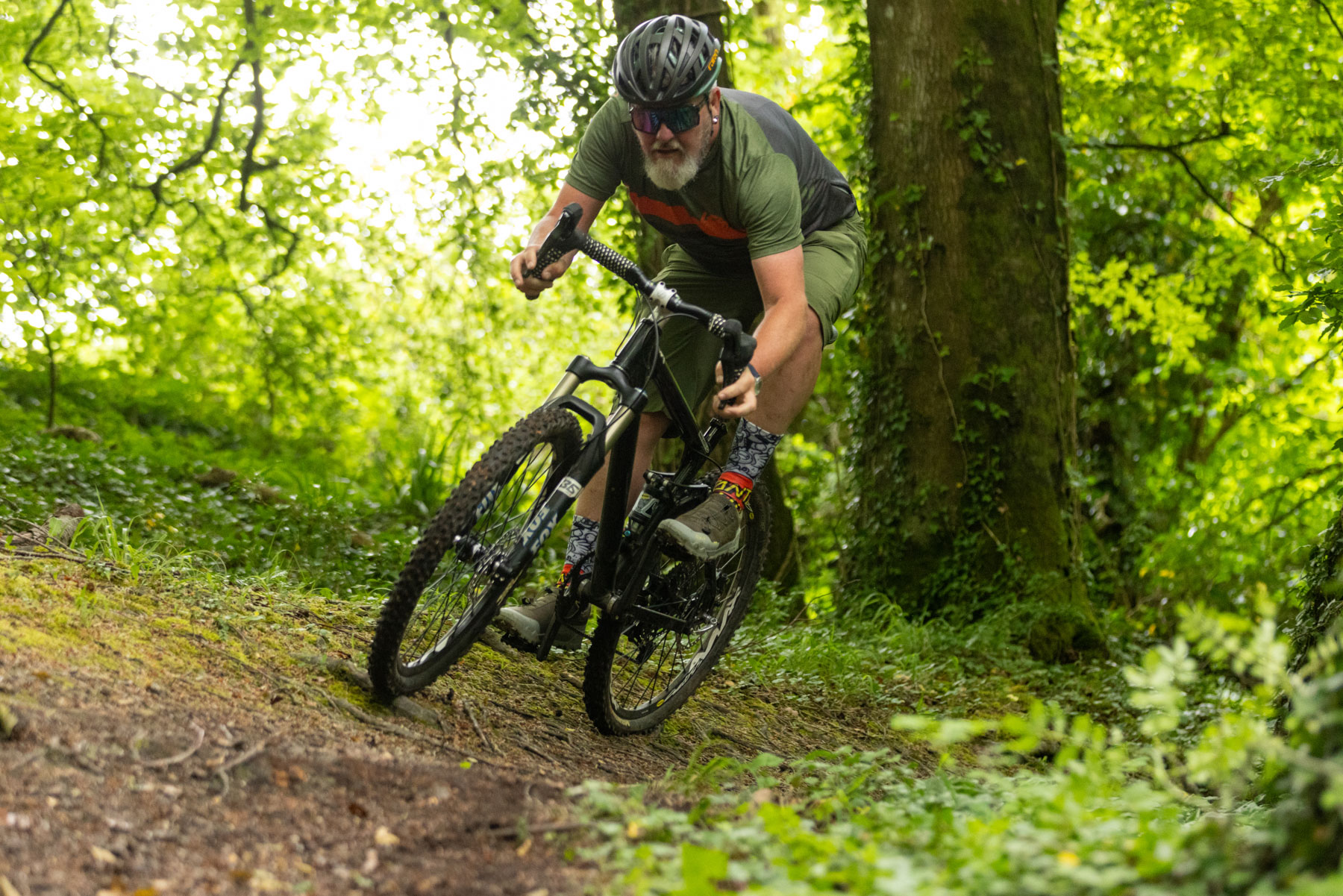
The Azonic’s short wheelbase makes it fun to ride on twisty tracks, enabling you to whip it into corners, and over roots and rocks. However, it feels less stable than the Lee Cougan.
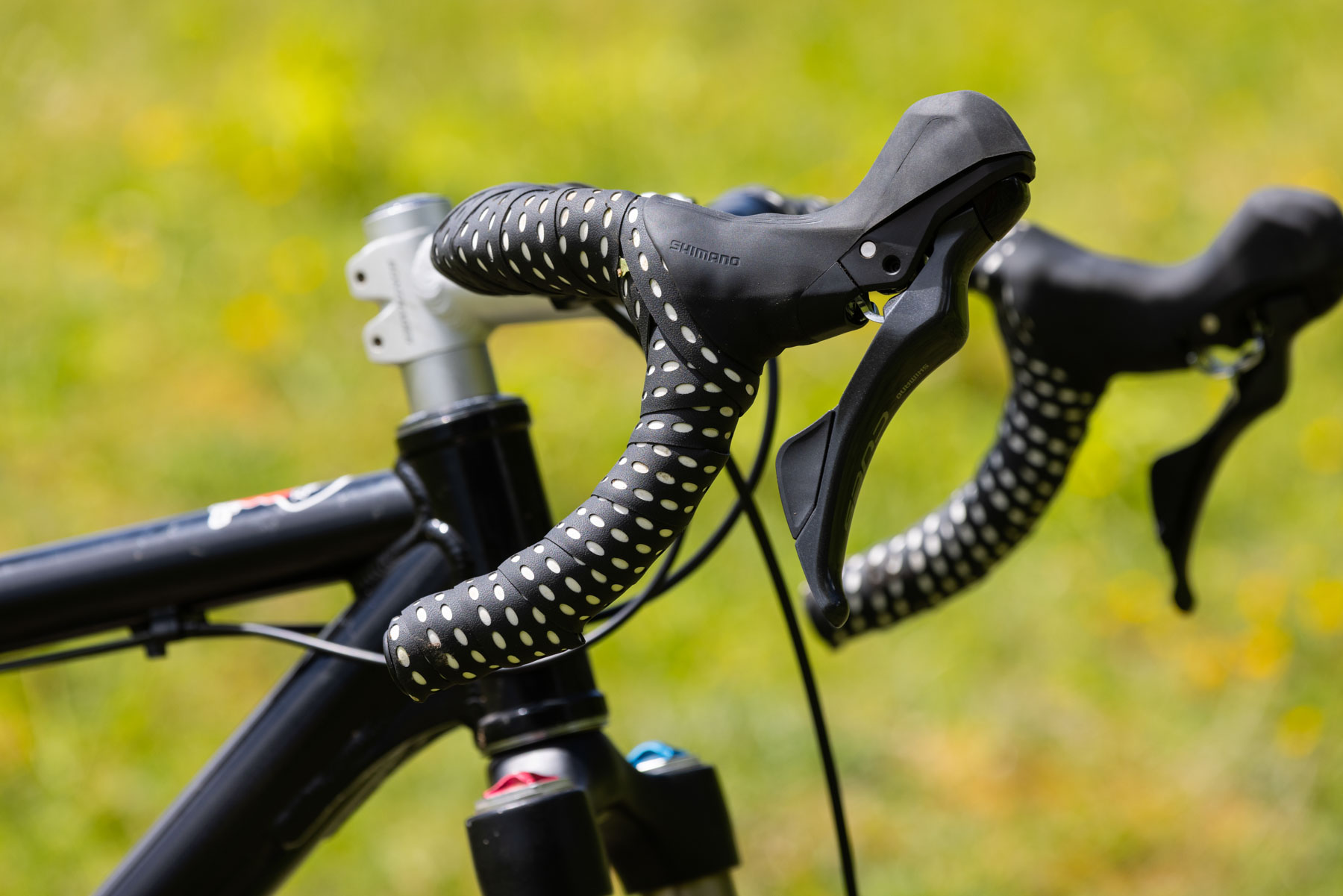
The CUES drivetrain really impressed, and hasn’t missed a shift, dropped the chain or done anything to prevent me recommending it.
The electronic drivetrain and brakes on the Lee Cougan are much, much better, but the rear derailleur and shifters alone would cost more than the full CUES setup.
Azonic Propulsion conversion vs Lee Cougan Super Innova Gravel bottom line
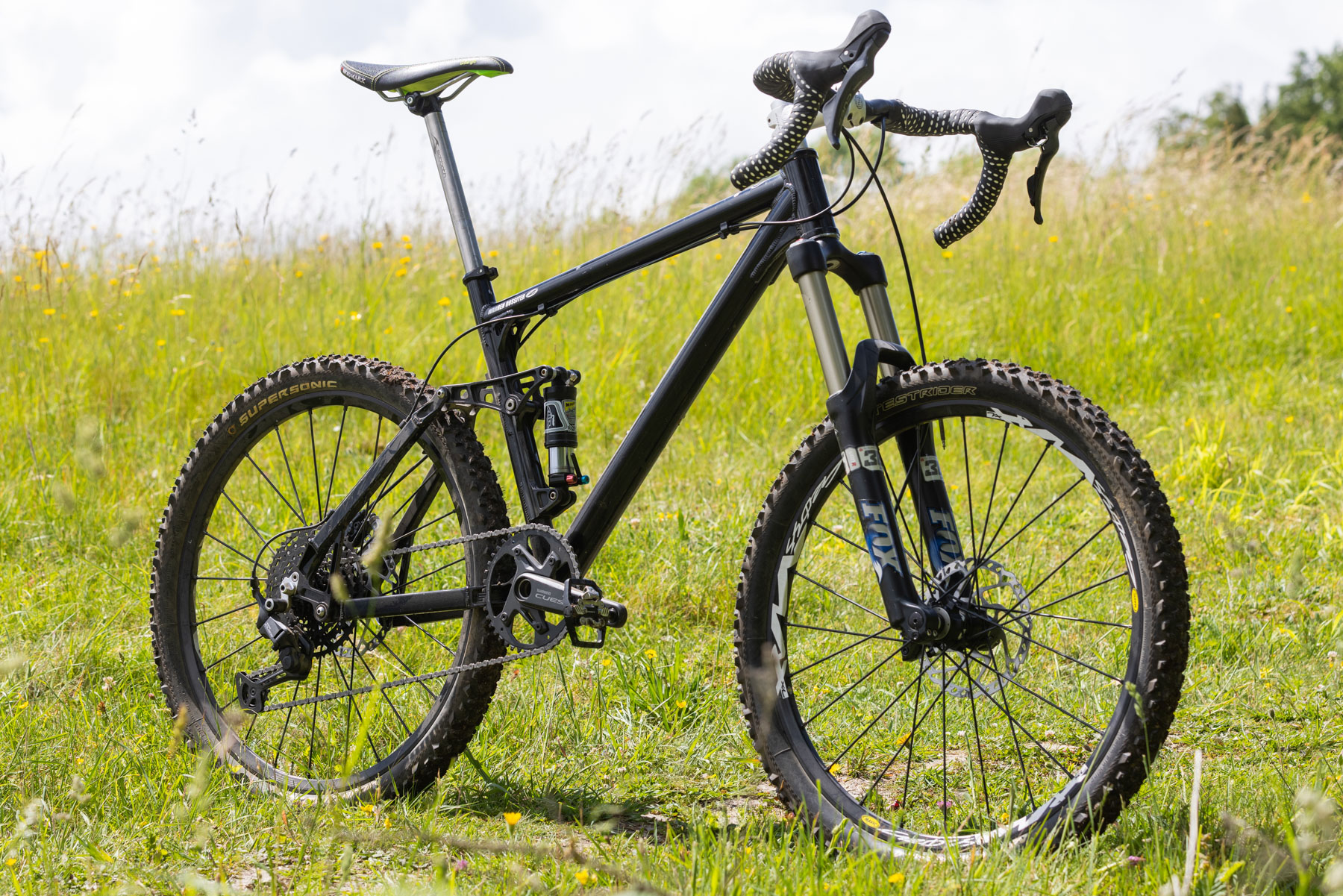
The Azonic project has brought one thing home to me – the simple joy of riding a bike. This neglected and forgotten bike that's been hanging in a corner of my workshop for 20+ years has been incredible fun to ride. If I hadn’t done this to it, it would have eventually been cleared out as junk.
It can’t even begin to match the performance of a modern state-of-the-art gravel bike, such as the Lee Cougan, but it's become one of my favourite rides.
The Lee Cougan is priced at €5,299 / $5,899, and is not officially available in the UK yet. However, a quick currency conversion would see it priced at around £5,000. That’s more than five times the price of the Azonic.
Is it five times better? Very possibly. Is it five times more fun? Absolutely not.
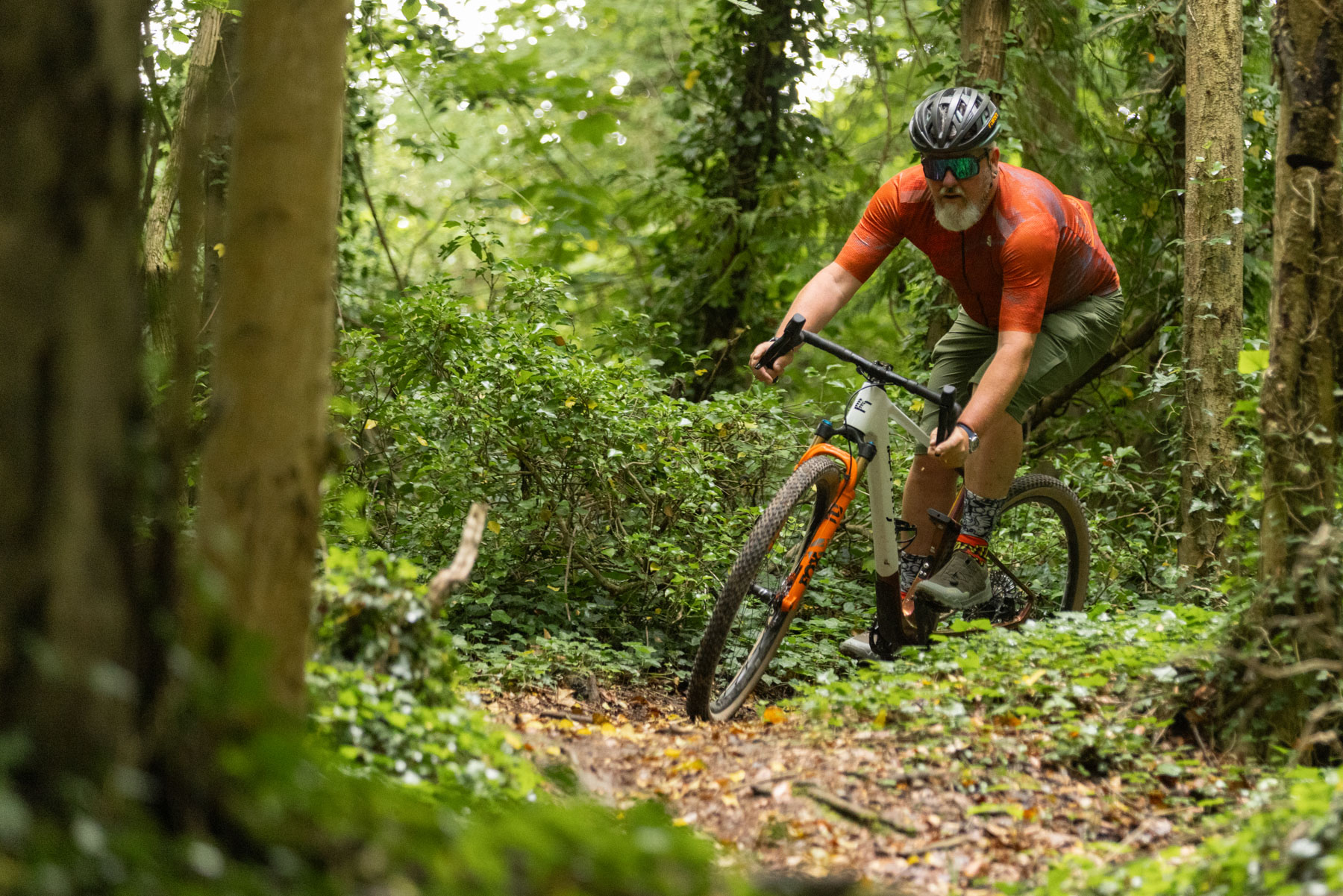
I wouldn’t choose the Azonic for an epic 200km+ event, I probably wouldn’t use it for a gravel sportive either. However, for budget thrills on all types of off-road, gravel, doubletrack, fire roads and singletrack, it’s hard to beat this level of bang per buck.
I can’t think of a new gravel bike for less than £1,000 that comes close to the fun factor of this bike. That it’s truly one of a kind and the fun I had building it are major pluses, too.
There are lots of ‘obsolete’ mountain bikes out there, or you might even have one of your own nestled in the corner of your shed (as I did).
I’d recommend a do-it-yourself approach to gravel tech. It’s great for the environment (it’s a bike saved from a skip and then landfill), great for your soul, and more importantly, great for your bank balance.
Azonic Propulsion gravel conversion spec and price list
- Weight: 13.62kg
- Shifters/brake levers: £159.99 left hand, £169.99 right hand
- Brakes: £34.99 each
- Brake pads: £29.99 each
- Rear derailleur: CUES Shadow+ 10/11-speed £59.99
- Crankset with 42t chainring: £79.99
- Bottom bracket: £24.99
- Cassette: 11-48t 10-speed £64.99
- Chain: £29.99
- Disc rotors: Shimano SLX £26.99 each
- Brake adaptors: Hope disc mount adaptors £21 each
- Brakes hoses: £29.99 each
- Sold: Hope hydraulic brakes +£50
- Total: £825.85 + cost of the bike