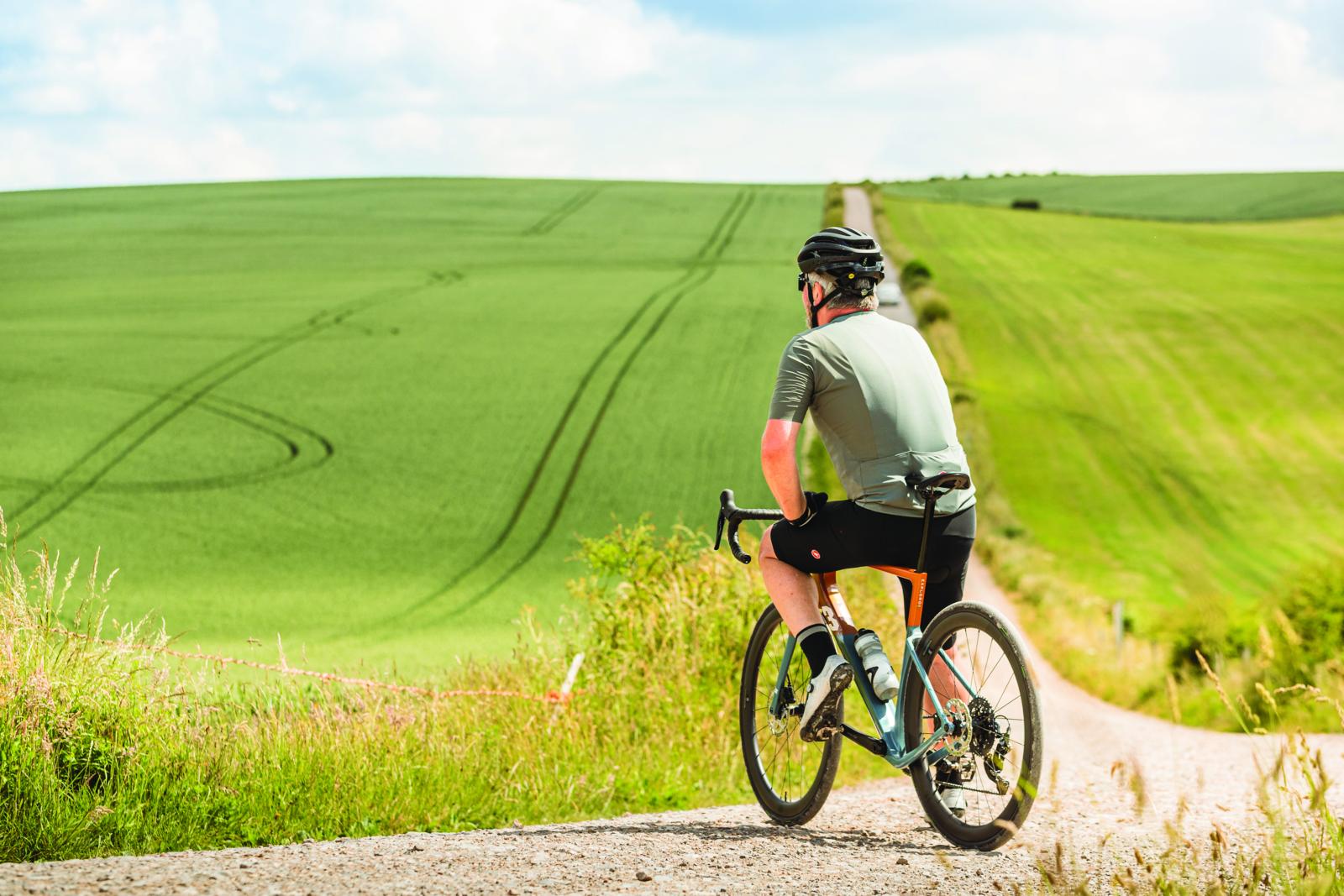
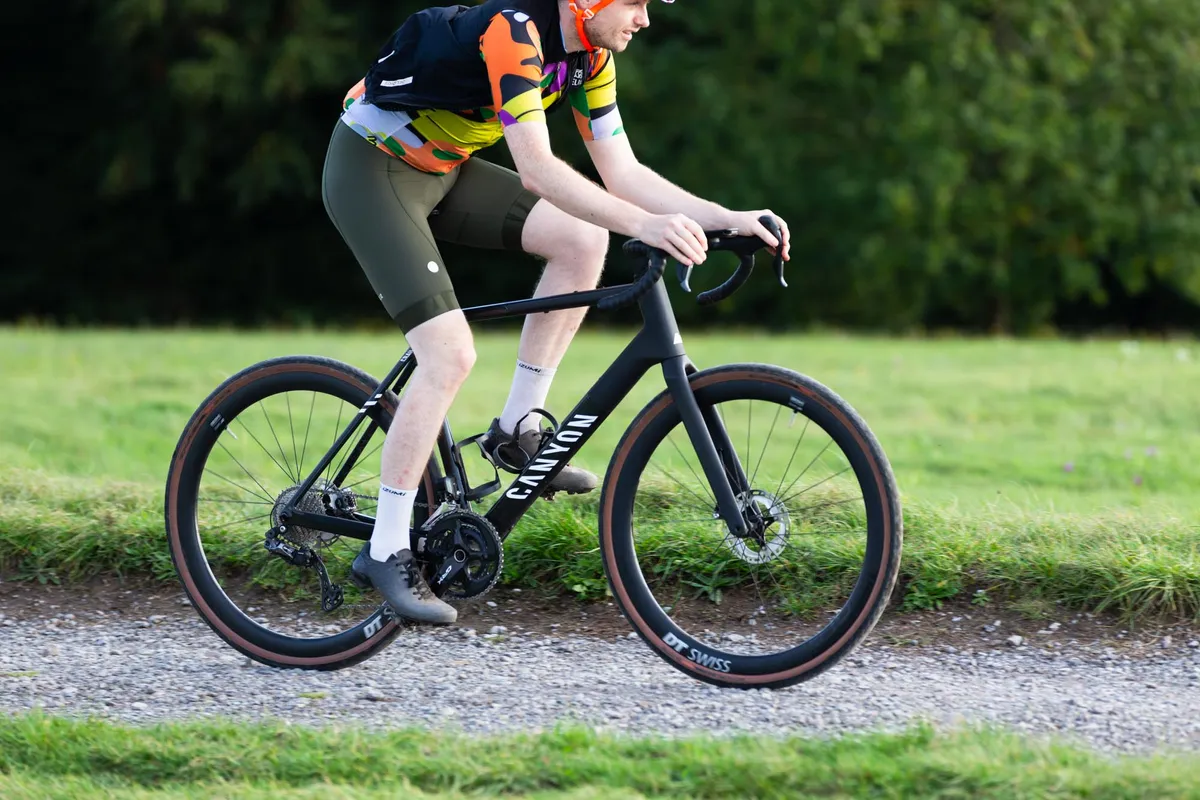
Pearson and Ribble both offer direct-sales bikes, but whilst Ribble master on value for money. Pearson's approach has a much more personal touch. With this in mind I decided to pitch Pearson's £6,100 On&On Race gravel bike against Ribble's Ultra-Grit, which comes in at almost exactly half the price – £3,099.
On paper, Pearson and Ribble have a lot in common. Pearson lays claim to being the world’s oldest bike brand, founded in 1860, with Ribble following in 1897 when it started building steel bicycle frames.
The parallels continue today. Ribble has become a direct-to-market online giant, and Pearson has transitioned from being an in-store-only brand to one with a network of dealers alongside a direct-to-market service.
The differences start when it comes to their bikes, however. Ribble has built a reputation for bikes that combine solid design with great value for money, shipped directly to you (although it has some stores dotted throughout the UK, too).
Introducing the bikes
Pearson On&On Race GRX 827 Di2

Pearson’s On&On Race is an out-and-out race bike, stripped of all extraneous fittings and fixtures, with an aero influence. It looks like a cross between a cyclocross bike and a road racer, sitting happily on the start line alongside the likes of Specialized’s Crux and Cannondale’s SuperX.
This On&On Race GRX 827 Di2 is the lower-spec option of Pearson's two Race bikes. It comes with Shimano’s latest 1x12 fully wireless GRX Di2 drivetrain and 40mm-deep Ere Research Tenaci GA40 carbon wheels.
Ribble Ultra-Grit Rival AXS XPLR

Ribble has recently revamped its gravel range, releasing two new models – the AllGrit for adventurous riders and bikepackers, and the racier Ultra-Grit.
The Ultra-Grit was developed with input from Ribble’s own Outliers pro gravel team as a race bike. The design employs plenty of elements from the brand's Ultra Race road bike, with an aero-optimised lightweight design paired with an aggressive geometry.
This Rival XPLR AXS model sits in the middle of the Ultra-Grit range, with Force XPLR AXS and Red XPLR AXS options above, and an Apex XPLR AXS model below. The Rival XPLR AXS bike comes equipped with a single-sided Rival power meter – a solid choice for a bike priced at £3,099.
Pearson On&On Race vs Ribble Ultra-Grit ride impressions

The Pearson On&On Race is a fantastic all-rounder for road and gravel; it's far more in the Cervélo Áspero 5 and Specialized Crux camp than it is the Cannondale Topstone or Mondraker Arid, for example.
Its ride on tarmac is light and lively, with the 40mm Vittoria Terreno T50 tyres providing impressive grip on gravel and in sloppy conditions, while still feeling rapid on tarmac.
Although it's a blast on tarmac, the Ribble doesn’t feel quite as nimble as the Pearson. The longer wheelbase and fatter tyres result in more stability, but I never felt quite as confident dropping a shoulder into a fast corner on the Ultra-Grit as I did on the On&On Race, even though the tightly packed tread of the Schwalbe G-One R tyres feels suitably secure on tarmac, whether wet or dry.

The lightweight rolling stock on the Pearson adds to the overriding feeling of agility the On&On Race exudes. Rides on tarmac between trails aren’t a chore, as they can be on some trail-oriented gravel bikes.
It’s exciting and fun to ride the Pearson fast, be it on tarmac or open gravel roads. It pings and flicks between lumps and bumps, and the frame's stiffness through the bottom bracket and at the head tube makes it a blast.
However, it never felt harsh, as some light and stiff gravel race bikes can. It’s quite the achievement and makes the On&On Race a compelling gravel choice.

I found the Ribble an easy bike to hustle along at speed with its excellent ride quality. Although the wheels are a few rungs below the Pearson’s carbon hoops, they respond well and pick up speed with ease. The frameset offers a firm ride, though, with its broad aero profiles and that deep-bladed fork.
I felt a lot more of the lumps and bumps through the seat of my bib shorts compared to the Pearson. Even with the larger 45mm tyres, it felt a little less refined than the On&On Race.

The fully wireless 1x GRX Di2 12-speed setup on the Pearson shifts sweetly and accurately. The derailleur borrows heavily from Shimano’s XT Di2 mountain bike derailleur, and it works very well.
There’s lots of power when it comes to braking, but the downside is that in anything but dry conditions, you’ll know about it. Hard braking, soft speed-regulating dabs, and everything in between, are met by a vocal screech once even the slightest bit of moisture or grime is introduced.

The Ultra-Grit on test uses the latest SRAM Rival XPLR AXS electronic groupset.
Although the Pearson’s GRX groupset is higher in the pecking order than Rival (more akin to Force), I didn’t find Rival AXS to be in any way outperformed. The rear derailleur’s shifting is rapid, accurate and free of drama, thanks to the clutched rear derailleur, no matter how rough the terrain gets.
It’s good to see Ribble add a power meter, too, even if it’s single-sided, and it has provided consistent data throughout my test rides.
Braking is excellent, with lots of feel and power, although like the Pearson, the rotors can get a little noisy when wet or caked with grit. The deep-bladed aero fork on the Ribble seems to channel more onto the rotor's surface compared to the Pearson, with the tell-tale scraping sound of the front rotor.

Both bikes are fun to ride on more technical terrain, and both have good tyre choices for mixed UK conditions. Neither can match singletrack-slaying gravel bikes such as Parlee’s Taos, Mondraker’s Arid RR and Cannondale’s Topstone, though.
That said, I enjoyed the challenge of getting both bikes out of their comfort zone. Both coped well with tight corners, drops and exposed roots, although line choice becomes critical when things get particularly rough.
The Ribble just has the edge thanks to its larger tyres, although the Pearson's quicker responses make mid-corner corrections and surprises easier to cope with.
Pearson On&On Race vs Ribble Ultra-Grit frame details

Compared to the On&On Adventure, the On&On Race has lost the third set of bottle bosses on the underside of the down tube, and there are no top tube mounts.
The seatstays are also reprofiled, eschewing rack eyelets, but there are mounts for a front derailleur.
The fork notably omits triple mounts and there are no mudguard eyelets.
Pearson claims this stripped-down frameset sees a 20 per cent reduction in frame weight from the Adventure’s 940g (Size 3, the equivalent of a 54cm), bringing the frame weight down to an impressive 750g. This stripped-down approach will naturally appeal to racers, and it’s no surprise that the On&On Race is the frameset of choice for the brand’s highly successful British cyclocross team.

Aerodynamics are taken care of via a fully integrated front end, alongside aero profiling on the main tubes and a dedicated aero carbon seatpost. Pearson says the bike has been tested in the wind tunnel, although it doesn’t offer any data.
The On&On Race features a SRAM UDH dropout for compatibility with direct-mount rear derailleurs and has tyre clearance of 45mm – generous for a cyclocross bike, although not what I’d expect of a gravel bike in 2026, with 50mm+ becoming the norm.
Pearson says it uses high-modulus Toray T1000 carbon to combine light weight and stiffness. This is blended with MJ04B carbon fibre, which is known for its tensile strength.
Ribble takes a similar approach with the Ultra-Grit, combining high-modulus T1000 carbon with a Toray M46 fibre with greater tensile strength. The M46 fibre is claimed to offer the same tensile strength, but with improved elongation (stretch) capabilities. In theory, this could help improve fatigue life and compliance through the frameset.
Ribble claims a 900g frame weight for the Ultra-Grit – impressively light for a frame that comes with a host of features not found on the Pearson, such as the top tube bento box mounts, three sets of bottle bosses, mudguard eyelets and a down tube storage port. On paper, it’s certainly a better-stocked frameset if you’re concerned with riding longer distances.
Like the Ultra-Race road bike the Ultra-Grit was influenced by, it features dedicated aerodynamic tube profiles, dropped stays, an aero seatpost, an integrated front end and a wide-stance fork. That fork helps give the Ultra-Grit a generous 53mm tyre clearance up front, with 50mm at the back – again topping the Pearson.
Pearson On&On Race vs Ribble Ultra-Grit geometry

Both bikes feature race-oriented geometries, with slightly relaxed head angles (compared to a road bike) – the Pearson has a 71.5-degree figure (size 5 / 58cm), with the Ribble slightly steeper at 72 degrees (L). They both have steep seat angles, too, with the Pearson 73.5 degrees and the Ribble 73.3 degrees.
The wheelbases are similar – the Ribble is a tighter 1,058mm, whereas the Pearson is 1,061mm.
Ribble Ultra-Grit
| Size | XS | SM | MD | LG | XL |
|---|---|---|---|---|---|
| Rider height | 5'3 - 5'7 (159 - 169cm) | 5'6 - 5'9 (167 - 176cm) | 5'9 - 5'11 (174 - 181cm) | 5'10 - 6'1 (179 - 186cm) | 6'0 - 6'4 (184 - 193cm) |
| Crank length (mm) | 165 | 170 | 170 | 172.5 | 172.5 |
| Seat tube angle (degrees) | 75.5° | 74° | 73.5° | 73.3° | 73° |
| Top tube (mm) | 522 | 550 | 570 | 585 | 602 |
| Head tube angle (mm) | 70.5° | 71.5° | 71.5° | 72° | 72° |
| Fork rake (mm) | 50 | 50 | 50 | 50 | 50 |
| Head tube (mm) | 105 | 125 | 145 | 170 | 190 |
| BB drop (mm) | 70 | 67 | 65 | 65 | 65 |
| Seat tube (mm) | 470 | 490 | 510 | 530 | 550 |
| Rear centre (mm) | 430 | 430 | 430 | 430 | 430 |
| Front centre (mm) | 605 | 610 | 626 | 637 | 648 |
| Reach (mm) | 386 | 394 | 404 | 410 | 417 |
| Stack (mm) | 526 | 545 | 562 | 588 | 607 |
| Wheelbase (mm) | 1025 | 1031 | 1048 | 1058 | 1070 |
Pearson On&On
| Size cm | 49 | 52 | 54 | 56 | 58 |
|---|---|---|---|---|---|
| Frame reach (mm) | 365 | 373 | 381 | 390 | 399 |
| Frame stack (mm) | 542 | 558 | 579 | 598 | 617 |
| Top tube length (mm) | 521 | 539 | 553 | 568 | 583 |
| Seat tube length (mm) | 470 | 495 | 520 | 545 | 570 |
| Head tube length (mm) | 110 | 125 | 145 | 165 | 185 |
| Seat tube angle (degrees) | 74 | 73.5 | 73.5 | 73.5 | 73.5 |
| Head tube angle (degrees) | 70.5 | 71 | 71.5 | 71.5 | 71.5 |
| BB drop (mm) | 78 | 78 | 78 | 78 | 78 |
| Wheelbase (mm) | 1011 | 1020 | 1030 | 1046 | 1061 |
| Chainstay length (mm) | 435 | 435 | 435 | 435 | 435 |
| Fork offset (mm) | 50 | 50 | 50 | 50 | 50 |
| Trail (40c tyre) | 71 | 69 | 66 | 66 | 66 |
| Rider height (ft/in) | 5'2-5'7 | 5'6-5'10 | 5'9-6'0 | 5'11-6'3 | 6'2 + |
| Rider height (cm) | 158-171 | 167-178 | 175-183 | 180-190 | 188 + |
When it comes to the ride position, both bikes are pretty aggressive.
The Pearson has a 399mm reach and 617mm stack, with Ribble going longer and much lower at 410mm and 588mm respectively, but that’s mitigated by Ribble’s use of a riser bar, which gives a 20mm rise at the hoods. Your hand and body position therefore feel very similar to the Pearson.
Pearson On&On Race vs Ribble Ultra-Grit specifications

The Rival AXS XPLR-equipped Ultra-Grit is demonstrative of Ribble's focus on value for money.
Canyon’s Grail CF SL 7 AXS comes with a similar Rival AXS specification and DT Swiss Gravel LN wheelset for £3,299.
Meanwhile, Specialized’s Crux Expert, with Rival AXS XPLR, is £4,999, although that bike comes with carbon wheels as standard. Cannondale’s SuperX 3 comes with the same wheels as the Ultra-Grit, but with a mechanical 2x GRX groupset for £4,250.
The Ultra-Grit specification is a solid offering, with a complete SRAM Rival AXS XPLR groupset combining a 40t chainring and 10-46t cassette. The DT Swiss G1800 wheelset is also a good choice – the 25mm alloy rim is tubeless-compatible and has a 24mm hook-to-hook internal width.
The 1,835g weight for a pair is decent for a wide, gravel-ready alloy wheelset, although upgrading via Ribble’s Bike Builder service (if you have the budget) is an easy way to save weight, with Hope, Vision and Zipp options on offer.
That’s not to say the Ultra-Grit is a heavy bike. It tips the scales at 9.46kg (size large), comparing well to the Pearson On&On Race at 9.04kg (58cm), especially when you remember it’s around half the price.
Schwalbe’s G-One R tubeless tyres in 45mm, a Selle Italia Novus Boost Evo saddle, and Ribble’s own gravel riser bar and integrated-routing compatible stem, are solid choices, as is the dedicated carbon seatpost.

Pearson’s £6,100 price tag stacks up well against some of its rivals. Specialized’s similarly stripped-down and flyweight Crux Pro in a similar specification (Force XPLR AXS and carbon wheels) is £799 more expensive at £6,999, and Cannondale’s SuperX with GRX Di2 (2x) is £450 more at £6,550.
But opt for a similar specification Ultra-Grit, such as the Force XPLR AXS model with Vision carbon wheels and a power meter, and you’ll be spending £1,800 less at £4,399. Canyon’s race-bred Grail CFR with 2x GRX Di2, a 4iiii power meter, and DT Swiss GRC 1100 carbon wheels is £100 less at £5,999.
The Pearson’s Shimano GRX Di2 1x groupset is paired with an XT-level cassette from Shimano’s mountain bike range. The 42t chainring and 10-51t cassette give a taller top end than the Ribble, although the Ribble has a lighter gear for climbing.
Up front, Pearson combines a carbon stem and bar – a step above the Ribble and commensurate with the price. The headset is the premium CeramicSpeed SLT with its low-maintenance, long-lasting, anti-corrosion design. It’s the same story with the bottom bracket – instead of a standard Shimano unit, Pearson has gone for a CeramicSpeed offering, again for its claimed low maintenance and longevity.
The wheels are from Dutch brand Ere Research – they may not be as well-known as the major players in the carbon wheels market, but there is a lot of solid tech on display. The 40mm-deep Tenaci GA40 aero-optimised rim is tubeless-compatible with a hooked profile and a broad 26mm internal width. These rims are great for running wider tyres, beyond the On&On Race’s 45mm rubber limit.
The rims are paired with ION S hubs, designed and engineered by ERE. The straight-pull hubs are machined for low weight, but are built tough with SKF stainless bearings and their own 36t star-ratchet freehub.
In all, these weigh a claimed 1,549g for the pair, making them good lightweight gravel wheels. They're shod with Vittoria’s Terreno T50 tyres in a 40mm width.
Completing the On&On is a Fizik Vento Argo X1 saddle atop a carbon aero post – on larger sizes with a 12mm offset and a zero offset on the smaller sizes. The carbon bar is wrapped in matching Fizik Bondcush 3mm-thick bar tape.
Spec details
Pearson On&On Race GRX 827 Di2
- Size tested: 5 (58cm)
- Sizes: 1, 2, 3, 4, 5
- Weight: 9.04kg
- Frame: T1000 and MJ04B carbon fibre
- Fork: Carbon fibre
- Shifters: Shimano GRX ST-RX820 12-speed
- Crankset: Shimano GRX FC-RX820, 42t
- Bottom bracket: CeramicSpeed T47 Uncoated
- Rear derailleur: Shimano GRX Di2 RX827, 12-speed
- Cassette: Shimano XT M8200, 12-speed, 10-51t
- Brakes: Shimano GRX RX820, 160mm rotors
- Wheels: Ere Research Tenaci GA40, carbon
- Tyres: Vittoria Terreno T50, 700c x 40mm
- Handlebar: Pearson Flared Carbon 2 piece, 42cm
- Stem: Pearson Carbon, 110mm
- Seatpost: Pearson Carbon
- Saddle: Fizik Vento Argo X1, 140mm
- Price: £6,100
Ribble Ultra-Grit Rival XPLR AXS
- Size tested: L
- Sizes: XS, S, M, L, XL
- Weight: 9.46kg
- Frame: Carbon fibre
- Fork: Ultra-Grit Carbon fork
- Shifters: SRAM Rival AXS E1, 13-speed
- Crankset: SRAM Rival XPLR AXS E1 DUB Wide with power meter, 40t
- Bottom bracket: SRAM DUB Wide BSA 68mm
- Rear derailleur: SRAM Rival AXS E1
- Cassette: SRAM Rival XPLR XG-1351, 10-46t
- Brakes: SRAM Rival, Paceline 160mm rotors
- Wheels: DT Swiss G1800 Disc
- Tyres: Schwalbe G-One R, 700c x 45mm
- Handlebar: Ribble Alloy Gravel Riser Bar, 42cm
- Stem: Ribble RS-2 stem, 90mm
- Seatpost: Ribble D-Shape carbon inline post
- Saddle: Selle Italia Novus Boost EVO Superflow FeC alloy
- Price: £3,099 / $4,750 / €4,350
Pearson On&On Race vs Ribble Ultra-Grit bottom line

The Pearson is faster on the road and flat terrain, thanks to the gearing and the tyre choice. It’s also a fun bike to ride and I particularly liked its whip-fast responsiveness – I can see why Pearson's cyclocross team races it.
The stripped-down nature of the design makes for a great-looking bike, but I (and many others) will miss not having down-tube storage, and if this were my year-round gravel bike, I would prefer to see a set of mudguard eyelets, front and rear.
As a tool for a job – racing – the Pearson is a brilliant choice, especially if you want to race cyclocross in the winter and then ride gravel in the summer.
The Ribble Ultra-Grit isn’t quite as refined as the Pearson – it has a much firmer ride, but it's capable of taking larger tyres to mitigate that. It also has more fittings for bottles, luggage and mudguards, not to mention generously sized down-tube storage, while being significantly cheaper.
Overall, the Pearson is the better race bike, and Pearson should be applauded for its customer service. The Ribble, however, is the better all-round option for day-to-day use and that’s why it wins this head-to-head.