Radial tyres are the biggest talking point in mountain bike rubber right now, but tyres are only useful if they make a difference on the trail. Extra grip is great, but not if it comes with vague steering, slow rolling speeds or a tyre that folds when loaded hard.
In a conventional mountain bike tyre, the casing threads, or ‘plies’, cross the tyre at roughly 45 degrees. This angled layout spreads forces further along the length of the tyre, tying the tread and sidewalls together and creating a stiffer, more supportive carcass.
That helps the tyre resist impacts and hold its shape under load, but it also makes the tread less able to flex around roots, rocks and trail chatter, which can reduce suppleness and grip.
A true radial tyre has plies that run much closer to 90°, from bead to bead. This enables the casing to flex more locally, so the tread can deform around surface imperfections, increasing the contact patch and keeping it better connected to the ground.
The challenge is maintaining enough sidewall support, steering precision and rolling speed, which is why the plies in ‘radial’ MTB tyres tend to be positioned slightly more diagonally.
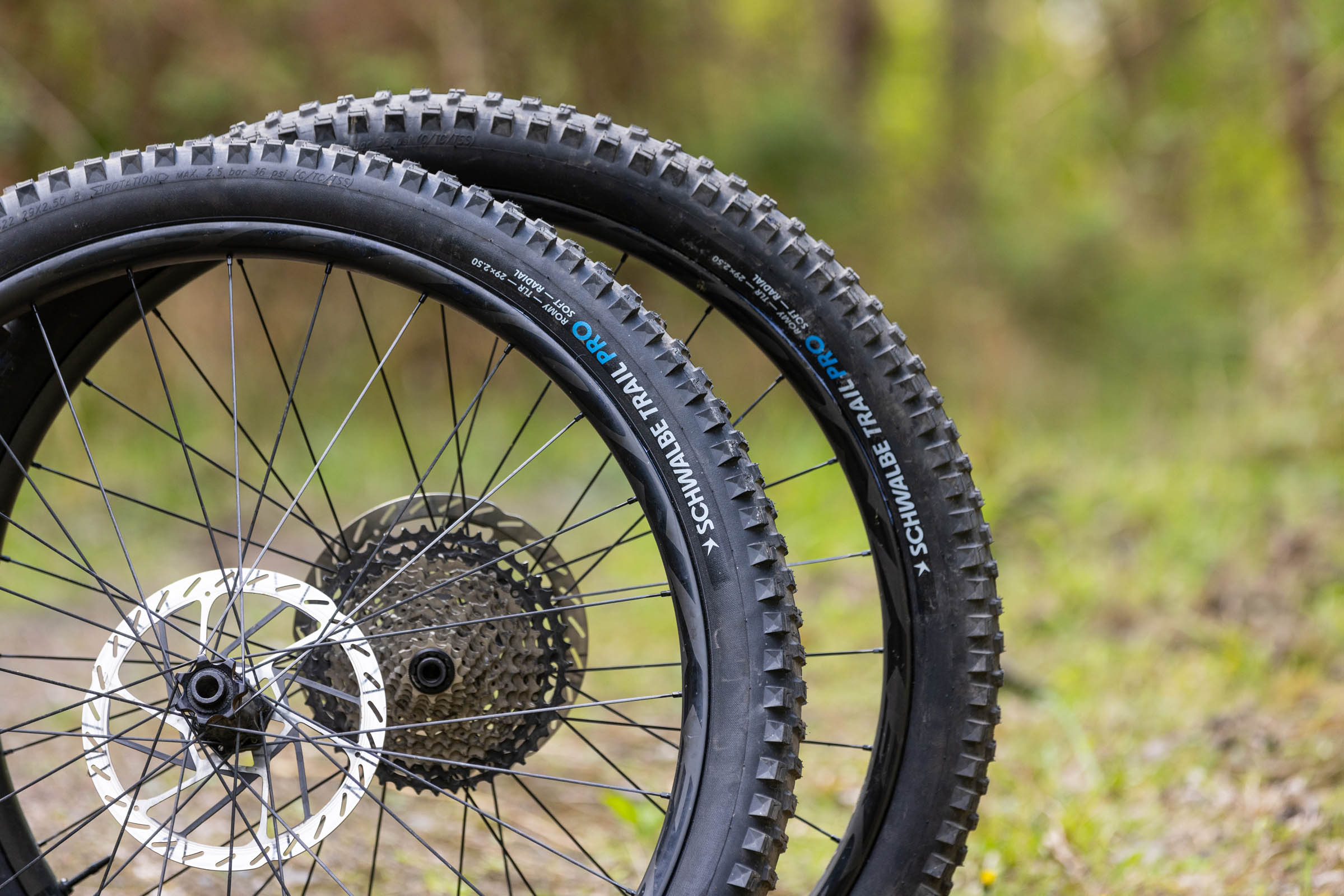
I tested three very different takes on the idea. Schwalbe’s Romy Trail Pro Radial Soft represents the trail category, Specialized’s Butcher Grid Gravity Radial sits in the enduro and aggressive-trail space, while Nutrak/Vee Tire Co's Attack HPL Full 40 RAD Core goes all-in on gravity riding.
To find out their pros and cons, and to see if they live up to the hype, I put these three tyres to the test.
How I tested radial tyres
To understand whether radial tyres make a tangible difference, I tested three very different versions of the idea rather than treating them as directly interchangeable options.
Schwalbe’s Romy Trail Pro Radial Soft was tested as the trail-focused choice, Specialized’s Butcher Grid Gravity Radial T9 as the aggressive trail and enduro option, and Nutrak/Vee’s Attack HPL RAD Core Full 40 as the gravity tyre.
I used a 130mm-travel trail bike, a 160mm-travel enduro bike and a 24kg full-power eMTB, matching each tyre to the kind of riding it's most likely to face. Conditions ranged from dry to intermediate, with some greasy sections mixed in.
The test loops included roots, embedded rocks, hardpack, loose turns, off-cambers, berms, braking bumps and rough natural singletrack.
I adjusted pressures to find each tyre’s best working window, then focused on where radial construction helped, where it introduced compromises, and which riders each tyre makes most sense for.
Introducing the tyres
Schwalbe Romy Trail Pro Radial Soft
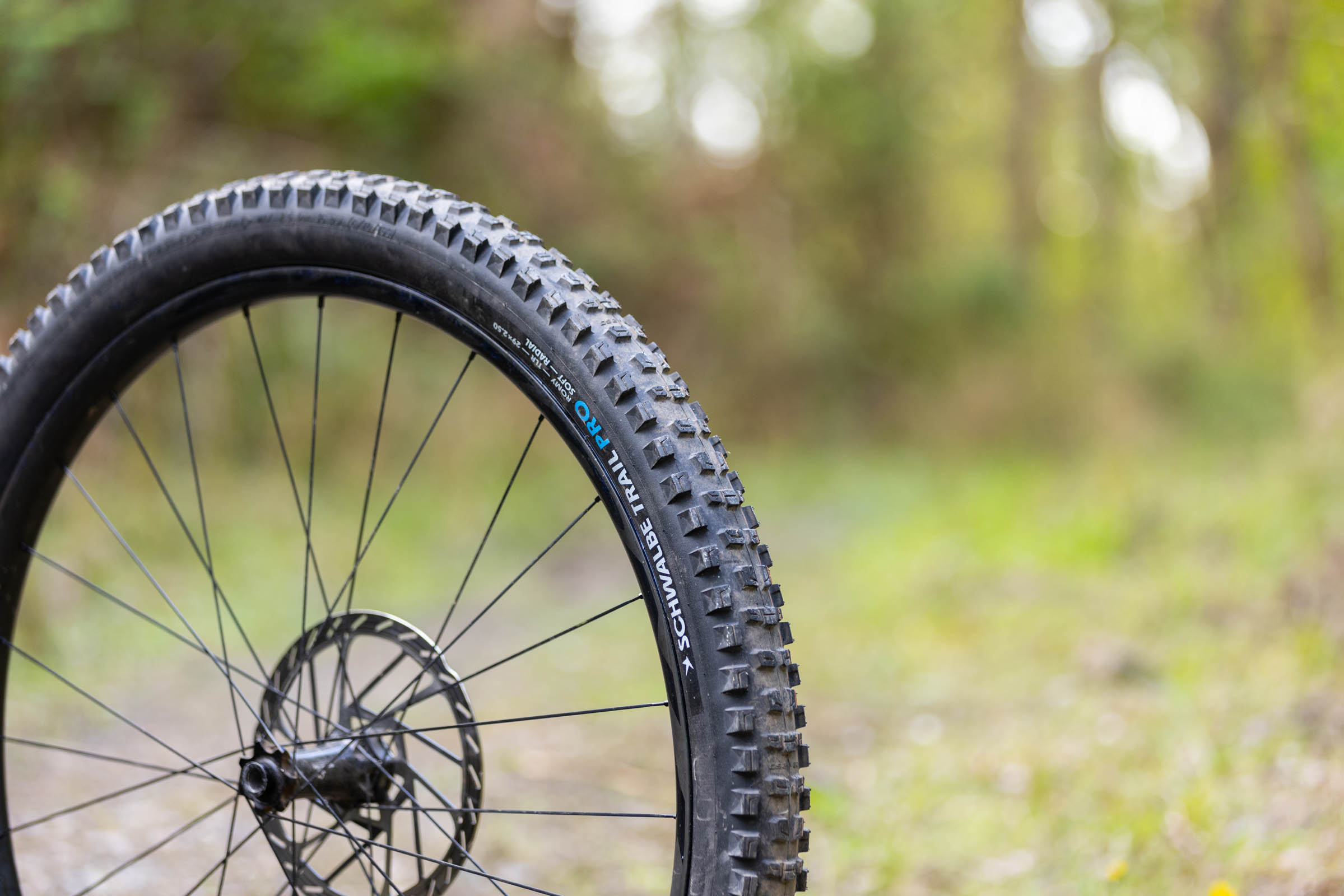
- £74.99 as tested
- Pros: Calm, damped trail feel; impressive grip for weight and tread depth; predictable rounded profile
- Cons: Pressure-sensitive; can feel vague if run too soft; expensive
The Schwalbe Romy Trail Pro Radial Soft is the one to choose if your rides are rooty, rocky and awkward rather than flat-out fast. It has a calm, settled feel and serves up impressive grip for a trail tyre, but getting the pressure right is crucial because the casing can feel vague if run too soft.
- Read more: Schwalbe Romy Trail Pro Radial Soft review
SQUIRREL_13987701
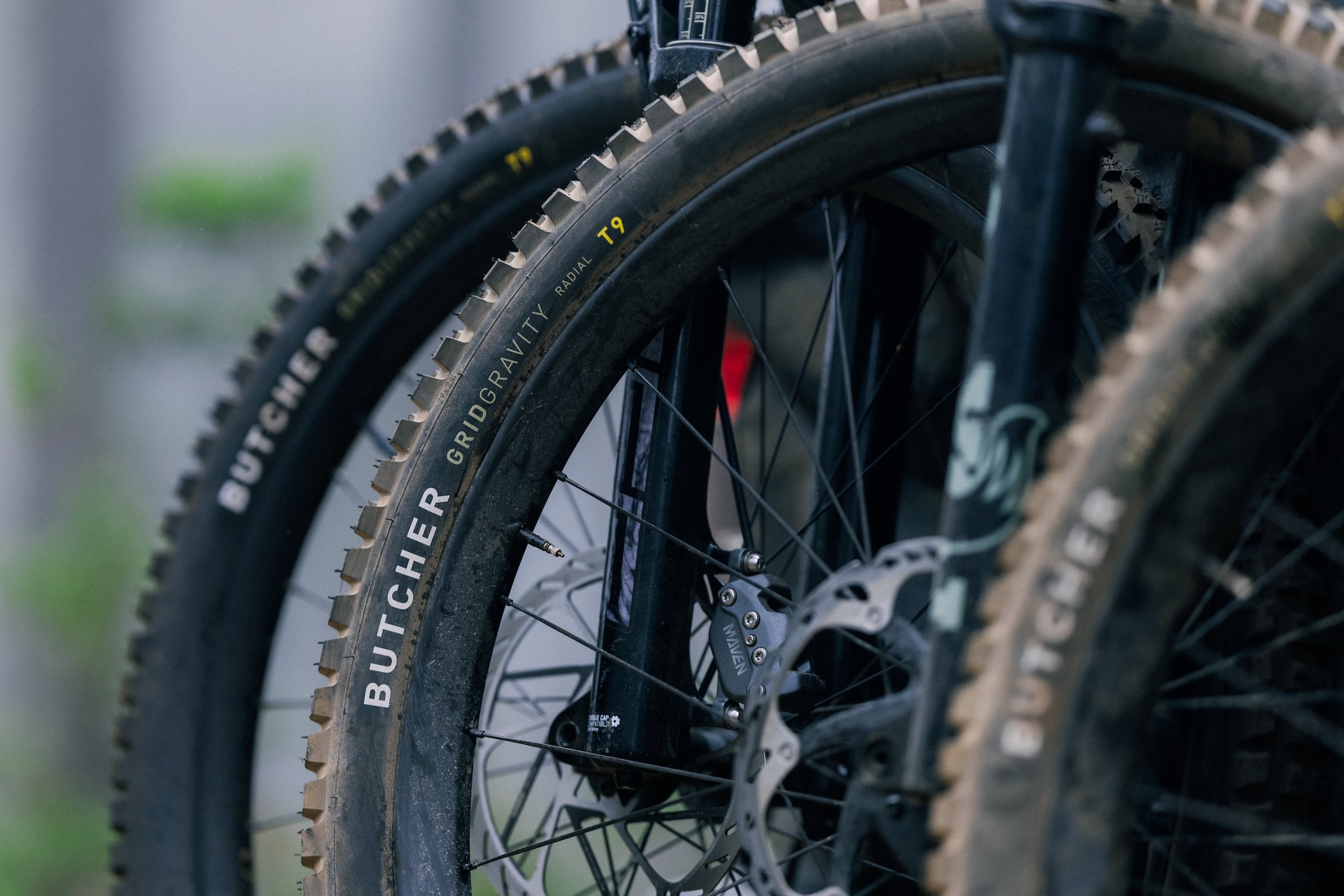
Specialized Butcher Grid Gravity Radial T9
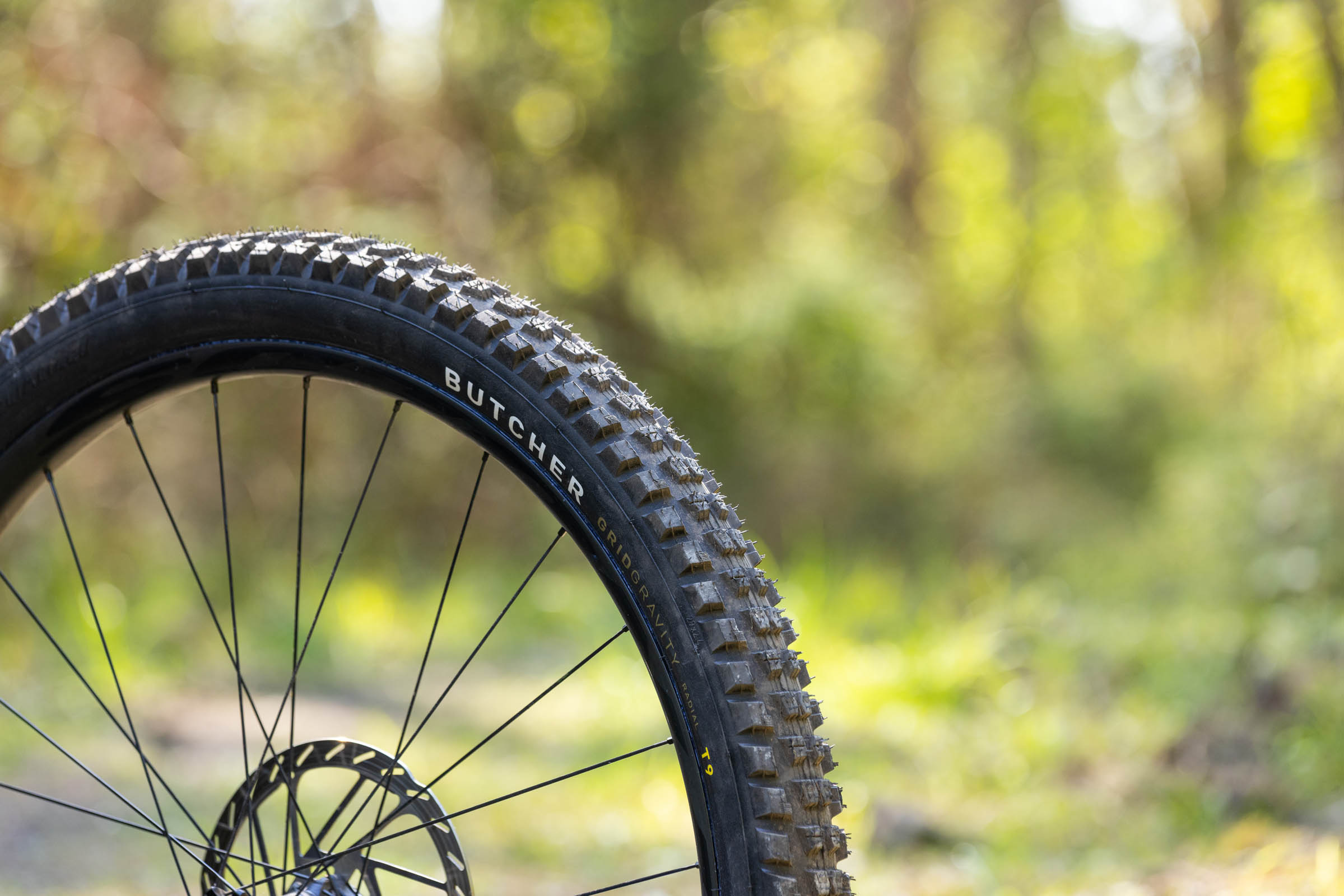
- £55 as tested
- Pros: Most familiar handling; good support at normal pressures; trustworthy dry-to-intermediate grip
- Cons: Modest rolling speed; not as plush-feeling as the Schwalbe or Nutrak; less convincing in soft muck
The Specialized Butcher Grid Gravity Radial T9 is the safest bet for aggressive riders. It doesn’t feel vague or overly soft, but still brings extra calmness, grip and control to rough trails. For enduro bikes, eMTBs and hard-charging trail riding, it’s the most well-rounded tyre here.
SQUIRREL_13994430
Nutrak/Vee Tire Co Attack HPL Full 40 RAD Core
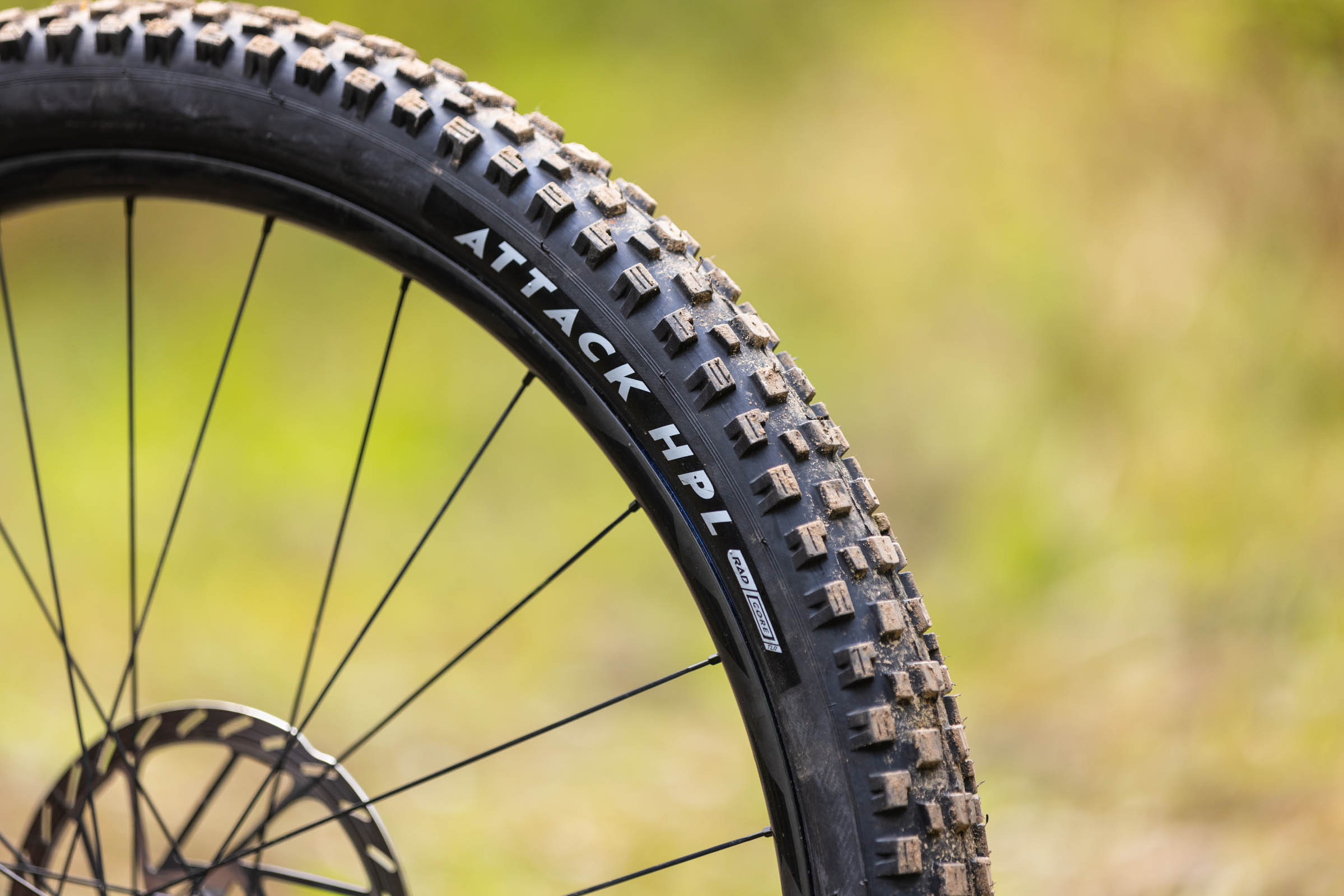
- 4.5 stars
- £64.99 as tested
- Pros: Huge descending grip; excellent damping and tracking; better support than expected
- Cons: Slow under power; soft compound will wear quickly, race tyre only
The Nutrak/Vee Attack HPL Full 40 RAD Core is the bruiser of the group. It’s too slow and heavy for big pedalling days, but point it down rough tracks and it makes immediate sense, with huge grip, impressive damping and loads of front-end confidence.
SQUIRREL_13995073
Are radial tyres worth it?
Radial tyre construction is more than marketing noise, but it isn’t a magic upgrade that works in the same way for every rider.
The best radial tyres feel calmer over roots, rocks and repeated trail chatter. They can help the bike track more smoothly, find grip more easily and feel less nervous when the ground gets rough.
That’s a genuine performance gain, especially on natural technical trails, where keeping the tyre connected to the ground matters as much as outright tread bite.
There are trade-offs, though. Radial tyres can feel slower on smoother climbs and transitions, and they often need more careful air-pressure setup.
The Schwalbe Romy Trail Radial showed how sensitive a more compliant casing can be, but also how much grip and comfort a trail tyre can gain.
Specialized’s Butcher Radial proved a more conservative construction can feel easier to live with, making it the safest option for aggressive trail, enduro or eMTB riders.
Nutrak/Vee’s Attack HPL RAD Core delivered the most descending confidence, but with more drag.
So, choose the Schwalbe for technical-trail grip, the Specialized for the best aggro setup and the Nutrak for DH, uplift days and race runs.
Radial tyres aren’t perfect, but if you value grip and comfort, they’re well worth a try. I’ll be looking to run them wherever possible.
Who are radial tyres for?
Radial tyres make most sense for riders who value grip, comfort and control more than outright rolling speed.
They suit natural technical trails, rough enduro tracks, downhill riding, uplift days and full-power eMTBs, where keeping the tyre connected to the ground can make the bike feel calmer and easier to trust.
They are less convincing for smoother trail-centre loops, long pedalling-heavy rides or riders who prioritise speed and efficiency over damping and traction. The key is choosing the right casing for your terrain, bike and riding style.
Radial tyres bottom line
Radial tyres aren’t just a clever new label, but they aren’t a guaranteed upgrade for every rider either.
The good ones give the bike a calmer, more connected feel, with the tread tracking rough ground instead of getting bounced across it. That makes most sense on natural, technical trails, where grip and control matter more than low rolling resistance.
These three tyres also show how different the results can be. The Schwalbe Romy Trail Pro Radial Soft brings a supple, damped feel to technical trail riding, although it rewards careful pressure setup.
Specialized’s Butcher Grid Gravity Radial T9 is the easiest one to recommend for hard trail riding, enduro and eMTBs because it balances grip, support and price well. The Nutrak/Vee Attack HPL RAD Core Full 40 goes furthest towards downhill and uplift use, with loads of grip and a very settled feel when the trail gets rough.
The key is not to buy a tyre just because it says radial on the sidewall. Casing support, compound, tread pattern, rolling speed and pressure sensitivity still matter.
Get the right one for your bike, and terrain and radial construction can bring a real benefit. Get the wrong one and it may feel slow, soft or less precise than the tyre it replaced.