Colnago has officially launched the TT2 time trial bike which will be used by Tadej Pogačar in the Tour de Suisse time trial tomorrow.
We first spotted the time trial bike being ridden by Pogačar as a prototype at the Tour de Romandie prologue time trial at the end of April. We published details of what was then known, including the 550g claimed weight reduction from Colnago’s TT1 time trial bike.
Colnago says that you can build up a complete bike, including the extensions and a disc rear wheel to hit the UCI 6.8kg weight limit.
Lighter but just as stiff
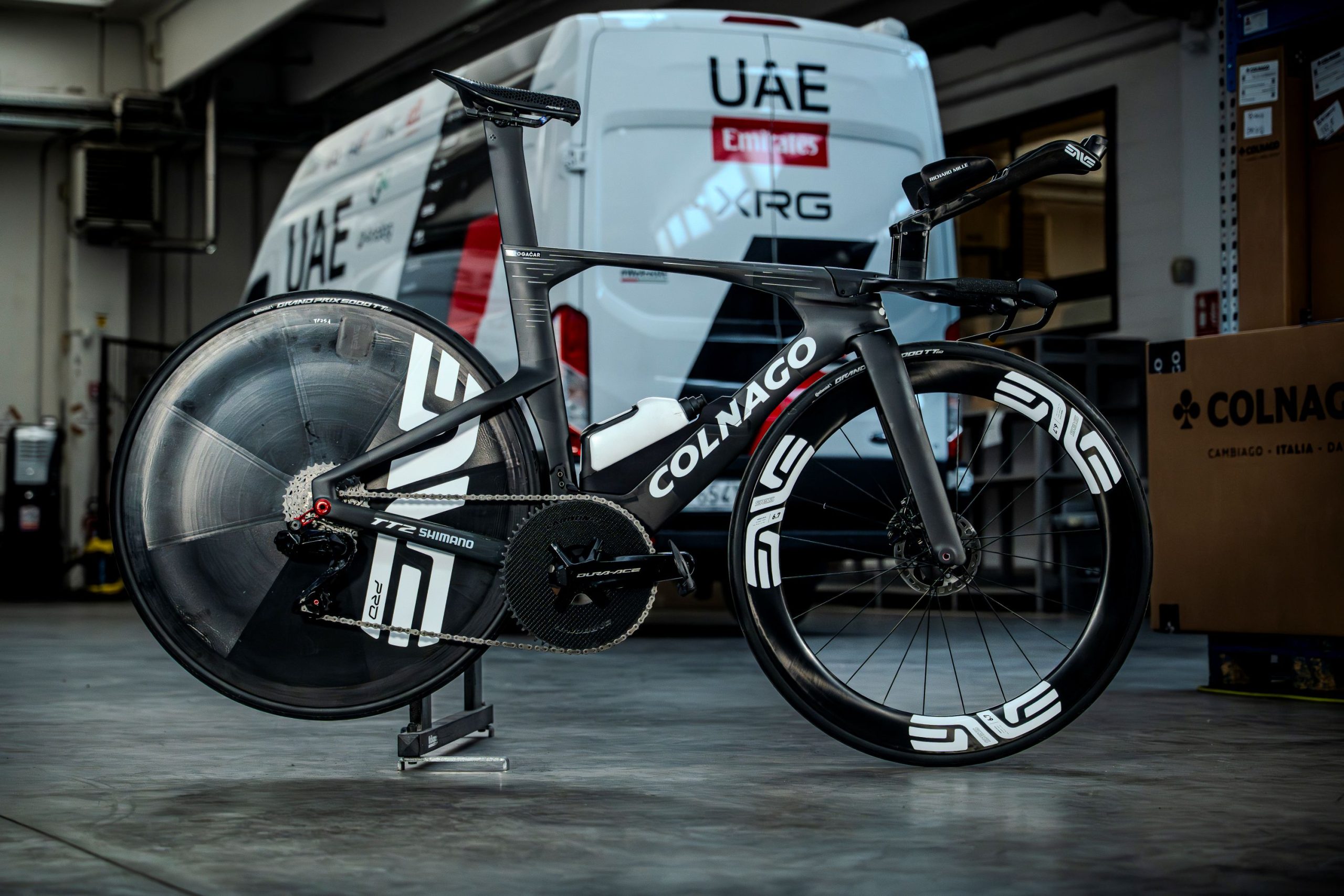
The weight loss is spread across the frame, fork, seatpost and parts, with an unpainted size S frame kit having a 2,240g claimed weight, a reduction from the 2,785g of the TT1.
Despite the significant weight loss, Colnago says the TT2 is as stiff as the TT1 and also offers improved aerodynamics, increased stability and the ability to fit a wider range of riders.
Tyre clearance has been increased from 28mm on a narrow rim for the TT1 to 30mm even on a modern wide rim. There’s scope to fit a massive 70-tooth chainring as a 1x drivetrain and the frame is also 2x compatible, with a BSA bottom bracket. The rear hanger is UDH compatible.
Designed for modern time trial courses
Colnago says that the new bike is designed for the more technical modern time trial courses in stage races, which often include climbs and descents and more technical sections, as well as uphill finishes, as in the Stage 1 team time trial in the 2026 Tour de France.
This requires a more agile, lighter bike than the straight, flat courses that were previously more typical of the “race of truth”.
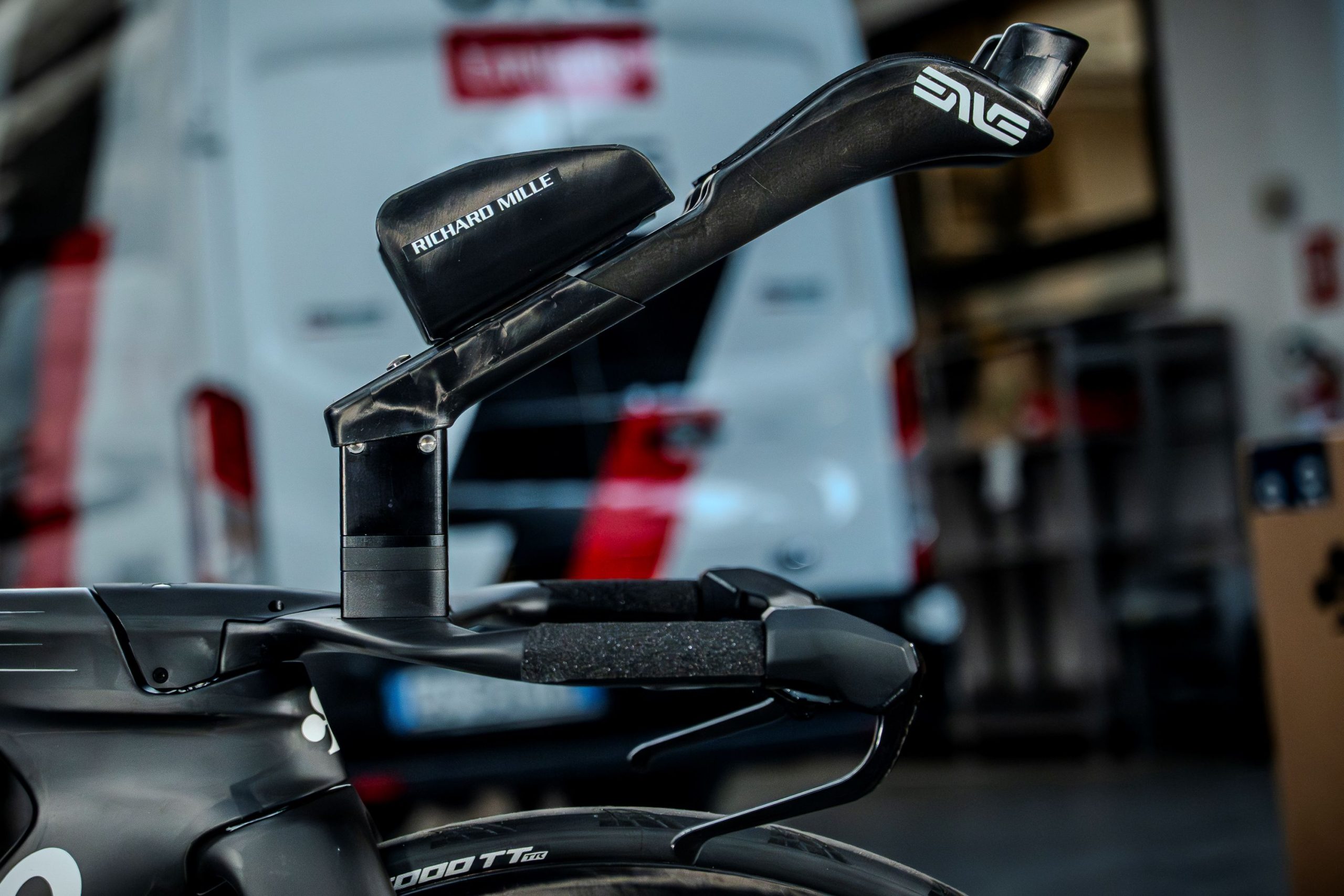
The bike’s aerodynamic development has focused on the front end, as this is where maximum aerodynamic benefits can be achieved. The head tube has been slimmed down, the base bars narrowed and the fork redesigned, resulting in a claimed 2 watt drag reduction over the TT1.
Colnago used the techniques it developed when designing the Y1Rs to aero optimise the frame, including embedding pressure sensors in a prototype frame to measure airflow and testing with a mannequin as well as without.
A conventional steerer
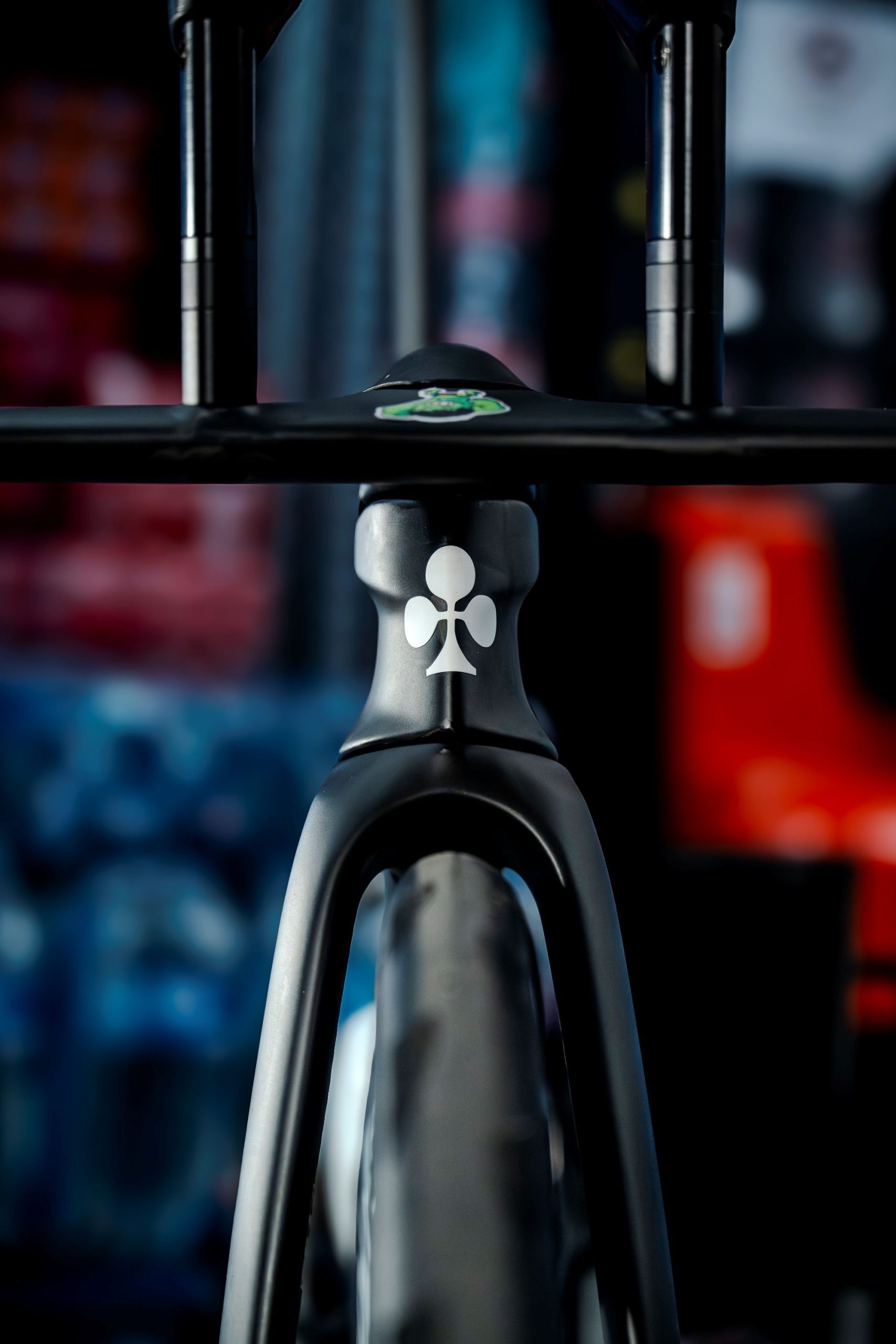
While the TT1 had a bayonet fork, the TT2 has a conventional steerer. Filippo Galli, Colnago’s lead engineer on the TT2 development, points out that this change was primarily made for weight reduction, with the TT2’s fork weighing 393g versus 530g for the TT1.
The waisted part of the head tube is just 32mm across, which Galli says is about as narrow as it’s possible to go with the 25mm steerer. To achieve this, the brake hose routing is through the rear of the head tube, rather than through the central section.
The TT2’s 360mm centre-to-centre base bar is narrower and slimmer than that of the TT1, in response to the demands of Colnago’s pros, as this reduces drag when accelerating and tackling technical parts of a course.
Aero tubes
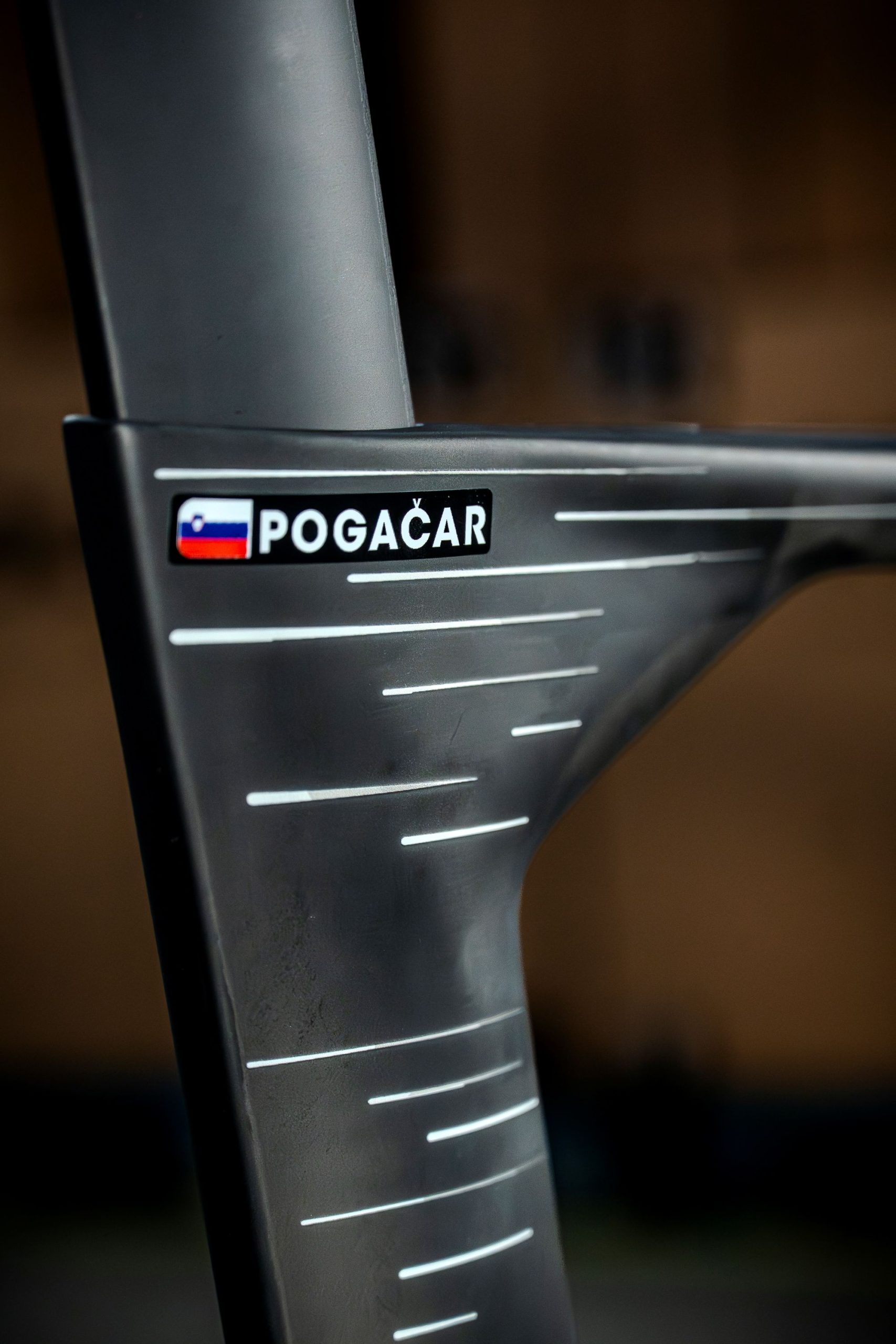
Colnago has also updated the aero tube profiles, improving the frame’s stability in crosswinds and changing wind angles, increasing rider confidence and hence speed. Its wind tunnel testing included measurement of the lateral force coefficient at different yaw angles, not just the zero-degree drag.
The TT2 has less angular tube transitions than the TT1, which is a major factor that has also allowed Colnago to reduce frame weight, as there are lower stress concentrations at the junctions. This has allowed it to reduce the amount of carbon fibre used and increase the use of high modulus carbon, lowering weight while maintaining the same frame stiffness.
There’s a new aero water bottle, which attaches to the frame with Fidlock retainers, has 405ml capacity and is UCI legal. Galli says the TT2 is around 2 watts more aero with the bottle than without, as it acts as a fairing around the bottom bracket area. Sponsor commitments mean that UAE Team Emirates-XRG will not be using it in competition this year though.
Four size options
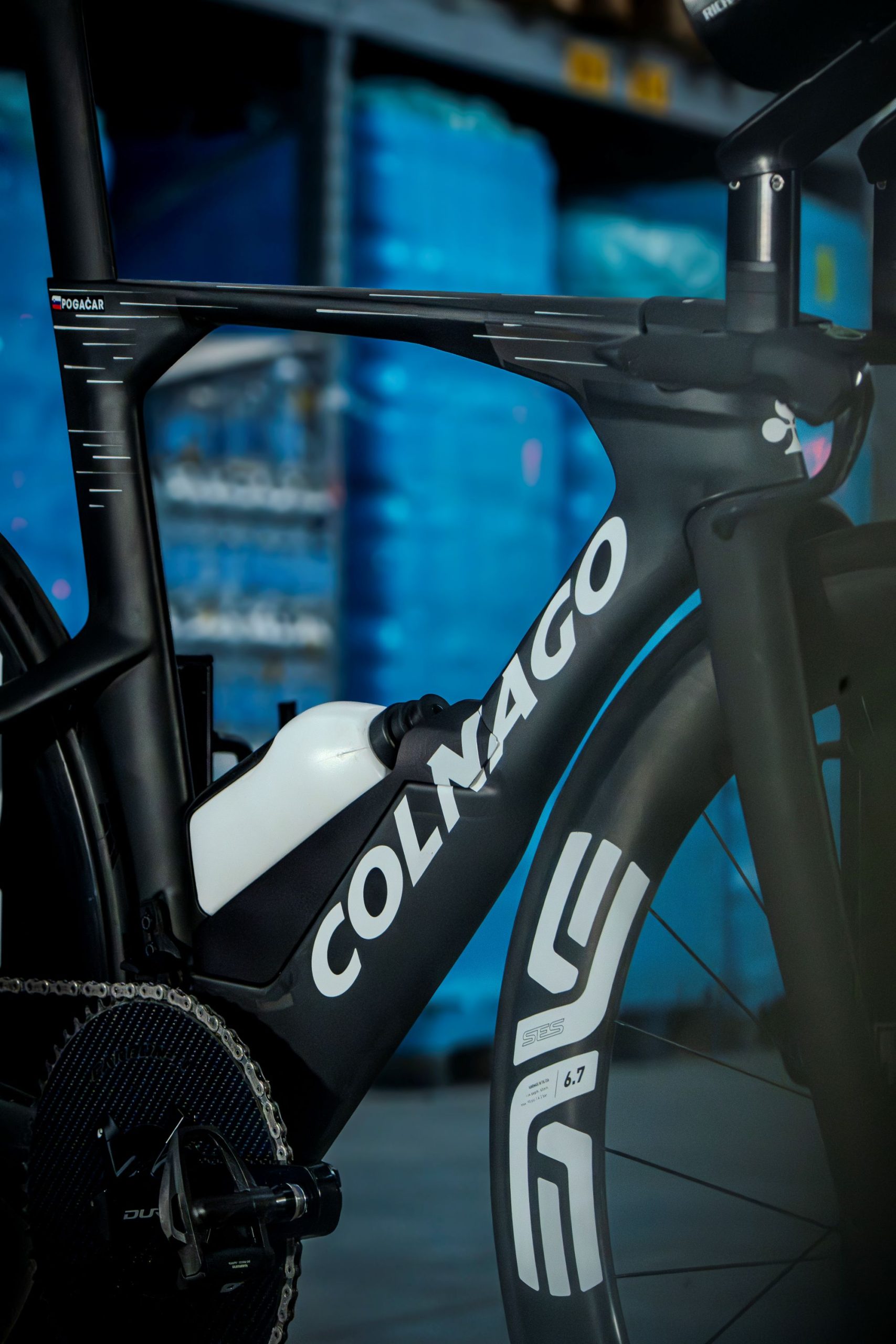
Colnago has also adjusted the frame’s geometry and added a new XS frame size, which Galli says is likely to be used by most of the UAE Team ADQ women’s team. The stack has been increased significantly in M and L sizes, as riders now typically adopt a higher ride position. The higher stack also makes it easier to maintain position and delivers improved handling.
There are two offsets available for the new, lighter seatpost: 0mm and +22.5mm, also helping to offer an increased range of fits.
There have been alterations made to the head tube angle and fork rake too, which Colnago says improve steering responsiveness and cornering precision, while the seat tube angle and bottom bracket drop have increased to accommodate more aggressive, forward positions.
The Colnago TT2 frame kit is priced at £6,499 / $7,500 / €7,040, the same price as the TT1, and will be available to buy from late September 2026.