The idea behind a rear-view radar is an early alert system to let you know when a vehicle is approaching from behind.
The latest radar-equipped rear lights work either with a compatible bike computer and app on your phone or smartwatch, or have a standalone audio warning, or work in conjunction with a compatible front light.
Using daytime running lights on your bike boosts safety, increasing visibility to other road users, and adding a radar to the mix only improves that.
You could, of course, add a helmet- or bar-mounted mirror and get similar results, but not everyone wants to accessorise their bike (or lid) in such a way.
After completing a recent mini-test, here are the best rearview radars currently on the market.
Editor's note: this article was updated on 8 June with our latest reviews from Warren's mini-test. The article now features our award-winning rearview radars and details on how Warren tested them.
- Read more: Best bike lights 2026 rated and reviewed
Best rearview radars at a glance
Best overall: Garmin Varia RearVue 820
SQUIRREL_TEXT_13955023

- £259.99 / $299.99 / €299.99
- Pros: Sophisticated radar with vehicle size and lane detection; good runtime
- Cons: Expensive; full functionality only with recent Garmin head units
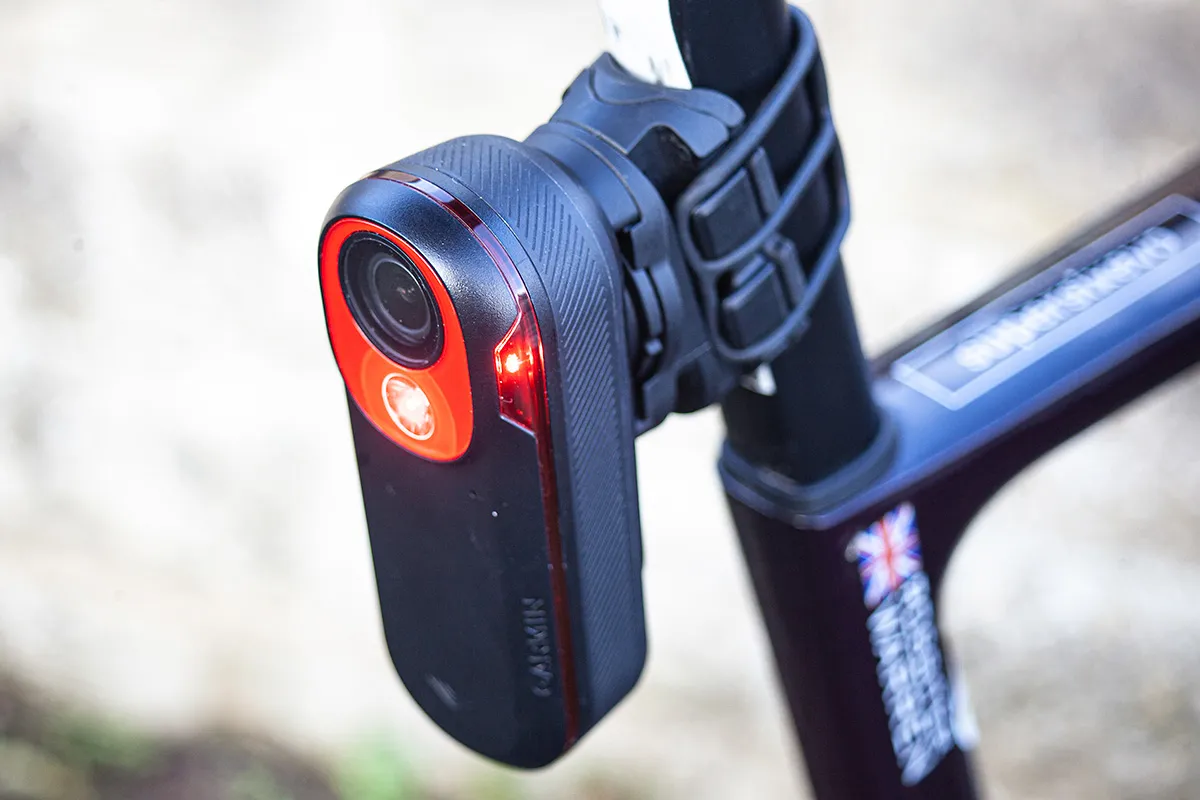
Garmin’s new generation RearVue 820 refines the detection function, so that it can distinguish between different vehicle sizes and which lane they’re travelling in. It will continue to show vehicles travelling at the same speed as you, too and has a 60-degree detection angle that’s wider than its competitors and a 192m measured detection range.
The most advanced features do require a newish Garmin Edge cycling computer, though, as they use a Bluetooth protocol rather than ANT+. They’re not useful on single-lane rural roads, but great for busy roundabouts and multi-lane junctions.
The unit fixes to a seatpost using a Garmin quarter-turn mount, which can accommodate different seatposts via adapters, or you can use a saddle rail mount sold separately. Light output is up to 100 lumens and the large battery offers a 24-hour claimed maximum runtime, with us achieving 14 hours with a non-flashing beam on busy roads.
The unit can also act as a brake light and provides good side-on visibility. It’s expensive, though.
SQUIRREL_13955023
Spec
- Dimensions: 98.9 x 25.9 x 43.2mm
- Weight: 90g
- Brightness: maximum 100 lumens
- Waterproof: IPX7
- Claimed battery: 24 hours day flash mode, 10 hours solid
- Radar detection angle: 60 degrees
- Radar detection distance (claimed): 175 metres / 190 yards
Best value: Lezyne Radar Drive Rear
SQUIRREL_TEXT_13960908

- £170 / $179.99 / €169.95
- Pros: Powerful rear light; can use Lezyne React Drive as a head unit; good detection distance and angles
- Cons: Rattle in review unit; no brake light function
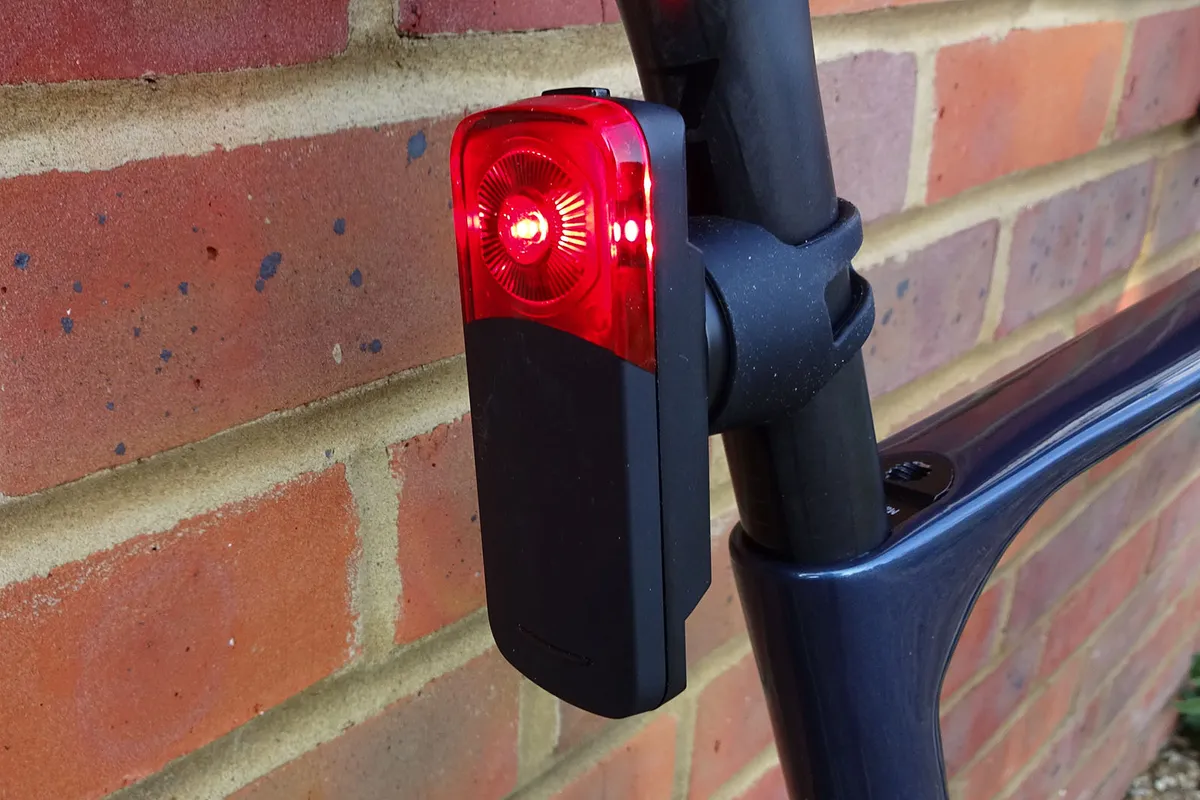
Lezyne’s take on a rearview radar offers the option to pair with its React Drive front light, which can provide visual and audible alerts, so there’s no need for a cycling computer. You can also use Lezyne’s app or a cycling computer as a head unit.
With Lezyne’s background in lights, the Radar Drive offers excellent 300 lumen peak lighting performance and side-on illumination. There’s a sleep mode to help save battery runtime when not moving, although this does deplete battery and it’s sensible to turn the unit off completely between rides.
Two straps and two seatpost adaptor shapes allow the light to be fitted to a range of seatposts and the unit is compact and stable on its mount.
The 140m measured detection distance is among the longest of any of the radars tested and there’s a wide detection angle. There’s no brake light function, though.
SQUIRREL_13960908
Spec
- Dimensions: 78 x 48.9 x 47.6mm
- Weight: 144g
- Brightness: max 300 lumens
- Waterproof: IPX7
- Claimed battery: 20 hours day flash mode, 6 hours solid
- Radar detection angle: 35 degrees
- Radar detection distance (claimed): 150 metres / 164 yards
How does a rearview radar work?

All radars use similar technology, utilising radio waves to detect vehicles from behind. The radar light unit sends out a low-power radar signal that reflects off vehicles and returns to the unit. The unit then calculates both the distance and speed of the approaching vehicle, generating a warning on your computer, app or visual/audible warnings.
The differences in performance come from the detection angle (the radar’s field of view) and the quality of the software interpreting the data.
Best of the rest
Garmin Varia RTL515
SQUIRREL_TEXT_13086413

- £169.99 / $199.99 / €199.99 / AU$369 as tested
- Pros: Excellent radar performance; can be used without a head unit
- Cons: Micro-USB port; run times can’t match the Wahoo
The RTL515 remains the best in class for radar functionality; it senses quicker, doesn’t have any dead spots, and I didn’t experience any false readings throughout my testing.
It's simple to set up, and the fact that it can be used without a head unit and through Garmin’s own app are bonuses, as is the versatile mount. However, as a light, it can’t match the smart features found on others in this list.
SQUIRREL_13086413
Spec
- Dimensions: 40x99x62mm (including mount)
- Weight: 106.1g (including mount)
- Brightness: max 65 lumens
- Waterproof: IPX7 (submerged 1m for 30mins)
- Claimed battery: 16hrs night flash mode (29 lumens), 6hrs in day flash mode (65 lumens), 8hrs in peloton mode (low steady, 8 lumens), 6hrs in solid mode (20 lumens)
- Radar detection angle: 50 degrees
- Radar detection distance (claimed): 140m
BBB Signal Radar BLS-251
SQUIRREL_TEXT_13946930

- £119.99 / $209.99 / €139.95
- Pros: In-built speaker; good taillight performance; well-priced
- Cons: Some disappearing vehicles and false positives
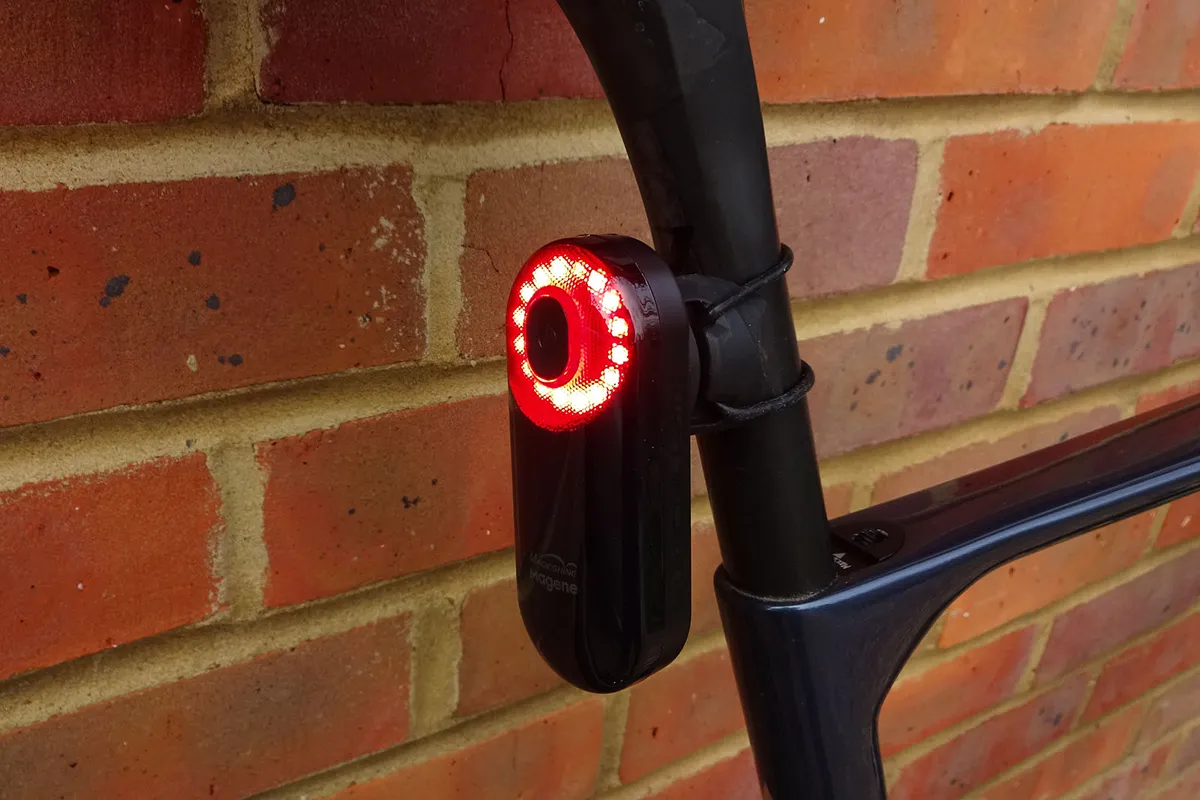
The BBB Signal includes a speaker, so it can be used stand-alone, as well as with a cycling computer or the Cannondale phone app (you don’t need a Cannondale bike to use this), which allows you to choose mode, turn the speaker on and off and adjust the radar’s sensitivity.
The large body includes a wide array of 19 LEDs, with up to 80 lumens of output. Six modes offer plenty of lighting options and up to 14 hours of claimed runtime.
The light attaches to your bike with a loop strap and there’s an aero seatpost adapter supplied. It’s quite a large unit though, with a 10cm length, so make sure there’s space for it if you’re riding a smaller frame size.
We found a 137m maximum detection distance and there was good detection of multiple vehicles, although same-speed vehicles can disappear. You can hear the unit’s speaker even in traffic, although you’ll not get a sense of how close a vehicle is or its speed.
We didn’t find any false positives on the road, only in a bike-only tunnel. It’s a good performer for its price.
SQUIRREL_13946930
Spec
- Dimensions: 99 x 42 x 35mm
- Weight: 90g
- Brightness: max 80 lumens
- Waterproof: IPX6
- Claimed battery: 14 hours day flash mode, 5 1/2 hours in solid
- Radar detection angle: 35 degrees
- Radar detection distance (claimed): 190 metres / 207 yards
Wahoo Trackr Radar
SQUIRREL_TEXT_13211646

- £179.99 / $199.99 / €199.99
- Pros: Long runtime; very good light; smart settings extend battery life
- Cons: Needs a bike computer as head unit; large mounting bracket
Although you need to use the Wahoo app for initial setup of the Trackr Radar, the app cannot act as a head unit, so you need to then pair the radar with a cycling computer to use.
The mounting bracket fits a range of seatposts via adapters, then to the rearview radar itself via a Wahoo quarter-turn mount. The bracket is quite large, so it might interfere with smaller frames.
There are many modes and control options for the light, which uses two LEDs, one for rearward focus and the second for spread and side visibility. You can set the LEDs to dim when no vehicle is detected, allowing battery life to extend to a week, and they can also act as a brake light.
Vehicles were detected consistently, but did drop from view when close and travelling at the same speed.
SQUIRREL_13211646
Spec
- Dimensions: 90 x 42 x 32mm
- Weight: 99g
- Brightness: max 53 lumens
- Waterproof: IPX7
- Claimed battery: 20 hours low flash mode, 10 hours high steady
- Radar detection angle: 35 degrees
- Radar detection distance (claimed): 150 metres / 164 yards
Bryton Gardia R300L
SQUIRREL_TEXT_13211644

- £99.99 / $130 / €129.95
- Pros: Low priced; good light unit; braking alert
- Cons: Inconsistent detection; non-detection of most motorcycles
Bryton’s radar unit is low-priced and pairs up easily with a cycling computer or the brand’s phone app, which we found offered a good range of functionality and was easy to use.
It uses a quarter-turn bracket to fix to the seatpost and offers plenty of light output, with braking detection and a brightness increase when a vehicle is detected. There’s good side-on illumination from the 220-degree visible lens.
We weren’t so impressed by the radar’s performance, finding a maximum detection distance of under 60m and a tendency to lose detection of similar speed vehicles, even quite a way behind. The Gardia often failed completely to detect motorbikes.
Runtime is good, at around nine hours even in constant mode and with the radar running. Performance is adequate for rural riding, but in town, the inconsistent detection makes the Gardia difficult to recommend.
SQUIRREL_13211644
Spec
- Dimensions: 97 x 20.9 x 40mm
- Weight: 66g
- Brightness: 51-150 lumens, flash pattern visible up to 1.6km
- Waterproof: Immersion in up to 1m of water for 30 mins
- Claimed battery: 17hrs day flash mode, 12 hours in solid
- View angle: none stated
- Radar detection distance (claimed): 190 metres / 207 yards / 623ft
How I tested rearview radars

I fitted each of the radars to a selection of bikes, using them on my road bike for rural, hilly, smaller roads including single lanes. I also fitted them to my commuter bike and used them while cycling into cities with faster dual-carriageway stretches and high-volume multi-lane roads.
I also used the free My Bike Radar Traffic app from the Garmin Connect store. The app provides real-time data on the radar’s detection distance and the number of vehicles detected on any ride.
Head unit options

As well as a detector, you also need something to alert you that an approaching vehicle has been detected.
Garmin defined the protocol to communicate the data from your radar to a head unit. That might be a cycling computer, with all of Garmin’s current range and many of its legacy designs including the ability to display vehicle proximity.
You can download a widget to Garmin’s smartwatches that enables them to provide notification of detection. It’s a feature supported by a wide range of current and past models.
Garmin also sells a standalone bar-mounted head unit, which displays vehicle information via a series of LEDs. It additionally offers the Varia phone app, which can display vehicle proximity information on your smartphone.
As with the rearview radar itself, other brands have incorporated radar compatibility into their cycling computers and most recent releases have this. Popular examples include the Wahoo Elemnt and Hammerhead Karoo 2.
Bryton, Magicshine and iGPSport have phone apps similar to Garmin’s, which can be used to display proximity for approaching vehicles.
Rearview radar benefits
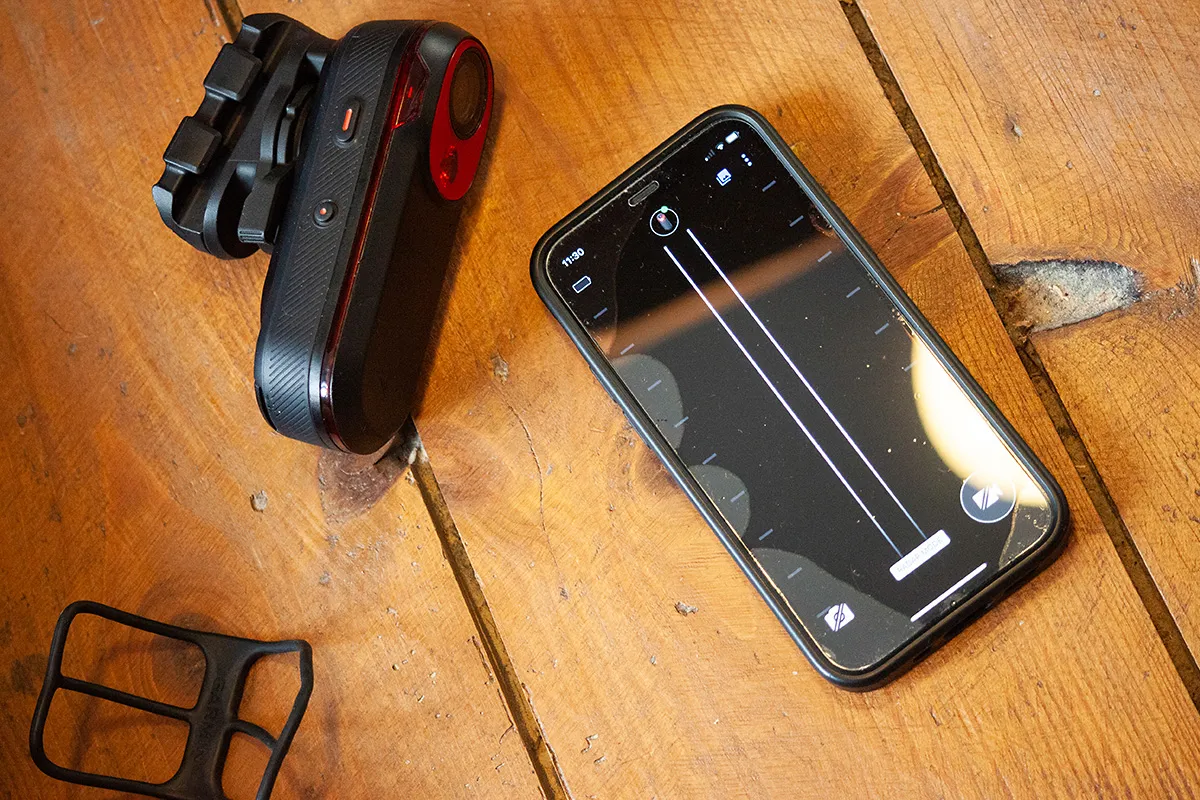
There’s no doubt that having a constant view of what’s happening behind you, rather than relying purely on your own eyes and ears, is of great benefit when riding on the road.
Although brands typically claim a detection range of just over 100m, it often appears to be significantly greater than this.
On flat open roads, a rearview radar can help you concentrate on your riding and on what’s happening ahead of you.
It’s also useful when descending or riding fast, when wind noise and the need to concentrate on the road ahead can make it difficult to detect a vehicle about to pass you.
Radar units typically claim around a 40-degree detection angle, so vehicles approaching from oblique angles are usually detected.
Most, if not all, rearview radars can also be set to change their lighting pattern as a vehicle approaches, which is designed to alert drivers. This might be a swap from a flashing to a constant mode, an increase in brightness or both.
There’s often an accelerometer built into the rearview radar unit, which enables you to use the rearview radar as a brake light and may also act as an incident detector if you have a fall.
If you’re using your rearview radar as an aid to safety, you want to be sure it’s working, so computer head units will usually display an alert when the radar is first connected up. An icon in the corner of their screen while riding indicates the radar is still operational.
If your battery starts to run low, most radar units will switch to a lower-power mode. You’ll usually receive an audible and visual alert on your head unit to notify you that the radar has a low battery and another when it is about to switch off. Your head unit will usually also provide an alert that the radar has been disconnected.
Rearview radar disadvantages
The main downside of rearview radar technology, which applies to all designs regardless of brand, is that detection relies on the difference in velocity between you and the approaching vehicle.
That means any other road user travelling at the same speed as you will not be detected. This most typically happens when a driver slows down, waiting for an opportunity to pass, when you will often get an all-clear signal on your head unit.
Depending on the circumstances, the vehicle may or may not reappear when its driver decides to overtake. If there are multiple vehicles behind you, subsequent vehicles may still be travelling at your speed, and so not appear on the radar until they choose to overtake.
On a twisting road, following vehicles may repeatedly disappear and then be re-detected as obstacles, such as tree trunks or banks, get between you and them.
Thus, you can’t assume that because there’s no alert on your head unit there’s nothing behind, nor can you assume that because one vehicle has passed you there are no more following.
You can also get false positives from the radar. These most typically seem to happen on windy days, when the movement of tree branches can lead to an alert, then an all-clear signal. Again, check behind to make sure you know what’s happening. Occasionally, a rearview radar can give you a false positive for no apparent reason.
If you’re riding parallel, or even at an angle to another road, you may get alerts for vehicles that are travelling on that road, not yours.
Occasionally, a vehicle might not be detected. The reason for this is unclear, but it does appear to happen more with some brands of rearview radar than others. Staying alert and not relying on your radar is key to its safe use.