Doping scandals at the Tour de France shaped the sport’s reputation for years.
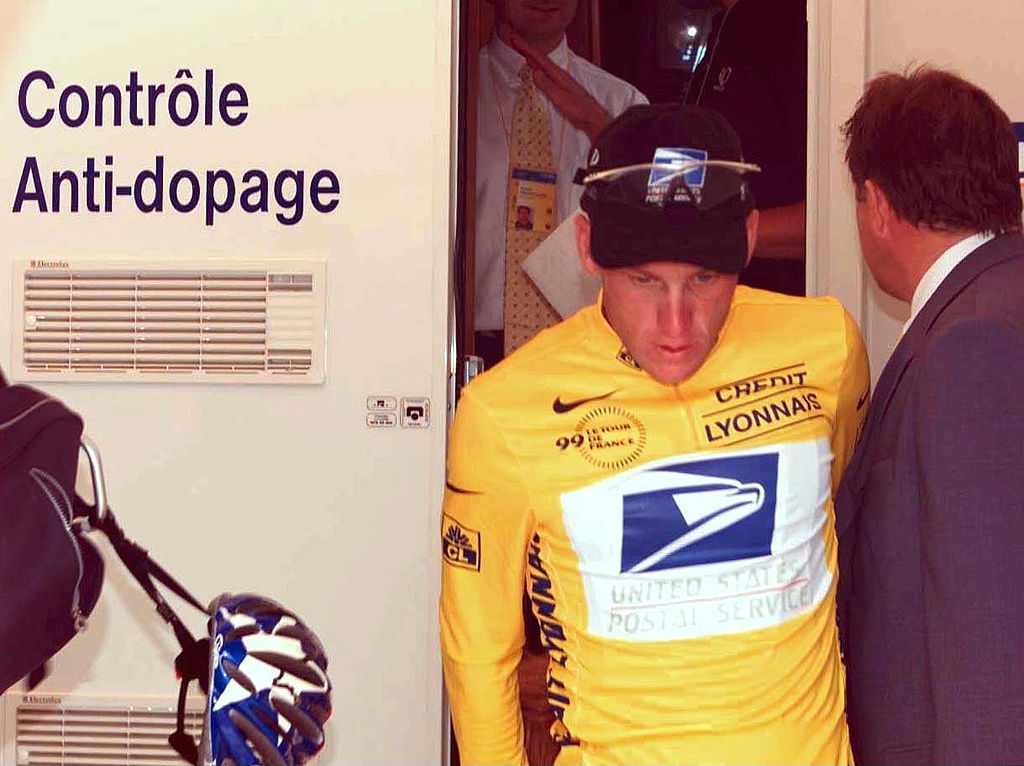
In the late 1990s and early 2000s, performance-enhancing drugs were widespread in the peloton. The Festina affair exposed organised team-wide doping, while Lance Armstrong’s case later revealed how deeply embedded it had become at the very top of the sport.
Armstrong won seven Tours between 1999 and 2005 before being stripped of his titles after admitting to systematic doping. His downfall has cast a long shadow over the sport that’s been almost impossible to shake off.
Seemingly superhuman performances still regularly raise eyebrows, but the consensus is that the sport is cleaner than ever. However, there are still gaps – and challenges on the horizon.
This week's controversy at the Tour, in which Jonas Vingegaard and Tadej Pogačar were visited by doping control officers at 2am and 5am respectively, with the latter crashing out of the race the following day, sparked further heated debate.
‘No major scandals since the days of Lance Armstrong’
As journalist James Witts explains in his book Dope: How Drugs Changed Sport, there have been no major scandals at the Tour since the Armstrong era.
“Is doping a problem at the Tour de France? The evidence suggests not with no major scandals since the days of Lance Armstrong,” Witts says, speaking to BikeRadar.
Since then, cycling has introduced stricter anti-doping measures.
The most important is the biological passport. Introduced in 2008, this tracks an athlete’s blood values over time to detect suspicious changes. It sits alongside the Whereabouts system, which requires riders to record their location, and to be available for testing every day.
Together, these systems have made it much harder to cheat without being caught. As a result, there have been no further major doping scandals on the scale of Armstrong.
That hasn’t put a stop to investigations and rumours. For example, Bahrain Victorious had its hotel searched by police during both the 2021 and 2022 Tours, but no charges followed.
However, that does not mean the problem has disappeared.
Witts is clear that gaps remain in the system, despite the progress made: “As we've seen many times before, an absence of positives doesn't necessarily mean an absence of guilt,” he says.
“Lance Armstrong said ‘I've been tested 500 times and never failed a drugs test,’ before revealing all to Oprah.”
Altitude vs EPO

Testing technology has also improved since the Lance era, but it is not perfect.
Substances such as EPO, which increases red blood cell production, can be taken in very small doses. Witts says this micro-dosing can boost performance while remaining difficult to detect.
It is also hard to separate artificial changes in blood values from natural ones caused by altitude training – a common tool used by elite teams – which produces similar effects in the body.
There are practical gaps, too. Riders are not usually tested overnight, leaving a window where banned substances could be used and cleared from the body before morning controls, explains Witts.
Funding is another limitation. Anti-doping programmes are expensive, and resources are finite across a global sport. As Witts notes in Dope, this can create tensions in a system where those who promote the sport are also responsible for policing it.
The risk of AI
There are also new challenges on the horizon. Advances in science and technology mean novel drugs could be developed faster than testing methods can keep up, including substances designed using AI.
However, for now, Witts is confident there is no clear evidence to suggest widespread doping at the top level today. Testing is more sophisticated, monitoring is tighter and the risks of getting caught are higher than ever.
But cycling’s history shows how long it can take for the truth to emerge. The sport is cleaner than it was, yet the possibility of doping has not been eliminated.
James Witts’ new book, Dope: How Drugs Changed Sport, published by Blink is available now from major retailers including Foyles and other online booksellers.
More on the 2026 Tour de France
- "We should be testing at all times" – Tour de France's nighttime doping tests reveal a tension at the heart of professional sport
- Pogacar's dominance at the Tour de France reveals cycling's two true loves: uncertainty and the underdog
- An incredibly low heart rate and an unbelievable engine: the physiology of a Tour de France cyclist in numbers
- Every team bike at the 2026 Tour de France