The UCI is making some additions to its rule book for 2026. Even if you’re not planning to take part in any WorldTour races in 2026, the UCI’s rule changes will affect you because they influence bike brands’ design decisions for mass-market bikes.
In 2025, we’ve already seen the effect of the relaxation of the UCI frame geometry regulations, for example.
While road bikes were converging on the lightweight/aero paradigm exemplified by the Specialized Tarmac SL8 and the Trek Madone Gen 8, brands have now again started to design out-and-out aero bikes, such as the Ridley Noah Fast and Van Rysel RCR-F, and put their lightweight bikes, such as the Cervélo R5, back on a diet.
So here are the UCI rule changes for 2026 that will affect bike and component design, plus the one the bike industry has effectively put on ice – for now.
Helmets

Road helmets, for example the Poc Procen Air, have become more and more like time trial helmets over the last few years. Pros have been riding in helmets marketed as time trial helmets too, for example, some Visma-Lease a Bike riders, who have been using the (first-generation) Giro Aerohead in races.
Now the UCI has put a stop to that with Article 1.3.031. It’s been causing consternation during 2025, but the UCI has now defined what the difference is and restricted which helmets can be worn for road races.
In both cases, the maximum size is the same, but “traditional” (ie road) helmets must have three inlet vents, must not cover the ears and must not have a visor. For now, you may be happy to wear your Procen Air, but it’s probably going to be the last of the line of TT-like aero road bike helmets.
Handlebars
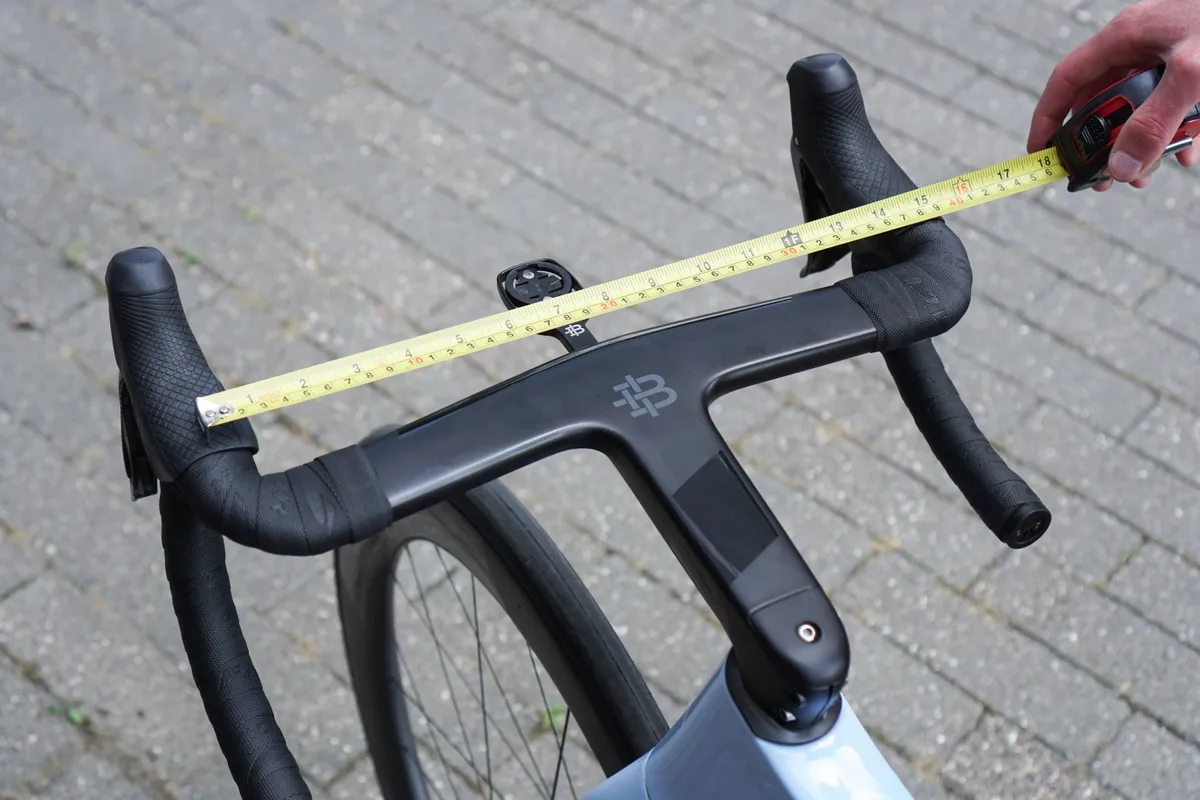
Existing technical specifications for handlebars in article 1.3.022 already impose restrictions on how high, how low, how far forward and how far back they can be placed.
But from the start of 2026, road and cyclocross handlebars used in competition have to be a minimum of 400mm across, outside to outside, with a maximum 65mm flare from the inside edge of the tops to the outside edge of the drops. The brake levers must have a maximum inward tilt of 10 degrees and a minimum of 280mm between the inside edges of the two levers.
So you’re unlikely to find many road bikes sold with extra-narrow or extra-flared bars, as brands fall into line with the UCI bar geometry regs, even if (like the 6.8kg bike weight limit) it discriminates against women cyclists and smaller riders.
Wheel depth
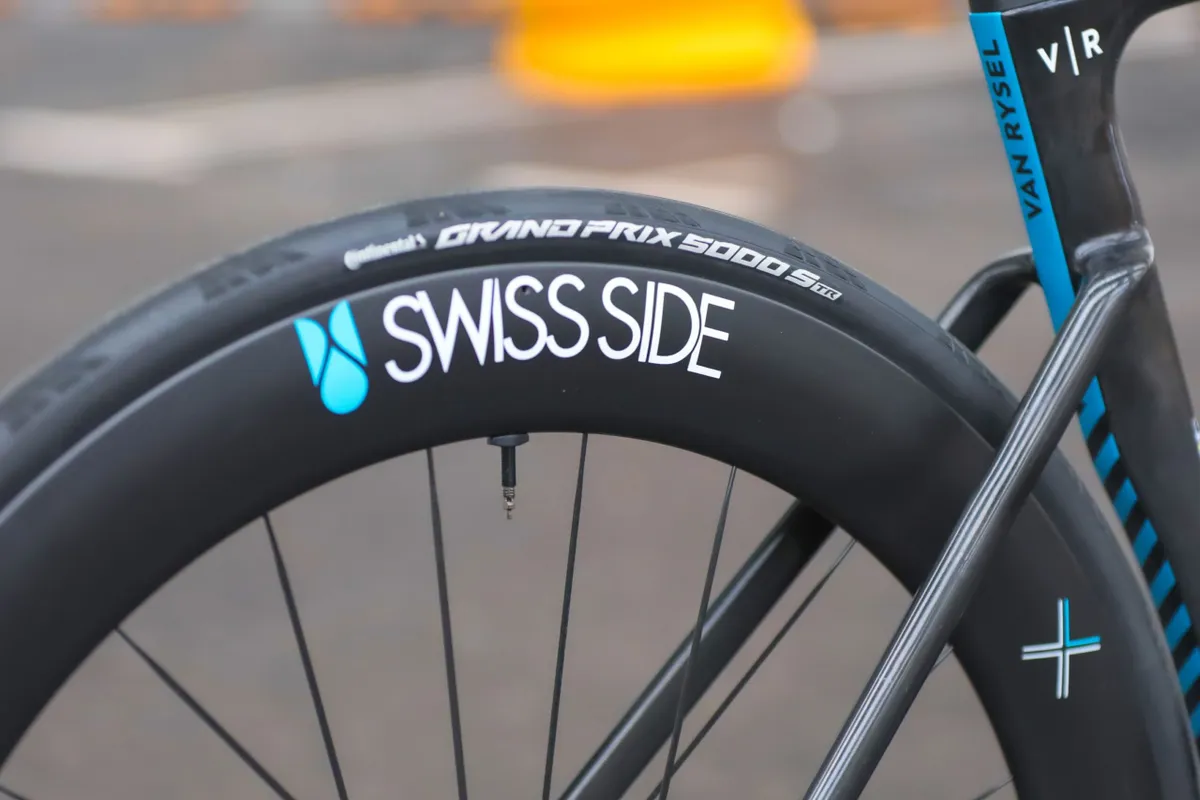
UCI article 1.3.018 has been modified to state that, in mass start competitions:
“The maximum height of the rim does not measure more than 65mm (measured as the perpendicular distance from the tangential line passing through any point of the outer extremity of the rim to the inner extremity of the rim).”
The UCI has stuck to its guns on this one, despite protests from wheel brands including Swiss Side, whose Hadron Ultimate 680 wheels fall 3mm outside the limit. Swiss Side claims its measurements show that tyre width, tread pattern and steering geometry have a far more significant effect than rim depth on bike handling.
Fork leg and stay width

From January 2026, the UCI has imposed a maximum width for the fork legs and stays on road bikes, with track bikes to follow from 2027. The maximum distance between the inside edge of the fork legs must be 115mm and between the seatstays 145mm.
So the trend for ever-wider fork legs seen, for example, on the Hope HB.T track bike and the BMC Teammachine R road bike is likely to cease. Apparently, Factor’s prototype aero bike, first seen at the Critérium du Dauphiné (now renamed the Tour Auvergne-Rhône-Alpes, by the way), is 1mm within the new reg at 114mm – canny design choice.
Gearing restrictions

This one’s on hold, following SRAM’s appeal to the Belgian Competition Authority. The UCI had proposed restricting the maximum rollout for bikes used in road races to 10.46 metres per crank revolution – which is equivelant to a 54x11t gear.
Unless the team were willing to use smaller chainrings, this put a spanner in SRAM’s (and Campagnolo’s) 10-tooth smallest sprockets.
Will regulations covering gearing restrictions return during 2026? It remains to be seen.
UCI team rankings

Finally, from 2027, points garnered by riders in disciplines other than road racing will be added to their team’s UCI ranking.
There have always been road pros racing in other disciplines, particularly track and cyclocross. But riders including Pauline Ferrand-Prévot, Mathieu van der Poel and Tom Pidcock have taken their multidisciplinary skills to new levels.
Their teams will, from 2027, be rewarded with extra UCI points for high placings in the UCI World Championships in competitions other than road racing.