
The first question those unfamiliar with cycling are likely to ask a professional bike racer is: “Do you race the Tour de France?” The three-week Grand Tour is a household name across the world that transcends the otherwise relatively niche sport of professional cycling. However, it is only since 2022 that riders in the current women’s peloton have been able to answer in the affirmative.
That year, the first edition of the Tour de France Femmes avec Zwift took place over eight stages with a Grand Départ that ran in tandem with the final stage of the men’s race on the Champs-Élysées. It ended with a mountaintop finish on the Super Planche des Belles Filles in the Vosges mountains, and was dominated by now-retired Dutchwoman Annemiek van Vleuten – a rider who defined an era of the women’s side of the sport.
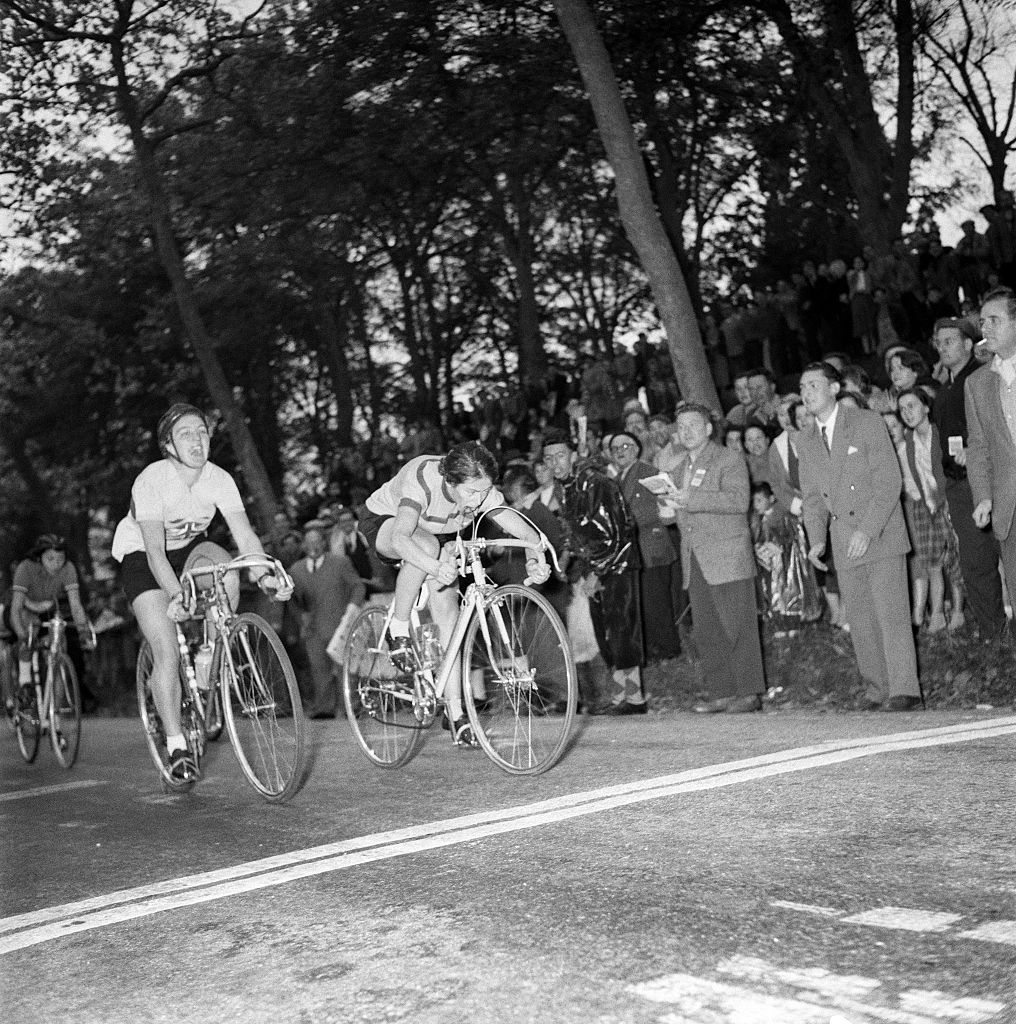
While the 2022 event was hailed as the ‘first’ Tour de France for women, there have, in fact, been several versions of a women’s Tour in the past. As far back as 1955, journalist Jean Leulliot organised a women’s Tour de France consisting of five stages, won by Irish-born Manx cyclist Millie Robinson. That race turned out to be a one-off, however, and it would be almost 30 years before the next one came about, in 1984.
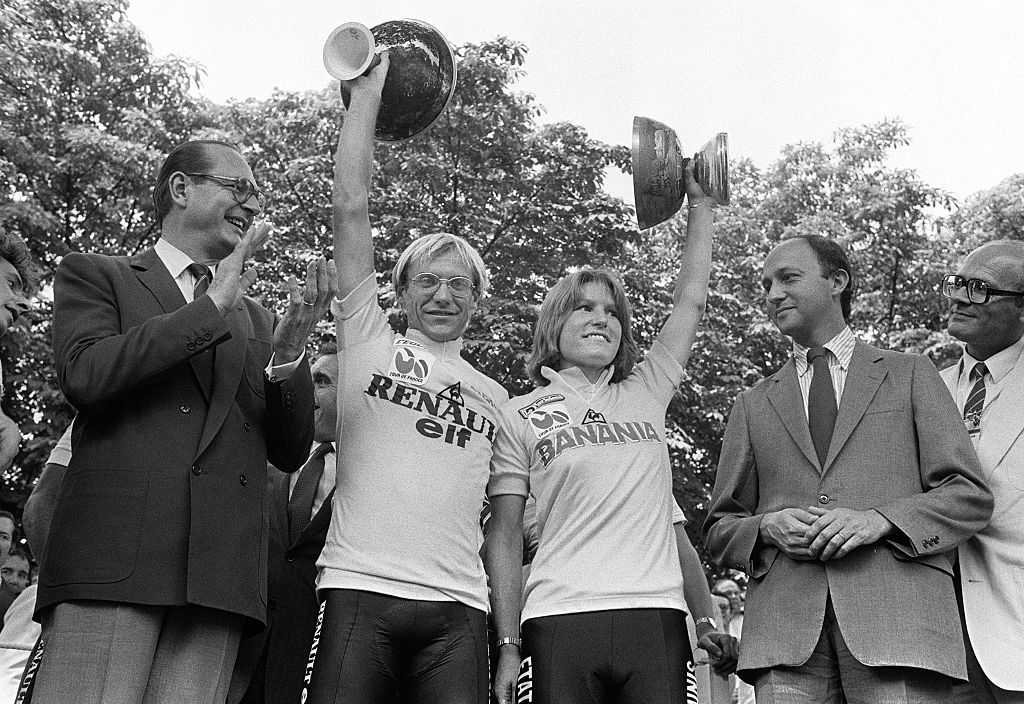
Launched in the same year as the first Olympic road race for women, the 1984 Tour de France Féminin was introduced by the Société du Tour de France (which later became part of Amaury Sport Organisation, or A.S.O – the current owners of the race – in 1992). That first edition took place over 18 stages in tandem with the men’s event, using shortened versions of the men’s stages.
The first woman to take home a yellow jersey was American Marianne Martin – who also claimed the polka-dot climber’s jersey as well as winning two stages. Martin finished 3min 17sec ahead of Heleen Hage of the Netherlands and received a prize of $1,000.
Between 1984 and 1989, the Tour Féminin dropped from 18 stages, with a total distance of 1,059km to 786km over 11 stages and a prologue. With limited media coverage and, therefore, little public interest in the race, the new race director of A.S.O, Jean-Marie Leblanc, put a stop to the event after the 1989 edition, citing its lack of financial viability.
The timeline of the women's Tour de France
- 1955 – Tour de France Féminin
A total of 41 riders took part in the five-stage race in Normandy - 1984-1989 – Tour de France Féminin
American Marianne Martin lifted the 1984 trophy - 1992-2003 – Tour of the EEC Women
The race underwent several organiser and name changes - 2005-2009 – Grande Boucle Féminine
Swiss rider Priska Doppmann took the win in 2005 - 2014-2021 – La Course
Marianne Vos won in 2014 and 2019 – a joint record with Annemiek van Vleuten - 2022-present – Tour de France Femmes avec Zwift
2026 marks the fifth edition of the Tour de France Femmes
Changing hands
By 1992, new organisers had stepped in and began to run the Tour Féminin under a new name (after legal threats surrounding use of the ‘Tour de France’ brand) with an August calendar slot. The race’s title evolved from Tour of the EEC Women to Tour Cycliste Féminin for five years, before becoming La Grande Boucle Féminine Internationale by 1998.
The organisers tried to give the event a fittingly challenging parcours, with the 1995 race even featuring a stage finish atop Alpe d’Huez. But money once again proved to be an issue. The riders faced long transfers as the organisers struggled to find towns willing to pay to host stages.
Then, in 2003, Monoprix, one of the main sponsors of the race, withdrew over controversy concerning unpaid prize money, which enforced a hiatus before another organiser took over in 2005. They, however, faced the same struggles as their predecessors and, by the final edition of the race in 2009 – won by Brit Emma Pooley – it was only four stages long.
Campaign for La Course
Four years later, in 2013, a group of athletes and campaigners calling themselves Le Tour Entier (The Whole Tour) and consisting of former pro Kathryn Bertine, Pooley, Olympic champion Marianne Vos and triathlete Chrissie Wellington, spearheaded a petition for A.S.O to bring back a women’s Tour de France. More than 93,000 people signed it.
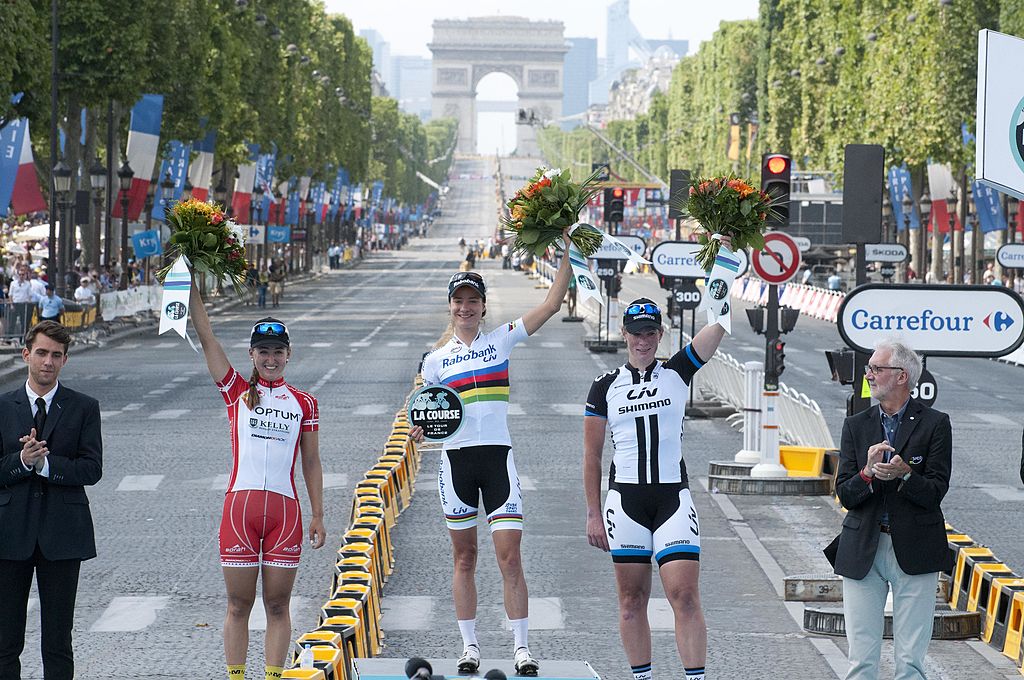
A.S.O responded by introducing ‘La Course’, a one-day race to be run alongside the final stage of the men’s race in 2014. That year, the women’s peloton appeared at the Tour de France for the first time since 1989 to race a criterium around the Champs-Élysées.
The inaugural La Course was heralded as a turning point for women’s cycling and there was hope that more stages would be introduced in the future.
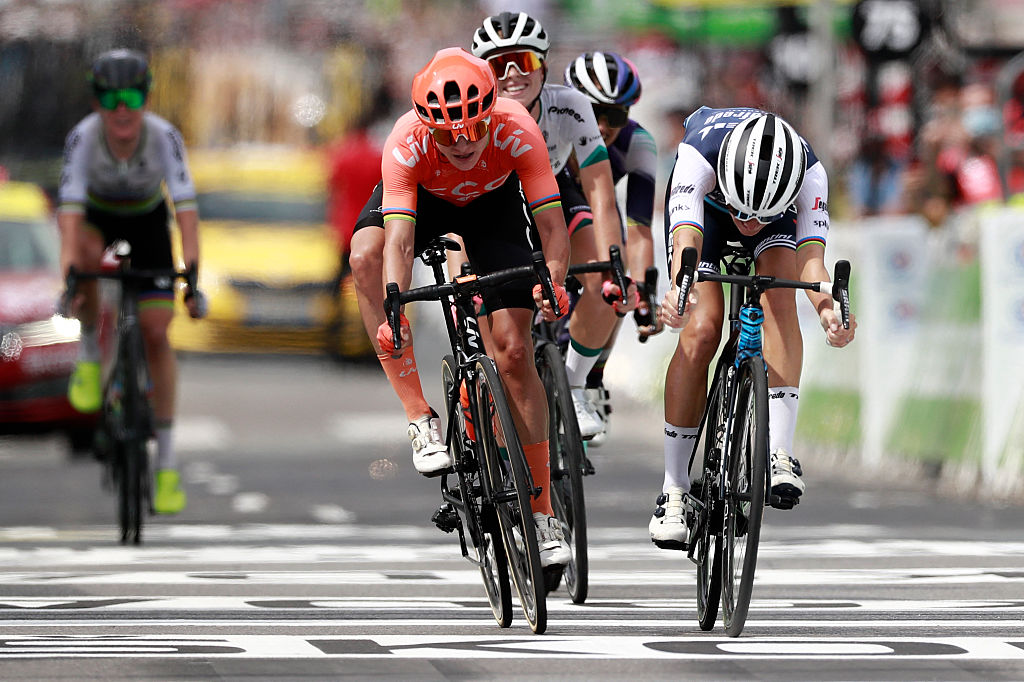
However, after that first edition (won fittingly by Vos), the race largely remained a one-day affair, staying on the Champs-Élysées for the first three editions before the organisers experimented with a two-day event in the mountains in 2017, then reverting to a short, one-day race held alongside one of the men’s stages.
Calls for a full women’s race continued, with the introduction of the Women’s WorldTour in 2016 proving the appeal and calibre of women’s racing, and the groups Donnons des Elles au Vélo and Internation Elles riding the men’s Tour de France route one day ahead of the peloton to highlight that women were capable of doing so.
Read more on the 2026 Tour de France Femmes avec Zwift
- Tour de France Femmes bikes 2026: who’s riding what?
- 8 key questions answered, from race favourites to must-watch stages
- How much does a Tour de France Femmes bike cost?
In 2020, the COVID-19 pandemic disrupted the race calendar and many professionals turned their attention to indoor racing. The virtual platform Zwift responded by hosting a ‘Virtual Tour de France’ – a five-stage race in place of the real-life event.
“We did it like we do all races in Zwift, which is equal prize purse, equal broadcast and equal distance,” said Kate Veronneau, director of content and women’s strategy at Zwift. “I think it was the proof of concept A.S.O needed.”
With Zwift yielding the power – and money – and A.S.O holding the key to hundreds of years of tradition, the meeting of old and new proved to be the perfect storm to restart the conversation around a women’s Tour de France.
“‘Tour de France Femmes avec Zwift’ – what a curious partnership,” Veronneau mused on the eve of the race. “We have this historic institution upholding the longest-standing traditions of cycling, and the longest race, and then you have Zwift who introduced a virtual platform and don’t play by anybody’s rules.”
For a few days that summer, the women’s peloton had a Tour de France that was equal to the men’s race. The virtual race sparked renewed enthusiasm for a women’s Tour de France, and when it returned later in the year as a one-day race, the consensus was the peloton deserved more.
After rumours throughout the off season, Tour de France race director Christian Prudhomme confirmed in May 2021 that a women’s Tour de France would take place the following year.
The right time
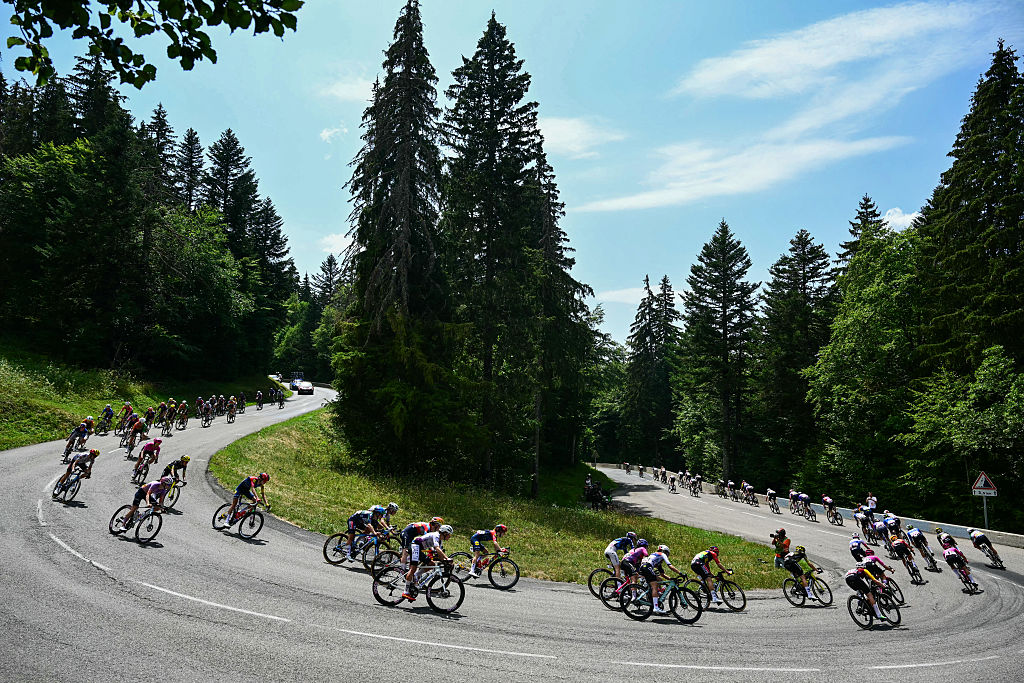
In the years between the final 2009 edition of the Grand Boucle Féminine and the 2022 Tour de France Femmes avec Zwift, women’s cycling grew beyond recognition. Thanks in part to UCI stipulations, Women’s WorldTour riders began to be paid a living wage, more races – and all WorldTour events – were broadcast live, and the depth within the peloton was increasing with every season. The time was right for a new era of a women’s Tour.
“It’s an exciting time right now to watch women’s racing,” said Veronneau. “It’s showing that this is years in the making, with support, investment and the visibility that the teams are able to build that depth, and that women are able to have the opportunity to develop as pro cyclists.”
The 2022 race featured eight stages – 10 fewer than that first 1984 edition – but the overall distance was only 25km shorter. The longer stages were yet another sign of the progress within women’s racing. Indeed, stage 5 was 175km, making it the longest race day on the women’s calendar by 10km, exceeding the UCI limit, meaning the organisers had to arrange special dispensation. The race also offered a €250,000 prize fund, including €50,000 for the winner – 50 times what Martin received in 1984.
Since that ‘first’ edition, the Tour de France Femmes avec Zwift has become firmly established on the calendar, evoking all the reverence and fanfare that comes with the Tour de France brand.
The riders have done justice to the parcours, delivering thrilling battles in some of the sport’s most iconic arenas, such as the Col du Tourmalet and Alpe d’Huez, equal to any seen in the men’s race. It has boosted the profiles of its former champions, and has already delivered a French yellow jersey winner in the form of Olympic mountain biking champion Pauline Ferrand-Prévot.
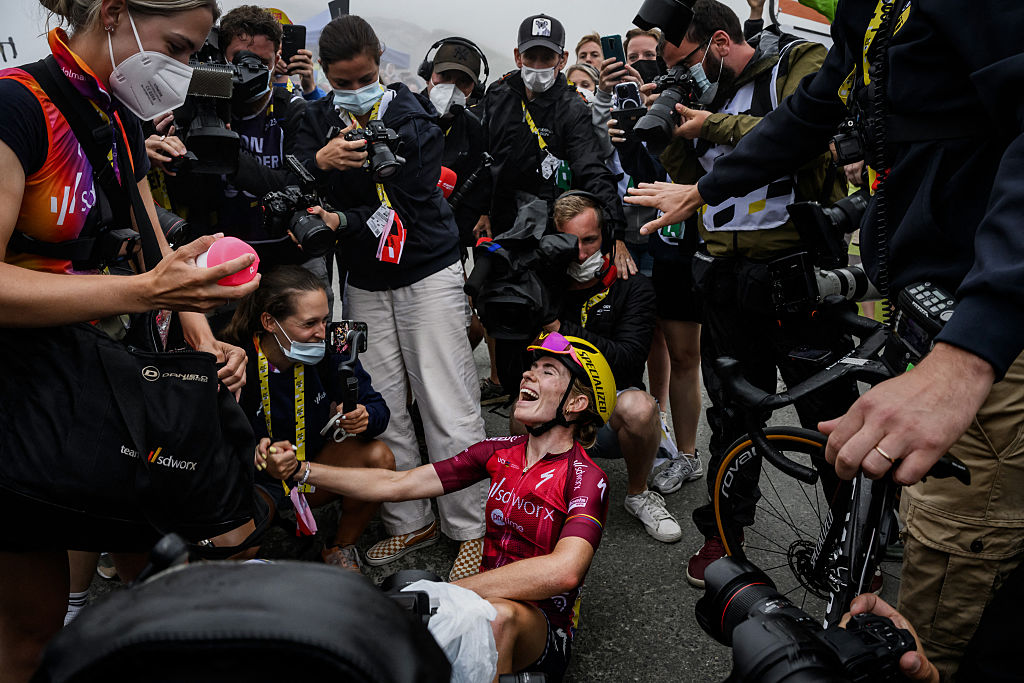
Last year, the organisers added a ninth stage as part of a concerted effort to grow the race in a sustainable way. While it’s still short of the 21 stages of the men’s event or the 18 of the 1984 women’s race, Veronneau argued that this was never the end goal. “I’d like to see the race build to a length that the Women’s WorldTour is really excited about, that the teams are really excited about and that they can support,” she said. “But I’m never going to say that’s got to be three weeks.”
This year’s race also has nine stages and saw the peloton set off from Lausanne in Switzerland for its second foreign Grand Départ. The parcours incorporates a 2km individual TT into Dijon on stage 4 – the first since 2024’s 6.3km stage 3 in Rotterdam, in the Netherlands, and the longest since the final stage of the 2023 race in Pau.
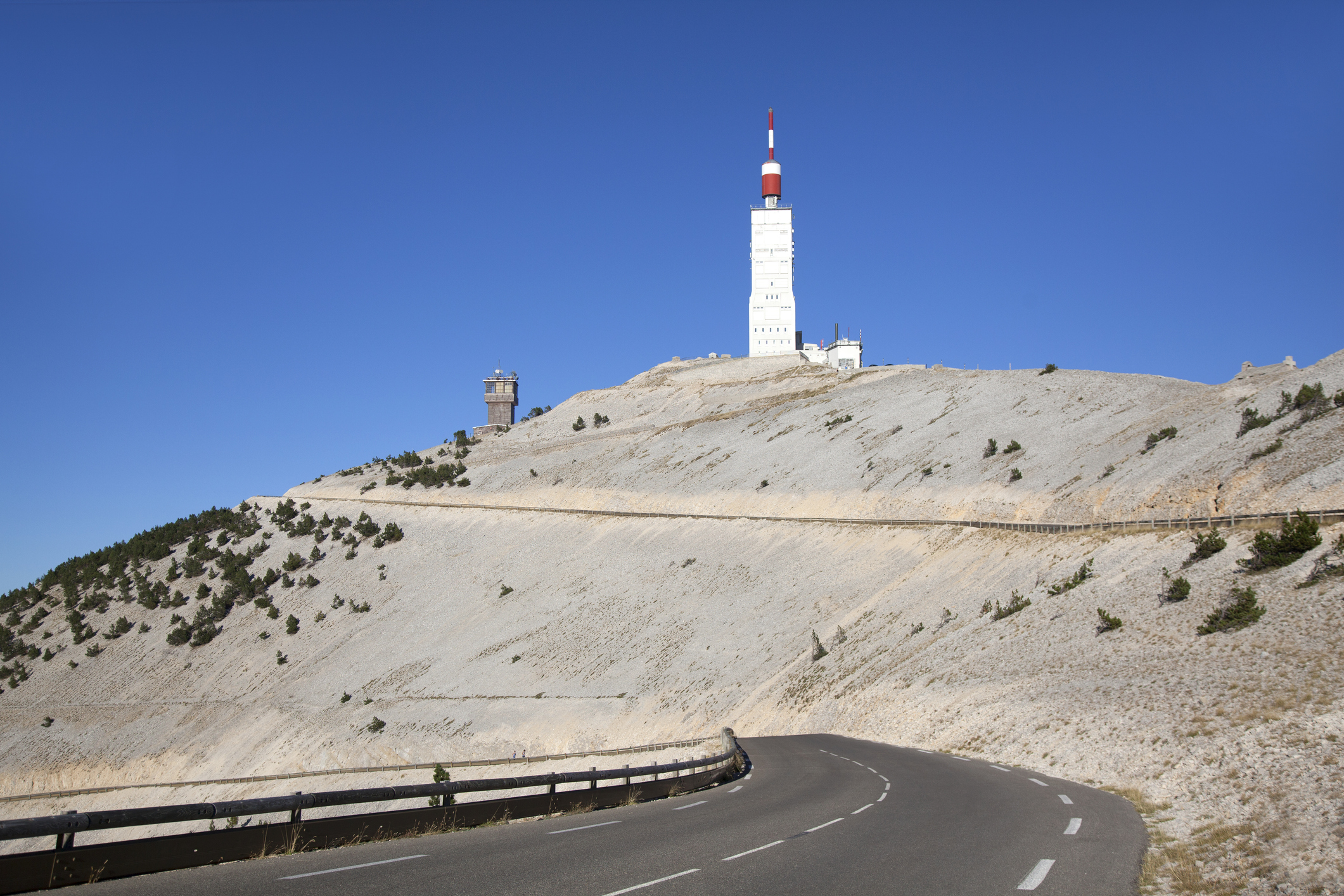
In keeping with previous editions, riders also tick off yet another legendary summit, in the form of Mont Ventoux, as part of a parcours that’s been dubbed “mischievous” by race director Marion Rousse.
"There are pitfalls on practically every stage,” she said during the launch of the 2026 route. “There isn’t a completely flat stage. Almost every day, there’s a climb. It’s a Tour de France Femmes that will be very difficult to keep up with mentally. You will have to be strong, because in the final, there is often a series of difficulties.”
The race concludes with a double-header weekend in Nice which, according to Rousse, is a great place to have fun with an unpredictable, hilly course. “It’s a bit like fireworks,” she said, “and that’s what we wanted to reproduce in our Tour de France Femmes. The last stage around Nice, with four ascents of the Col d’Èze, won’t have a single metre of flat terrain – the last variation, via the Col du Vinaigrier, is actually a slope of the Col d’Eze, with gradients of over 16%. It’s going to be spectacular.”
Standing the test of time
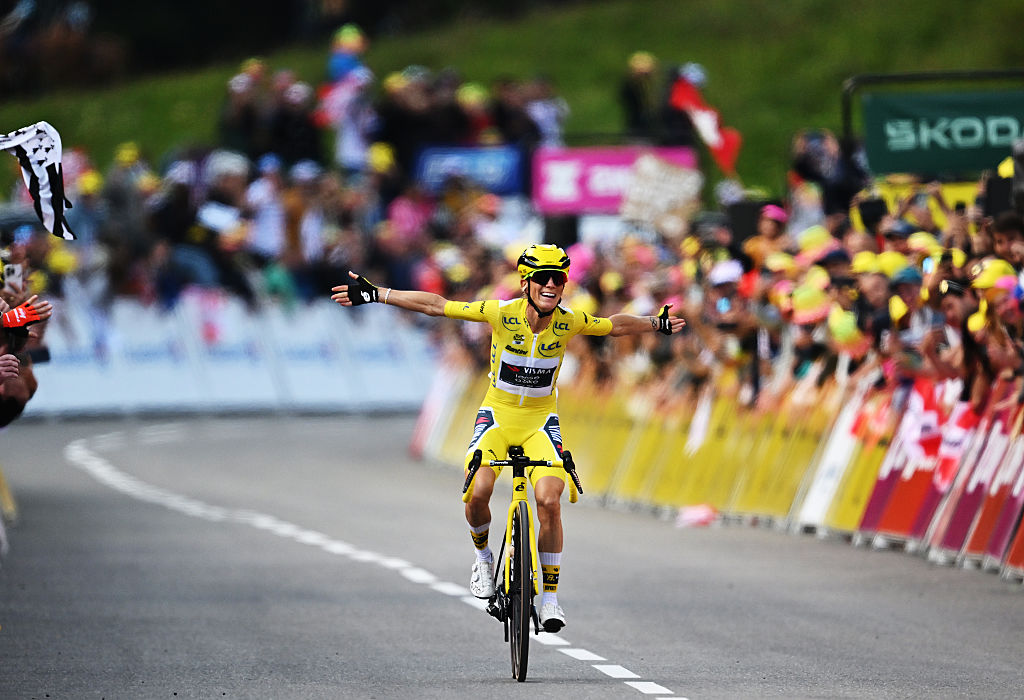
After the false starts of previous women’s editions of the Tour de France, A.S.O is determined that this version of the race will continue to be a success. Prudhomme told The Guardian in 2021: “What we want to do is create a race that will stay the course, that will be set up and stand the test of time. What that means is that the race cannot lose money.”
Rousse nods towards the previous editions while acknowledging the modern race’s need to stay the course. “Some will remember the epic duels of the 1980s… Those valiant pioneers raced in what was a kind of curtain-raiser to the men’s race,” she wrote in the guide to the first edition of the race. This new race will thrive on its own and will maintain the intense focus that the Tour always receives through the course of another week of intense battle.”
The live-coverage statistics from the first four editions of the race show there is a huge appetite for women’s racing, especially at the Tour. Last year, the broadcaster France Télévisions reported that 25.7 million viewers tuned in to watch French national hero Ferrand-Prevot take victory in the final stage.
“It’s a simple, essential message: just follow the racing,” Veronneau said. “I joke I have the easiest job in the world, in getting people excited about women’s racing, because you watch one race and you’re hooked. The personalities, the action… It’s just truly vibrant. It just needs the eyes on it and the broadcast opportunities, and then everything else is going to continue to fall into place.”
More on the Tour de France Femmes
- Tour de France Femmes: 8 key questions answered, from race favourites to must-watch stages
- Tour de France Femmes bikes 2026: who’s riding what?
- How much does a Tour de France Femmes bike cost?
- SpongeBob SquarePants heads to the Tour de France Femmes aboard Factor One road bikes
- Padded bras cause controversy at Tour de France Femmes ahead of stage four time trial


