The Cateye AMPP 500S and Viz 150 bike light set provides good performance at a competitive price, with the Viz 150 rear light a particular highlight.
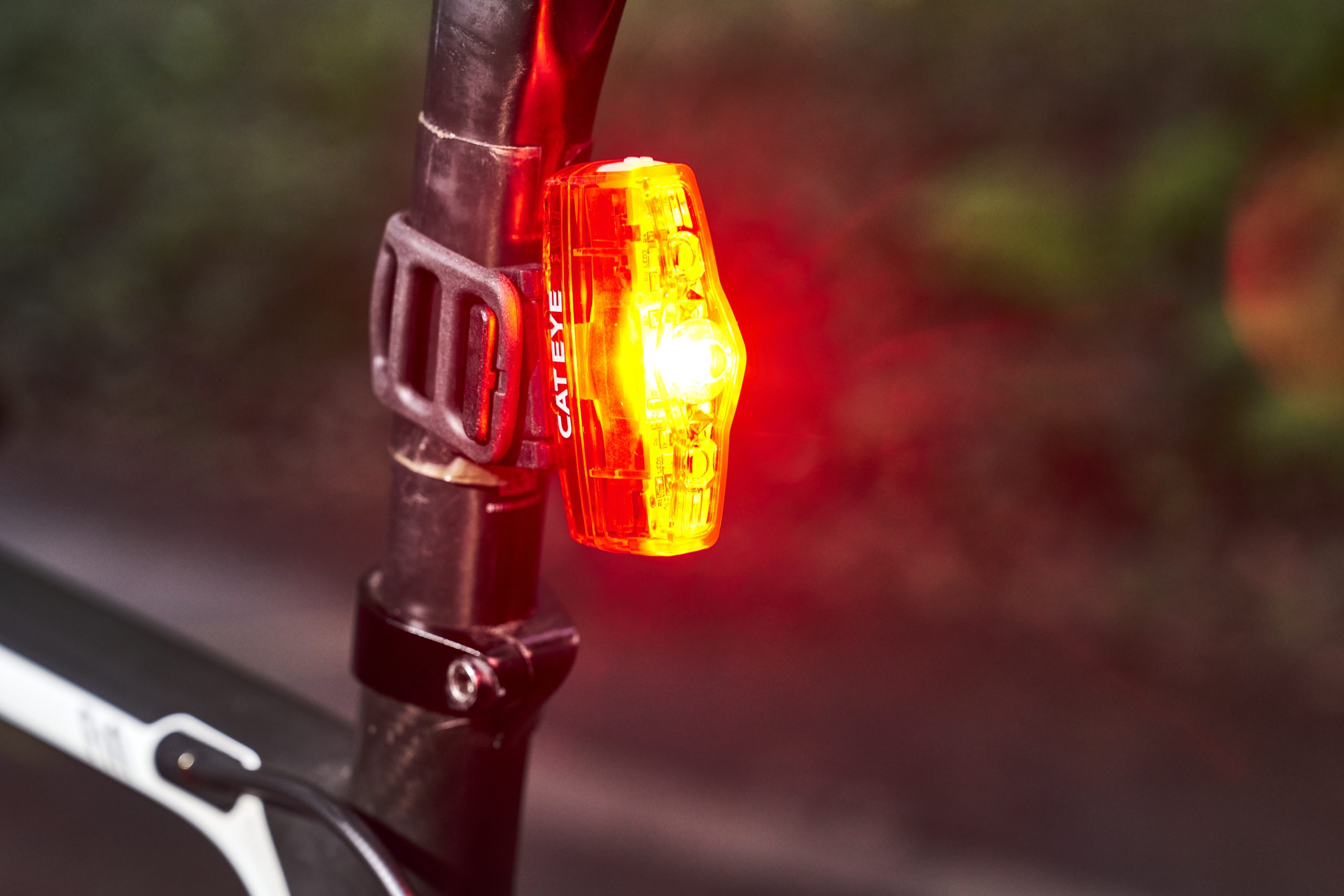
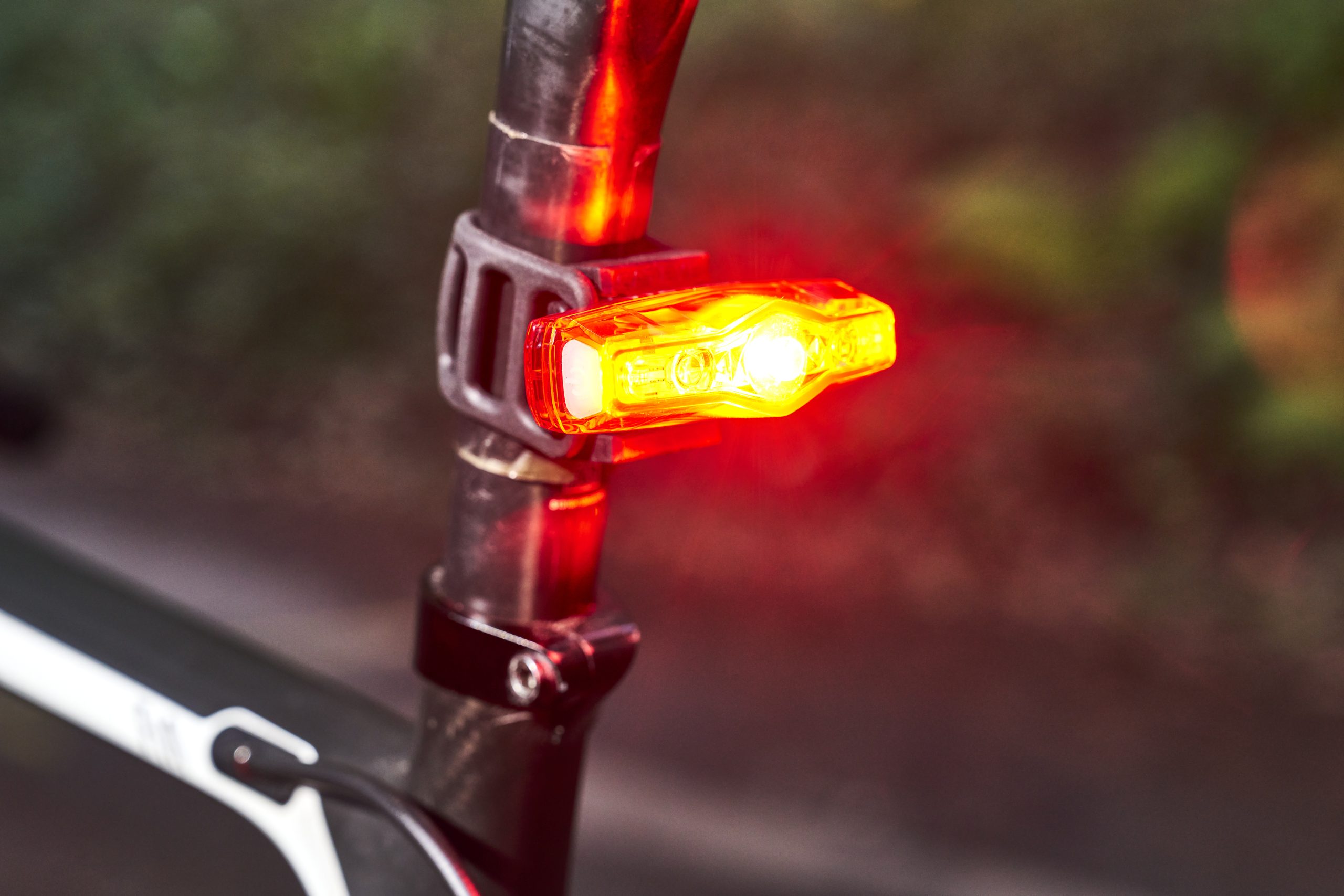
As you might expect, the Viz 150 can deliver up to 150 lumens, so it’s among the more powerful rear lights from the sets I tested together. However, it’s how it’s delivered that’s striking.
Cateye has what it calls a Hyperflash mode, which ostensibly is a day flash mode designed to draw attention to you in brighter conditions. Hyperflash takes things to a whole new level by engaging the LEDs in a crazed pattern (and flashing them at their most powerful for intermittent bursts).
It’s about as striking as rear-light flash modes come, and while it can be a little overpowering to the point of distraction in Cateye’s most powerful rear light, here it’s a touch less potent – but no less noticeable by my reckoning.
You also get a standard flash mode and a combination mode, on top of a single static mode, which puts out 20 lumens. This is its most power-hungry setting, and it delivered 5hrs 15mins before winding down to a low-power flash mode for a remarkable further seven hours.
These numbers are impressive, even if you account for the relatively low lumen count, but it’s worth saying Cateye’s lens does a great job of magnifying the LEDs underneath in this static mode, effectively helping them appear brighter.
You can orient the light vertically or horizontally on the seatpost using the supplied bracket, which is a simple band-on affair with an angled shim and comes with a strap long enough for medium-depth aero seatposts. The design is a little bulky, which is a shame, but hardly a deal breaker.
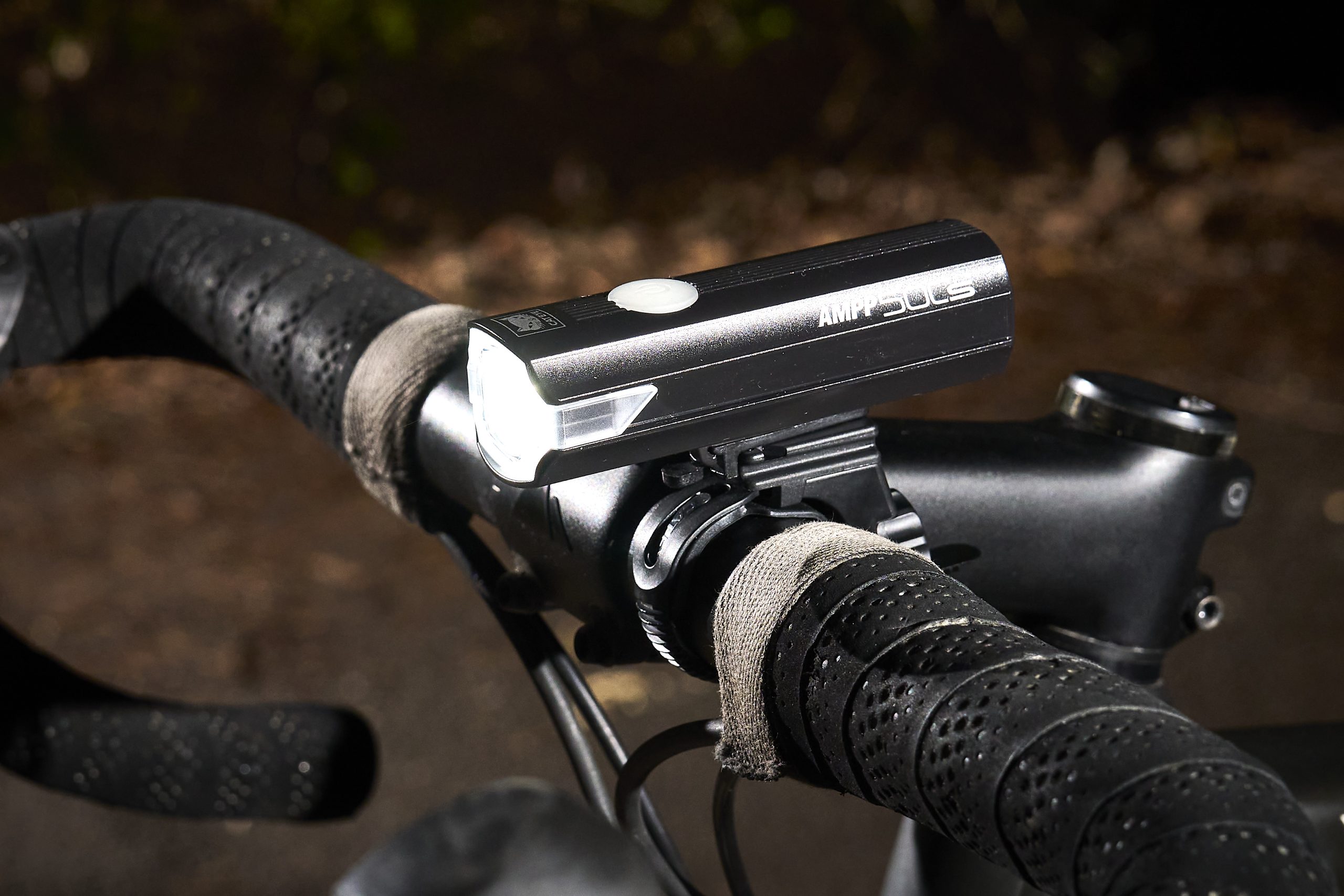
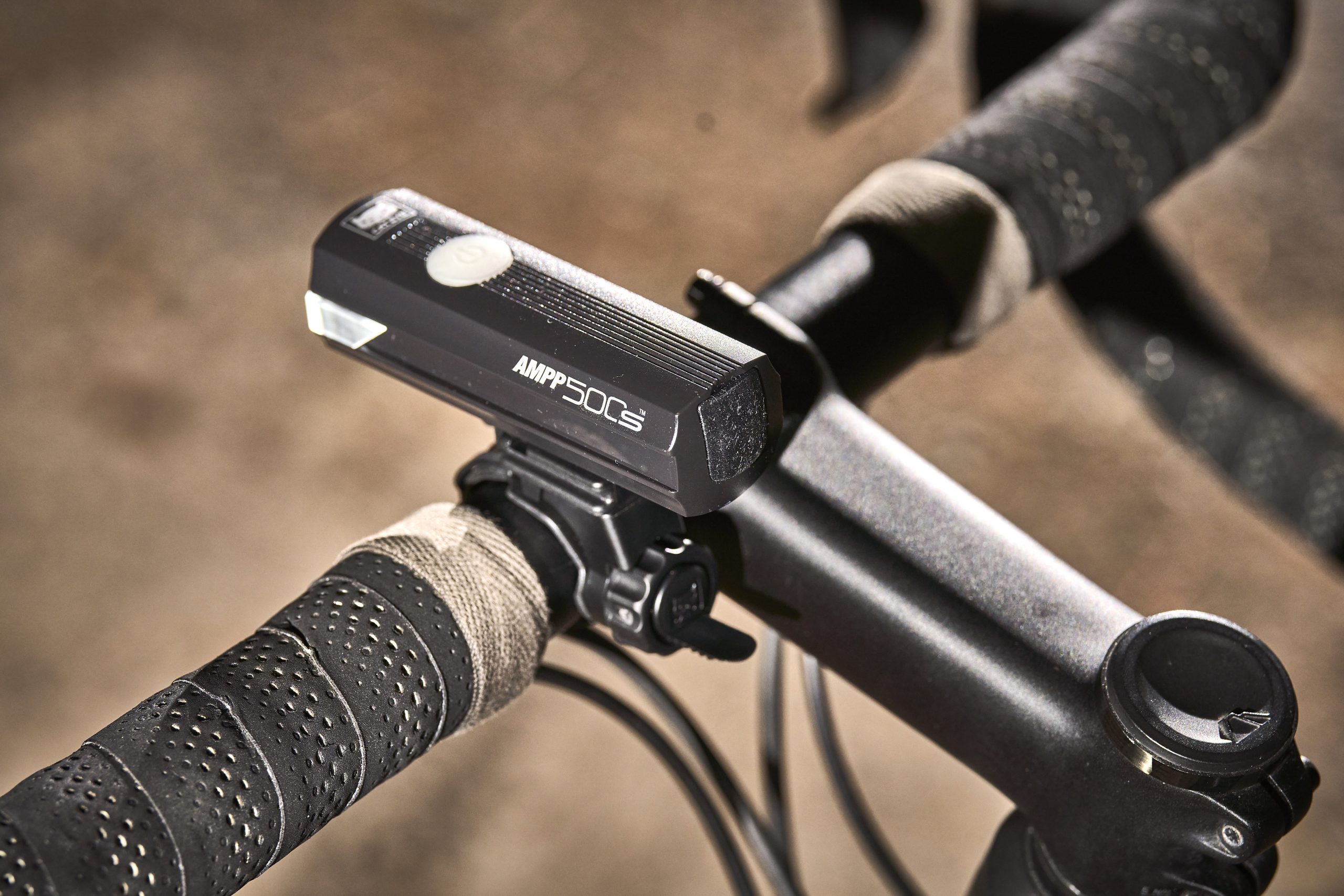
The AMP 500S front light features a tried-and-tested barrel design, and it makes use of Cateye’s spin-wheel fastening bracket system.
This isn’t the best bracket system around, because the wheel used to fasten it can get lost (and I have lost one in the past). It also leaves a length of plastic exposed when fully tightened, and the release mechanism on the underside of the light body feels a little flimsy – as if I could easily bend it or snap it off with enough use.
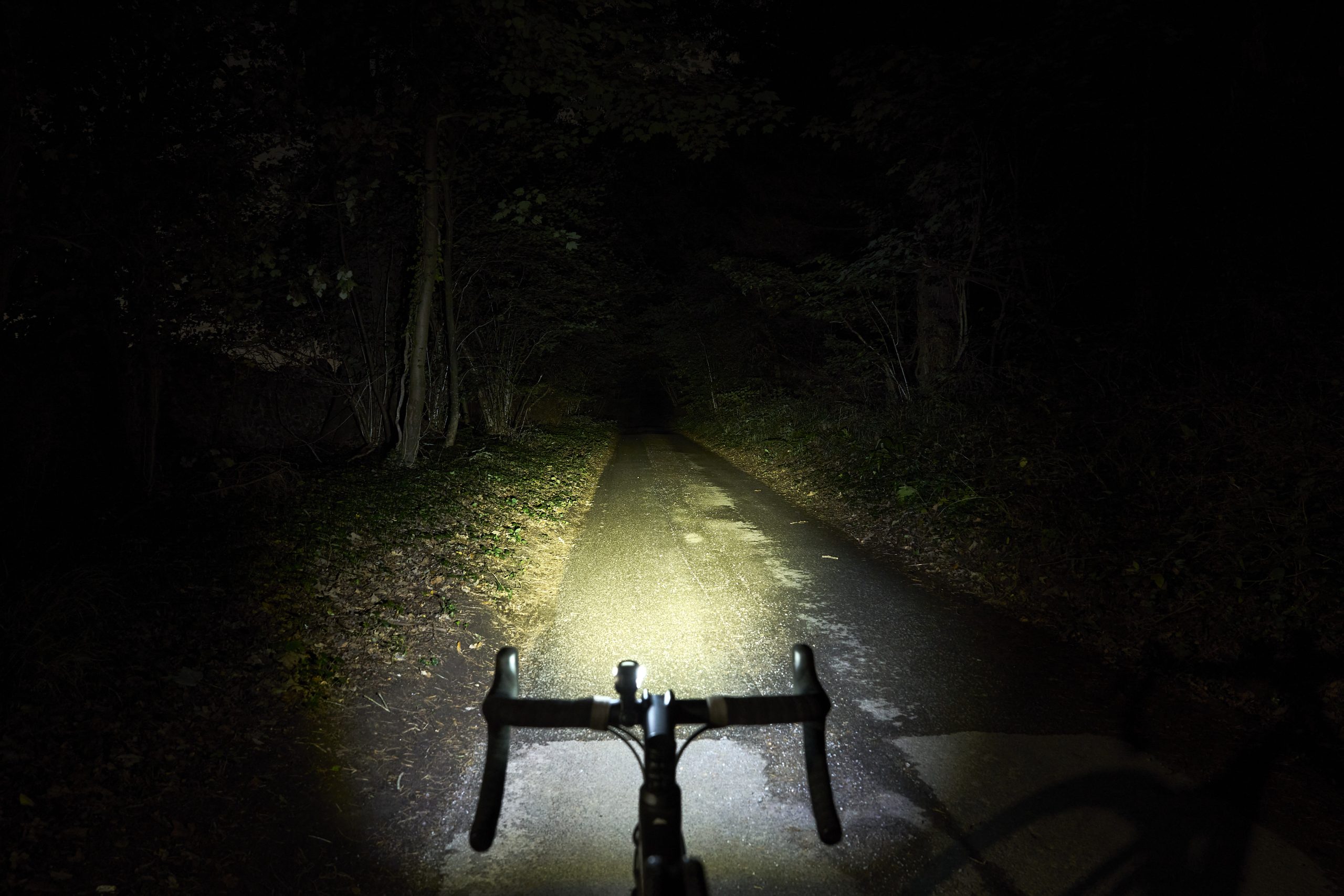
That said, it holds the light firm and there’s a little left-right play to centre the beam to shine in front of the stem, not just dead ahead.
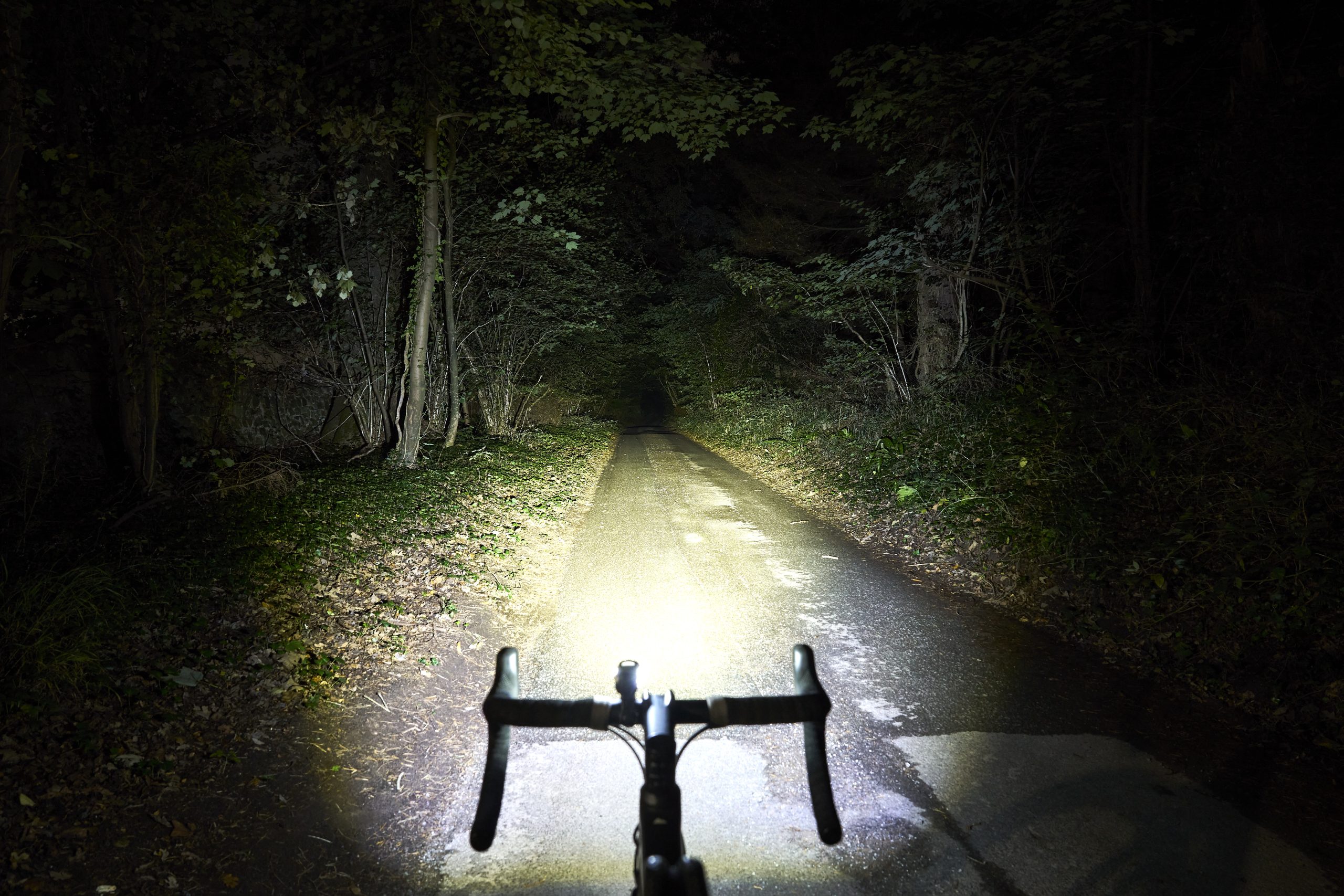
The beam has a spotlight style, with some useful bleed on the outer edge for peripheral vision. The lens is almost square-shaped, and this delivered an odd sensation of light falling away suddenly where it typically wouldn’t when riding at speeds approaching 25km/h. Given most bike lights have a more rounded shape, it’s something to get used to.
My battery burn down test saw the AMPP 500S last for two hours on the top 500-lumen static setting, but it really delivered that much power for around two-thirds of that time. This is at the lower end of the spectrum.
How we tested
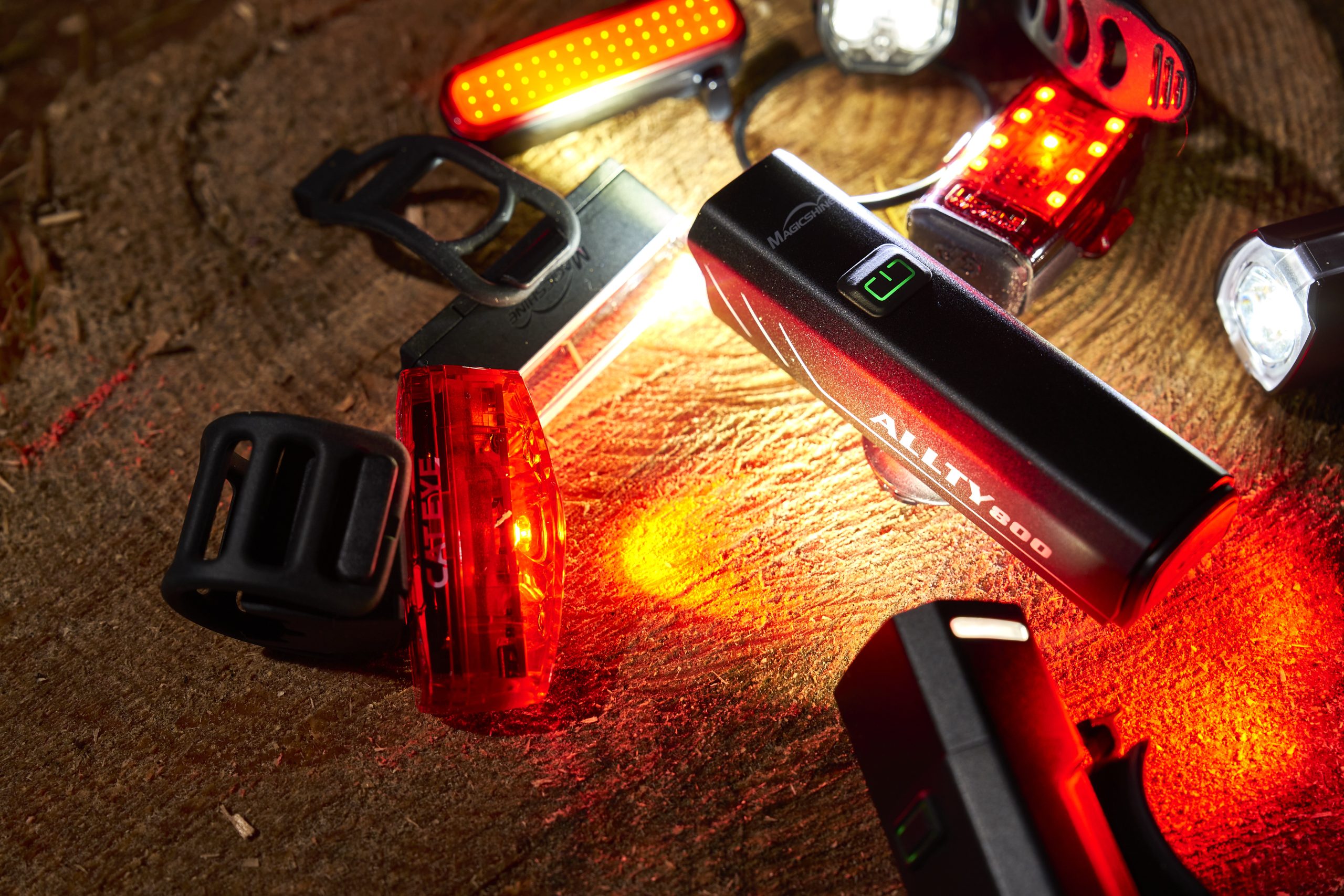
I tested these bike light sets using two local test loops over the course of nearly two months – one largely street-lit, criss-crossing through a local urban area, and another almost exclusively un-lit on country back lanes. Both were ridden at night (meaning some late starts and early mornings), while I also used each light set for local rides during the day.
I also ran a battery burn-down test – discharging the lights from empty on their most powerful setting. This gives a good indication of the minimum battery life you can expect and flags when power-save modes kick in.
In my experience of testing over 100 lights, there’s usually a small discrepancy in burn times from one unit of the same light to the next, so my figures are intended as indications, rather than guarantees.
All front lights featured at least a 500-lumen maximum output and each set costs under £100.
Light sets tested
- Lezyne Fusion Drive 500+ / KTV Drive Pro+
- Magicshine Allty 800 v2 / Seemee 50 v2
- BBB NanoStrike 700i / Signal 80
- Ravemen FR500 / CL01 Pro (LS07)
- Moon Rigel Lite / Helix Lite
- Giant Recon HL 600 / Recon TL 200
- Cateye AMPP 500S / Viz 150
- Sigma Buster 800 / RL 150
- Knog Blinder Pro 700 / Plus
Using both lights is easy, with simply cyclical mode selection operation, and they both feature memory functions to pick up in the same mode you left off in.
Cateye doesn’t supply charge cables in the box, so you’ll need to find or fund your own – perhaps not the end of the world, given this is the cheapest lights set on test at £64.99. Both lights charge via USB-C ports.
Cateye AMPP 500S and Viz 150 lights set bottom line
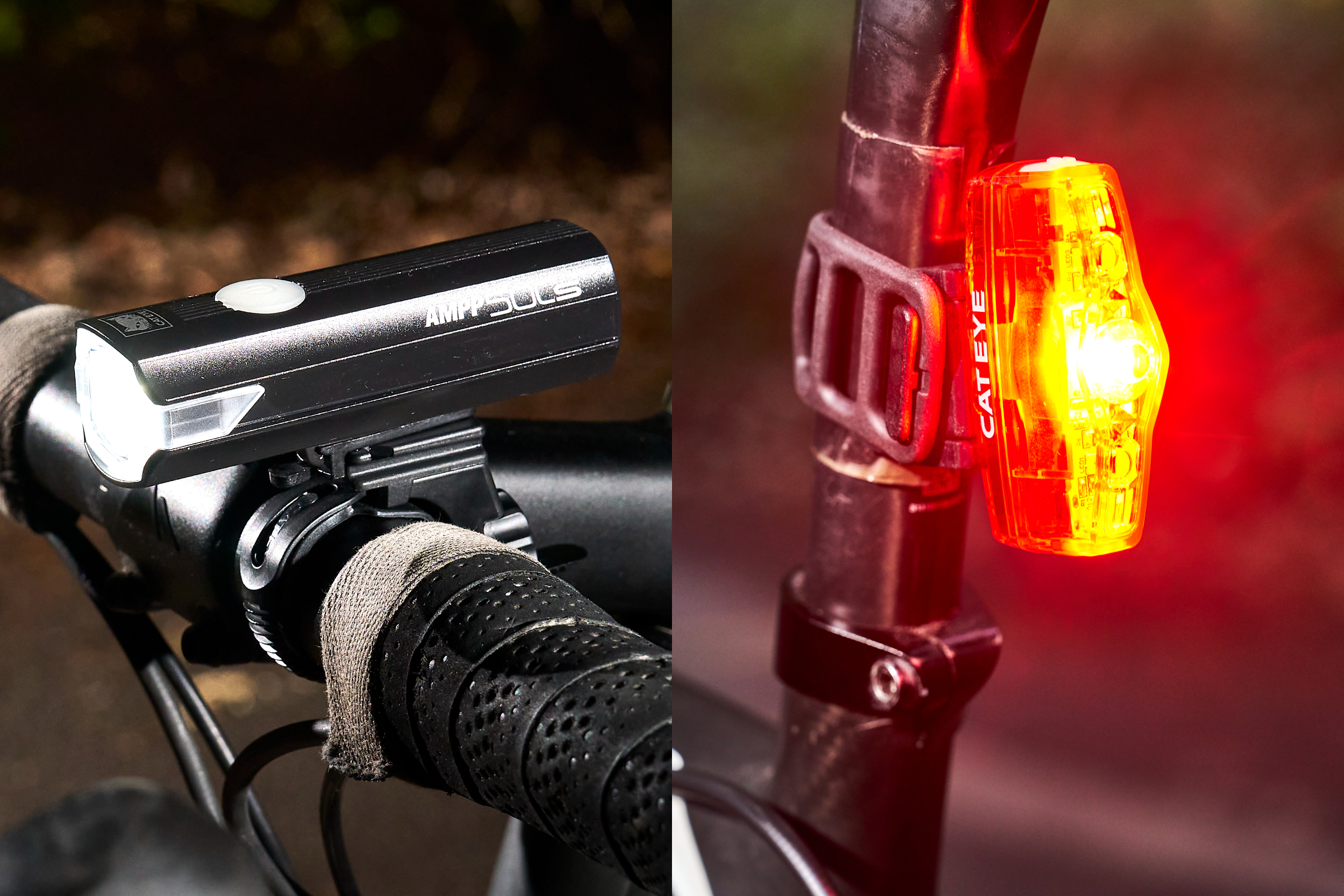
If you want one of the most striking rear lights available, consider the Cateye AMPP 500S and Viz 150 set.
It offers good value, albeit the front bracket could be simpler to use and you might need to shell out for a USB-C cable if you don’t already have one.
Product
| Brand | Cateye |
| Price | €69.50, £64.99, $62.95 |
| Weight | 133g |
Features
| Light type | front_and_rear |
| Remote switch | no |
| Integrated battery | yes |
| Features | Cateye AMPP 500S (front) ● Weight: 106g ● Material: Plastic ● IP rating: IPX4 ● Lumens: 500 ● Runtime: 1.5-60hrs Cateye Viz 150 (rear) |