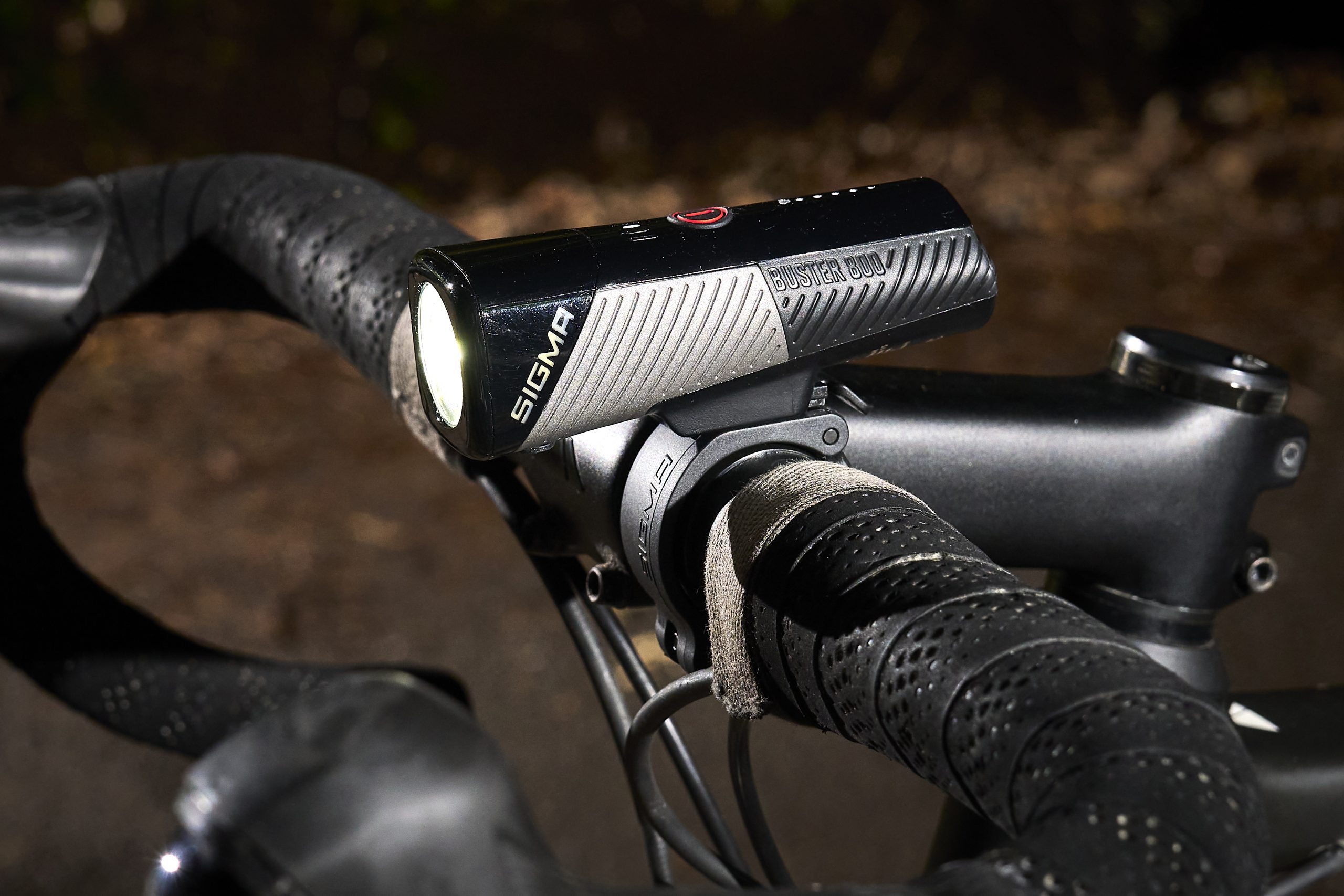
The Sigma Buster 800 & RL 150 Lightset costs £84.99, which makes it one of the more expensive sets of the sub-£100 group I've tested this year. However, it’s powerful and the rear light comes with a handy brake-light function, which goes a long way to justifying the cost.
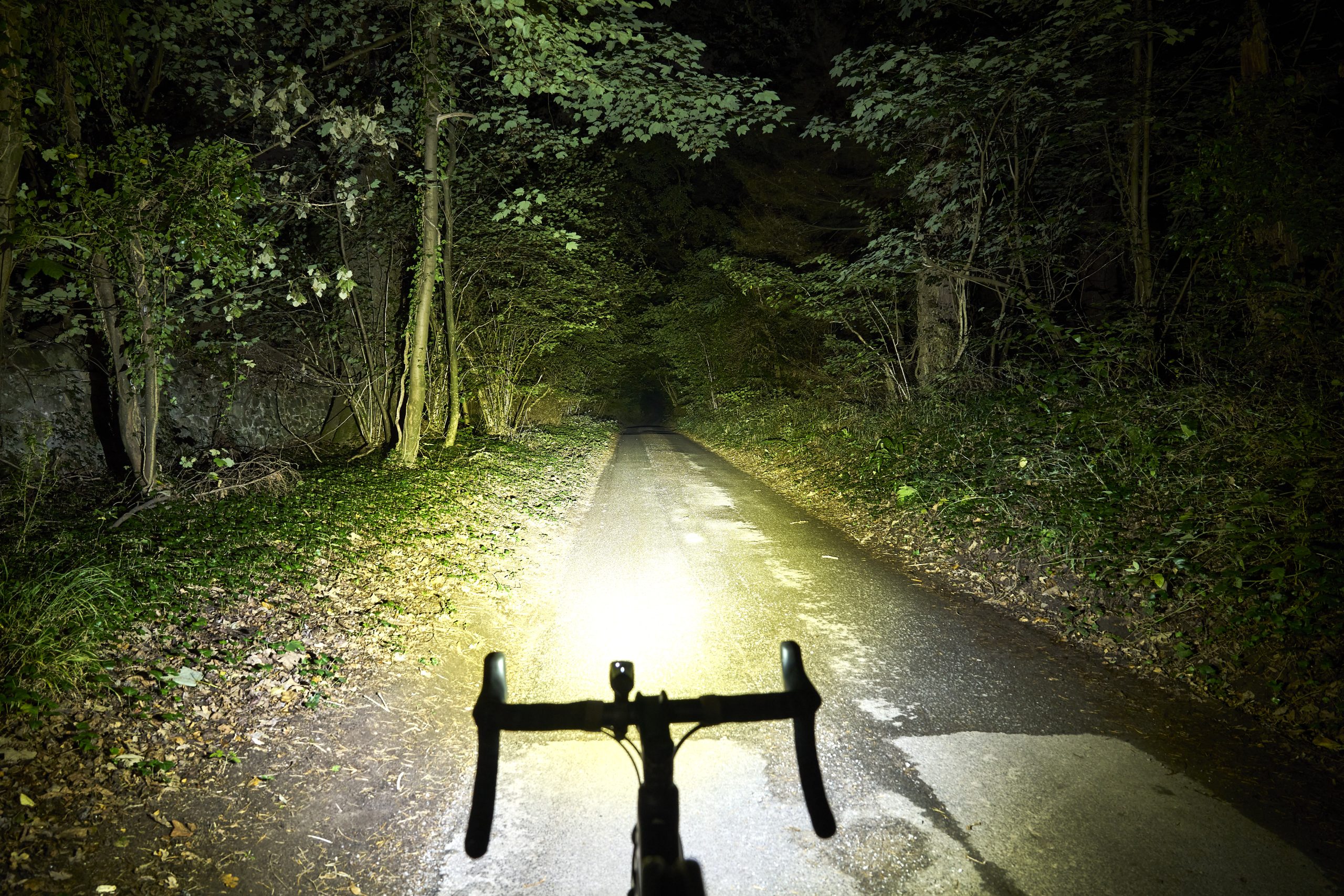
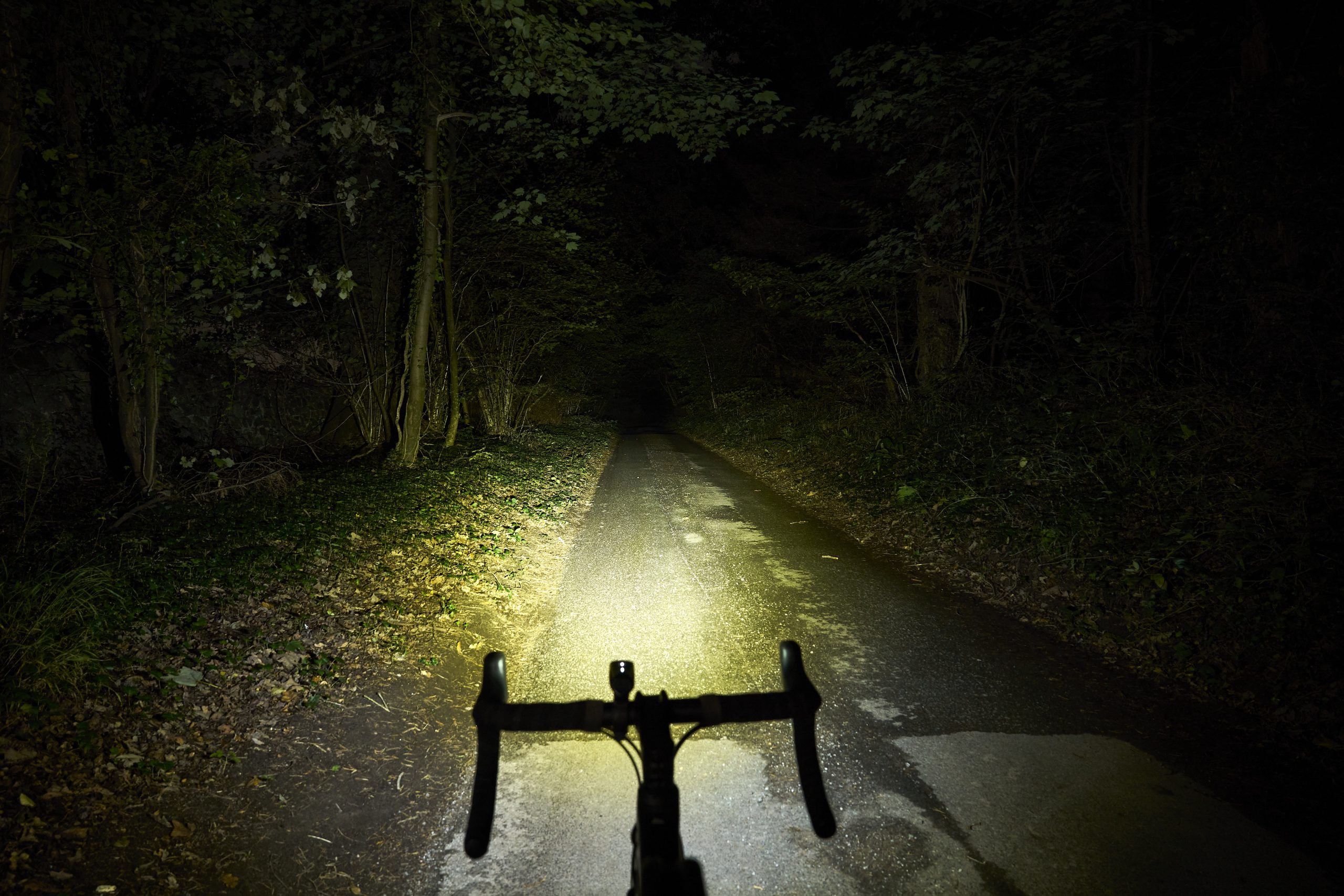
Putting out 800 lumens, the Buster 800 front light is the brightest I've tested in 2026, and the spotlight beam does a great job of illuminating the road ahead.
There’s some light bleed around the focussed area, aiding peripheral vision, but in the main the power is well-directed forwards for faster rides in the dark.
I was happy to ride at 25km/h in the dark and felt more comfortable pushing on a little faster than with lesser-powered lights.
The grey metal part of the light body gets very hot when run in its high mode. The heat sink works hard to dispel the heat, saving the black plastic that makes up the rest of the body from that job.
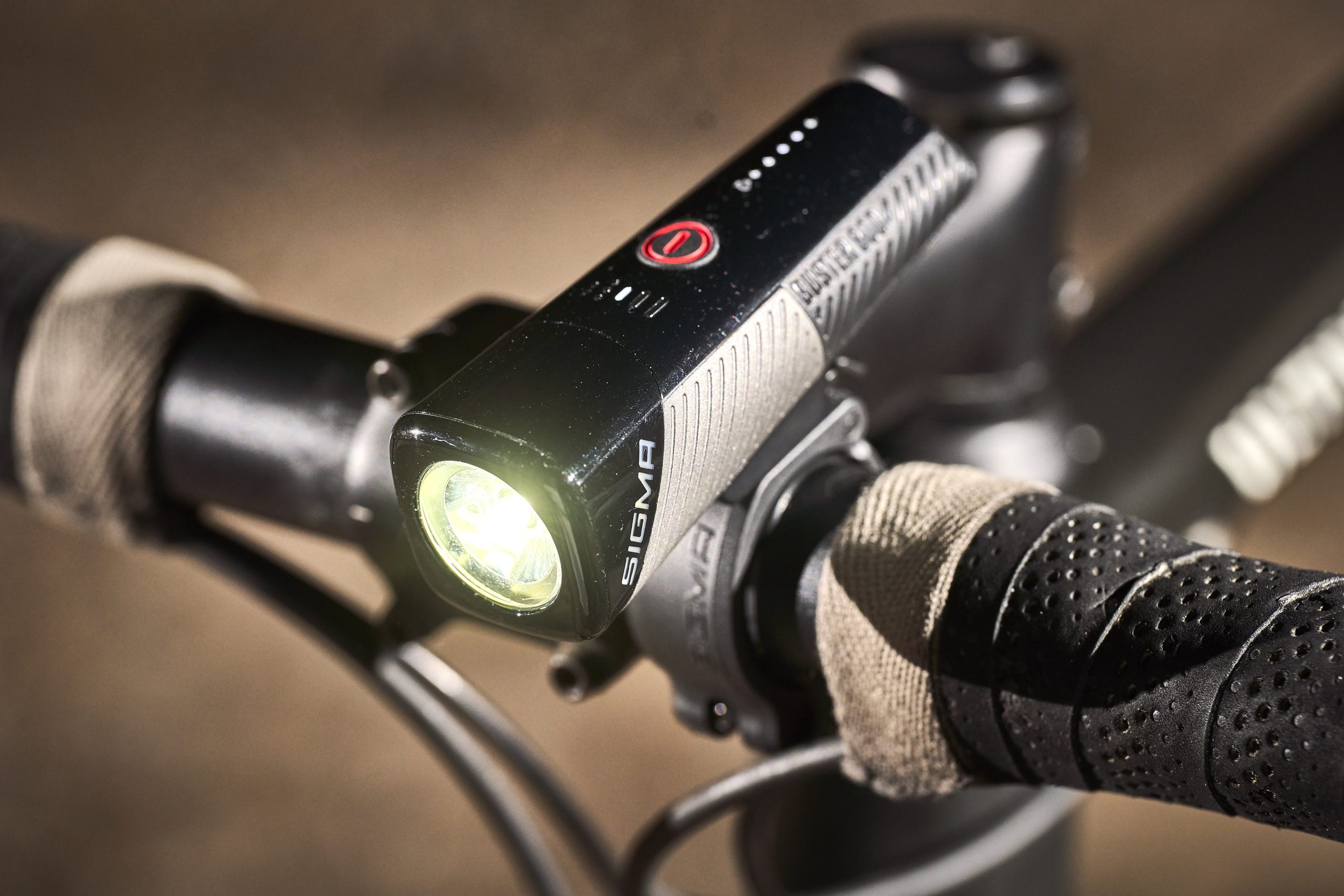
The Buster 800 is operated using a standard cyclical mode selection format, albeit with a small quirk: instead of a long press to switch it on, you need to double-press the power button.
A single press when switched off lights up the battery-level dots. Perhaps confusingly, when the light is on, a long press switches it off (a double press just moves you through two modes quickly).
Modes are indicated via lights above the power button – these are assigned quite intuitively, with a longer indicator for a more powerful static mode, and dotted indicators for the flashing settings. There’s a mode memory function, too, so if you have a favourite you can select it and return to it when you switch the light back on.
The bracket is a little chunky with the screw clasp, but you get different-sized shims to help it grip your handlebar.
It’s all a little fiddly to put together, based on my experience of this and other Sigma lights I’ve tested. But, once on you shouldn’t need to remove it again – the light slides off easily when the release tab is pressed.
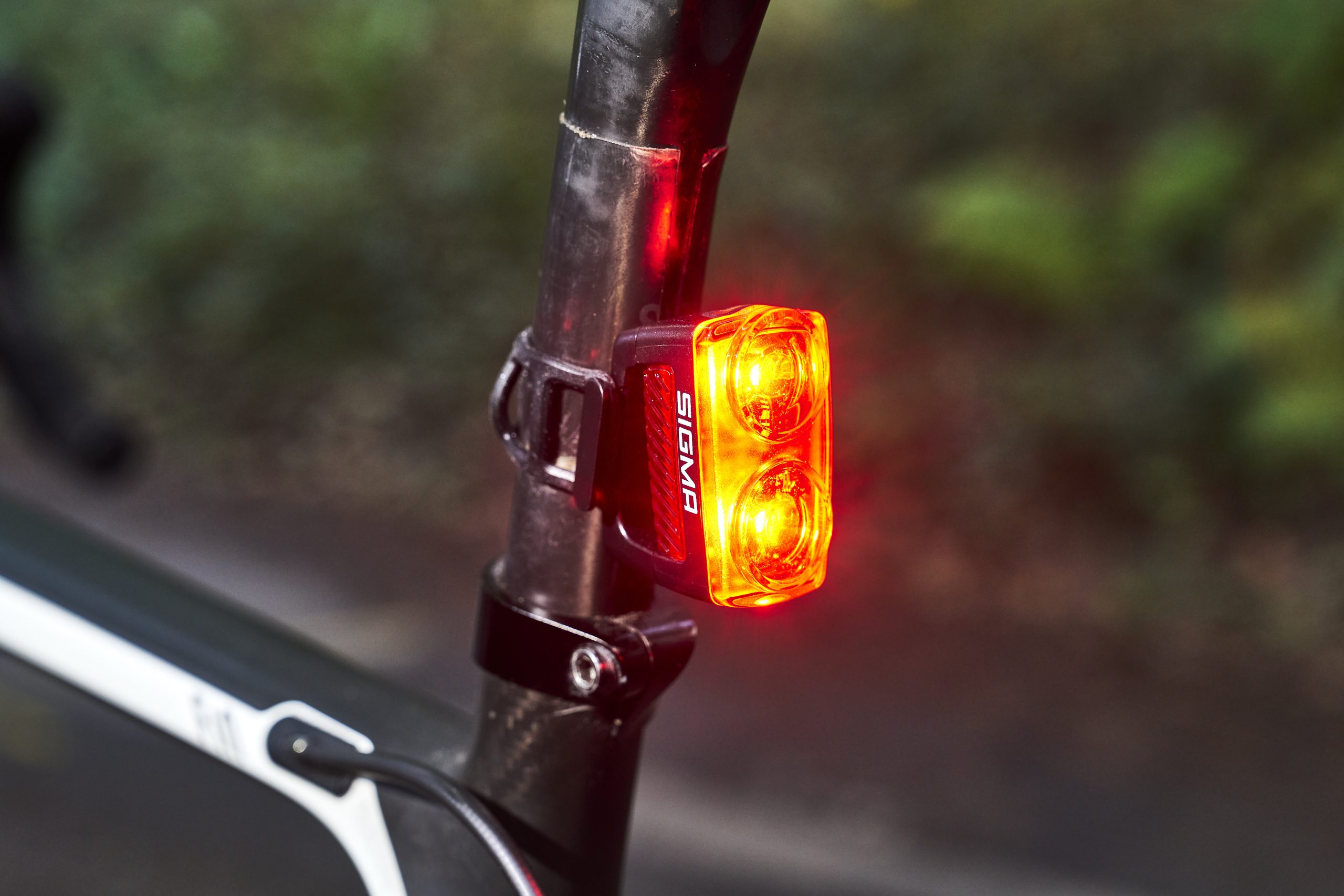
At the back, the Buster RL 150 features a punchy 150-lumen output, but perhaps most notably, has a brake light function that kicks in when an internal accelerometer detects significant deceleration.
This overrides the mode you’re in to temporarily punch out at 150 lumens. The only other time you see this output is in the day-flash setting, and the highest static output delivers 40 lumens. This means whenever the brake light activates, it’s a very noticeable change, which is great for signalling to road users behind you.
The downside of this mode, if there is one, is battery life becomes quite variable.
If you’re commuting through a city centre with lots of starting and stopping for 20 minutes, you’re going to activate it more and burn through the battery much faster than you would if you were riding at a constant pace for an hour or so. It’s worth noting, you can’t switch it off – even when in low-battery mode, it’ll still kick in.
Sigma hedges its claims around this and any battery-related fade by including the mathematical ‘equal-to-or-less-than’ symbol alongside all its run-time and lumen-output predictions.
In my indicative burn down test, I achieved 3hrs 50mins before it dropped its setting, lasting around another 2hrs 30mins. In use, you’ll get less than this.
The Buster front light delivered just shy of two hours in its highest 800-lumen mode, before powering down noticeably in two stages. The first is still bright enough to ride by in the dark if you’re careful and lasts to around 4hrs 15mins, but the second really only checks the legal box of having a light on your bike after sunset for a further 30 minutes.
How we tested
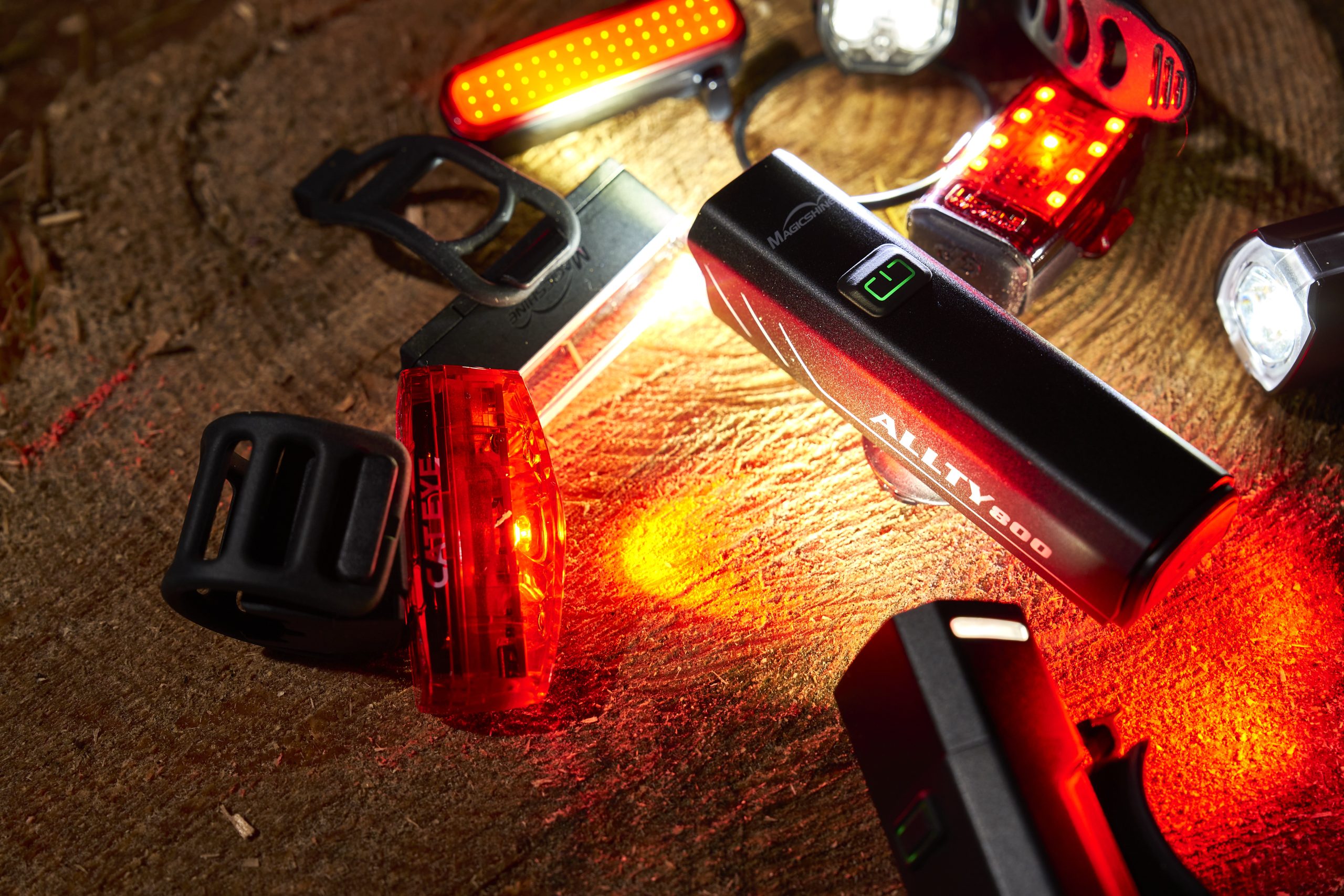
I tested these bike light sets using two local test loops over the course of nearly two months – one largely street-lit, criss-crossing through a local urban area, and another almost exclusively un-lit on country back lanes. Both were ridden at night (meaning some late starts and early mornings), while I also used each light set for local rides during the day.
I also ran a battery burn-down test – discharging the lights from empty on their most powerful setting. This gives a good indication of the minimum battery life you can expect and flags when power-save modes kick in.
In my experience of testing over 100 lights, there’s usually a small discrepancy in burn times from one unit of the same light to the next, so my figures are intended as indications, rather than guarantees.
All front lights featured at least a 500-lumen maximum output and each set costs under £100.
Light sets tested
- Lezyne Fusion Drive 500+ / KTV Drive Pro+
- Magicshine Allty 800 v2 / Seemee 50 v2
- BBB NanoStrike 700i / Signal 80
- Ravemen FR500 / CL01 Pro (LS07)
- Moon Rigel Lite / Helix Lite
- Giant Recon HL 600 / Recon TL 200
- Cateye AMPP 500S / Viz 150
- Sigma Buster 800 / RL 150
- Knog Blinder Pro 700 / Plus
It’s worth pointing out that the Sigma lights have a waterproofing rating of IPX4 – the lowest of the group I tested, even if protection against splashes (which a 4-rating indicates) should be adequate for most tasks.
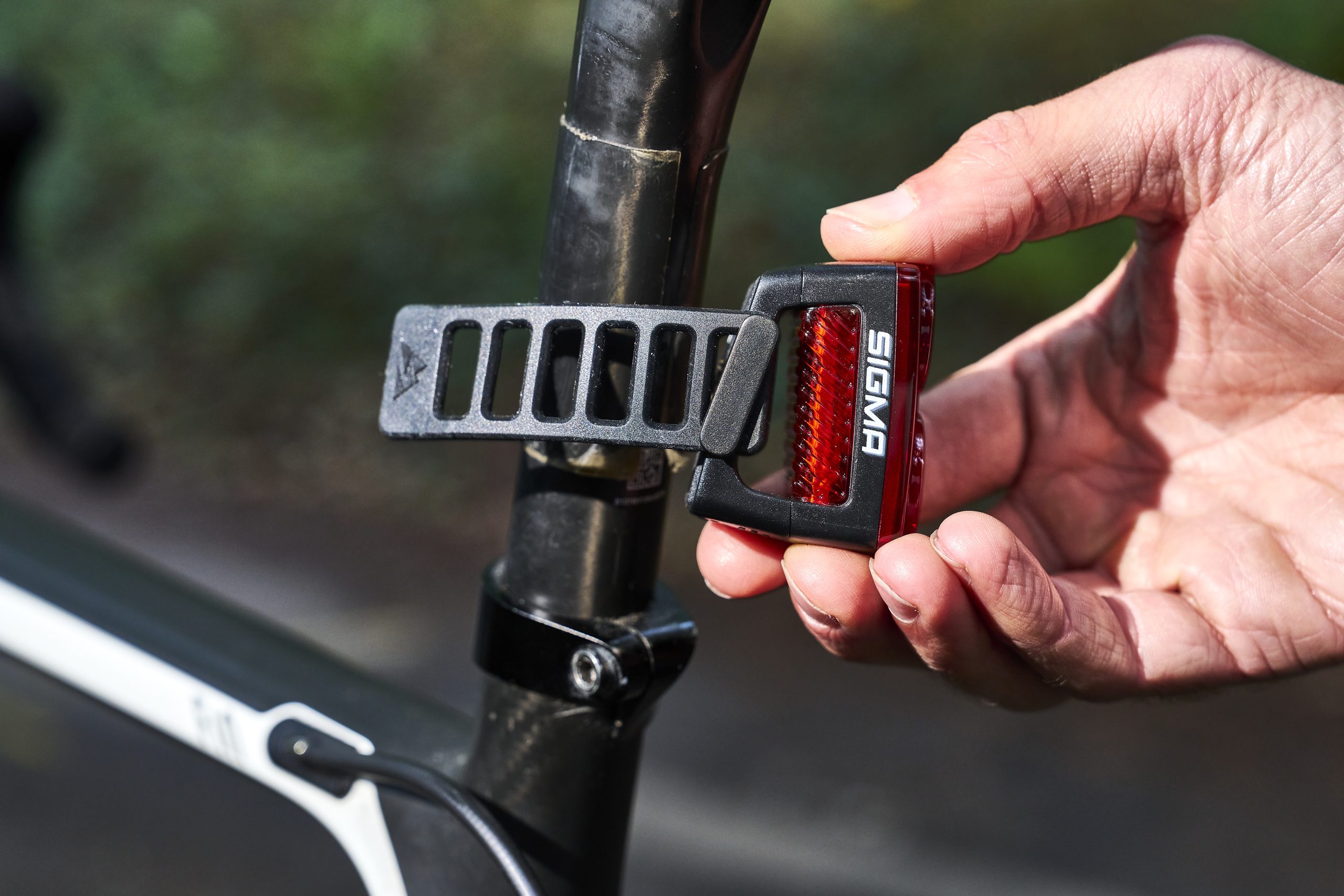
The lights set comes with one USB-A to USB-C charge cable, a GoPro adaptor to fit the front light under an out-front mount, and the band required to attach the RL 150 to the seatpost.
Sigma Buster 800 and RL 150 Lightset bottom line
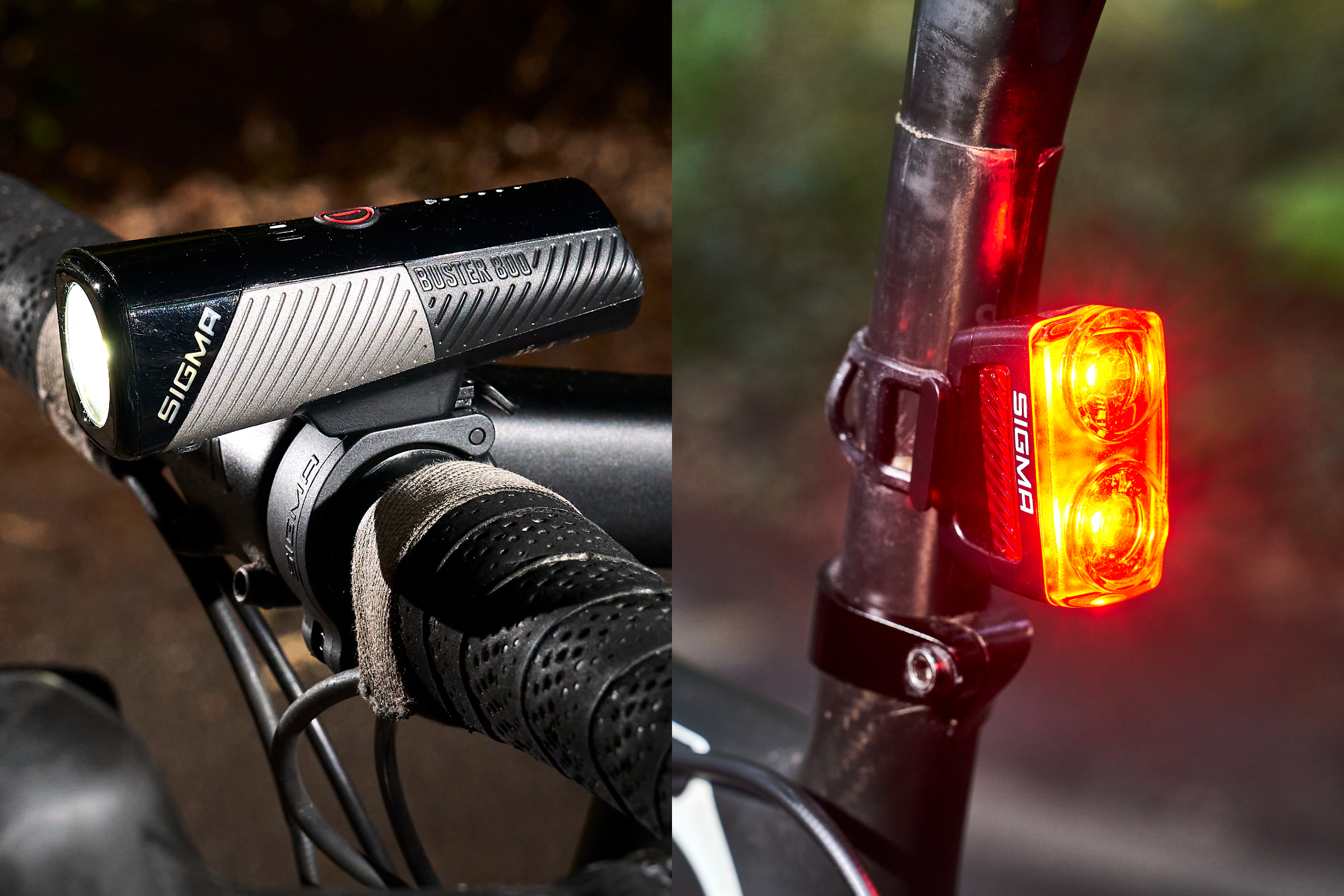
The Sigma Buster 800 and RL 150 Lightset is a strong contender mainly for the brightness of both lights and the braking utility of the rear light specifically.
The front light has something of an old-school design, but you could do a lot worse than the Sigma lights.
Product
| Brand | Sigma |
| Price | €99.95, £84.99 |
| Weight | 188g |
Features
| Light type | front_and_rear |
| Remote switch | no |
| Integrated battery | yes |
| Features | Sigma Buster 800 (front) ● Weight: 150g ● Material: Plastic ● IP rating: IPX4 ● Lumens: 800 ● Runtime: 2-50hrs Sigma RL 150 (rear) |