32in wheels are big news in the worlds of mountain and gravel bikes right now. Singular Cycles is one of the first brands to get a 32-gravel bike to market – and it has done it right.
The classy titanium Pterodactyl has everything I want from the best gravel bikes: speed, smoothness, brilliant handling, and a breathtaking way of keeping momentum thanks to those huge wheels.
The geometry is spot-on, and the frame is finished beautifully. The only caveat is the sizing means it's not going to work for smaller riders.
Singular Pterodactyl build, sizing and spec
Singular Cycles has history when it comes to gravel bikes – its first product was a drop-bar mountain bike released in 2006, called the Peregrine, and a staple of the brand ever since. Simply put, Singular was doing gravel before gravel existed.
So perhaps it’s apt that its latest bike, the Pterodactyl, brings new 32in-wheel tech to gravel first. I say ‘first’, because this isn’t a pre-production bike, or prototype – it’s a full-production model you can buy right now.
The Pterodactyl has been designed only in L, XL and XXL sizes, which are suitable for riders from 5ft 10in to 6ft 9in according to the brand.
“That’s where this large wheel size can do what it’s supposed to do,” says founder Sam Alison, “without excessive stack height, slow handling, or toe overlap.”
The obvious downside here is smaller riders are sized out of the Pterodactyl, and if Alison is proven correct across the industry, then out of 32in-wheel bikes completely.
Despite a tendency to make rules with to no real benefit to racers or general riders (sock height, computer sizes, and these days, bike weights), it’s little surprise the UCI has begun to explore the possibility of banning 32in bikes in sanctioned races, on sporting grounds.
Singular Pterodactyl geometry
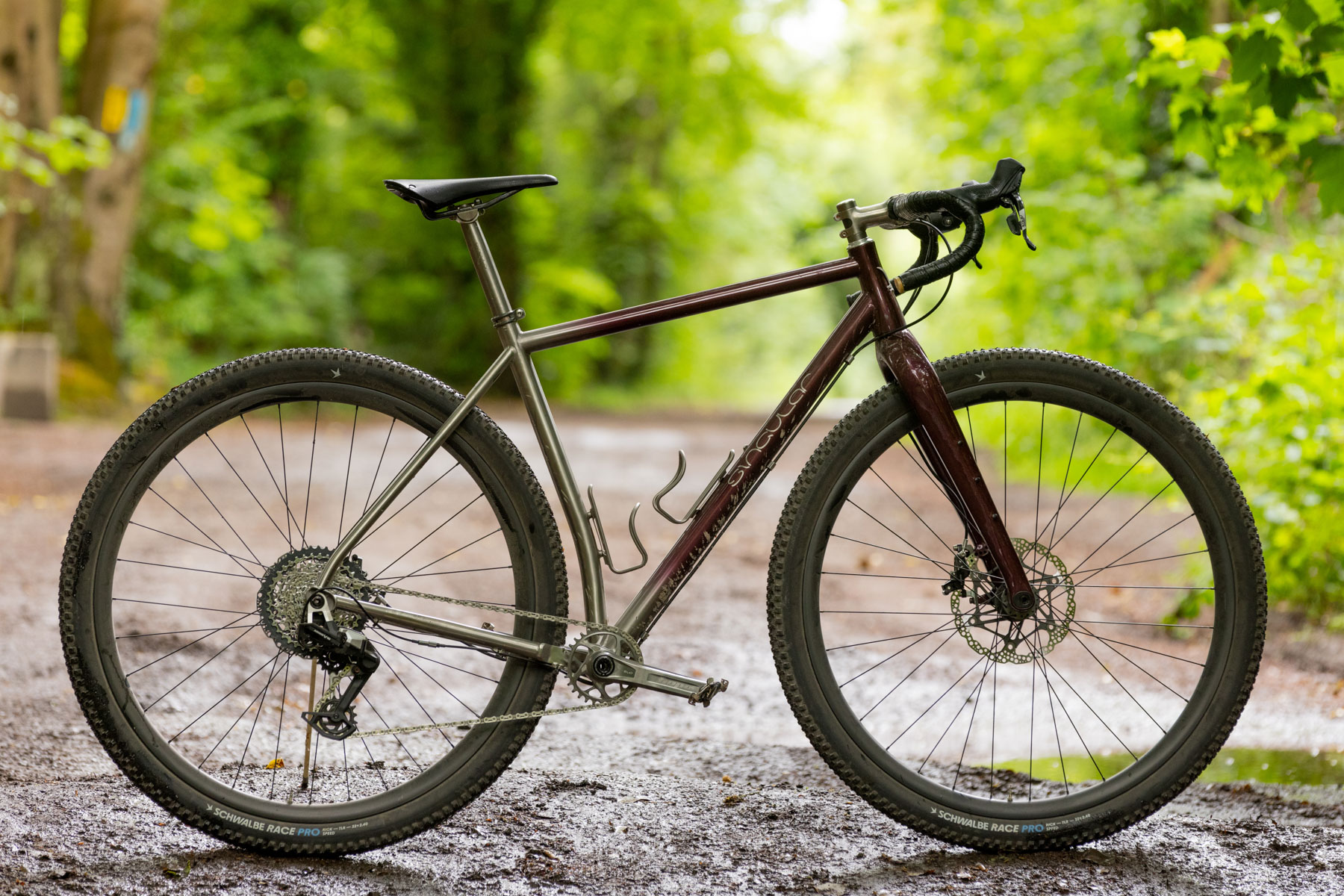
To accommodate the larger wheels in its custom-butted titanium frame and Columbus carbon fork, the Pterodactyl uses mountain bike standards for its axles: Boost spacing (110mm wide) at the front and Super Boost (157mm) spacing at the rear.
Alison says this enabled the brand to build a stronger wheel for the size by increasing the bracing angle via widened hub flanges.
The bottom bracket shell is also MTB derived, with an 88.6mm T47 threaded shell. Typical 700c-wheeled gravel bikes have either a road-like 68mm, or wider 73mm shell.
The geometry evolved from a combination of Singular’s gravel bikes and its pre-existing 32in mountain bike, with a steeper head angle of 71 degrees and a steep 74-degree seat angle. That means the front end will feel familiar and should have quicker steering than a slacked-out mountain bike.
The wheelbase is long at 1,106mm in a size XL, but of course it needs to fit the larger wheels. However, it's not as long as I'd have imagined – it's only 56mm longer than my own Cannondale Topstone (58cm).
The stack is 672mm, but the head tube is short at 140mm, compared to my own 58cm Topstone. It's 62mm taller in stack, but the head tube is 40mm shorter. That means the bike looks in proportion with its large wheels.
The Columbus Futura Adventure fork has a flip chip to enable you to switch between 45 and 50mm offsets (I had it set at 50mm, pushing the wheel a little further forward, which tames the steering a little).
| size | Large | XL | XXL |
|---|---|---|---|
| reach | 394 | 429 | 447 |
| stack | 672 | 691 | 710 |
| top tube | 585 | 619 | 645 |
| seat tube | 550 | 580 | 600 |
| seat tube c-c | 500 | 530 | 550 |
| head angle | 71 | 71 | 71 |
| seat angle | 74.3 | 74.1 | 74 |
| head tube | 140 | 160 | 180 |
| chainstay | 470 | 470 | 470 |
| Wheelbase | 1106 | 1140 | 1165 |
| Front centre | 656 | 690 | 715 |
| Standover | 780 | 810 | 840 |
| Trail (with 2.5in tyre) | 82 | 82 | 82 |
| BB Drop | 68 | 68 | 68 |
| Fork rake | 50 | 50 | 50 |
| max tyre size | 2.5" | 2.5" | 2.5" |
The build combines SRAM mountain bike and gravel components, with a classy Hope crankset thrown in for good measure.
At first glance, the small 30-tooth chainring and 10-44t cassette had me thinking it’d be under-geared, but when you account for the increased wheel size and 2.4in tyres, that adds up to a circumference of 254.47cm / 100.18in, which means the 30/10 bottom gear is 9.5in.
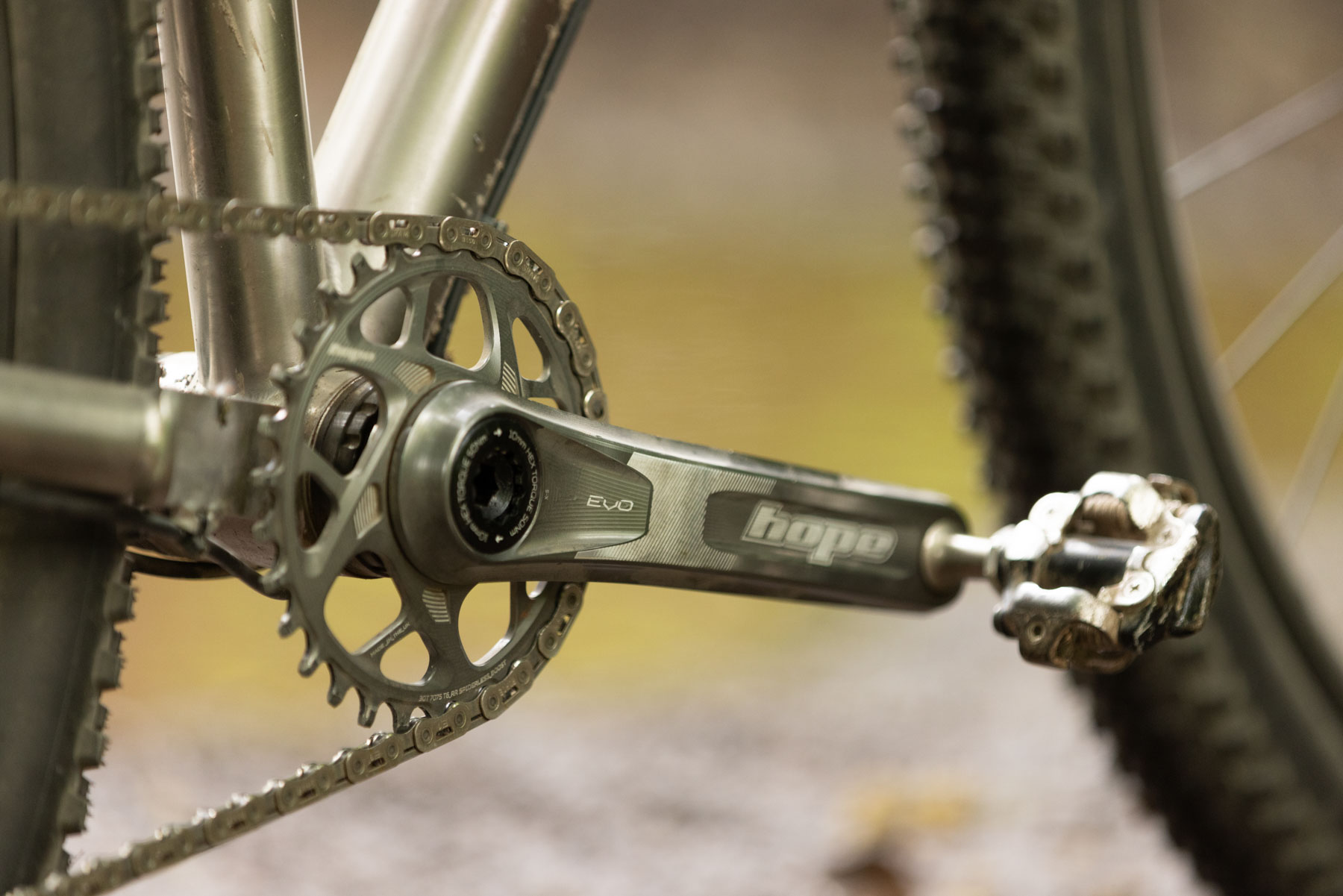
For comparison, a traditional 700c wheel with a 45mm gravel tyre, and standard gravel gears of a 44-tooth chainring and the same 10-tooth gear gives 9.6in. So, top-end speed potential is close, with the 32in offering a slightly taller gear.
With a 44-tooth lightest gear (44/44), the 700c option would be 2.2in; on the 32in-wheel bike, it's 2.6in at the other end. It's not nearly as big a difference as you might imagine.
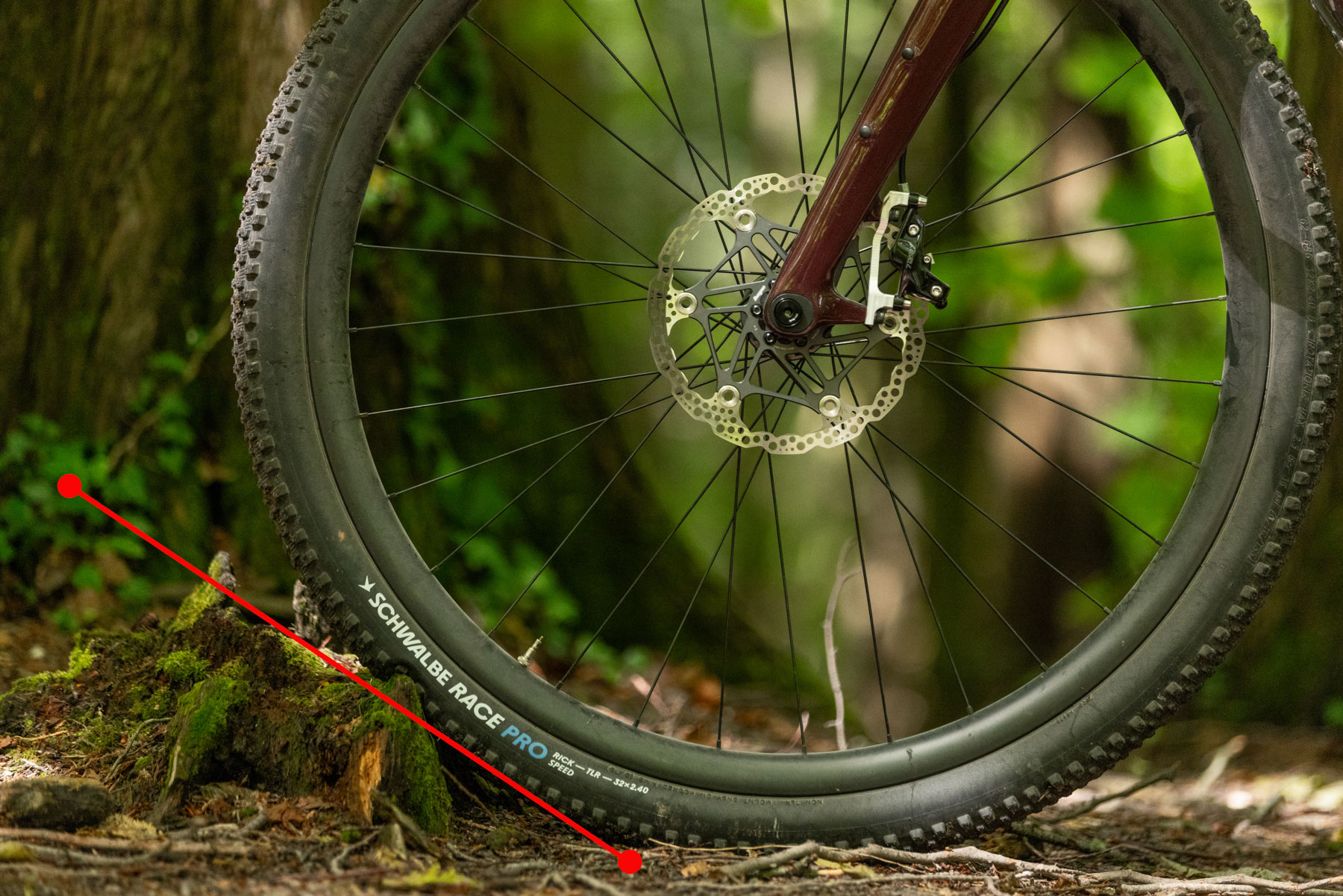
The Schwalbe Pro RS Rick 32x2.4in prototype tyres are excellent. They’re somewhat reminiscent of the Schwalbe G-One in its most aggressive tread, so they make a lot of sense for gravel even though they’re lightweight XC tyres. They carry their extra volume well, roll quickly on tarmac and are supple at lower pressures off road.
The grip is tenacious in the dry conditions I’ve been testing the Singular in.
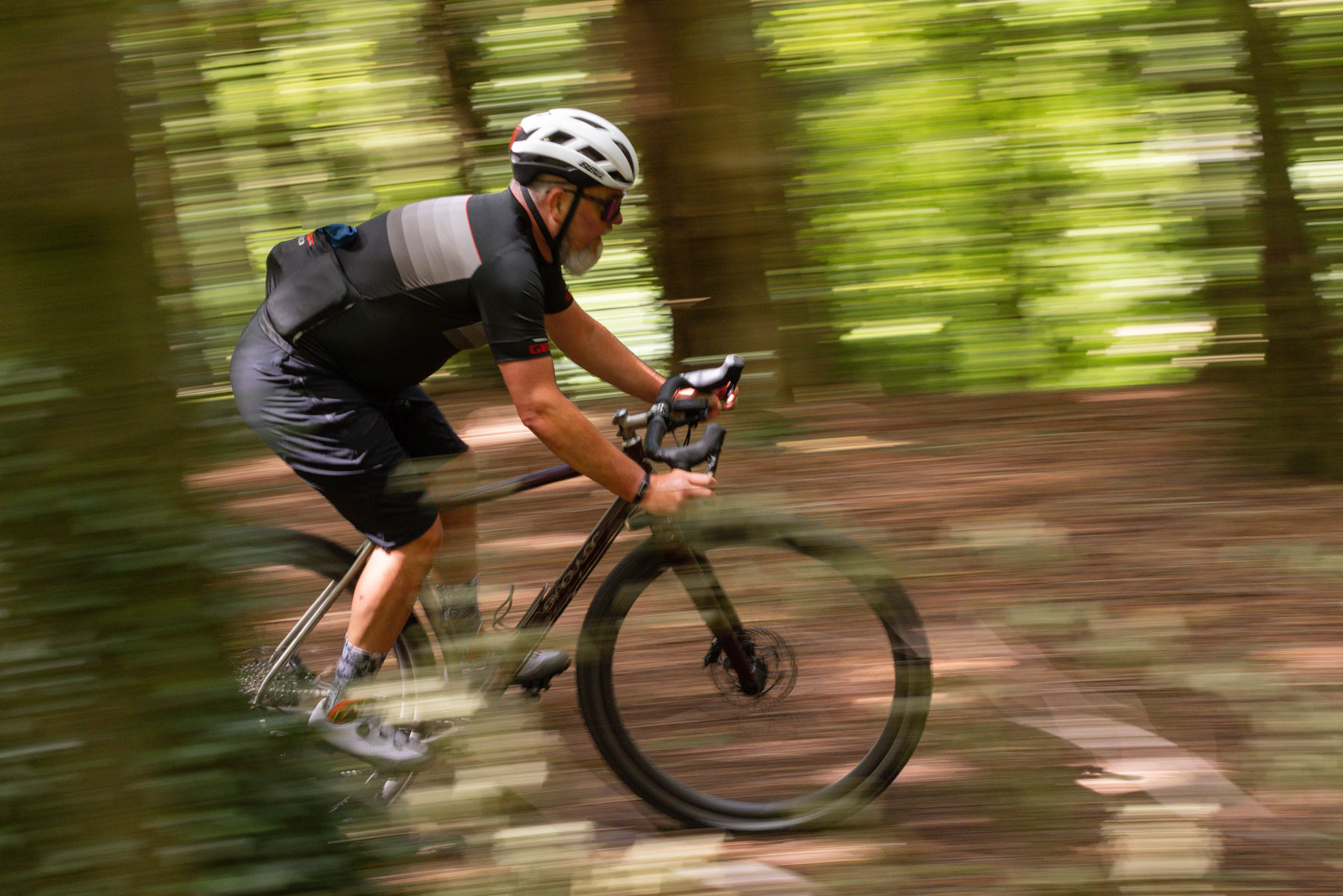
The Singular Pterodactyl rides fast, keeps momentum and handles sweetly. I’m not sure what I expected from a 32in gravel bike. I’d tried a prototype with a short 10-minute blast on a recent trip to Belgium and been impressed, but without taking that bike properly off-road I could only really judge how it rolled.
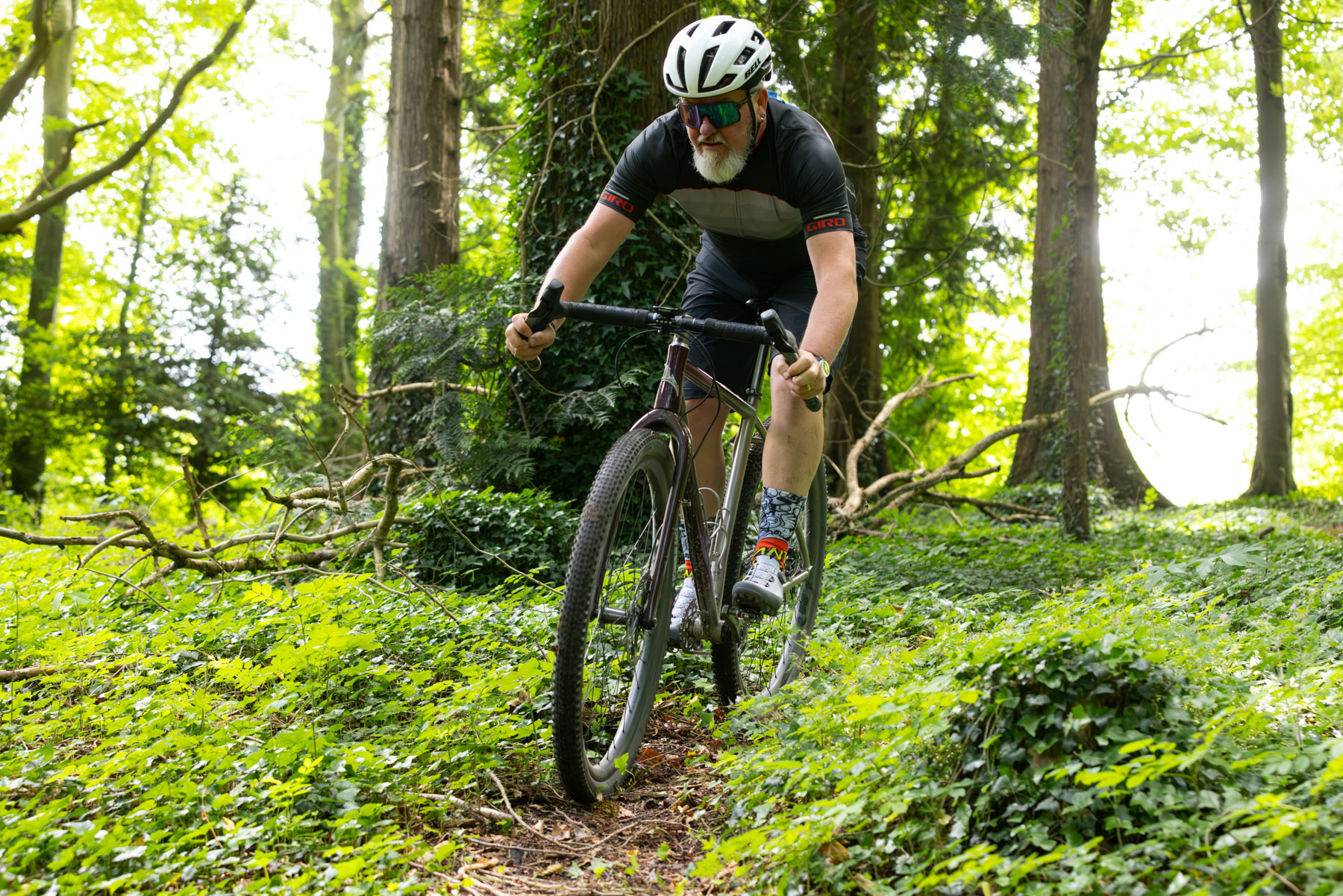
The Pterodactyl, however, was quite simply epic on every surface I threw at it – from rough unmetalled roads through to double and singletrack. I also spent lots of time on technical woodland trails and it felt masterful everywhere.
The big wheels gain momentum quickly and hold onto speed impressively with it, compared to 700c wheels.
When you get into particularly choppy, roughened and rocky surfaces that usually batter you and ebb away at your speed, the wheels help the bike flow well.
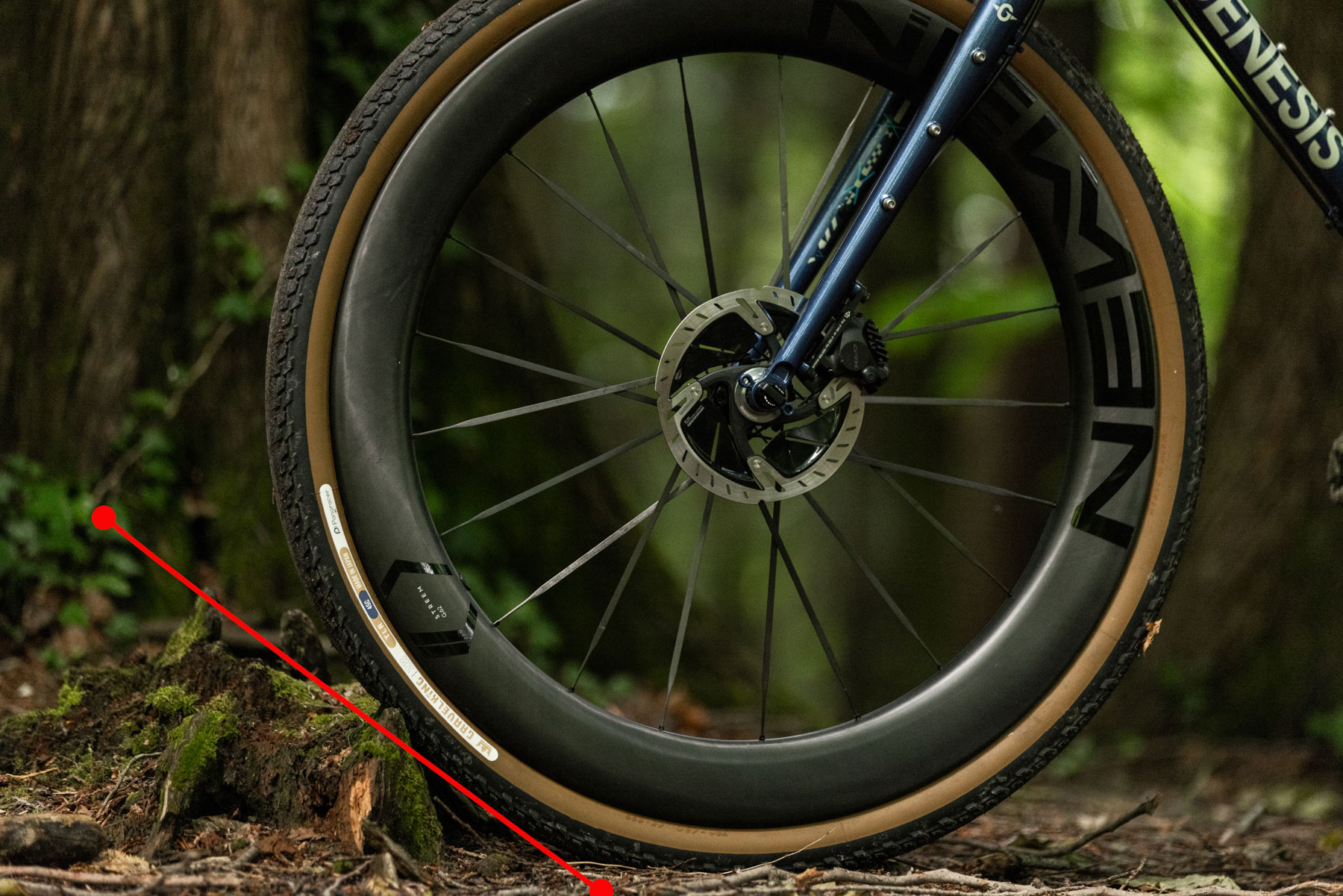
It’s all down to the angle of impact – on a smaller wheel, with a smaller tyre, roots and rocks provide a steeper (harder) impact angle. This effectively knocks pace out of your progress, but with a bigger wheel and tyre, the angle is much shallower, so the wheels roll over uneven surfaces much more smoothly.
When it comes to potholes and divots, the larger circumference bridges hollows, rather than dropping into them.
Essentially, you keep more of your speed for longer – it’s a momentum machine.
I expected the trade-off of big wheels would be lazy handling and a bit of wheel flop at lower speeds, but the Pterodactyl handles as well as my own 700c gravel bikes.
Dynamically, the rider position of being central on the bike, and the sweeping bend of the seat tube helps keep the wheelbase tight and the back end feeling nimble. At the same time, pedalling is efficient.
Combine that with geometry that makes the Pterodactyl steer as quickly as bikes I’m used to, and I can’t really sense any down side of the larger wheel size.
You still get the sense that the bike's taller, and that can take a little getting used to especially when leaning into a corner – you feel as if it’ll tip and flop into a corner or berm because it's further to lean.
However, once I was accustomed, I could lean into corners and revel in the heaps of grip from the tyres' elongated contact patch (relative to 700c rubber, of course).
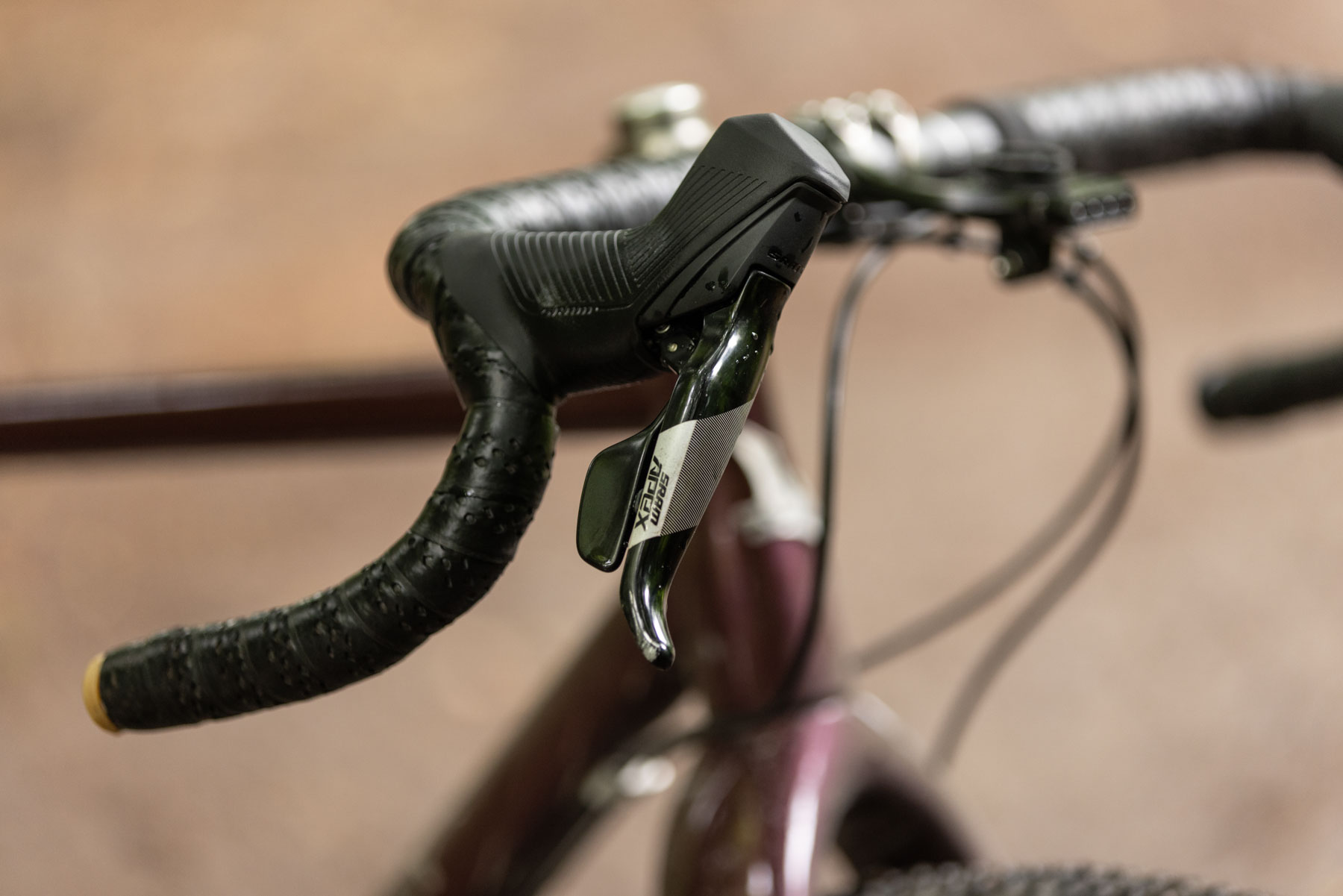
The bigger wheels make sense on climbs, too, despite naturally being a little heavier. On technical climbs, the big circumference means you can concentrate on pedalling rather than avoiding obstacles.
The bike has a modest build and weighs in at 11.5kg, which when you consider it has a titanium frame, alloy bars, big wheels and 2.4in tyres is impressive.
My own 700c-wheel Lab71 Cannodale Topstone weighs in at 9.7kg with a RockShox Rudy XPLR Ultimate fork. The Kinesis Tripster AT+ weighs in at 10.22kg in a similar-level build.
I was quite taken by how light and lively the Pterodactyl felt – it responds to pedalling inputs rapidly and the steering is nimble and reactive, even with the flip chip set at the longer setting.
I’m a big fan of suspension for gravel. My own bike has a soft-tail frame design and a suspension fork. The Pterodactyl, however, offers the same levels of smoothness and comfort as the complex suspension on my bike, thanks mainly to the sheer volume of the tyres and the way in which the wheels roll over rough stuff.
Singular Pterodactyl bottom line
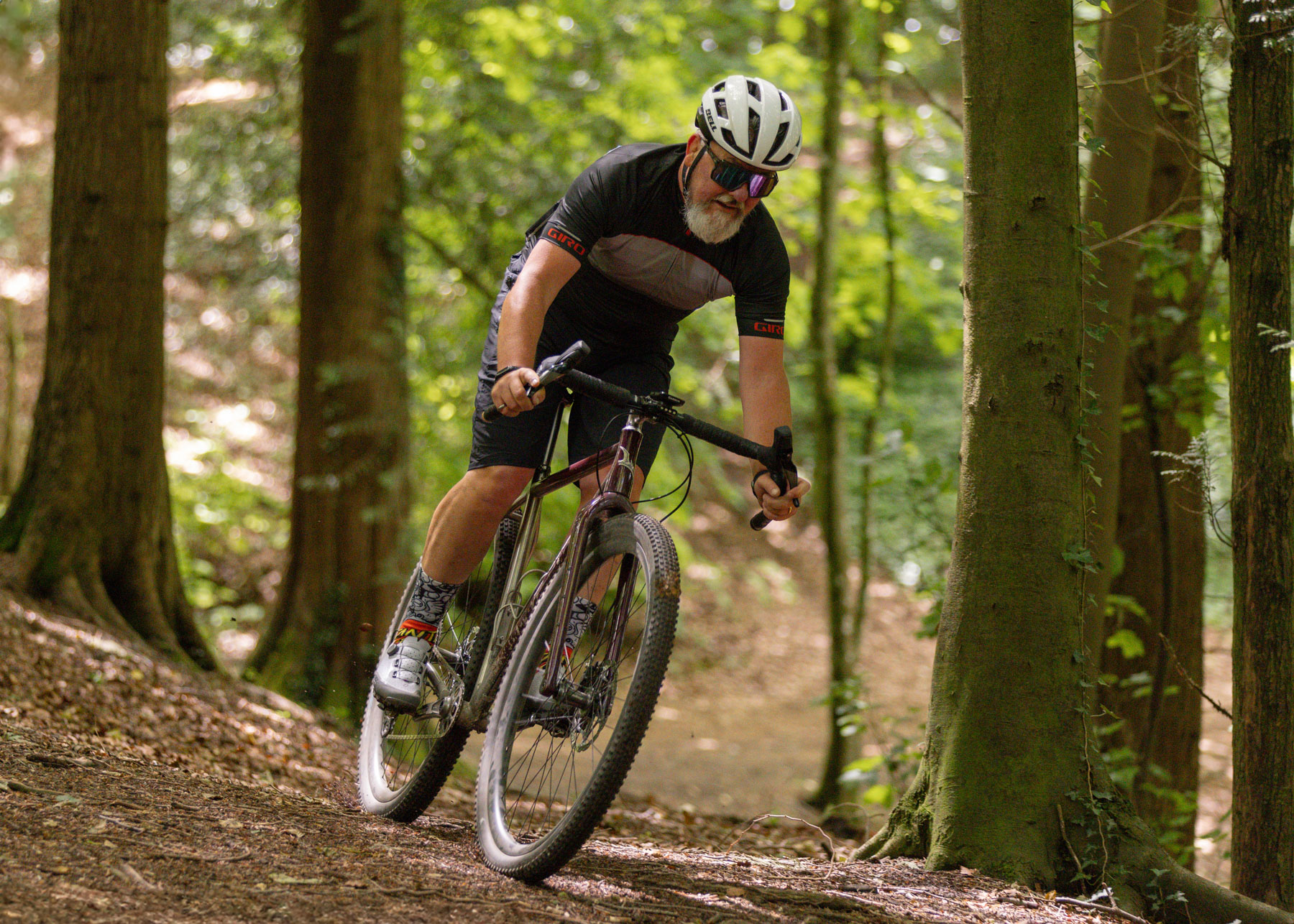
I’ll admit to being something of a sceptic when it came to 32in wheels, but this brilliant showcase has banished those thoughts completely.
I was worried how the geometry would play out, but it’s spot-on and doesn’t feel compromised by the wheel size. The large wheels feel wonderfully fast, and the momentum gains and extra grip more than make up for any weight penalty.
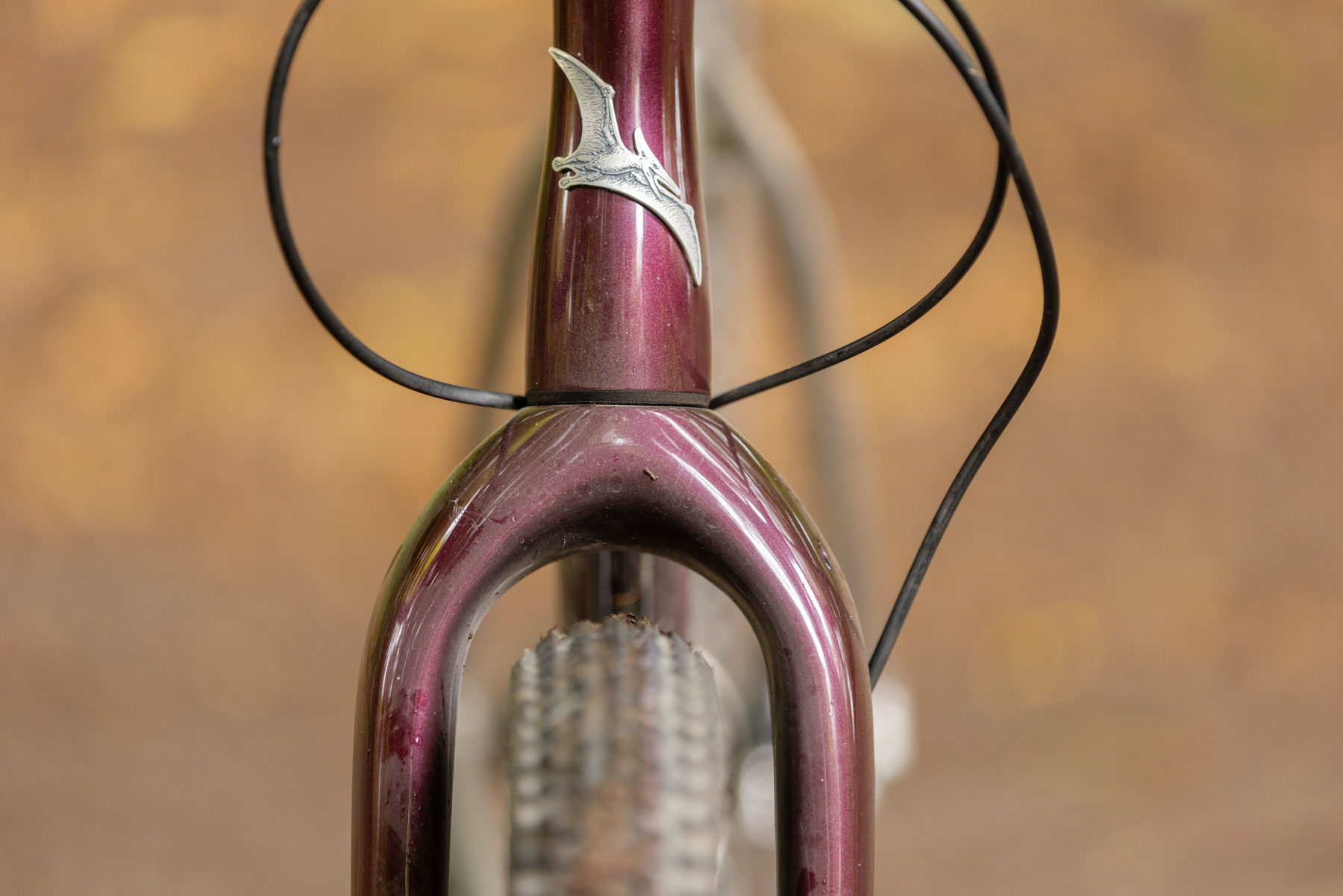
The Pterodactyl's frame finish is beautiful, too, and the external brake and cable routing appeals to the home mechanic in me – even if I doubt we’ll see much of that from the bigger brands and their future carbon bikes.
But Singular has got the Pterodactyl on the market quickly, and in such a polished state, beating those big bike brands – for that it deserves credit.
Questions remain about the fairness of a wheel size that may only ever be available to taller riders, and this may affect uptake in years to come if the pros aren’t able to use them. But for now, I’m fortunate to be one of those who can.
Product
| Brand | Singular |
| Price | £7600.00 |
| br_whatWeTested | Singular Pterodactyl |
| Weight | 11.50kg |
Features
| Fork | Columbus Futura adventure fork |
| Stem | Singular Ti forged 80mm |
| Chain | Sram flat top |
| Tyres | Schwalbe Rick 32 x 2.4" prototype |
| Brakes | Sram Level 4 piston |
| Cranks | Hope Evo, Hope 30t chainring |
| Saddle | Brooks Cambium Carbon |
| Wheels | Nextie Carbon 32" / Hope Pro 5 hubs |
| Headset | Chris King |
| Shifter | SRAM Apex Mechanical 12s |
| Cassette | SRAM XPLR 10-44 |
| Seatpost | Singular Titanium Seatpost |
| Grips/tape | Odi Classic |
| Handlebar | Spank Flare 30 |
| Bottom bracket | Hope |
| Available sizes | L/XL/XXL |
| Rear derailleur | SRAM Eagle 90 T-Type |