SQUIRREL_14028539
The Merida Lithos 8000 is a full-power enduro eMTB for riders who want race-level descending performance without sacrificing all-day versatility.
Its carbon-fibre frame delivers 174mm of rear-wheel travel, with mixed wheels as standard (29in front, 27.5in rear) and the option to fit a 29in rear wheel.
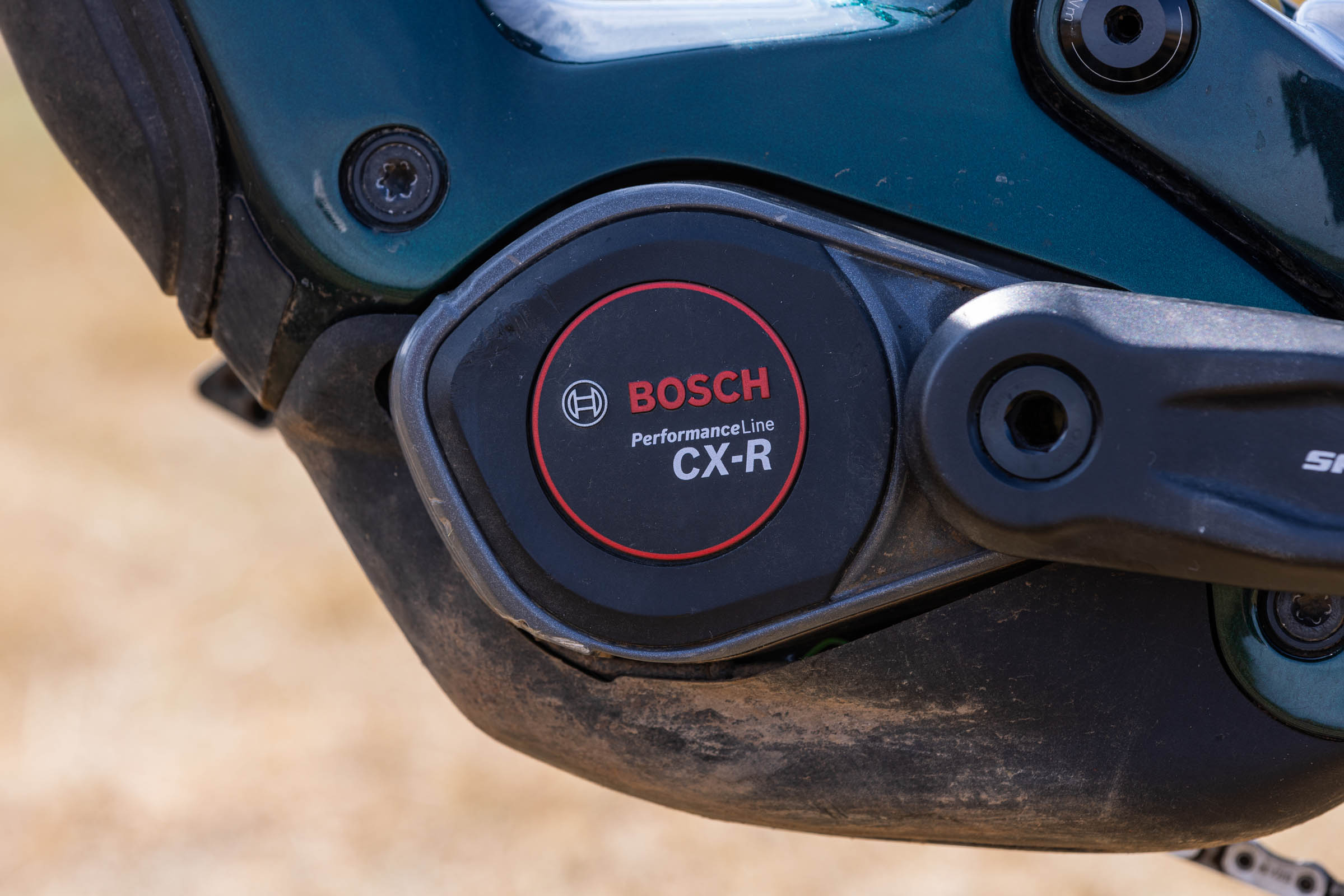
Bosch’s Performance Line CX-R motor is paired with a removable 800Wh battery, while RockShox Ultimate suspension and a wireless SRAM drivetrain complete the build.
What separates the Lithos from the other bikes I rode as part of our 2026 Mountain Bike of the Year test is how little compromise you feel on the trail.
It’s exceptionally calm over rough ground, yet remains intuitive and quick to change lines on. At 24.5kg, it isn’t light, but it disguises its bulk better than almost any other bike here.
I tested the Atherton S.170E.2 as part of our annual Bike of the Year test, which focused on the latest and greatest hard-hitting electric mountain bikes for 2026. From a shortlist of six, three bikes were selected for the final head-to-head showdown: the Atherton S.170E.2, Merida Lithos 8000 and Yeti LTe T4.
The Merida pushed the Atherton close in performance terms, with a more forgiving ride, but the Atherton combines the best motor control, the highest descending ceiling and the most convincing price.
Three key things you need to know
- The Merida feels balanced and confidence-inspiring from the first descent
- Suspension combines excellent grip and small bump sensitivity with enough support for aggressive riding
- It has impressive stability yet doesn't demand constant effort from the rider to move the bike around
The full Bike of the Year 2026 shortlist
- Amflow PX Carbon Pro – £8,999 / $10,199 / €9,999
- Atherton S.170E.2 – £7,999 / $N/A / €7,599.05 (before applicable local taxes)
- Marin Alpine Trail EXR – £6,899 / $8,999 / €7,999
- Merida Lithos 8000 – £8,500 / €8,899
- Specialized Levo 4 Evo Pro – £9,699 / $10,499 / €10,999
- Yeti LTe T4 – £12,999 / $14,900 / €14,500
Balanced uphill, nervous at a standstill
The Mid size’s steep 78.5-degree effective seat tube angle, generous 646mm stack height and relatively long 447mm rear centre (effective chainstay length) create a well-balanced climbing stance.
Your weight sits naturally between the wheels, keeping the front tyre loaded without forcing an exaggerated chest-forward position as the gradient rises.
The tall cockpit remains comfortable on long fire-road climbs, while the front wheel tracks surprisingly accurately in steeper and more technical sections given its propped-up feel.
That chainstay length helps prevent weight shifts backwards under power, but doesn’t make it impossibly difficult to lift the bike over roots and ledges.
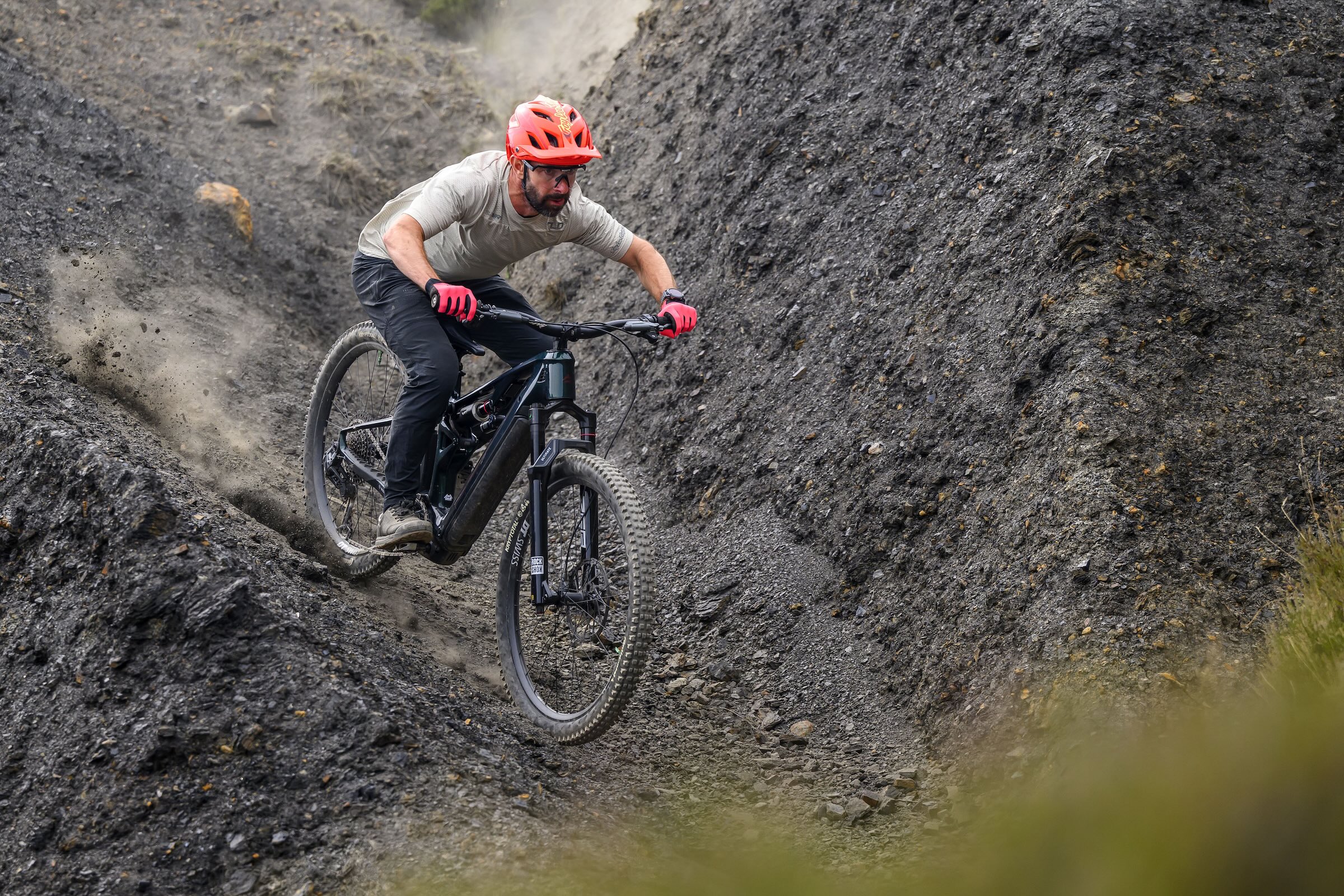
Rear-wheel traction is excellent. The suspension follows broken ground rather than hanging up, but still provides a defined platform to pedal against. It doesn’t collapse into its travel or wallow every time your legs put effort into the pedals, helping the Lithos maintain momentum without wasting energy through excessive movement.
Bosch’s CX-R motor, with its 750W and 120Nm peak stats, suits the Merida’s calm climbing character once momentum is established. The eMTB+ mode gives access to the full output while varying its response more usefully than Race mode on natural terrain.
The drive unit’s weakness becomes apparent before the climb has begun. In the stronger modes, a small amount of pedal pressure can release more assistance than expected, so balancing on a slope or positioning the cranks for a restart requires care.
That jerky and abrupt initial movement contrasts with Avinox-equipped bikes, where assistance more closely mirrors the pressure applied. Once rolling, however, the Bosch motor settles into a rhythm and the problem is reduced, but there certainly are more surges from the motor compared to the Avinox system.
The 800Wh battery returned 26.6km and 1,650m of climbing and descending in my full-power range test (with the caveat that this will have been affected by rider weight, tyre choice, etc). It can also be removed, exchanged for Bosch’s lighter 600Wh battery or supplemented with a Bosch PowerMore range extender.
Confidence without a learning curve
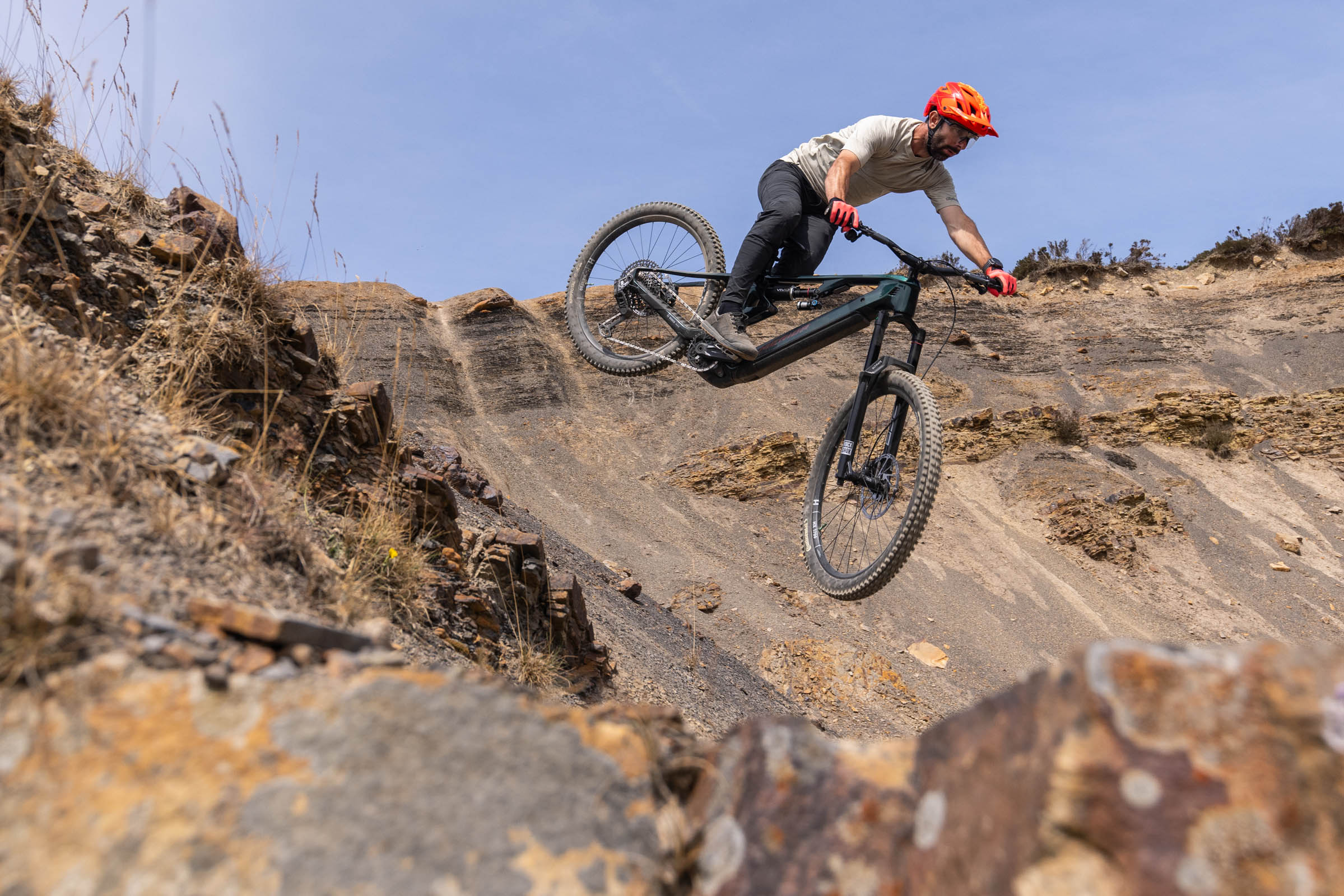
The Merida feels natural from the first downhill. There’s no awkward settling-in period or need to recalibrate your riding around unusual steering or suspension behaviour.
Its riding position places you centrally between the wheels, making it easy to relax and start pushing. It doesn’t demand exaggerated body movements or punish you for taking a few corners to understand it.
As speed rises, the chassis stays calm without feeling dull. Repeated roots, rocks and braking bumps rarely knock it from the chosen line, and it remains composed when the terrain turns steep, fast or unpredictable.
Hard braking doesn’t cause excessive pitching or skipping. The suspension remains active enough to preserve grip, giving you the confidence to slow down later and release the levers sooner.
That behaviour is particularly useful through rough chutes and braking-bump-filled turns. Instead of stiffening or being forced away from the chosen line, the bike keeps tracking the ground and leaves you free to concentrate on what comes next.
Still, the Lithos isn’t the most energetic-feeling bike when pumping smooth compressions. Its suspension is better at muting the terrain and maintaining momentum over rough ground than firing the bike forwards from every undulation.
However, it never feels dead. There’s still enough support to push through berms, larger compressions and sections where the rider, rather than the motor, needs to generate speed.
Suspension that does everything
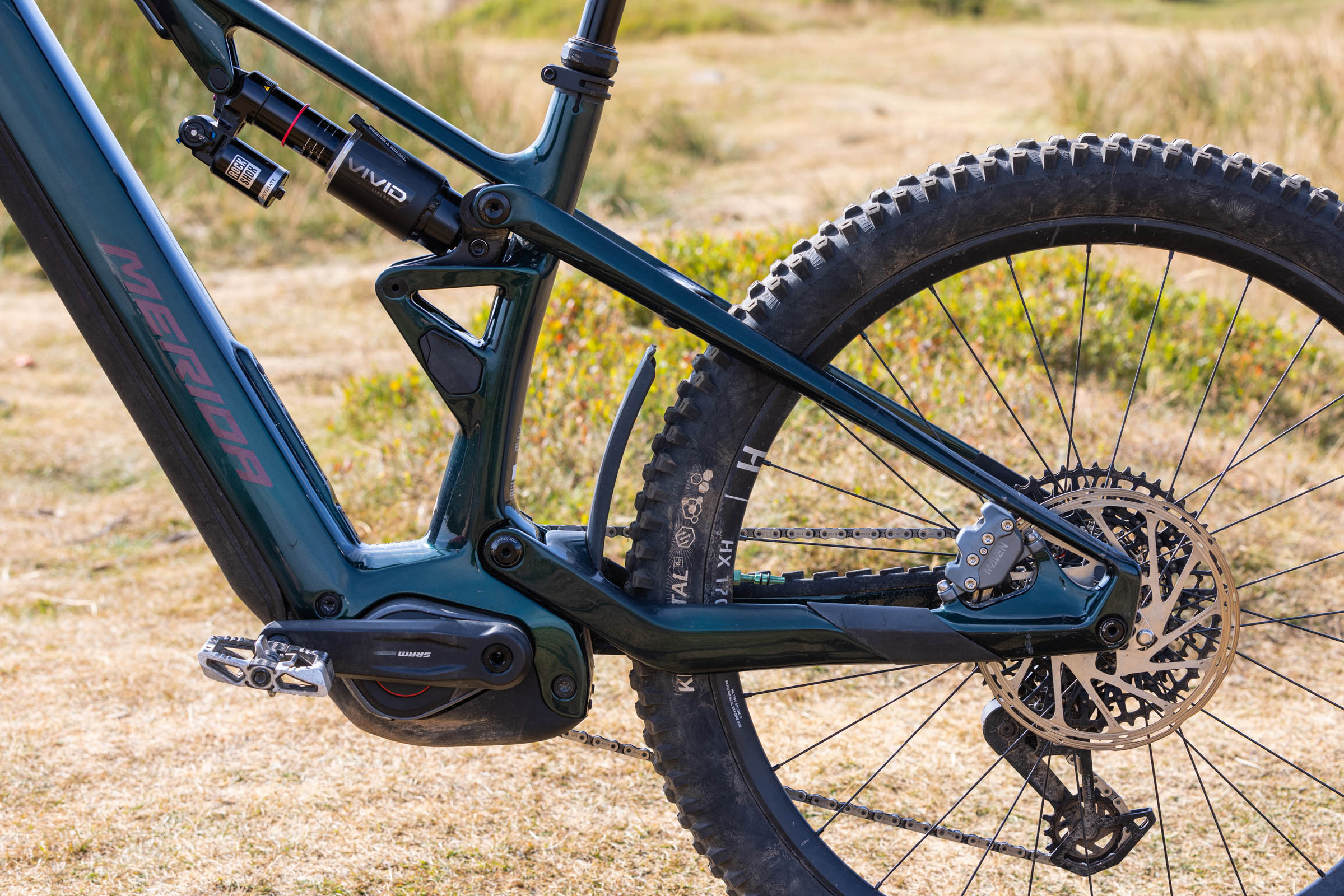
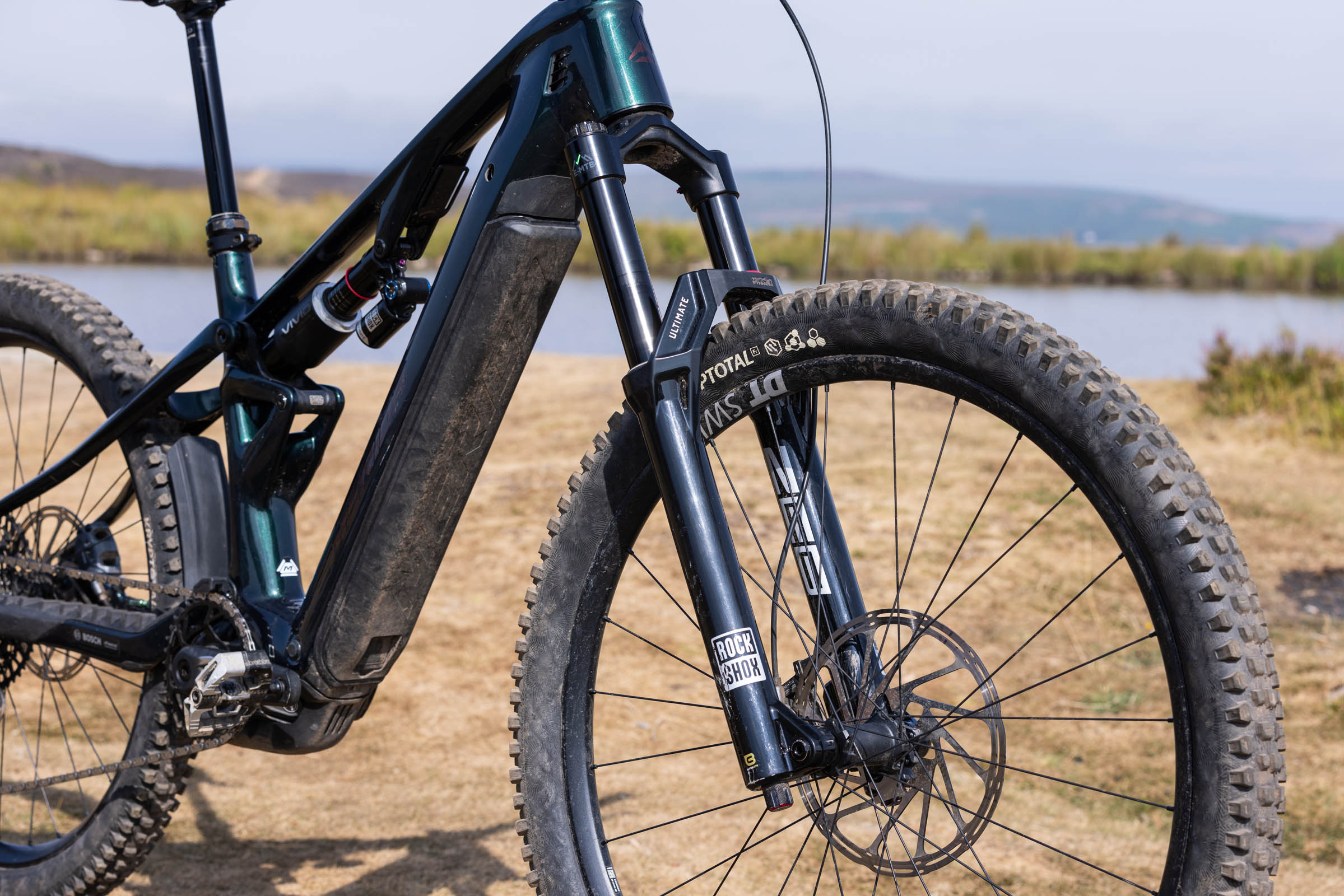
The RockShox ZEB Ultimate fork and Vivid Air Ultimate shock make a well-matched suspension package. Neither end dominates the ride, and each moves into its travel smoothly and predictably.
In its initial travel, the rear end absorbs fine chatter almost invisibly, keeping the enduro-spec Continental tyre settled across roots, loose stones and corrugated braking bumps.
That sensitivity creates grip, but the bike doesn’t sink excessively when loaded through a turn. It remains settled rather than vague, enabling you to judge how hard the tyres can be pushed.
Deeper in the stroke, the chassis retains enough height to carve accurately and resist pitching under braking, without losing the supple character that defines the bike.
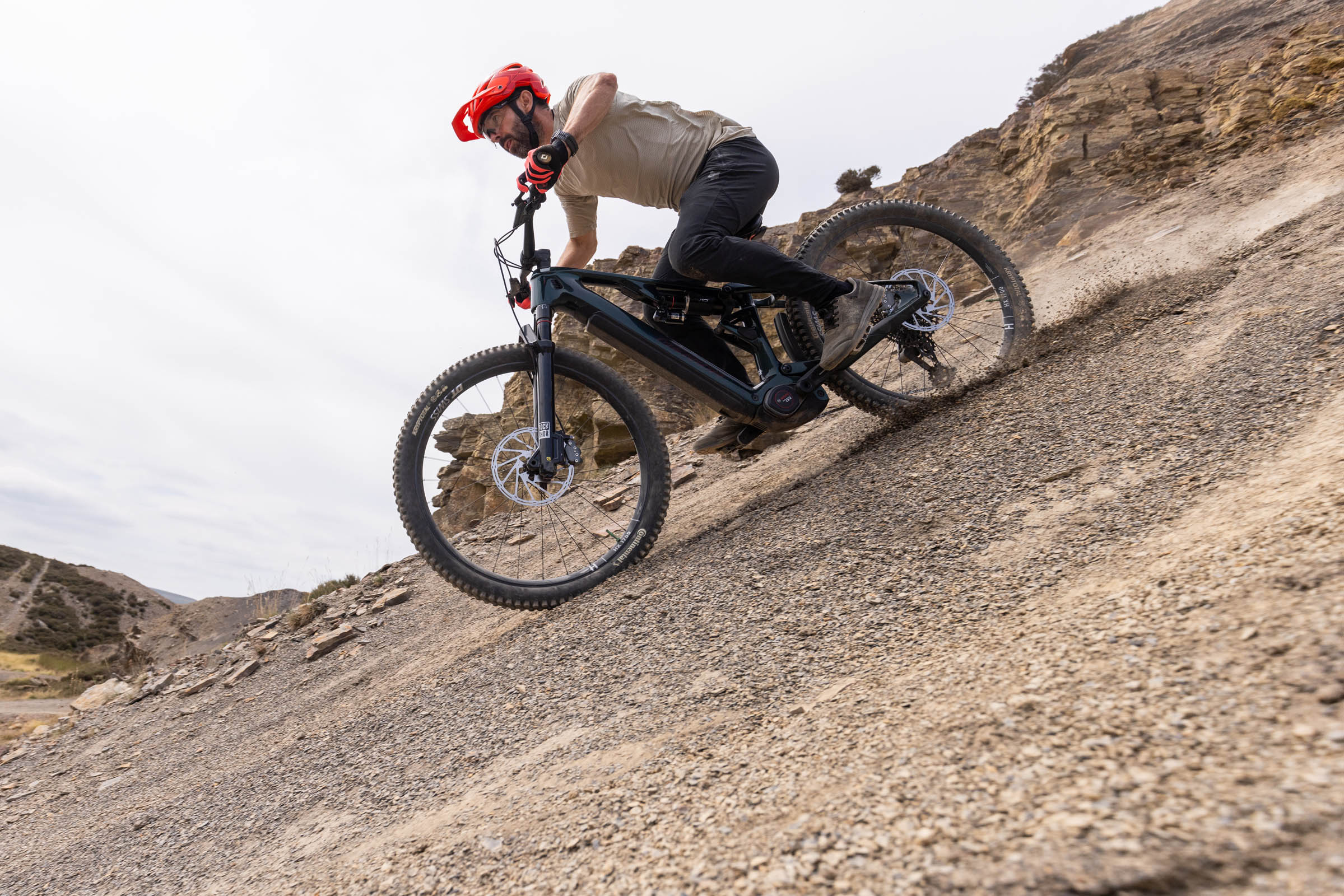
Heavy compressions use the available travel progressively and it then returns without a kick.
This balance helps the Merida remain easy to ride over repeated descents. It removes enough trail feedback to reduce fatigue, but leaves sufficient connection to judge grip and load the tyres accurately.
Heavy on the scales, light on the trail
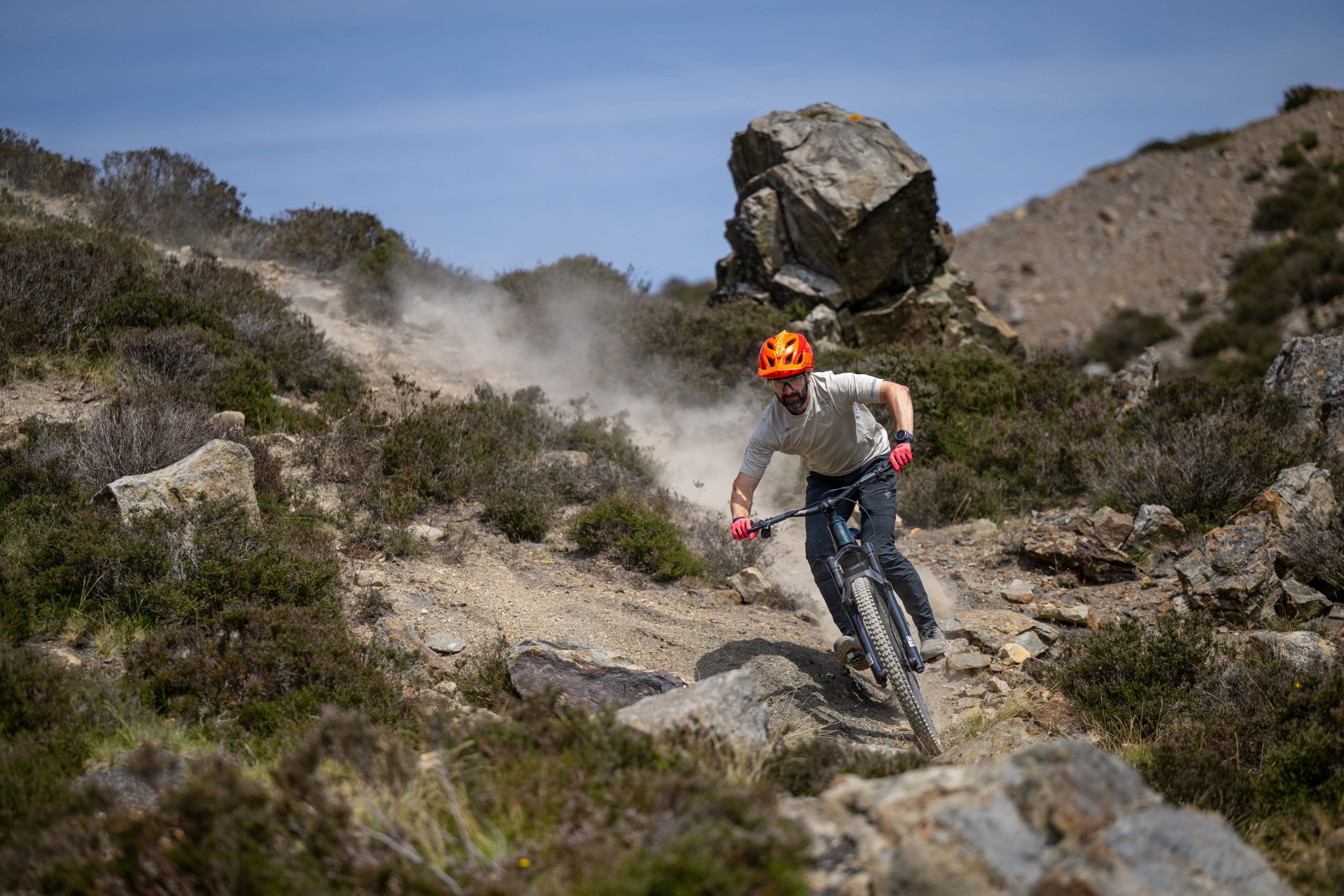
The Mid-sized Lithos weighs 24.5kg. On the trail, though, it feels significantly lighter.
It leans into turns naturally and holds a clean arc without needing to be manhandled. Line changes are precise, and there’s no obvious understeer when you arrive late or need to tighten a corner.
Merida has struck an excellent balance with the geometry, too. The tall front end creates security on steep ground, while the reach and wheelbase provide stability without stretching you uncomfortably between the axles.
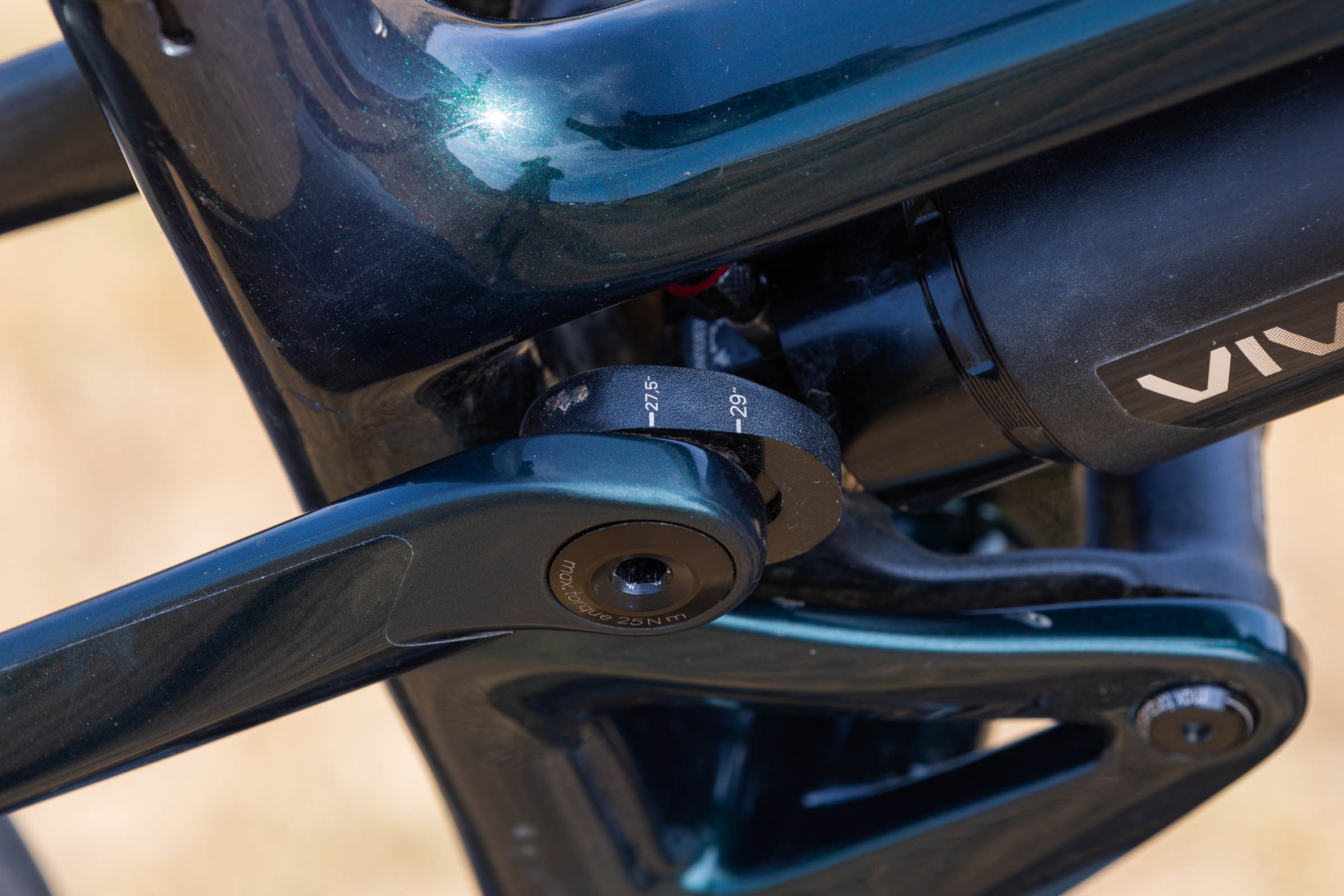
The mixed-wheel setup helps the rear follow you through tighter sections, rather than dictating the line. You can load the bike into a turn, release it and move towards the next one without feeling as though you’re waiting for the chassis to catch up.
This doesn’t result in a nervous or hyperactive ride, though. The Lithos combines composure with enough responsiveness to make technical singletrack enjoyable, rather than merely survivable.
It may not have the S.170E’s distinctive taut race-feel top speed, but it demands fewer compromises and works across a broader range of trails. The Atherton encourages you to attack, while the Merida simply makes riding quickly feel natural.
Almost no weak links
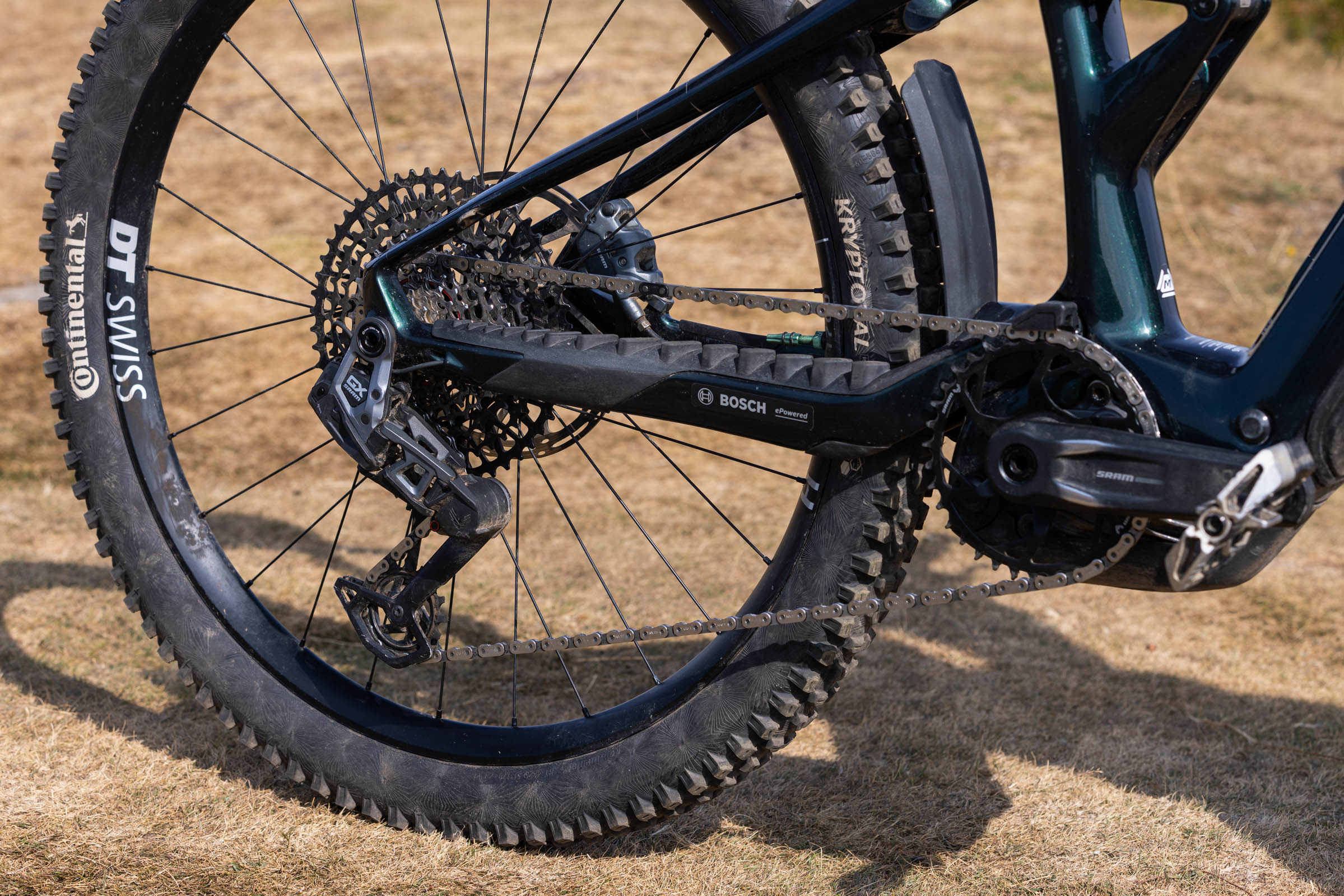
The specification suits the frame. Continental’s Kryptotal tyres deliver dependable grip and support, with a SuperSoft front compound and Soft rear. Harder or heavier riders may eventually want a tougher rear casing for extra support and puncture protection.
The DT Swiss HX 1700 wheels contribute to the bike’s accurate, planted feel without introducing unnecessary harshness, while SRAM’s GX Eagle AXS Transmission shifts cleanly under motor load and offers the range needed for severe gradients.
SRAM’s Maven Bronze brakes provide ample power, helped by a large front rotor, although the variable bite point experienced with other Maven brakes remains possible when the bleed isn’t perfect. It would be great to see SRAM's H2S rotors rather than the older CenterLine rotors that come fitted.
Merida’s own cockpit kit doesn’t feel excessively stiff or awkwardly shaped, while its Team TR II dropper can be adjusted across a huge travel range. The integrated mini-tool beneath the saddle and the removable battery add genuine everyday usefulness.
Useful adjustment, sensible build
The Lithos comes as a mixed-wheel bike, but can take a 29in rear wheel, enabling riders to prioritise either agility or smooth rolling.
It’s also compatible with a 600Wh Bosch battery (available separately), as well as the stock 800Wh one, making it possible to reduce weight for shorter rides.
At £8,500, it’s expensive without feeling needlessly extravagant. Budget is concentrated on the parts that create the bike’s composed, forgiving ride – its Ultimate-level suspension and dependable aluminium wheels.
While the Lithos 6000 offers the same carbon chassis and large battery for £2,000 less, the 8000’s Ultimate-level fork and shock aren’t decorative upgrades – their balance and control are central to why this build feels so complete.
How I tested | Bike of the Year 2026
I rode all six bikes back to back across the same mix of technical climbs, trail-centre loops, steep natural descents, rough braking-bump sections and larger bike-park features. To compare motor response, climbing traction, geometry, suspension support, braking control and handling as fairly as possible, I repeated key trails, adjusting setup between runs where required.
Each bike also completed the same maximum-assistance range test, while the three finalists were timed on the Forest of Dean’s FOD Thursday downhill and ridden by a second tester to cross-check my conclusions.
Also tested
- Merida Lithos 8000
- Specialized Levo 4 EVO Pro
- Marin Alpine Trail E XR
- Yeti LTe T4
- Amflow PX Carbon Pro
Merida Lithos 8000 bottom line
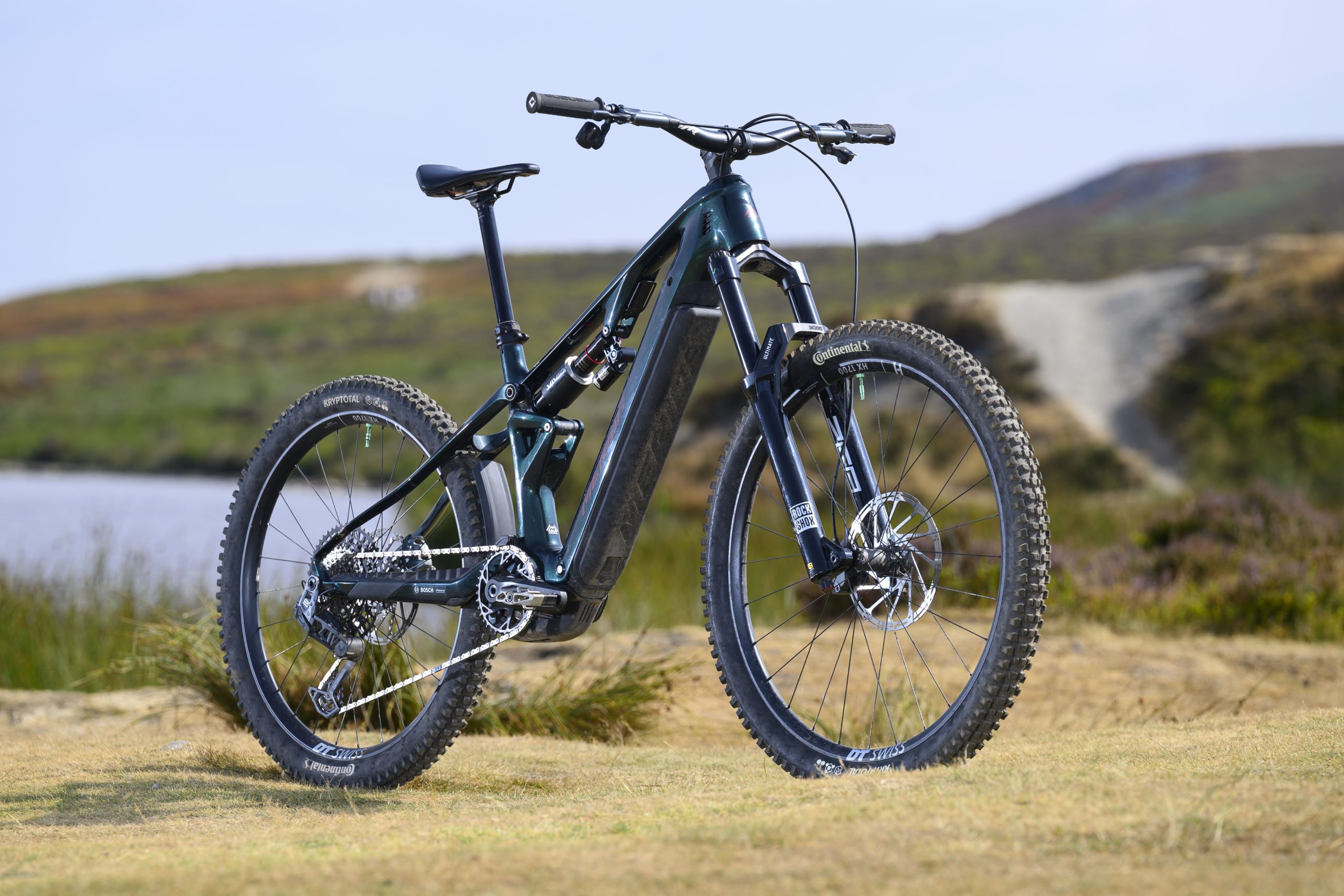
The Lithos 8000 succeeds through balance rather than one attention-grabbing feature. It climbs comfortably, turns without fuss and gives the rider an unusually generous margin for error when rough descents become messy.
Its 24.5kg weight is largely hidden by neutral handling and suspension that combines grip, support and deep reserves. The result is a bike that’s fast without being demanding and calm-feeling without becoming inert.
The Bosch motor’s nervous standstill engagement is its clearest weakness, and the Maven brakes need a good bleed to feel their best. Those issues don’t undermine the complete package, though.
The Lithos is easy to trust, difficult to unsettle and doesn't leave you feeling fatigued when you ride it hard. It doesn’t simply compete with the Atherton for the best descending performance, its broader versatility makes it a genuine contender for the overall win. It only narrowly misses out.
SQUIRREL_14028539
Product
| Brand | Merida |
| Price | €8899.00, £8500.00 |
| Weight | 24.50kg |
Features
| Fork | RockShox ZEB Ultimate eMTB |
| Stem | Merida Expert eTR II, 40mm |
| Chain | SRAM GX Eagle Transmission |
| Frame | Carbon fibre, 174mm rear-wheel travel |
| Motor | Bosch Performance Line CX-R |
| Tyres | Continental Kryptotal-F Enduro SuperSoft 29x2.4in front, Kryptotal-R Enduro Soft 27.5x2.4in rear |
| Brakes | SRAM Maven Bronze, 220mm front and 200mm rear rotors |
| Cranks | SRAM S1000 Eagle eMTB, 160mm, 36t |
| Saddle | Proxim Altius Steel |
| Wheels | DT Swiss HX 1700 aluminium, 29in front/27.5in rear |
| Cassette | SRAM XS-1275, 10-52t |
| Seatpost | Merida Team TR II |
| Grips/tape | Merida Expert TR |
| Handlebar | Merida Expert eTR, 780mm |
| Rear shock | RockShox Vivid Ultimate |
| Available sizes | XShort, Short, Mid, Long, XLong |