The Factor Monza represents a departure for Factor, which, until now, has focused practically all of its energies on the high end of the road bike market.
Instead of ultra-premium layups and builds, there’s a workmanlike recipe here, albeit it remains a far cry from being cheap. Down-tube storage is a smart feature, too, even on a racy bike such as this.
There’s truth to the argument that the Monza might be the least Factor-like bike the brand has produced, but that doesn’t mean it’s without charm.
Factor Monza – key details
- Factor’s ‘democratised’ race bike
- Features internal down-tube storage
- Weighs 7.97kg in a size 56 (without bottle cages)
- Fitted with SRAM Force AXS
- An enjoyable race bike to ride, but lacks the ‘wow factor’ many might expect from a Factor bike
Factor Monza ride impressions
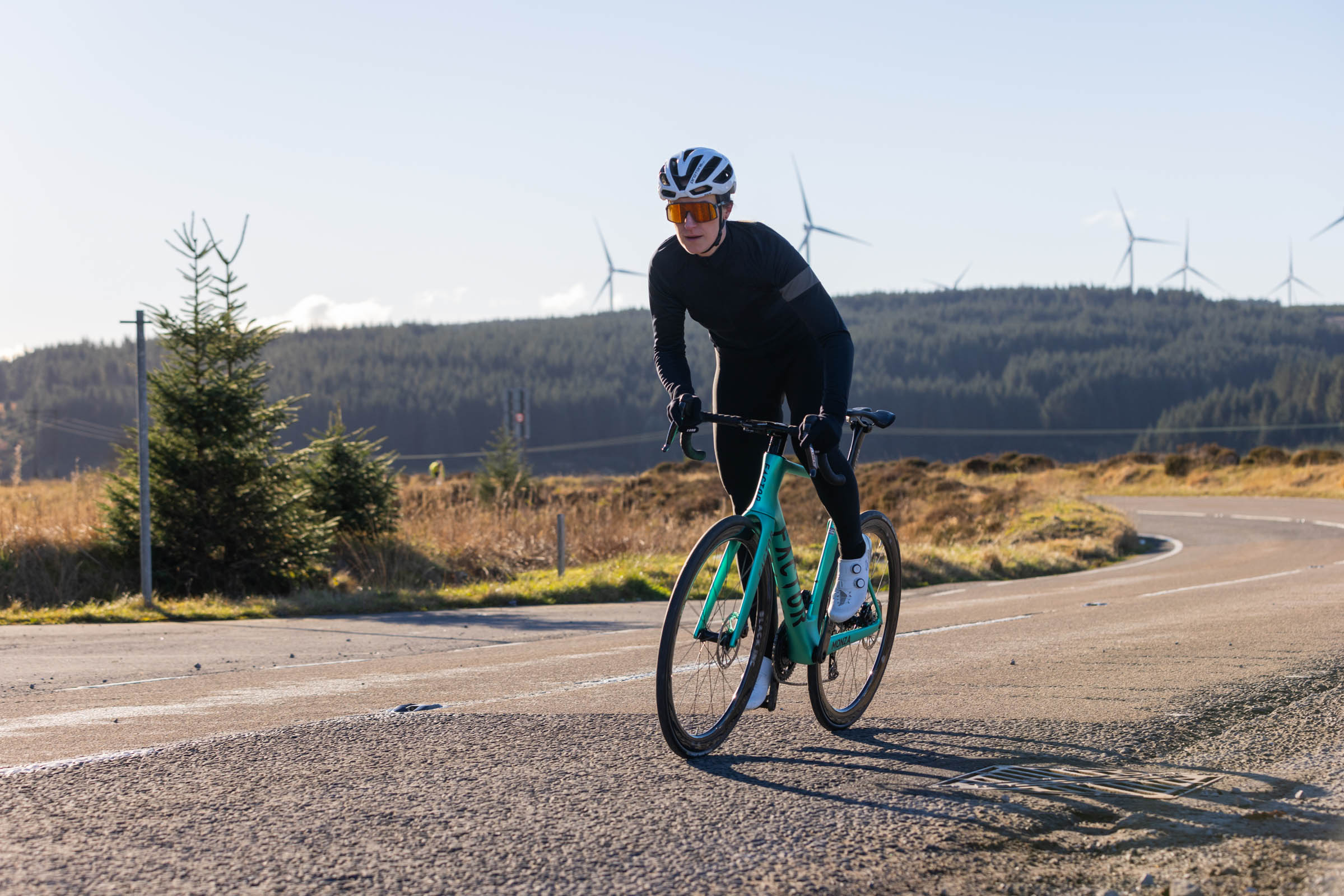
The Monza is Factor’s attempt at producing a ‘democratised’ race bike, one that doesn’t necessarily sit at the bleeding edge of race bike design like the One and Ostro VAM.
Accordingly, it’s a few thousand pounds cheaper than an Ostro VAM, albeit a Force AXS-equipped bike like the one tested here is still £6,999 / $7,199 / €8,299. That’s Specialized Tarmac SL8 Pro-rivalling money (with the same groupset, at £7,249), though, so our expectations should remain high.
The Monza is heavily influenced by the Ostro VAM, with similar (but not identical) aerodynamic profiling throughout, and is said to be only 2.5 watts shy of the Ostro’s performance in the wind tunnel, at 45kph.
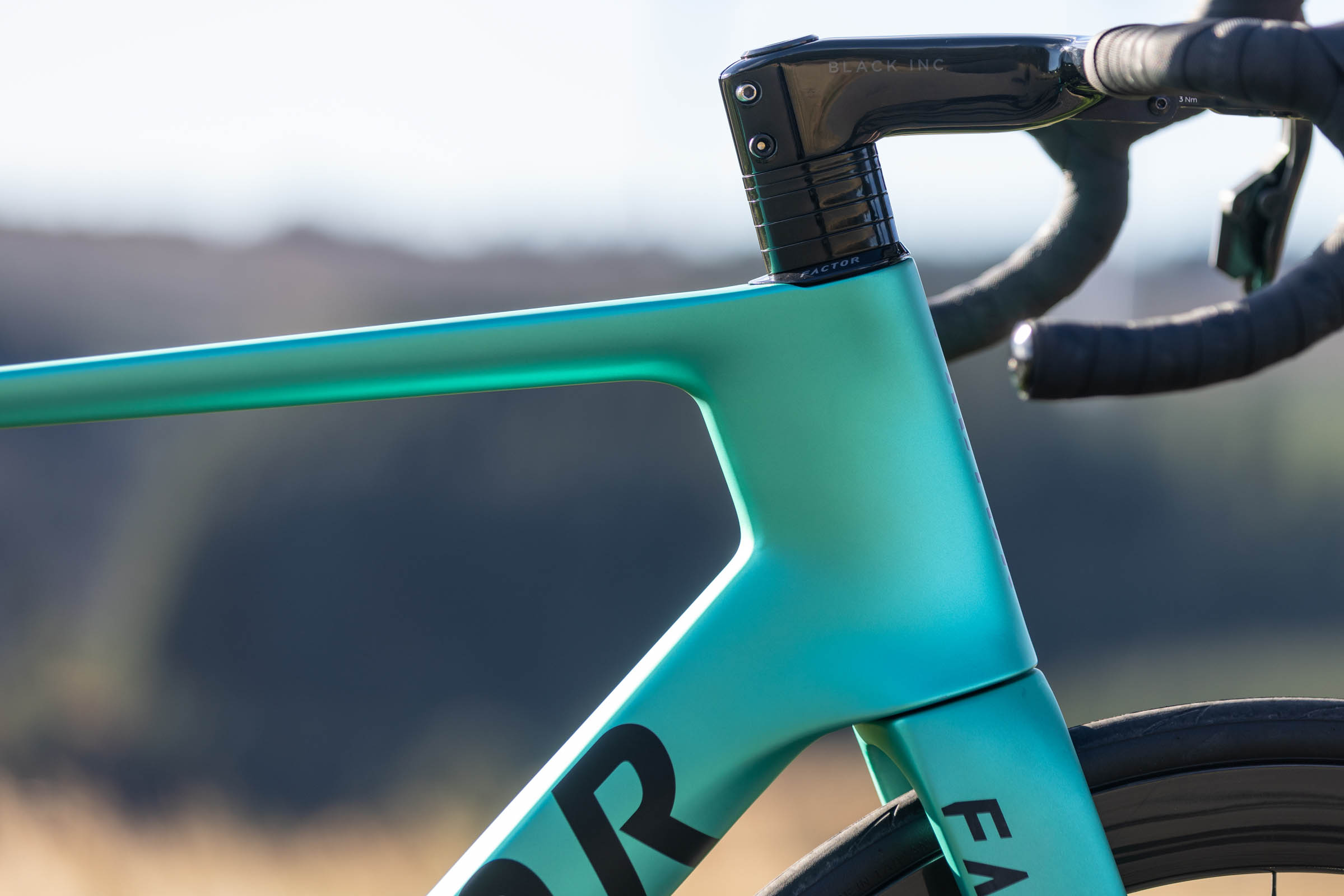
The head tube isn’t as conical, the cable-routing system has been simplified thanks to the use of a 1.5in upper headset bearing design ported over from the Ostro Gravel, and the choice of easier-to-work-with carbon is aimed at reducing waste from manufacturing errors.
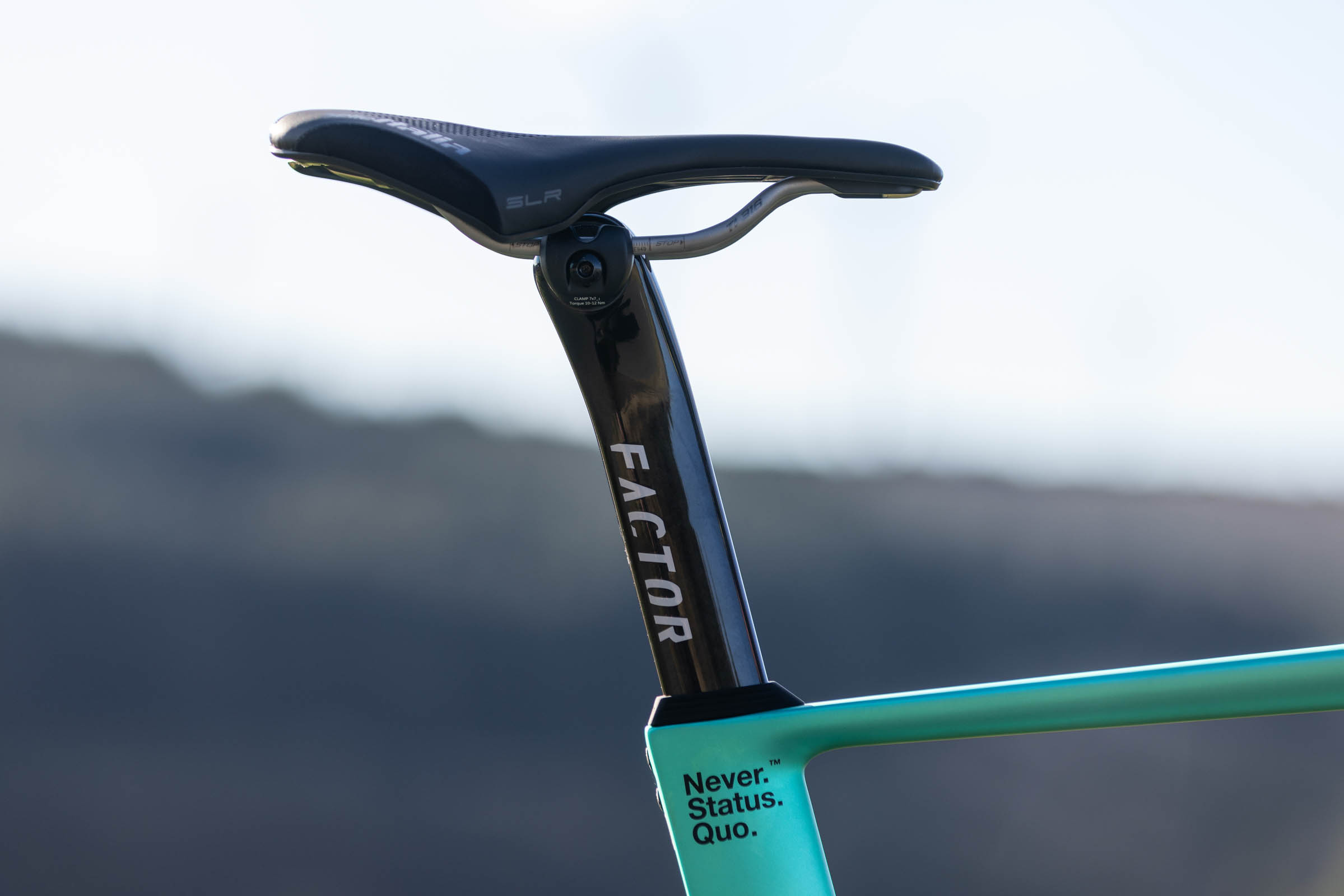
The Di2 battery fits into the seatpost (as opposed to a port in the down tube or bottom bracket), so there’s no need for complicated housing in the frame itself, which makes way for the Monza’s party piece – a down-tube storage port.
This opens and closes via a slide-latch, and holds a fabric zip bag inside for tools and essentials – around the same as a medium-sized saddle bag, except with extra length that's ideal for a mini pump.
This is said to save up to 6 watts at 45kph compared to running a full saddle bag, although such a design likely prohibits the kind of shrouded bottle-cage layout you’ll find on the Wilier Filante SLR ID2 or BMC Teammachine R, which are also claimed to improve aerodynamic performance.
Of course, if you wanted to carry extra spares, you could, and Factor also makes a dedicated saddle-rail bracket for neat integration of a rearview radar or light.
Weight isn’t all bad
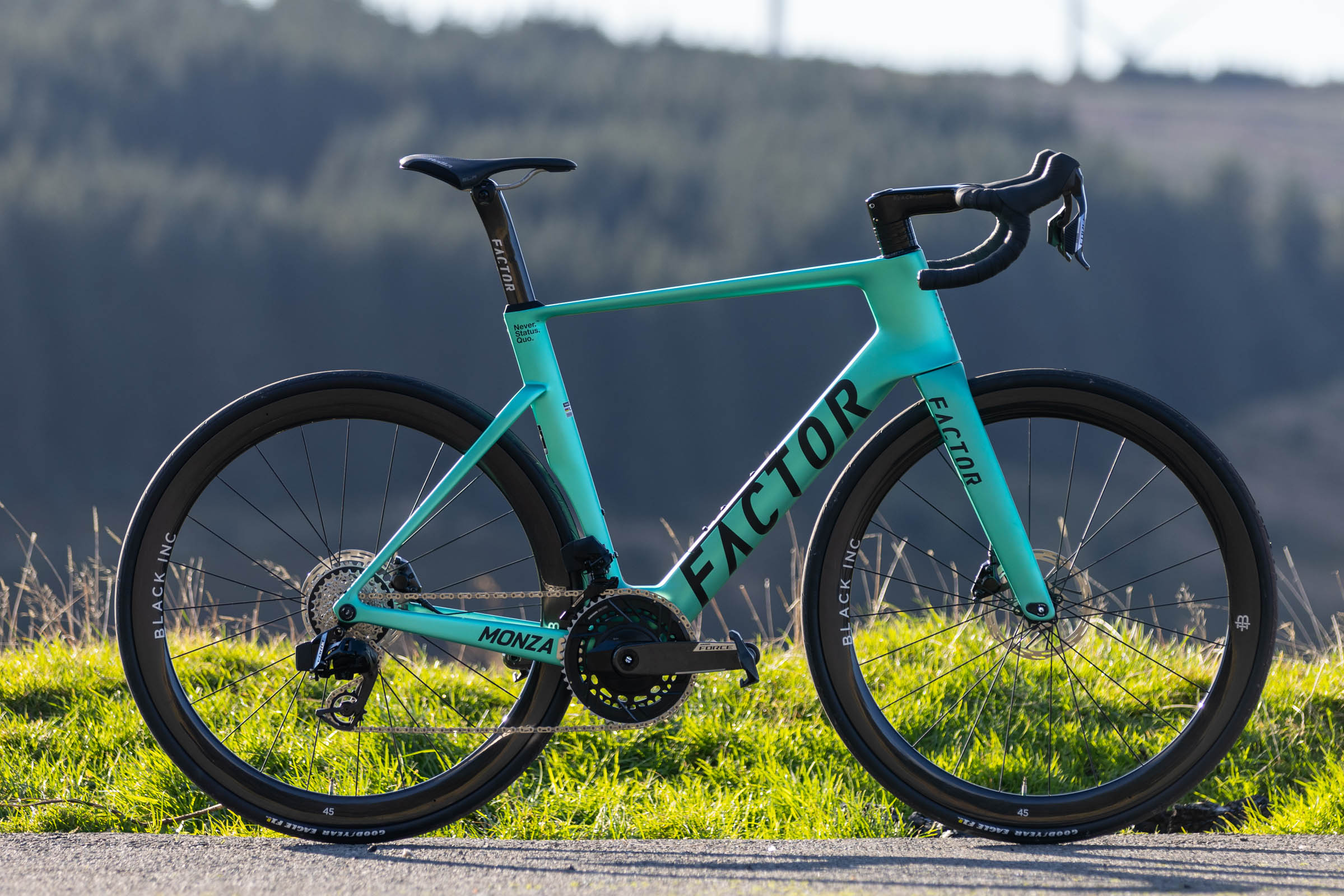
The bike’s on-paper frame weight will raise eyebrows at a claimed 1,100g in a size 56 (my full bike weighed 7.97kg), but it’s less surprising when you consider the Monza’s design. While the extra grams sap a little reactivity when riding out of the saddle (the bottom bracket is also said to be around 10% less stiff than the Ostro VAM), the bike has its merits.
It’s worth remembering that aerodynamic efficiency almost always trumps a weight saving of a few hundred grams or so, unless climbing steep hills is your bread and butter. It certainly feels efficient and fast, and Factor even says it holds a candle to bikes such as the Specialized Tarmac.
In order to reach similar stiffness levels as the Ostro VAM, which was evident from the moment I first rode it, the Monza’s tube walls are thicker. This and the greater use of a simpler, woven carbon material seems to have had the side-effect of improving the bike’s ability to reduce road buzz (slightly lower-modulus carbon can have this effect, and I’ve noticed it before in bikes such as the Canyon Ultimate and the Tarmac).
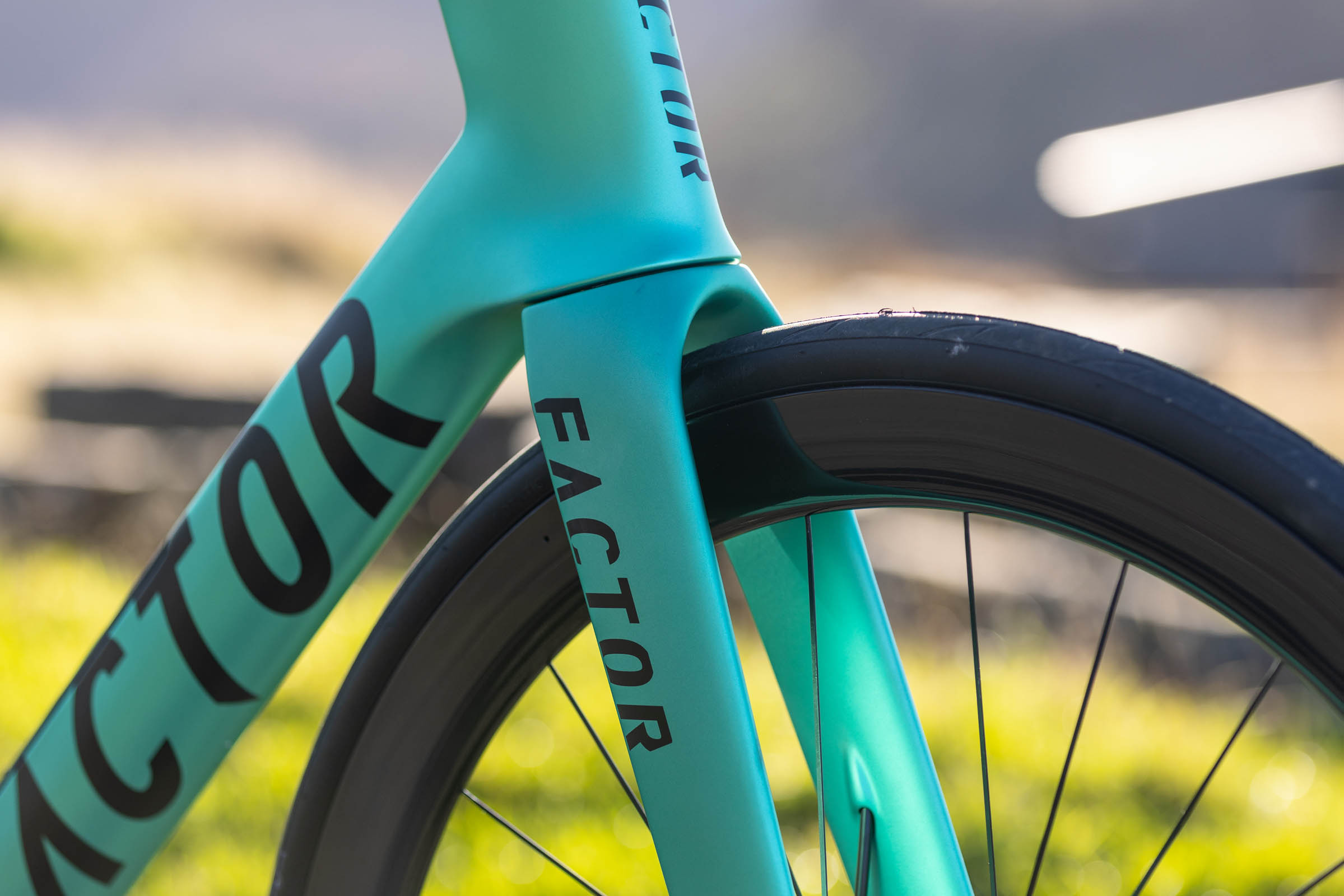
Although I tested the Monza with 28mm Goodyear Eagle F1 R tyres set up with tubes, and therefore higher pressures than I would run tubeless, the ride didn’t feel harsh. The Black Inc Forty Five wheelset contributed to this smooth ride experience, despite feeling plenty stiff enough.
An upgrade to 32mm tyres would also make more of the frame’s 34mm clearance without putting it under pressure, and offer even greater compliance when the pimples turn into potholes. If this is a bike intended to appeal to more riders, that’s a clear upgrade pathway.
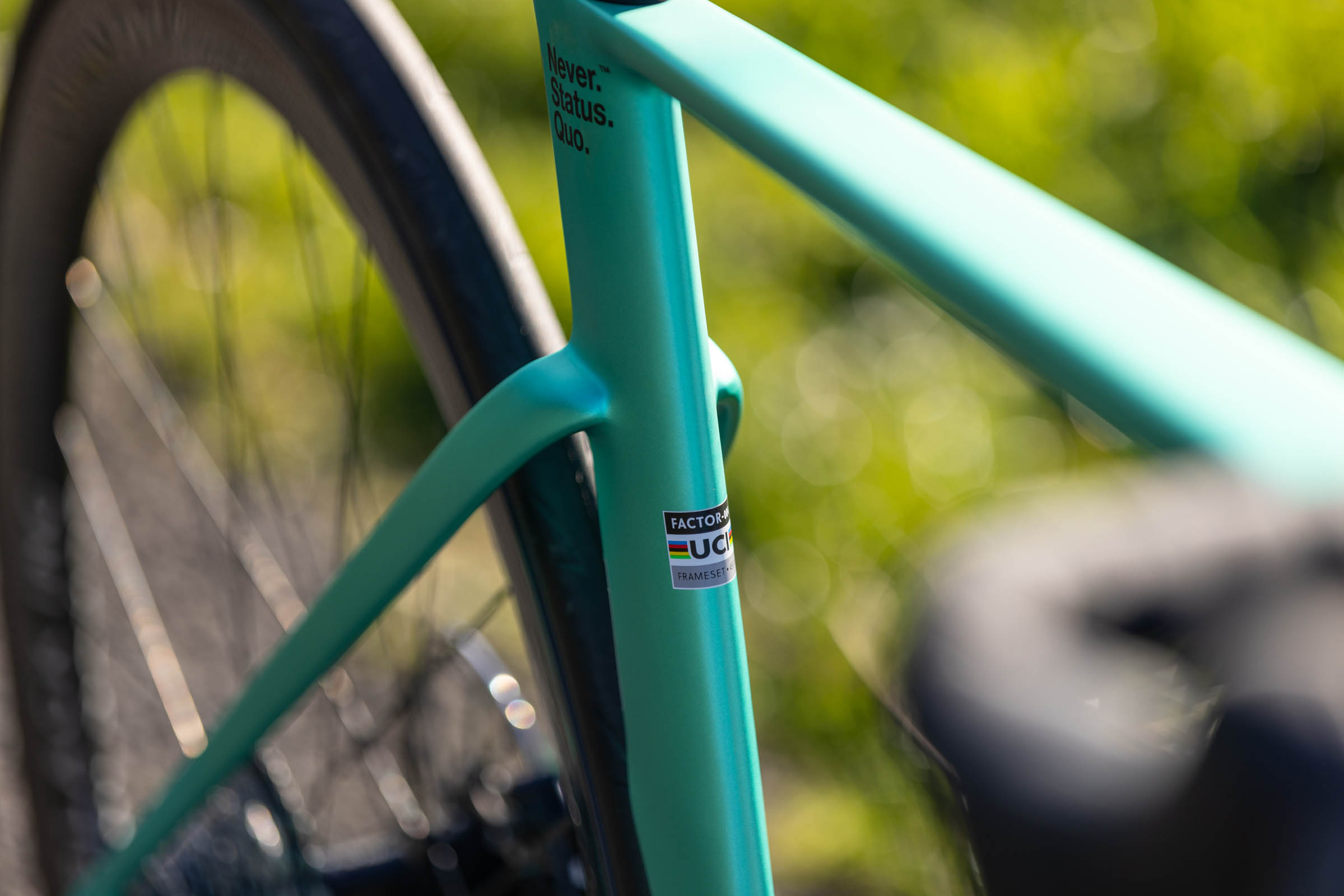
That relative ride ease is compounded by the fit geometry, which is less aggressive than you’ll find in a typical race bike. A stack of 574mm in the size 56 (and 597mm in a size 58) means it’ll suit more riders than your typical racer (albeit it’s not an endurance bike), or enable more people to run the Monza at their optimal stack height without having to resort to using a lot of spacers.
Those already accustomed to Factor’s ultra-premium bikes may find the ride a little jarring – but then the Monza is designed to appeal to those who previously would have been priced (or fitted) out of consideration.
The handling is razor-sharp – with a 73.3° head tube angle and almost equally steep seat tube angle, the handling is extremely involving, which, for most, will translate to great fun.
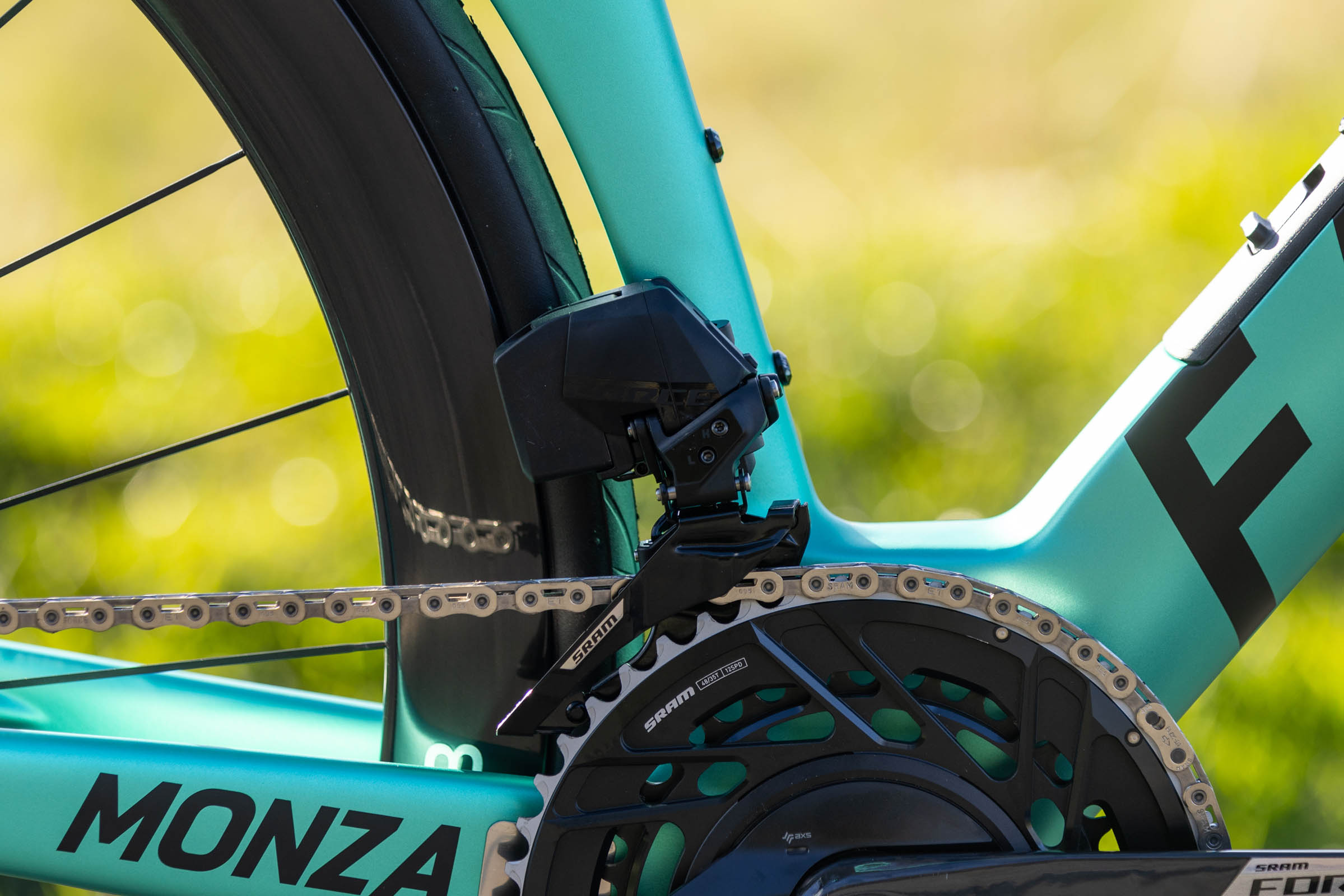
While £6,999 / $7,199 / €8,299 is still a premium price tag for a bike fitted with SRAM Force AXS, you get a dual-sided power meter for that money, somewhat addressing the balance. That said, a Canyon Ultimate CF SLX costs £1,000 less for a nominally identical build.
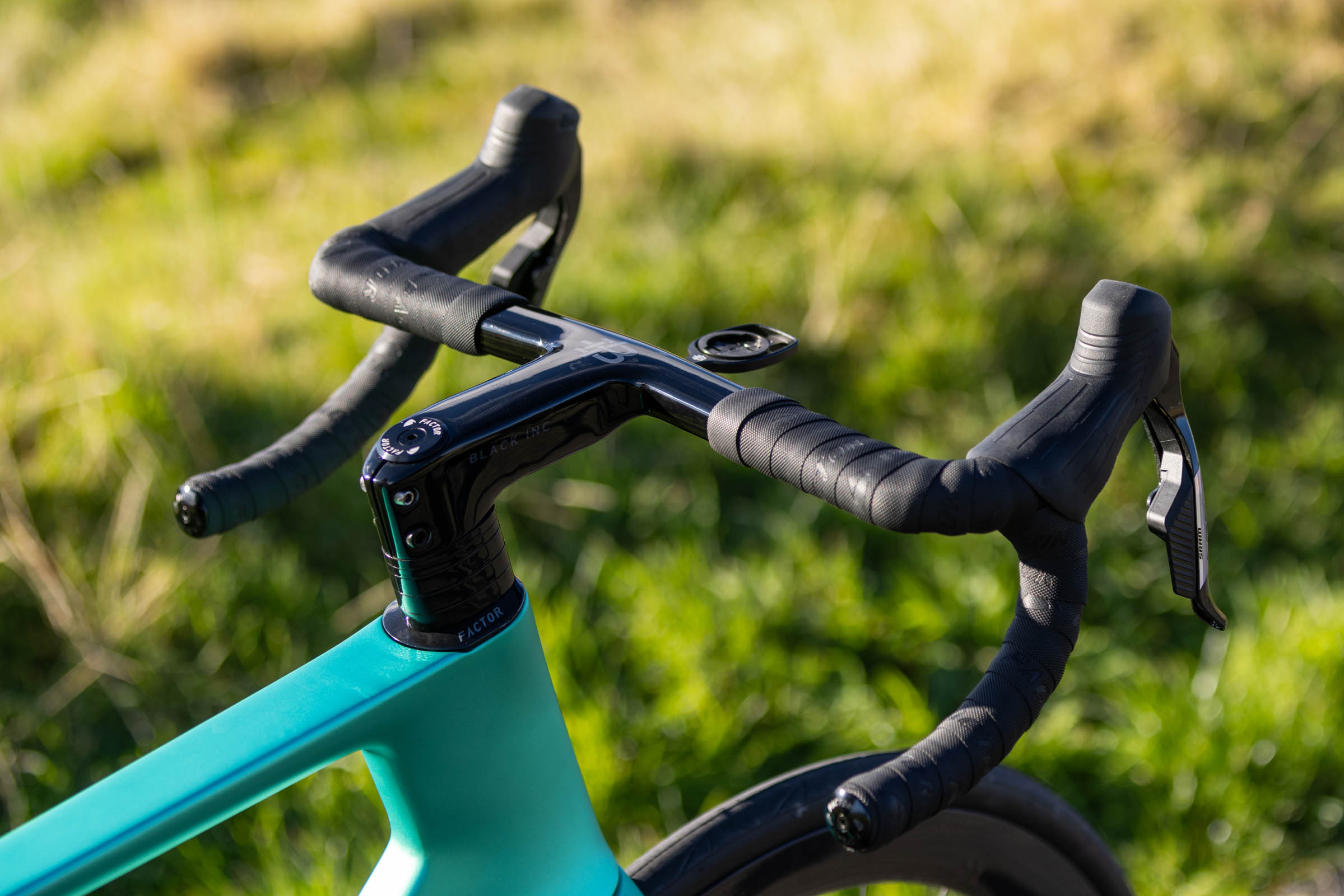
However, what you can’t do with a Tarmac or Ultimate is choose your cockpit size from 18 options, and the seatpost setback, plus the length of cranks at point of purchase (while Factor’s dealers may also help you source specific chainring and cassette sizes).
This means customers should be able to dial in their Monza to a greater extent than other bikes without having to make any additional budgetary considerations.
How I tested
I tested the Wilier Filante SLR ID2 and Factor Monza side by side, with both bikes relatively new arrivals for 2026.
They were tested on my local control routes, on rides of up to 100km. The conditions were largely stable, albeit cold and wintry at times.
Factor Monza bottom line
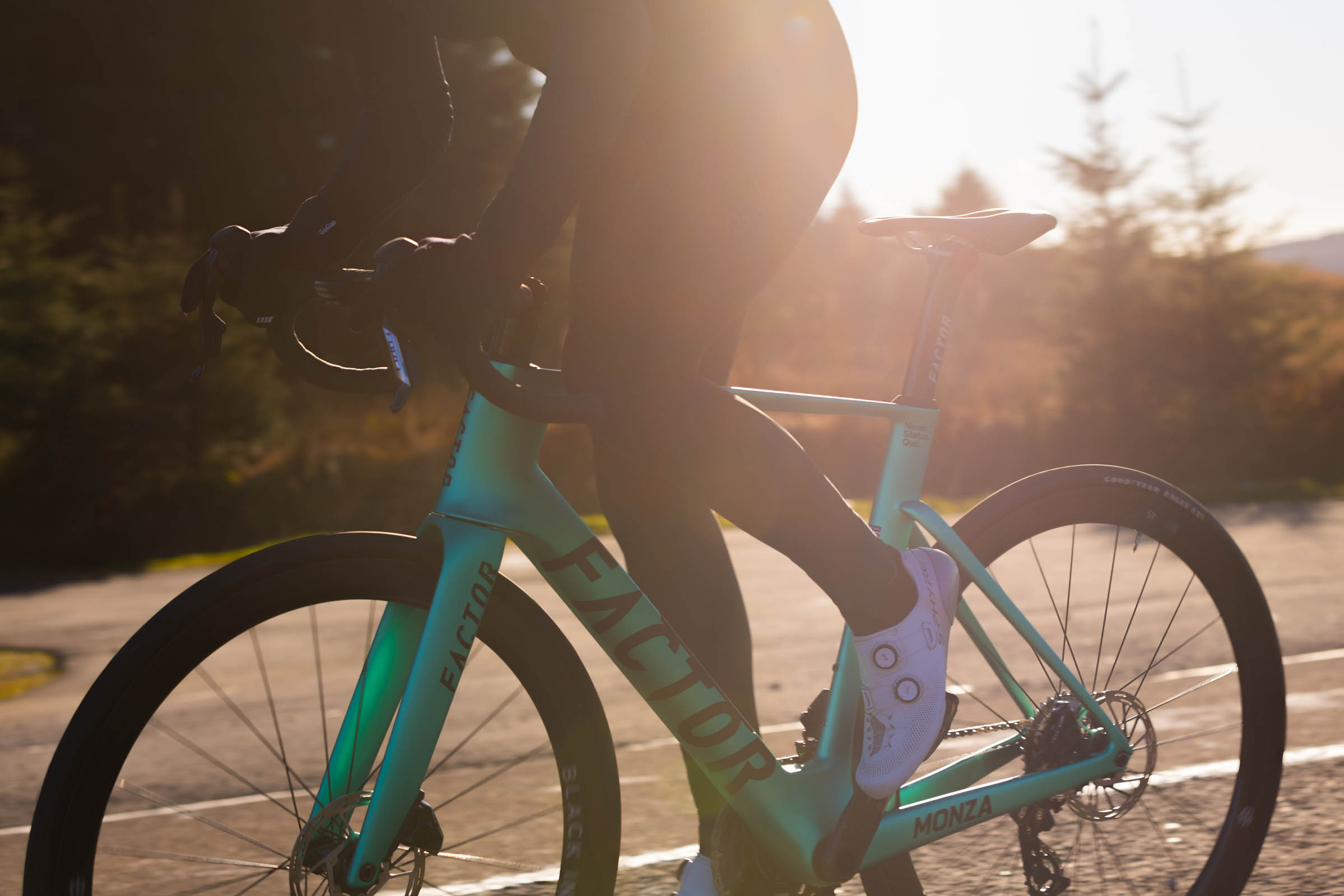
The Factor Monza might carry a few extra grams, but the trade-off is a race bike that you might be able to afford (relative, at least, to its more expensive flagship options).
The inclusion of the practical down-tube storage and 34mm tyre clearance makes it, arguably, easier to live with year-round. The price remains premium, but overall it’s quite competitive with some major rivals.
Credit must go to Factor for retaining its semi-custom buying journey even with this less pricey bike – this means you can, within reason, make the Monza the perfect bike for you at the price shown.
However, the Monza’s biggest strength is its ability to appeal to more than simply dedicated racers.
Product
| Brand | Factor |
| Price | €8299.00, £6999.00, $7199.00 |
| Weight | 7.97kg |
Features
| Fork | Factor Monza, carbon |
| Frame | Factor Monza, carbon |
| Tyres | Goodyear Eagle F1 R, 28mm |
| Saddle | Selle Italia SLR Boost TM |
| Wheels | Black Inc Forty Five |
| Seatpost | Factor Monza, carbon |
| Bottom bracket | T47a threadfit |