When Shimano launched its XTR Di2 M9200 wireless electronic groupset, the Japanese giant also refreshed its brakes line-up, including this new BR-M9220 four-piston trail and enduro option.
The lever has been built to work better with svelte cable runs, the calipers have been reworked and there’s a new mineral oil, which Shimano claims offers a more consistent performance, designed to solve the wandering brake-point problem that has dogged its brakes recently.
At £249.99 per end (excluding rotors), the price is on a par with similar brakes from SRAM and Hope, while the 299g weight (front) for my test brakes is more than acceptable for a powerful four-piston stopper.
The BR M9220 brakes offer predictable and controllable power with a muted, typically Shimano ‘digital’ (on/off) feel. However, there are more eye-popping MTB brakes out there if you need them.
Shimano BR M9220 – what you need to know
- Ample power for trail and enduro applications
- Plenty of adjustability
- New mineral fluid is not backward compatible – you'll need to assess your bleed kit’s condition
Designed to keep you rolling
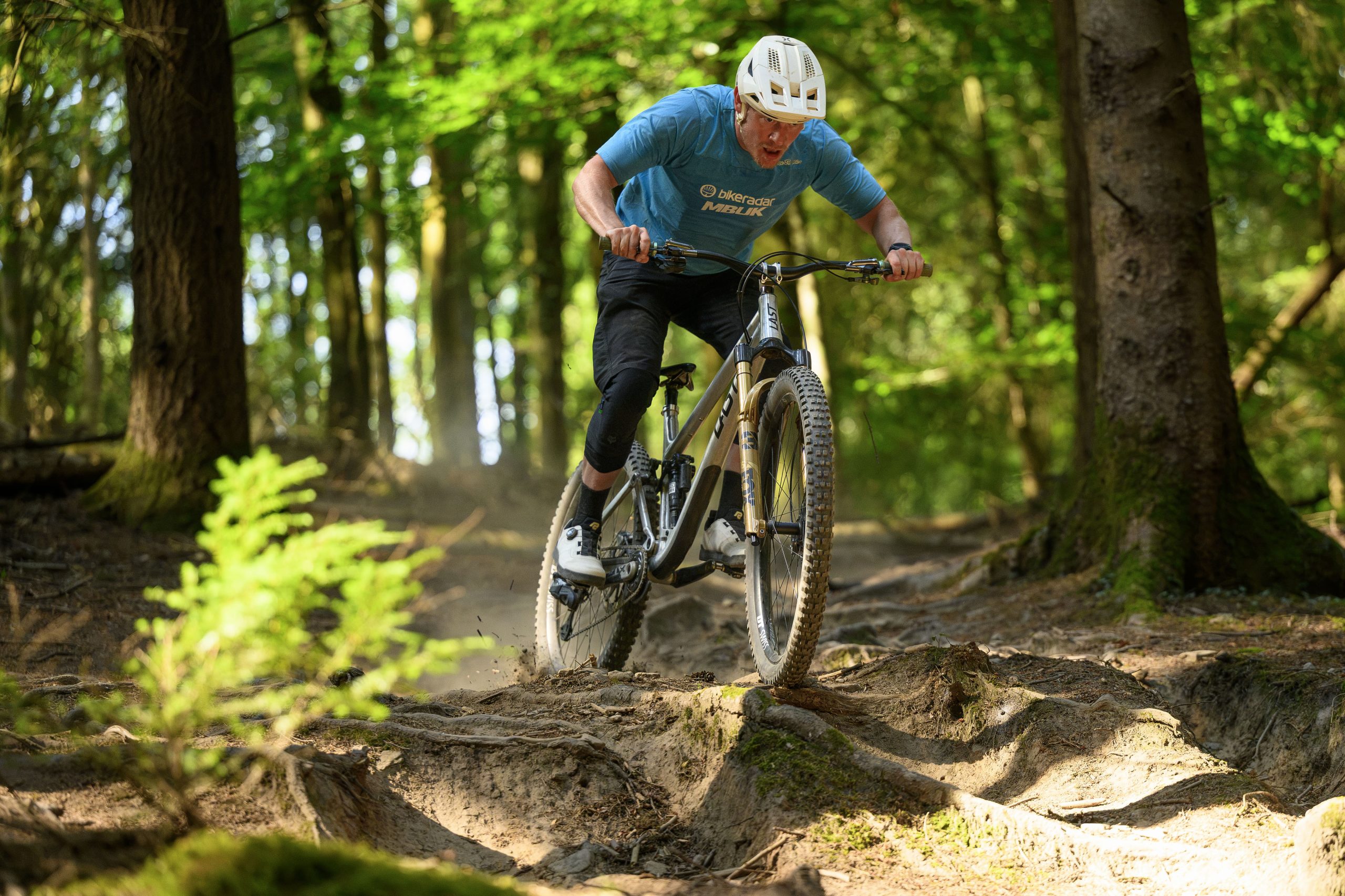
With the DH-focused Saint brakes still in Shimano’s line-up (and if pictures from World Cup pits are to be believed, soon to be refreshed), it’s no surprise the XTR four-piston brakes aren’t quite cut out for downhill.
However, at 87kg, and being tested on a 150/160mm-travel enduro bike from the steeps of South Wales through to hot and dusty Finale Ligure in Italy, these brakes have performed admirably, offering up plenty of stopping power.
Shimano brakes have a reputation for being fairly digital, with a strong bite and quick growth in power over a relatively short lever pull.
This remains true. However, it feels as though both the bite and the intensity of power delivery have been muted a little with these latest brakes. While I like the on/off feel of Shimano’s stoppers, this slightly softer feel is welcome, and I reckon it will suit more riders.
There is still a reassuring clamp when the finned brake pads hit the rotors, though, so they don’t feel vague, or rely on you hauling on the levers to get the best out of them.
Keep pulling
The breakaway force needed to pull the lever, and the resistance to the lever blade being pulled, is average – some (pre-Tech 4 lever) Hope brakes are stiffer to pull, while the Hayes Dominion brakes are much lighter. Shimano seems to sit in the middle and tested back-to-back with SRAM’s Motive and updated Maven brakes in my garage, its brakes feel very similar.
As a result, on longer descents and with 203mm rotors, I haven’t found the XTR brakes lacking in power or contributing to excessive arm pump.
There is a caveat to this, though.
The stock sintered pads work well with their cooling fins – they bed in quickly and seem to blend bite, power and quietness. However, I found in more extreme conditions (Finale's long, hot runs for example), the power can deteriorate quickly once the pads are past half-worn and the brakes are running hot, necessitating a hefty haul on the levers.
Replacing them with fresh pads very quickly restored full-run power levels.
On shorter UK runs or when it’s damp and cool, where less heat is being generated, the older pads work fine. In wet and muddy conditions, I didn’t find pad wear rates excessive, and I haven't found the stock pads particularly noisy either.
Shimano BR M9220 key data
- 299g (brake lever, hose, caliper, pads) – front
- Lever reach and free-stroke adjustment
- 1,700m hose
- Hinged bar clamp
- One-piece caliper
Revised hardware
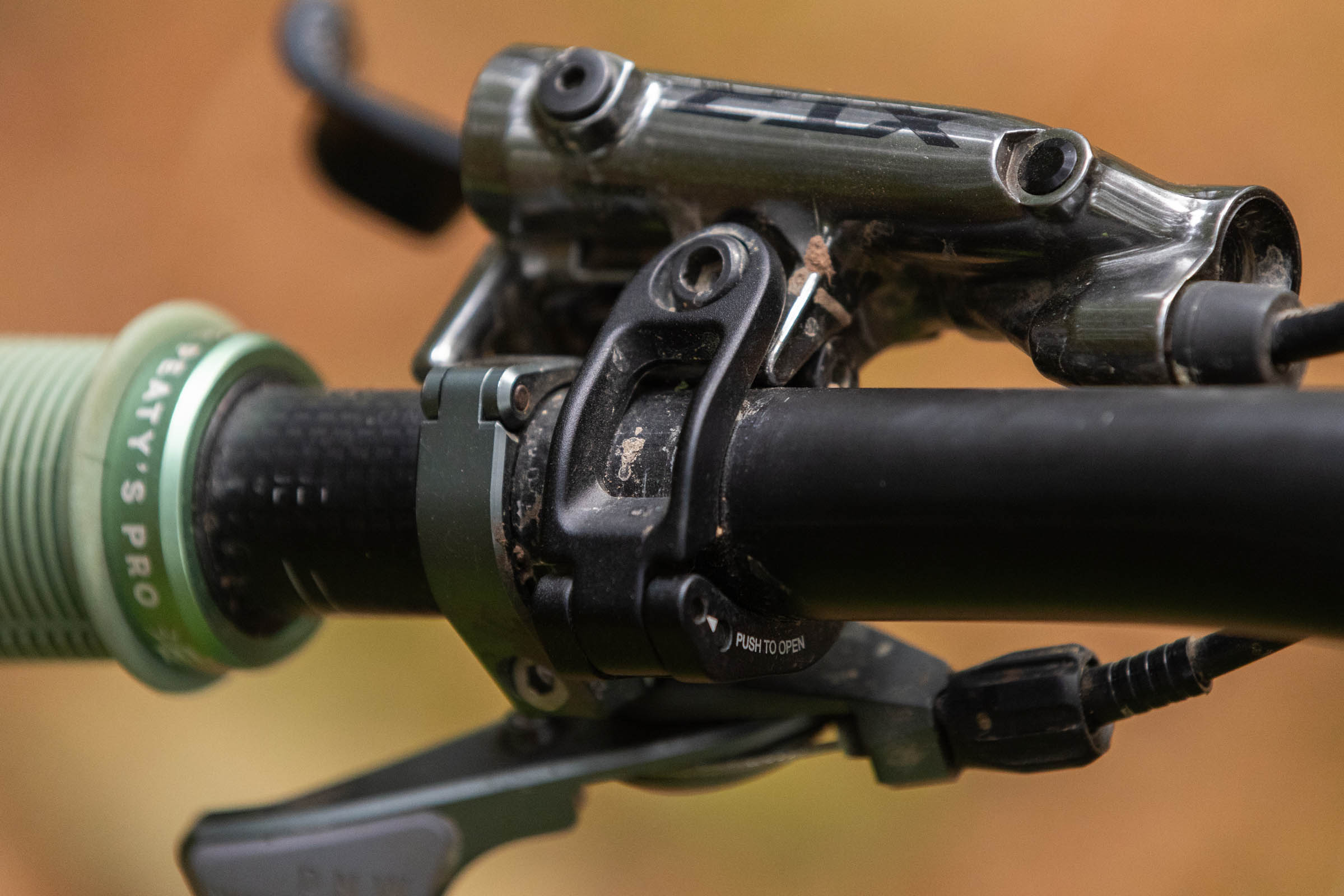
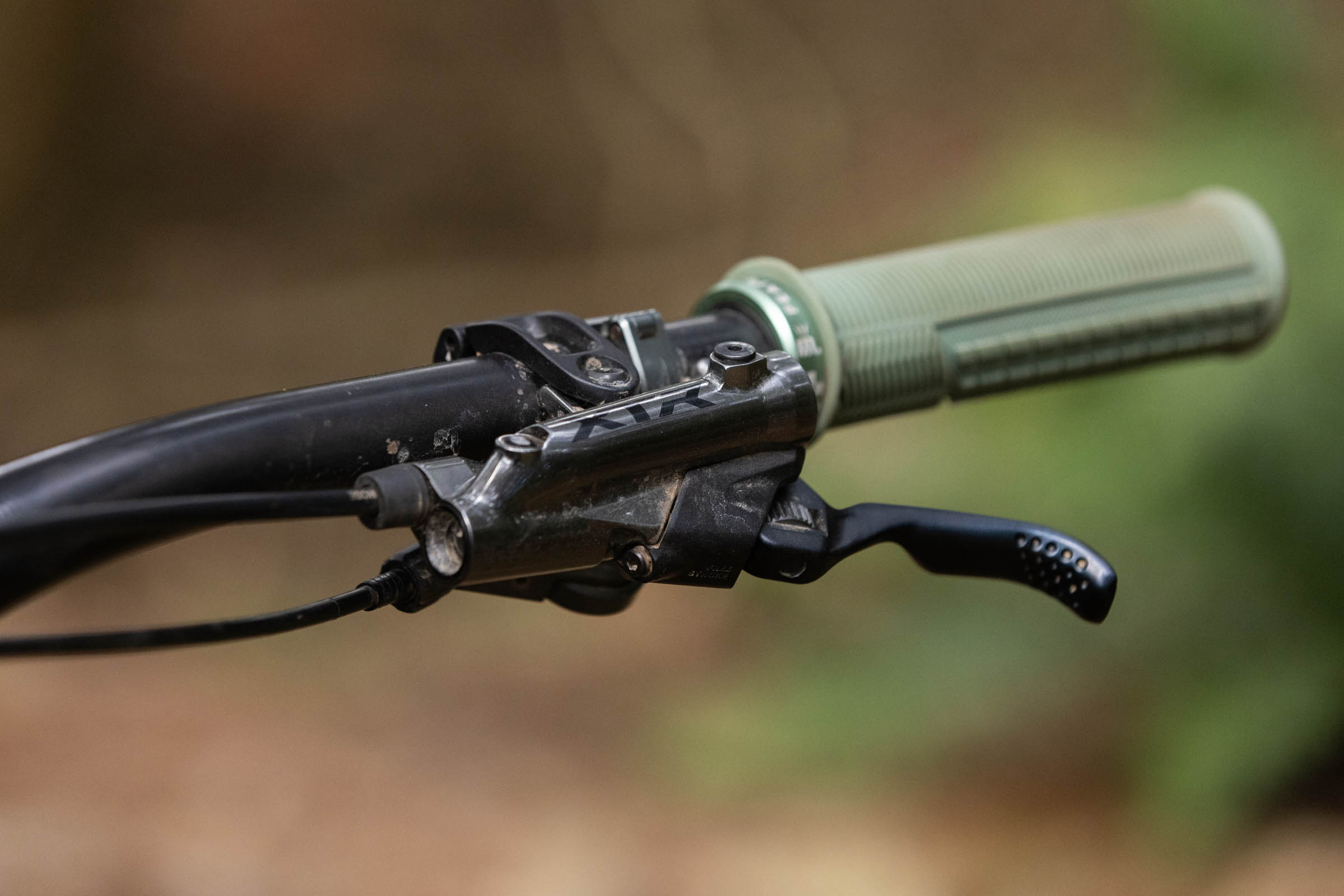
The new brakes have a noticeably different left- and right-specific lever body compared to the previous generation, with the hose exiting the lever body almost parallel to the bar. This tidies up the cockpit and works better with integrated systems.
The lever blade is similar to other Shimano brakes, with a relatively short length and a sharp hook at the end with dimples – it's a secure-feeling lever with and without gloves.
The lever has a slight upsweep, and there’s a minor change in the location of the blade’s pivot for ergonomic reasons. Both of these have reportedly been done to make the arc of the lever more aligned with your finger’s movement.
On the trail, the difference is barely noticeable.
The knurled lever reach-adjust dial embedded in the lever blade is easy to adjust, and makes a meaningful difference, while the free-stroke adjustment makes some, if not a huge amount of, difference.
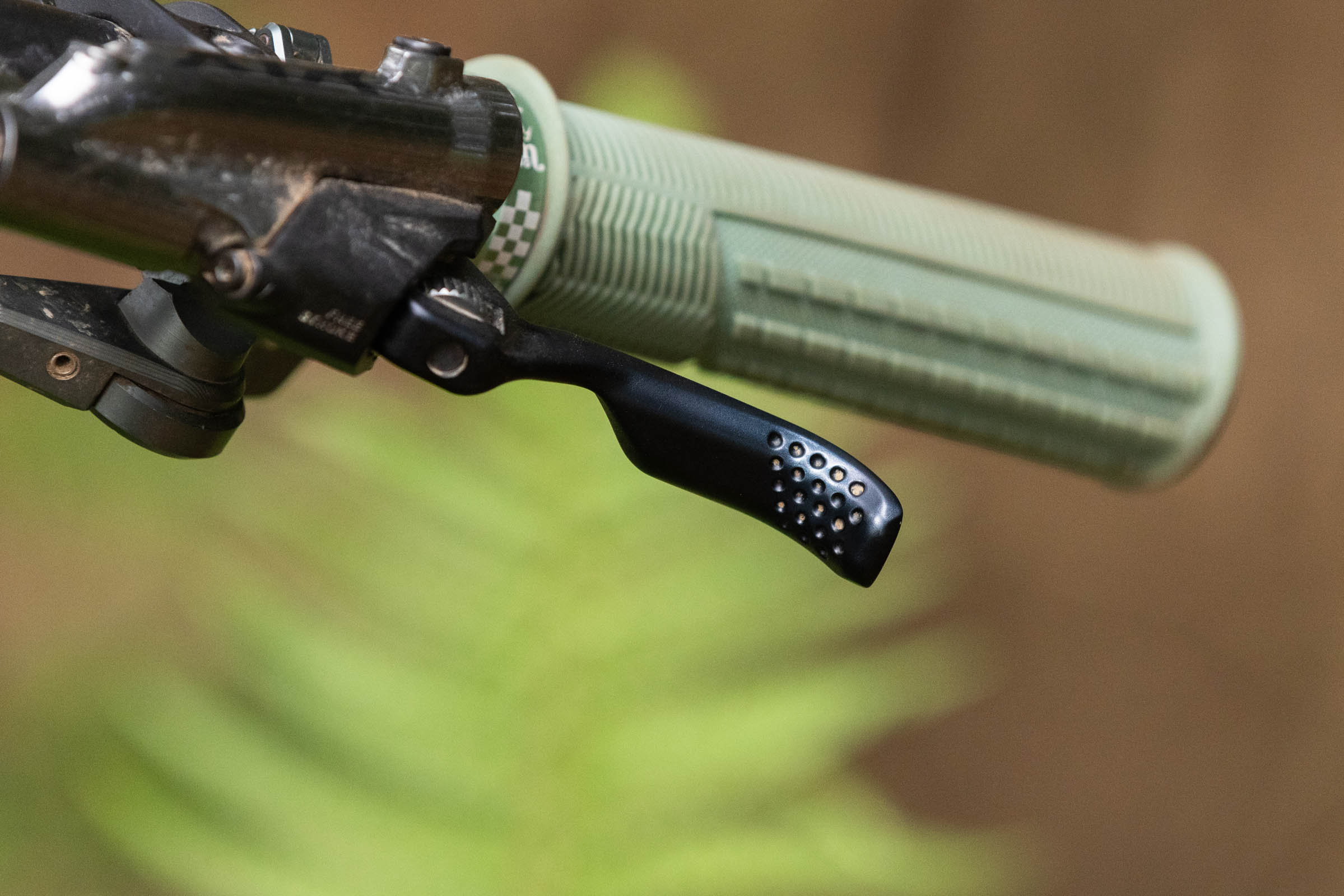
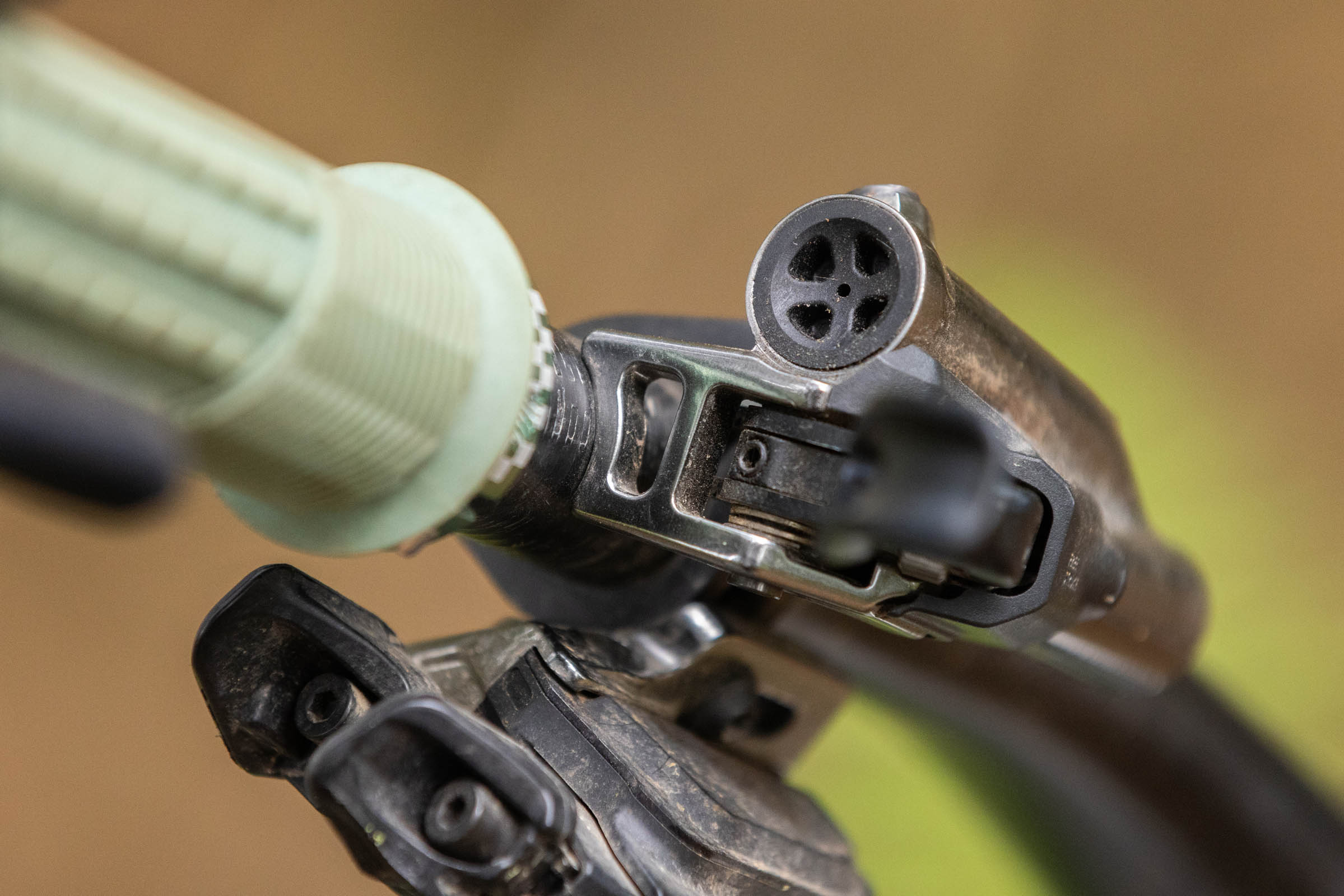
The I-spec EV mount, to integrate shifters and dropper levers with a single bar clamp, is easy to use and offers up more adjustment than SRAM’s Matchmaker clamps in my experience.
However, I’m not a fan of the locked split clamp – it's frustrating to open, while the second brace, which improves lever-body stiffness, takes up extra handlebar real estate. Add in the new architecture that brings the lever body closer to the bar and there’s less room for on-bar accessories.
The lever body holds the ServoWave link, which alters the ratio of lever pull to piston push as the lever advances through its travel. This helps give the rotor and pads decent clearance (because the early lever pull results in more piston push than later in the lever stroke).
This helps with setup, making it easier to work around slightly warped rotors, while adding mud clearance.
Down below
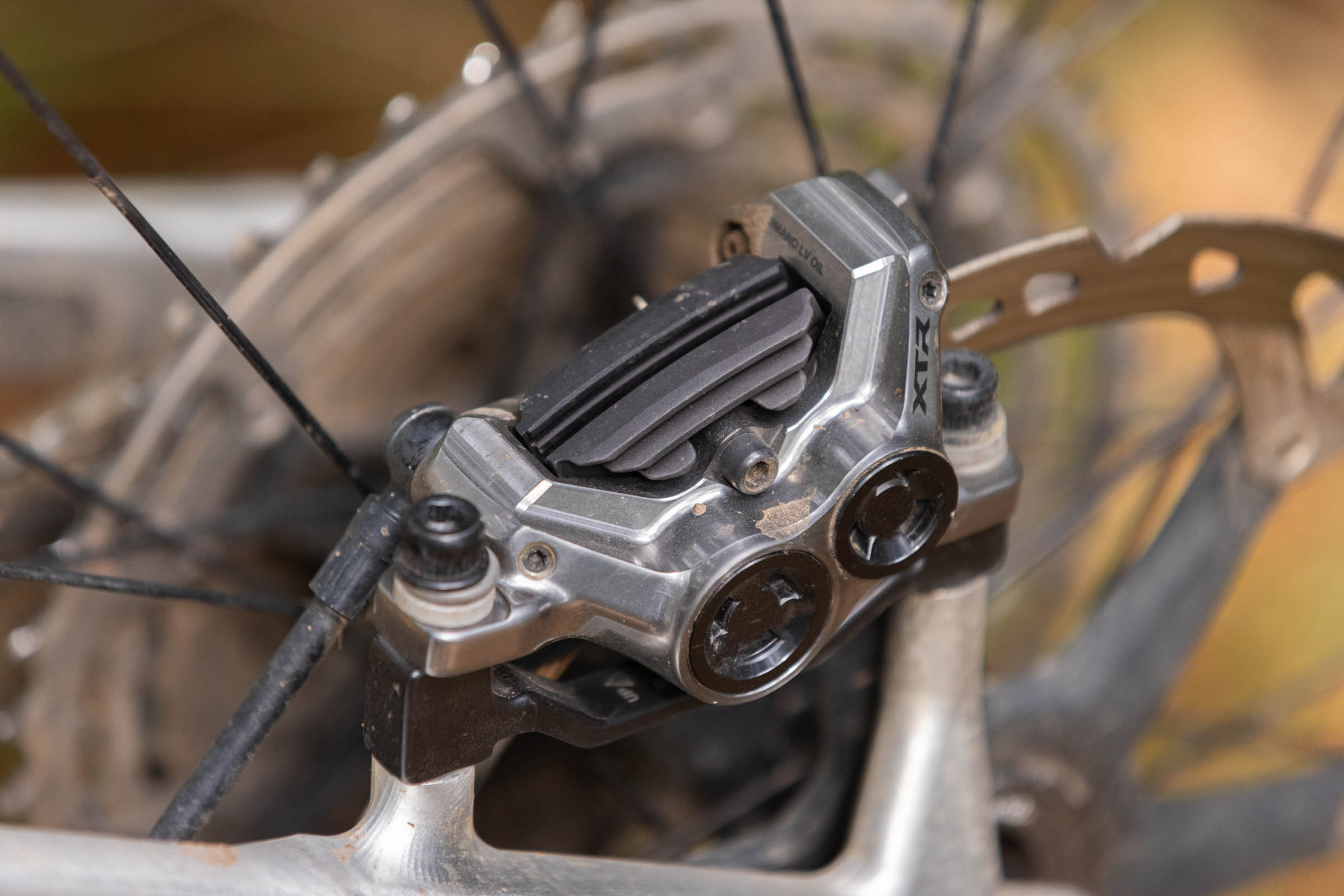
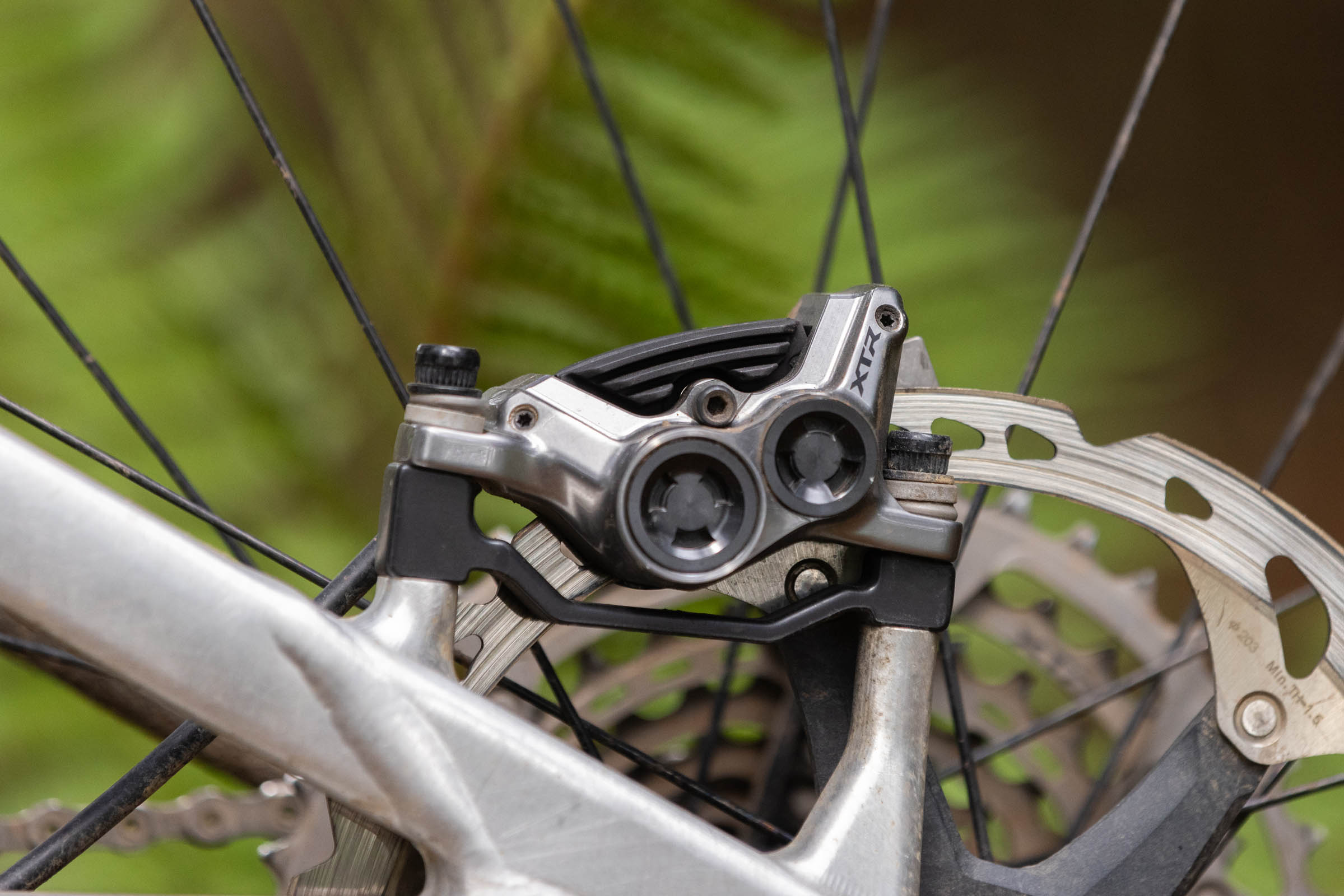
At the caliper end, there are four resin pistons, set in pairs of 15mm and 17mm diameters, to improve modulation.
The one-piece caliper is finished very nicely, and the top-entry for the pads makes life easy.
Shimano has worked on reducing pad rattle, with a more wedge-shaped pad and revised retaining-pin design – both of which help. There’s no interference with hex keys when accessing the lower of the two bolts.
How I tested
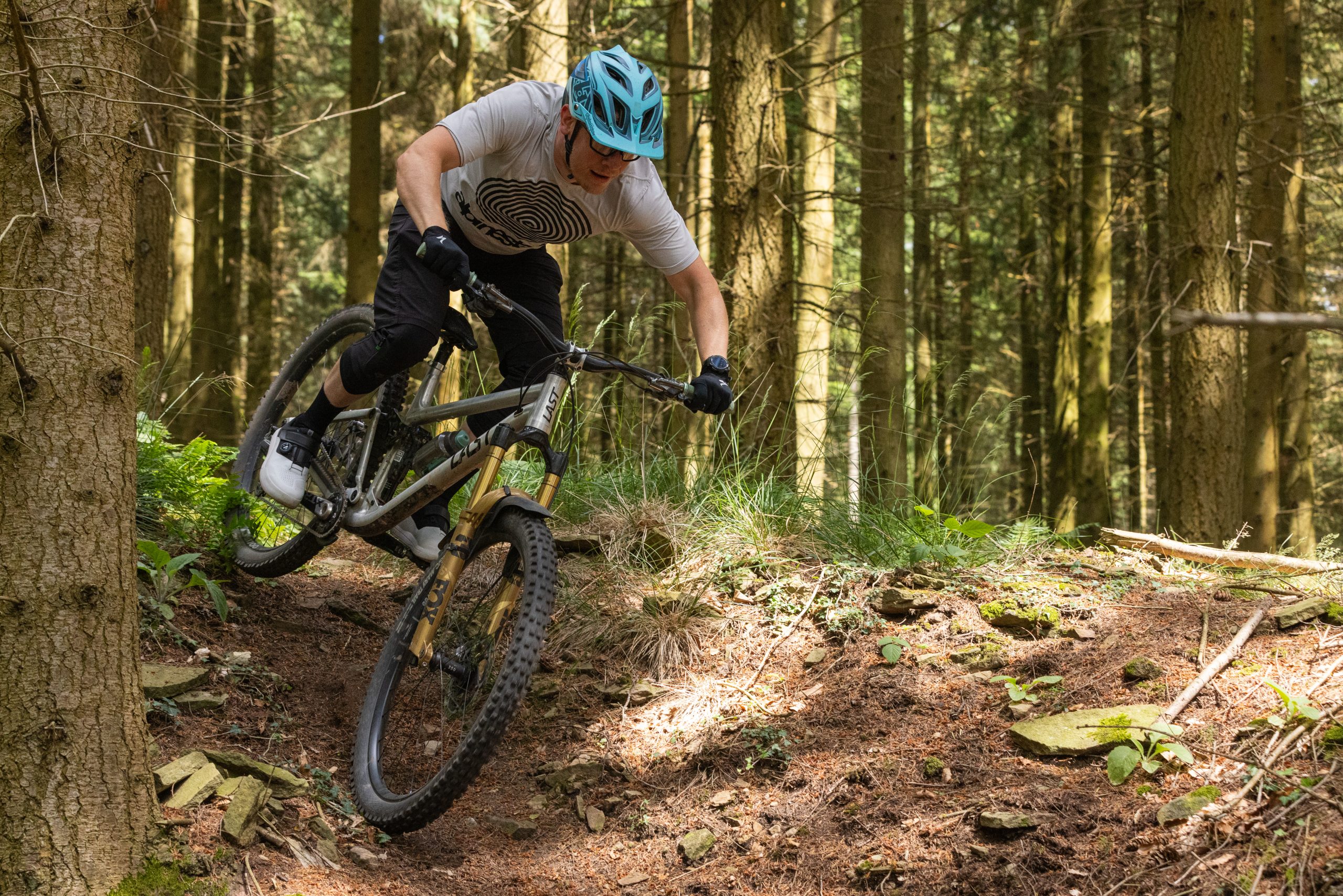
The brakes have been run on a Last Glen bike for six months in wildly varying conditions. They’ve endured many laps around damp forests, as well as some high-speed shenanigans in Finale Ligure.
While I’ve not had much maintenance to do on these, they were bled when fitting them as part of the testing process.
Shimano’s new, thicker rotors will work with the caliper, for even more heat resistance.
Fluid dynamics
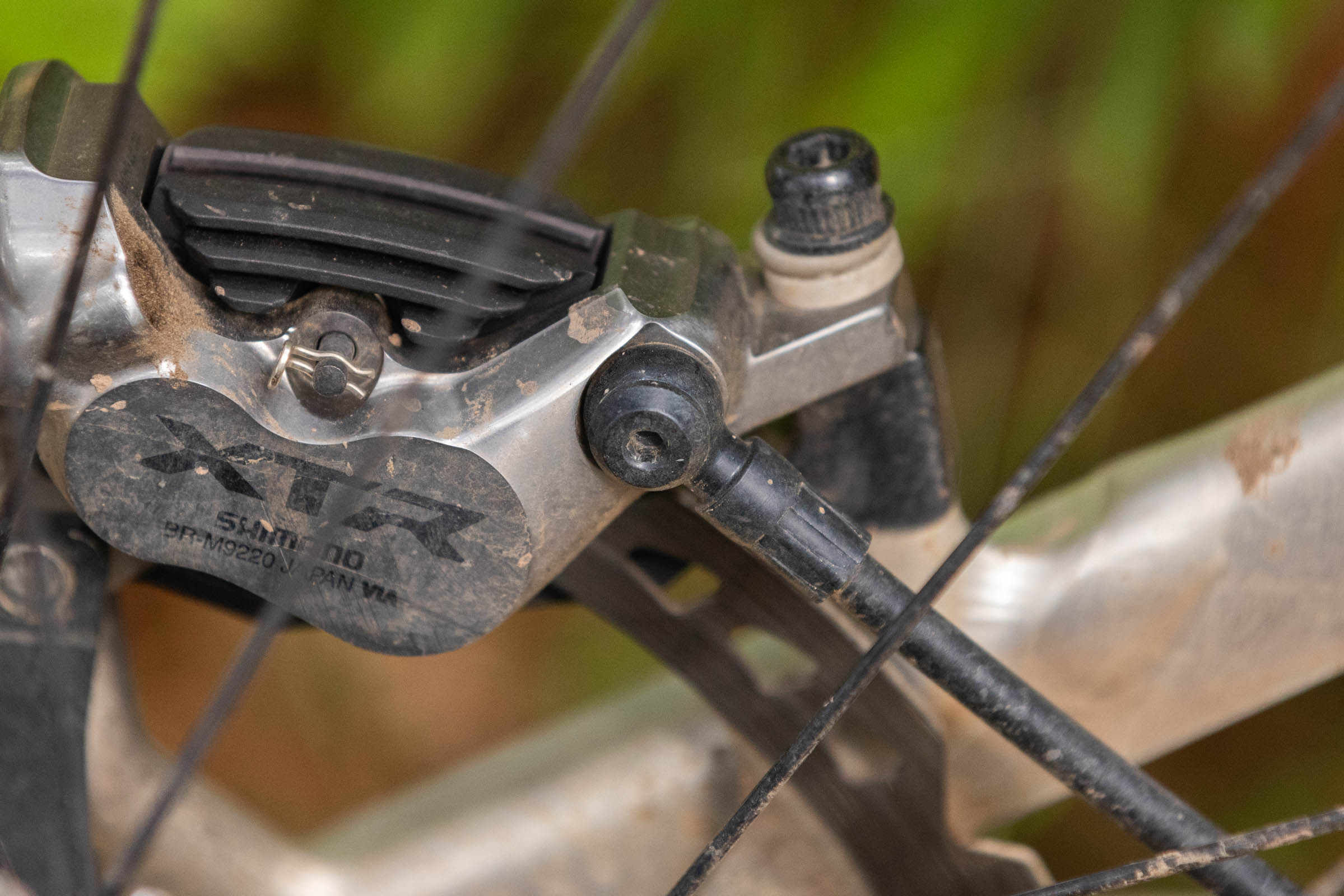
Internally, there’s Shimano’s new Low Viscosity mineral oil, said to improve heat stability on long runs – but I'd say there’s only a minor improvement.
Ensure there’s none of the old fluid left in your bleed kit, because it’s not cross-compatible and could damage the seals.
By using the official bleed kit and taking it slowly, I’ve not had too many issues with inconsistent bleeds.
On this note, I’ve also had no issues with wandering bite points, something older generation brakes struggled with, and something that a poor bleed can contribute towards.
There’s a slight change in the bleed procedure, with the separation of the bleed port and bleed bolt on the calliper, which in my opinion, makes the job a touch easier.
Shimano BR M9220 bottom line
The XTR BR-M9220 brakes would be a smart, well-priced and fair-weighted pick for a trail, all-mountain or enduro bike, especially when paired with larger rotor sizes.
They have a familiar Shimano feel but with the edge taken off a little which should appeal to a broader range of riders.