The 2026 Tour de France time trials test a different set of skills to the straight-line speed that has historically been the key to success.
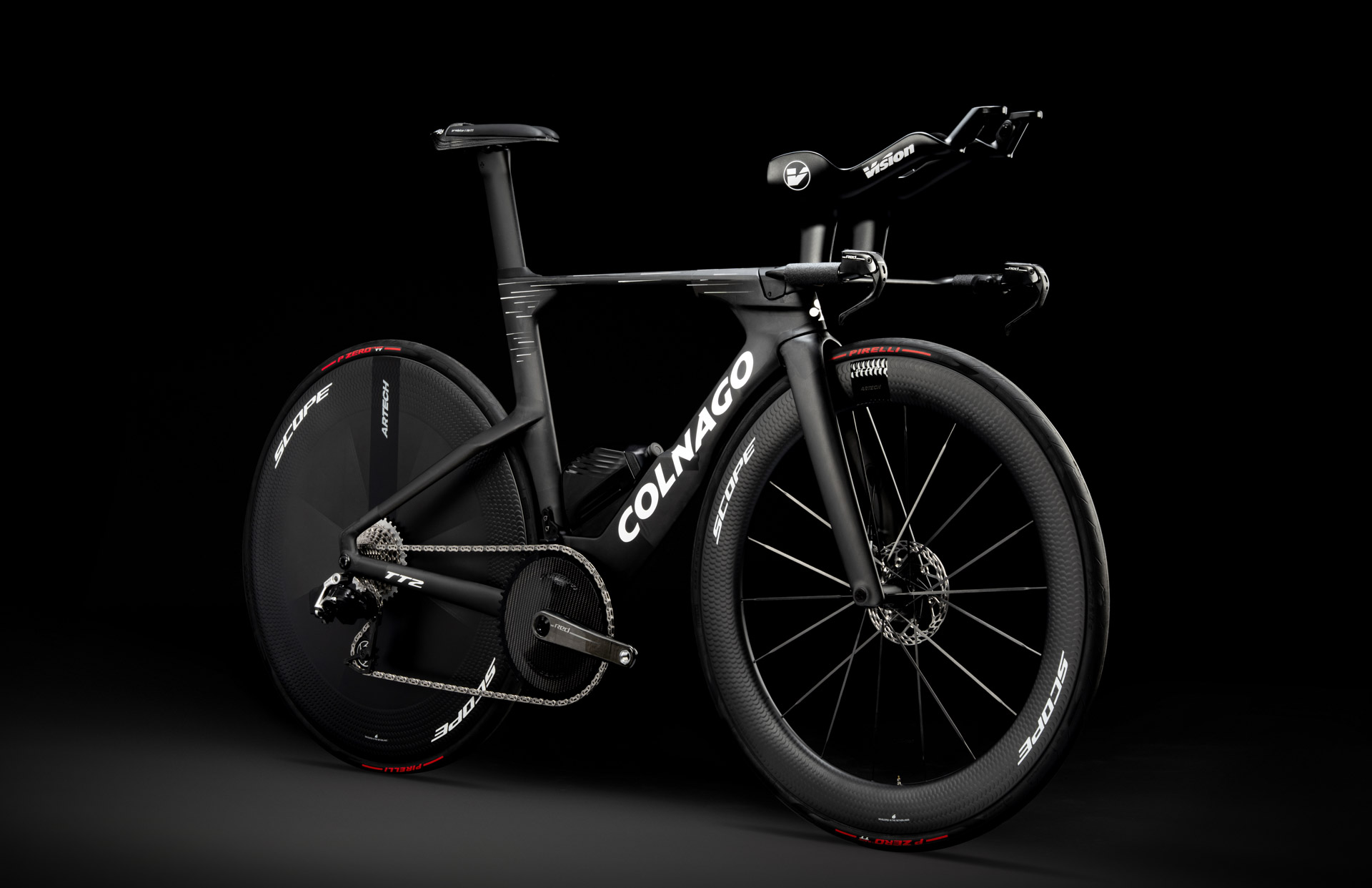
To give Tadej Pogačar the edge in both 2026 Tour time trials, as he vies for a fifth victory in Paris, Colnago has just launched the TT2 time trial bike.
Both the opening stage team time trial in Barcelona and the stage 16 individual time trial on the shores of Lake Geneva require climbing skills and agility on twisty, technical courses.
The stage one team time trial has an 800m, 7% climb to the line and, under the new team time trial rules, individual times count for the general classification, so contenders for the overall win can’t be held back by their bikes (or team-mates).
The stage 16 individual time trial includes a 9.7km climb with an average gradient of 4.3%, a descent of a similar length, and a technical final run through the streets of Thonon-les-Bains. While the climb may not be steep, it will give riders a conundrum: prioritise low weight or aerodynamic efficiency?
“In the last few years, Grand Tour time trial stages have included more elevation gain, such as the final stage of the 2024 Tour de France in Nice, and technical segments are more and more frequent. We expect more in the future too,” says Filippo Galli, Colnago’s chief engineer for the TT2 project.
Pogačar doesn’t need to worry: the TT2 has been developed to save more than half a kilo in weight, compared to the outgoing Colnago TT1, while remaining a fully aero-optimised machine for the fastest rider in the world.
Improving on a time-trial benchmark
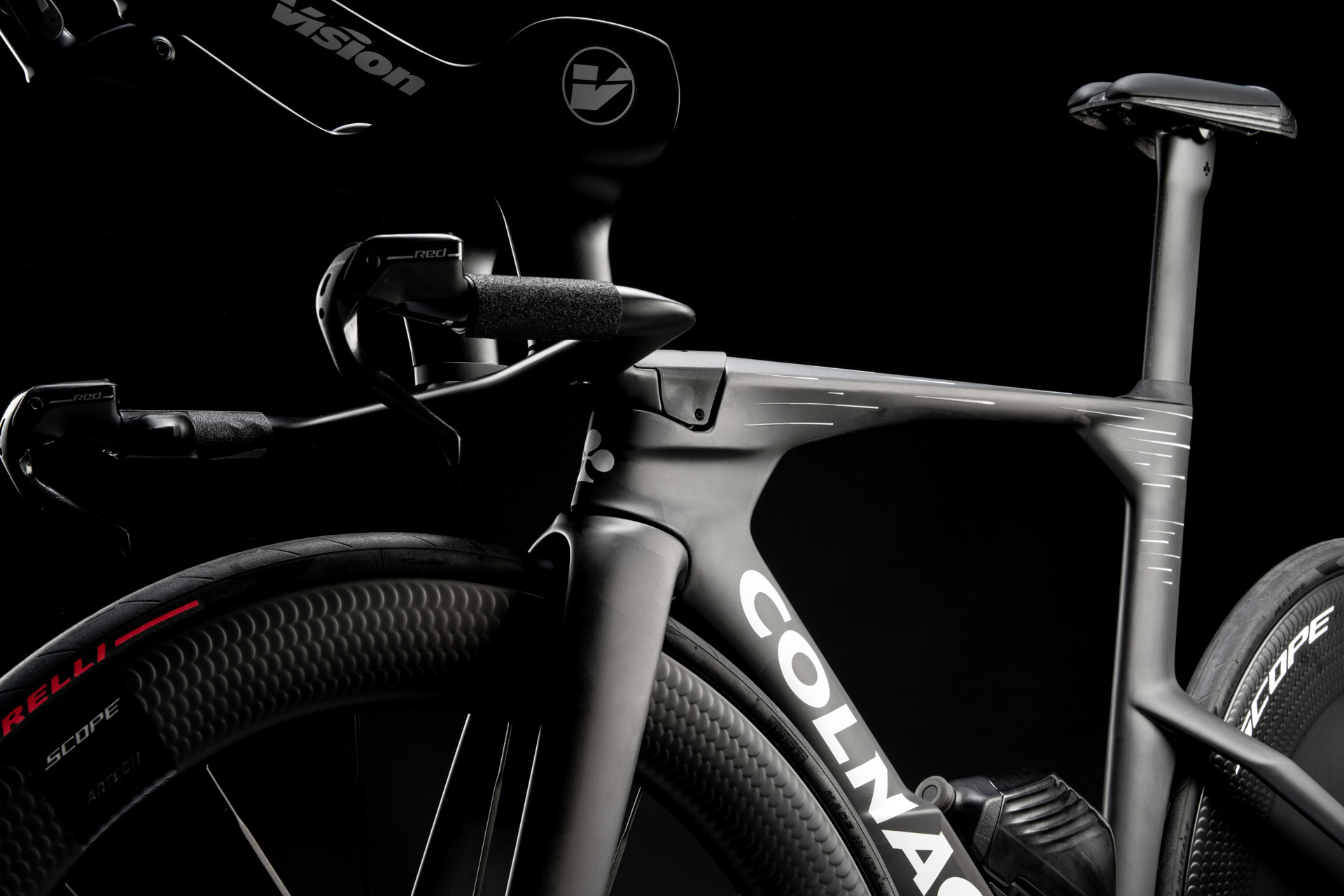
“The TT2 was born at the direct request of the team, to have a bike that performs the best in Grand Tour time trials,” Galli says.
“We were satisfied with the aerodynamics of the TT1, which is still a benchmark in aerodynamics, but we wanted to significantly improve the weight and handling of the bike. We needed a quicker, more responsive and faster time trial bike that’s more stable on technical courses.”
Colnago has shaved around 550g off the frameset weight of the TT1, already regarded as a benchmark pro-level time trial bike. With a frame weight of 985g and a fork weight of 393g, the TT2 frameset is as light as many road bikes and a complete TT2, ready to race and with disc wheels, can sit close to the UCI’s 6.8kg weight limit.
“Weight has become increasingly important for modern time trial stages,” adds Galli. “With the TT2, the goal was to create a bicycle that is aerodynamic as the TT1, but that dramatically drops the weight.
“The option of having a time trial bike, with a TT position, but with the weight of a lightweight bicycle, is a request that’s become more frequent from our men’s and women’s teams.”
Colnago says it hasn’t sacrificed aerodynamics to achieve that low weight, though. The TT1 was already a benchmark in aerodynamic performance, Galli says, but the new TT2 slightly improves its wind-cheating credentials thanks to a smaller frontal profile, revised tube and fork profiles, and optimised component integration.
Aerodynamic stability
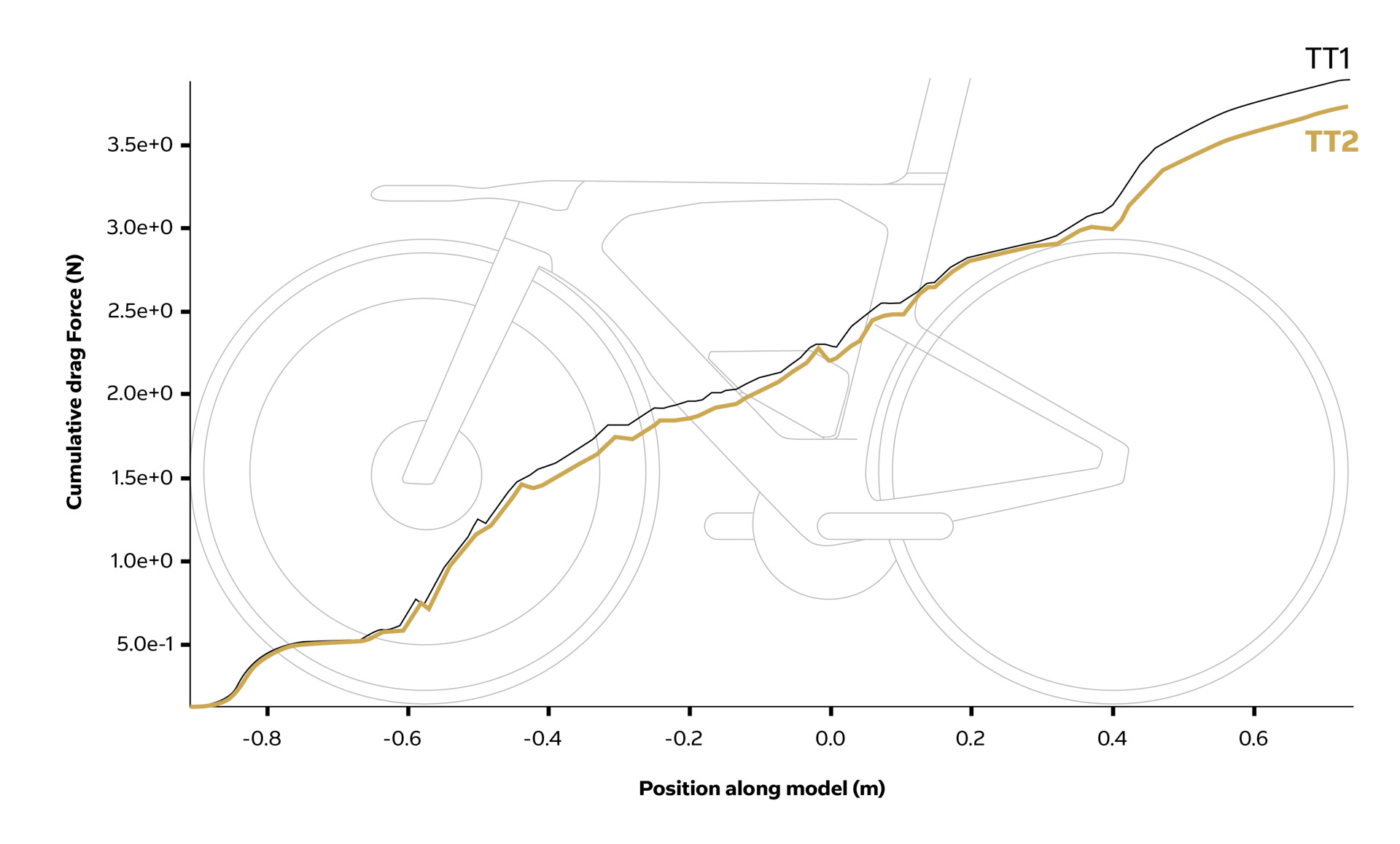
The TT2 is also designed for consistent aero performance and stability over a wide range of wind yaw angles and wind speeds.
This is another critical factor in modern races, so the rider can concentrate on power production, rather than needing to divert attention and energy to controlling the bike, Galli adds.
Colnago worked with the Politecnico di Milano institute to refine the frame’s aerodynamics. When developing the Y1Rs aero road bike, Colnago developed a range of advanced modelling and testing tools that were then applied to the TT2’s design, including embedding pressure sensors into a prototype frame to directly measure surface pressure on critical areas in the wind tunnel.
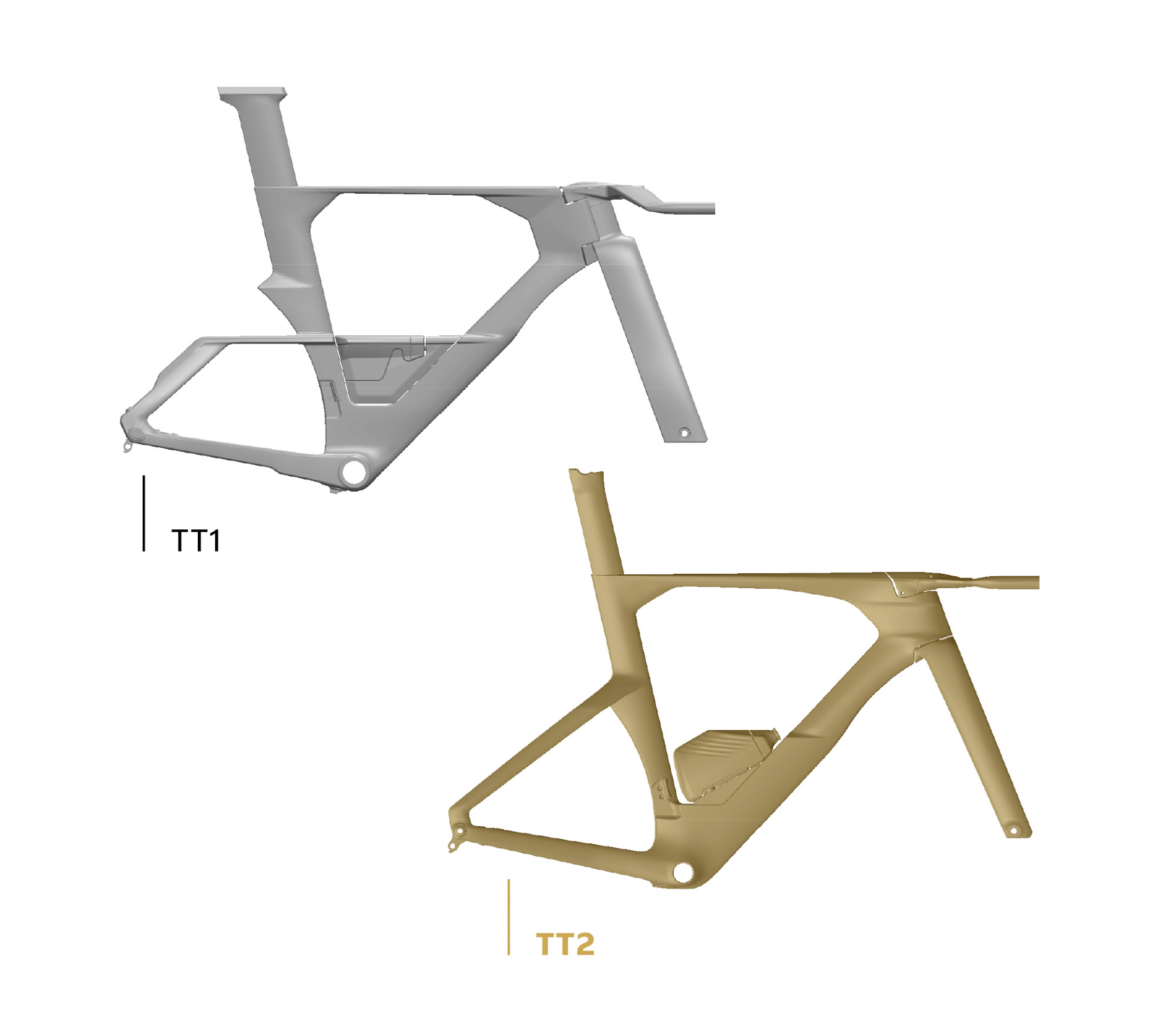
It’s an approach that’s more precise than overall drag measurement, according to Colnago, and allowed the brand to refine its CFD modelling, focusing on the aero profiles of key parts of the frame, while minimising their weight.
Colnago says the result is improved aerodynamic performance over the TT1, particularly at higher yaw angles, where there’s less lateral force on the frame and hence greater stability.
More agile and a better fit
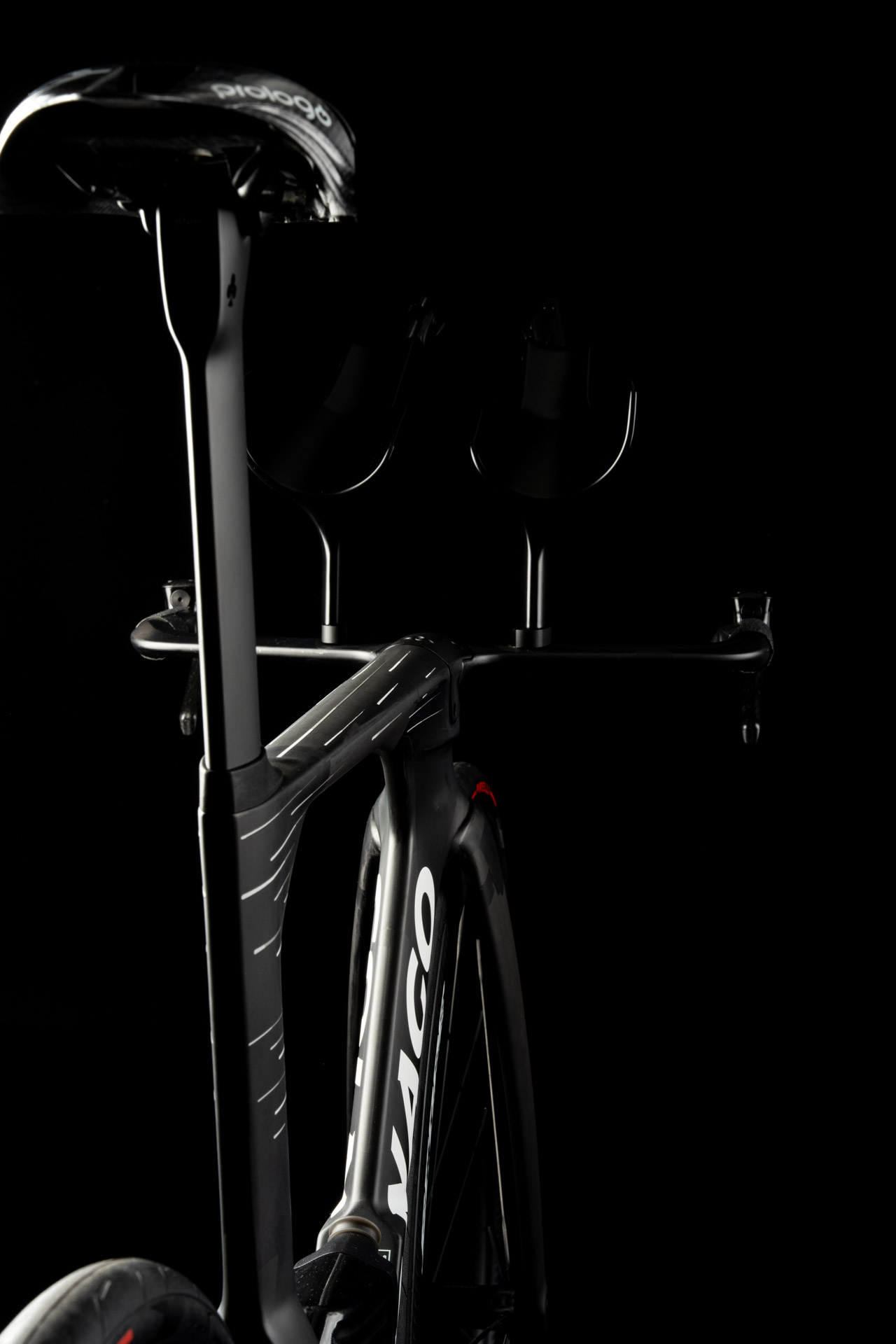
The Colnago TT2 also addresses the increased agility needed to negotiate complex time trial courses. Colnago has tuned the geometry for more responsive steering and more accurate cornering, as well as quicker changes in direction.
A steeper seat tube and lower bottom bracket favour the aggressive aero positions now preferred by the best riders in the world.
“Handling is more and more important in modern time trials, with climbs, descents and sharp corners,” says Galli. “We defined the geometry of the TT2 with the team.”
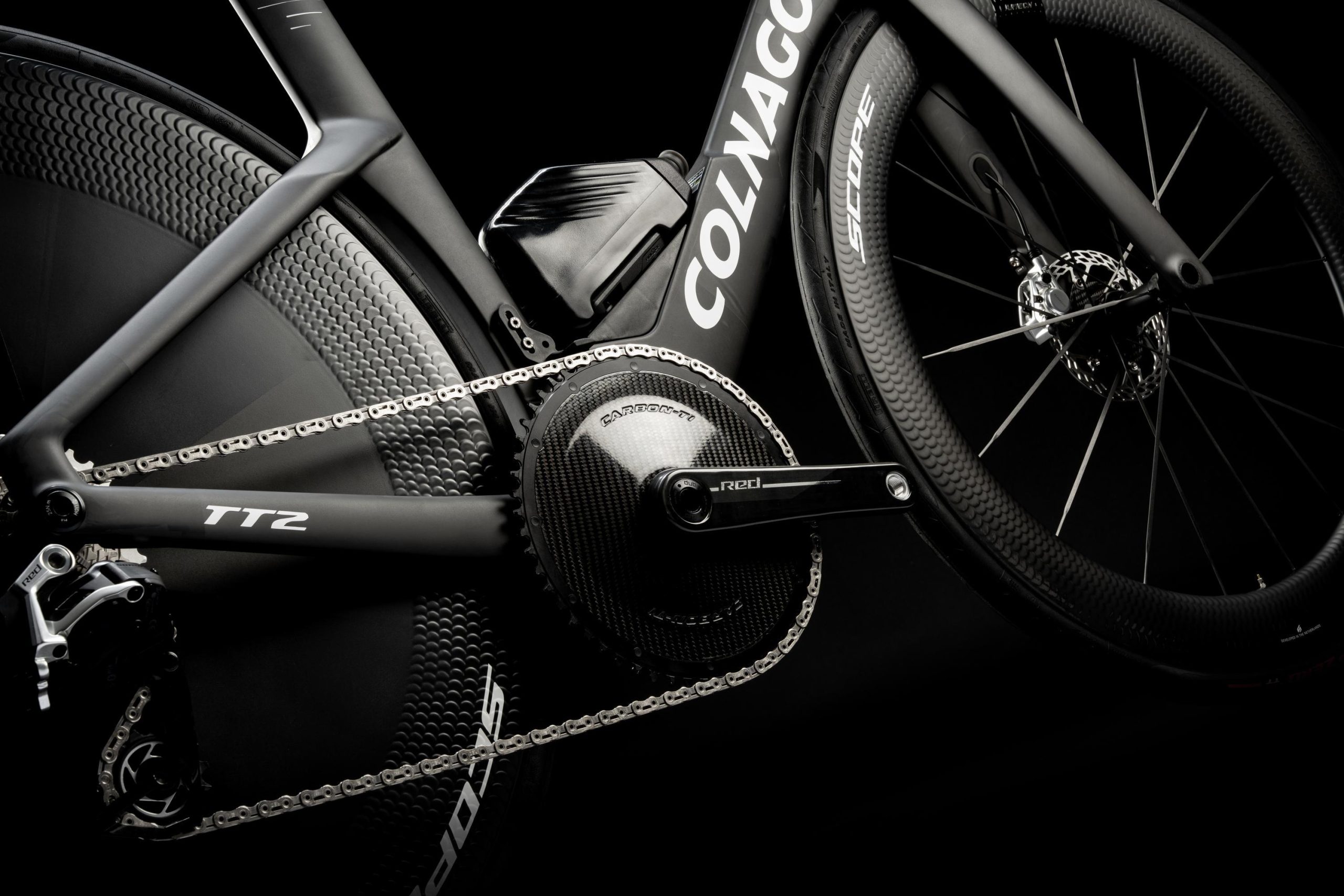
The TT2 frame provides clearance for a 70-tooth chainring and 30mm tyres, again providing the flexibility for modern configurations.
Colnago has added a fourth frame size to provide a better fit for shorter and taller riders, and the stack has been lowered for larger frame sizes – a request from the team, according to Galli. “We also developed an extra-small size, at the request of the UAE ADQ women’s team,” he says.
“The fine-tuning of the carbon layup was also checked by the riders too, and they shared feedback on the performance of the bike, both in the wind tunnel and on the road.”
Up front, there’s a new integrated cockpit with narrower base bars and the option to set the extensions higher for a more sustainable long-distance position.
Galli says the TT2 was developed with team partners in mind too, including ENVE, UAE Team Emirates-XRG’s wheel supplier.
Pogačar’s bike for the Tour de France is equipped with ENVE’s new SES 100 PRO and SES PRO Disc wheels, with the latter also going on a diet and dropping 200g in weight over the previous generation.
Together, these developments could give Pogačar an edge in the 2026 Tour de France time trials and help propel him towards a fifth Tour crown.