Front bike lights are getting ever-brighter. A few years ago 500 lumens was a typical output for a mid-priced light for road use, while lights for off-road use typically had a massive separate battery pack to provide a light output that was around 1,000 lumens.
Now, the best bike lights for road cycling and commuting can pump out 1,000 lumens. The best mountain bike lights can routinely emit 2,000 lumens or more from a one-piece design without a separate battery pack, but still offering decent runtimes. Outputs are often greater than a car’s headlights.
But do you need all that power? Drivers and other riders often complain that they’re dazzled by bike lights, so are modern front lights too powerful and should power output be limited? We asked the experts from Knog and Exposure how many lumens you actually need for a front bike light.
See or be seen?
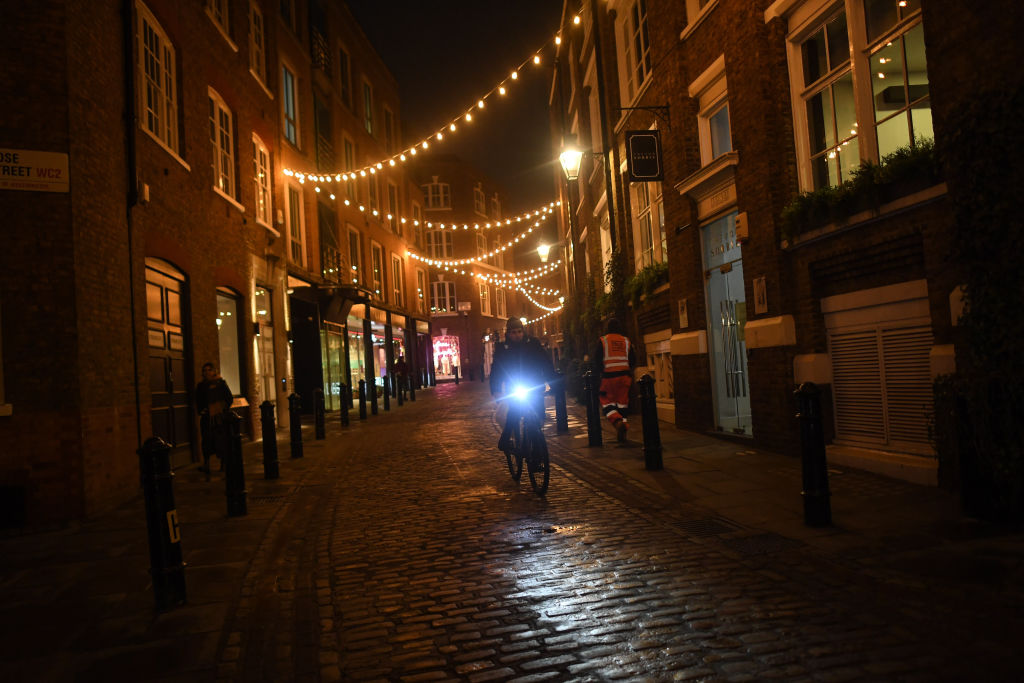
Colin Brown of Knog tells us: “Lumens can sometimes be a confusing number for new riders getting their first light, but we generally recommend customers figure out if they’re looking for a be-seen or a see-by light.”
Urban streets are usually well-lit, so there’s less need for a bright light to illuminate the road ahead. Here, a light is mainly serving to make sure that other road users can see you. The same is true when riding during daylight hours.
Riding on an unlit road, your light also needs to allow you to see where you’re going and pinpoint any obstacles in the road, such as potholes. This requires a brighter beam.
Riding off-road, your light also needs to allow you to pick your way, so more output is usually needed, even on a straight gravel trail, while a mountain or gravel biker tackling technical trails off-road will need even greater output and a broad beam to see where they’re going.
“For the see-by front lights, it's a big spectrum but we generally start with urban lights with an output around 400 lumen, road lights starting around 700 lumen, gravel or off-road riding starting around 1,000 lumen and MTB lights are usually 1,400+ lumen,” states Brown.
Beam pattern and angle matter
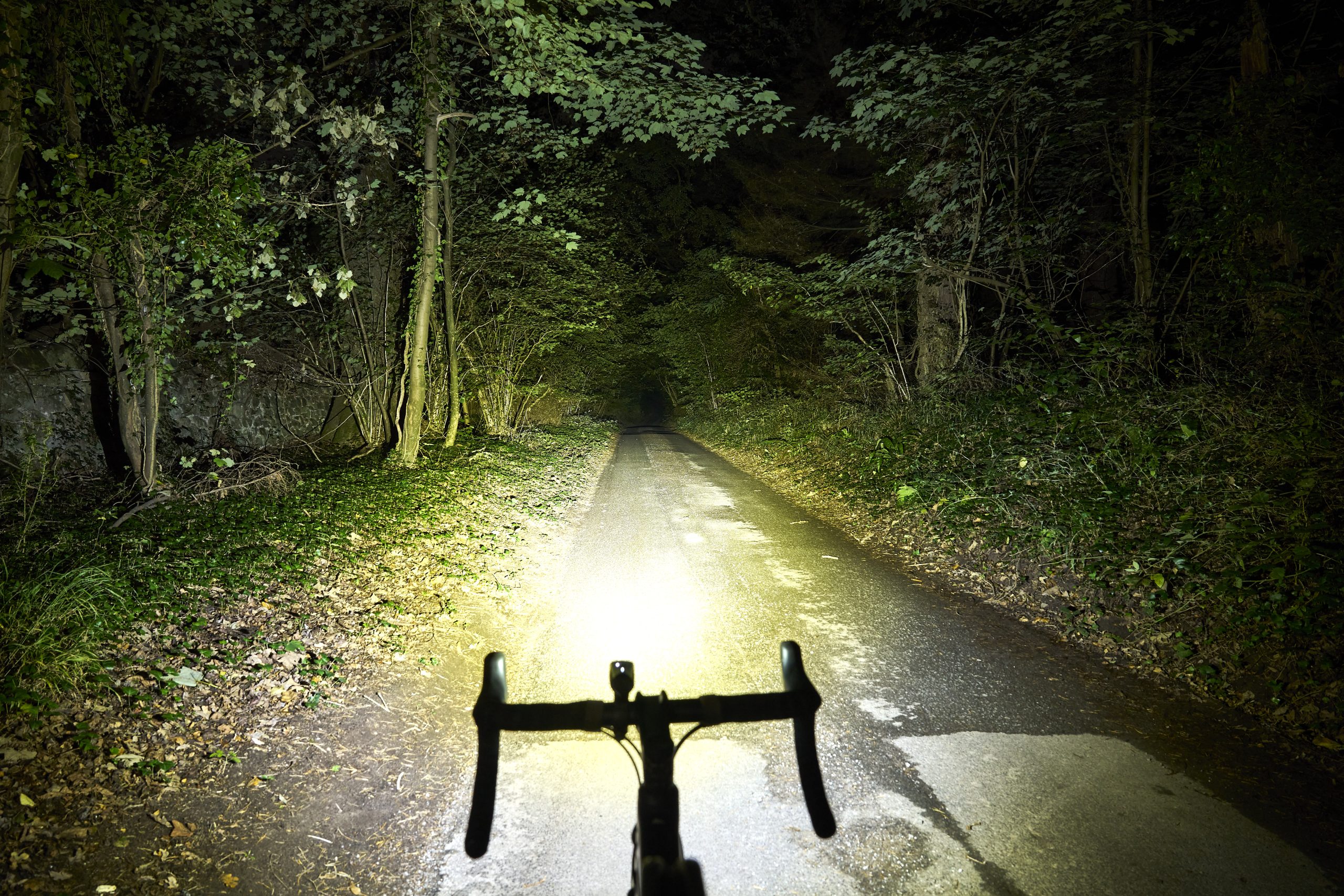
It’s not just about lumens though, it’s what you do with them. There’s no point in having a super-bright front light if it’s illuminating a spot miles down the road or trail, as it’s what’s within a few seconds’ riding time that will usually determine how fast and with how much assurance you can ride.
“One thing that's really important to consider, and something that's important to us, is how lumens relate to the beam angle,” says Knog’s Brown. “Having a bright light can be great but if your beam pattern doesn’t suit your riding style, it can be counterproductive.
“For example, I ride in the city here in Melbourne, and I’m not too concerned with a really bright light (although that’s nice), what I’m more interested in is the total beam angle, or how visible I am coming up to an intersection.”
A light that’s pointed horizontally is much more likely to annoy approaching road users or off-road riders than one that points downwards and illuminates the area you’re about to ride over to a greater extent.
Sam Rump of Exposure emphasises that need to direct your light properly.
“Lumens alone don't decide whether a light dazzles,” he says. “What matters is how the light is delivered and how it reacts to other road users. By using the correct lensing and LED, output can be well-controlled and stop others from being blinded. A poorly controlled one, or one angled too high, will dazzle at almost any output.
"Even a good beam will dazzle if it's tilted up. Aim it down at the road a few metres ahead."
Bike light brightness for urban use
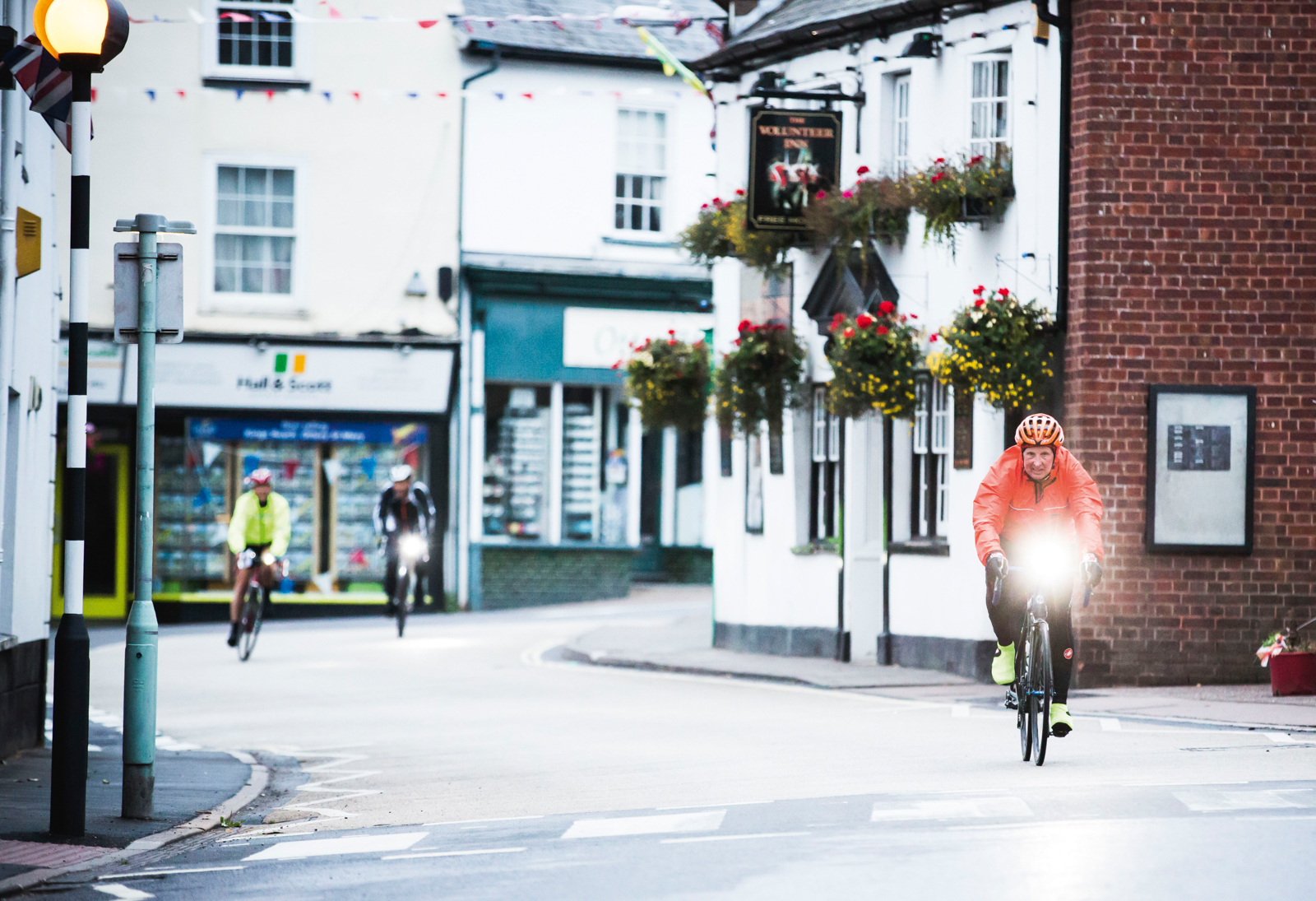
For lit streets, Rump recommends around 300 to 600 lumens output.
"In town you mainly need to be seen, not to light up the road. What matters more is a daytime flash pattern. Our DayBright pattern was developed with a panel of psychologists to be one the brain can't tune out, and it's visible from over a kilometre away even in bright conditions."
Once you head onto unlit roads and country lanes, he suggests you look for a light with around 1,300 to 2,000 lumens output.
"This is where you need beam reach for potholes and corners, and also where you meet the most oncoming traffic at speed. Beam control matters most here.
“Our Strada light uses a road-specific beam, a flat spread across the tarmac plus a spot reaching down the lane, together with our AKTiv auto-dipping. Twin light sensors detect oncoming headlights, dip the beam below the driver's eyeline, then return to full power once they've passed."
The Strada light is an example of a growing range of smart bike lights, available from a number of brands, which sense ambient light levels and other road users and adjust the light output.
Greater output off-road
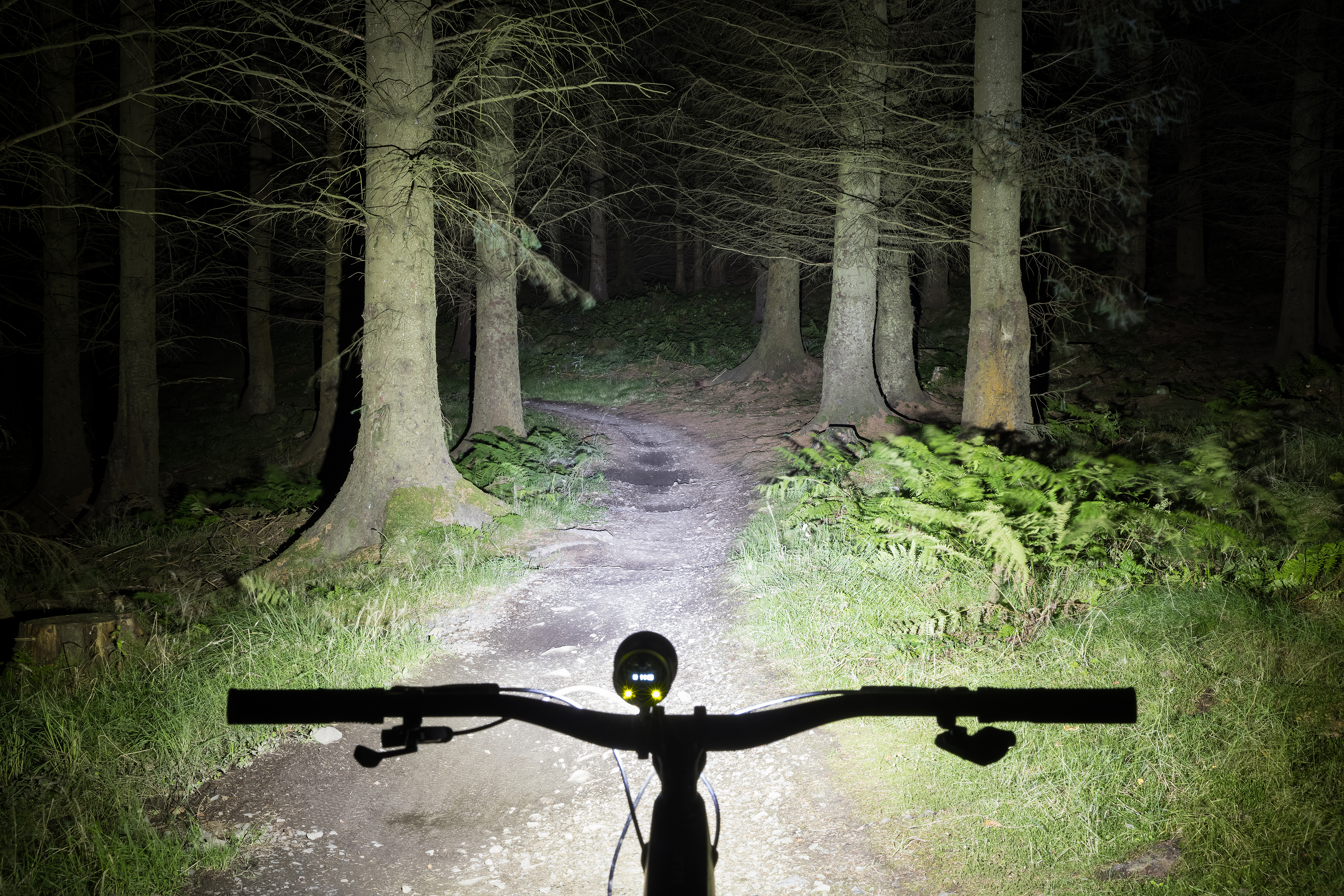
For off-road riders, having a beam spread that shows them where to go is important – you don’t want to feel you’re riding in a tunnel with no perception of what’s around you. A second, smaller helmet-mounted light with a spot beam can be useful, as it will point where you’re looking, not where the handlebars are pointed, helping you to pick your way.
"Off-road you rarely meet oncoming traffic, so you can use full power," says Rump. He says a helmet light of around 1,600 – 2,360 lumens can illuminate wherever you're looking, and he reckons that gravel riders don’t need quite as much output, around 1,600 to 2,650 lumens.
"Gravel routes often mix lanes with rough tracks,” he states. “On lane-heavy rides, a road light with auto-dipping like the Strada 13 keeps you courteous to traffic. For rougher, faster terrain, an off-road beam gives you more width and reach. This could also be paired with a helmet light for more technical or single track gravel.”
German light regs help avoid dazzling others
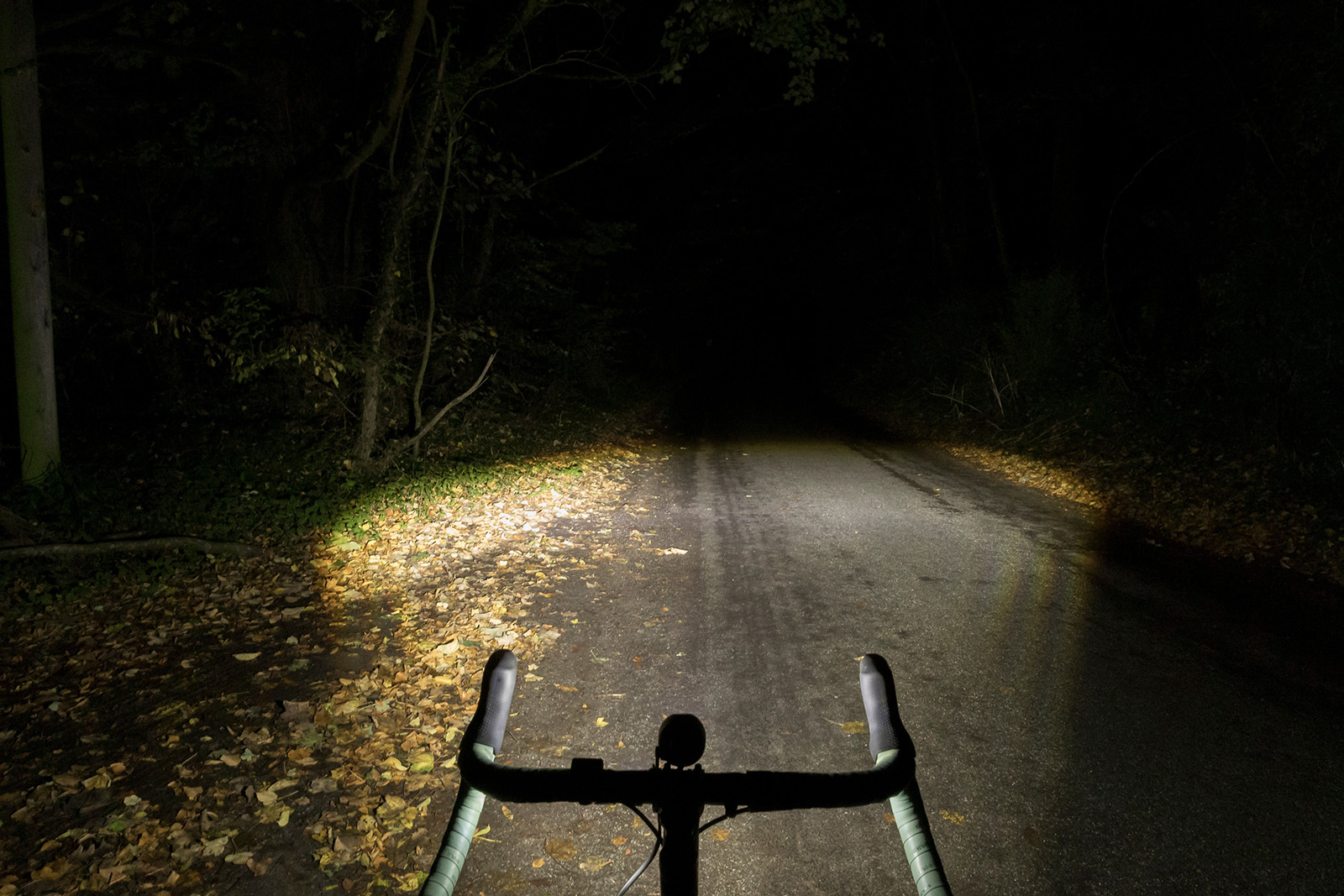
All lights, both front and back, sold in the German market must comply with the country’s Straßenverkehrs-Zulassungs-Ordnung, known to its friends as StVZO. This requires that the light must be designed to direct the beam downwards, with a cut-off to the upward projection.
StVZO is specifically designed to avoid dazzling other road users. It also dictates that lights have to be constant, with no flashing or pulsing illumination, a regulation that also applies in France.
Some lights have a StVZO setting, but can also be switched to a more powerful beam when there’s a need for greater output if you're heading off-road.
Dial it down
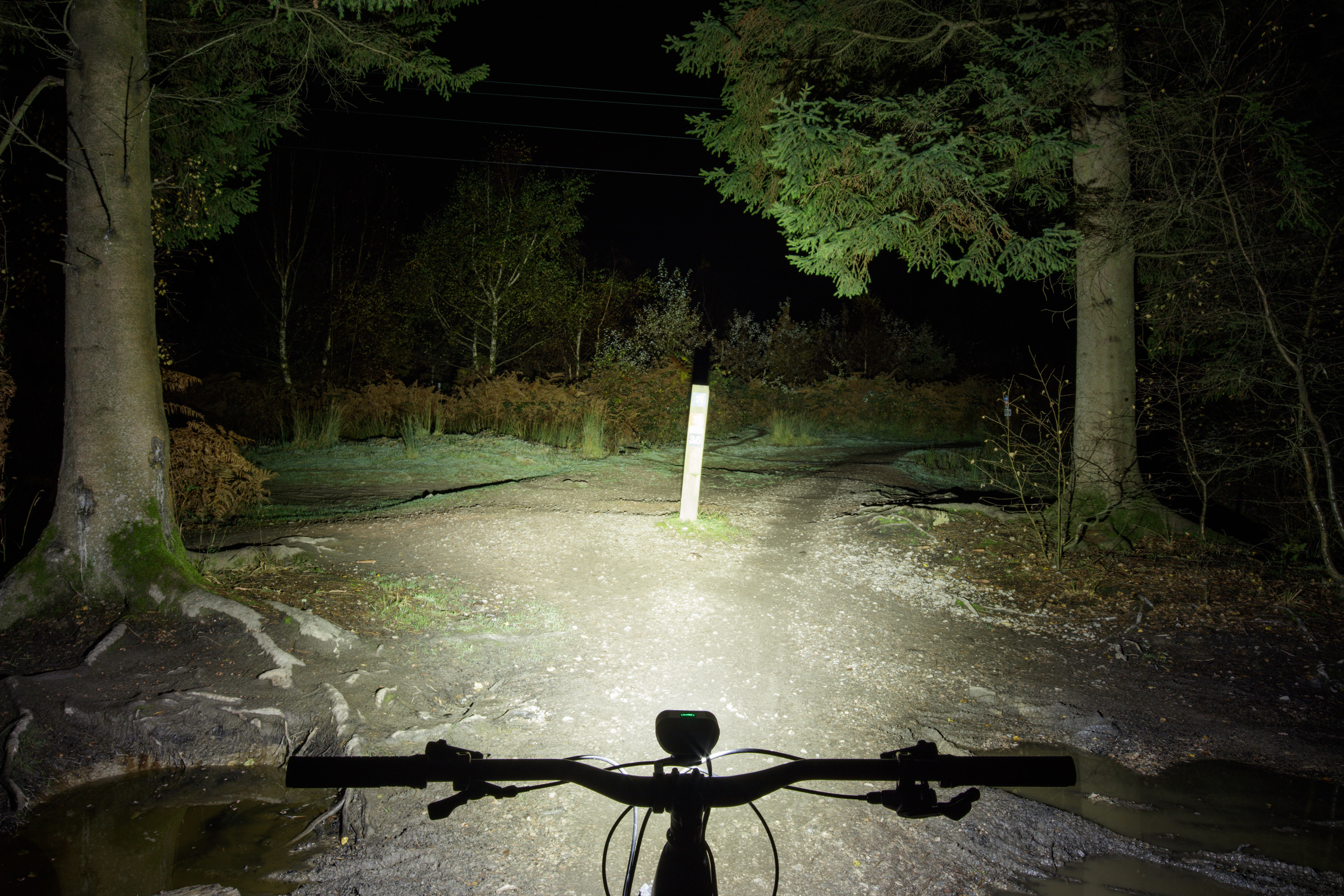
Just because you have a powerful front light doesn’t mean you need to use it on its highest setting all the time.
"The highest setting isn't always the right one. Drop down on lit roads and around other riders," says Rump.
A brighter light will usually have a large battery to support the high output, so you can get substantially greater runtime by choosing a lower output setting, that’s also less likely to annoy approaching riders and drivers.
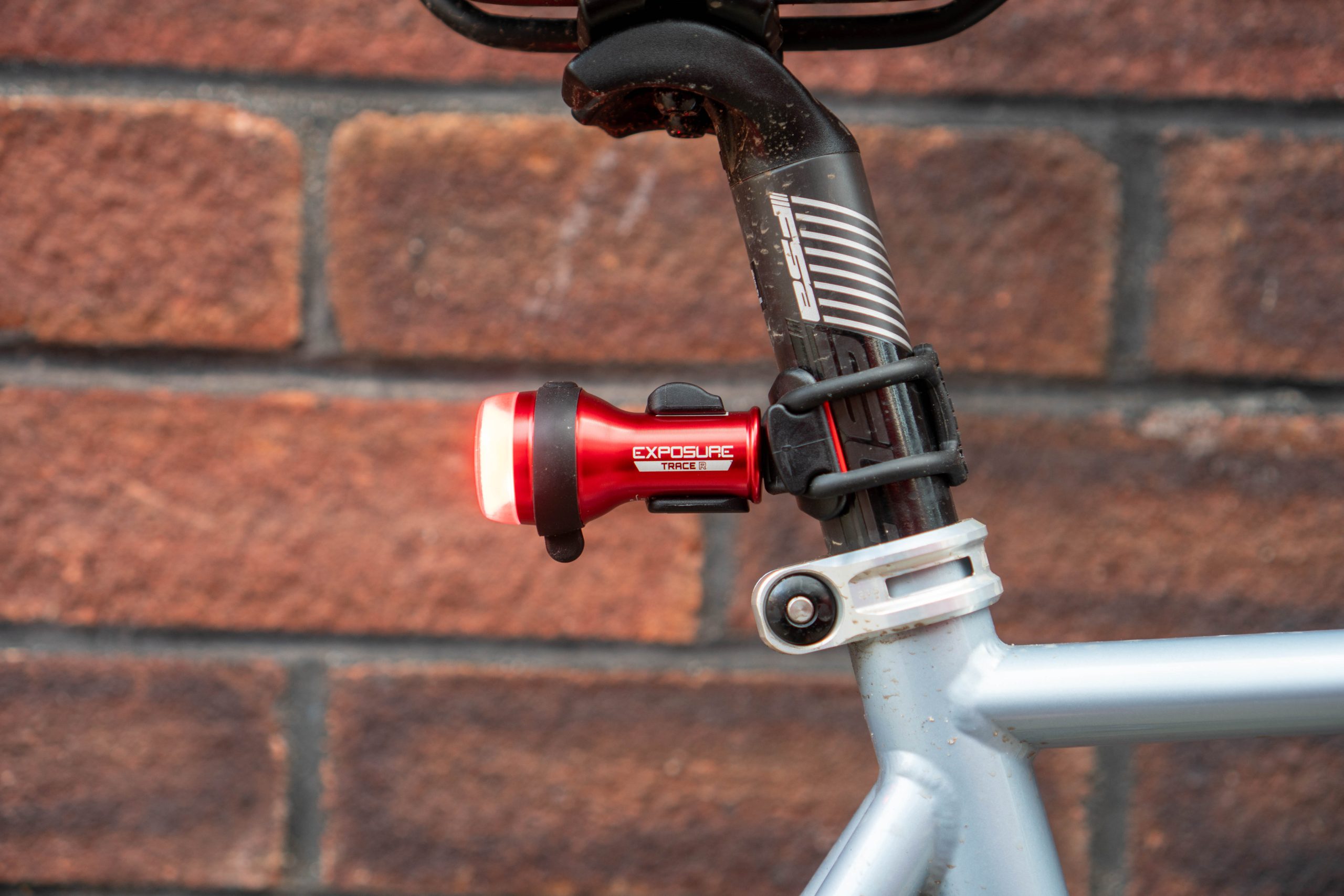
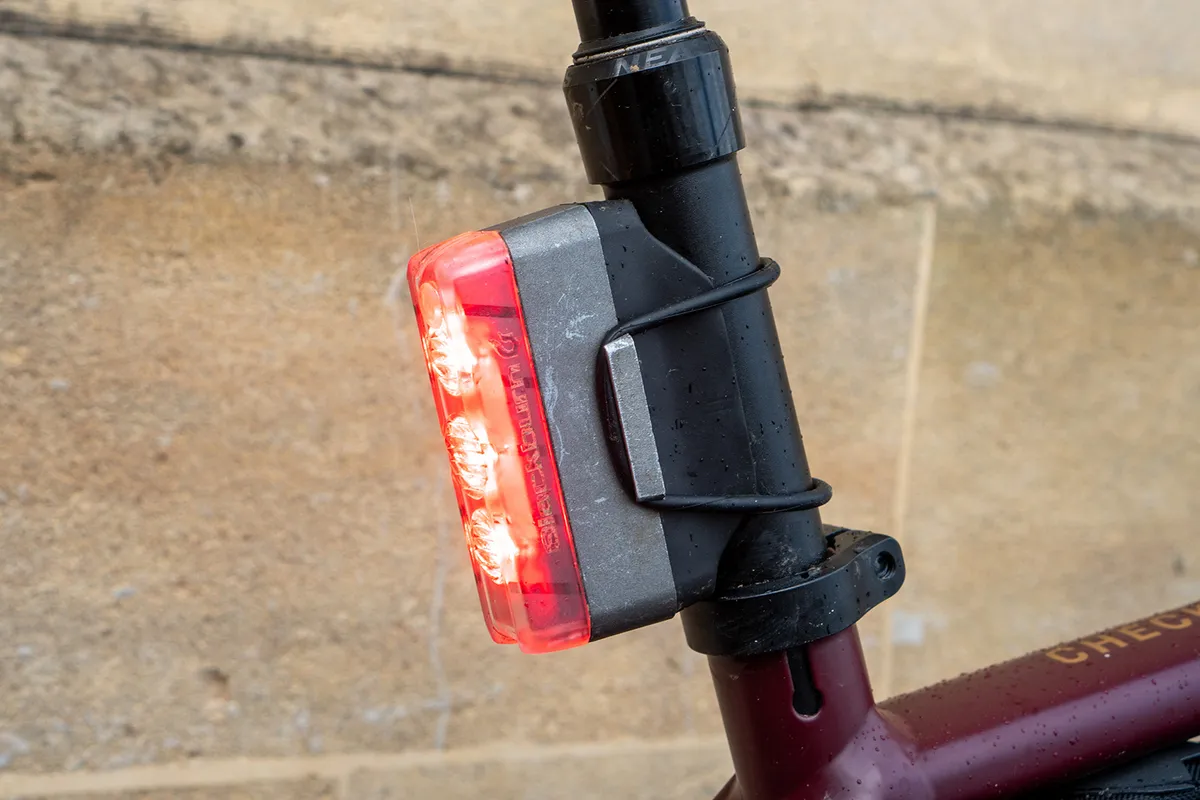
Rear lights can dazzle too, particularly if they’re on a high output flashing setting. Again, there are options to avoid annoying other road users. Reducing the output is beneficial and there are lights which do so automatically.
Rump points to Exposure’s ReAKT: “Our Peloton technology dims the rear light when it detects a rider's [or driver's] front light behind you, then returns to full brightness when nobody's there. ReAKT goes further, adjusting output to the ambient light: brighter on busy lit streets, dimmer on dark roads."
Your eyes are very good at adapting to low illumination too, so you may not need huge output – ask anyone who used to ride with an Ever Ready front light with an incandescent bulb and non-rechargeable zinc-acid battery.