We’ve all heard bike mechanics going on about things you should ‘always’ or ‘never’ do when working on your bike.
I’ve worked in 13 bike shops over 25 years and, in that time, have seen the same maintenance mistakes crop up time and again.
Luckily, many of these are easily fixable or altogether avoidable without spending much money. In fact, four out of five of the tips I'm about to cover are completely free to enact.
Here are the five easy-to-follow pieces of everyday workshop advice – they'll keep your bike running smoothly, save you time and, perhaps most importantly, help you avoid costly mistakes.
1. Don't lube a chain without wiping off the excess

Lubing your bicycle chain is of course better than not doing so. However, wiping off any excess is an important part of the procedure.
Chains run smoothly because of tiny rollers rotating on the chain’s pins. These need to be lubricated to create a film of lubricant between the pin and the roller. This keeps the chain running smoothly with minimal friction, reduces wear, prevents unnecessary noise and provides a barrier against corrosion.
Enough lubricant needs to be applied to the chain in order to penetrate inside the roller, which is more than you might expect.
However, excess lubricant dripping down inside the cassette or chainring isn’t going to do any good, and will trap dirt and grime around your drivetrain. Wiping off the excess after lubricating the chain will help minimise this.
Repeated lubrication without wiping the excess off will lead to gummed-up drivetrains, affecting performance and increasing wear.
It is important to periodically degrease your chain and drivetrain because this gets rid of old lubricant and dirt, leaving bare metal before lubricating again. Periodic degreasing helps maximise the lifespan of your drivetrain.
- Read more: How to clean and lubricate a chain.
2. Don't get contaminants on the disc rotors

The only thing that should be touching your disc rotors is your brake pads.
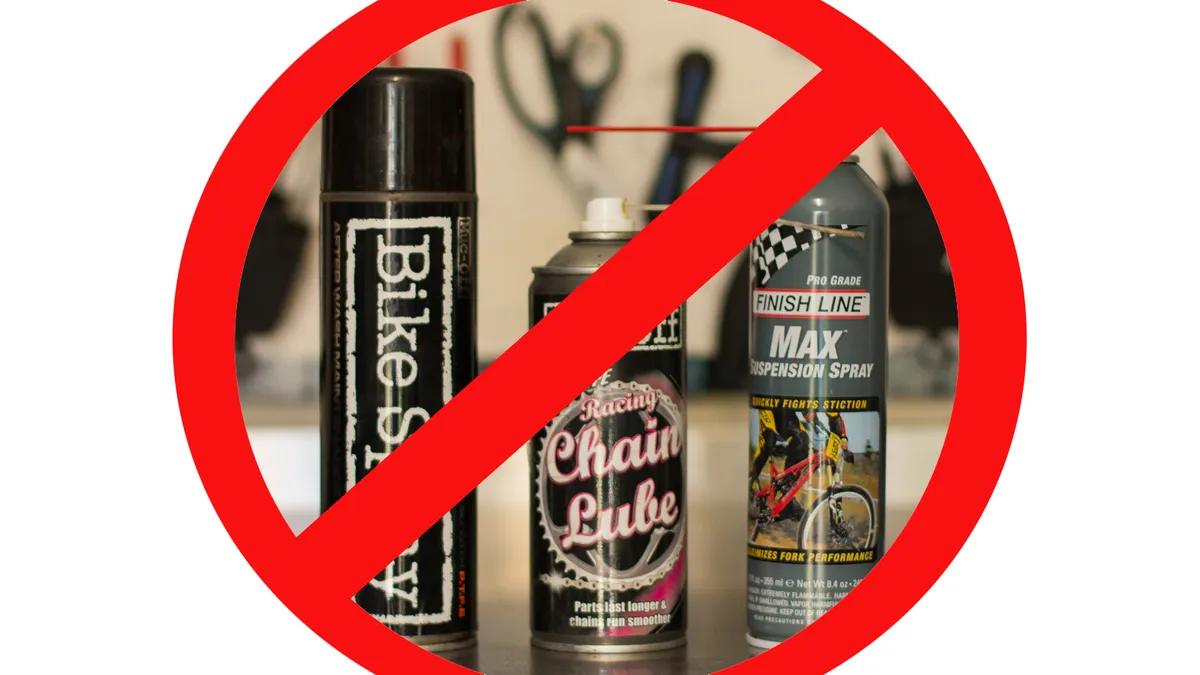
Spray lubricants can easily be directed accidentally onto your disc rotors, which contaminates brake pads and reduces braking performance.
Even degreasers can coat a disc-brake surface with residue and interfere with the important friction-building job the pads and rotor must do.
It’s important to go to every length to prevent overspray or spillage onto disc rotors. Avoid using aerosols near the bike if possible – if it creates a mist, it can land on your rotors.
I’ve even seen mechanics at World Cup events removing the disc rotors and pads from the bike before washing it, so as to prevent any contamination from detergents or oils washed off the bike.
Companies such as Muc-Off have created removable disc-rotor guards to help prevent brake contamination during washing and maintenance.
- Read more: Disc brake rotors explained
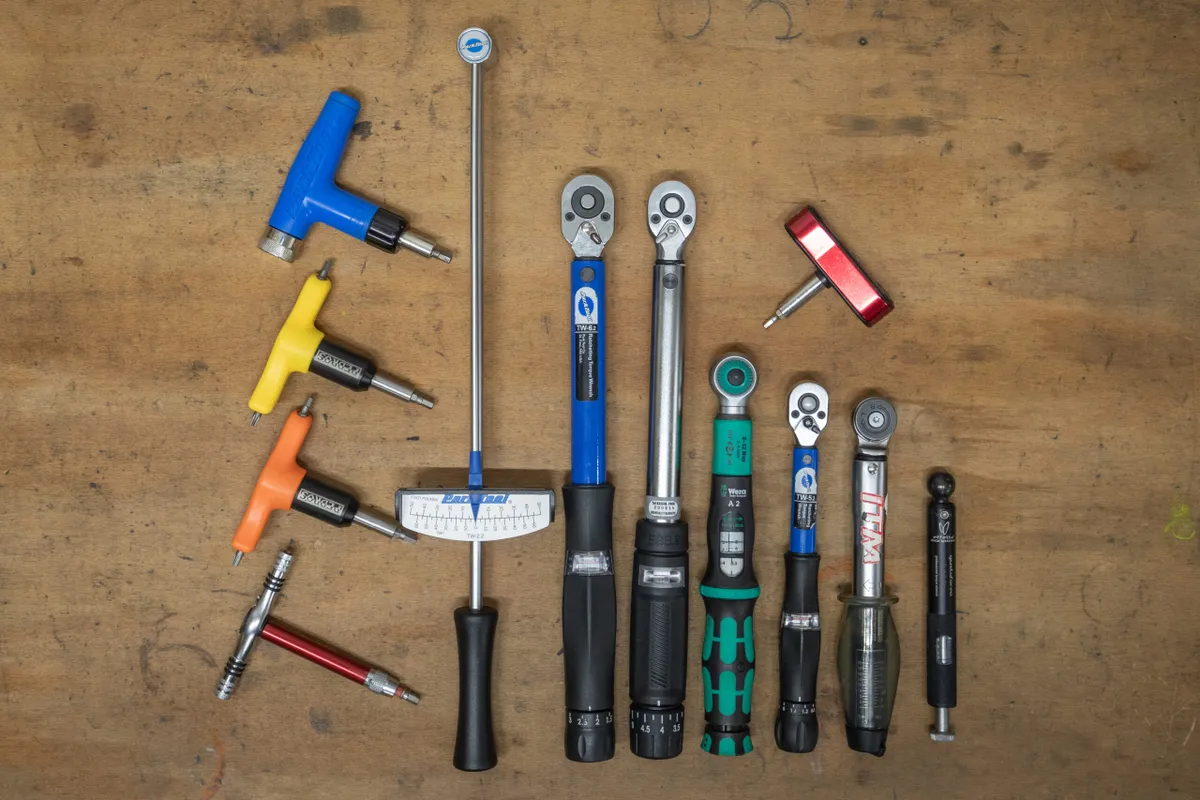
3. Don't overlook the torque wrench (especially with carbon parts)
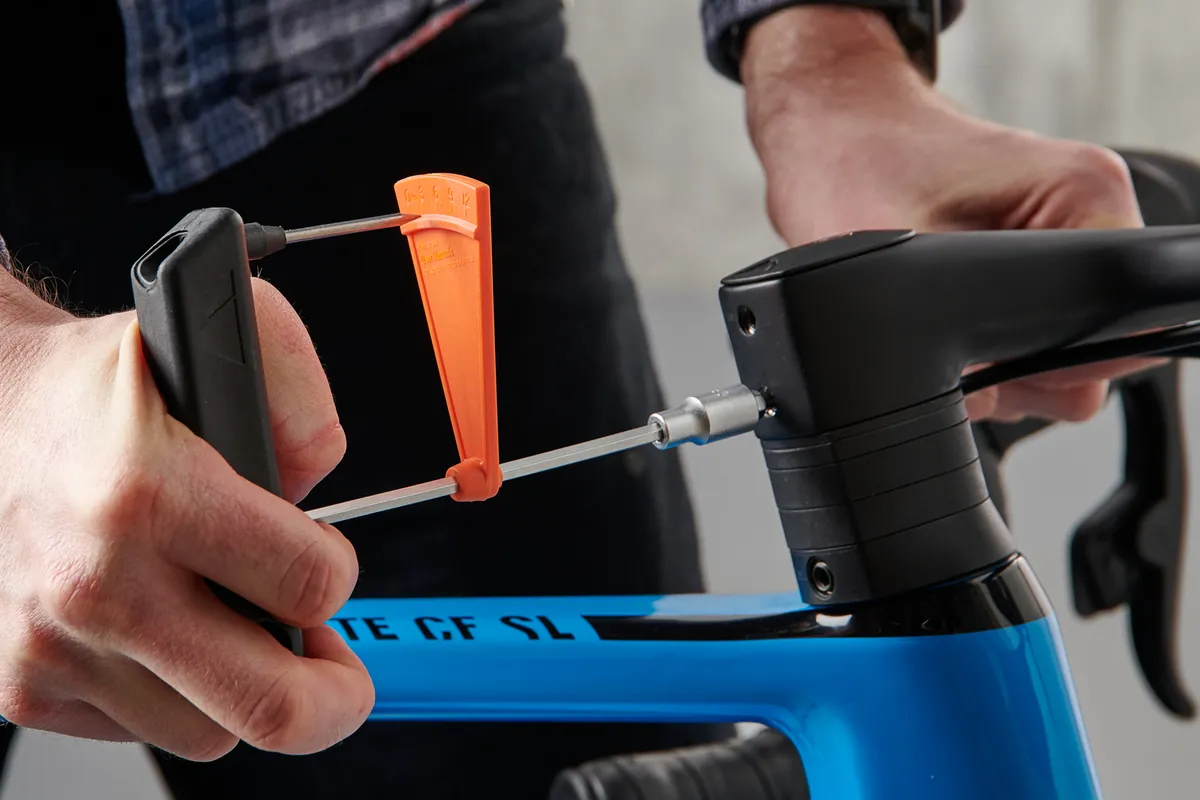
It’s always best to use a torque wrench. Even if you don’t have the latest and greatest torque wrench, using a basic one is still a great guide because it prompts you to look up the torque settings for the particular part.
Some parts can be quite forgiving, but smaller parts such as handlebar and stem clamps, particularly with carbon components, can be damaged easily.
It can be easy to overtighten a bolt, and once a part is crushed, it's ruined – there are no second chances.
Conversely, items with high-torque settings, such as SRAM DUB cranks, must be tightened to the correct specifications, or they could creak or work themselves loose.
Of course, there are exceptions where a torque wrench isn’t feasible, such as trailside repairs, but even then it’s possible to buy minimalist torque wrenches to fit in your bag.
4. Don't forget to bed in disc brakes properly

Bedding in disc brakes properly means putting them through some heat cycles in order to get them working consistently throughout their life.
Bedding in brakes is important to create a friction layer between the disc and pads. It smooths out any irregularities and prevents glazing.
If you hit the road or trail without bedding in brakes, they might not work properly the first time you apply them and could overheat.
There are various methods that different mechanics swear by, but in general bedding in brakes involves getting them up to temperature (but not overheating them) by applying steady pressure, letting them cool and repeating the process.
One method of bedding in brakes is to pedal down a smooth gradient while applying the brakes and allowing them to cool as you pedal back to the top for another lap.
Manufacturers such as Sinter even make bedding-in machines, using a powered roller to spin the wheel. There are maps for different-sized rotors and pads, and lights offer direction to show when to apply the brakes and when to cool them.
- Read more: How to bed in new disc brake pads
5. Never put a bike away wet

It might seem like common sense not to put a bike away when it’s dirty after a wet ride, but it can be harmful to your bike to put it away before it’s had a chance to dry, after washing it.
Bikes contain a mixture of materials and increasing amounts of microelectronics. These can corrode in the presence of water, pitting surfaces and seizing materials together.
It’s always best to put your bike somewhere dry to let the moisture evaporate before storing it in a cold garage or shed.
Doing this will minimise the likelihood of water getting trapped where you don’t want it and steadily corroding your expensive parts.
- Read more: How to clean a bike