In our Tech Q&A series, we tackle cycling queries – from trailside bodges to full workshop overhauls – with help from the BikeRadar team and trusted industry experts. This time, it’s a reader wondering how much they need to spend on a set of hex keys.
I'm fed up of using my old, knackered Allen keys – I don't even know where half of them came from. Is it really worth spending more money on hex keys with fancy spinners and nice finishes, or will a set of cheapo ones cut it?
Gary Cooper
Short answer: you don’t need top-shelf, pro-mechanic jewellery – but you absolutely shouldn’t stick with worn-out bargain-bin tools either.
As BikeRadar’s workshop manager Will Soffe notes: “Hex keys are the most frequently required tool for working on your bike.”
If that’s the tool you reach for on almost every job, surely it makes sense to own a decent set?
You don’t have to spend a fortune, but tolerances matter. Testing by former Australian BikeRadar editor and certified tool dork David Rome in 2017 showed measurable size variations between brands. That might only be fractions of a millimetre, but a sloppy-fitting key increases the risk of rounding a bolt – something that can become an expensive mistake.
If the tips on your current keys are visibly rounded or burred, they’re cooked – replace them.
What should you buy?
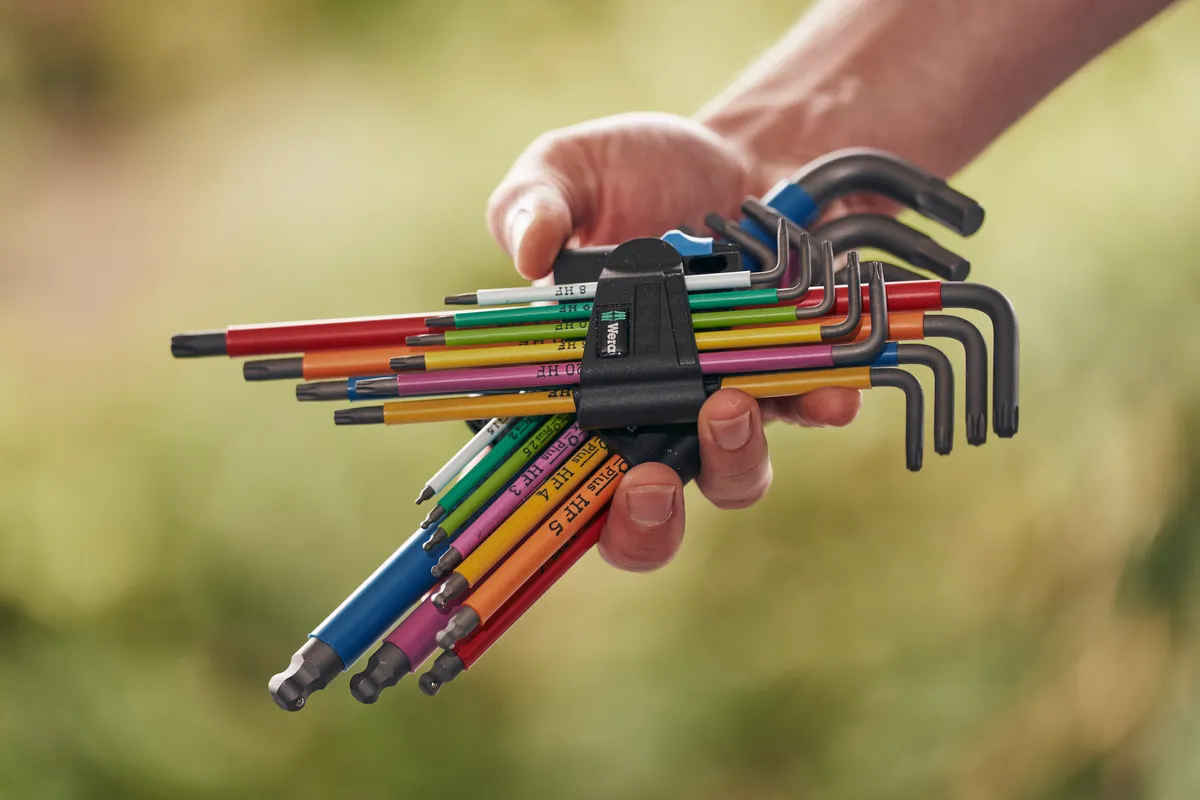
For most home mechanics, a good-quality set of long L-shaped hex keys from a reputable brand is more than enough. Look for cleanly machined, sharp-edged tips and solid steel construction.
We’d typically recommend something such as a set of entry-level Bondhus hex keys for most riders.
SQUIRREL_13838568
The Bondhus 69499 hex keys are only £17 at RRP, for example. But there’s also no harm shopping around for a deal on a set from a reputable bike brand.
As you build out your home workshop, it’s also worth having more than one style.

As Park Tool’s head of education Calvin Jones puts it: “You want square ends, you want ball ends, you definitely want a variety… get several different styles of hex keys depending on what you're working on.”
Ball ends are great for awkward access, but use the square end for final tightening. A 4/5/6mm three-way key is also a workshop staple and can handle a surprising amount of work quickly.