The overriding gravel tyre trend in 2025 was bigger is better. But I’ve ridden a fair few gravel bikes with tyres wider than 50mm and I’m not convinced.
That’s not necessarily an issue with the dimensions. It’s more to do with what I want from a gravel tyre.
From gravel's early days, when bikes such as the original GT Grade came with then ‘huge’ 28mm tyres, even early trail-ready gravel bikes such as Cannondale’s suspension-equipped Slate came with 42mm. Now we’re being told bigger is better.
50mm or bigger tyres have their flaws

Over this winter, I’ve run 50mm gravel tyres on a few test bikes, and even bigger tyres on some models that can fit 29in mountain bike tyres.
Yes, these wider tyres mean you can run much lower pressures to extract every millimetre of grip and revel in the extra comfort afforded by the larger volumes. But there are downsides.

On the tarmac leading to off-road trails, larger-volume tyres can feel ponderous. They also deform more on a hard, unmoving road, which means they feel squirmy in corners. The same can be said on hard-packed, frozen, solid gravel roads.
Compliance over rougher surfaces means your ability to maintain speed is improved. But getting up to speed doesn’t feel anywhere near as rapid – especially if you're more used to the acceleration of a road bike.
The flipside is I think anything smaller than 40mm is basically a cyclocross tyre or a road tyre with light grip.
Smaller can be fast, but not necessarily forgiving

Considering 50mm tyres can be ponderous, and 40mm tyres are on the narrow side, it might not surprise you that I run 45mm tyres on my Lab71 Cannondale Topstone.
Admittedly, it’s the 2023 model, so this is the widest tyre my Topstone can take. However, on the road, they’re great – quick enough to keep pace with road bikes, not as squirmy in the corners and fast on lighter gravel roads.
The downside is thinner tyres find their limits quicker in rougher conditions. With 45mm tyres, you need to run a slightly higher pressure to prevent rim strikes. That means less comfort than bigger tyres, especially on fully rigid gravel bikes.
That's mitigated somewhat by bikes such as the Topstone, with its soft-tail back end, and I run mine with a suspension fork up front.
Adding a gravel fork is an expensive way to increase comfort, but it’s not as expensive as upgrading a perfectly good bike just to get broader rubber on your wheels.
We need better tyre options, too

Irrespective of what tyre width you run, gravel tyre options were limited until fairly recently.
Most gravel tyre makers were trying to provide one-stop solutions for all. That meant trying to create a tyre that would work for transcontinental bikepackers, yet somehow appeal to day riders and racers trying to put together lightweight gravel race bikes.
A tyre built for loaded-up bikes needs a stiffer, heavier casing to handle the extra weight. That’s fine for bikepacking, where toughness and longevity are key. But I wanted gravel tyres that offered zip and speed, so I always felt hampered.
Add to that tread-condition options, and I’ve been forced into using tyre pairings that weighed more than the wheels they were fitted to.
I’d say a lot of the trend of pros switching to mountain bike tyres was because of the huge wealth of options. In a much more mature market, and one that takes racing seriously, you can get lightweight, super-soft durometer rubber and highly evolved grip. That’s fantastic if your bike (unlike mine) can take the larger sizes.
More choices are coming

Searching for tyres in the past was a process of trial and error. Some of the smaller, niche brands did good things. I’ve been impressed by Czech rubber specialist Tufo. Its 40mm-wide Swampero tyres are light, even with an aggressive mud-ready tread. They’ve proven hard-wearing, too.
Tyre choice is more limited for my Cannondale Slate gravel bike, which has 650b wheels. For riding on trails, I’ve settled on Specialized’s Sawtooth 2Bliss Ready tyres in 42mm, which is the maximum clearance on the Slate.
I switched over to some excellent slicks in the summer from Compass (now Rene Herse), with the Babyshoe Pass 42mm slicks. Those now reside on my Sven Cycles e-commuter bike and have proven tough enough for my 30-mile commute in all weather.

But things are looking up on tyre choice. Some of the major brands have now started to make tyres more performance-oriented.
I’ve been impressed by the latest incarnation of Schwalbe’s G-One tyre, particularly the RS model. Maxxis’ Rambler is a tyre I already liked, but the performance improvements from the latest Hypr-X compound version are like night and day.
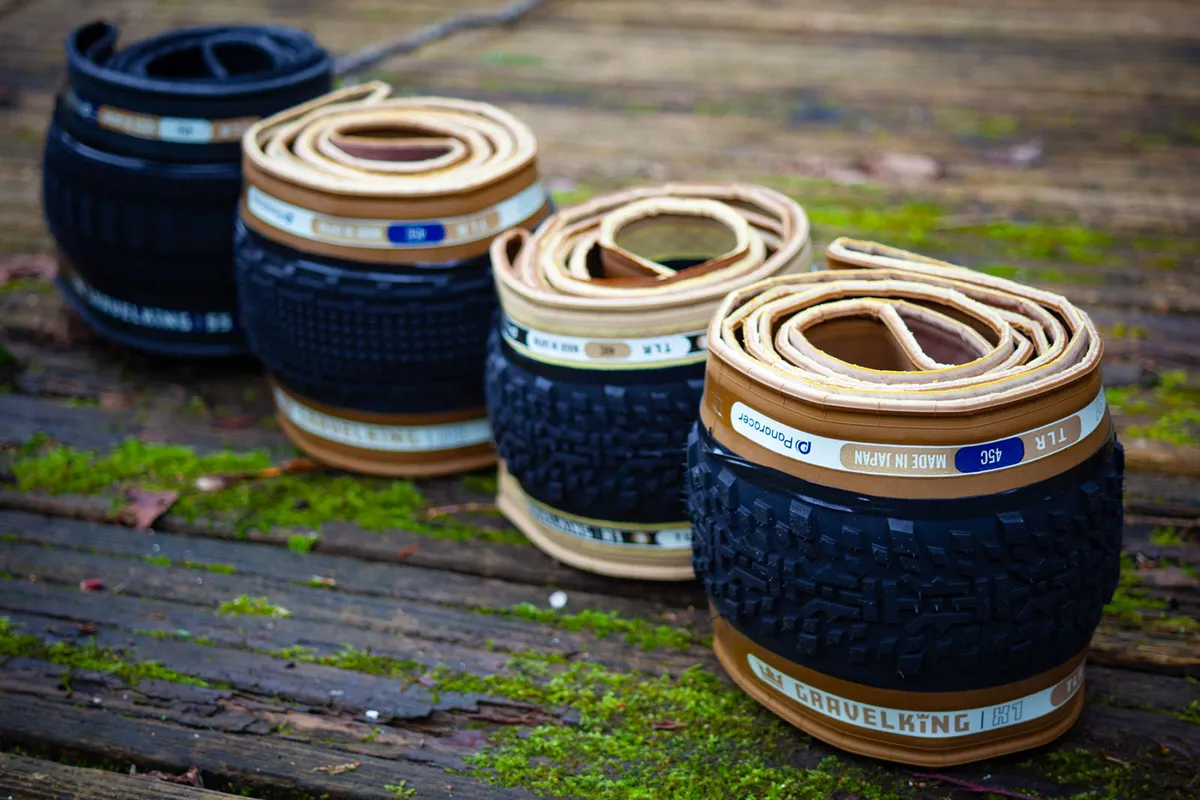
Panaracer’s long-needed update to the classic GravelKing range uses softer compounds and lighter casing options (and Panaracer makes them all in 650b size). I’ve heard good things about Vittoria’s new compounds, too.
It’s a trend that’s most welcome, and long overdue.
You don’t need to replace your bike

It’s easy to be swayed by the hype surrounding ever larger tyre sizes for gravel. And it can make you think you need a new bike.
I almost fell into that trap in 2025, especially after riding so many great new gravel bikes, which all had larger clearances.
The bikes I had the most fun on – Parlee’s epic Taos and Mondraker’s fun-filled Arid – had 50mm+ clearances, but both came with 45mm tyres. And, ultimately, I never found myself wanting more.

So, now we’re seeing a wider choice of gravel bike tyres, I’d recommend you give your gravel bike a treat and upgrade to one of the new generation of softer-compound, lighter and more performance-oriented gravel tyre options. And if your current favourite tyre hasn’t seen a serious update in the last few years, I’d bet it’s on the cards.
If you're happy with your current bike, stay with it. I guarantee getting better tyres will be a far better way to upgrade your 2026 gravel fun rather than the financial strife of buying a new bike.