The Tour de France is always a showcase of the best new cycling tech. Each year, bike brands roll out the latest versions of their most coveted kit.
Ahead of the race getting underway today in Barcelona, this week we saw the launch of the new Specialized Tarmac SL9, Look 795 Blade RS and Orbea Orca Aero. These releases followed several bikes being teased at the Tour Auvergne-Rhône-Alpes, which will likely appear again at the Tour.
But the road bikes will have to wait, because today’s Grand Départ is a team time trial. It’s the first time we’ve seen a TTT at the race since 2019, so I thought I would share (in no particular order) my favourite Tour de France time trial bikes, from early modifications to steel road bikes and the very latest tech being used at this year’s Tour.
Greg LeMond’s 1989 Bottecchia Chronostrada
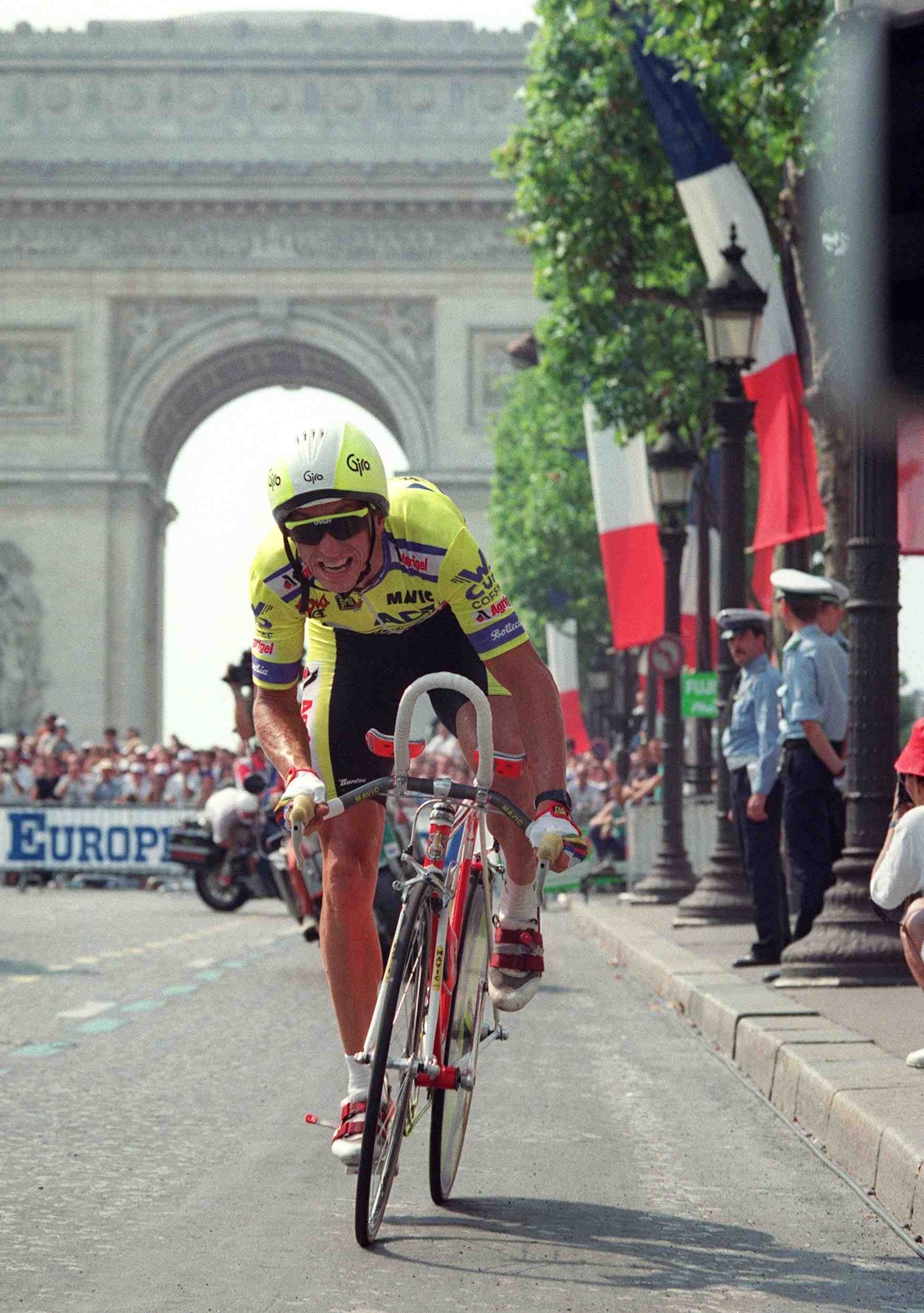
In the 1980s, time trial bikes evolved from being standard steel race bikes into low-pro designs. These had a custom steel frame with a dropped front end and a 650c (or 26in) front wheel.
In this respect, LeMond’s custom Bottecchia Chronostrada was much like the rest of the peloton. The major difference was LeMond added a clip-on Scott aerobar.
The clip-on was designed by Boone Lennon, a US skiing coach who applied the downhill skier tuck position to bike riding – and from which a revolution in time trial and triathlon design was born.
This radical, aerodynamic position arguably helped LeMond win the 1989 Tour de France. The final stage was an individual time trial, and LeMond clawed back a 50-second deficit to beat Laurent Fignon by 8 seconds, which is the smallest victory margin in Tour de France history.
Miguel Induráin’s 1992 Pinarello Espada
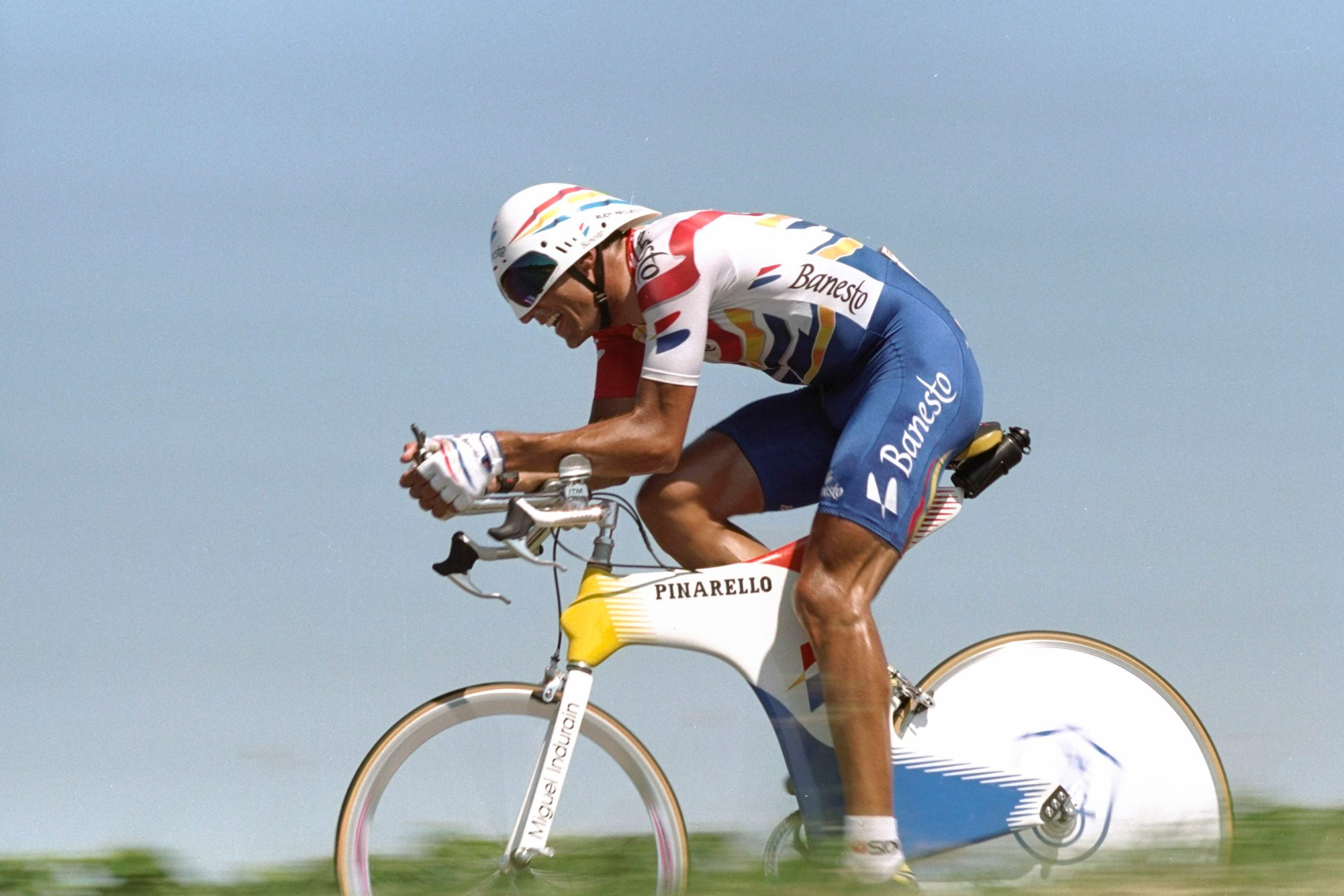
The Espada was Pinarello’s answer to Chris Boardman’s Lotus 108/110, and it was initially conceived for Induráin (Big Mig) to take on the hour record.
Whereas the Lotus had been designed by Mike Burrows in a workshop in Norfolk and refined by Lotus sports cars, the Espada was the work of Elvio Borghetto (who went on to work on Pinarello’s Dogma F8, Team Sky’s race bike).
To make the bike, Pinarello received technical assistance from Lamborghini and employed plenty of wind-tunnel testing. It was the first time Pinarello had worked in carbon fibre and helped herald a revolution in bike construction.
Induráin took the hour record on the track version of the Espada, becoming the first rider to break the 53km mark.
Pinarello then developed the road-going Espada on which Induráin dominated Tour time trials. It’s reputed that Pinarello only ever made four Espadas.
Chris Boardman’s 1994 Lotus 110
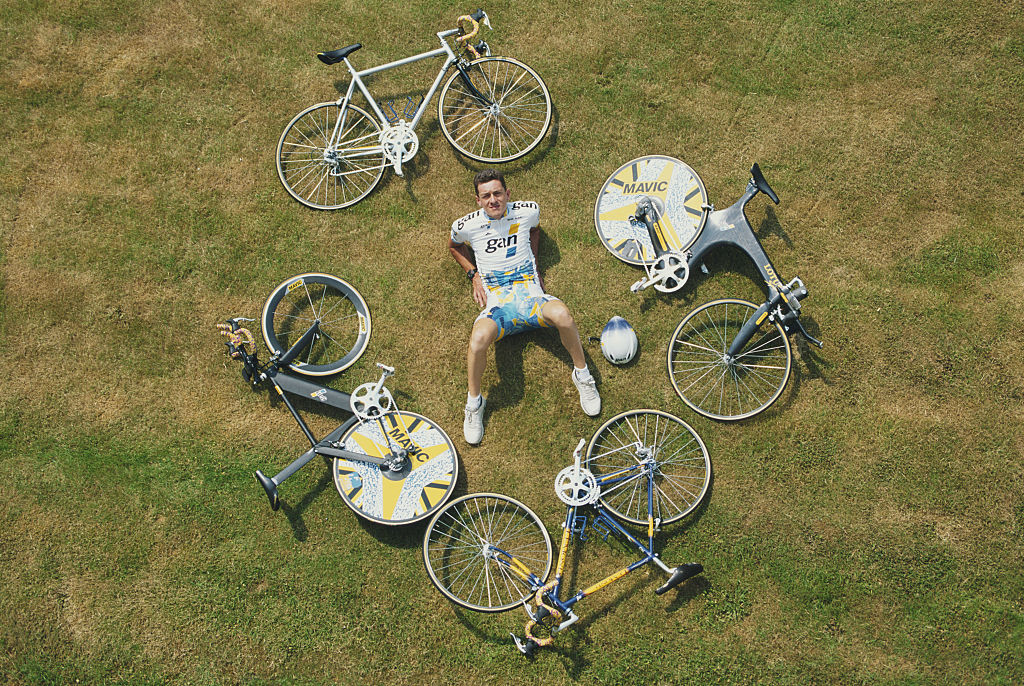
Thousands of words have been written about the Lotus track bike. It’s what helped make Chris Boardman a household name in the UK, even though Boardman was an exceptional rider in his own right.
The road-going Lotus 110 was based on the all-conquering track bike from the 1992 Olympics, and Boardman took the prologue in the 1994 Tour averaging an astonishing 55.152kph (34.27mph). He beat the three-times and defending Tour de France champion Miguel Indurain by 15 seconds over only 7.2km.
Jan Ullrich’s 1997 Pinarello Parigina
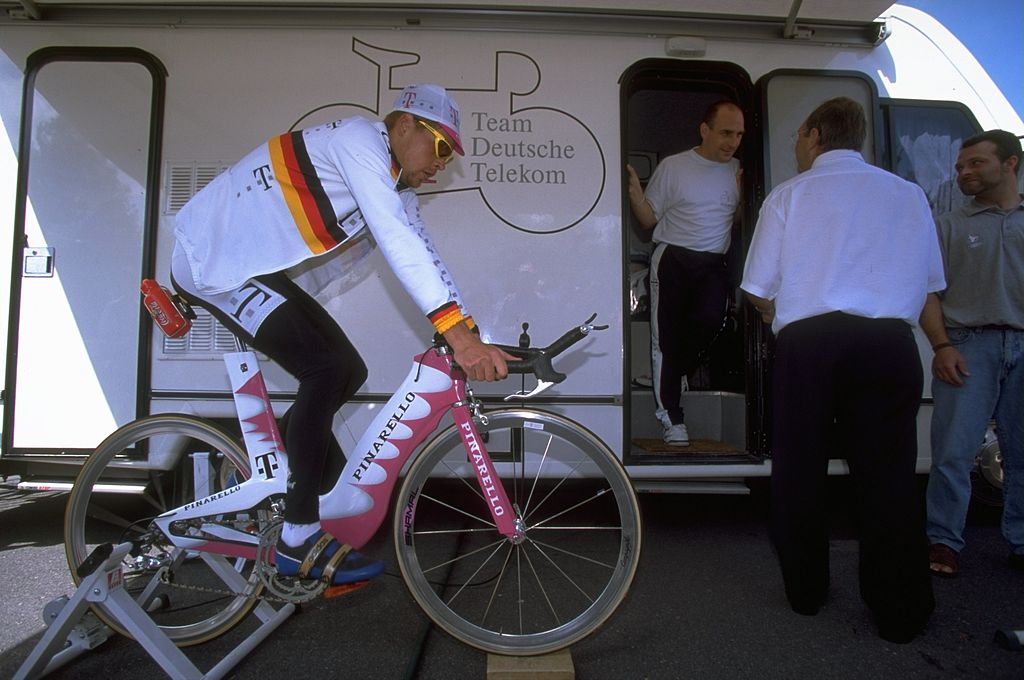
The Pinarello used by Ullrich (and Bjarne Riis) in the 1997 Tour de France was an evolution of the Espada. Much like the Espada, the Parigina (Italian for Parisian) was initially designed for the Italian Olympic team ahead of the 1996 Atlanta Olympics.
The radical design had no top tube. Instead, there was just a large aero down tube and a huge seat mast that double as a fairing for the rear wheel. Reputedly, the prototype Pinarello Pariginas of Ullrich and Riis each cost over $20,000 to fabricate. That’s the equivalent of $41,000 today.
The bike earned the unenviable nickname of the ‘Frisbee’ after Riis, in a pique of rage, threw his into a field in the final time trial. He was frustrated by mechanical issues – and no doubt Ullrich’s domination throughout the race.
The Parigina showcased lots of clever thinking. The deep chainstay section effectively had a cutout to enable the chain to run through it. Pinarello even used surface textures to condition airflow (something Ridley reintroduced on early Noah Road bikes).
Sadly, we never got to see how far the tech on the Espada, Parigina and Burrow’s Lotus bikes could be pushed.
In 2000, the UCI fully enforced the 1996 Lugano charter. These new regulations effectively banned any bicycles that didn’t have a traditional diamond-shaped frame. They said it was for reasons of ‘safety’ and so that less well-funded teams and nations could compete on a level playing field.
Of course, that worked, didn’t it? Some 26 years later, professional bike racing is an equal affair with no particular teams or nations dominating. Oh, wait…
Lance Armstrong’s 1999 Litespeed Blade
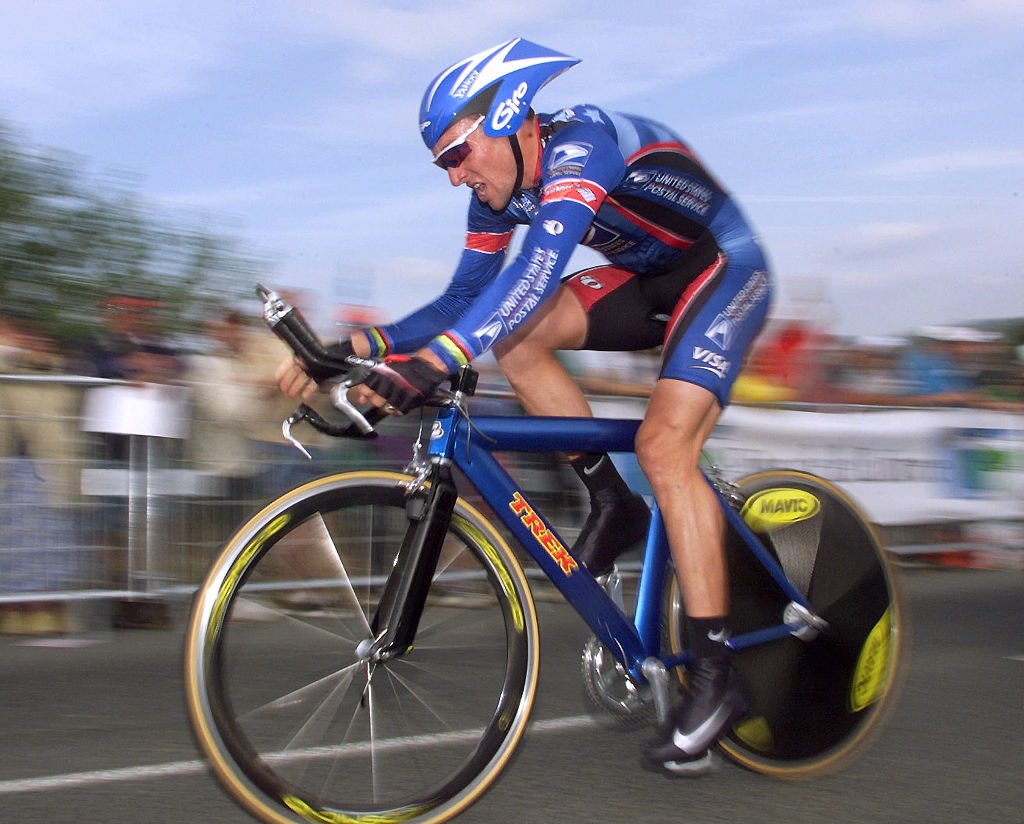
Trek didn’t have a dedicated time trial bike for the 1999 Tour de France. So, Lance Armstrong’s US Postal Service team used the titanium Blade from fellow American brand, Litespeed.
Unlike other radical designs, the air foil tube shapes were not from moulds or castings. They were all hand-formed at Litespeed in Tennessee, which was then still under the ownership of its founders, the Lynskey family.
To be sponsor-correct, the bikes were painted and branded as Trek bikes. This was one of the last instances (we know about) of a bike being rebranded for the Tour, and one of the few times titanium has won stages at the Tour, even if Armstrong's victories have been scrubbed.
In 2002, Australian sprint ace Robbie McEwen won two stages on a titanium Litespeed for Lotto.
Carlos Sastre’s 2008 Cervélo P3C
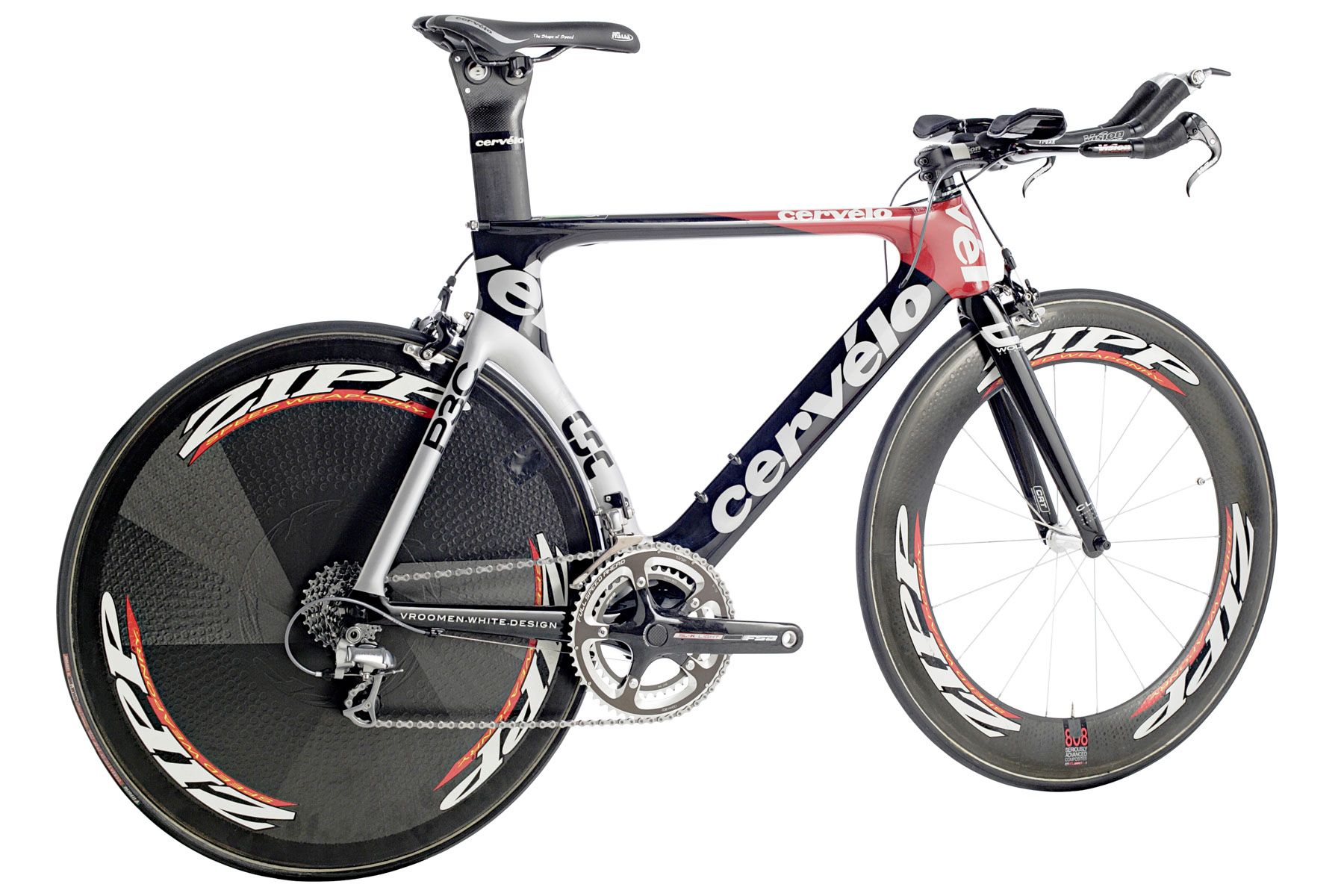
Cervélo cemented its reputation by pushing aerodynamics with lightweight designs in the carbon fibre era, and the P3C is a prime example of this approach.
The carbon tubes used Cervélo’s TrueAero Smartwall technology. That meant super-slim aero profiles and a narrow frontal profile.
The radical seat tube hugged the rear wheel and was a key feature of the P3C. It’s a feature you can recognise today (although much-refined) in bikes such as the Tour- winning Colnago Y1Rs.
Carlos Sastre’s CSC team were renowned for tweaking components. Reputedly, they removed bearing seals on their Zipp wheels and replaced the grease with oil to reduce friction and unlock extra speed.
Cadel Evans’ 2010 BMC TT01
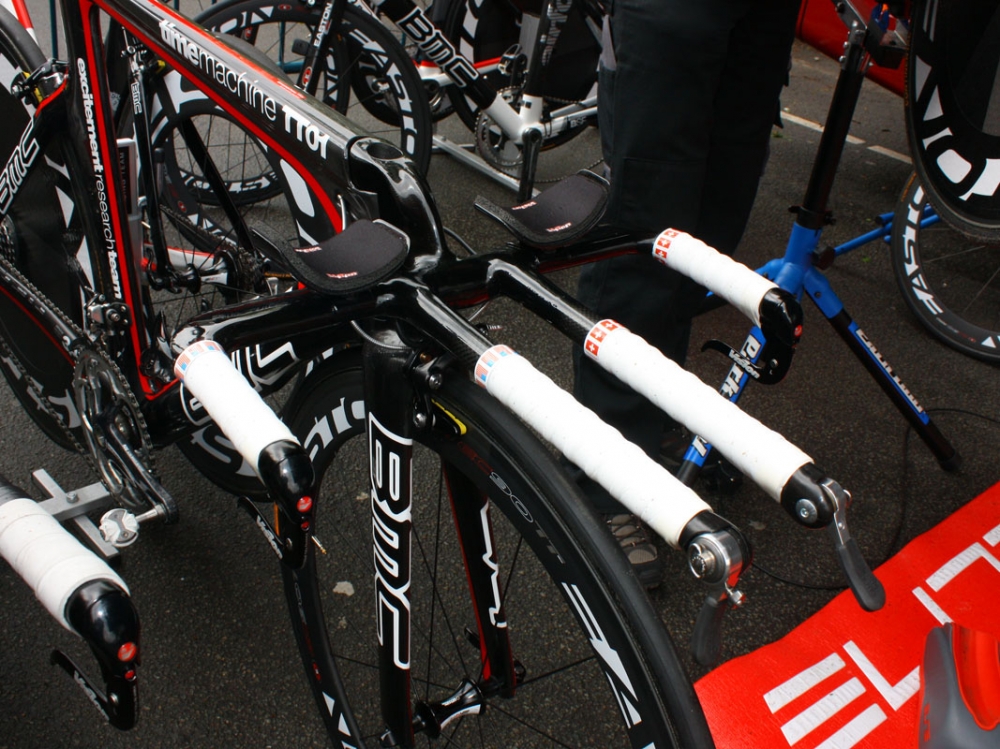
The TT01 showcases how designers can adapt to restrictive rulings and regulations. The original TT01 used so much new thinking. At the front, the twin-crown (or ‘Living Hinge’ as BMC called it) meant BMC could use much smaller bearings for the headset, thus narrowing the front end. They could also make the leading edge deeper to improve aerodynamics.
At the time, similarly forward-thinking brands such as Look and Felt did similar.
The difference on Cadel’s 2010 bike was that BMC fabricated a new fork that incorporated both the stem and bar. That was in order to accommodate Cadel’s extremely low ride position, which effectively put the bars below the head tube’s top.
At the back, the deep aero seatpost fitted into the seat tube with a hidden wedge clamp. This has now become the norm on bikes designed to be more aerodynamic.
Chris Froome’s 2015 Pinarello Bolide
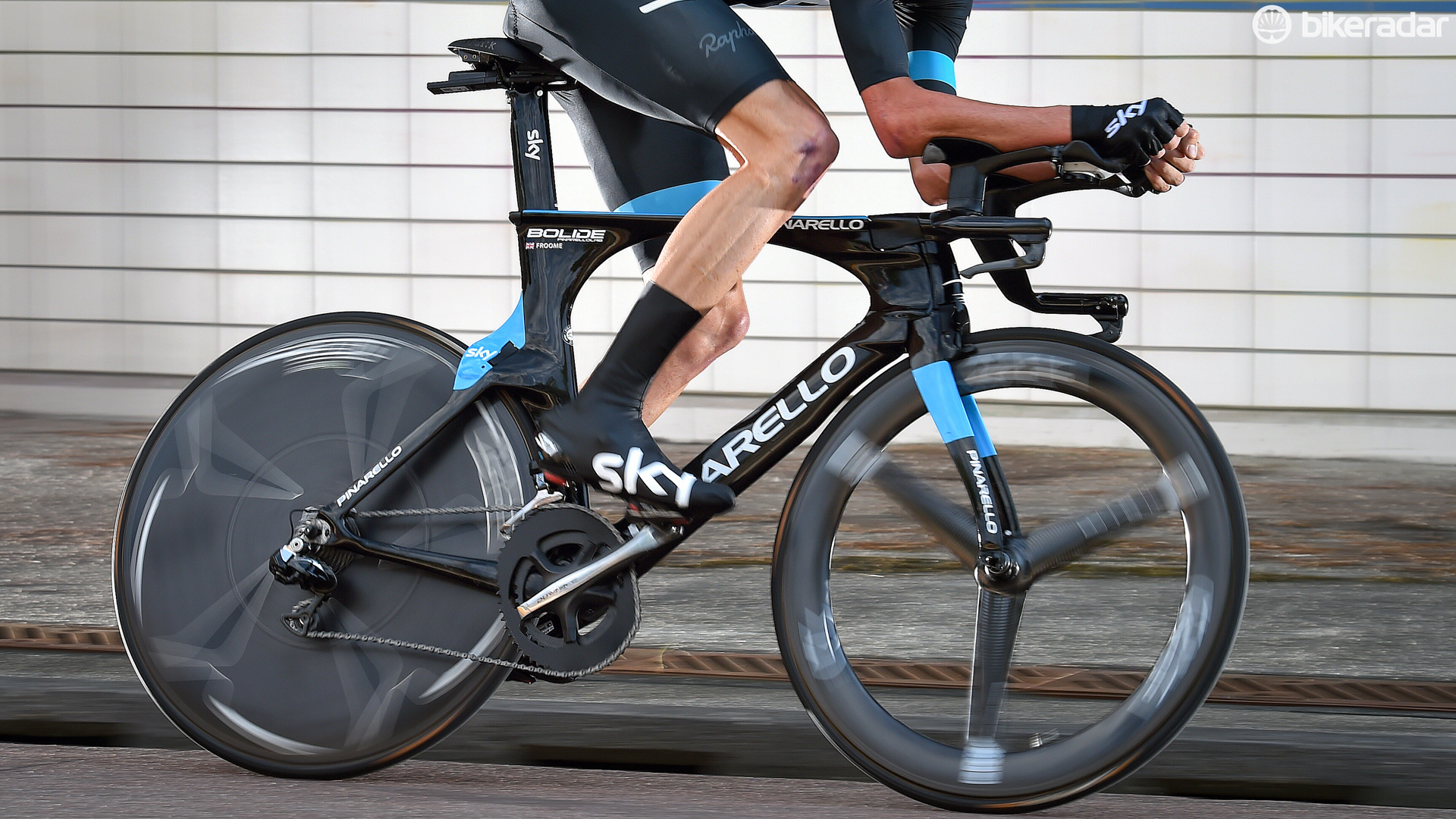
Chris Froome's Pinarello Bolide pushed the rules to the max. Pinarello argued the Bolide’s somewhat controversial rim-brake fairings were structural to get around rules that ruled out aero additions to bikes.
Pinarello brought the Bolide out in 2013, and the design was refined with the help of Jaguar racing. It’s also the bike that formed the basis of Sir Bradley Wiggins' hour-record setting track bike, continuing the story of Pinarello teaming up with sports car specialists for hour-record success.
Chris Froome’s Factor Hanzo 2021
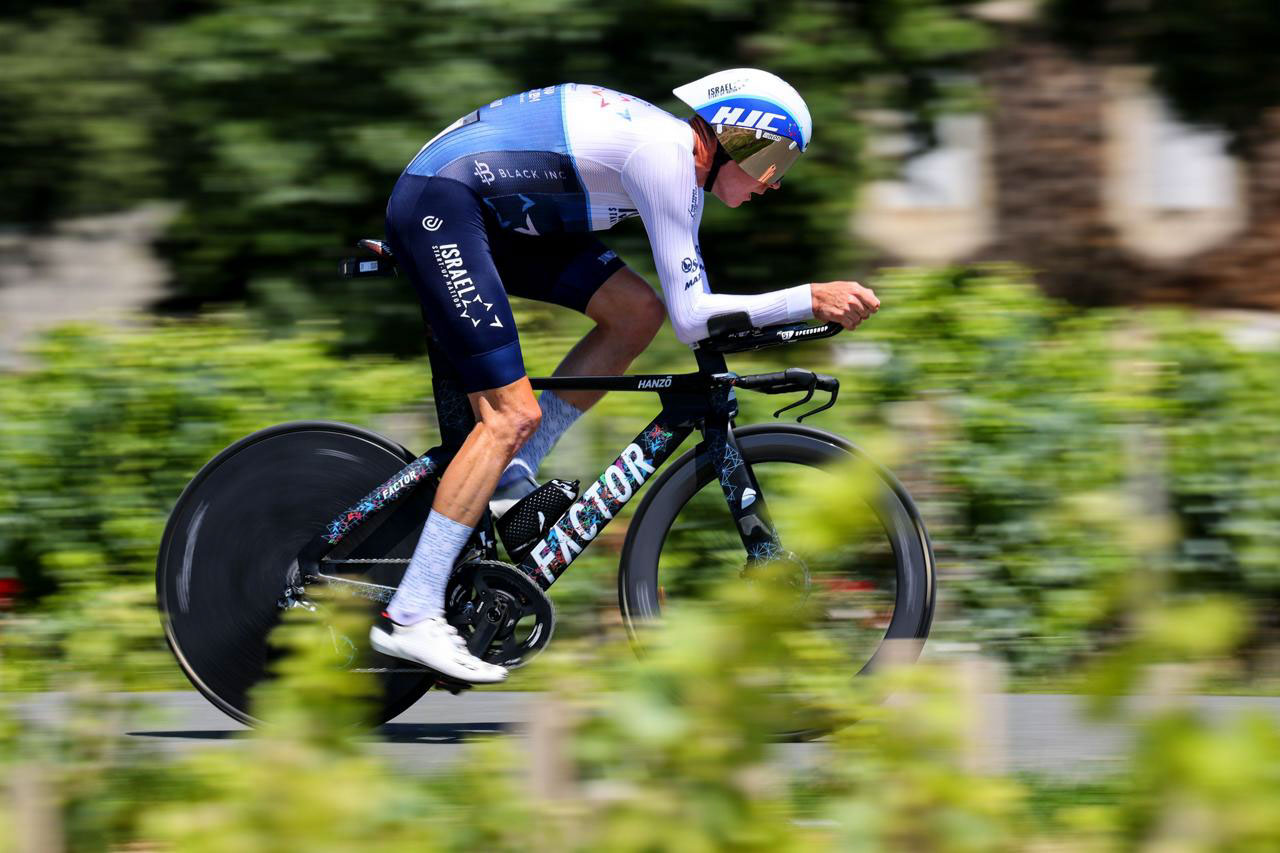
Froome’s second entry in my list admittedly comes after his glory days at Team Sky. That said, the Factor Hanzo pushed boundaries so far that it makes the Bolide look conservative.
The Hanzo took huge advantage from the relaxation of the UCI rules; every element of the design interprets the regulations and pushes them to the limit.
The front end takes full advantage of the UCI bringing down the minimum cross-section on tubes from 2.5cm to 1cm. The Hanzo fork legs, head tube, stem and bar combination all are reduced. Factor claims this means it has been able to reduce the frontal area by a huge 60%.
The mono-riser for the bar, the huge clearances of the fork around the wheel and the stays at the rear mean less turbulence created by rotating wheels.
Factor’s in-house construction also meant it could refine the carbon to ensure the bike was stiff enough to handle the power of the strongest riders. This is something lots of early aero designs struggled with.
I don’t think the Hanzo is a pretty bike, but I have a ton of admiration for the boldness of the design and the conviction to prioritise function over form completely.
Tadej Pogačar’s 2026 Colnago TT2
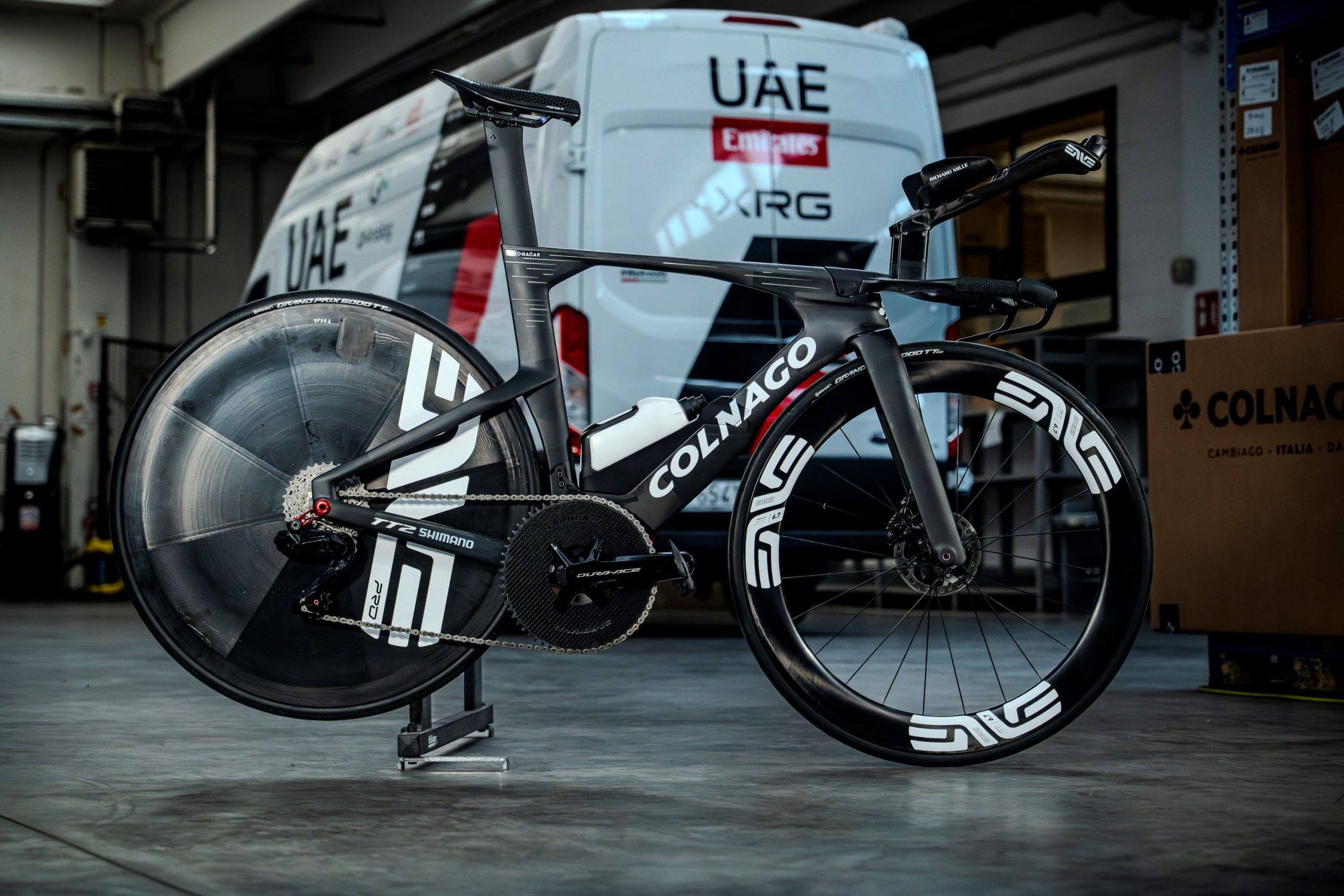
As if Pogačar needed any greater advantage, Colnago’s new TT2 time trial bike may not look radically different from the established TT1, but under the skin there have been some huge changes.
Colnago has managed to shed more than half a kilo in weight from this slippery, special bike. It claims the TT2 could be built down to the UCI weight limit of 6.8kg, which would be more than a kilo lighter than Pogačar’s previous TT bikes.
It could also prove a useful advantage during today’s team time trial, which includes climbs up to Barcelona’s Olympic stadium.