
If you’re a dedicated road bike tech fanatic, you’ll have likely seen that what looks very likely to be Shimano's unreleased Dura-Ace R9300 groupset has broken cover at this year’s Vuelta a España.
Yet while a new flagship road bike groupset from the legendary Japanese brand would usually be cause for celebration for a nerd like me, this leak has left me feeling extremely underwhelmed.
We don’t yet have any official details about the groupset from Shimano, but the basics of what can be gleaned from spy shots and race photographs so far offer little to get me excited.
Shimano Dura-Ace Di2 R9300: what we know so far

Before I tell you why I’m so disappointed with what’s been leaked, let’s recap what we’ve learned about the new groupset so far.
Thanks to reporting from our frenemies over at CyclingNews, we know the groupset has a 2x13-speed configuration.
That much we’ve expected for a long time, given the move to 13-speed is a logical next step from the current 12-speed groupset, Dura-Ace Di2 R9200.
Leaked wheel specs suggest this might require a new freehub standard, although what freehub is being used here can’t be gleaned from the available images.
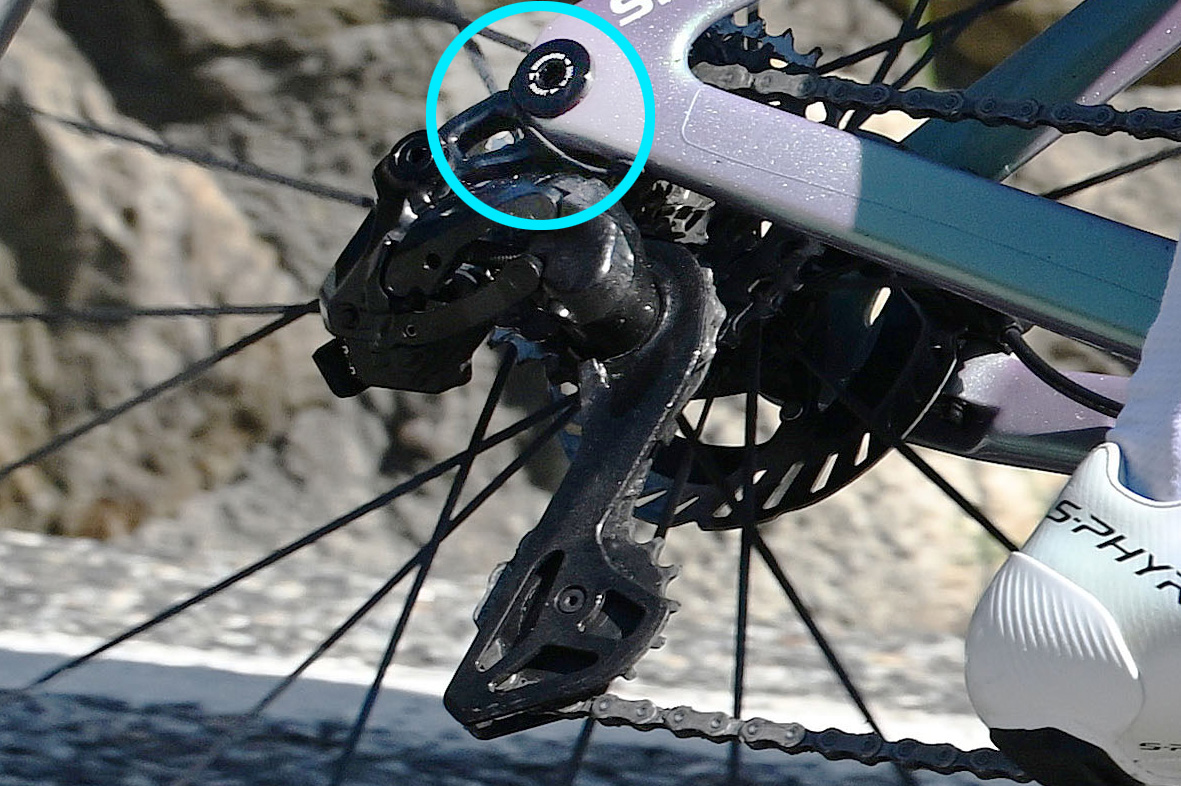
What we didn’t expect, however, is that the groupset appears to remain semi-wireless, because a wire can be seen leading from the frame and into the rear derailleur. There’s also no visible battery on the rear derailleur, or enough bulk to suggest the battery from the fully wireless XTR Di2 M9200 rear derailleur has been sequestered away somewhere on it.
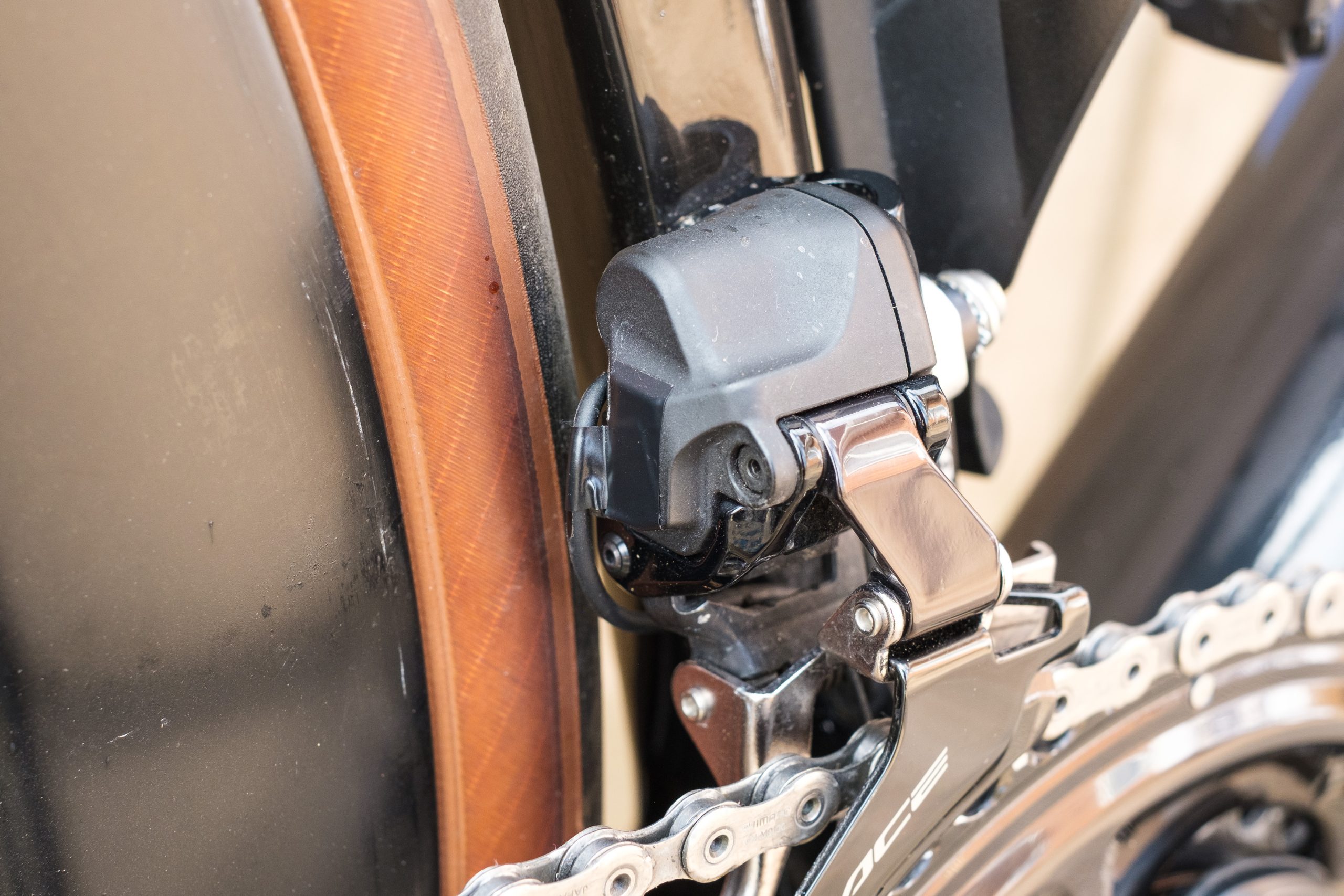
The small size and lack of anything that looks like a battery on the front derailleur likewise suggests it hasn’t gained the ability to operate wirelessly.
The only other visible updates to the derailleurs, then, are a set of solid, potentially oversized pulley wheels on the rear and what looks like a hollowed-out section on the pivot arm of the front.
Although the derailleur looks to be compatible with conventional derailleur hangers, using Shimano's 'direct mount' standard, the Shimano branding on the Universal Derailleur Hanger (UDH) signals the brand may now be making its own hangers for UDH-compatible frames.
How these differ (if at all) from the standard SRAM-spec options remains to be seen.
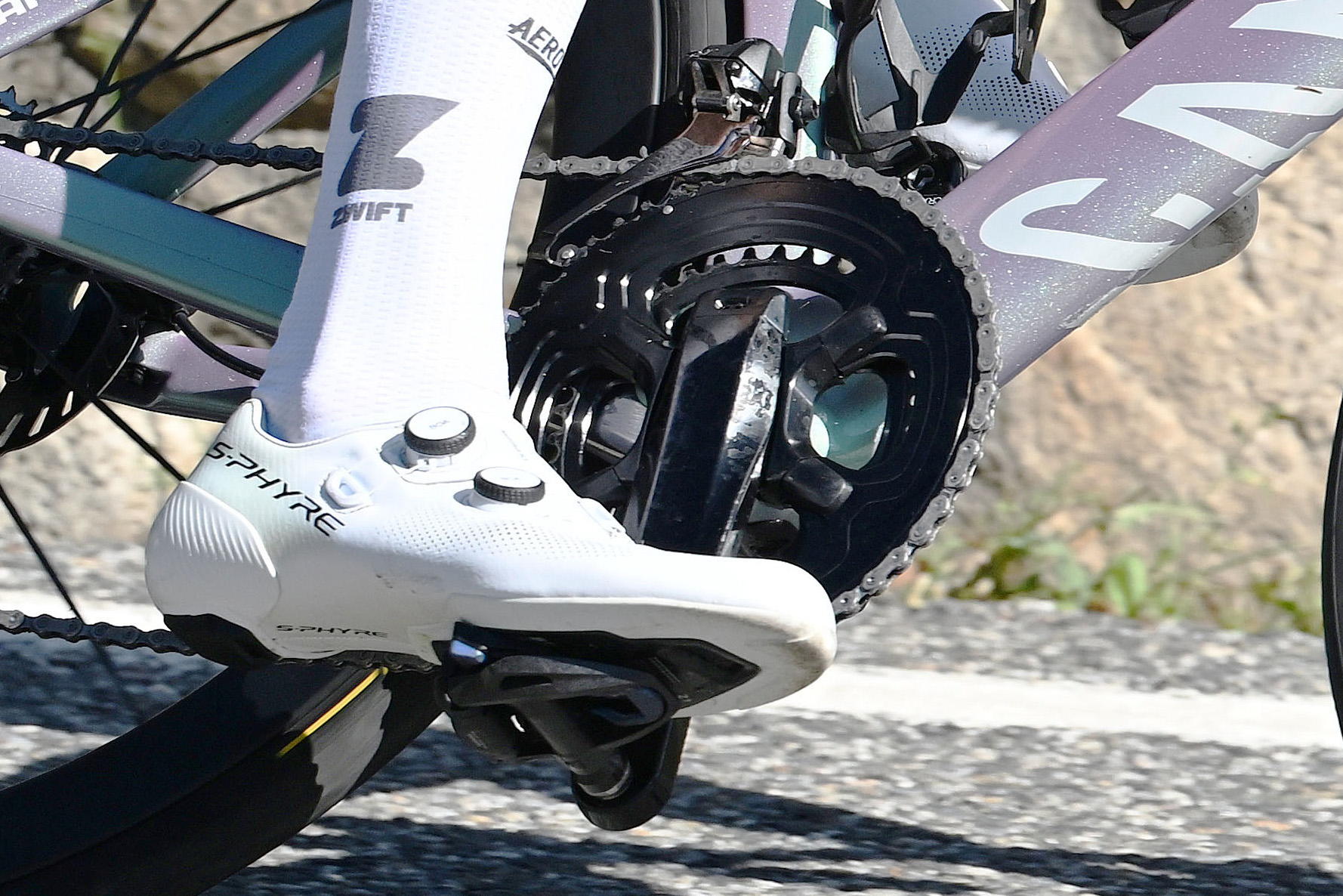
We see more significant changes at the crankset, which looks to have moved to a direct-mount design, as on Shimano’s mountain bike groupsets. This means the crankset is independent of a chainring spider.
At La Vuelta, Alpecin - Premier Tech’s Lindsay De Vylder has been using the new crankset in a 2x configuration with pro-standard larger than usual chainrings.
Given the profiled design of the chainring spider, and the clear performance benefits they confer, I expect standard Dura-Ace R9300 chainrings will continue to utilise Shimano’s Hollowglide tech – which helps improve chainring stiffness, and therefore front shifting, compared to machined ones.
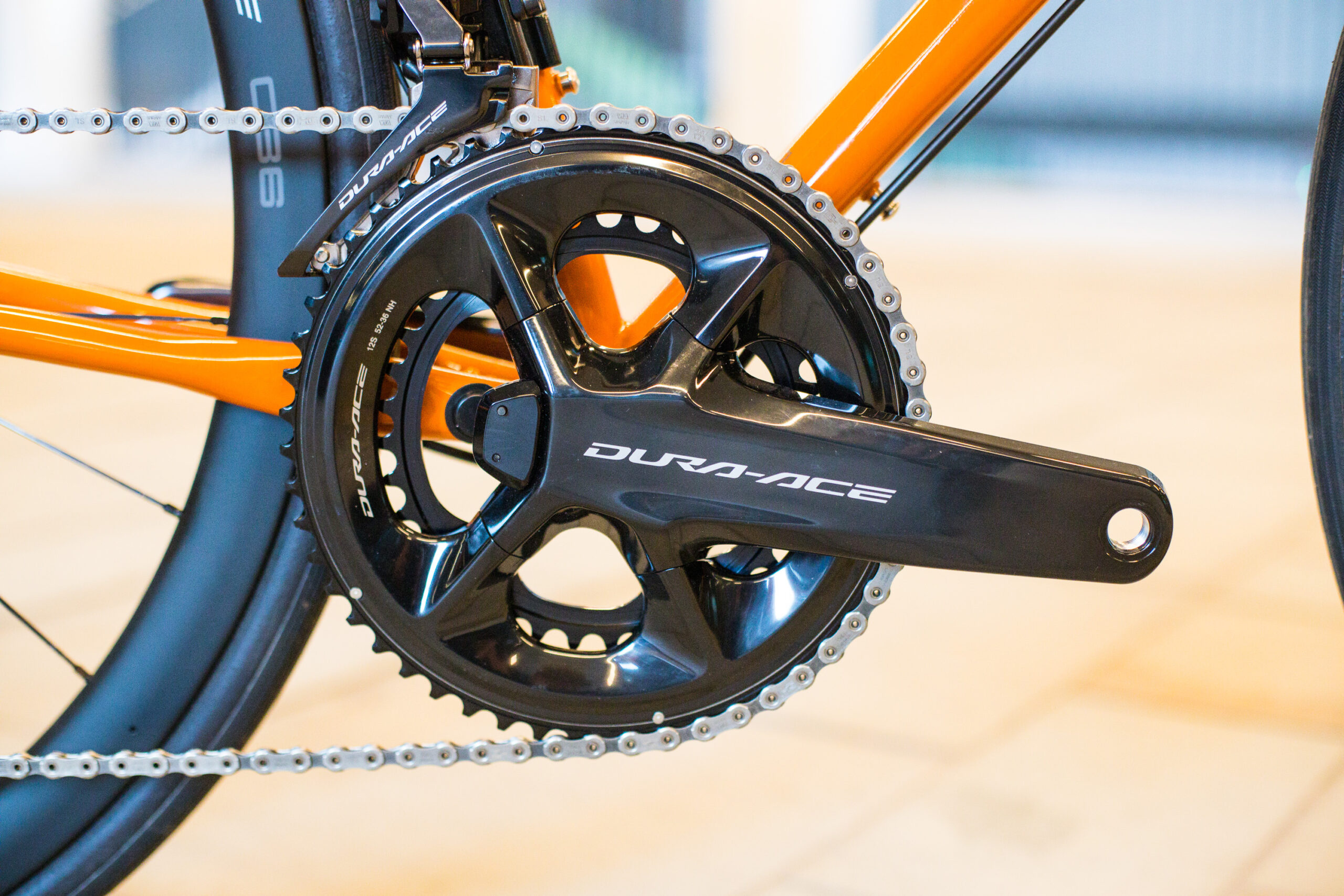
However, Shimano has long only made Hollowglide chainrings in sizes up to 54-tooth, leading pro cyclists looking for larger rings to use alternative options, as seen on De Vylder's bike.
The new crank design, and what looks to be an updated charging port at the top, also suggests the design of the integrated power meter has been overhauled again. Perhaps (hopefully) this latest revision will solve its long-standing accuracy problems.
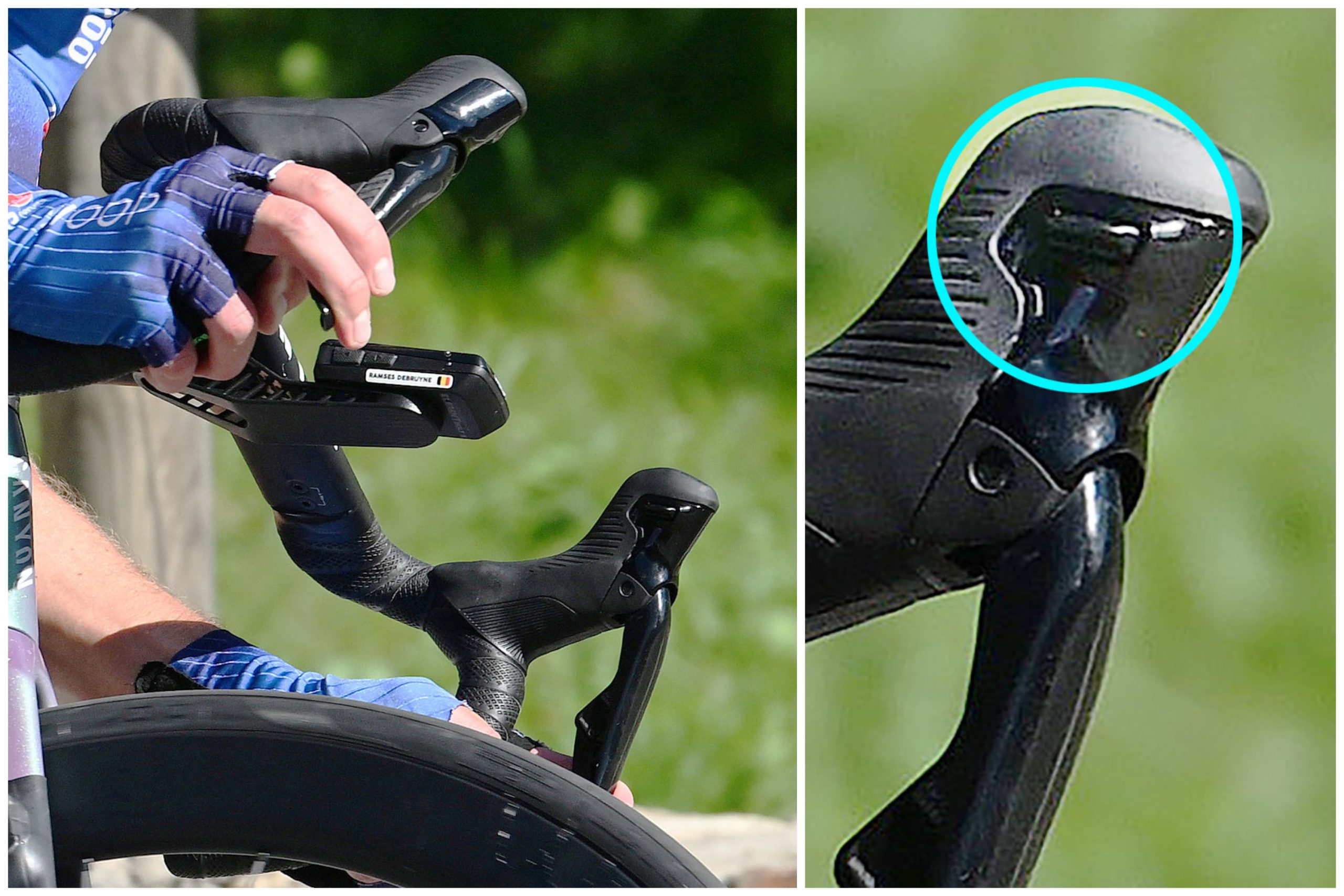
Last but not least, we can see some small changes to the integrated shift and brake levers, with a subtly refined hood shape and change to the position of the programmable auxiliary button. Instead of sitting directly on top of the shifter ‘pommel’, it now sits just on the inside of the pommel – presumably for easier actuation by a rider’s thumb.
Why this is so disappointing
So that’s what we know about the groupset, here’s why it has left me feeling so deflated.
In a nutshell, this just isn’t enough progress.
It’s not fully wireless
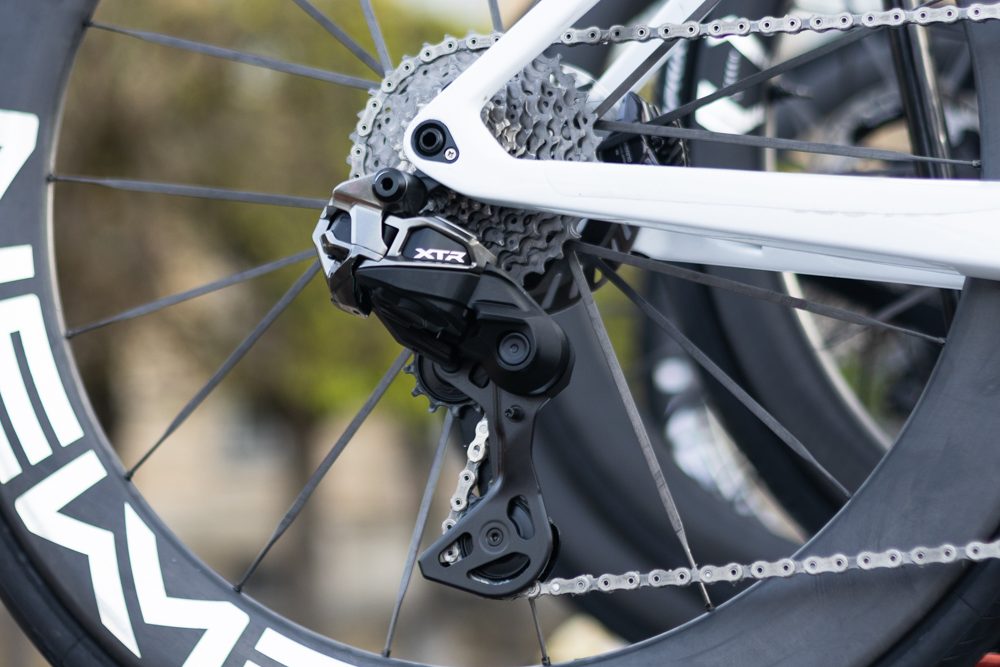
Let’s get the big one out of the way first; it’s not fully wireless.
I know there are some benefits to Shimano’s existing semi-wired design, such as only having to charge a single battery and the fact it means the bulk of said battery can be hidden inside otherwise redundant frame space.
However, even a few centimetres of wire dangling out of a pro-spec race bike feels very retrograde, and on frames that don’t offer full internal cable routing it can look a real mess.
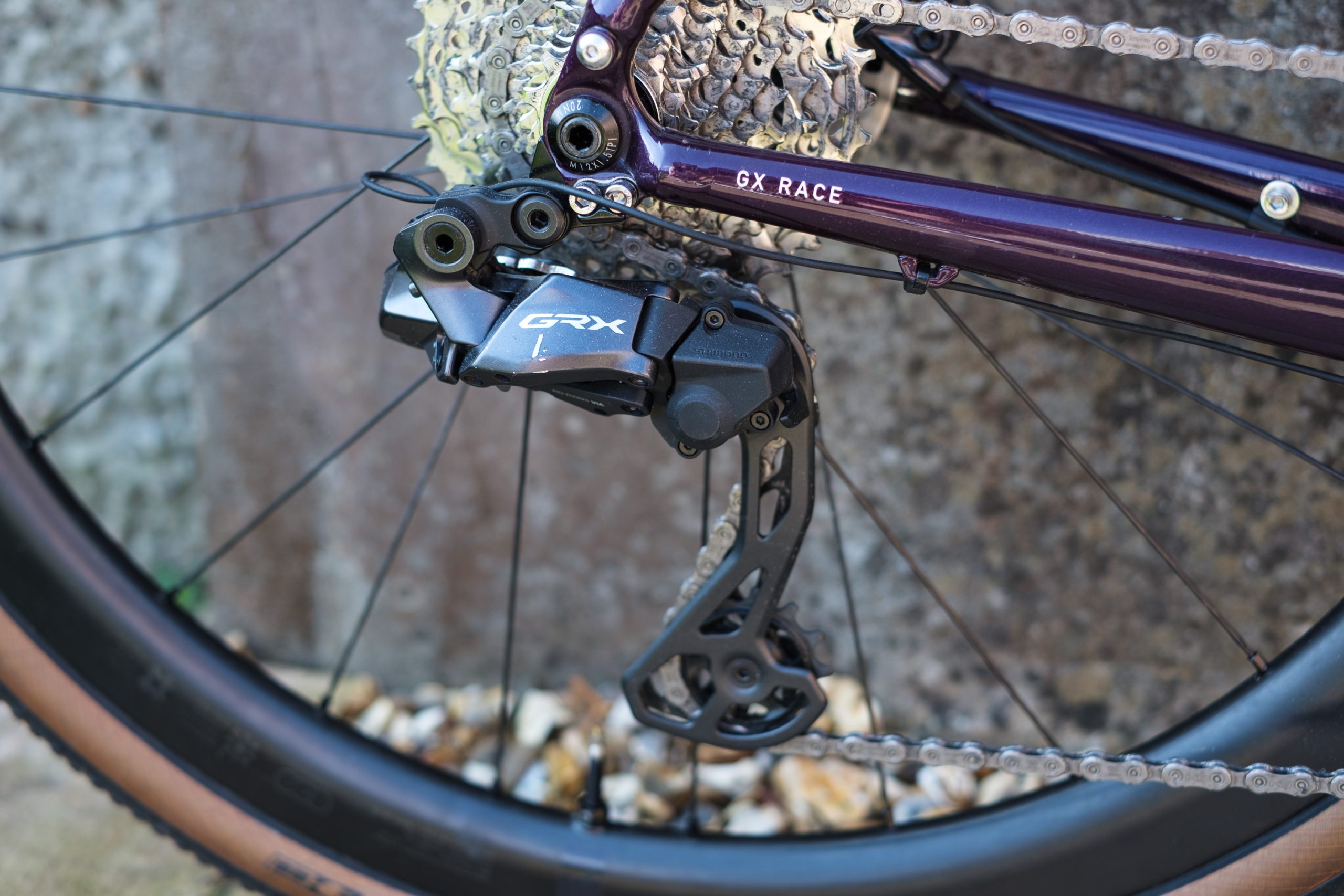
Wires can also get in the way. Having recently put 32mm tyres back on my Giant TCR Advanced Pro, for example, I had to use electrical tape to keep the Di2 wire out of the way and prevent it rubbing on the rear tyre.
Given Shimano already has fully wireless mountain and gravel bike rear derailleurs, perhaps there’ll also be an option to use a wireless road rear derailleur, that’s yet to be revealed, in a 1x setup – and as with Shimano’s GRX Di2, you’ll need to run a wired setup in order to use a front derailleur.
Another boring appearance
The all-black finish is also deeply disappointing.
This may simply be a prototype groupset, and therefore not reflective of how it will look upon release, but when we first spotted R9200 at a pro race back in 2021 that turned out to be the finished product.
I’d therefore be quite surprised if the final R9300 groupset had a drastically different appearance.
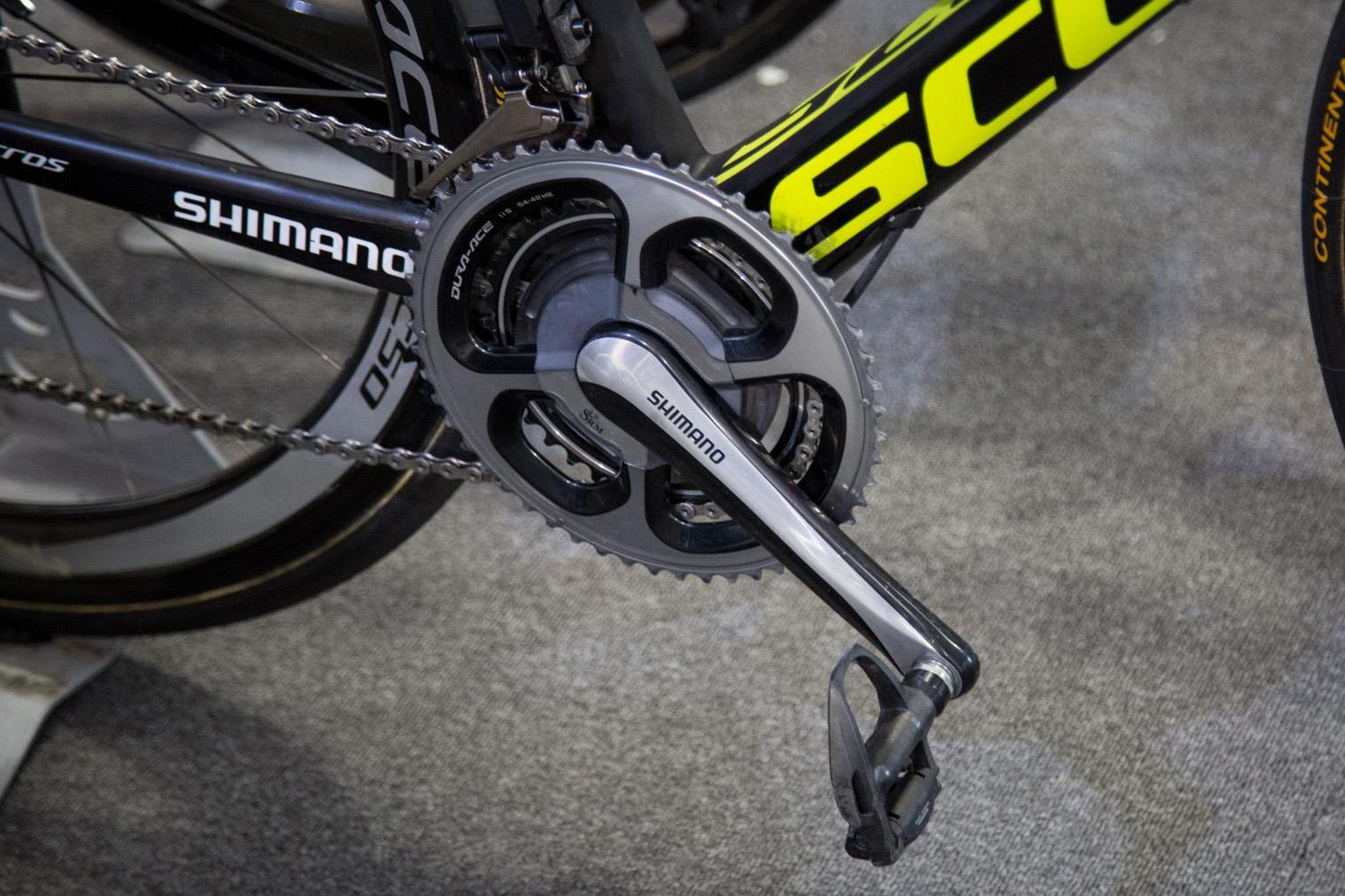
Beauty is in the eye of the beholder, but I was desperately hoping Shimano would move back to using a little more polished silver aluminium – à la Dura-Ace Di2 R900 (which is widely considered to be among the best-looking road bike groupsets ever made).
Shimano has stuck doggedly to its guns with aluminium cranks in recent years, for example, even as rivals SRAM and Campagnolo have moved exclusively to carbon ones on their high-end groupsets.
However, the Japanese brand seems strangely reluctant to celebrate that fact – save for the odd limited-edition groupset such as GRX Limited or the polished-silver CUES components that launched last year.
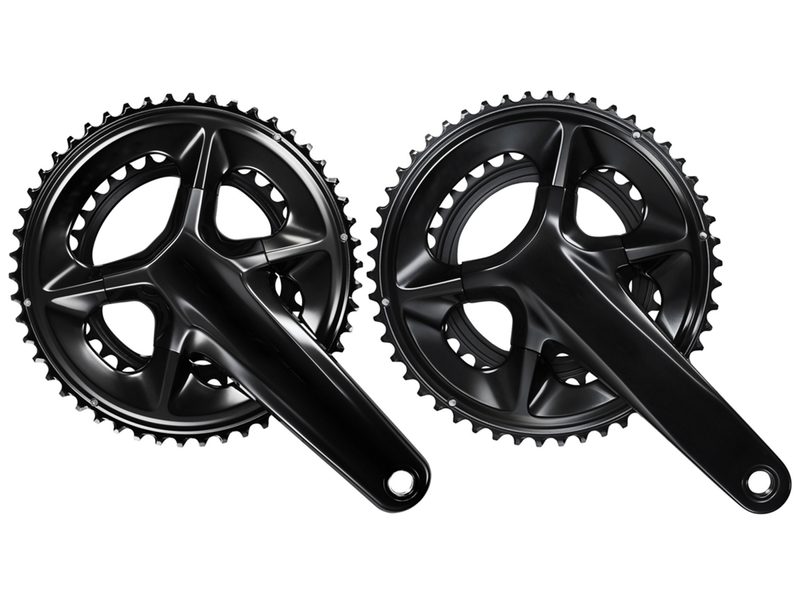
Instead, we look to be getting another flagship groupset that doesn’t look all that different from Shimano's mid-range 105 Di2 R7100 at a glance.
Given a large part of why anyone buys a flagship groupset is because of the ‘bling factor’, that Shimano looks set to continue with a conservative approach to the aesthetics of its Dura-Ace groupset is a shame.
This could have been a firmware update
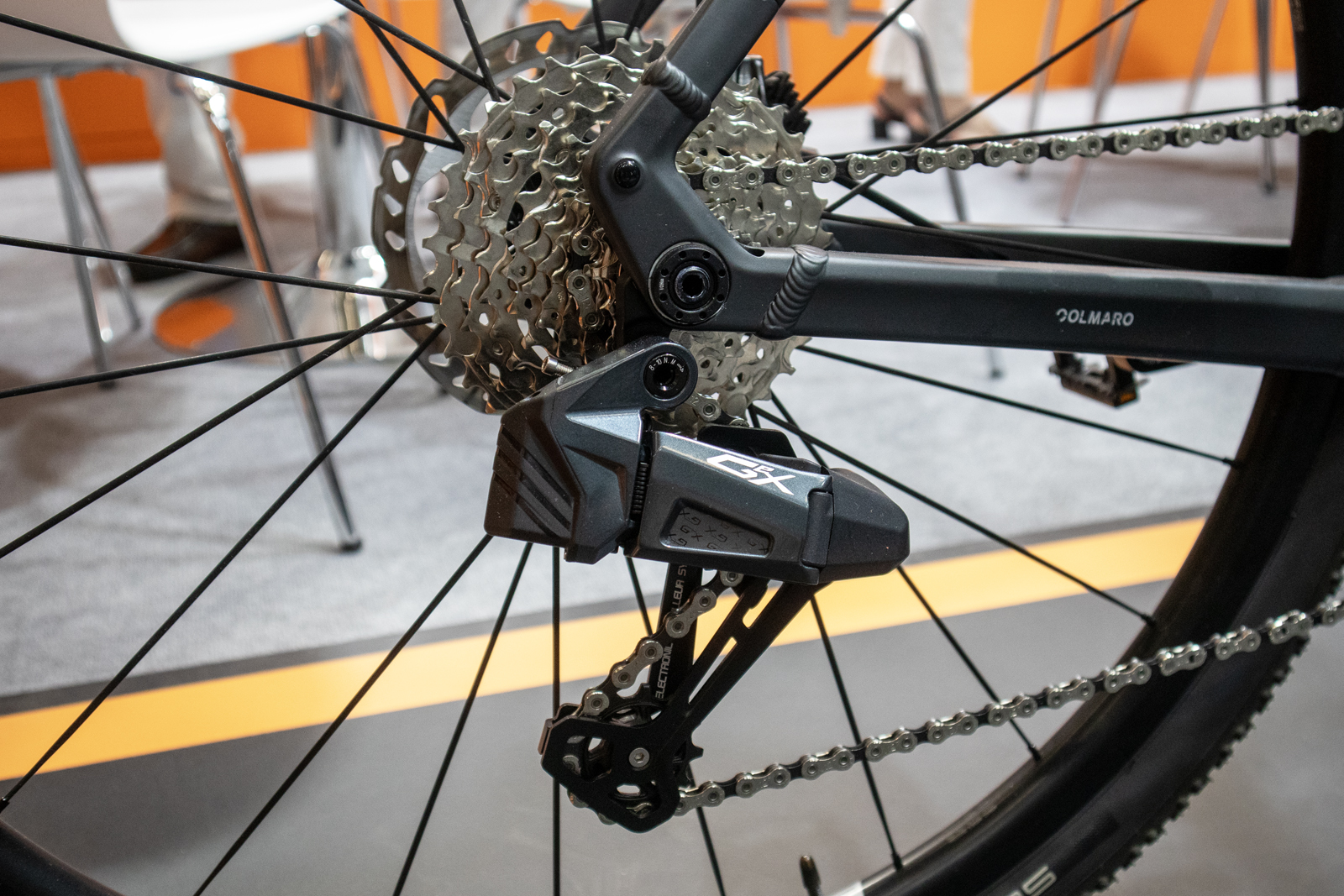
If the only major change is the addition of a 13-speed cassette, I find myself asking why this justifies trying to sell us a whole new groupset, simply to access one extra sprocket at the rear.
Couldn’t this have just been a new cassette and a firmware update?
After all, Wheeltop’s EDS rear derailleur (which, incidentally, is also fully wireless) can be programmed to work with cassettes from 3- to 14-speed, so there don't appear to be any obvious technical limitations with electronic rear derailleurs.
Perhaps riders will be able to mix and match new and old parts.
If the chain, cassette and chainring profiles haven't changed, perhaps the new rear derailleur will work with existing '12-speed' shifters, for example. This would mean riders may only need to buy that and a new cassette to upgrade to a 13-speed a drivetrain.
But if that's the case, I can imagine many riders with 12-speed groupsets (such as myself) won't bother upgrading to the full groupset because there doesn't appear to be much else worth splashing out for here.
Come on Shimano, riders deserve more
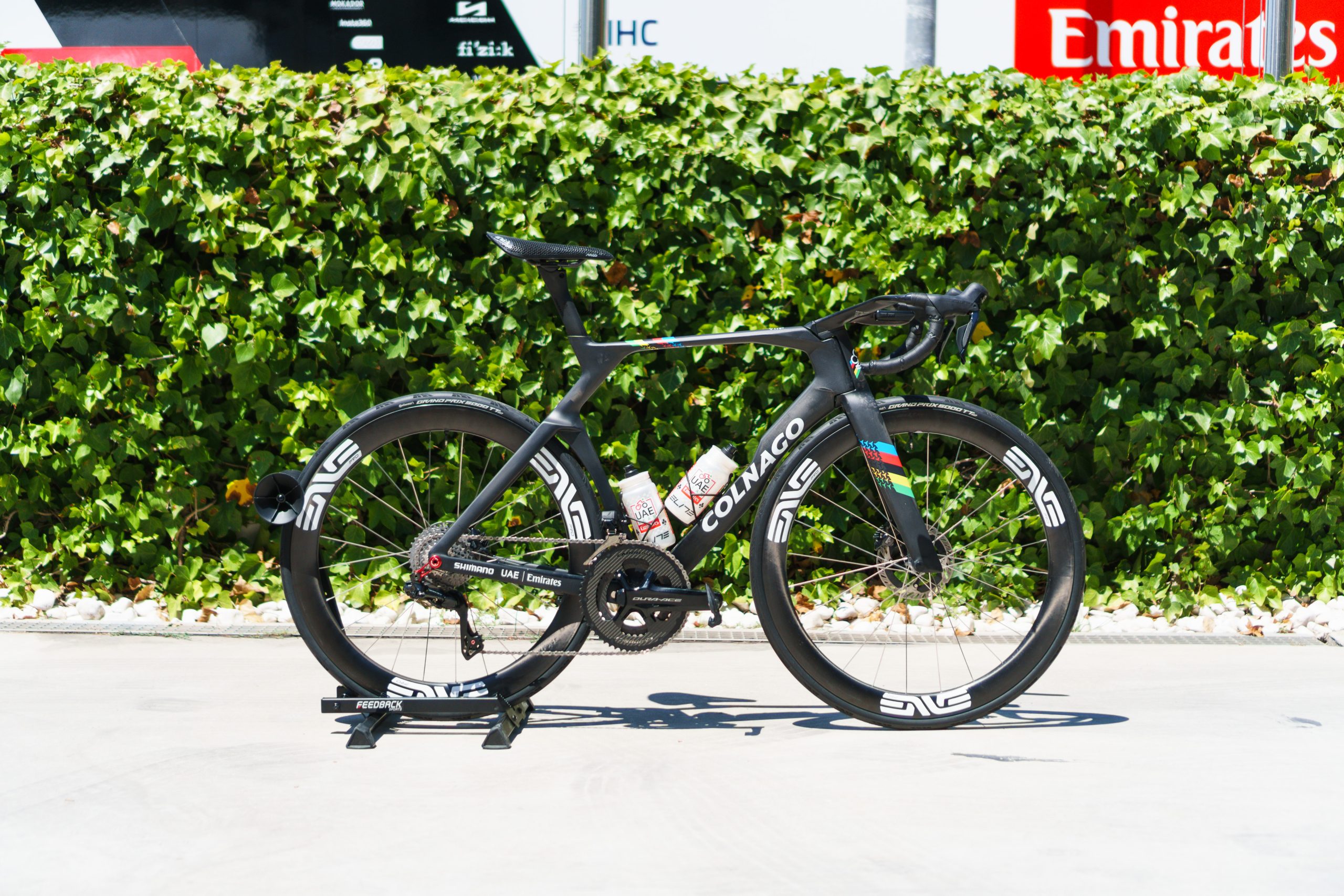
As someone who has always used Shimano groupsets on their personal bikes, this leaked Dura-Ace Di2 R9300 groupset has left me disappointed and somewhat annoyed.
I’ve no doubt it will function fantastically and that Tadej Pogačar will, in all likelihood, win next year’s Tour de France using this groupset.
Shifting performance from Dura-Ace Di2 R9300 will almost certainly be class-leading, as will the groupset’s weight, ergonomics and so on.
But those are characteristics the existing Dura-Ace Di2 R9200 groupset already has – those would not represent upgrades worth shelling out four figures for.
Likewise, a power meter crankset that can finally be widely agreed to be functioning as advertised would be very welcome. It wouldn’t be cause for celebration, though, because that’s the minimum riders should expect of any component.
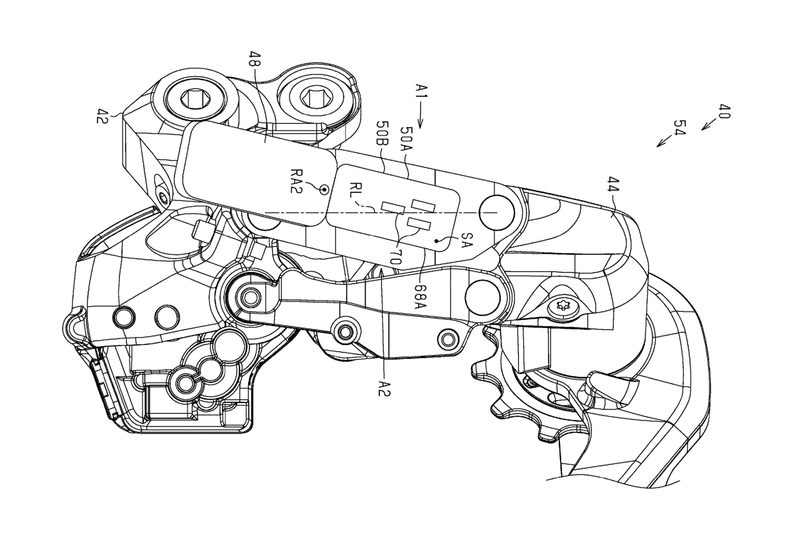
Given the direction of travel in the bike industry, plus the fact Shimano already has fully wireless mountain and gravel bike rear derailleurs, and that we’ve already seen patents for it, a fully wireless Shimano road bike groupset seems inevitable.
Is Shimano really going to make us wait another five years for it?
The fact that Dura-Ace Di2 R9300 doesn’t appear to be fully wireless makes it feel like something of a stop gap, rather than the pinnacle of what Shimano is capable of producing for road bikes.
Perhaps I’m jumping the gun and there’ll be some killer details to change my mind when this new groupset launches, but, as things stand, I can’t help but feel Shimano has let us down.


