Tadej Pogačar will take to the 2026 Tour de France hoping to secure his third consecutive and fifth overall victory, and his bike of choice is heavier than you might expect.
We’re at the Grand Départ in Barcelona checking out all the pro bikes ahead of the race’s start tomorrow, and got hands-on with the Slovenian’s Colnago Y1Rs aero bike, with its raw-carbon finish.
The Y1Rs is kitted out with the components and personal touches that will be familiar for anyone who has paid attention to Pogačar’s bikes in the past. But it also has some new, refined touches over the aero bike the reigning champion used throughout last year’s Tour de France.
Pogačar’s bike of choice last year, and this year
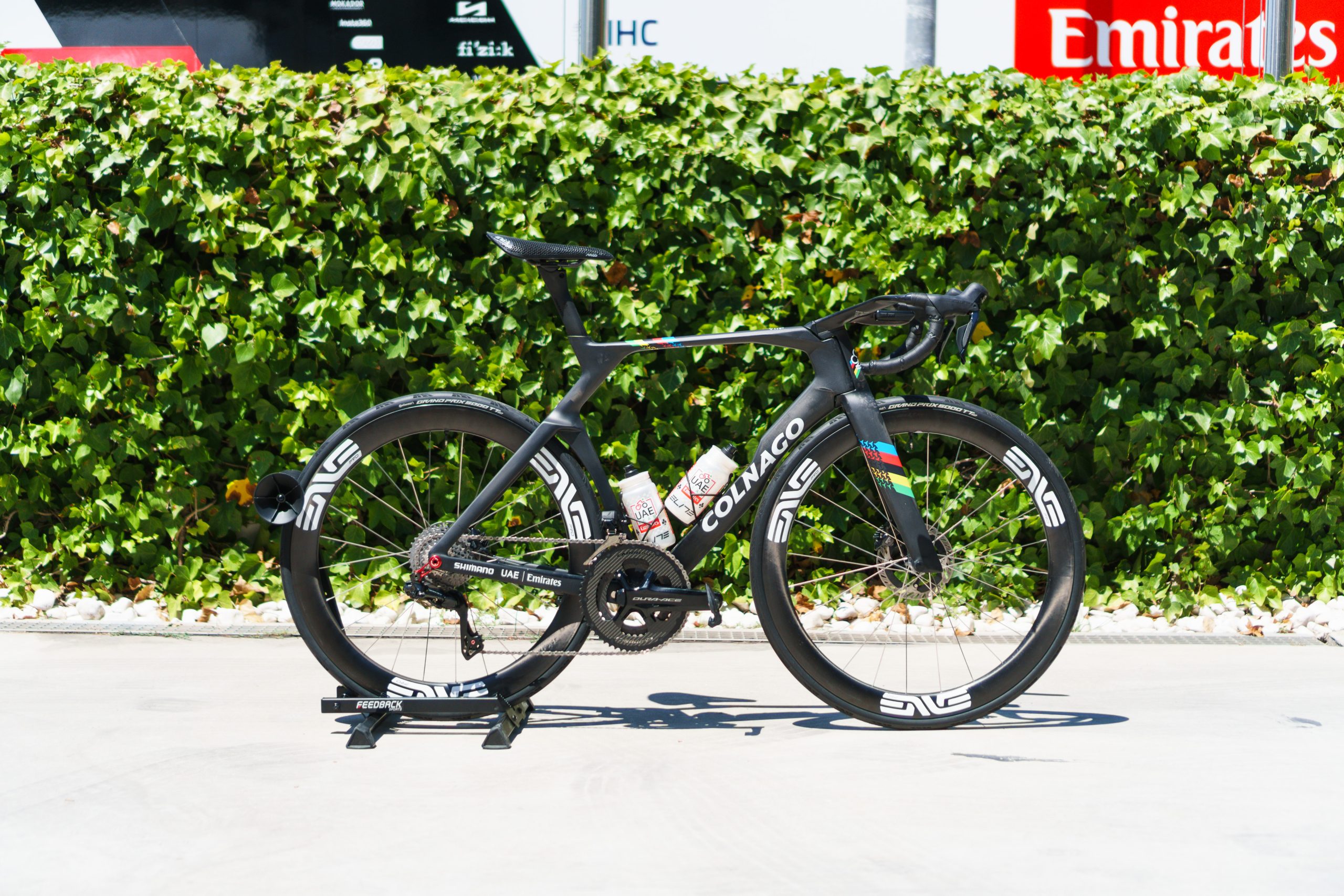
Ahead of the 2025 Tour de France, we spied Pogačar’s Colnago V5Rs. The climbing bike was decked out in World Champion colours and weighed under the UCI weight limit. Yet it didn’t get a look in, with Pogačar opting to ride the Colnago Y1Rs aero bike throughout the race.
The decision was probably spurred by the fact Colnago equipped cycling’s mega-star with a special raw-carbon version of the bike for stage 15, an uphill time trial. He then used it on stage 16, which finished on Mont Ventoux.
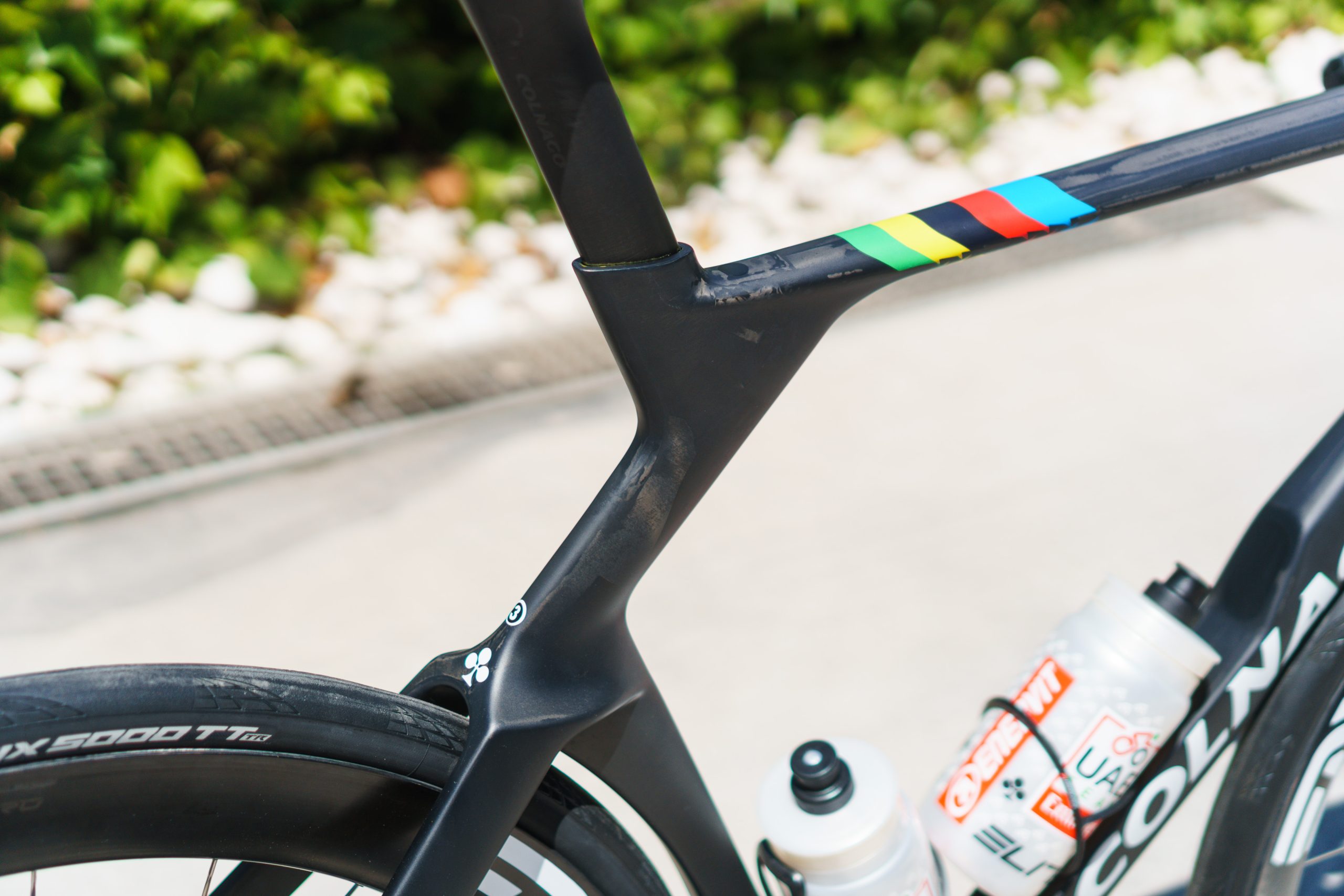
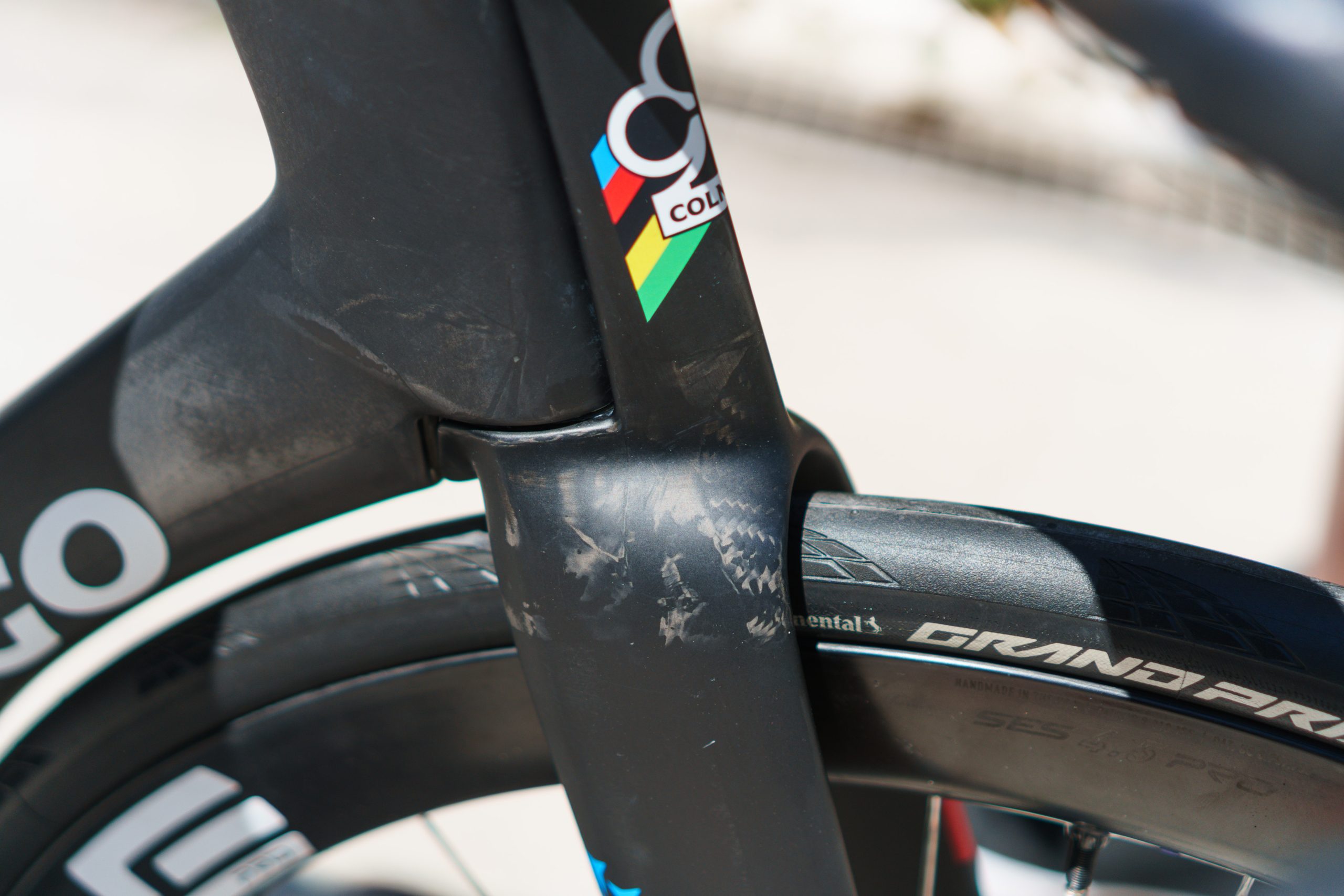
Colnago summed the bike up as “no paint, no frills, only speed” and said its aerodynamics – courtesy of its radical frame design, bayonet fork and gullwing cockpit – outweighed the weight savings of the V5Rs. And it seems Pogačar is keen to stick to that raw-carbon, “only speed” approach for the 2026 Tour de France.
How much does it weigh?
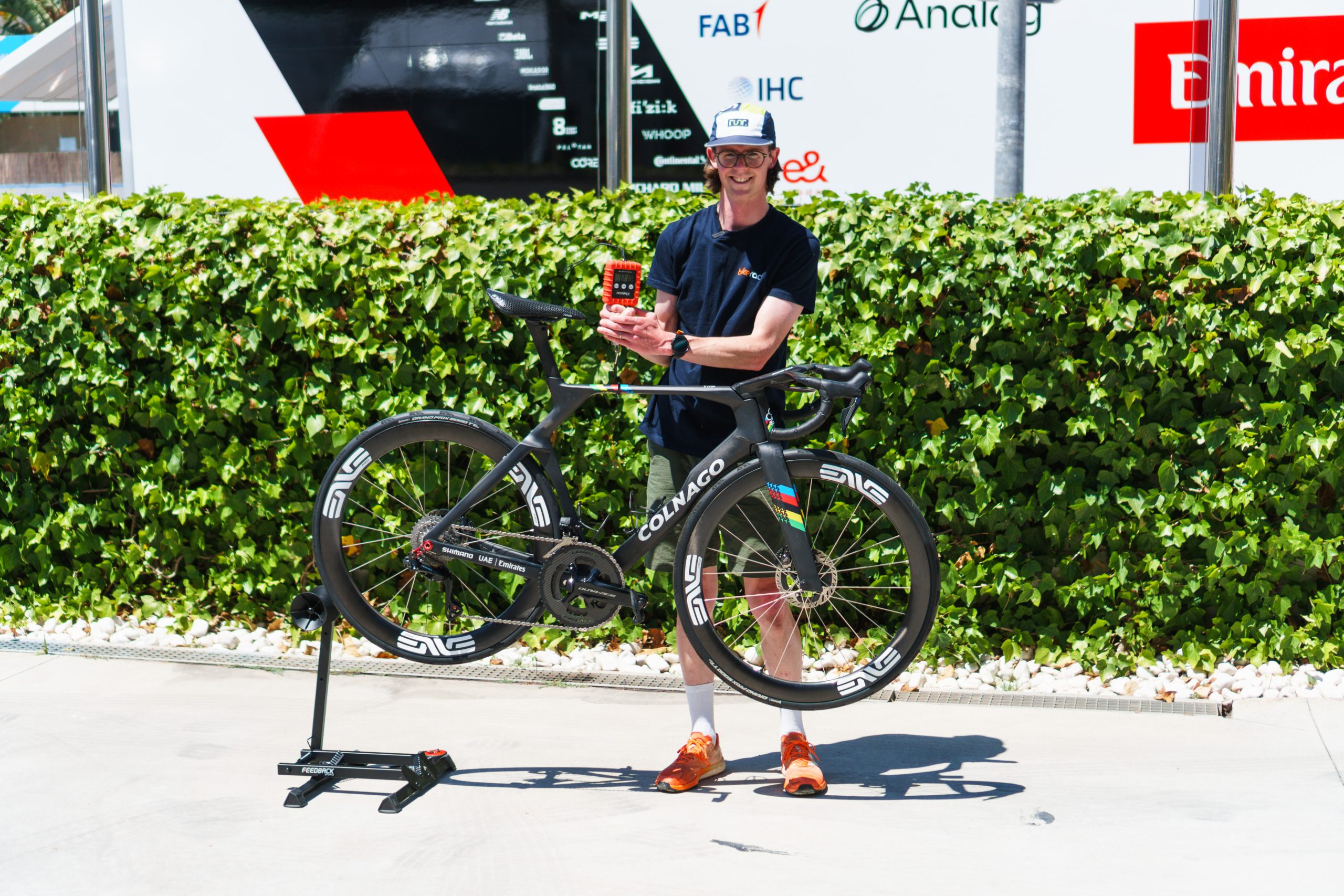
When we visited Pogačar’s UAE Team Emirates-XRG team and weighed his Y1Rs, it tipped our scales at 7.25kg.
That’s slightly heavier than you might expect. At last year’s Tour, Pogačar’s painted Colango Y1Rs weighed 7.57kg. This was at the top end of what Colnago says a typical version of the bike should weigh, and the Italian company says a painted version can weigh as little as 7.2kg.
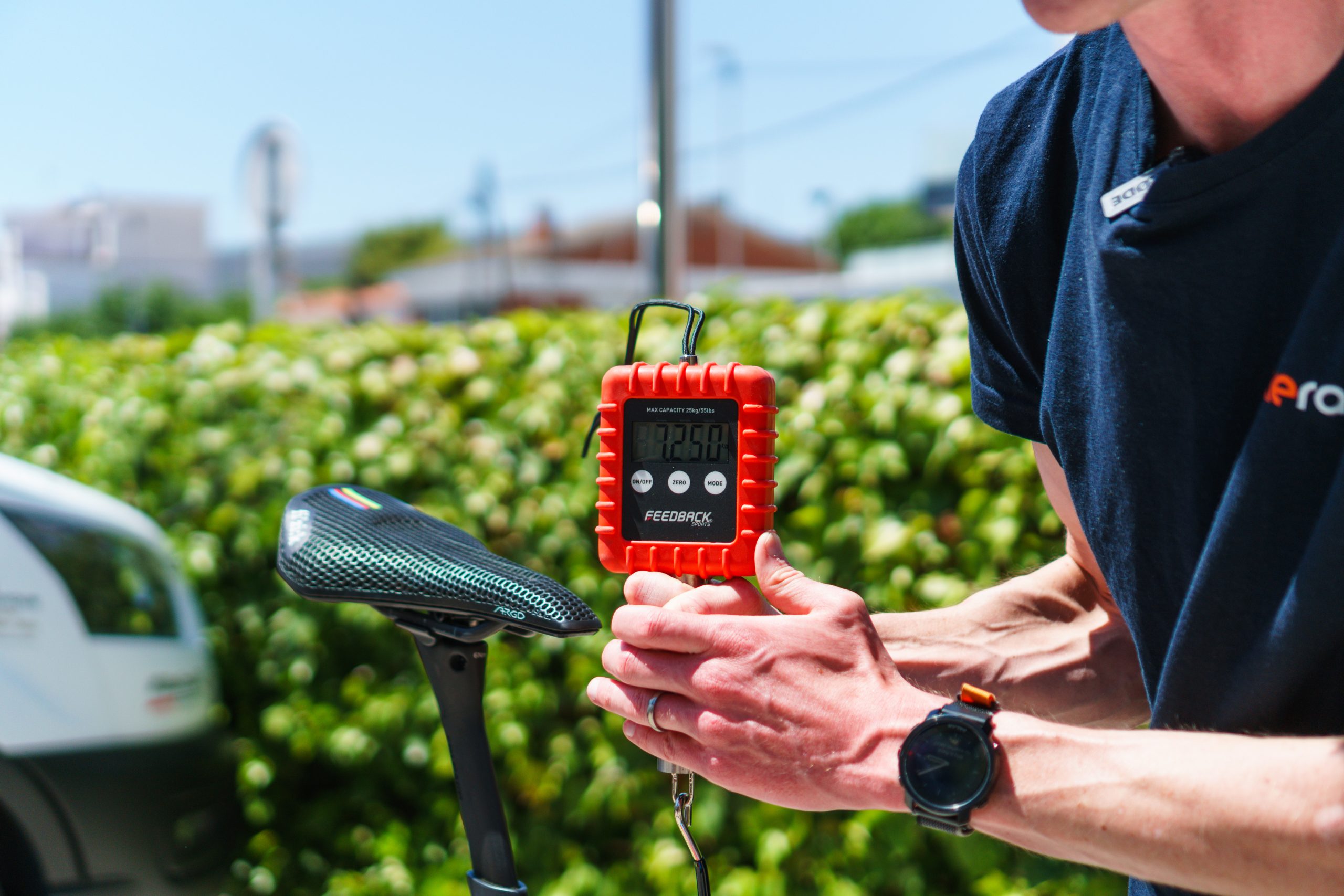
Colnago also told us the bike should weigh “around 7kg”. But that’s just the amount it says a raw-carbon Y1Rs should weigh, rather than the weight of Pogačar’s bike specifically.
Pogačar’s bike is also on the heavier side when compared to Jonas Vingegaard’s Cervélo S5 for this year’s race. Vingegaard’s aero bike is 450g lighter than Pogačar’s, although the Dane rides a smaller frame size and it was fitted with a 1x drivetrain when we weighed it.
Tadej Pogačar's Colnago Y1Rs for the 2026 Tour de France
- Frame: Colnago Y1Rs
- Size: 54cm
- Handlebar width (centre-to-centre): 36cm
- Groupset: Shimano Dura-Ace Di2 R9200 with Carbon-Ti chainrings
- Power meter: Shimano Dura–Ace
- Pedals: Shimano Dura-Ace
- Wheels: ENVE SES 4.5 Pro
- Saddle: Custom 3D-printed Fizik Argo Adaptive
- Tyres: Continental GP5000 TT TR
- Nominal tyre size: 28c
- Measured tyre size (front): 31.6mm
- Measured tyre size (rear): 30.8mm
- Total weight: 7.25kg
Lightweight parts
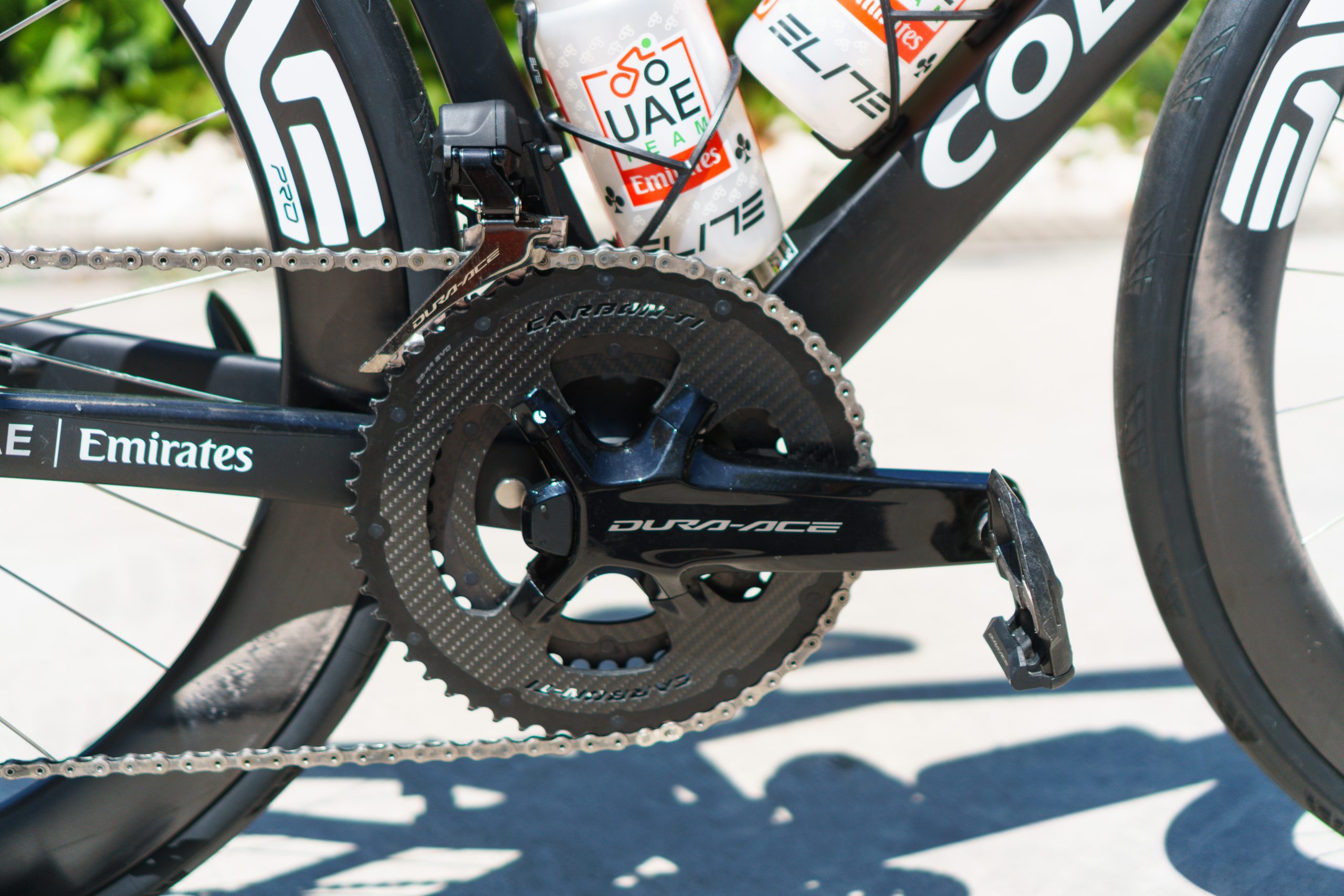
So it might not be as light as Vingegaard’s bike, but Pogačar still has a suite of lightweight parts on his Y1Rs.
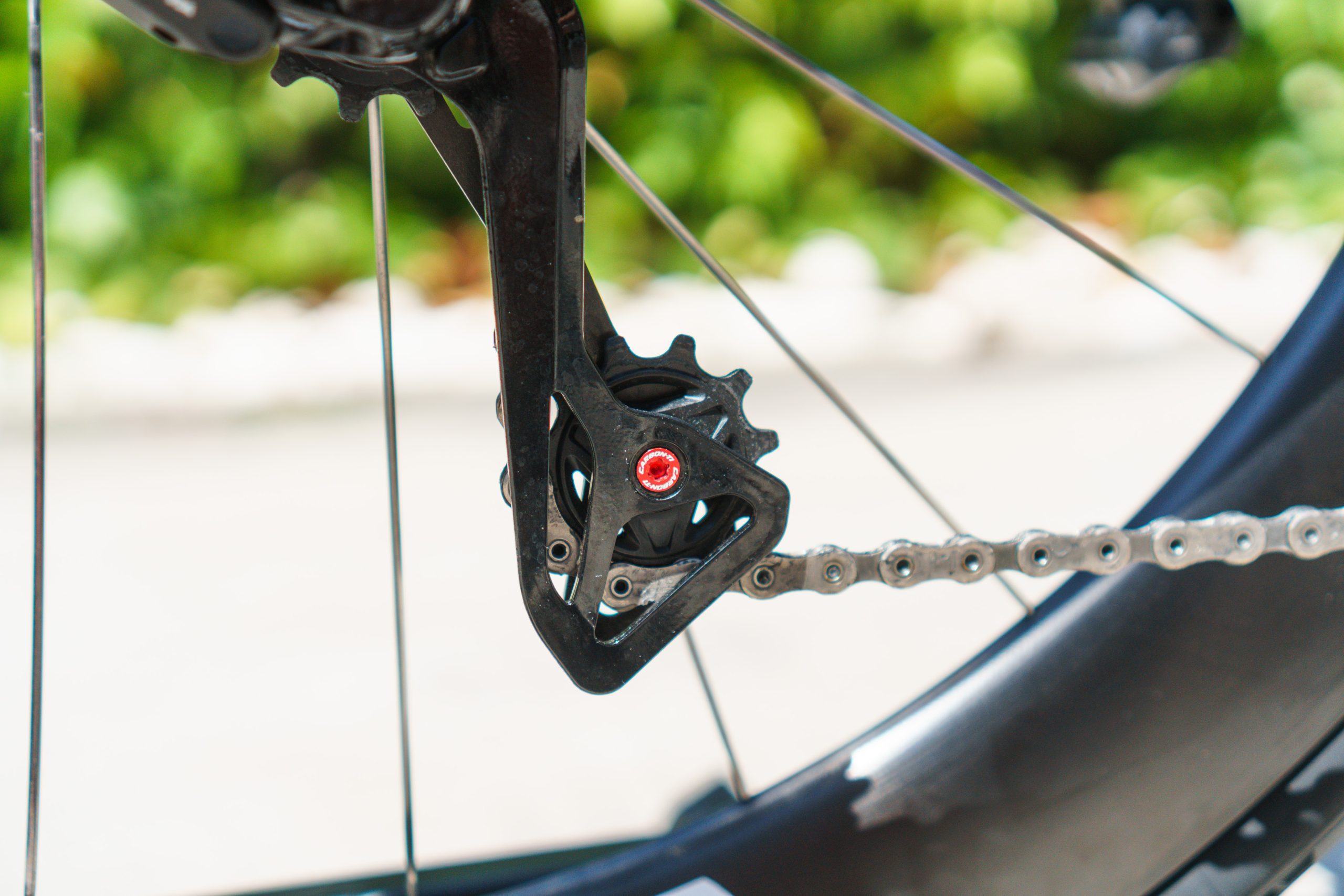
Pogačar is running a Shimano Dura-Ace Di2 groupset, but as usual, it’s completed with weight-saving Carbon-Ti chairings. The champion also has Carbon Ti fixing bolts for his jockey wheels, because why not?
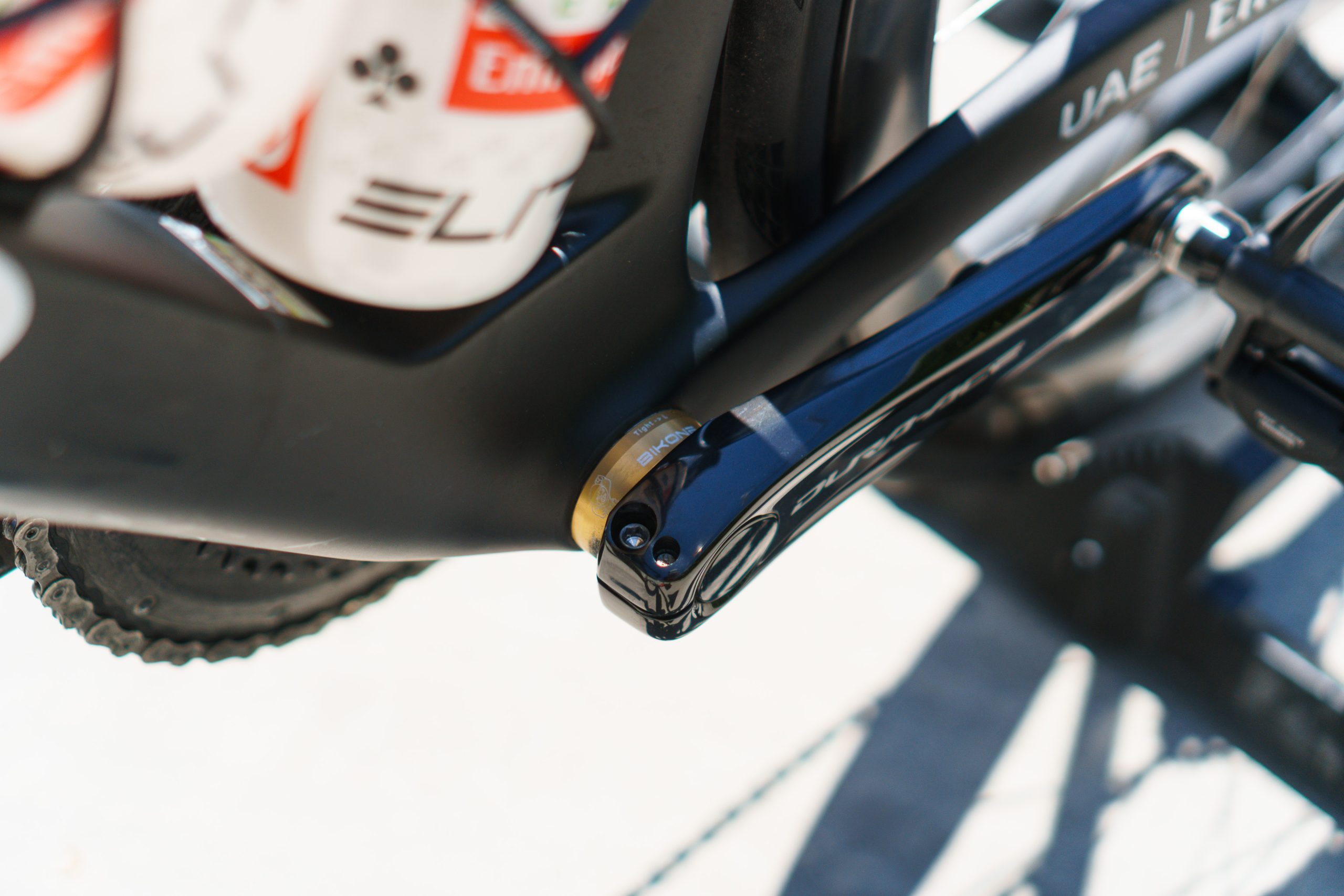
The bike is also fitted with a Bikone BSA Road Ceramic Aero UAE bottom bracket. The bottom bracket was developed with Pogačar’s team for use on the Y1Rs and TT2 time trial bike.
At 77g, it’s Bikone’s lightest-ever bottom bracket. But while lightweight BBs often have smaller bearings, this design retains full-size bearings for less friction.
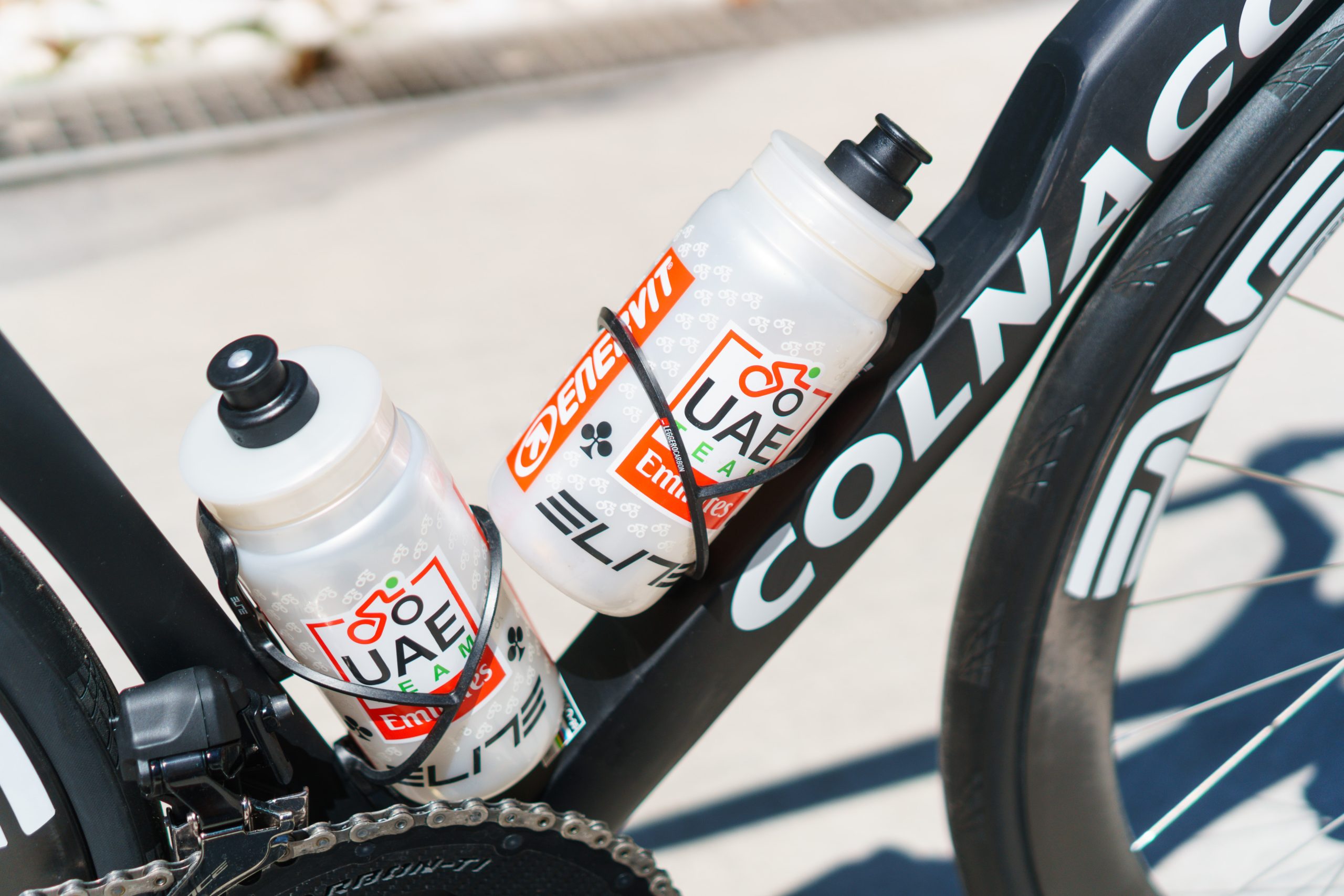
Elsewhere, Pogačar’s bike is complete with Elite Leggero Carbon bottle cages, which are said to weigh only 13g each.
ENVE wheels and Continental tyres
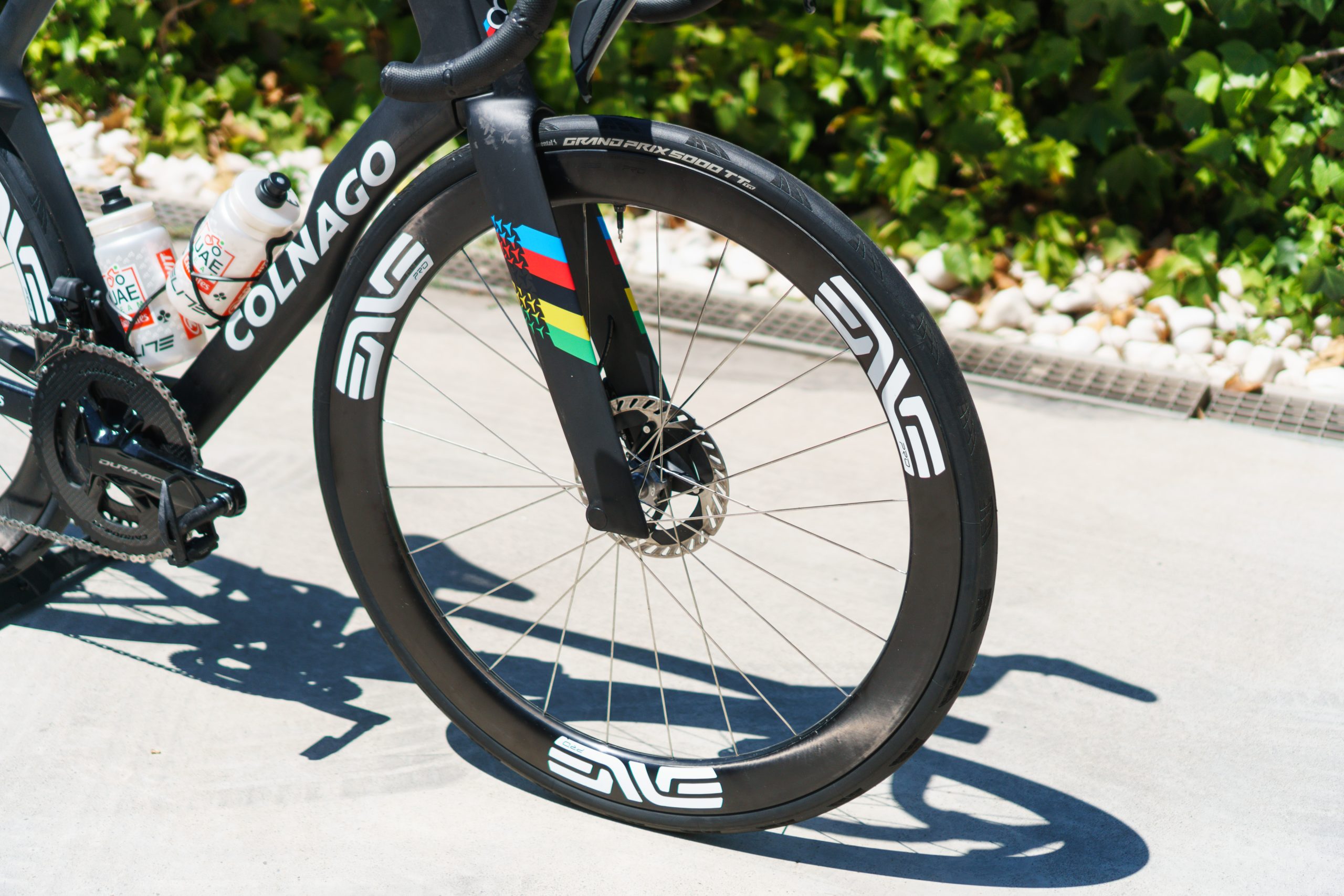
Pogačar has the same wheel and tyre setup that he ran at the 2025 Tour de France.
The world champion is running ENVE SES 4.5 Pro wheels, which launched ahead of the 2025 Tour de France. These buck the trend for wider, hookless rims. They saw ENVE reintroduce ‘mini-hook’ rims and feature a 23.5mm internal width, which is 1.5mm narrower than the standard SES 4.5 wheels.
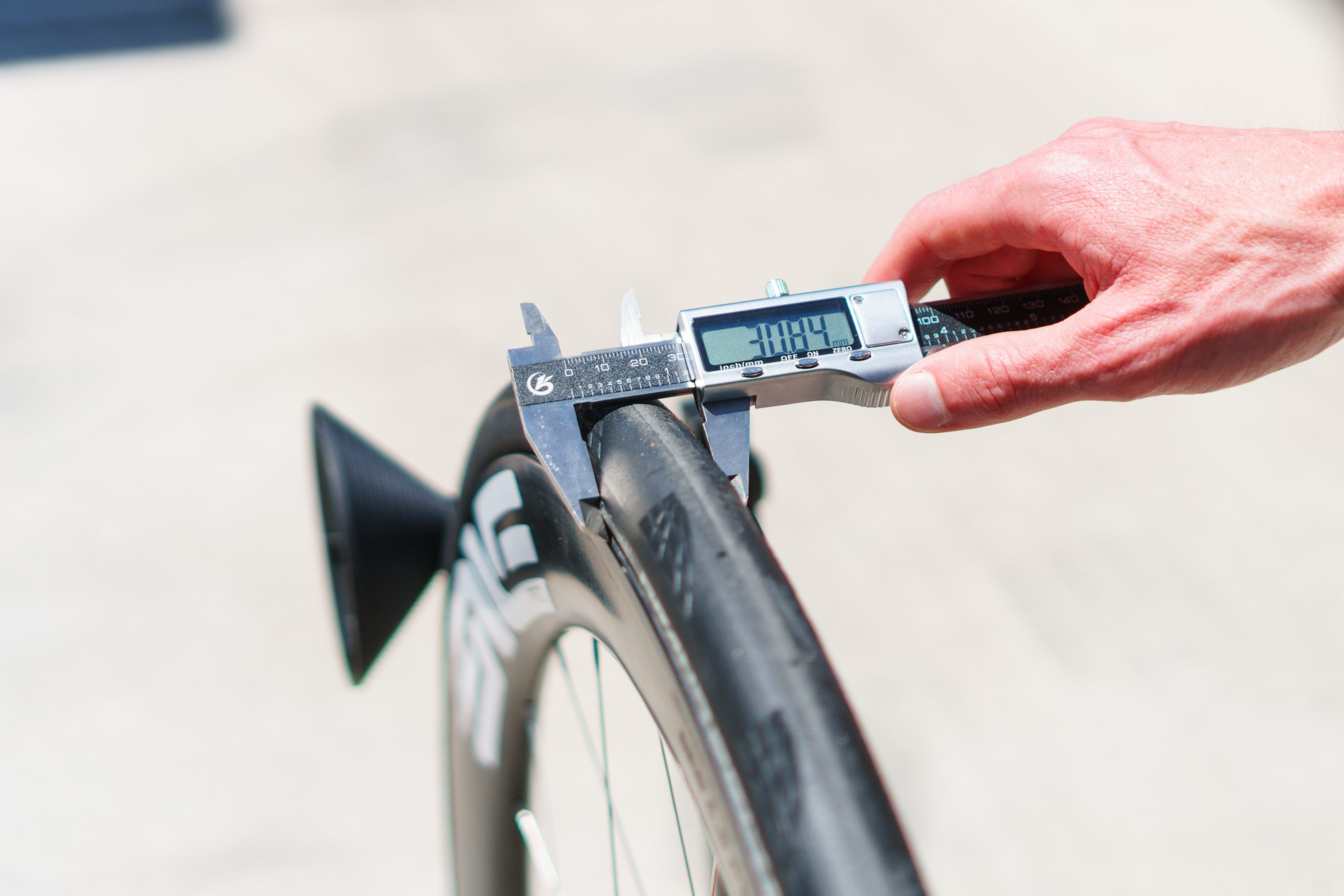
The wheels are wrapped in Continental’s GP5000 TT TR tyres. The time trial tyres are a popular choice for road racing, and we spotted them on Matej Mohorič’s Bianchi Specialissima RC.
But unlike Mohoric, who’s opted for 30c tyres, Pogačar has stuck with 28c tyres. These come up to 30.8mm on his rear wheel and 31.6mm on his front wheel.
Gullwing cockpit
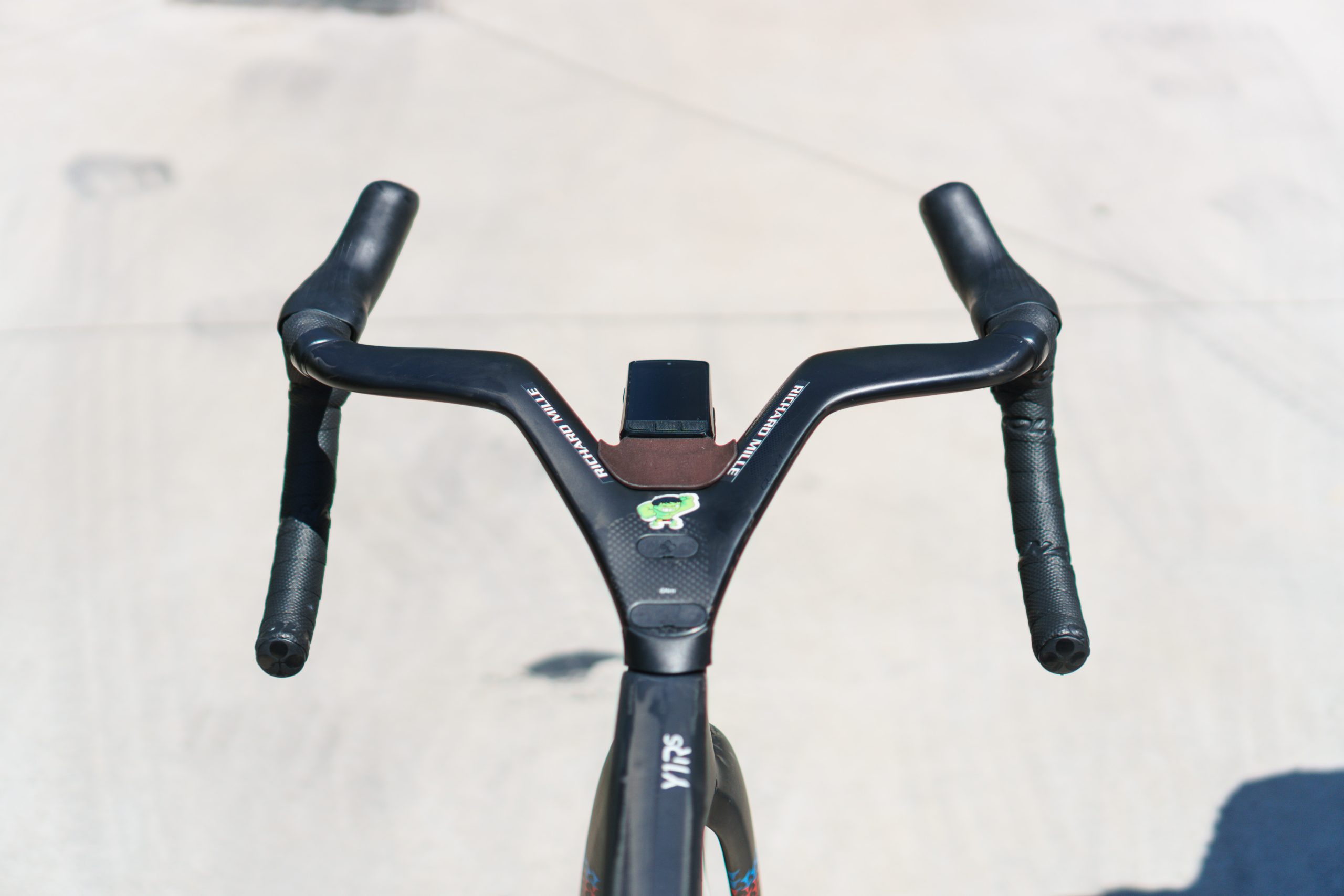
One of the developing trends on race bikes is gullwing cockpits, which are said to reduce aerodynamic drag.
The Colnago Y1Rs has one of the most extreme versions of the design, with the bar turning inwards significantly.
That shape consequently requires an oversized computer mount to smooth airflow and this year, Pogačar appears to have a strange brown, wood-effect panel.
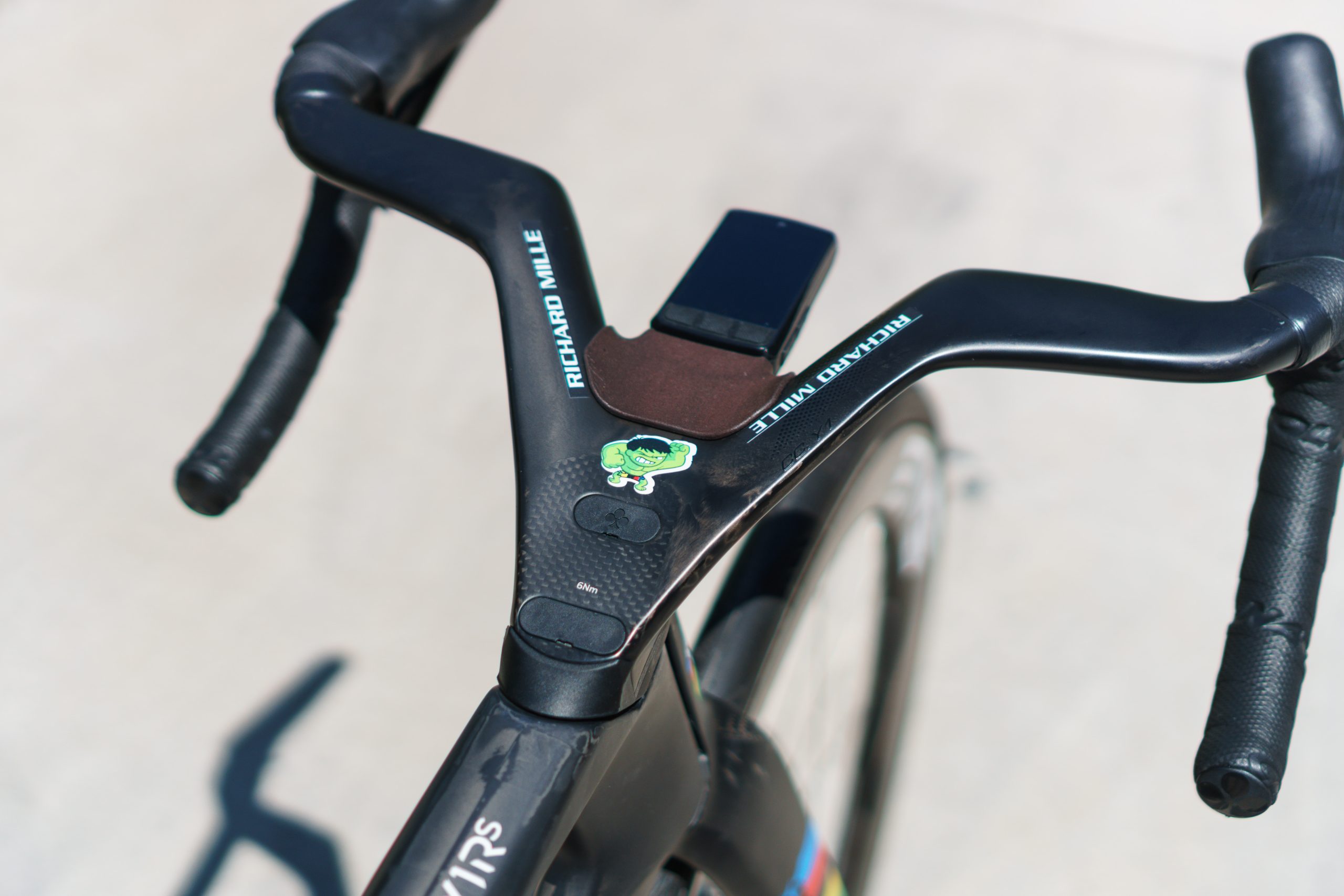
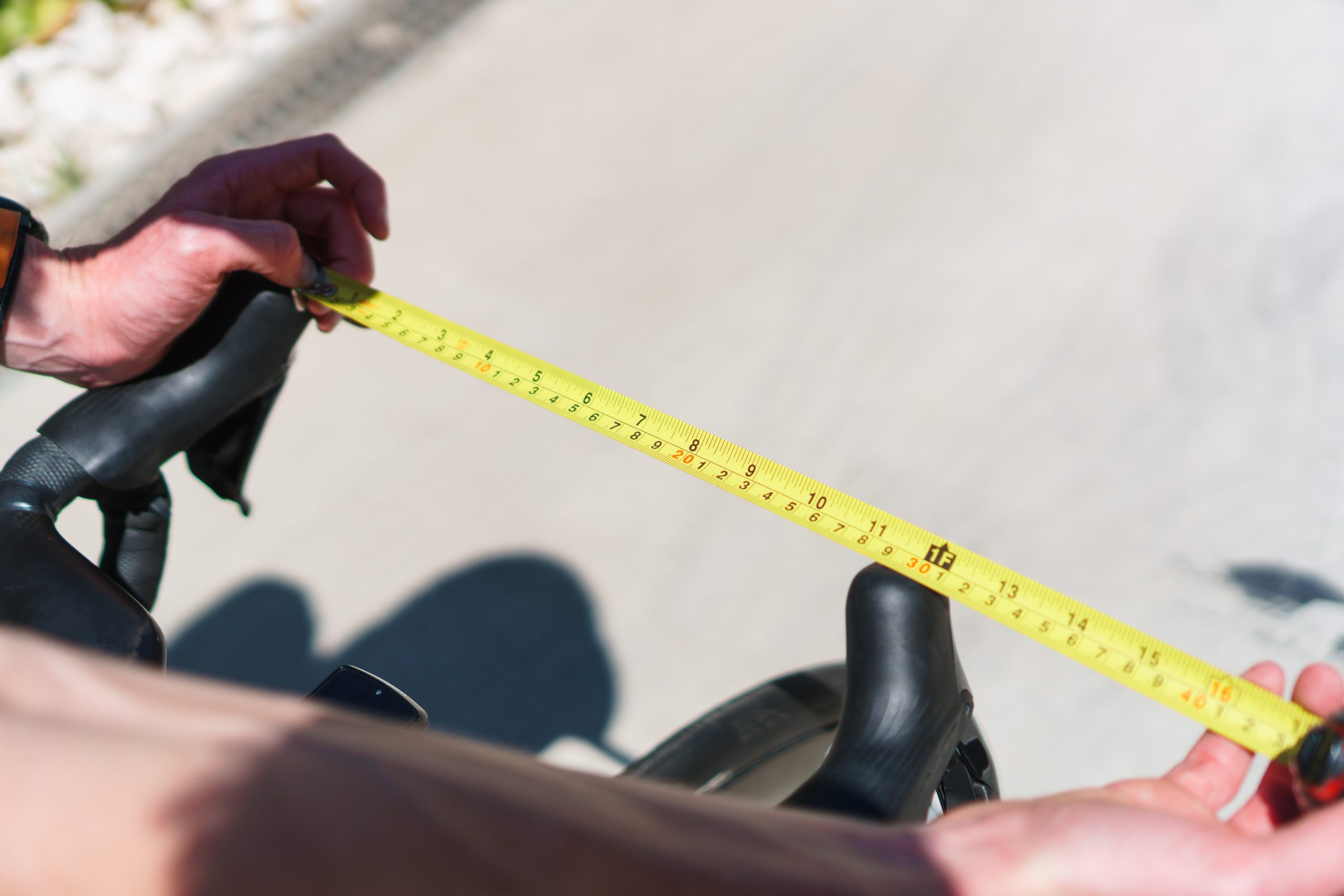
Pogačar has also stuck to a narrow 36cm bar, centre-to-centre, which measures 40cm at the drops. The levers are tilted in to 28cm, which is the UCI limit.
The cockpit is finished with his customary Richard Mille and Hulk stickers, and has sprint shifters hidden on the drops.
A custom saddle
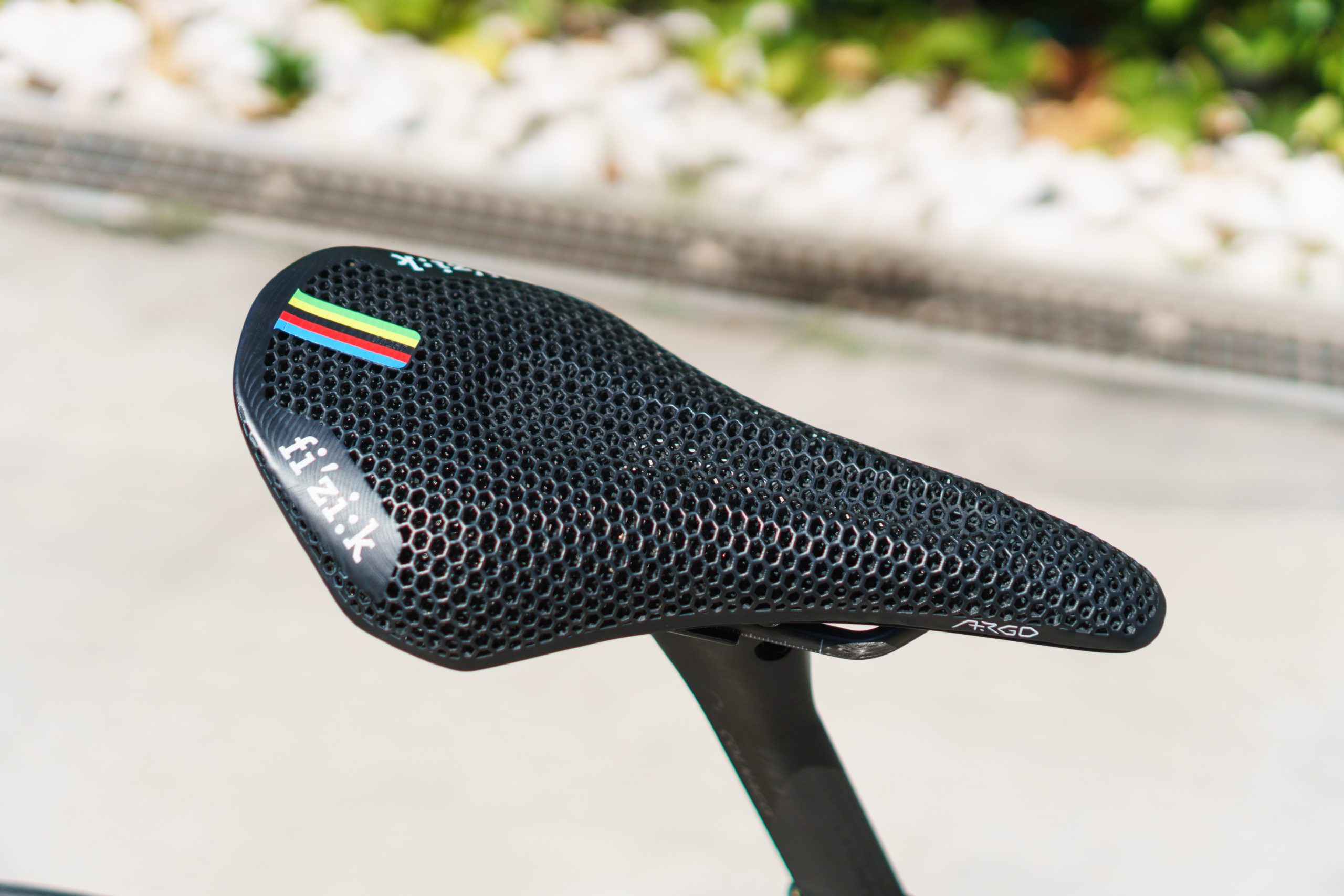
The finishing touch to Pogačar’s Tour de France bike is his Fizik Argo Adaptive 3D-printed saddle.
The saddle is custom printed through Fizik’s bespoke programme for Pogačar’s anatomy and aggressive riding style, that will surely animate much of this year’s race.
More on the 2026 Tour de France
- Jonas Vingegaard’s Cervélo S5 for the 2026 Tour de France is bang on the UCI’s 6.8kg weight limit
- Spotted! Remco Evenepoel will ride this prototype Specialized Shiv time trial bike at the Tour de France
- Can the Tour de France ever be Pogačar-proof? The race organisers face a near-impossible task
- From a rare team time trial to a brutal Alpe d’Huez finale: 8 questions answered about the 2026 Tour de France route
- Live Tour de France coverage to be broadcast on S4C and BBC iPlayer