Tour de France organisers through history have contended with several generational talents who’ve gone on hot streaks of consecutive wins. Eddy Merxkx, Miguel Induráin, Chris Froome and, dare we mention him in the context of the Tour, Lance Armstrong, are just some of the riders who’ve held strangleholds on the race over the years.
Route manipulation to remove certain advantages for a dominant champion is the big lever an organiser can pull to balance the scales towards other contenders.
That may be more tempting when it comes to perceived ‘boring’ dominance, such as the Induráin, Armstrong or Froome years – after all, the organisers (and fans) just want to see an exciting race.
Pogačar, the defending champion gunning for a record-equalling fifth title (Armstrong’s seven haven’t counted for years), is different in the sense that his dominance remains so watchable, but the fact is most people still want to watch a finely balanced race in which the result is in doubt until the very end.
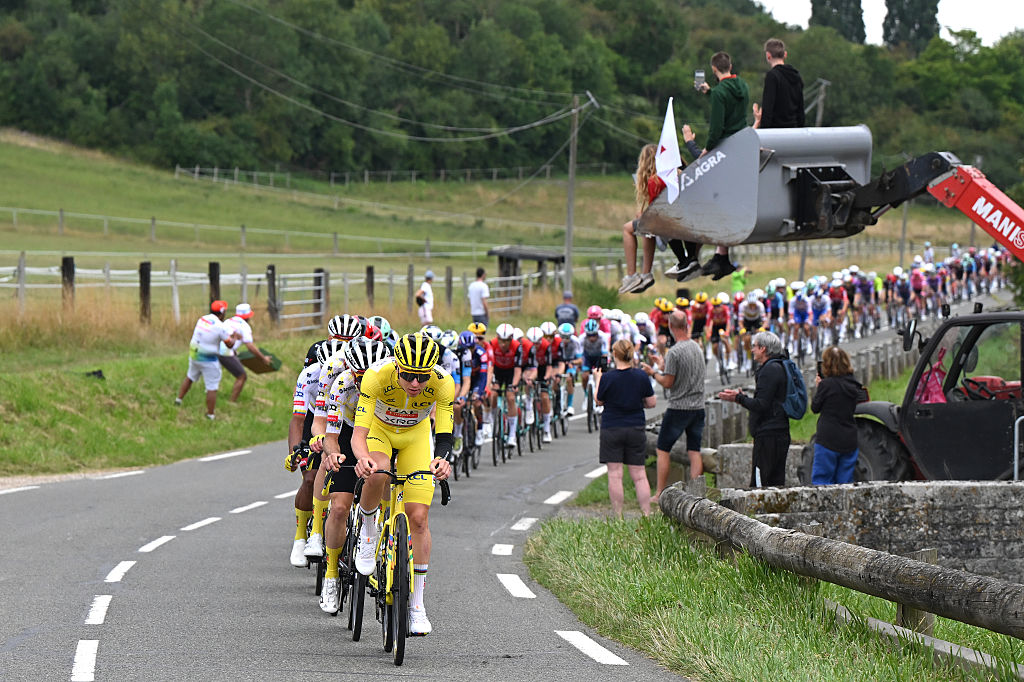
Of the leaders, the 2026 route holds no fears for Pogačar. A weakness in his earliest Tours de France, his team, UAE Team Emirates–XRG, has been refined each year and is now an embarrassment of riches.
Debutant Isaac del Toro, for example, would be challenging for yellow were he on any other team, and he’ll be protected on flatter lands by bodyguards-de-luxe Nils Politt and Florian Vermeersch. This all-round strength means even stages such as the opening team time trial in Barcelona should be a strength, rather than a potential banana skin.
For a rider who’s fastidiously completing his palmares (he added a maiden Tour de Suisse in the immediate build-up to the Tour), Pogačar will also be keen to fill in holes in his record.
While not exactly a student of pro cycling history as some of his predecessors have been, Pogačar nonetheless has become an enthusiastic collector of races and garlands. 2026 gives him a second chance, on stage 19, to add his name to an Alpe d’Huez switchback – the local award for winning here.
Given the riders who’ve had the honour bestowed (Marco Pantani, Bernard Hinault, Fausto Coppi), he surely won’t want to miss out (Tom Pidcock won from the breakaway on the Tour's last visit, in 2022). It’s something even Merckx missed out on; his career pretty much ended on the climb in 1977.
Vingegaard is back – and 'better than ever'
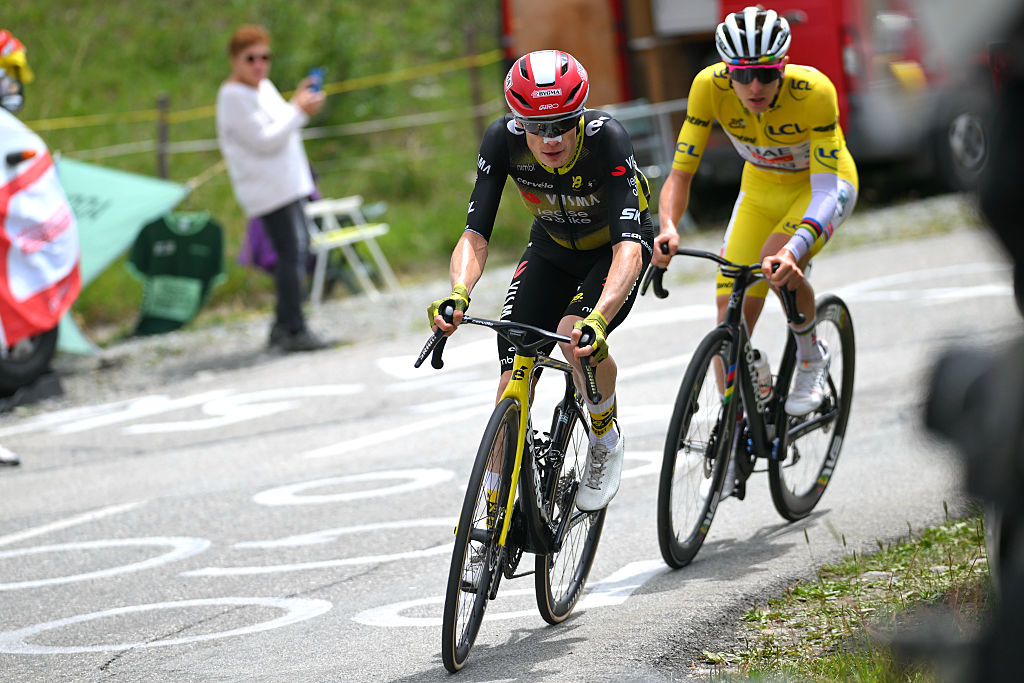
Chief rival Jonas Vingegaard, given he also targeted (and won) the Giro d’Italia in May, will appreciate a route that builds slowly in difficulty across three weeks rather than explodes out of the gate.
The Dane is a consummate diesel and after injury-related struggles in the two most recent Tours (a life-threatening spring crash in 2024, and a concussion at Paris-Nice in 2025) he arrives this year declaring he’s over both and better than ever.
With that maiden Giro success in the bag, he also starts with far more race days in his legs than ever before, with the view that will suit his strengths. Winner of the past two Grand Tours, victory in the Tour would see Vingegaard achieve the rare feat of holding all three Grand Tour jerseys (Giro, Tour, Vuelta), something last achieved by Froome in 2018.
Might he also be hoping for heat, particularly as the race heads to the high Alps? Given his hot-weather pedigree, he might be one of the few people in France who’d appreciate another searing month after the record-shattering temperatures of June. Even if that happens, it’s not quite the weakness for Pogačar that it was in 2023.
Vingegaard will also approve of the inclusion of a team time trial, which always benefits a rigorously organised team such as Visma–Lease a Bike – even if it’s not quite as strong as it was in his Tour-winning years of 2022 and 2023.
Remco Evenepoel, on the other hand, will be dismayed by the total lack of flat solo time trialling, in which he is streets ahead of his rivals. He’s still the favourite to take stage 16’s hilly 26km TT, but it won’t be by the substantial time gaps that would be his foundation for a first maillot jaune.
Building to a crescendo – but is the result inevitable?
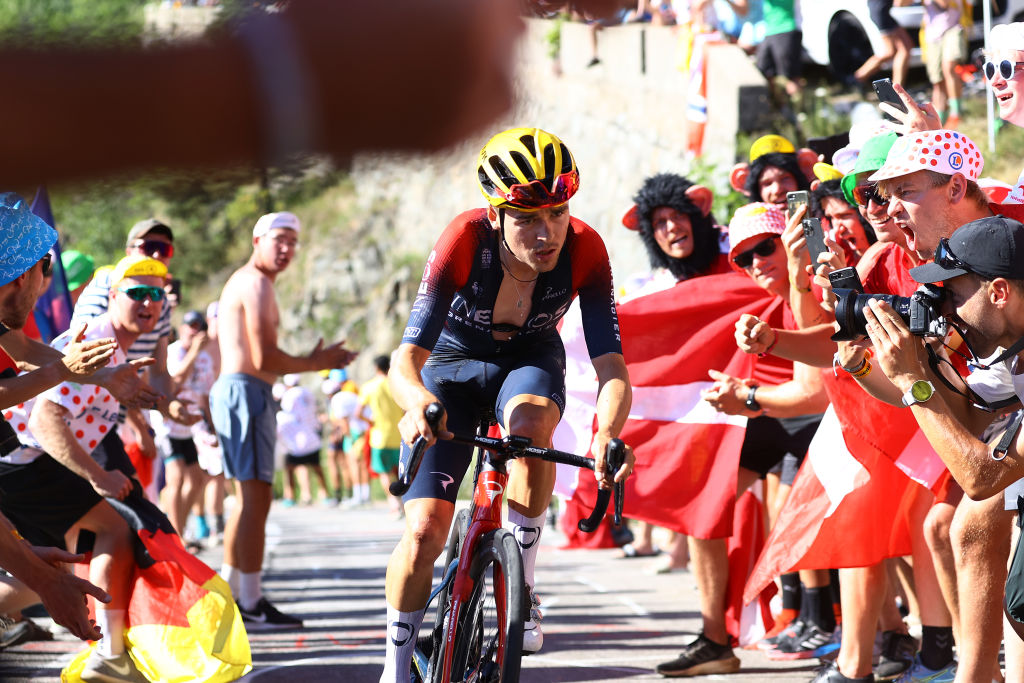
The Tour's race director, Christian Prudhomme, has always been a route innovator, tweaking and experimenting here and there, to keep riders guessing and ideally keep the suspense alive until the end of the three weeks.
No Tour route can ever be a total response to the previous one – lead times of Tour organising are longer than that and mean the bare bones of next year’s race are in place before this year’s has happened. But equally, consecutive races often have unique characteristics.
In an interview with France Info at the launch of the race, Prudhomme called the 2026 route a race of “crescendo”, in which the hardest stage is saved for the very end.
"There will be five summit finishes, including three in the three days before the finish in Paris," he said. "Even if the yellow jersey has a five-minute lead, they won't be able to say they've won. Pogačar has already proven he can gain time on all terrains, but the course is designed in such a way that the tension will be in crescendo."
This crescendo has been more commonly achieved with a late-race time trial, and it wasn’t until 2009 that stage 20 mountain stages were seen in the race. So, the stage 20 finish at Alpe d’Huez is not just the toughest stage of this year’s race but the toughest finish in Tour de France history.
Crescendo, then, is the word for it – but, given Pogačar's all-conquering dominance across all terrain, the route could just be delaying the inevitable.
In reality, this remains a route ideally suited to Tadej Pogačar and it'd take 21 sprint stages for the Tour's organisers to change that.
And even then, you wouldn’t put it past him to somehow eke out victory.
More on the 2026 Tour de France
- We weighed Tadej Pogačar’s 2026 Tour de France bike – and it’s heavier than you might think
- Jonas Vingegaard’s Cervélo S5 for the 2026 Tour de France is bang on the UCI’s 6.8kg weight limit
- Spotted! Remco Evenepoel will ride this prototype Specialized Shiv time trial bike at the Tour de France
- From a rare team time trial to a brutal Alpe d’Huez finale: 8 questions answered about the 2026 Tour de France route
- Live Tour de France coverage to be broadcast on S4C and BBC iPlayer