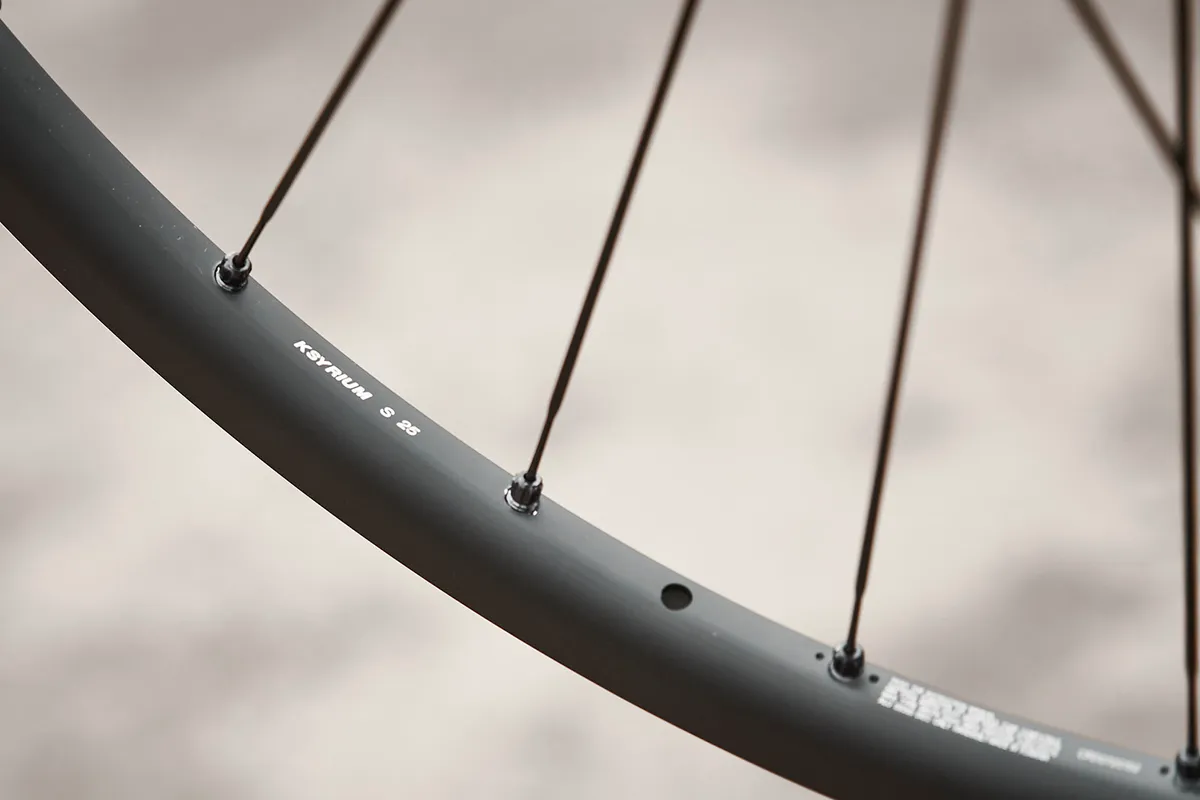
Some standards for bike parts seem to have existed for decades with little change – 9/16in pedal threads and 1 1/8in stems being notable examples.
Sometimes, this is because we riders are set in our ways, but sometimes the existing standards are perfectly adequate.
Here are some of the most notable examples of when bike manufacturers have decided to develop a new standard and the public have (rightly or wrongly) turned their noses up.
Giant OverDrive 2
Giant Bicycles is a company known for innovation, but there are some notable examples of it missing the mark when it came to the cycling public accepting those innovations.
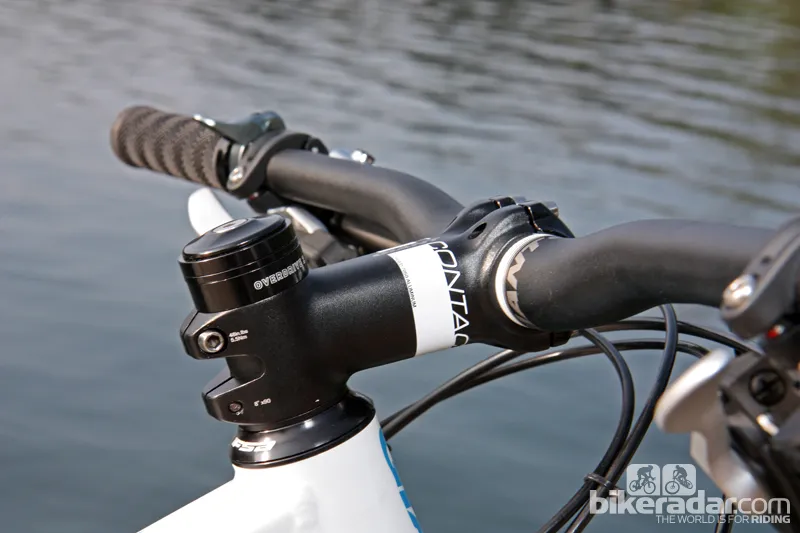
The original Giant OverDrive used a tapered steerer tube, which had a 1.5in diameter at the bottom and 1 1/8in (1.125in) at the top.
This is the now-universal standard for single-crown forks. It uses the same 1 1/8in stems and headset spacers that have existed since the 1990s, blended with an oversize lower bearing from the now-defunct 1.5in steerer-tube standard from freeriding for extra strength and stiffness. This was widely regarded as a great idea.
However, the OverDrive 2 was intended to refine the concept, using the same 1.5in lower part of the steerer tube but an oversized 1 1/4in (1.25in) upper part. Unfortunately for Giant, this did not catch on. While it increased the steerer tube’s stiffness as intended, the incompatibility it produced did not endear it to the buying public.
Not only did aftermarket stems and headset spacers not fit, but forks from Giant bikes were almost worthless because they would not easily fit anything other than Giant bikes with the OverDrive 2.
It was a solid concept, but not one that was popular in practice
Giant D-Fuse
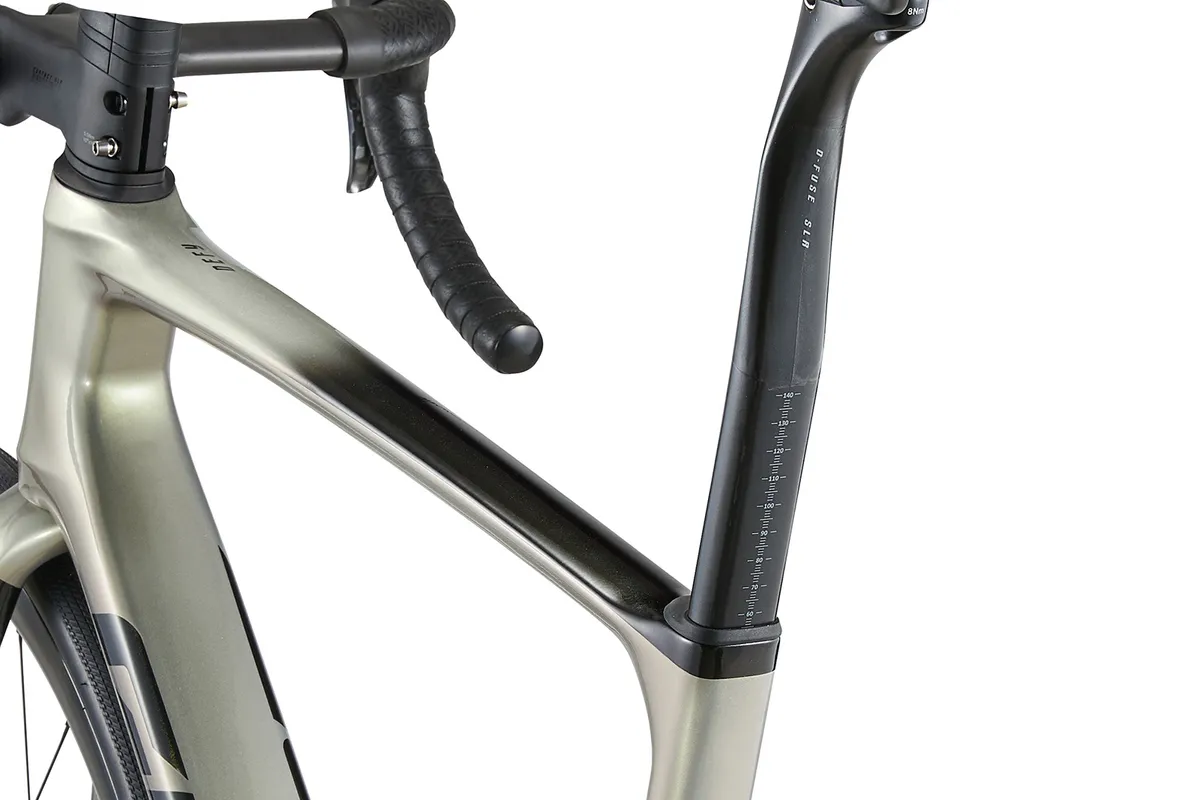
Giant’s D-Fuse technology is a D-shaped seat tube specced on some of its bikes, which necessitates the use of a matching D-shaped seatpost. This profile of seatpost is sometimes called Kammback or Kammtail and is also seen on bikes from manufacturers such as Rose and Ribble.
Giant says its D-Fuse seatposts improve comfort by absorbing trail buzz and bumps. When made from carbon, the D-Fuse seatpost works well, offering a degree of rearward compliance when the rider is seated.
However, the inability to run a dropper post on various gravel bikes, and the necessity to run a special seat clamp have not boosted its popularity.
Giant has tried to minimise these gripes and maximise compatibility by releasing its newest Revolt gravel bikes with a round seat tube.
The models with a static post will use the D-Fuse seatpost, but with a removable shim that means a regular round seatpost can be used when the shim is removed. This is particularly useful for any rider looking to fit a gravel dropper post to their Revolt. Top work, Giant.
Cannondale’s AI and Hope’s low-dish MTB rear wheels
Engineers from Hope and Cannondale experimented with changing their frame alignment standard so they could make a stronger wheel by dishing it less, enabling the rim to sit centrally between the hub flanges.
This would create equal spoke angles and equal forces on both sides of the wheel. Cannondale called its dishless wheel standard 'AI' (Asymmetric Integration), whereas Hope’s asymmetric axle standard didn’t get a name, but could be called 130x17mm because the rear axle runs directly on the hub bearings.
On most bicycles, the dish of the rear wheel tends to hold the rim central between both sides of the rear axle. This means wheel builders will dish the rim over towards the driveside to compensate.
However, both Hope and Cannondale decided it was worth the engineering effort to offset the dropouts in the frame toward the driveside, creating an asymmetric wheel. This should, in theory, increase the strength of the wheel because the angle of the spokes from the hub flange to the eyelet can be increased.
This standard is found on bikes such as Cannondale’s Jekyll and Hope’s HB.130.
Cannondale’s 'AI' wheel standard requires a wheel with the rim dished 6mm toward the non-driveside, compared to standard. Keeping the rim central between the hub flanges means the wheel is dished towards the disc to compensate for the off-centred dropouts.
Meanwhile, Hope created a 130mm hub spacing, bringing the non-driveside in toward the centre, to give the perfectly triangulated spokes.
Both these methods work perfectly well and should create stronger rear wheels. However, they make this list because of the hassle factor: you can't just buy any rear wheel of the correct size with the correct hub standard and slot it into your bike anymore.
Replacement wheels will have to be built from scratch, or an existing wheel re-dished to fit the frame. Many riders find this tiresome and not worth the extra wheel strength.
Hope realised this, though, because later versions of the HB.130 came with regular rear hub spacing, while the AI standard seems to have been phased out, not appearing on Cannondale's latest Topstone or SuperSix.
Cannondale and Fox DYAD
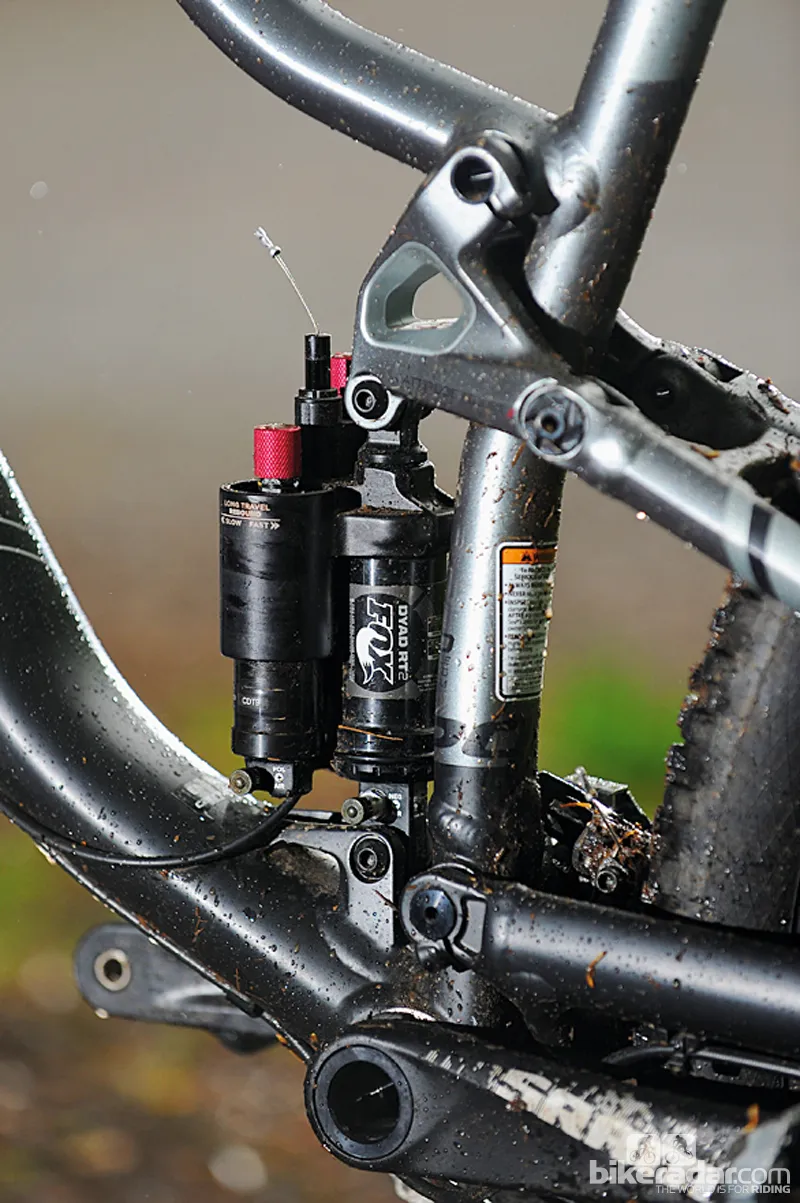
Cannondale's Trigger, Jekyll and Claymore models from the early 2010s used a pull-shock designed in conjunction with Fox. Pull-shocks were seen before this on bikes such as Scott’s Genius in the 2000s with the Equalizer 2.
It was clever, with the design saving space within the frame and even offering adjustable travel and geometry at the flick of a switch.
Unfortunately, they seemed to go wrong more often than traditional shocks, and they were tricky for suspension technicians to repair, earning these high-tech air shocks a reputation for poor reliability, regardless of how clever the design was.
Shimano Saint RD-M800 rear derailleur

It’s a surprise to see the 'big S' on this list, but it just goes to show that even the best can get it wrong sometimes.
Shimano Saint has been around since 2003 and is still a staple on downhill mountain bikes. With rumours of a fresh Saint groupset arriving soon, it looks as though it’s here to stay a good while longer.
The first iteration of Saint was the M800 groupset, which included a rear derailleur. There was nothing too special about the way the 9-speed derailleur shifted, and in many ways it resembled a beefed-up XT derailleur of the same era.
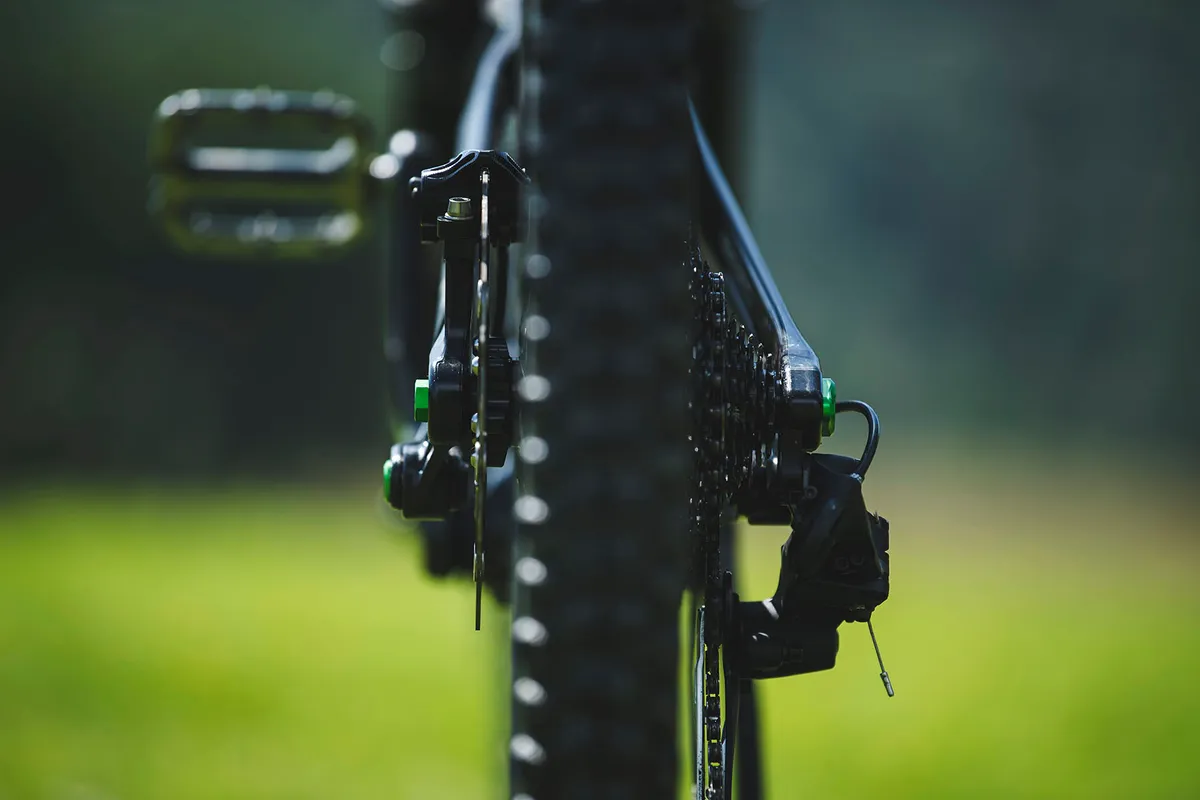
The controversy was in the way it (and the lower-spec Hone M600 derailleur) attached to the bike. It did not use a traditional derailleur hanger, instead offering a threaded hole for a 10mm axle.
Shimano’s thinking was logical: if the fragile derailleur was circumvented, there would be fewer weak links on the bike and the drivetrain could be made more reliable.
The issue was you had to use the proprietary Shimano Saint 10mm axle of the correct width to fit your frame, bolting on the derailleur instead of your axle nut.
This was about the time the 12x150mm downhill hub standard took off, and became standard equipment on DH bikes until the introduction of 12x157mm (now called Super Boost). So, despite there being a solid engineering reason for the bolt-on Saint derailleur, it had a short life.
SRAM's UDH (Universal Derailleur Hanger) standard took over from the Saint RD800 as the most futuristic derailleur hanger standard in 2019, finally doing away with the need for replaceable derailleur hangers for SRAM UDH users.