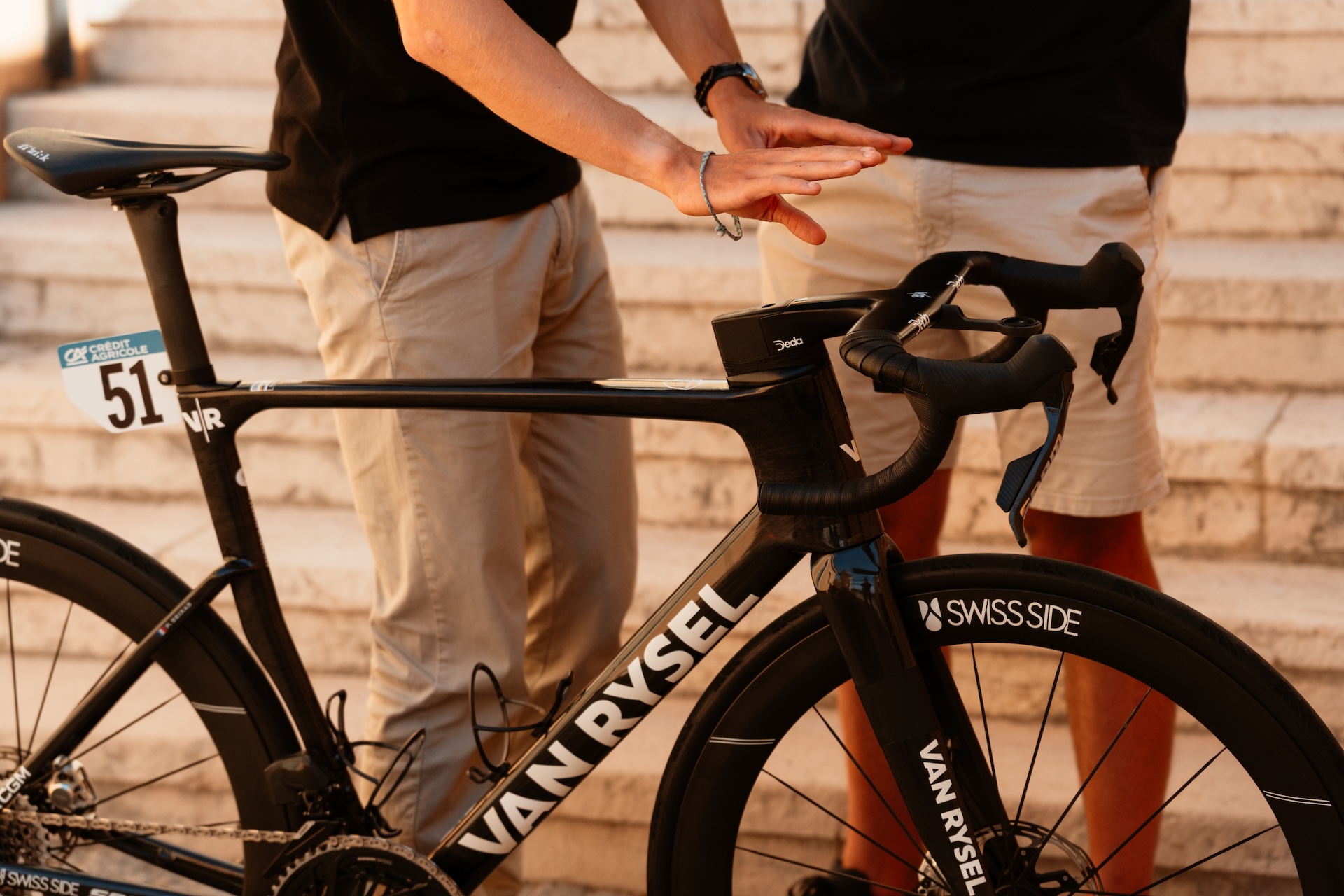
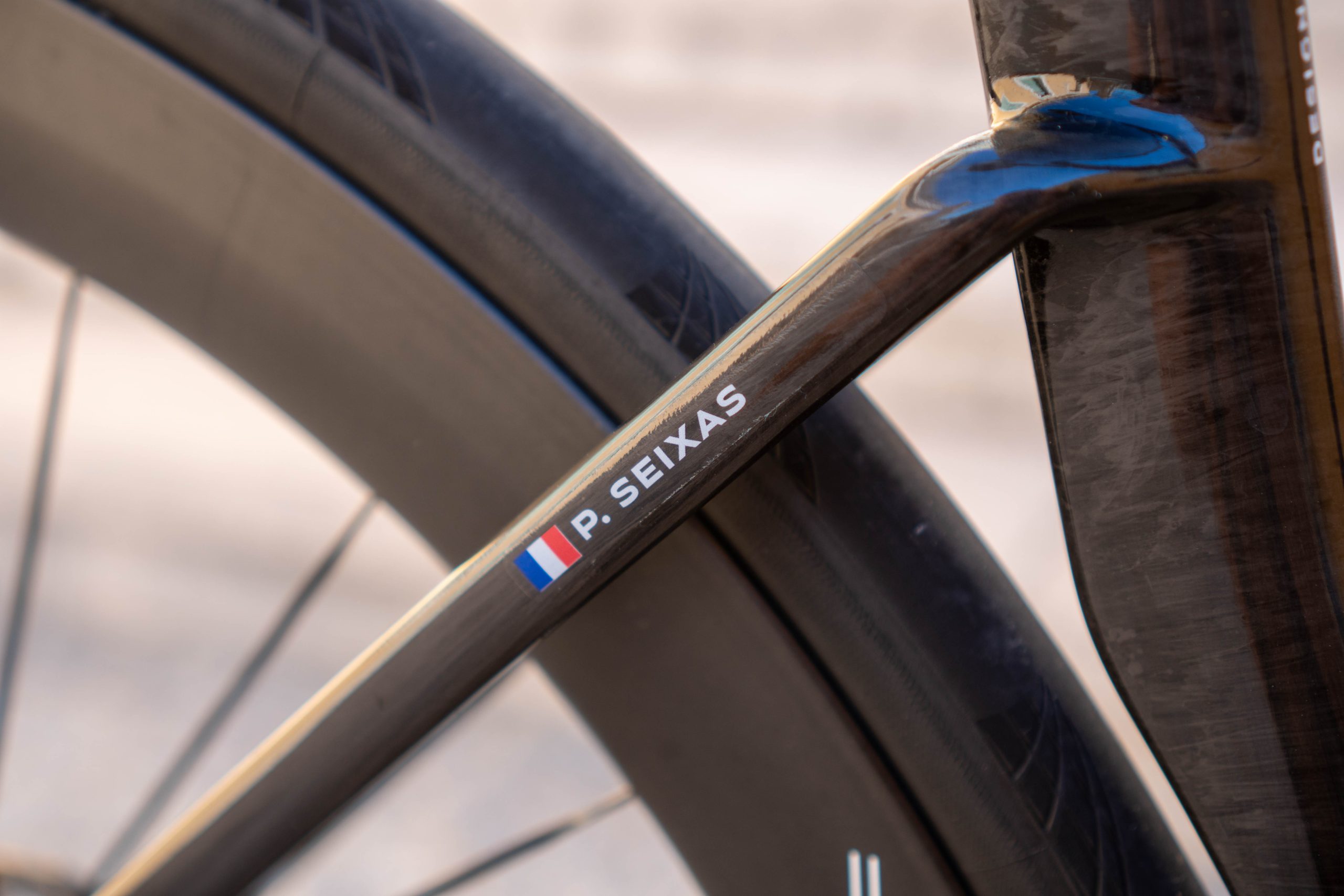
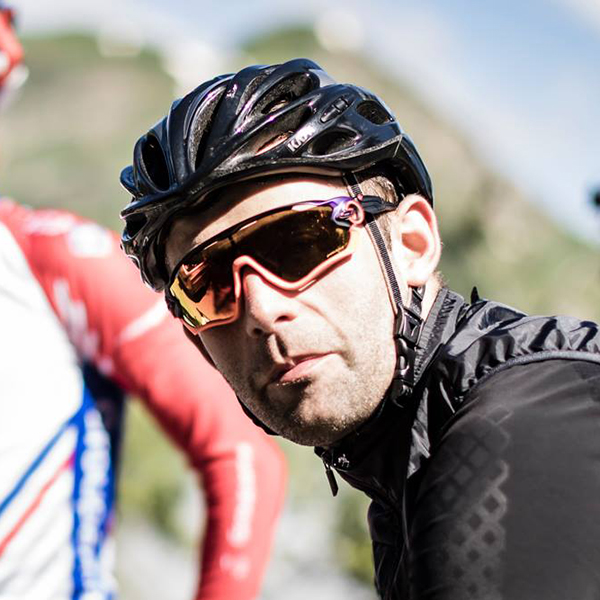
Rising French superstar and Tour de France GC hopeful Paul Seixas has been riding this prototype Van Rysel race bike since The Tour Auvergne-Rhône-Alpes in June.
Last month, he rode it to the biggest win of his career at Il Lombardia, the final one-day Monument race of the season.
Both his Decathlon CMA CGM team and Van Rysel have been at pains to keep the bike under wraps for the second half of the road-racing season, limiting us to spy shots on top of team cars and from afar.
Now, we know for sure that this is the new Van Rysel RCR-R Pro race bike, and only two days after his season-climaxing win, we were able to get hands-on with it and speak to the man himself about his setup.
Read more
- The new Van Rysel RCR-R2 Pro is lighter, stiffer and more aerodynamic
- Van Rysel RCR-R first-ride review
Wide handlebar
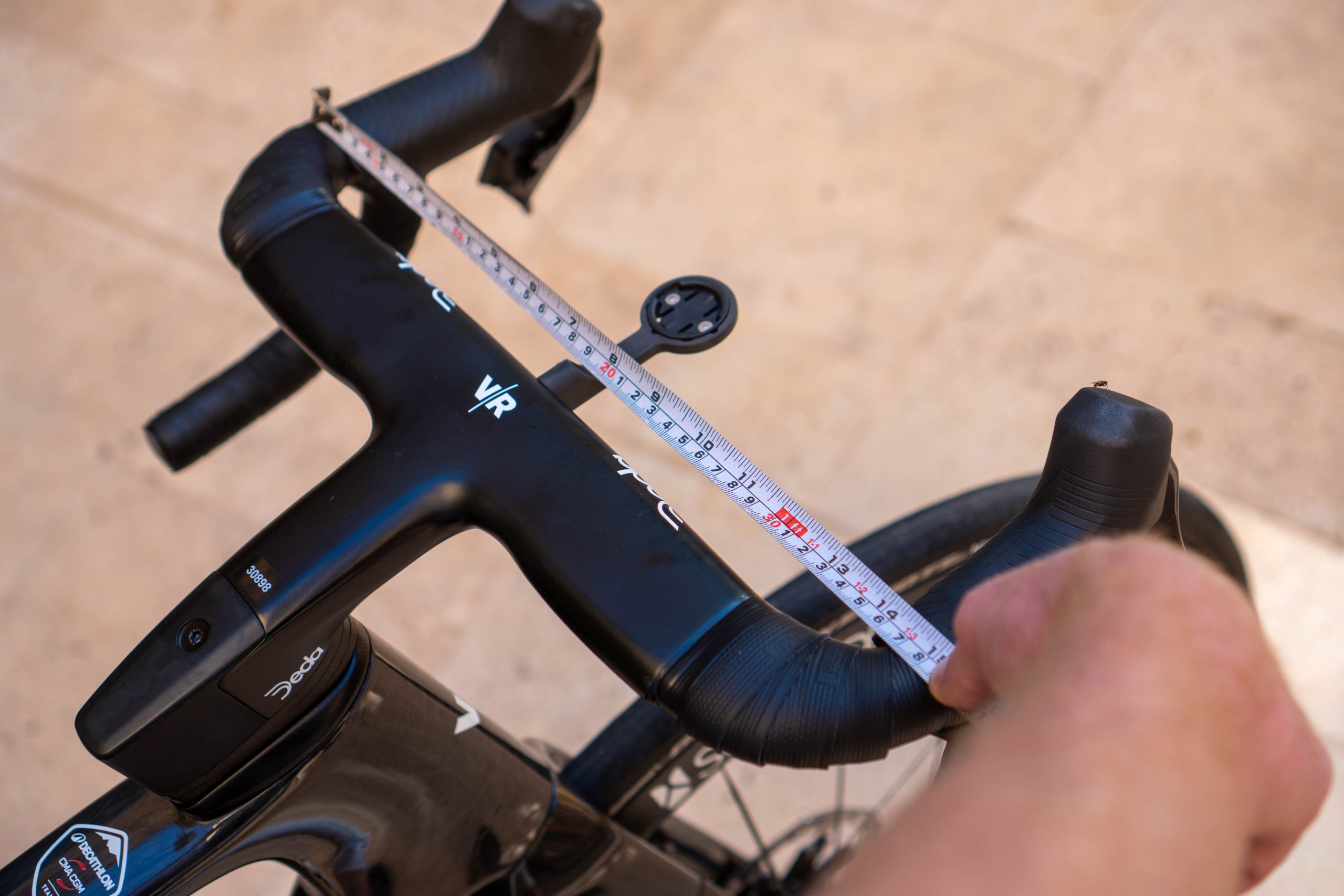
The first thing that stands out is the handlebar, which we measured at 38cm wide from centre-to-centre at the tops, and 40cm wide from centre-to-centre at the drops.
The handlebar itself is a new one-piece setup designed by Van Rysel in conjunction with Italian components specialist Deda Elementi, but the key point is it doesn’t conform to the typical as-narrow-as-possible size of 40cm, measured from the outside edge of the drops.
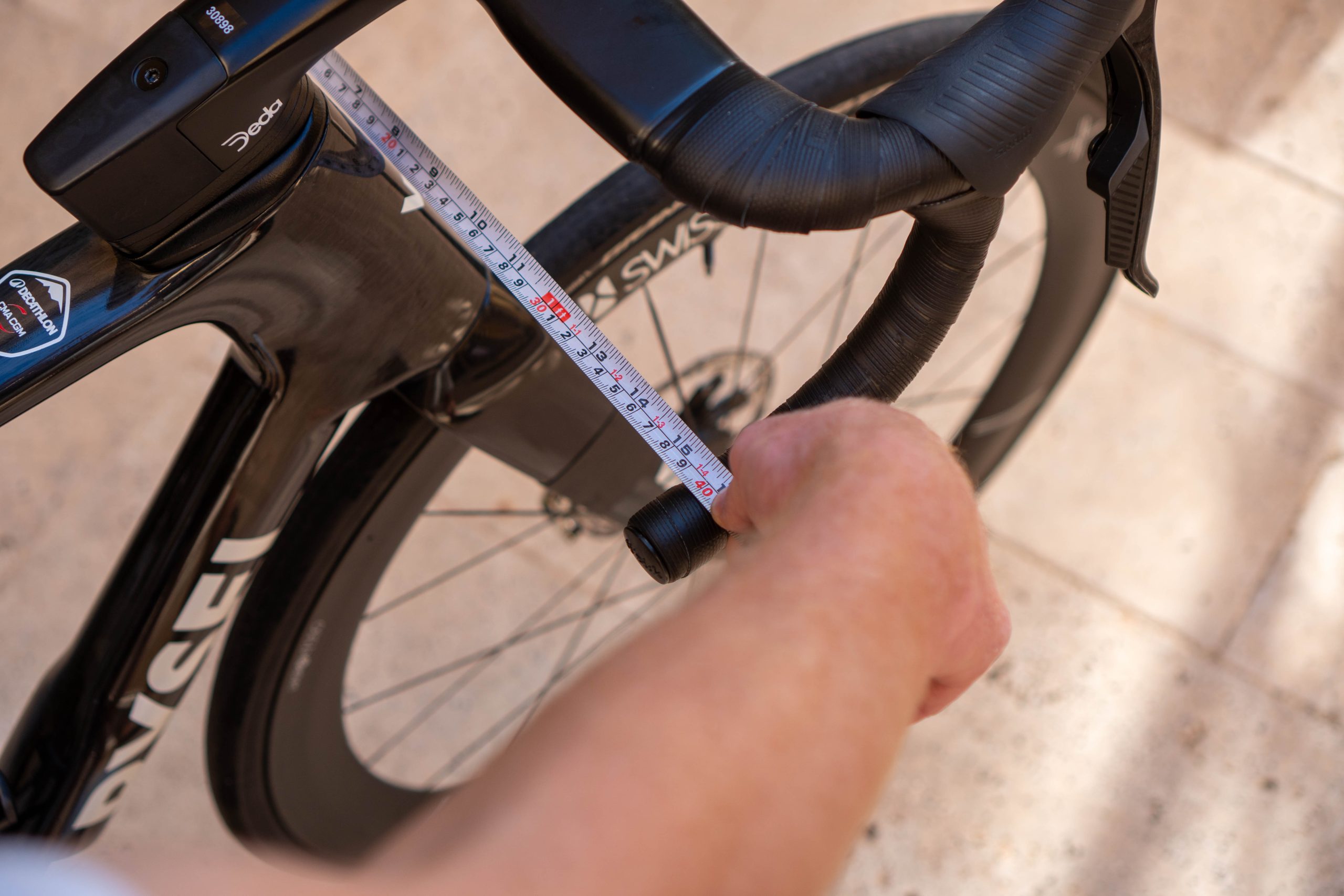
Seixas confirms that, although the regulations permit a narrower handlebar, his team and Van Rysel “have done a study on this, and found the 40cm handlebar to be the most optimised size”, with only one or two outliers within the Decathlon CMA CGM team using a different size.
Interestingly, Seixas points out the study revealed that “it doesn’t really matter” what the rider’s size on the bike is when trying to achieve aero efficiency. While slightly built in the typical manner of a road-racing cyclist, Seixas is 1.86m tall (around 6ft 1in).
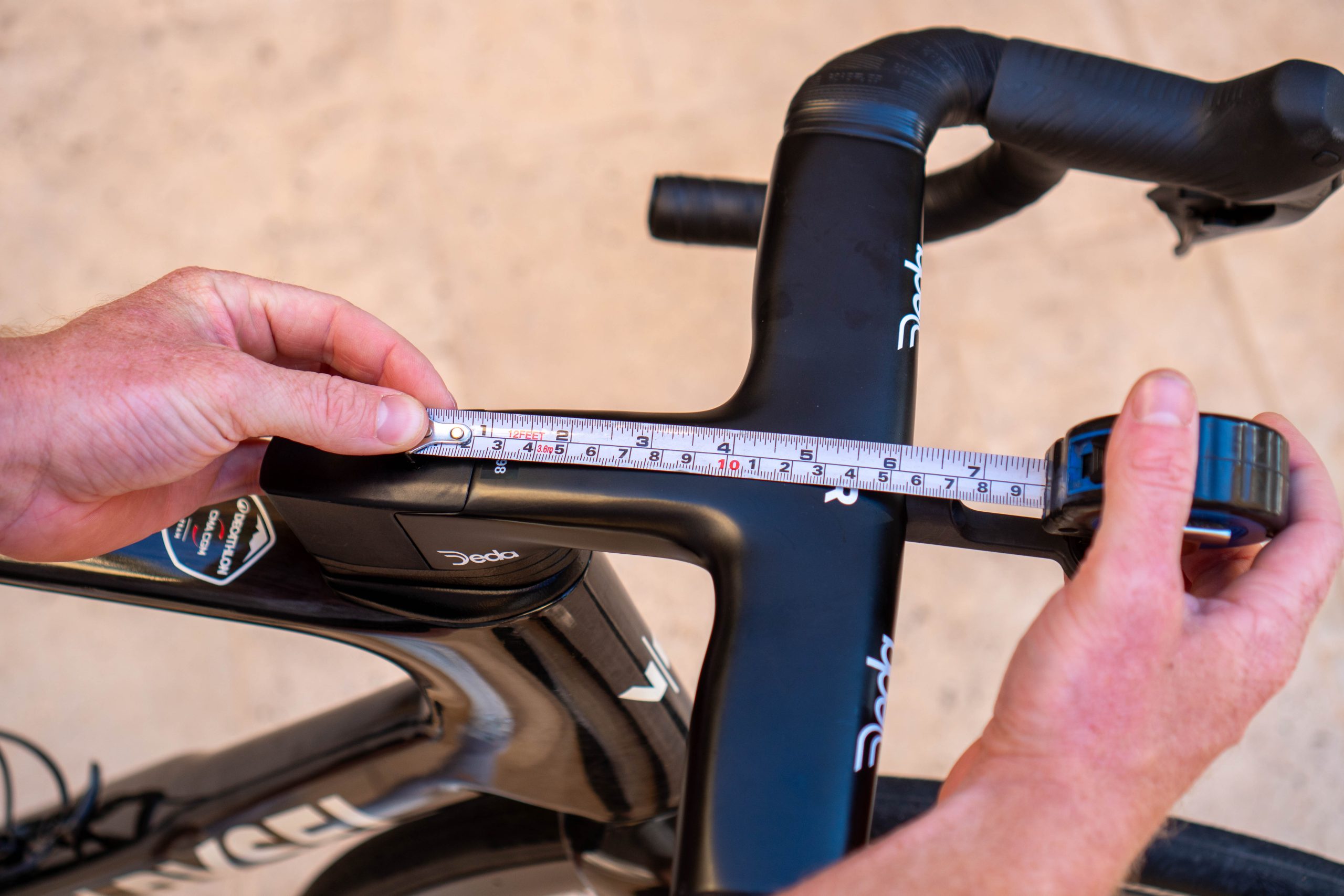
In time-honoured pro tradition, though, Seixas’ effective stem is a lengthy 130mm. He rides a size-large frame, roughly equivalent to a size 56cm, but runs the larger-than-typical stem in order to remain on a smaller-sized frame.
All things being equal, the smaller frame will feel more agile under a larger rider, but with the steering tempered by the long stem, Seixas is also looking to save weight here.
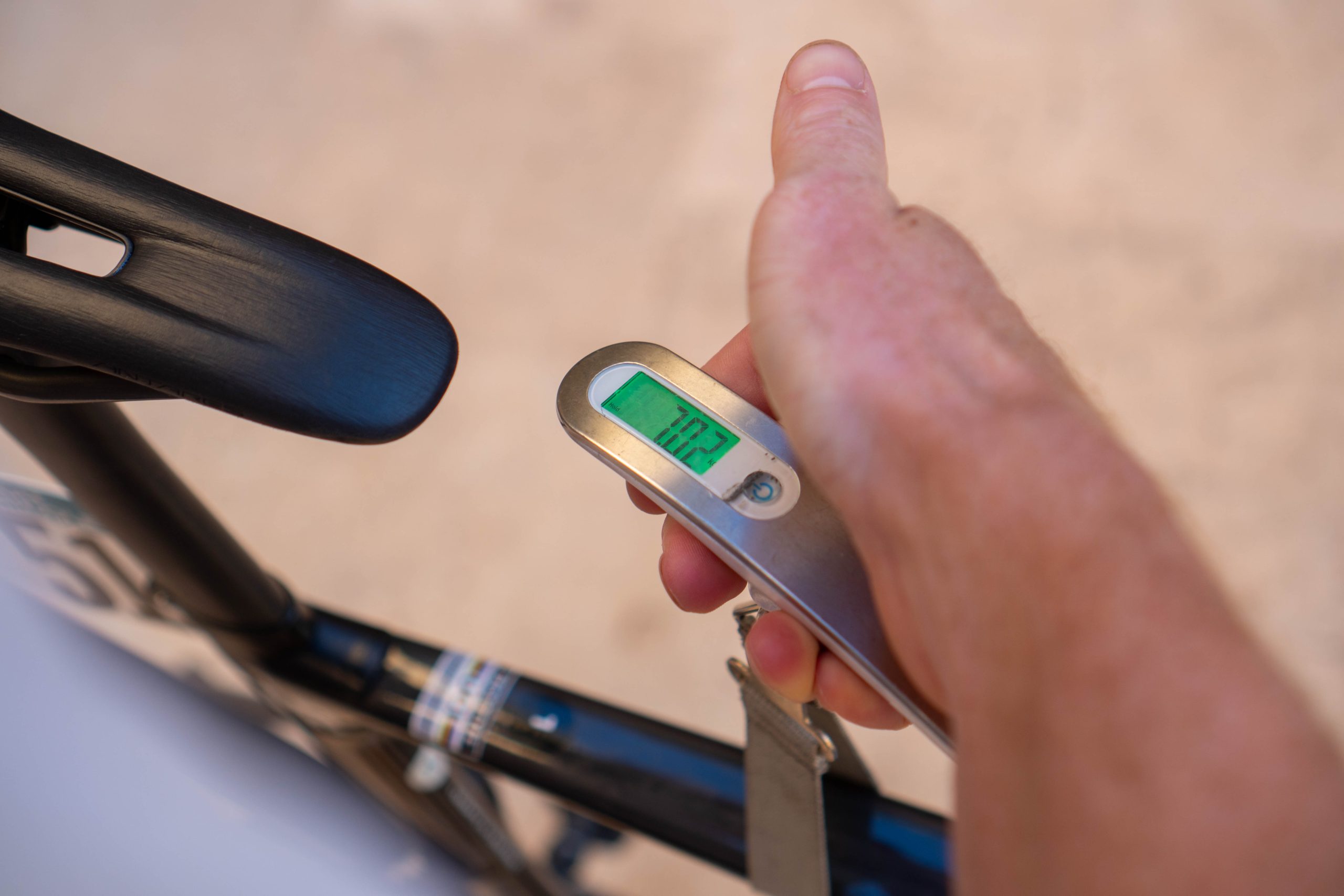
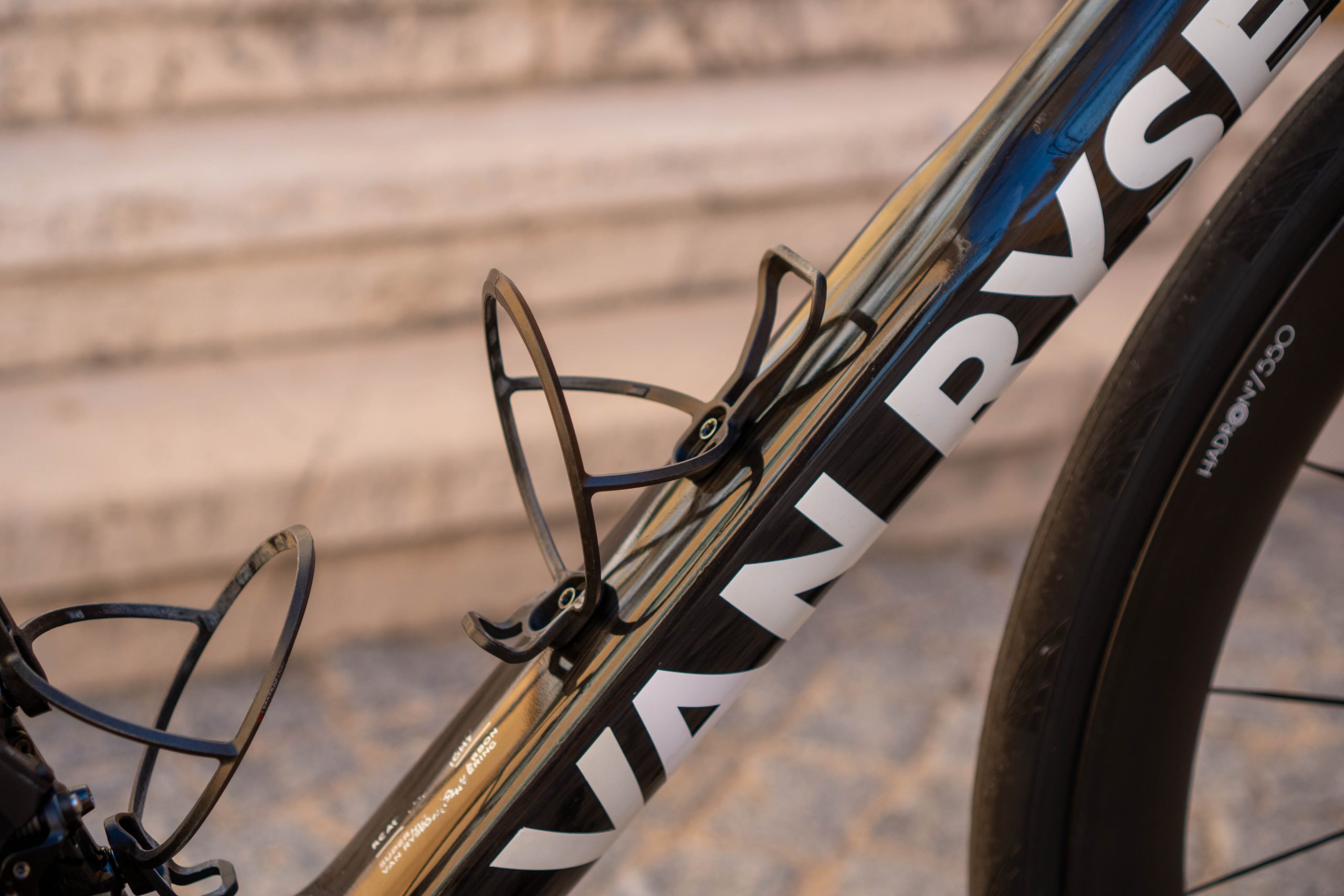
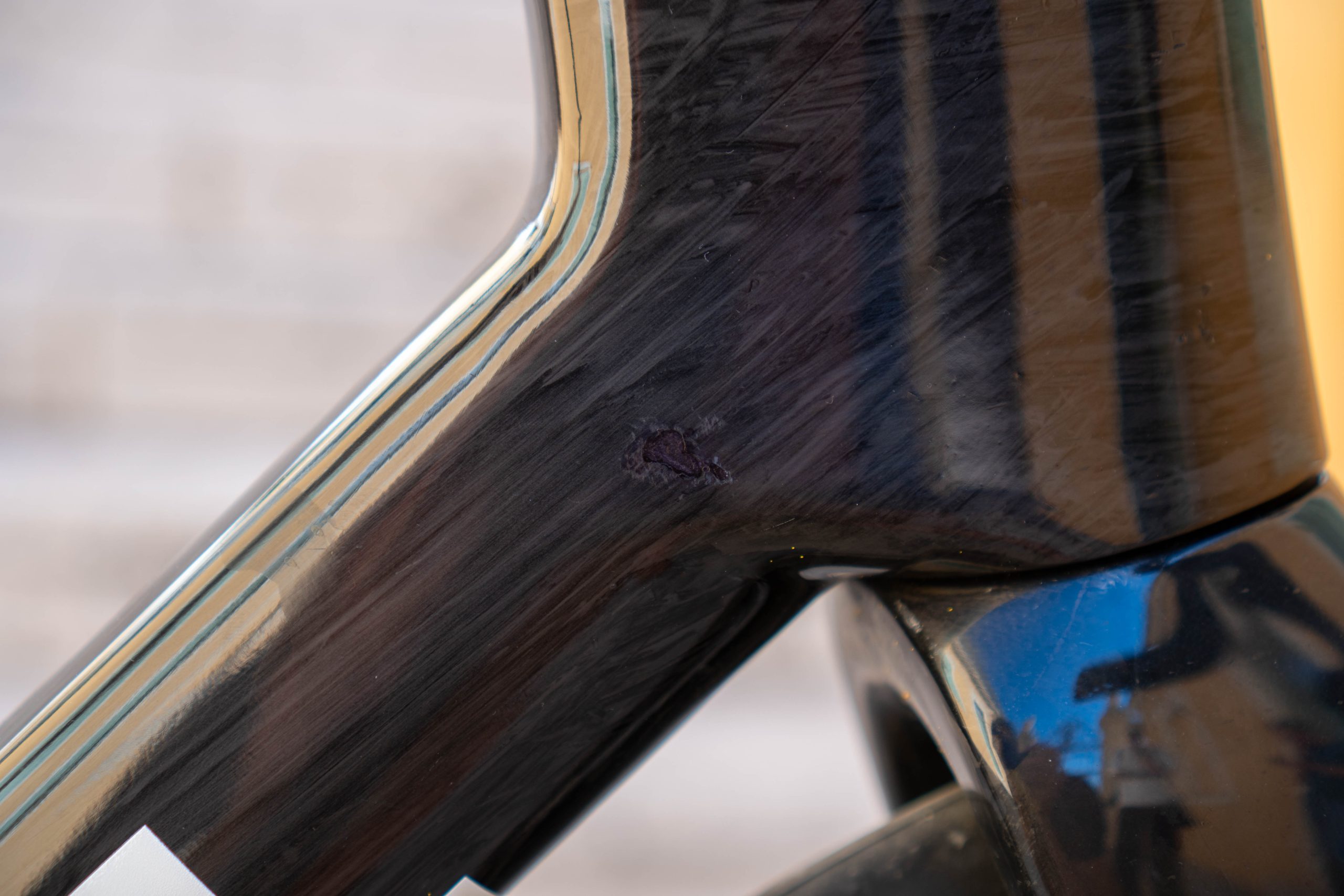
The Frenchman’s RCR-R Pro frameset is unlike any RCR-R Pro set to go on sale, given it’s unpainted, save for a protective lacquer coating. Van Rysel won’t confirm how much weight this saves, but his bike weighs 7.02kg.
Specific choices and scars of war
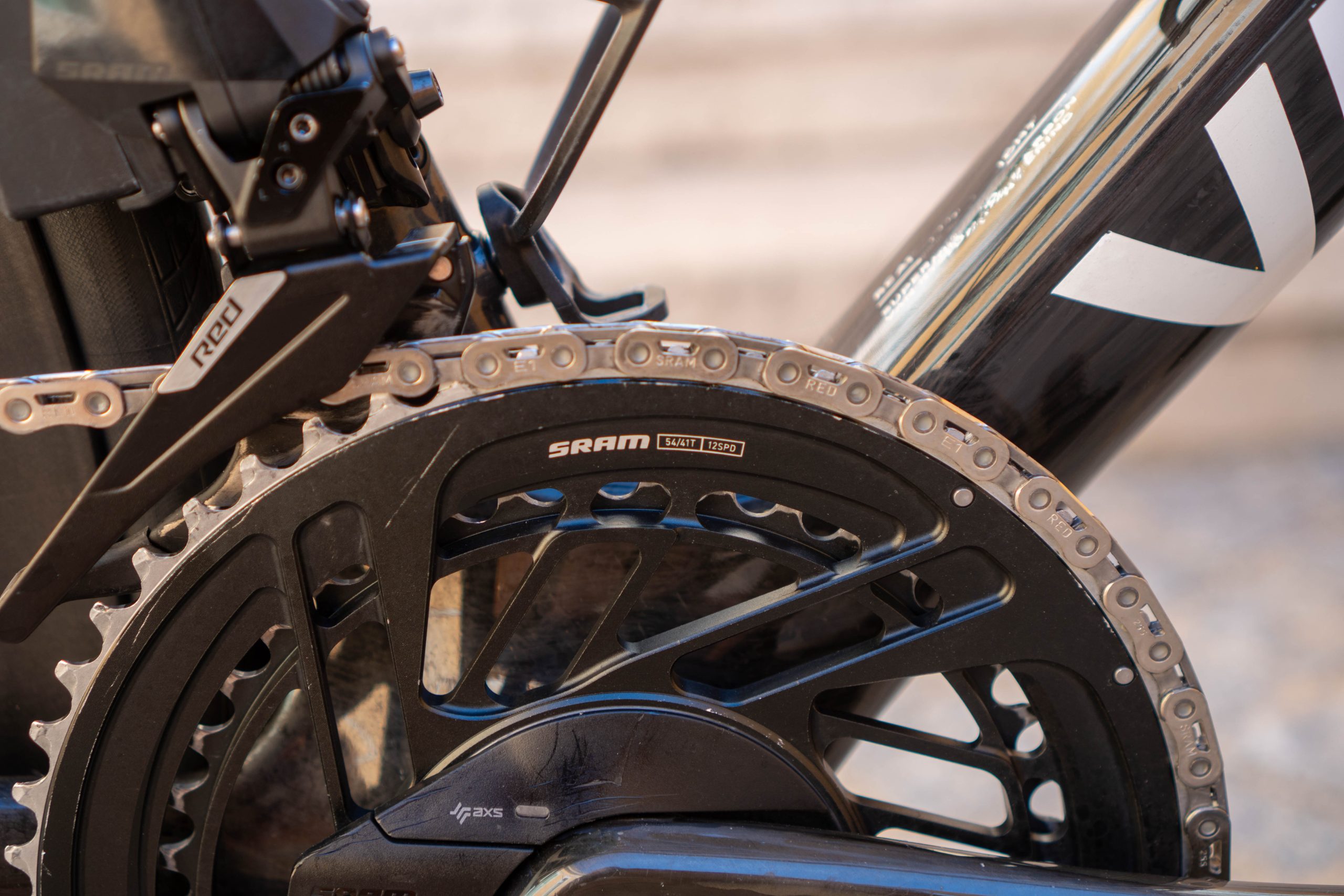
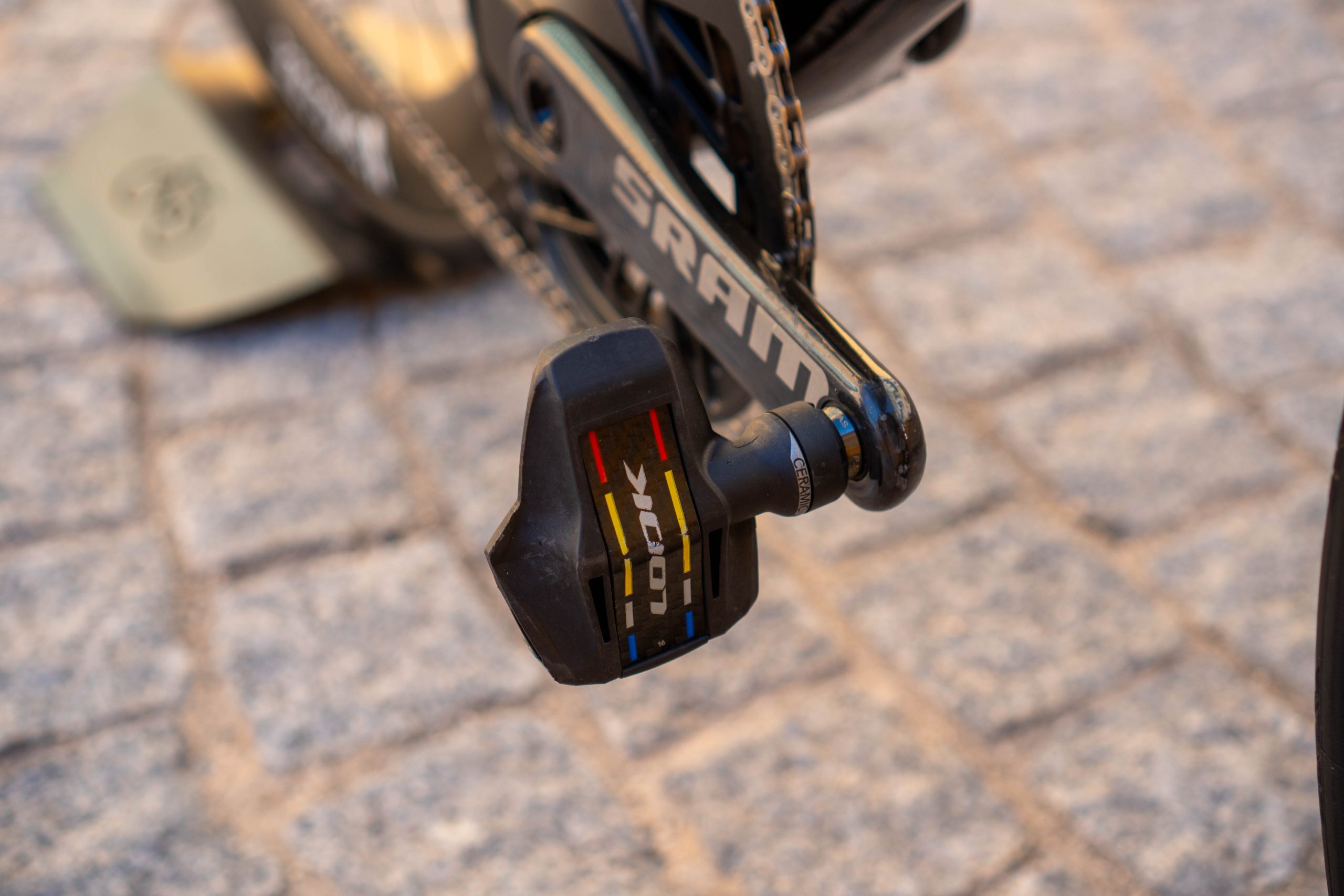
The fundamental spec of Seixas’ bike holds few surprises – he’s running a full SRAM Red AXS groupset with ‘pro-style’ black cranksets and front derailleur. His gearing, set up for the demands of the hilly Il Lombardia classic, features a 54/41-tooth chainring combination with a 10-36 tooth cassette.
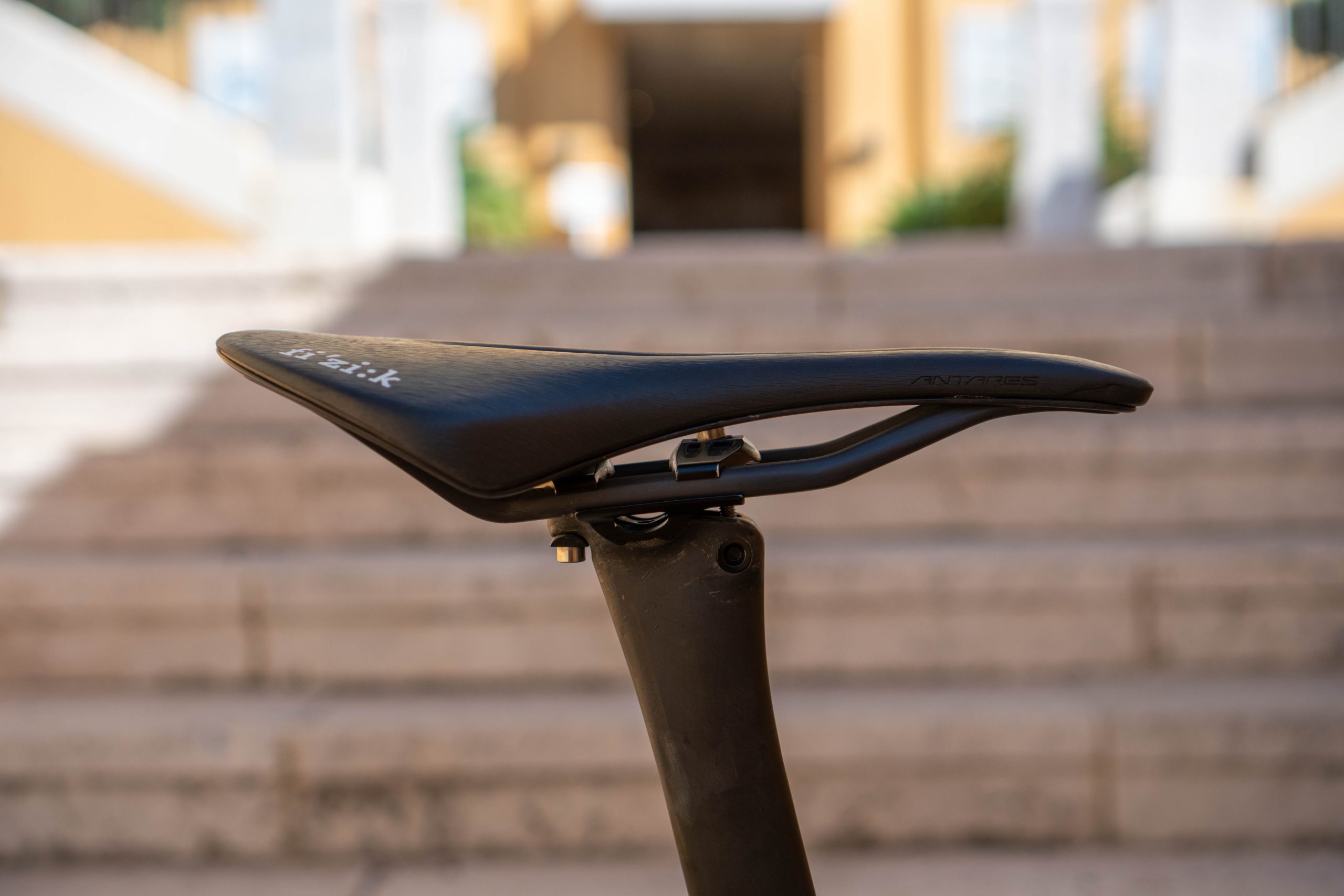
Seixas uses an in-line seatpost, following the prevailing trend that sees riders pitched more steeply over the bottom bracket to yield greater pedalling efficiency.
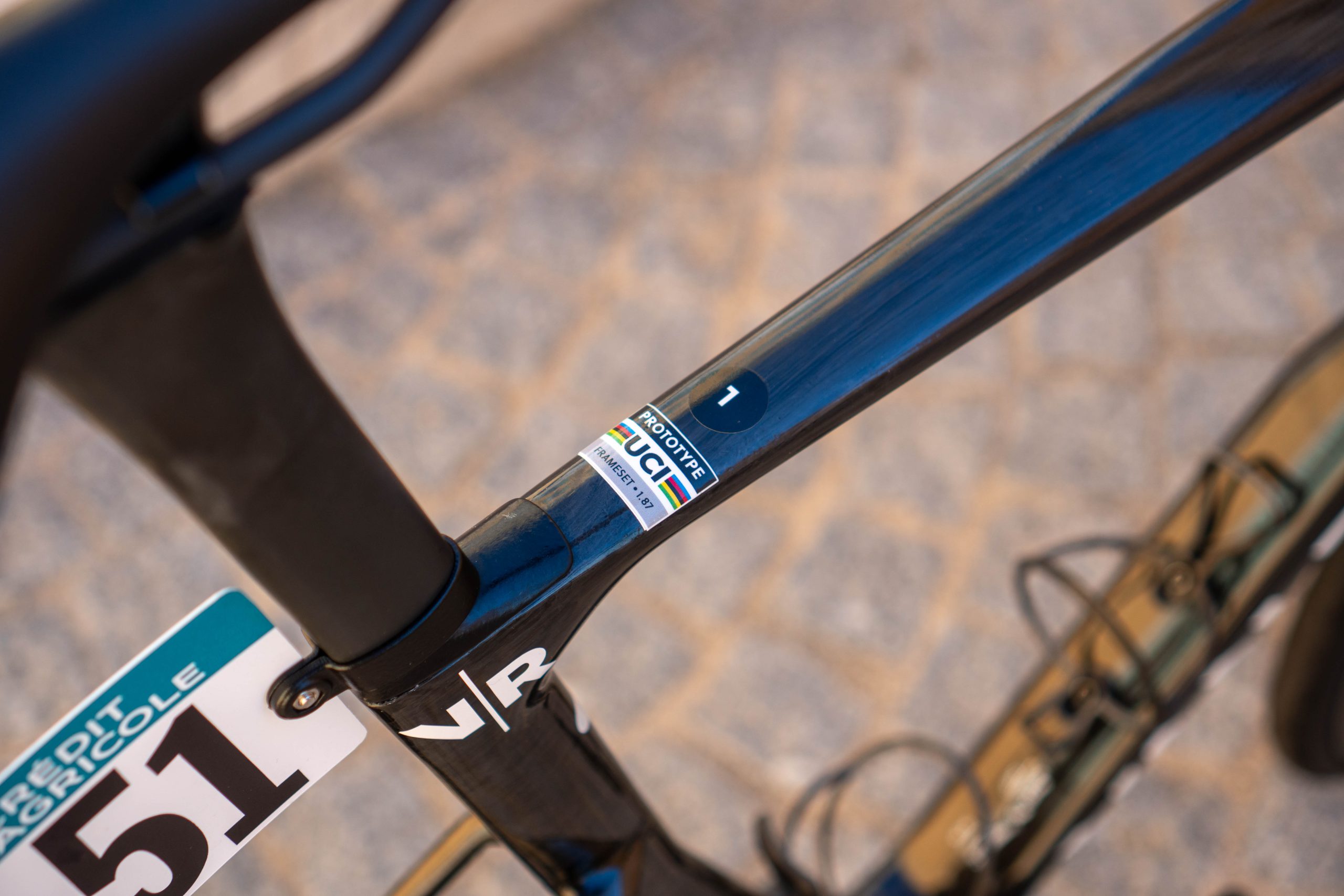
Given the new RCR-R Pro’s geometry largely mimics that of the RCR-F aero bike – a decision taken by Van Rysel “to make transitions between race bikes as easy as possible” – the RCR-R Pro’s seat tube angle isn’t as steep as, for example, the recently launched Ridley Falcn RS 2.0.
Accordingly, Seixas has his Fizik Antares set almost as far forward on the rails as possible.
For Il Lombardia, he chose to run the Swiss Side Hadron Ultimate 550 wheelset, the 55mm-deep all-round choice from the brand. Unlike a growing number of top-spec racing wheels in 2026, these don’t have carbon spokes, instead featuring DT Swiss Aerolite spokes. The hubs are DT Swiss 180 EXP models, with SINC ceramic bearings.
The wheels aren’t as wide as some, measuring 22mm across internally. This helps inform the choice of 28mm-wide rubber, for which the rims are said to be aerodynamically optimised.
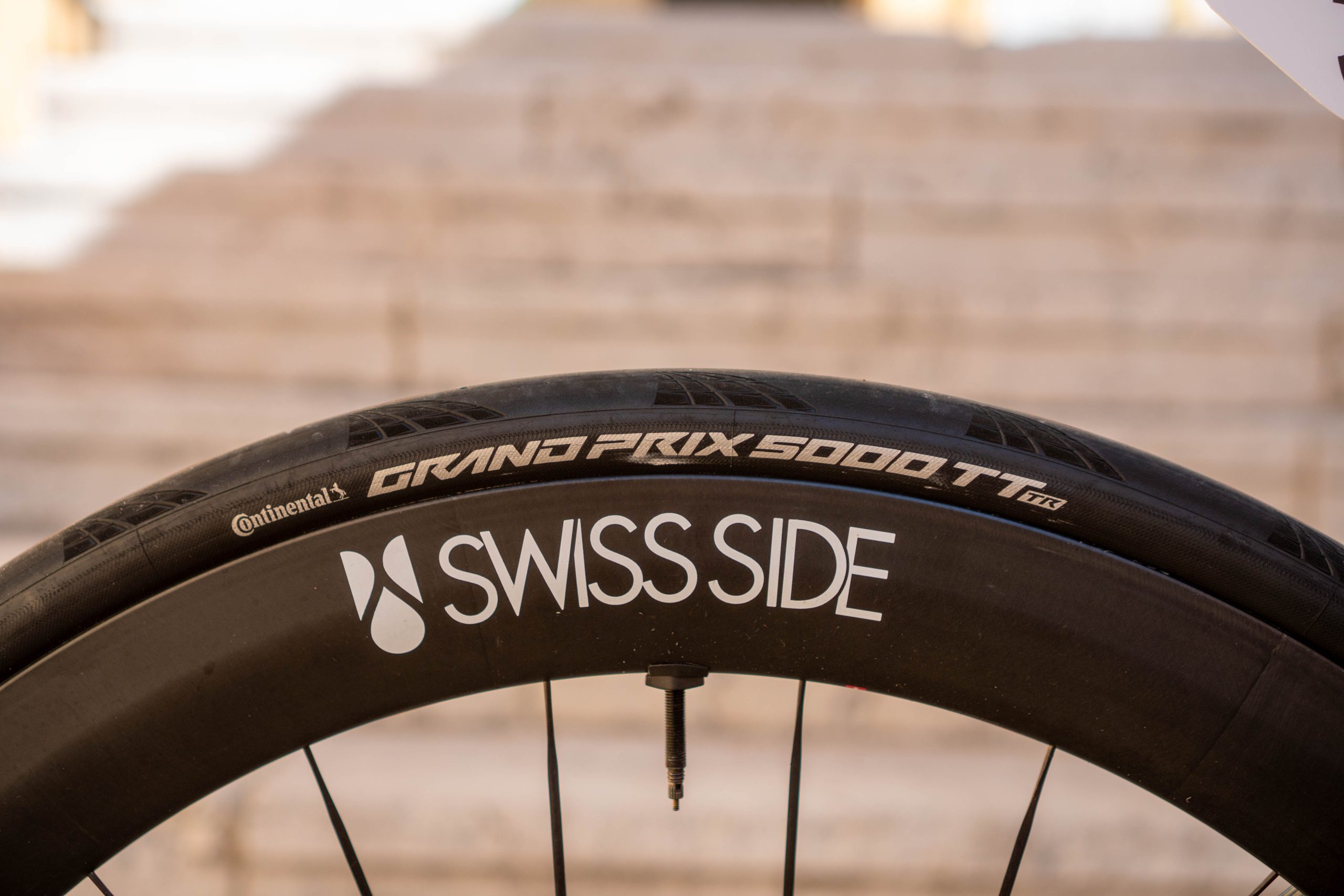
Seixas’ choice of Continental Grand Prix 5000 TT TR tyres is unsurprising (these time trial-specific tyres are known to produce less rolling resistance compared to the sometimes-used Grand Prix 5000 S TR tyres). However, Seixas has chosen not to run the Aero 111 front tyre as part of the ensemble.