In our Tech Q&A series, we tackle your cycling questions – big or small – with help from the BikeRadar team and trusted industry experts. In this instalment, a reader wants to know what the difference is between a folding and a wire bead tyre.
Would you provide a rundown on the differences and pros/cons of folding vs wire bead tyres? For some brands and even for the same model of tyre, both are offered.
Ken Allen
The bead is the edge of the tyre that hooks into the rim. On a wire bead tyre, this is made from steel, which gives it a fixed shape. That’s why these tyres can’t be folded and tend to hold a rigid, circular form even when they’re off the bike.
Folding tyres replace that steel wire with a flexible material, usually Kevlar or another aramid fibre. This allows the tyre to be folded or packed down.

At a glance, the only obvious difference between folding and wire bead tyres is whether you can roll them up or not – but there’s a bit more going on under the surface.
In practical terms, the biggest differences are weight and cost.
“Wire bead tyres are generally more affordable and very durable thanks to the steel bead,” explains James Heaton of tyre brand, WTB. “That makes them a great option for commuters, casual riders or anyone who isn’t too concerned about weight.”
That durability comes with a trade-off, though. “The downside is they’re heavier and can’t be folded, so they’re less practical to carry as a spare or pack away,” Heaton adds.
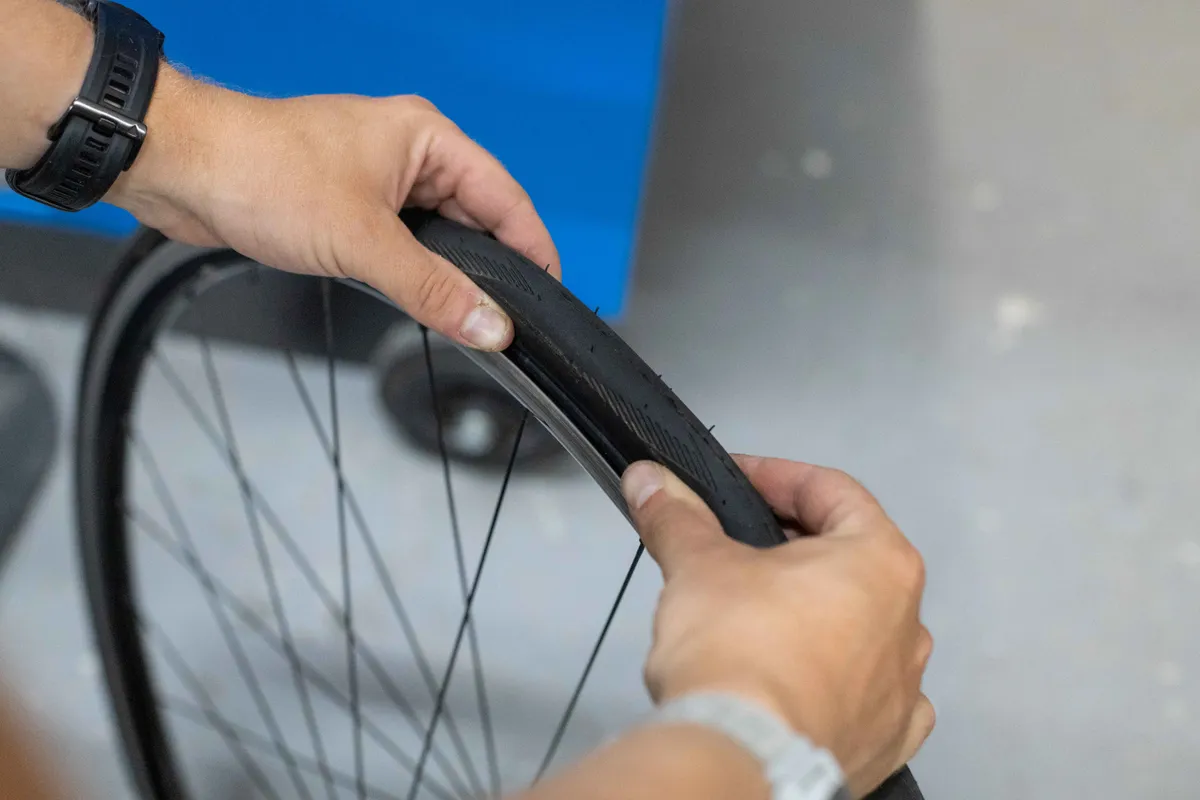
Folding tyres sit at the other end of the spectrum.
“Folding bead tyres are lighter and more portable because they use flexible materials like aramid fibres instead of steel,” says Heaton. “That reduction in weight, especially rotational weight, can make a noticeable difference to performance.”
They’re also typically found higher up in a brand’s range. “You’ll often see folding tyres paired with more advanced rubber compounds and casings, which can improve grip, rolling speed and ride feel,” Heaton explains. “The trade-off is cost, because those materials are more expensive.”
Durability can also vary slightly depending on use.

“While still very strong, folding tyres can be a little less robust than wire bead options in some situations,” Heaton adds, “but for most riders the performance benefits outweigh that.”
When it comes to tubeless setups, most modern tubeless-ready tyres are folding by design, because the flexible bead helps with installation and sealing. Wire bead tubeless tyres exist, but they’re far less common.
If you want a tough, affordable tyre for everyday riding, a wire bead option will do the job perfectly well.
If you’re chasing lower weight, better ride feel or easier portability, a folding tyre is usually the better pick.