With brands now fully settled into the UCI’s last big regulation changes, alongside the ever-present trend towards wider tyres and aero trumping lightweight, 2025 has seen small but significant developments when it comes to road tech.
But what do we think will make headlines in 2026?
We’ve checked our star charts to see what tech fortune might lie ahead.
Ashley Quinlan: aero bikes will make a comeback

2026 will see aero bikes make a storming return to fashion.
In recent years, the all-rounder race bike has been the cocktail of choice for most brands, effectively following the lead set down by Specialized’s Tarmac. Bikes such as the Pinarello Dogma F, Cannondale SuperSix, ENVE Melee, Wilier Filante SLR and Trek Madone SLR (to name a few) prove the point, with very few WorldTour teams leaning on their dedicated aero bikes.
2025 saw this change somewhat – Cervélo updated its S5 aero bike, while Tadej Pogačar made mincemeat of his rivals on board the Colnago Y1Rs, leaving the even more recently updated V5Rs in the shade.
Factor has also recently lifted the lid on the One, the striking aero bike that made its racing debut in 2025.

These examples don’t guarantee a wholesale return of the dedicated aero bike, but I wager that – now brands have had time to understand the latest UCI regulations and extract meaningful performance improvements for racers – we’ll see more of these bikes launch in 2026.
In turn, this might mean we’ll see these aero race bikes marketed towards racers (and racers alone), rather than to those who would usually be better off with an endurance bike.
Might we then see all-rounder race bikes slacken off a little, too, to help them suit non-racers better? We’ll see.
Warren Rossiter: 1x on the road will be taken seriously

Now we have 1x drivetrains that really work on the road, bikes will follow.
Single chainrings on the road have until now been the preserve of a few small devotee brands. 3T started the ball rolling and Britain’s own Vielo has pushed ahead with promoting 1x. In 2025, Cannondale’s Synapse Lab71 came with a 1x SRAM Red AXS drivetrain, and it was sublime.
The advantages, now we also have 1x12-speed Shimano options and 1x13-speed from SRAM and Campagnolo, are clear. Cassette choices have improved since 1x’s early days, while chain lines are better and there’s more room for bigger tyres. Even aerodynamics have improved, to a degree.

For endurance bikes, we’ll see more 1x options to make the most of those benefits, and I wouldn't be surprised to see the resurgent aero road bikes being offered in 1x builds, too.
Plenty of pro riders have been toying with 1x for the Classics and Grand Tours. Now it's our turn to reap the benefits of simpler drivetrains with ample gear range.
Oscar Huckle: Shimano (and Campagnolo) need to up their groupset game

2025 was a seismic year for groupset releases, with SRAM trickling down much of its top-end Red AXS technology to the Force and Rival levels, and Campagnolo launching its Super Record 13 ecosystem.
But while Shimano launched multiple wireless electronic mountain and gravel bike groupsets, the brand's road absence was notable.
While Dura-Ace R9200, Ultegra R8100 and 105 R7100 are all still considered choices, Shimano is lagging behind now it’s the only member of the ‘Big Three’ to not have a fully wireless electronic road groupset – they’re all semi-wireless.

Historically, Shimano refreshes its groupsets every four years, and with Dura-Ace R9200 launching in August 2021, surely it must be next year after sitting out 2025.
Beyond being wireless, as senior technical writer Simon von Bromley predicted, I agree the new Dura-Ace is likely to be 13-speed (given Campagnolo has done this, and SRAM offers 13-speed for its 1x gravel drivetrains).
But beyond that, it’s anyone’s guess how Shimano will advance its top-end line – for the sake of innovation, I hope it doesn’t pull its punches against SRAM and Campagnolo.

Although Campagnolo has told BikeRadar it is working on new platforms aimed at “intermediate” price points, these platforms better come quick if the brand wants a healthy future, after reports of plans to cut up to 120 staff at its Vicenza HQ.
I hope we’ll see a Chorus 13 launch sooner rather than later, and hopefully a tier below that as well, to entice new fans.
As for SRAM, the obvious direction is for it to port its direct-mount rear derailleurs over to the road. But I don’t think this will happen in 2026 – its flagship Red AXS line only launched in 2024, so I suspect it will be at least another year before that happens.
Jack Luke: hookless rims will confuse consumers and risk a UCI ban

The number of brands standing steadfastly behind hookless road rims has dropped to an admittedly vocal and influential minority.
However, the number of wheels now circulating in the new and used market, and the often alarming lack of consumer knowledge, means hookless is not a subject that’s going to go away any time soon.
Provided they’re used within spec, hookless rims don’t appear to be less safe than conventional hooked rims.
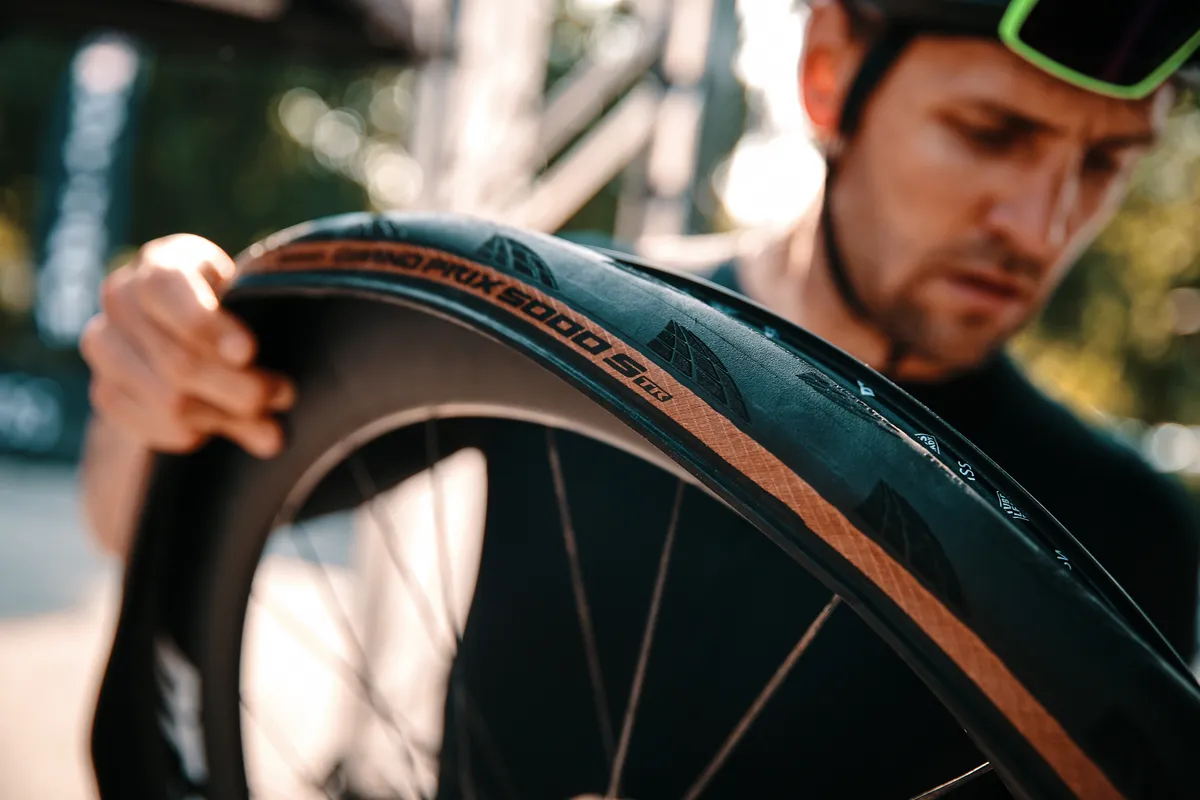
However, we frequently see concerning comments from readers boasting about using tyre/rim combos well outside of manufacturer recommendations.
More worrying is the many riders who may have unwittingly bought bikes with hookless wheels, worn out their original tyres, then replaced them with tyres outside of wheel-manufacturer recommendations.
While I sincerely hope it doesn’t happen, it will only take one well-publicised incident to throw hookless rims back into the spotlight and cast further doubt over their (questionable) merits.

Trouble could also come from the CPA riders' union, which has made clear it strongly disapproves of hookless wheels, with chief Adam Hansen claiming he receives a complaint “at least every second week” about crashes caused by hookless rims.
The UCI has been curiously reserved in its reaction to hookless rims. But given its propensity to ban tech it perceives as unsafe (or just doesn’t like the look of), a sweeping ban on hookless wheels in reaction to an incident wouldn’t surprise me at all.
The introduction of mini-hook rims complicates things further. Described by Hunt’s Paddy Brown as a “branding piece”, mini-hook rims are effectively just regular hooked rims that fly very close to ISO/ETRTO minimum dimensions for a hook.

The introduction of a third, confusing category – which isn’t really a category – of wheels that consumers now need to be aware of is unhelpful. Actually, the whole thing is a mess, and it’s not going to get any easier for the time being.
I’ll add that I’m not the authority on this subject – I am merely riding on the coattails of Simon von Bromley’s excellent three-part series on the state of hookless, which is now the go-to reference for such matters.
George Scott: road-bike fit and geometry will continue to evolve
I’ll start by referring back to one of the most interesting pieces we published this year, when Ollie Smith posited the idea of a more upright bike fit being faster.
Until now, the common consensus – led by the go-fast-at-all-costs attitude of pros – has been that a super-low position, aided by a slammed stem, enables a rider to adopt a more aerodynamic position. If it’s aero, it’s fast by default.
Slowly, however, that view is changing, including in the pro peloton. This year, we’ve seen a growing number of riders fitting more spacers under their stems in a bid to raise the stack height. The goal? To help them sustain a more aerodynamic body position, with a flat back and the forearms horizonal – but, and this is the crucial bit, to do so in more comfort and, therefore, for longer.

Expect that trend to continue – and gain momentum in 2026 – and for bike brands to respond by adapting the geometry of their most aggressive bikes.
Elsewhere, we’ve recently seen Factor launch the One, with its bayonet-style fork, and wildly wide fork legs. That’s where the eye is immediately drawn when looking at the One, but Factor has taken a fresh look at the geometry, too.
In simple terms, it has shifted it forward, with a steep seat tube angle and increased reach, to reduce stem length. The handlebar is available in a taller version, too. All that is to say, while road race bikes will, by their nature, remain aggressively laid out, the default position of old – low and long – is changing, and that's no bad thing.
Simon von Bromley: cycling will continue ducking meaningful changes to improve rider safety

Rider safety was a huge topic of discussion this year, but so far, the sport’s governing body (the UCI) and its primary stakeholder (Tour de France organiser, the ASO) has only tinkered around the edges as opposed to making the root and branch reforms many feel are required.
The UCI’s new handlebar, helmet and frame regulations for next year spring to mind, for example, as does its botched gearing restrictions trial (which it was forced to suspend following a ruling from the Belgian Competition Authority in October).
Roundly criticised by fans and experts alike, these technical tweaks ignore ostensibly bigger issues such as poor course design, the absence of enhanced helmet safety standards for road racing and the general lack of protective equipment worn by riders regularly hurtling along in large bunches at breakneck speeds.

It’s fair to say the public nature of road racing means it will always be impossible to control every variable and manage every risk effectively, and I’ve no doubt those at the top of the sport care about rider safety.
However, until those in power start to take an “objective, science-based approach” to these issues, and more closely involve relevant experts in their decision-making processes, I worry 2026 will feature yet more unnecessary crashes and rider injuries.