They both have wheels and tyres and (in most cases) someone piloting them. But that’s about as far as the synergies between motor vehicles and bicycles go.
So why do car companies keep launching bicycles? It could be the chance to increase their eco credentials or, more cynically, to increase brand awareness to another cohort of potential buyers.
We’re not sure, but we do know there’s been a steady stream of automotive brands that have put their name on a frame. Sometimes it works; usually it doesn’t.
So here’s our pick of the car companies that decided bicycles were the next big thing and what became of their efforts.
1. Bugatti
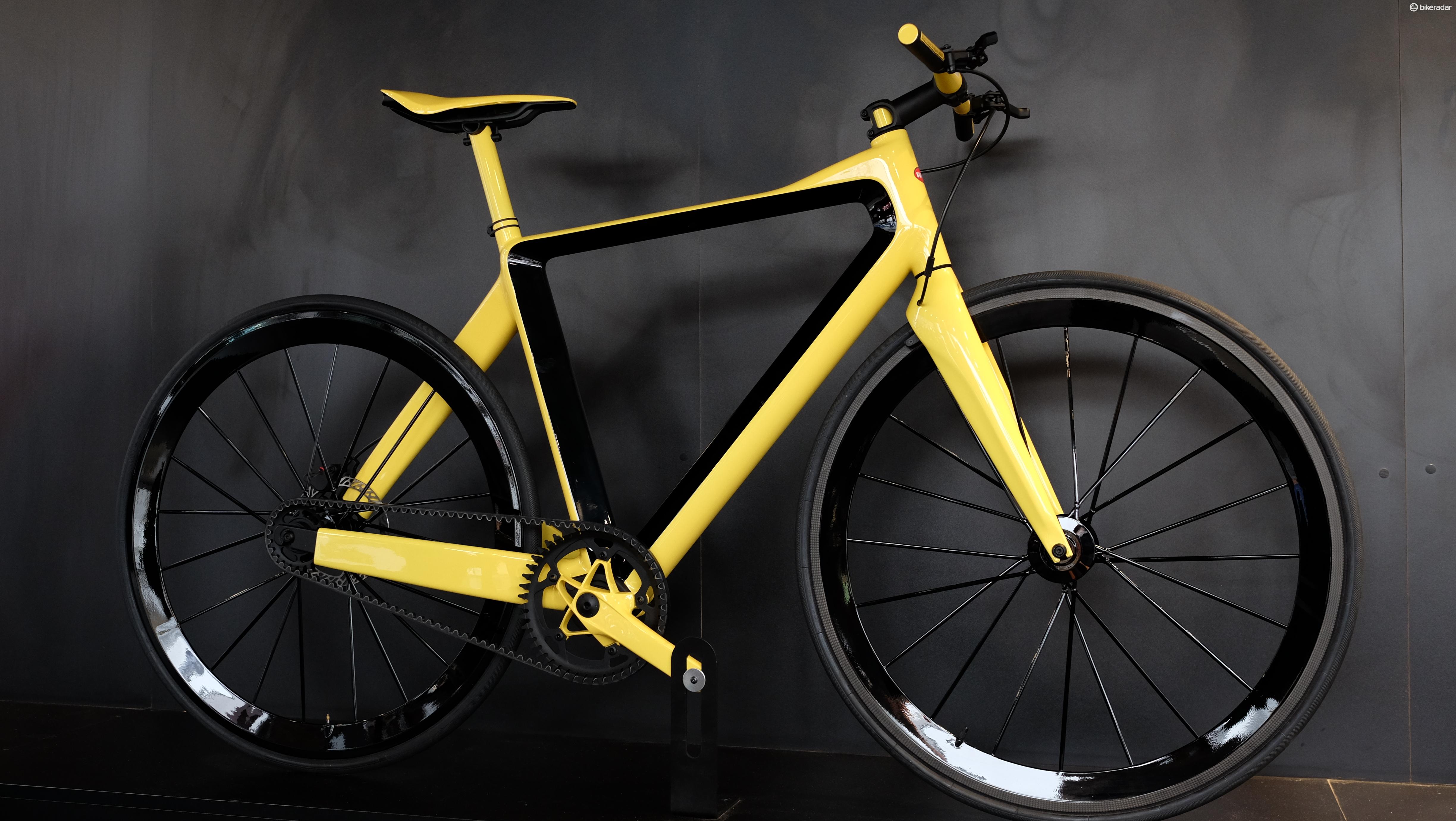
Bugatti makes very expensive cars under the wing of Volkswagen, but that hasn't prevented it from dabbling in bicycles.
Back in 2017, it produced a sub-5kg flat-bar bike by bolting every exotic lightweight bit and piece it could find onto a carbon frame, colour matched to its Chiron supercar. The bike was a limited(ish) edition of 667 – we’re not sure how many sold. Its $39,000 price was a drop in the ocean compared to the matching yacht or the Chiron’s £2.5m list price.
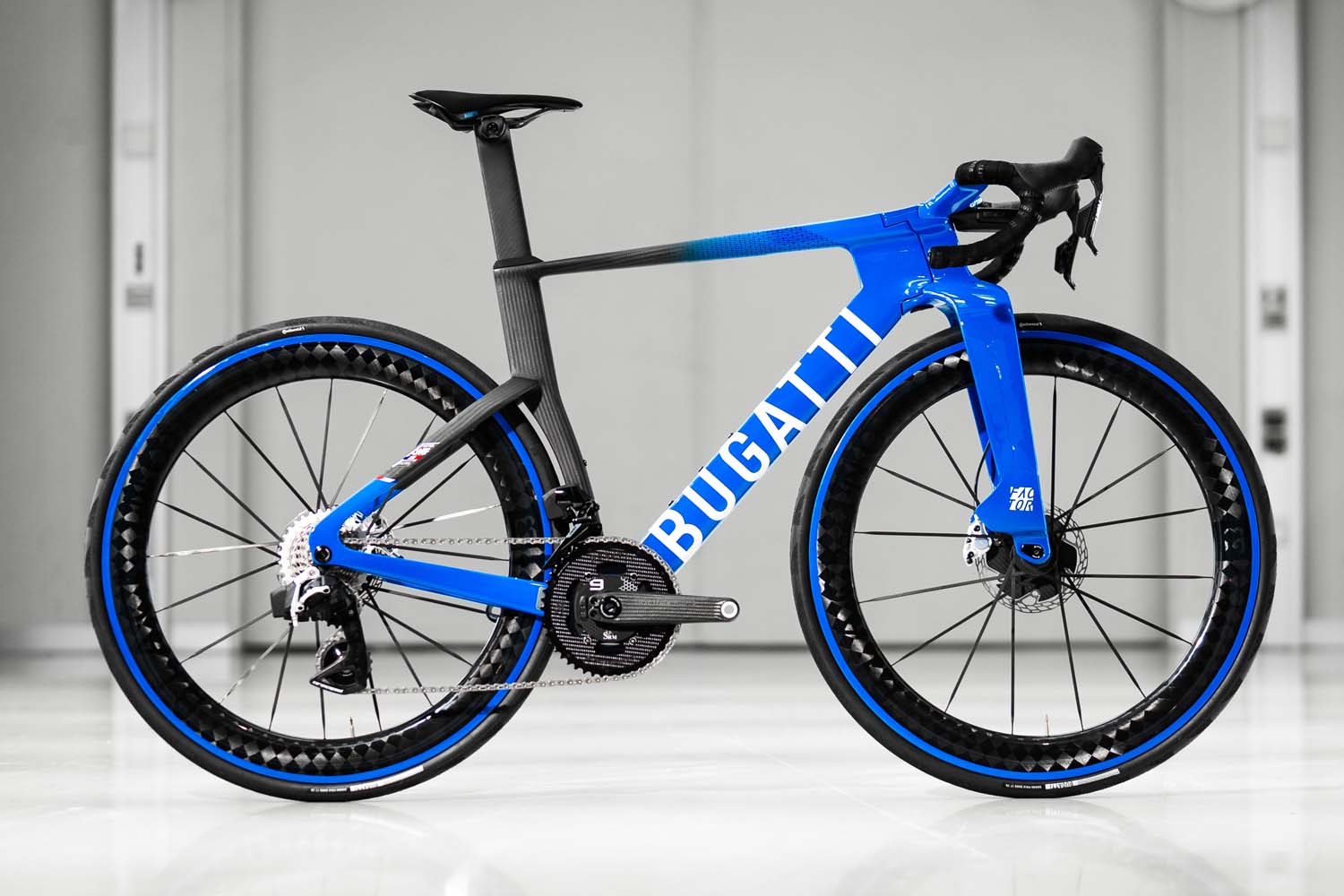
More recently, the brand has announced the cheaper and, presumably, faster Bugatti Factor One. When we say cheaper, that’s £20,899 rather than $39,000. The Factor One is an eye-popping design before you add the shouty Bugatti logo to its down tube, but if you’re up for a drag race with the local wannabe pro, this could be the bike for you.
2. Volkswagen
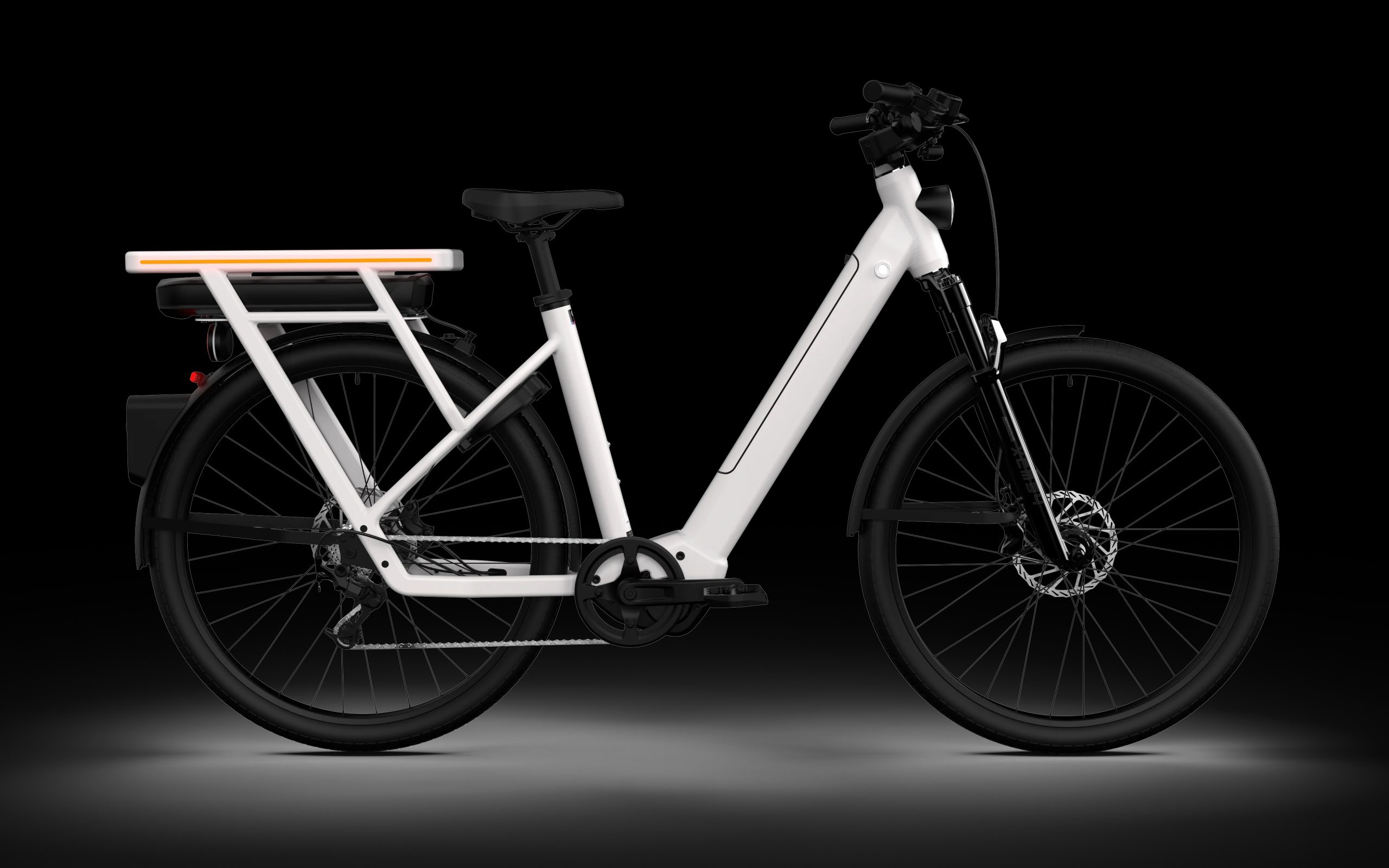
Bugatti’s Volkswagen parent has also caught the bike bug in 2026, releasing what it claims is the world’s safest ebike.
Rather than just putting its name on a bike, Volkswagen has imported car safety tech into it. This includes a rearview camera/radar that streams images of the Bugatti roaring up behind you to a handlebar display, in case you don’t hear it coming.
The rearview camera is coupled to smart glasses, which act as a heads-up display and navigation aid. There’s also a smart helmet with an array of lights that blasts out 500-lumen brake and turn signals.
Volkswagen was beaten to the line by the Mercedes AMG Petronas F1 team electric bike, which offers similar functions, and is a collaboration with N+ bikes.
3. Porsche
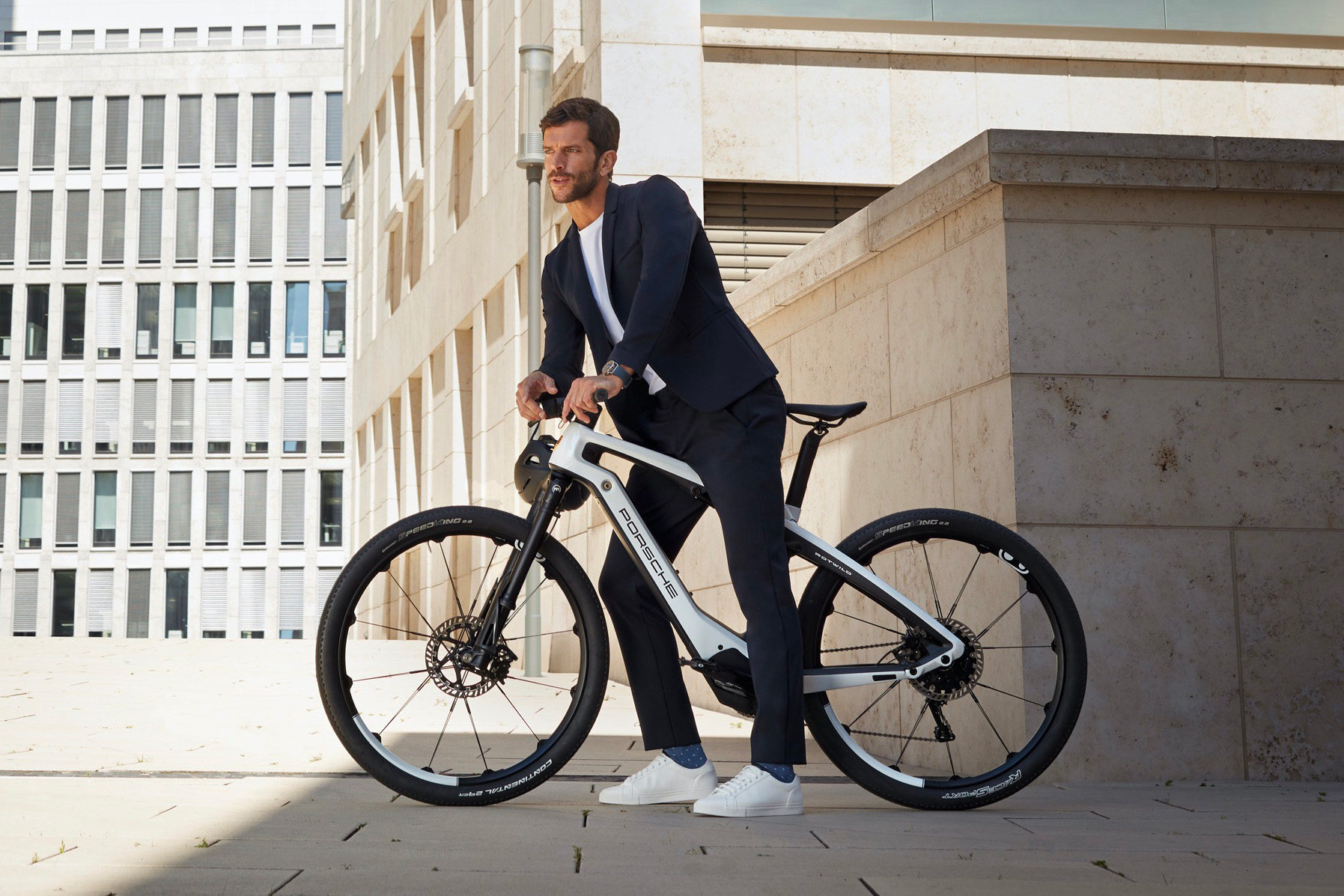
Not to be left out, Porsche, another VW subsidiary, had its own ebike subsidiary. This also pulled in the Fazua electric bike motor brand, which Porsche bought in 2022.
Porsche closed its ebike company in May 2026, also discontinuing sales of the Fazua ebike motor system, with its chairman saying it must refocus on its core business, due to "fundamentally changed market conditions for ebike drive systems".
In late 2026, you can still buy Porsche’s electric mountain bikes, along with all the Porsche-branded gear you’ll need and a rear rack to transport your ebike to the trailhead on your Porsche car.
4. Ferrari
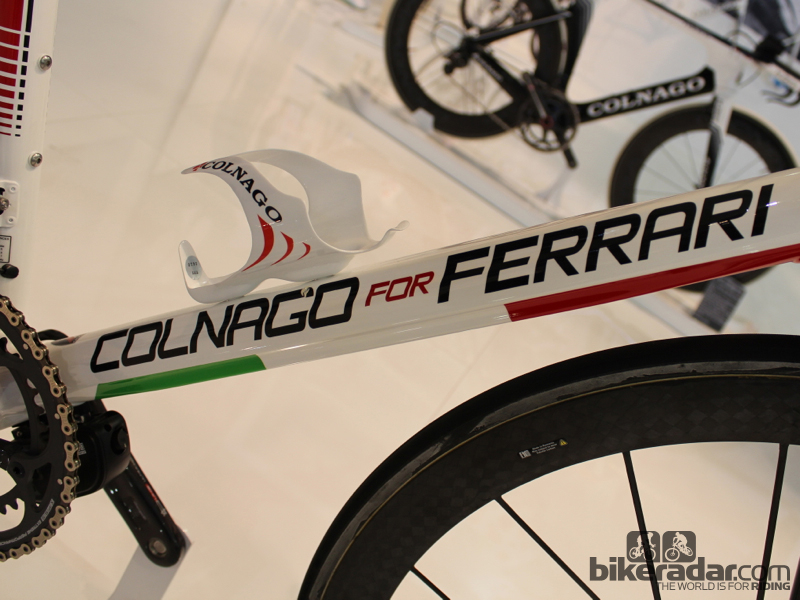
You’d think Italy’s prestige bike brands would be a natural partner for Ferrari – well, maybe.
The Italian stallion has placed its name on a number of limited-edition bikes from Bianchi and, more frequently, Colnago, to which it first leant its engineering expertise in 1987.
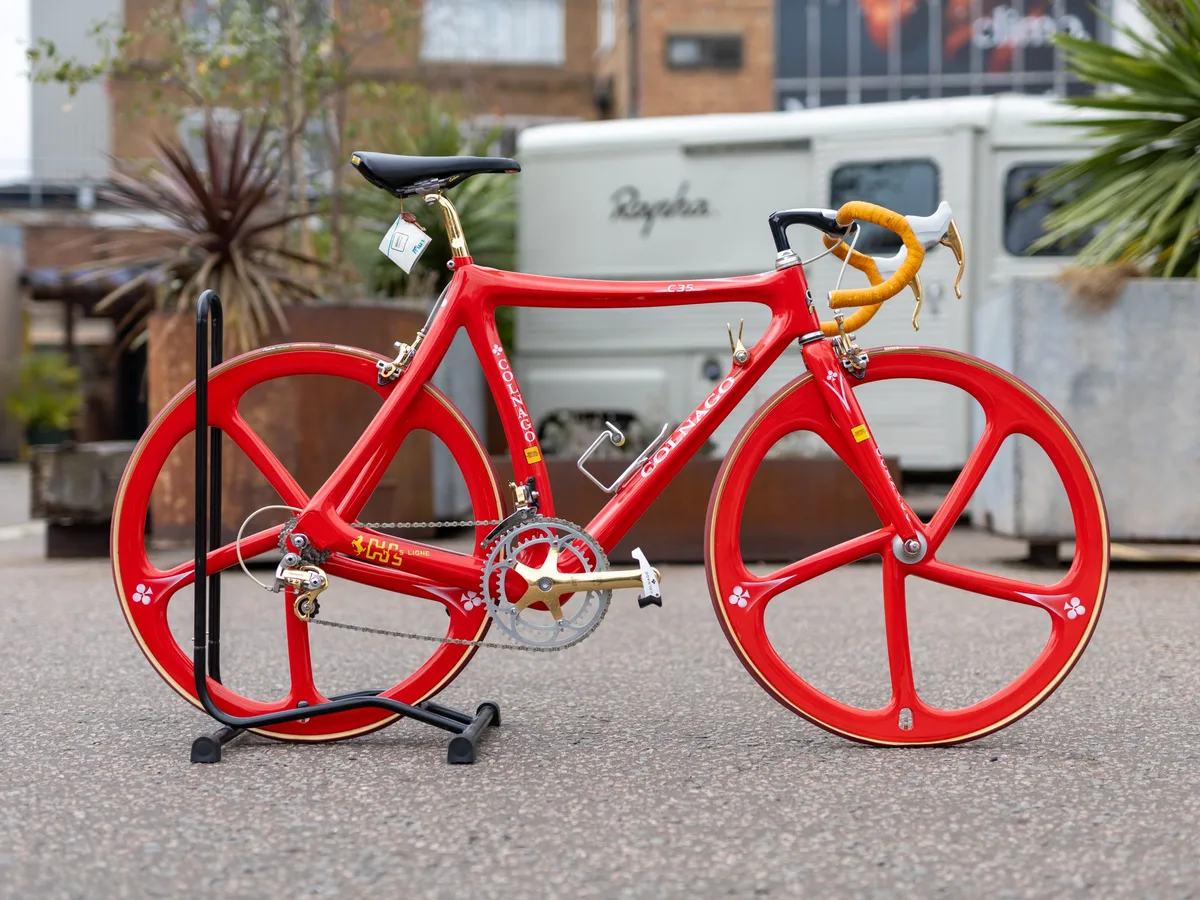
Perhaps the most startling child of Colnago and Ferrari’s collaboration was the 1988 Colnago C35, one of the first ever monocoque bike frames and made of a carbon/Kevlar composite. We tracked down one of two bright red Hors Ligne versions ever made, complete with red five spoke wheels and gold Campagnolo C-Record eight-speed groupset.
In 2008, Colnago and Ferrari launched the carbon CF7 in a limited run of 99 bikes. The main features were a strut-reinforced down tube, aimed at increasing frame stiffness and power transfer.
In 2015, Colnago produced a 100-bike Ferrari-branded edition of its V1-r, the precursor to the current V5Rs. Colnago called out the safety car later that year though, recalling the bike due to a defective fork.
Meanwhile, Ferrari’s partnership with Bianchi, announced in 2017, produced a few concepts and prototypes, but never seemed to leave the starting grid.
5. Aston Martin
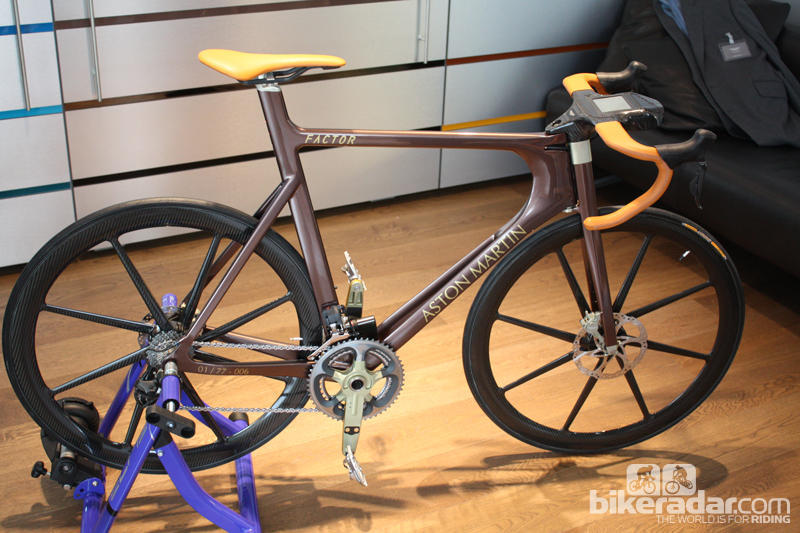
Aston Martin is another performance car brand with a long history of bicycle collaborations, usually with fancy bike brands.
Back in 2012, it launched the One-77, packaged with a ‘motorsport-derived data logging system’. It was highly integrated and complete with then-novel hydraulic disc brakes, actuated via a Hope cable converter. The list price: £25,000. The frame was co-developed with the upstart Factor brand, which has continued to make its mark in bike design.
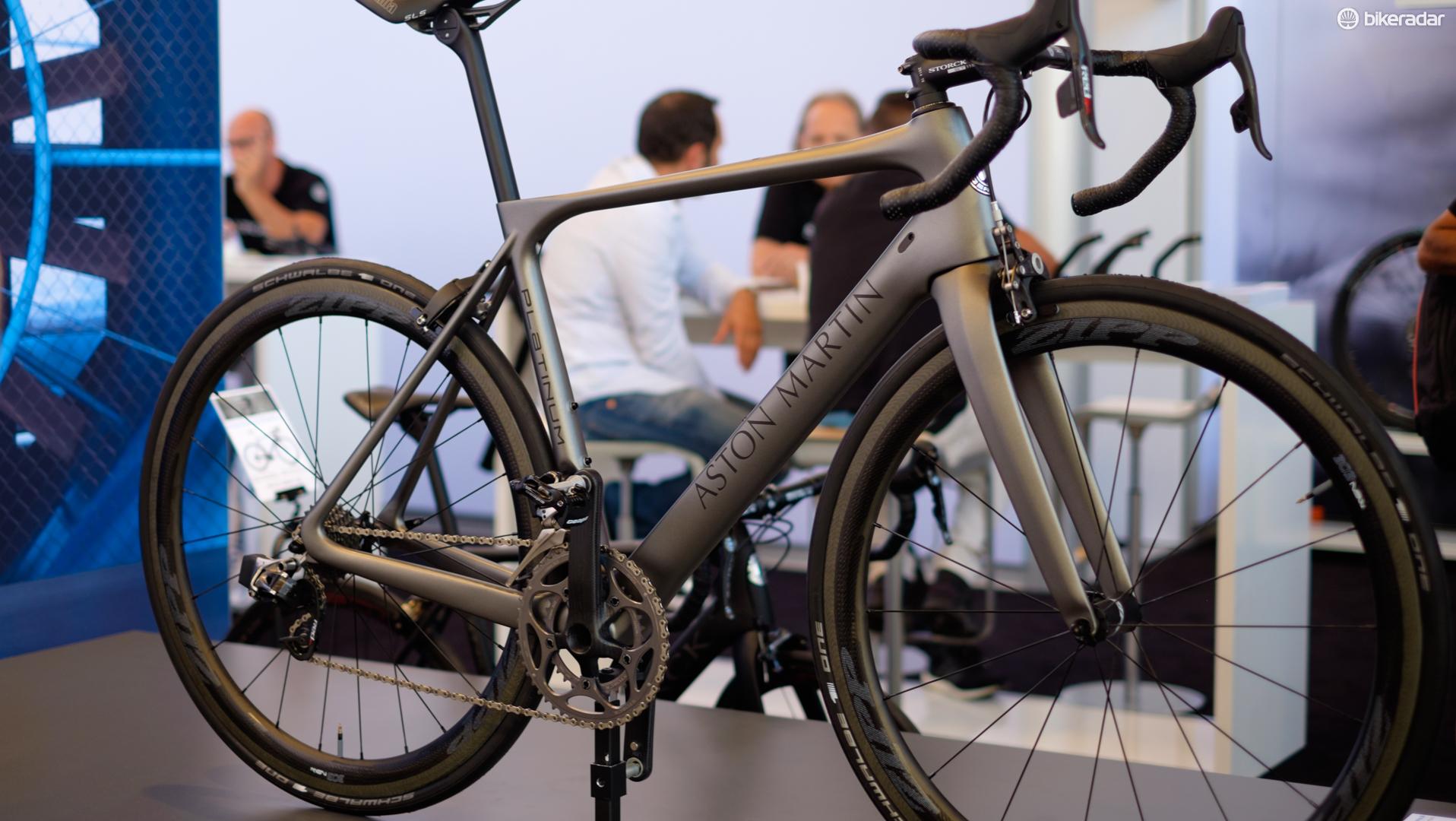
Next came the 2016 Aston Martin Storck bike. At the time, Storck was a hot name in cycling and the bike looked the part, with SRAM and Zipp’s finest and a smart pearlescent paintjob. It also weighed a claimed 5.9kg and cost a then huge £15,777.
Most recently, Aston Martin has collaborated with UK-based J. Laverack, launching the ‘visually boltless’ .1R carbon bike in 2023. J.Laverack specialises in titanium bikes, so there’s plenty of 3D-printed titanium hardware, including titanium tips to the carbon crank arms that enable you to choose exactly the crank length you want.
The brands set the builds available at 100 and, as of September 2026, there are only nine slots left.
6. Lotus
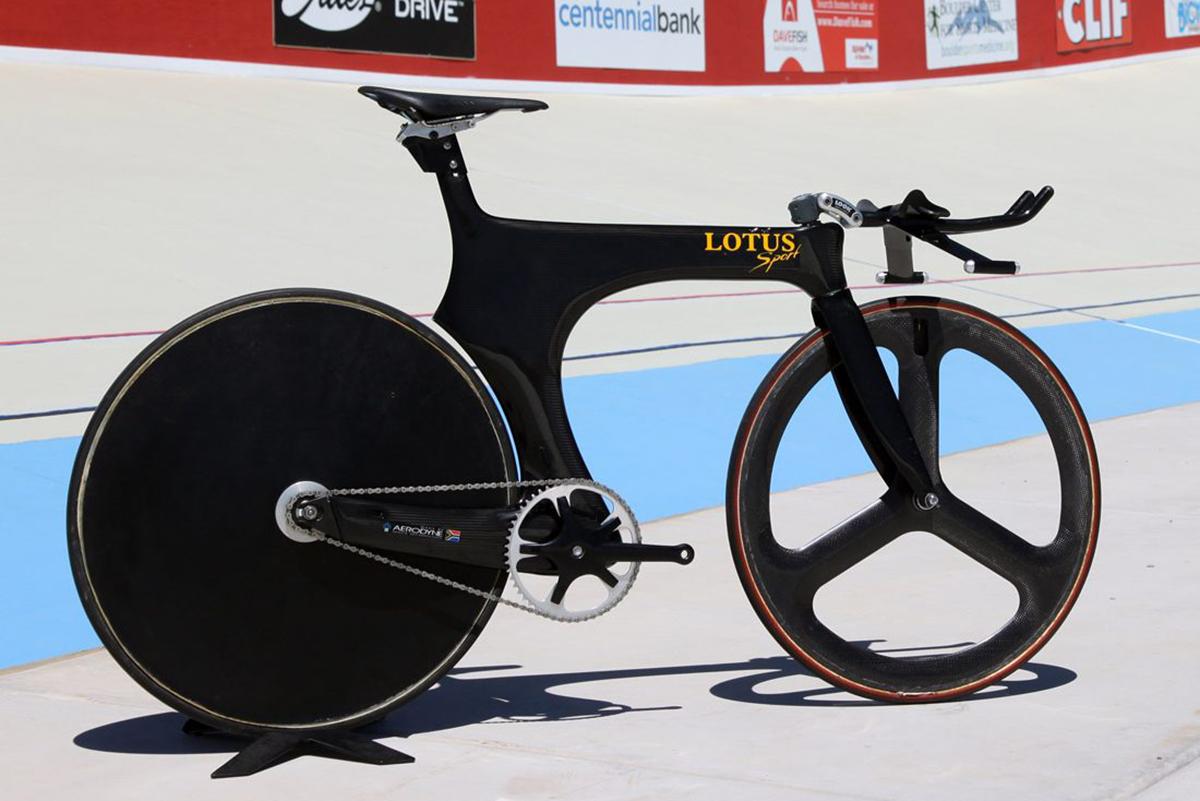
Most car companies have been content to place their names on bike brands’ products, but Lotus shook up the cycling world with its Type 108 monocoque carbon Olympic track bike, famous for Chris Boardman’s gold medal at the 1992 Barcelona Olympics.
Boardman rode its successor, the Lotus 110, to the yellow jersey at the 1994 Tour de France, before the UCI’s Lugano Charter outlawed bike frames without a down tube.
More recently, Lotus has dabbled in electric bikes, with the £20,000 Type 136, launched in 2023. This packs a 1.2kg motor system and borrows design features including the wide stance fork legs and seatstays from the Hope HB-T track bike, which Lotus designed for the 2020 Tokyo Olympics.
7. Tesla
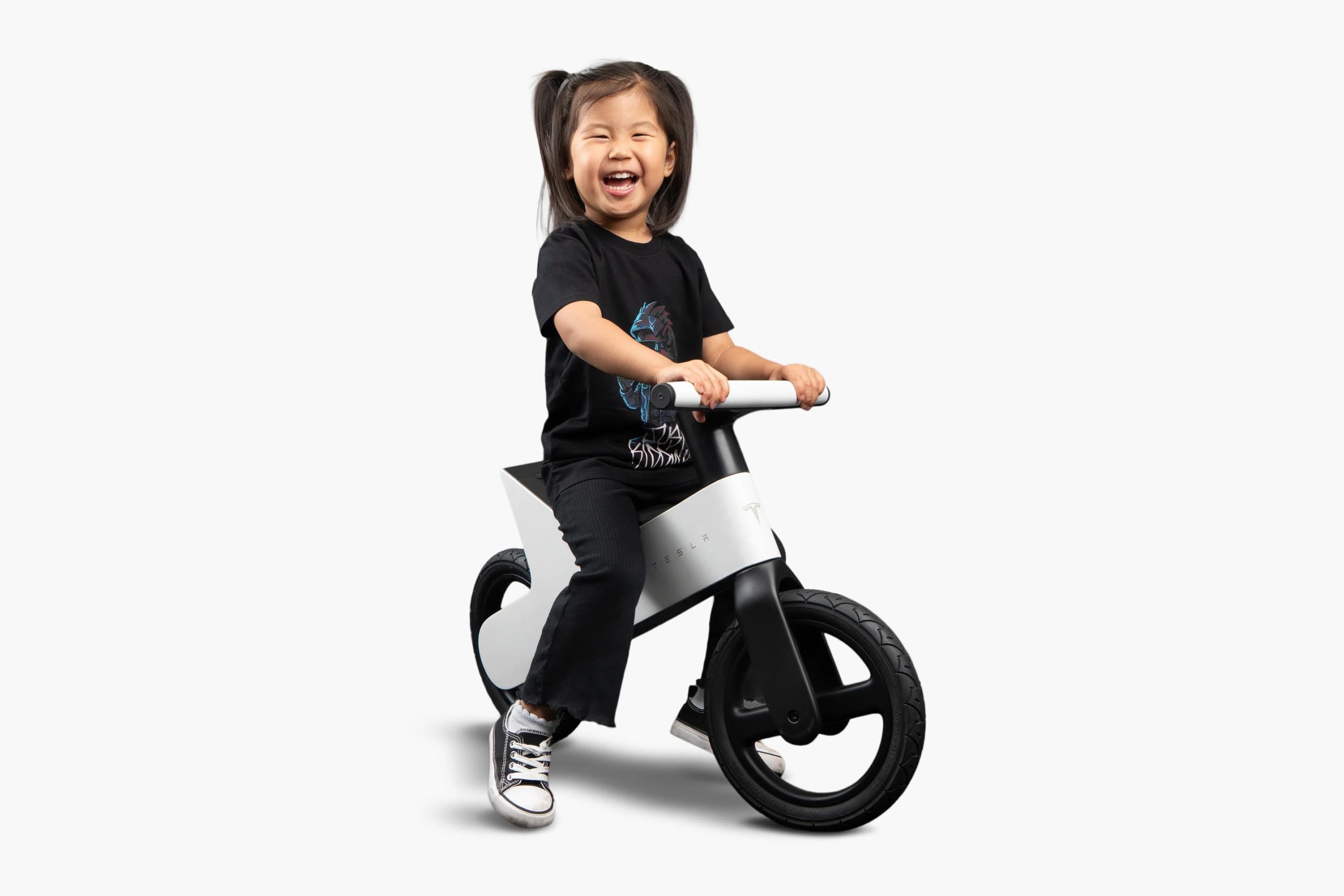
Tesla, meanwhile, has started small with its bicycle – literally, because it has launched a balance bike for kids from two to five.
There’s a futuristic design and some fancy tech in there, if not an electric motor, because the Tesla balance bike has a magnesium frame and a seat that helps it to grow with its rider. Its list price of $225 should be reasonably affordable too, particularly if you happen to be a trillionaire.