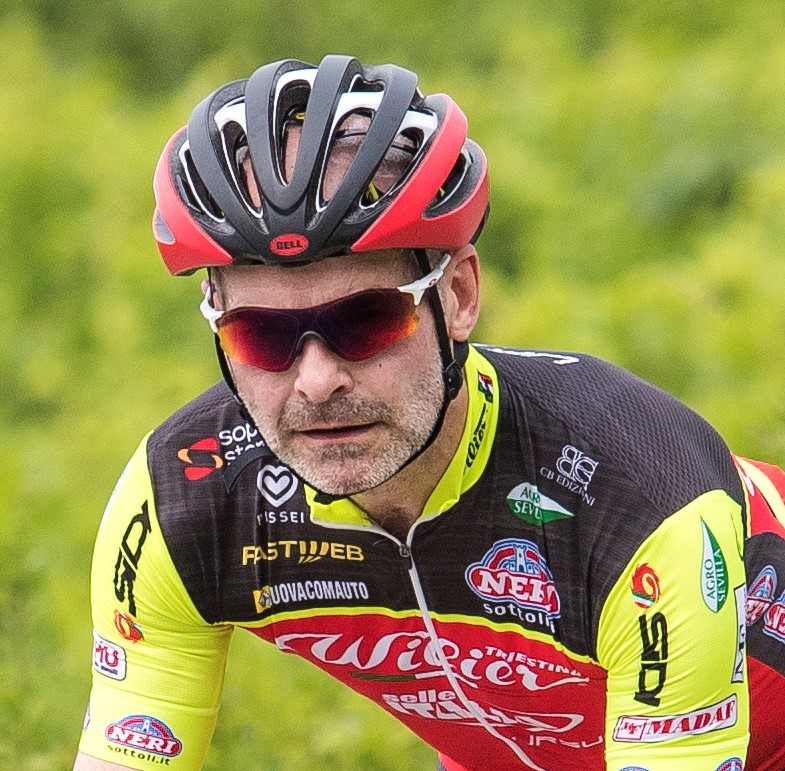
The UCI has just banned large cycling computers from competition, despite the fact that weight weenie pros almost invariably choose the smallest and lightest cycling computer they can use. It cites cognitive load, although reading 10 fields of data on a tiny screen probably takes more concentration than on a larger screen.
Grumbles about the UCI being out of touch and luddites are nothing new, with a sorry history of banned tech that goes back at least to its 1934 prohibition of the use of recumbent bikes in races, which stymied their development for 40 years.
Most recently, it tried and failed to ban SRAM’s 10-tooth smallest sprocket, on the grounds that it enabled cyclists in races to ride too fast (the UCI has appealed the ruling). It wanted to make a 54x11t the highest permitted gear, with its suggested fix that SRAM (and Campagnolo, which offers similar ratios) just disabled its highest gear.
While SRAM fought back and won, there’s a long list of cycling tech banned by the UCI, with a clutch more added at the start of 2026, including wheels over 650mm deep and fork legs more than 115mm wide.
Here are some of the UCI’s most notable bans, in rough chronological order.
Battaglin FiR Piranha

Banned in 1985, the Battaglin Piranha time trial bike’s distinctive feature was its bulbous front wheel, designed to smooth airflow around the rider’s legs. It was rolled out for the Giro d’Italia prologue time trial as a one-off for Inoxpran team leader Roberto Visentini, but race officials banned its use immediately, citing an unfair advantage, so it was never raced.
In addition, the carbon frame was a monocoque. As with the Lotus bikes of the next decade, it lacked a down tube, a design the UCI would subsequently also ban in 2000.
Lotus Sport 110 bike
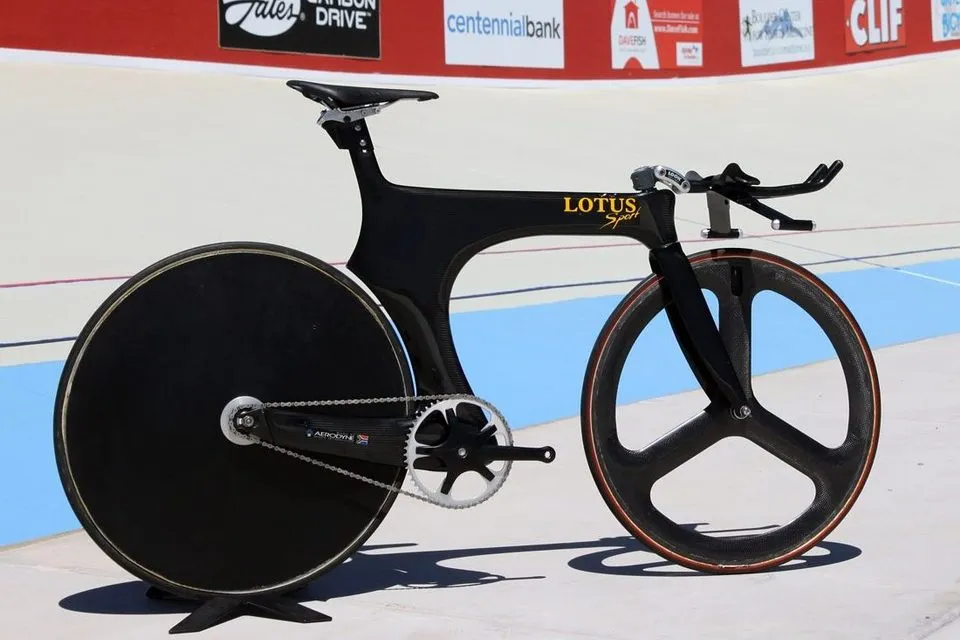
The Lotus bikes were the acme of 1990s bike innovation, with Chris Boardman winning a gold medal on the track at the 1992 Barcelona Olympics on the Lotus 108. The Lotus 110 built on the 108’s design and adapted it for time trial, not just track use. Boardman won the 1994 Tour de France prologue on the 110.
The 1990s saw the high tide of bike innovation, with radical designs flourishing before the UCI’s Lugano Charter. Ratified in 2000, this put the lid on novel bikes, leaving designers to tinker within limits on bikes that are still in force today.
They include the notorious 6.8kg minimum bike weight that recently saw Lorena Wiebes, on a flat stage, thrown out of the Giro d’Italia Women for riding a bike that was rumoured to be 20g under the weight limit.
Another clause of the treaty required that bikes used in competition have a traditional diamond-tubed frame, rendering the monocoque Lotus frames without a down tube illegal.
Cinelli Spinaci handlebar extensions
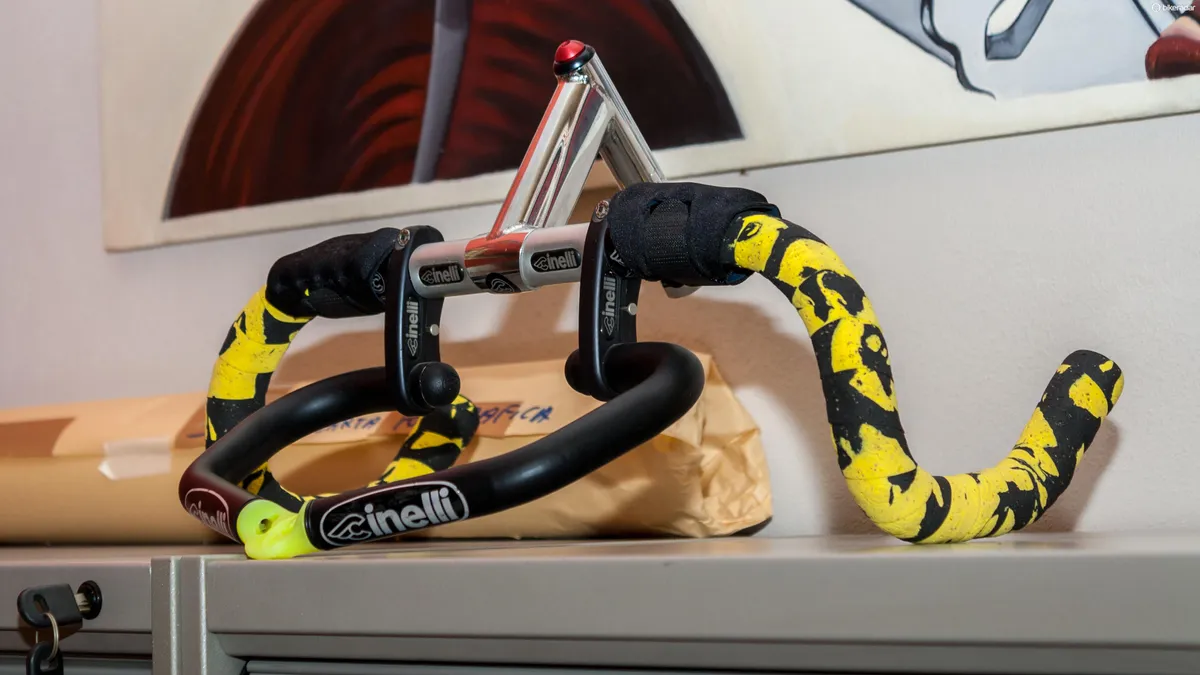
‘Puppy paws’ riding positions, where the rider rests their forearms on the handlebar, may have been banned fairly recently by the UCI, but it’s had it in for novel hand positions in road races for a long time.
The Spinaci extensions bolted onto the bar’s top and provided a narrower handhold ahead of the bar, placing the rider’s hands closer together and lowering the ride position, without reverting to full-on aerobars, which were already banned from road races.
The narrow position and lack of proximity to the brake levers led the UCI to ban the Spinaci extensions and their imitators in 1997.
Spinergy Rev-X wheels

An early use of carbon fibre for wheels, the Rev-X wheels were launched in the early 1990s and replaced steel spokes with eight carbon fibre arms, four on each side of the hub. The design was both lighter and more aerodynamic, and was famously ridden by Mario Cipollini and the Saeco Cannondale team.
The UCI was concerned about their safety though, both in crashes and due to structural failure, as well as vibration-related injuries due to their stiffness. It banned the wheels in 1997. Spinergy survived the ban and still makes bicycle wheels – with conventional spokes, although they’re still made with the PBO fibre used originally for the Rev-X.
Continuous glucose monitors
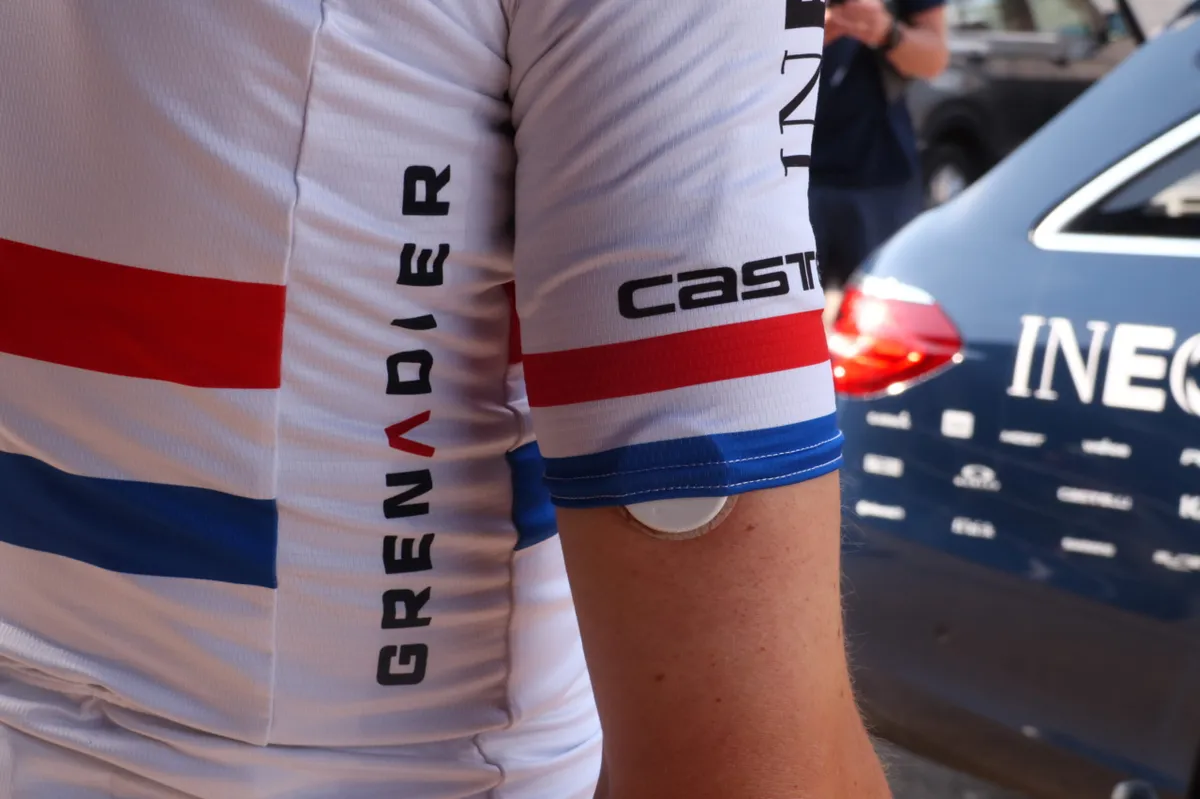
You’d probably like to know if you’re about to bonk, right? So would the pros, so continuous glucose monitors began to appear in the peloton. It’s the same tech as used for diabetes monitoring, with a patch that inserts a probe into the arm to detect glucose levels and transmit the data to a device, in this case a cycling head unit or smartwatch.
Marketed by Supersapiens, Wahoo built the tech to read the data into its bike computers. The UCI banned it in mid-2021, adding a blanket prohibition of any device that captures metabolic values in races, which rules out lactate monitoring too. It confirmed the ban didn’t extend to heart rate monitors.
Supersapiens shut down in early 2024, but there’s a crop of new devices emerging that, non-invasively, measure everything from breathing depth to sweat composition and are surely ripe for a ban.
Ekoi PW8 pedals

Pedal design may not have advanced much since Look launched the PP65 pedals, the first clipless design, back in 1984, but there has been a recent flurry of ultra-low stack height pedals. Q36.5 and SRM have collaborated on a low-stack system and Shimano looks to be about to launch a replacement for its SPD-SL pedal system.
But early off the block was Ekoi with its PW8 pedals, launched in 2024. Warren Rossiter loved the low weight and stack height when he reviewed the pedals and their accompanying shoes. The UCI didn’t like ‘em though, or at least hadn’t approved them for use in races.
This resulted in the Nice Métropole UCI Continental team having to beg, steal or borrow replacement pedals and shoes an hour ahead of Stage 2 of the 2024 Etoile de Bessèges stage race (stage 1 was cancelled due to farmer protests, so this was their first outing at the race).
The Ekoi PW8 pedals are now available to purchase, but pro team take-up has been limited, probably because they don’t want to be left to race barefoot if the UCI finds another reason to object.
Gravaa tyre pressure adjustment system

Although famed for its cobbles, the first 100km or so of Paris-Roubaix is ridden on smooth tarmac roads and there’s more tarmac between the cobbled sectors. Pros have to choose a tyre pressure that’s a compromise between efficiency on tarmac and cobble smoothing.
The Gravaa system avoids this, using a mechanical pump in the wheel hub to inflate the tyres between cobbled sectors and a valve to deflate them to tackle the cobbles. The system was taken up by Visma-Lease a Bike, which used it in Paris-Roubaix in 2024 and 2025, with Pauline Ferrand-Prévot riding with it when she won the women’s race in 2025.
The UCI banned it this year, though. It told BikeRadar this was because Visma-Lease a Bike was the only team that had access to the system, which it claimed gave it an unfair advantage. The UCI requires that equipment must be available commercially, which the Gravaa system was not, because Gravaa had declared bankruptcy in January.
There’s a whole list of other stuff banned by the UCI, from head socks and race numbers not pinned to the rider’s jersey to odd-shaped water bottles. Let us know in the comments if we’ve forgotten anything.