There’s a sameness about many road bike designs, which can make them hard to tell apart on first glance.
Nearly all modern road bikes have a wide down tube, with skinnier tubes elsewhere, many with aero cross-sections. Hidden cabling has taken over, while one-piece cockpits are almost standard on higher-spec models. That’s often paired with dropped seatstays and usually with deeper-section carbon-rimmed wheels.
How did we get here, why do all modern bikes adopt the same basic frame-design features and what might come next in road bike design?
- Read more: Best road bikes 2026 – our pick of the best endurance, race, women’s and entry-level road bikes
The UCI steps in

The 1990s saw a flowering of novel bike designs, with the Lotus 110 track/TT bike, for example, dispensing with the double-diamond frame shape in favour of a monocoque design without a down tube.
Tour de France time trials were raced on bikes with a smaller front than rear wheel, while the 1987 Kirk Precision frame, which was raced on road stages in the Tour de France, had I-beam frame members.
All that stopped with the 1996 UCI Lugano Charter. Issued by the Union Cycliste Internationale, cycling’s world governing body, this stated: “The real meaning of cycle sport is to bring riders together to compete on an equal footing and thereby decide which of them is physically the best.
“New prototypes can be developed because they do not have to take into account constraints such as safety, a comfortable riding position, accessibility of the controls, manoeuvrability of the machine, etc. The bicycle is losing its “user-friendliness” and distancing itself from a reality which can be grasped and understood,” the Charter continued.

So, 30 years later, any bike used in competition under the UCI’s rules still needs to have a frame with a double-diamond frame design, equal-sized wheels and a separate down tube. According to the Charter, it also has to weigh at least 6.8kg.
The UCI’s technical regulations have ballooned over the past 30 years and now run to 78 pages, including the notorious 6.8kg rule, which still stands.
While there’s no reason a bike that won’t be raced in UCI-sanctioned competition needs to conform to the UCI rulebook, in practice bike brands’ R&D is focused on the bikes used by their pro teams, so new bikes are designed to fit within the UCI’s rules.
Bikes used in competition also, according to the UCI rules, need to be available to purchase, which again reduces the room to innovate.
Stay with the herd

There are risks from straying too far from the rulebook, too. Rules are frequently added arbitrarily by the UCI to stymie designs that stray too far from the norm.
Recently, these have included dictats on handlebar width and brake lever positioning. A bike maker that has developed a handlebar that doesn’t comply may suddenly find itself with expensive moulds for a handlebar that can’t be used on pro bikes.
So, bike brands often sail as close to the wind as possible, without standing out, which tends to promote design uniformity.
There are similar pressures in other areas of cycling equipment design. The UCI has, in 2026, banned the use in road races of helmets that have fewer than three front-facing vents or that part-cover the ears, which has eliminated several helmets previously used by some pros.

It’s also set a maximum wheel rim depth of 65mm, which disallowed the 68mm-deep Swiss Side wheels used in previous seasons by the Decathlon CMA CGT team.
Another recent addition to the rules stipulated that fork legs could be no more than 115mm apart. Whether by design or luck, that’s only 1mm greater than the stance of the fork legs on the Factor One aero bike.
UCI rules don’t apply to gravel bikes and triathlon bikes for competition, so there’s more room to innovate. Nevertheless, most of these bikes still stick close to the road bike rulebook.
In the case of tri bikes, there are UCI rules for time trial bikes and many bike brands develop one frame for both triathlon and UCI time trials. There may be add-ons for triathlon use, such as feed boxes behind the seatpost and in-frame hydration systems not permitted by the UCI, but the basic frame is UCI-compliant.
Gravel bikes tend to stick close to the road playbook, too, although there’s an increasing trend for gravel racers to adapt mountain bike frames, adding drop bars and other add-ons, for ultra-distance gravel races.
Rise of the aero bike
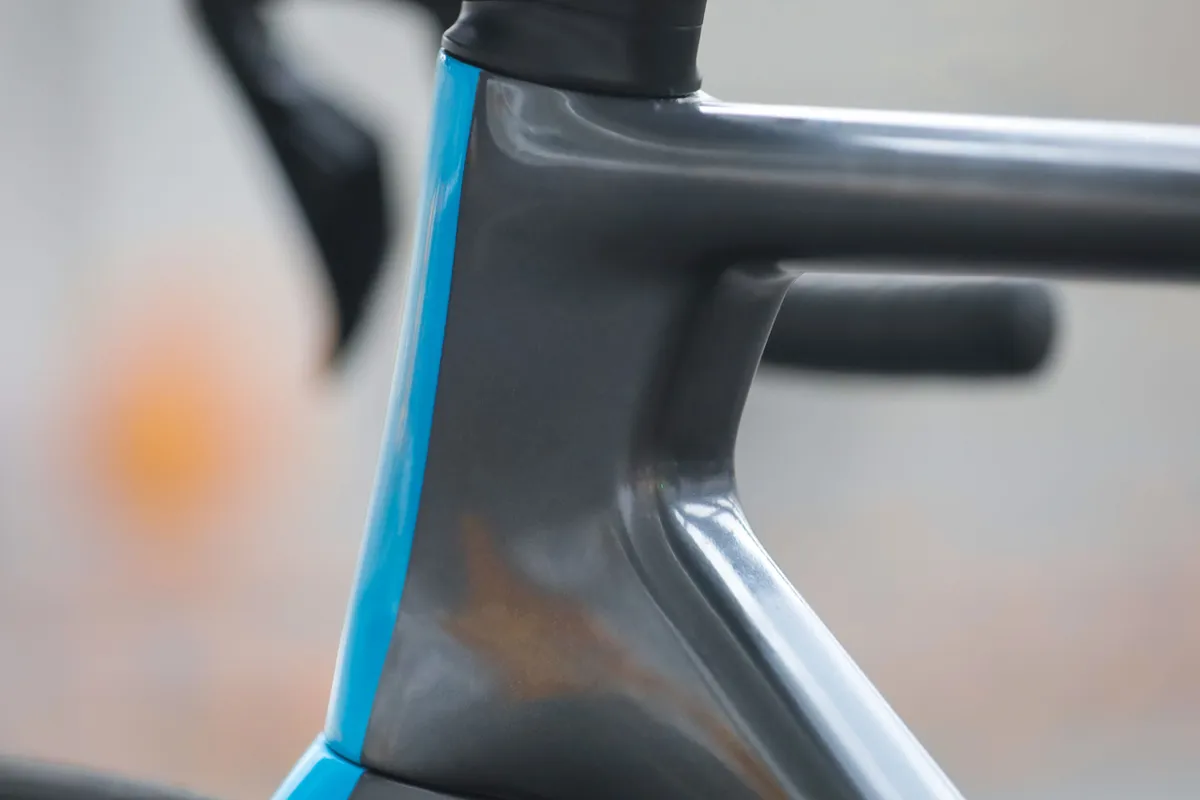
Another technical innovation brewing in the 1990s was frame aerodynamics. Pioneered by Cervélo, founded in 1995, road bike aerodynamics really took off in the 2010s.
Round tube profiles are not aerodynamically efficient because they generate turbulence on the trailing side. A 2016 study at Cal State University, Sacramento, for example, found the drag on a model bike frame with truncated aerofoil tube profiles was 48 per cent less than with round tubes.
First-generation aero bikes from the 2010s were typically chunky, with deep tube sections that made them significantly heavier than a round-tubed bike, and in many cases quite uncomfortable to ride thanks to the frame’s rigidity.
Bike brands typically had an aero bike and a lightweight bike in their portfolio, to suit the needs of pro riders on fast, flat race stages and on hillier routes. Giant had its aero Propel and lightweight TCR, Specialized its Venge and Tarmac, Merida its Reacto and Scultura and Trek its Madone and Emonda, for example.
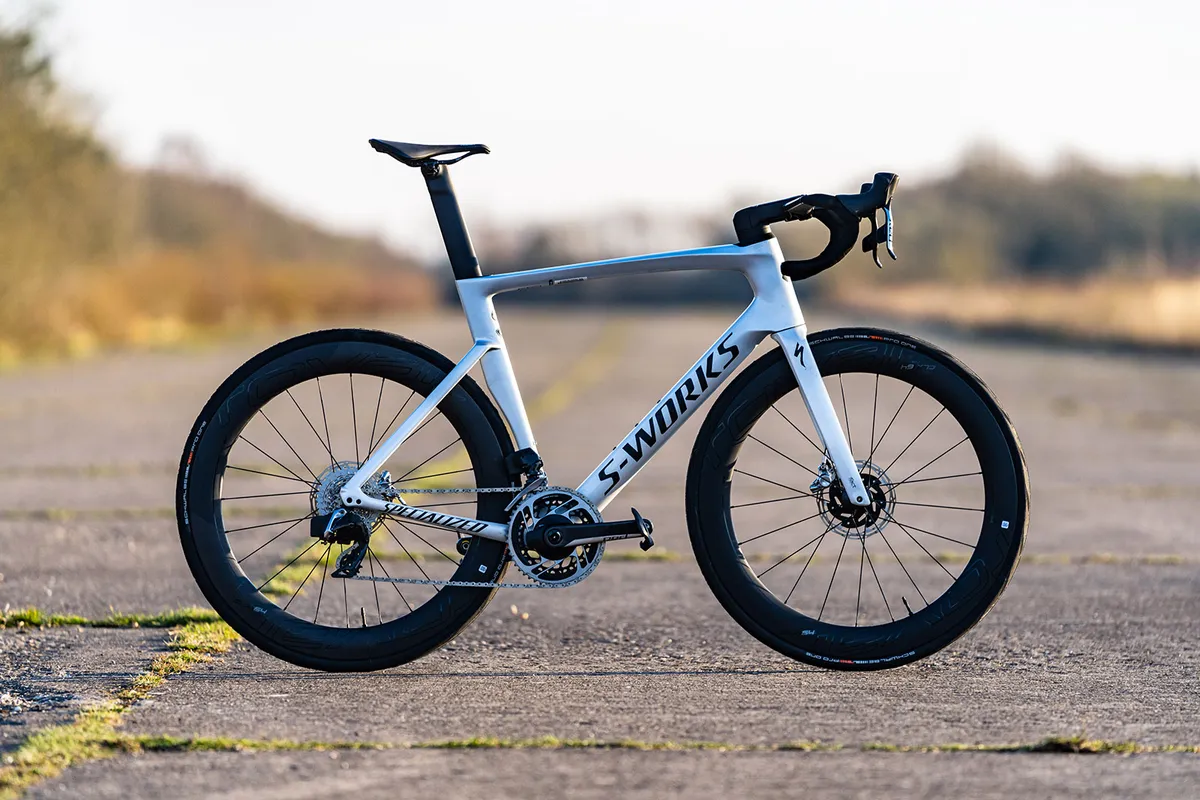
Very few bike brands bucked the trend, with Pinarello the stand-out example, selling only its lightweight-aero Dogma.
Many aero bikes had strikingly similar profiles, with deep-section frame and fork tubing combined with dropped seatstays to reduce their frontal area. The UCI’s ballooning rule book stipulated how deep the frame tubes could be and how far the seatstays could be dropped.
The UCI’s 3:1 rule stated that no frame member could have a depth greater than three times its width. While the original Cervélo Soloist aero bike had classic teardrop-shaped tubing, bike brands all adopted Kammtail tube profiles, where the rear of the teardrop was cut off. This enabled them to improve frame aerodynamics without contravening the 3:1 rule and was another driver of design uniformity.
Lightweight-aero rules

Around 2020, the next wave of bike design saw lightweight-aero bikes take over, again with the majority of mainstream bike brands on board.
This was driven by wind-tunnel testing, which showed that the main gains from aero framesets came at the front of the bike. This justified making the tube profiles at the rear thinner, increasing ride comfort over first-generation aero bikes while reducing bike weight. Comfort rivalled traditional round-tubed lightweight bike frames and weights headed down towards the magic 6.8kg.
The archetype was the Specialized Tarmac SL7, but other brands followed the same route: Cannondale with its SuperSix Evo, Giant with its Propel and, latterly, Trek with its eighth-generation Madone.
The switch from rim brakes to disc brakes and the change from mechanical to electronic shifting have also changed bike design.

Thru-axles used with disc brakes have enabled designers to reduce frame weight while retaining bike rigidity, thanks to their more robust connection to the frame.
Unlike cable-operated brakes, hydraulic brake hoses can follow complex routing without degradation of braking performance. The same is true of wired or wireless electronic groupsets.
Together, they have allowed front-end integration, without external cabling, which has a disproportionate effect on a bike’s drag. In 2019, Pinarello reported that moving from external cables on its Dogma F10 to hidden cables on the Dogma F12 reduced drag by 5 per cent.
Top-spec bikes now invariably have integrated front ends with hidden brake-hose runs, usually with one-piece bar/stems. Combined with the lightweight-aero frame designs, it’s another paradigm that has resulted in a crop of similar-looking bikes being launched in the last half decade.
Apex bike?

For a few years, it looked as if the aero-lightweight bike would be the dominant bike design for years to come. But a toss of the dice saw the UCI relax its 3:1 rule in 2017, in favour of a new set of geometry rules, which defined 80mm-deep, 10mm-wide geometric boxes within which frame members had to sit.
That’s enabled the developing of new designs that incorporate deeper tube sections, particularly at the head tube and the fork legs. So there’s a crop of newer bikes emerging that offer enhanced front-end aerodynamics. Examples include the latest Cervélo S5, Ridley Noah Fast 3.0 and Factor One. It’s another design trend that has seen a crop of similar-looking bikes, although with a shape that’s distinct from the lightweight-aero bikes.
At the same time, this has created space for lightweight bikes, still with aero features but at or below the 6.8kg limit. The Factor O2 VAM was an early exemplar, but alongside it now sit bikes such as the Cervélo R5, while the Aethos 2 fills a similar niche in Specialized’s line-up.
Will we see more brands re-split their lightweight and aero bikes as they launch their next-generation products over the coming years? And, with many lightweight bikes now well below the 6.8kg mark, will we finally see the rescinding of the 6.8kg UCI weight limit, ushering in further development and an era of truly lightweight bikes?
However the world of road bikes develops next, as for the past 30 years, it seems certain that the caprices of the UCI will continue to dictate what the pros and the rest of us are offered to ride.